Oracle 1Z0-144 Online Practice
Questions and Exam Preparation
1Z0-144 Exam Details
Exam Code
:1Z0-144
Exam Name
:Oracle Database 11g: Program with PL/SQL
Certification
:Oracle Certifications
Vendor
:Oracle
Total Questions
:106 Q&As
Last Updated
:Jul 09, 2026
Oracle 1Z0-144 Online Questions &
Answers
Question 1:
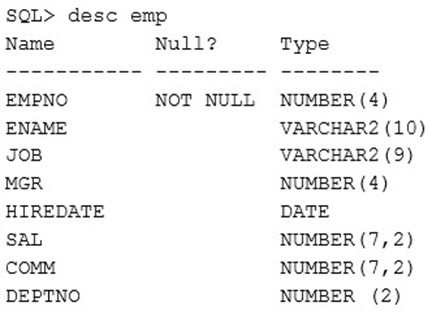
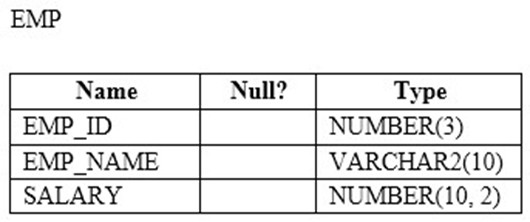
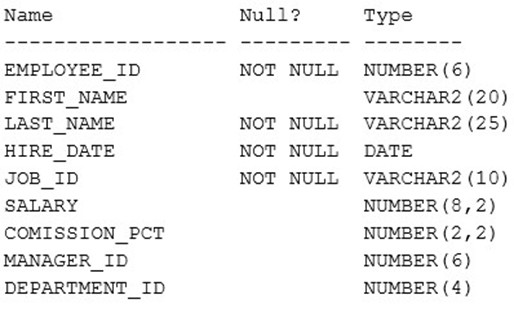
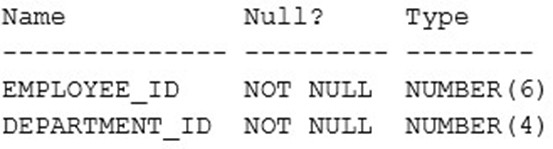
View the exhibit and examine the structure of the EMPLOYEES table.
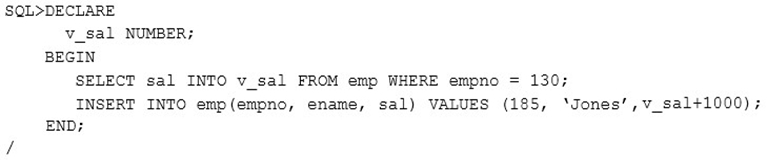
EMPLOYEES_SEQ is an existing sequence. Examine the following block of code:
Which statement is true about the above block of code?
A. It gives an error on execution because sequences cannot be used in anonymous blocks. B. It consists of a single transaction. C. It consists of two transactions. D. The data is automatically committed after the block execution ends.
B. It consists of a single transaction.
Question 2:
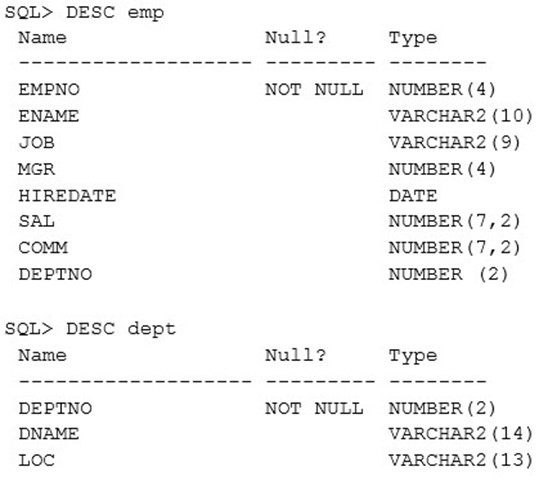
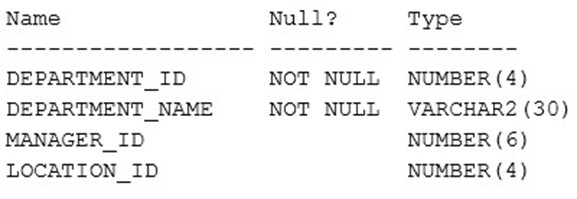
View the Exhibit and examine the structure of the departments table in SCOTT's schema.
Examine the following block of code:
The above procedure is created by user SCOTT. Another user JONES needs to use the procedure.
Which two statements are true in the above scenario? (Choose two.)
A. JONES executes the procedure with definer's rights. B. JONES executes the procedure with invoker's rights. C. SCOTT should grant only the execute privilege for the procedure to JONES. D. SCOTT should grant both the execute privilege for the procedure and insert privilege for the table to JONES.
A. JONES executes the procedure with definer's rights. C. SCOTT should grant only the execute privilege for the procedure to JONES.
Question 3:
View the Exhibit to examine the PL/SQL block.
Which statement is true about the output of the PL/SQL block?
A. It executes and the output is emprec.deptname:. B. It executes and the output is emprec.deptname: Sales. C. It produces an error because NULL is assigned to the emprec.empid field in the record. D. It produces an error because the CHECK constraint is violated while assigning a value to the emprec.deptid field in the record.
A. It executes and the output is emprec.deptname:.
Question 4:
Which two statements are true about anonymous blocks and named subprograms? (Choose two.)
A. Subprograms are by default executed with definer's rights. B. The declare section is optional for both anonymous blocks and subprograms. C. Both anonymous blocks and subprograms execute by default with invoker's rights. D. The declare section is mandatory for anonymous blocks and optional for subprograms.
A. Subprograms are by default executed with definer's rights. B. The declare section is optional for both anonymous blocks and subprograms.
Question 5:
Which two statements are true about database triggers? (Choose two.)
A. Each trigger can be of any size. B. Each trigger can be of a maximum size of 32 KB. C. A trigger can contain a maximum of 32 lines of code. D. Triggers fired by DML statements cannot cascade simultaneously. E. Both DML and DDL statements can cascade any number of triggers. F. Both data manipulation language (DML) and data definition language (DDL) statements can cascade up to 32 triggers.
B. Each trigger can be of a maximum size of 32 KB. F. Both data manipulation language (DML) and data definition language (DDL) statements can cascade up to 32 triggers.
Question 6:
Which two statements are true about the usage of the cursor for loops? (Choose two.)
A. The cursor needs to be closed after the iteration is complete. B. The implicit open, fetch, exit, and close of the cursor happen. C. The record type must be explicitly declared to control the loop. D. The PL/SQL creates a record variable with the fields corresponding to the columns of the cursor result set.
B. The implicit open, fetch, exit, and close of the cursor happen. D. The PL/SQL creates a record variable with the fields corresponding to the columns of the cursor result set.
Question 7:
Examine the following PL/SQL code:
Which statement is true about the fetch statements in the PL/SQL code?
A. Each fetch retrieves the first row and assigns values to the target variables. B. Each fetch retrieves the next consecutive row and assigns values to the target variables. C. They produce an error because you must close and reopen the cursor before each fetch -statement. D. Only the first fetch retrieves the first row and assigns values to the target variables- the second produces an error.
B. Each fetch retrieves the next consecutive row and assigns values to the target variables.
Question 8:
View the Exhibit and examine the structure of the customer table.
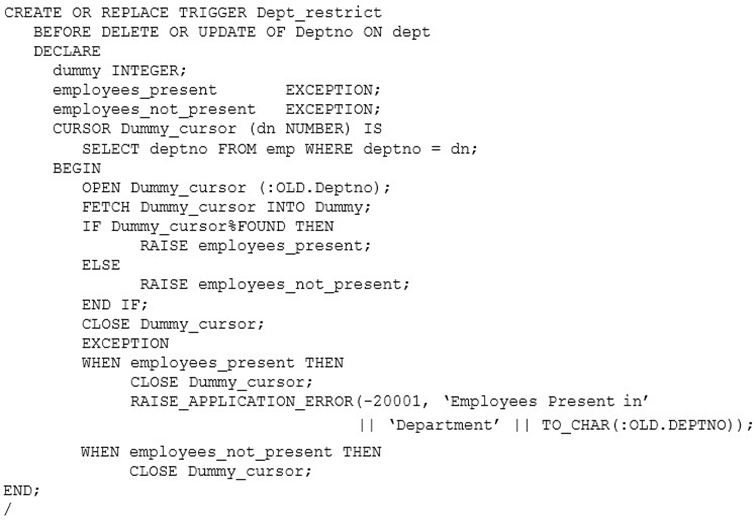
You create the following trigger to ensure that customers belonging to category "A" or "B" in the CUSTOMER table can have a credit limit of more than 8000.
What is the outcome?
A. The trigger is fired, a message is displayed, and the update is successful. B. The trigger is fired and a message is displayed, but the update is rolled back. C. The trigger is not fired because the WHEN clause should be used to specify the condition; however, the update is successful. D. The trigger is not fired because column names must be specified with the UPDATE event to identify which columns must be changed to cause the trigger to fire; however, the update is successful.
A. The trigger is fired, a message is displayed, and the update is successful.
Question 9:
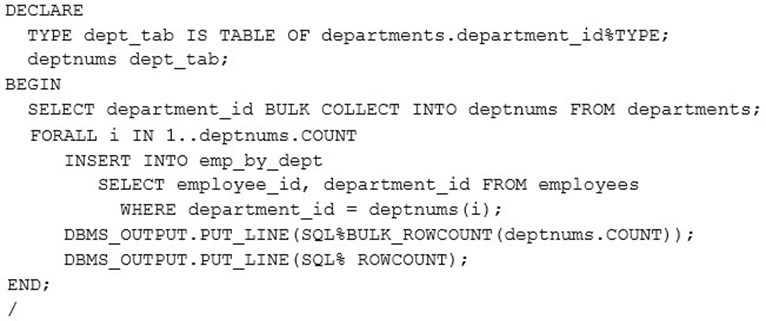
Examine the following block of code: Which two statements are correct about the code above? (Choose two.)
A. The function goes through only the parse and executes phases. B. The function goes through the parse, bind, and execute phases. C. The function goes through the parse, bind, execute, and fetch phases. D. All the processing phases for the function are performed only at run time. E. Only the EXECUTE IMMEDIATE statement inside the function is parsed at run time.
A. The function goes through only the parse and executes phases. E. Only the EXECUTE IMMEDIATE statement inside the function is parsed at run time.
Question 10:
Which two statements are true about the handling of internally defined or user-defined PL/SQL exceptions? (Choose two.)
A. Add exception handlers whenever errors occur. B. An exception handler should commit the transaction. C. Handle named exceptions whenever possible instead of using when others in exception handlers. D. Instead of adding exception handlers to your PL/SQL block, check for errors at every point where they may occur.
A. Add exception handlers whenever errors occur. C. Handle named exceptions whenever possible instead of using when others in exception handlers.
Nowadays, the certification exams become more and more important and required by more and more
enterprises when applying for a job. But how to prepare for the exam effectively? How to prepare
for the exam in a short time with less efforts? How to get a ideal result and how to find the
most reliable resources? Here on Vcedump.com, you will find all the answers.
Vcedump.com provide not only Oracle exam questions,
answers and explanations but also complete assistance on your exam preparation and certification
application. If you are confused on your 1Z0-144 exam preparations
and Oracle certification application, do not hesitate to visit our
Vcedump.com to find your solutions here.