1Z0-1081-22 Real Exam Questions

Oracle Financial Consolidation and Close 2022 Implementation Professional

116 questions available · Page 1 of 12

Updated Exam DumpsVerified AnswersPass Guarantee

Get Complete Exam Dumps
Question 1 Single choice

When a Financial Consolidation and Close (FCCS) application was created, no intercompany options were enabled.

Which statement is true?

  1. A

    The FCCS_No Intercompany member of the ICP dimension will be used for all data.

  2. B

    Data can be stored by intercompany partner but no eliminations will occur.

  3. C

    An extra custom dimension will be available.

  4. D

    The ICP dimension will be omitted.

Show answer and explanation

Correct answer: D

Question 2 Multiple choice

Which two members of the Consolidation dimension cause the standard foreign currency translation rules to be ignored? (Choose two.)

  1. A

    FCCS_Amount_Override

  2. B

    FCCS_Rate Override

  3. C

    FCCS_Contribution

  4. D

    FCCS_Proportion

  5. E

    FCCS_Elimination

  6. F

    FCCS_Translation

Show answer and explanation

Correct answers: B, E

Question 3 Single choice

Audit is enabled by default for which task categories?

  1. A

    Data only

  2. B

    All task categories

  3. C

    No task categories

  4. D

    Metadata Administration and Security

Show answer and explanation

Correct answer: A

Explanation

References:
https://docs.oracle.com/en/cloud/saas/planning-budgeting-cloud/pfusa/audit_overview.html

Question 4 Multiple choice

An entity's Common Stock balance is made up of data loaded through Data Management and an adjusting journal entry posted in the application. The Common Stock balance must not re-translate each month.

What two data entries need to happen to have the Common Stock balance bypass the default translation of equity accounts? (Choose two.)

  1. A

    Data entry to the Common Stock account with the FCCS_Amount Override member of the Consolidation dimension and the Data Source member FCCS_Managed Data.

  2. B

    A journal entry to reverse the adjusted Common Stock balance with the Data Source member FCCS_Journal Input.

  3. C

    A journal entry to the Common Stock account with the FCCS_Amount Override member of the Consolidation dimension and the Data Source member FCCS_Journal Input.

  4. D

    Data entry to the Common Stock account with the Multi-GAAP FCCS_Adjustments member and the Data Source member FCCS_Data Input.

Show answer and explanation

Correct answers: B, D

Question 5 Single choice

Which statement is FALSE when enabling a Multi-GAAP application?

  1. A

    Two custom dimensions are available after enabling Multi-GAAP.

  2. B

    The Multi-GAAP dimension is optional.

  3. C

    The system automatically creates an FCCS_IFRS member.

  4. D

    Additional GAAP adjustment can be created.

Show answer and explanation

Correct answer: A

Question 6 Multiple choice

When creating a Financial Consolidation and Close (FCCS) application, which initial Multi-source data options can be selected? (Choose two)

  1. A

    ERP Cloud

  2. B

    Supplemental Data

  3. C

    Data Management

  4. D

    ERP r12

Show answer and explanation

Correct answers: B, C

Question 7 Single choice

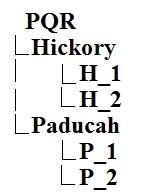
PQR Company has the ownership structure shown above.
If P_2 lends money to H_1, which point of view would the credit balance that offsets P_2's debit balance?

  1. A

    Entity PQR, Consolidation FCCS_Elimination, Intercompany FCCS_No Intercompany

  2. B

    Entity Paducah, Consolidation FCCS_Elimination, Intercompany FCCS_No Intercompany. Entity P_2,
    Consolidation FCCS_Contribution, Intercompany ICP_H_1

  3. C

    Entity Paducah, Consolidation FCCS_Elimination, Intercompany ICP_H_1

  4. D

    Entity P_2, Consolidation FCCS_Contribution, Intercompany H_1

Show answer and explanation

Correct answer: C

Question 8 Multiple choice

Which two statements are true of the roll forward calculation in the Movement dimension?

  1. A

    Values for base-level Movement members are calculated as the difference between Closing Balance and Opening Balance.

  2. B

    Translated values for Closing Balance are adjusted to the ending rate for the period.

  3. C

    Values for Opening Balance are retrieved from the prior period Closing Balance.

  4. D

    Data for opening balances must be loaded to the Opening Balance member prior to consolidation.

Show answer and explanation

Correct answers: B, C

Explanation

If Entity currency and Parent currency Closing Balance data does not exist in the prior period, then the Ending Rate for the prior period is used.
Opening balance is calculated from the prior period's Closing Balance.
References:
https://docs.oracle.com/en/cloud/saas/financial-consolidation-cloud/agfcc/
built_in_calculations.html (https://docs.oracle.com/en/cloud/saas/financial-consolidation-cloud/agfcc/built_in_calculations.html)

Question 9 Single choice

Which statement is FALSE when setting up Shared Entities?

  1. A

    The calculation status will not change in all instances when data is changed in one instance.

  2. B

    The Data Storage Member Property must set to "Dynamic Calc".

  3. C

    You build an alternate hierarchy by using partial share Entity members.

  4. D

    When data is posted to one shared entity, the data is posted to all instances.

Show answer and explanation

Correct answer: A

Question 10 Multiple choice

In the Movement dimension, for which two can you modify the default translation calculation?

  1. A

    Base-level members under FCCS_Mvmts Subtotal

  2. B

    Opening Balance

  3. C

    Closing Balance

  4. D

    Opening Balance Input

Show answer and explanation

Correct answers: A, B

Explanation

References:
https://docs.oracle.com/en/cloud/saas/financial-consolidation-cloud/agfcc/EPM-INFORMATIONDEVELOPMENT-TEAM-E93973-628A1C2A.pdf
http://www.allreadable.com/3128VWfe