According to MuleSoft, which deployment characteristic applies to a microservices application architecture?
A. Services exist as independent deployment artifacts and can be scaled -independently of other services B. All services of an application can be deployed together as single Java WAR file C. A deployment to enhance one capability requires a redeployment of all capabilities D. Core business capabilities are encapsulated in a single, deployable application
A. Services exist as independent deployment artifacts and can be scaled -independently of other services explanation:
Explanation/Reference:
In a microservices application architecture, each service is designed to be an independent deployment artifact. This means that services can be deployed, updated, and scaled independently of one another. This characteristic allows for greater flexibility and agility in managing applications, as individual services can be scaled up or down based on demand without impacting other services. It also enhances fault isolation, as issues in one service do not necessarily affect the entire application. This is in contrast to monolithic architectures, where all components are packaged and deployed together, often resulting in a single point of failure and difficulties in scaling and updating specific parts of the application. References: MuleSoft Documentation on Microservices Architecture Principles of Microservices Design
Question 2:
An integration Mute application is being designed to process orders by submitting them to a backend system for offline processing. Each order will be received by the Mute application through an HTTPS POST and must be acknowledged immediately. Once acknowledged, the order will be submitted to a backend system. Orders that cannot be successfully submitted due to rejections from the backend system will need to be processed manually (outside the backend system).
The Mule application will be deployed to a customer-hosted runtime and is able to use an existing ActiveMQ broker if needed.
The backend system has a track record of unreliability both due to minor network connectivity issues and longer outages.
What idiomatic (used for their intended purposes) combination of Mule application components and ActiveMQ queues are required to ensure automatic submission of orders to the backend system, while minimizing manual order processing?
A. An On Error scope Non-persistent VM ActiveMQ Dead Letter Queue for manual processing B. An On Error scope MuleSoft Object Store ActiveMQ Dead Letter Queue for manual processing C. Until Successful component MuleSoft Object Store ActiveMQ is NOT needed or used D. Until Successful component ActiveMQ long retry Queue ActiveMQ Dead Letter Queue for manual processing
D. Until Successful component ActiveMQ long retry Queue ActiveMQ Dead Letter Queue for manual processing explanation:
Explanation/Reference:
Correct answer is using below set of activities Until Successful component ActiveMQ long retry Queue ActiveMQ Dead Letter Queue for manual processing We will see why this is correct answer but before that lets understand few of the concepts which we need to know. Until Successful Scope The Until Successful scope processes messages through its processors until the entire operation succeeds. Until Successful repeatedly retries to process a message that is attempting to complete an activity such as: -Dispatching to outbound endpoints, for example, when calling a remote web service that may have availability issues. -Executing a component method, for example, when executing on a Spring bean that may depend on unreliable resources. -A sub-flow execution, to keep re-executing several actions until they all succeed, -Any other message processor execution, to allow more complex scenarios. How this will help requirement : Using Until Successful Scope we can retry sending the order to backend systems in case of error to avoid manual processing later. Retry values can be configured in Until Successful Scope Apache ActiveMQ It is an open source message broker written in Java together with a full Java Message Service client ActiveMQ has the ability to deliver messages with delays thanks to its scheduler. This functionality is the base for the broker redelivery plug-in. The redelivery plug-in can intercept dead letter processing and reschedule the failing messages for redelivery. Rather than being delivered to a DLQ, a failing message is scheduled to go to the tail of the original queue and redelivered to a message consumer. How this will help requirement : If backend application is down for a longer duration where Until Successful Scope wont work, then we can make use of ActiveMQ long retry Queue. The redelivery plug-in can intercept dead letter processing and reschedule the failing messages for redelivery. Mule Reference: https://docs.mulesoft.com/mule-runtime/4.3/migration-core-until-successful
Question 3:
A leading bank implementing new mule API.
The purpose of API to fetch the customer account balances from the backend application and display them on the online platform the online banking platform. The online banking platform will send an array of accounts to Mule API get the account balances.
As a part of the processing the Mule API needs to insert the data into the database for auditing purposes and this process should not have any performance related implications on the account balance retrieval flow
How should this requirement be implemented to achieve better throughput?
A. Implement the Async scope fetch the data from the backend application and to insert records in the Audit database B. Implement a for each scope to fetch the data from the back-end application and to insert records into the Audit database C. Implement a try-catch scope to fetch the data from the back-end application and use the Async scope to insert records into the Audit database D. Implement parallel for each scope to fetch the data from the backend application and use Async scope to insert the records into the Audit database
C. Implement a try-catch scope to fetch the data from the back-end application and use the Async scope to insert records into the Audit database explanation:
Explanation/Reference:
Try-Catch Scope for Data Fetching:
Async Scope for Inserting Records into Audit Database:
Ensuring Better Throughput:
References:
MuleSoft Documentation on Async Scope
Best practices for Error Handling in MuleSoft
Question 4:
A Mule application currently writes to two separate SQL Server database instances across the internet using a single XA transaction. It is 58. proposed to split this one transaction into two separate non-XA transactions with no other changes to the Mule application.
What non-functional requirement can be expected to be negatively affected when implementing this change?
A. Throughput B. Consistency C. Response time D. Availability
B. Consistency explanation:
Explanation/Reference:
Correct answer is Consistency as XA transactions are implemented to achieve this. XA transactions are added in the implementation to achieve goal of ACID properties. In the context of transaction processing, the acronym ACID refers to the four key properties of a transaction: atomicity, consistency, isolation, and durability. Atomicity : All changes to data are performed as if they are a single operation. That is, all the changes are performed, or none of them are. For example, in an application that transfers funds from one account to another, the atomicity property ensures that, if a debit is made successfully from one account, the corresponding credit is made to the other account. Consistency : Data is in a consistent state when a transaction starts and when it ends.For example, in an application that transfers funds from one account to another, the consistency property ensures that the total value of funds in both the accounts is the same at the start and end of each transaction. Isolation : The intermediate state of a transaction is invisible to other transactions. As a result, transactions that run concurrently appear to be serialized. For example, in an application that transfers funds from one account to another, the isolation property ensures that another transaction sees the transferred funds in one account or the other, but not in both, nor in neither. Durability : After a transaction successfully completes, changes to data persist and are not undone, even in the event of a system failure. For example, in an application that transfers funds from one account to another, the durability property ensures that the changes made to each account will not be reversed. MuleSoft reference: https://docs.mulesoft.com/mule-runtime/4.3/xa-transactions
Question 5:
A Mule application is synchronizing customer data between two different database systems.
What is the main benefit of using eXtended Architecture (XA) transactions over local transactions to synchronize these two different database systems?
A. An XA transaction synchronizes the database systems with the least amount of Mule configuration or coding B. An XA transaction handles the largest number of requests in the shortest time C. An XA transaction automatically rolls back operations against both database systems if any operation falls D. An XA transaction writes to both database systems as fast as possible
B. An XA transaction handles the largest number of requests in the shortest time explanation:
A travel company wants to publish a well-defined booking service API to be shared with its business partners. These business partners have agreed to ONLY consume SOAP services and they want to get the service contracts in an easily consumable way before they start any development. The travel company will publish the initial design documents to Anypoint Exchange, then share those documents with the business partners.
When using an API-led approach, what is the first design document the travel company should deliver to its business partners?
A. Create a WSDL specification using any XML editor B. Create a RAML API specification using any text editor C. Create an OAS API specification in Design Center D. Create a SOAP API specification in Design Center
A. Create a WSDL specification using any XML editor explanation:
Explanation/Reference:
SOAP API specifications are provided as WSDL. Design center doesn't provide the functionality to create WSDL file. Hence WSDL needs to be created using XML editor
Question 7:
Refer to the exhibit.
This Mule application is deployed to multiple Cloudhub workers with persistent queue enabled. The retrievefile flow event source reads a CSV file from a remote SFTP server and then publishes each record in the CSV file to a VM queue. The processCustomerRecords flow's VM Listner receives messages from the same VM queue and then processes each message separately.
How are messages routed to the cloudhub workers as messages are received by the VM Listener?
A. Each message is routed to ONE of the Cloudhub workers in a DETERMINSTIC round robin fashion thereby EXACTLY BALANCING messages among the cloudhub workers B. Each messages routes to ONE of the available Clouhub workers in a NON-DETERMINSTIC non round-robin fashion thereby APPROXIMATELY BALANCING messages among the cloudhub workers C. Each message is routed to the SAME Cloudhub worker that retrieved the file, thereby BINDING ALL messages to ONLY that ONE Cloudhub worker D. Each message is duplicated to ALL of the Cloudhub workers, thereby SHARING EACH message with ALL the Cloudhub workers.
B. Each messages routes to ONE of the available Clouhub workers in a NON-DETERMINSTIC non round-robin fashion thereby APPROXIMATELY BALANCING messages among the cloudhub workers
Question 8:
As a part of design , Mule application is required call the Google Maps API to perform a distance computation. The application is deployed to cloudhub.
At the minimum what should be configured in the TLS context of the HTTP request configuration to meet these requirements?
A. The configuration is built-in and nothing extra is required for the TLS context B. Request a private key from Google and create a PKCS12 file with it and add it in keyStore as a part of TLS context C. Download the Google public certificate from a browser, generate JKS file from it and add it in key store as a part of TLS context D. Download the Google public certificate from a browser, generate a JKS file from it and add it in Truststore as part of the TLS context
D. Download the Google public certificate from a browser, generate a JKS file from it and add it in Truststore as part of the TLS context explanation:
Explanation/Reference:
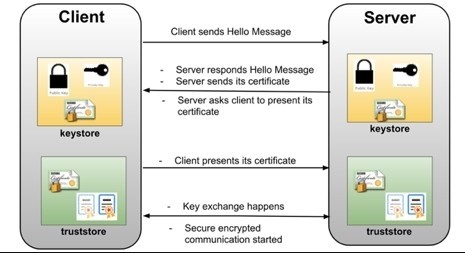
When configuring the TLS context for an HTTP request to the Google Maps API, the primary goal is to ensure that the Mule application can establish a secure connection.
Here's a detailed explanation of the necessary steps:
Download Google Public Certificate:
Generate JKS File from Certificate:
keytool -importcert -file google.cer -keystore truststore.jks -alias google Add JKS File to Truststore:
Configure HTTP Request Connector:
By completing these steps, your
Mule application will trust the Google Maps API server's certificate, allowing for secure communication.
References:
MuleSoft Documentation: Configuring TLS
Google Maps API Documentation
Question 9:
Which Salesforce API is invoked to deploy, retrieve, create, update, or delete customization information, such as custom object definitions using Mule Salesforce Connectors in a Mule application?
A. sObject Platform Action API B. User Interface API C. Metadata API D. Process Rules API
C. Metadata API explanation:
Explanation/Reference:
The Salesforce API used to deploy, retrieve, create, update, or delete customization information, such as custom object definitions, using Mule Salesforce Connectors in a Mule application, is the Metadata API. The Metadata API enables programmatic access to the metadata of Salesforce organizations, allowing developers to manage customizations and configurations programmatically. Using the Metadata API, Mule applications can automate the deployment and management of Salesforce customizations, facilitating continuous integration and deployment processes within Salesforce environments. References: MuleSoft Documentation on Salesforce Connectors Salesforce Metadata API Developer Guide
Question 10:
An organization is evaluating using the CloudHub shared Load Balancer (SLB) vs creating a CloudHub dedicated load balancer (DLB). They are evaluating how this choice affects the various types of certificates used by CloudHub deplpoyed Mule applications, including MuleSoft-provided, customer-provided, or Mule application-provided certificates.
What type of restrictions exist on the types of certificates that can be exposed by the CloudHub Shared Load Balancer (SLB) to external web clients over the public internet?
A. Only MuleSoft-provided certificates are exposed. B. Only customer-provided wildcard certificates are exposed. C. Only customer-provided self-signed certificates are exposed. D. Only underlying Mule application certificates are exposed (pass-through)
A. Only MuleSoft-provided certificates are exposed.
Nowadays, the certification exams become more and more important and required by more and more
enterprises when applying for a job. But how to prepare for the exam effectively? How to prepare
for the exam in a short time with less efforts? How to get a ideal result and how to find the
most reliable resources? Here on Vcedump.com, you will find all the answers.
Vcedump.com provide not only Salesforce exam questions,
answers and explanations but also complete assistance on your exam preparation and certification
application. If you are confused on your MULESOFT-INTEGRATION-ARCHITECT-I exam preparations
and Salesforce certification application, do not hesitate to visit our
Vcedump.com to find your solutions here.