MCD-LEVEL1 Exam Details
-
Exam Code
:MCD-LEVEL1 -
Exam Name
:MuleSoft Certified Developer - Level 1 (Mule 4) -
Certification
:Mulesoft Certifications -
Vendor
:Mulesoft -
Total Questions
:234 Q&As -
Last Updated
:Jul 08, 2026
Mulesoft MCD-LEVEL1 Online Questions & Answers
-
Question 11:
Refer to the exhibits. The updateTemp and getTemp flows share the same default object store.
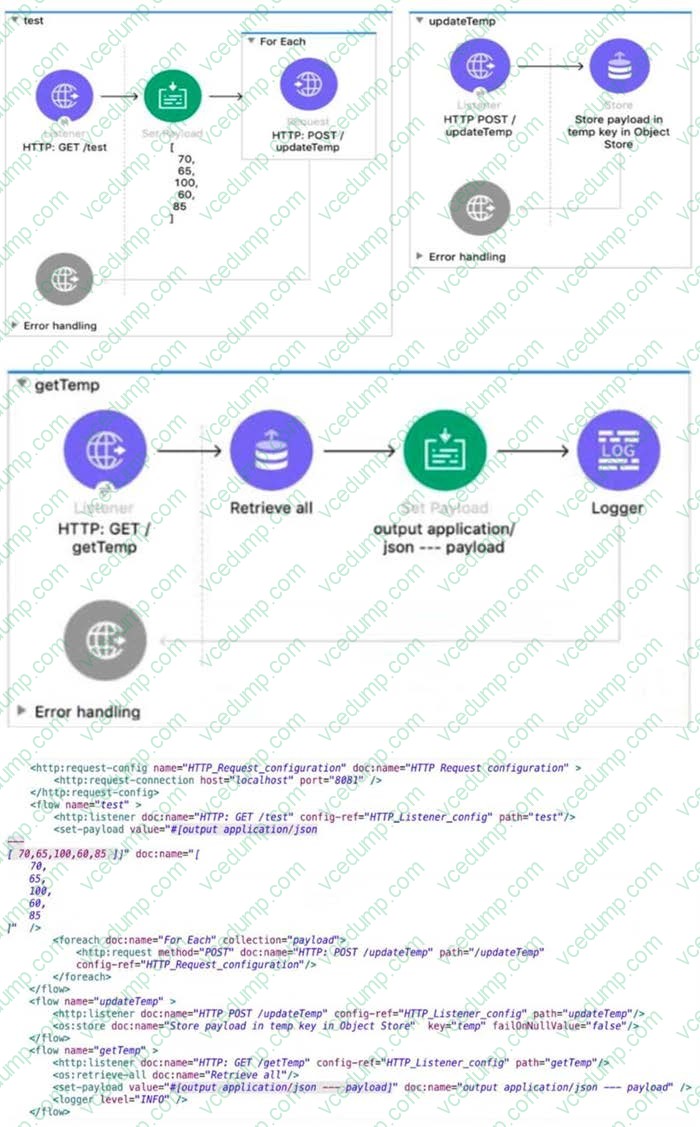
A web client sends one GET request to the test flow's HTTP Listener, which causes the test flow to call the updateTemp flow. After the test flow returns a response, the web client then sends a different GET request to the getTemp flow's HTTP Listener. The test flow is not called a second time.
What response is returned from the request to the getTemp flow's HTTP Listener?
A. Option A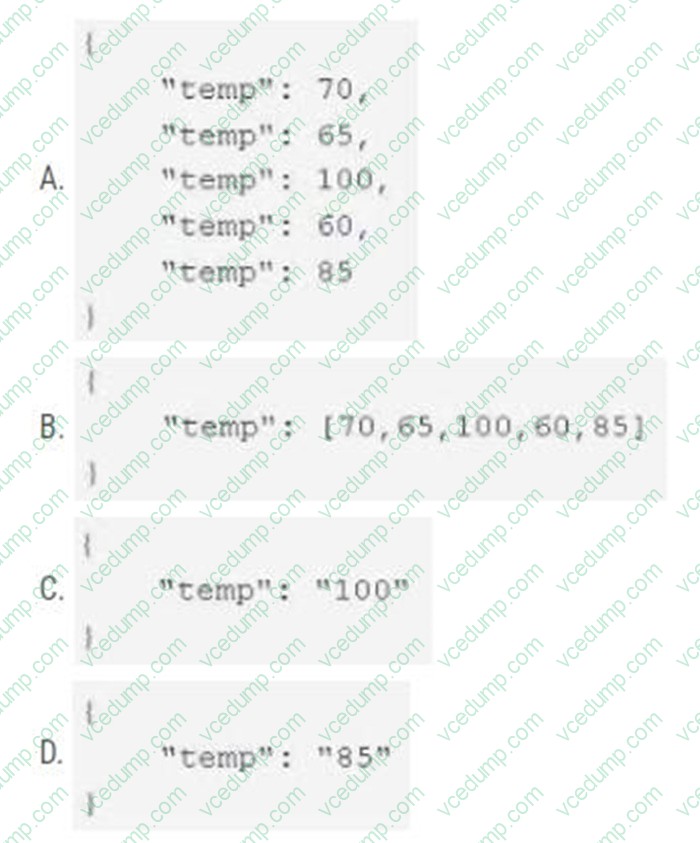
B. Option B
C. Option C
D. Option D -
Question 12:
Refer to the exhibit.
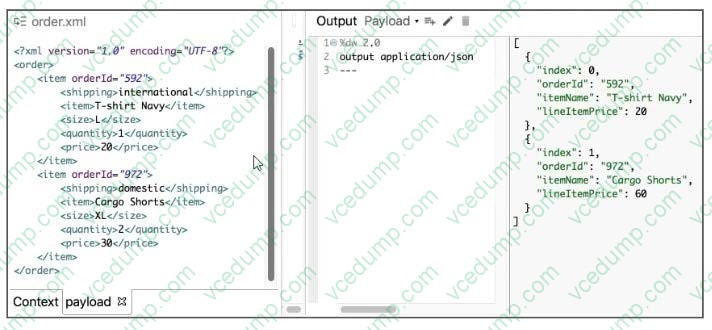
What Database expression transforms the input to the output?
A. Option A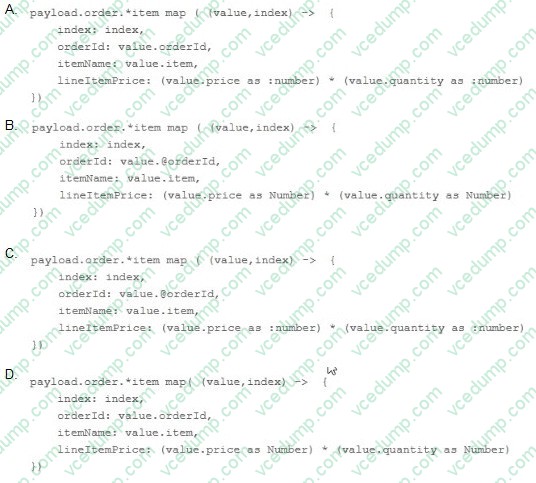
B. Option B
C. Option C
D. Option D -
Question 13:
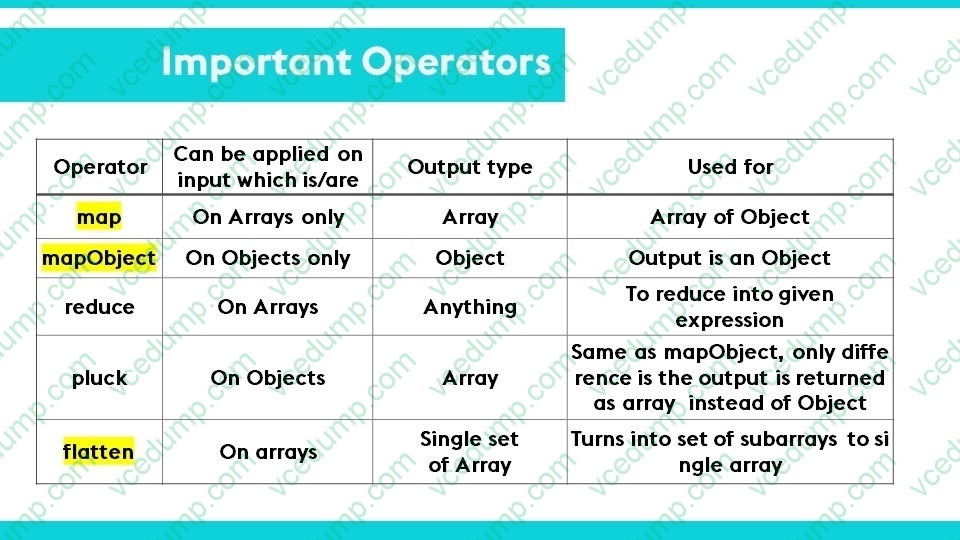
What is the output of Dataweave Map operator?
A. Map
B. Object
C. String
D. Array -
Question 14:
What is the correct Syntax to add a customer ID as a URI parameter in the HTTP listener's path attribute?
A. #[customerID]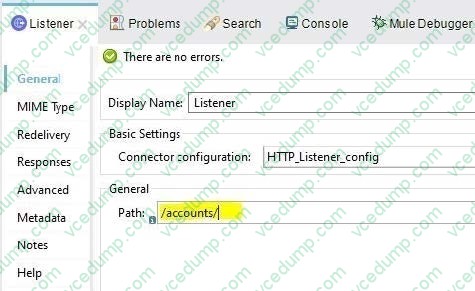
B. $[customerID]
C. {customerID}
D. (customerID) -
Question 15:
Refer to the exhibits. A web client submits a request to http://localhost:8081/fliqhts?destination=SFO and the Web Service Consumer throws a WSC:BAD_REQUEST error.
What is the next step to fix this error?
A. Set a header In the Consume operation equal to the destination query parameter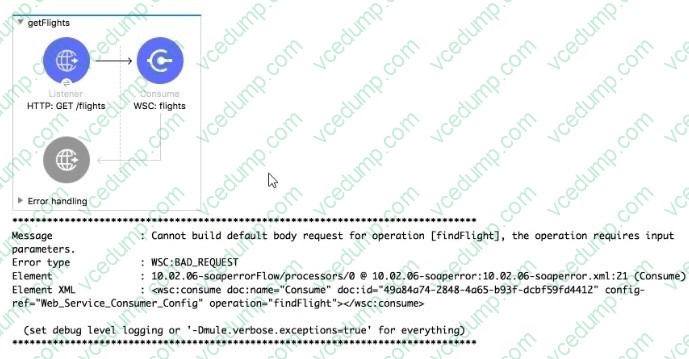
B. set a SOAP payload before the Consume operation that contains the destination query parameter
C. set a property m the Consume operation equal to the destination query parameter
D. set a JSON payload before the Consume operation that contains the destination query parameter -
Question 16:
Refer to the exhibits.
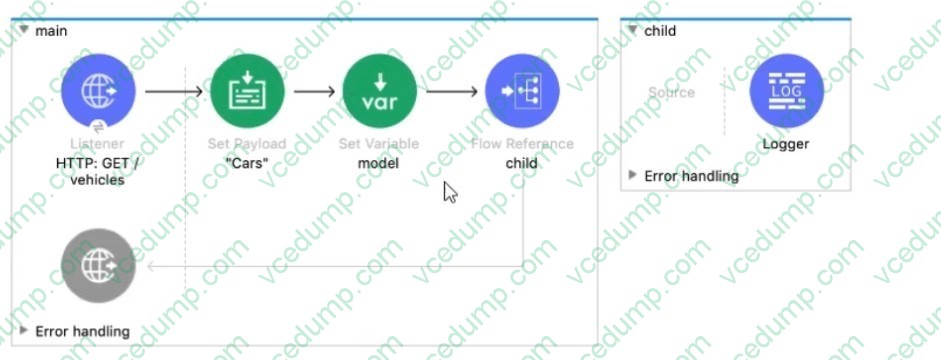
The main flow contains a Flow Reference to the child flow.
A web client sends a GET request to the main flow's HTTP Listener that includes a make query parameter.
What values are accessible in the child flow?
A. payload
B. payload make query param
C. payload model var
D. payload make query param model var -
Question 17:
A Database On Table Row listener retrieves data from a CUSTOMER table that contains a primary key userjd column and an increasing kxjin_date_time column. Neither column allows duplicate values.
How should the listener be configured so it retrieves each row at most one time?
A. Set the watermark column to the bgin_date_time column
B. Set the target value to the last retrieved login_date_time value
C. Set the target value to the last retrieved user_jd value
D. Set the watermark column to the user_Id column -
Question 18:
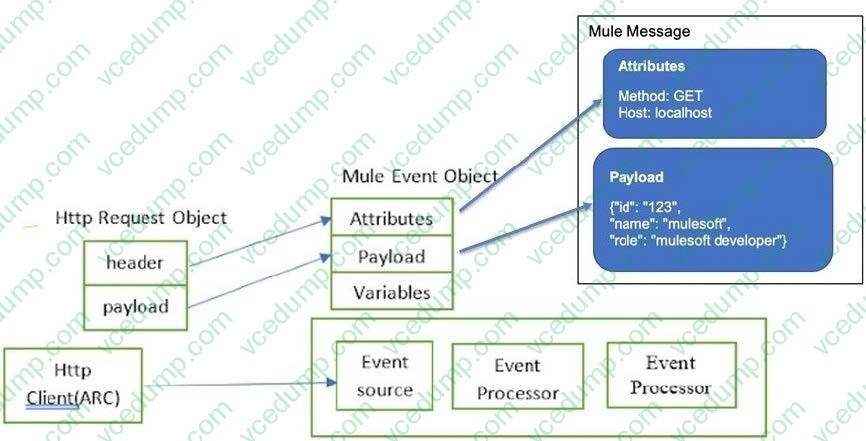
What happens to the attributes of a Mule event in a flow after an outbound HTTP Request is made?
A. Attributes are replaced with new attributes from the HTTP Request response (which might be null)
B. New attributes may be added from the HTTP response headers, but no headers are ever removed
C. Attributes do not change
D. Previous attributes are passed unchanged -
Question 19:
Refer to the exhibit.
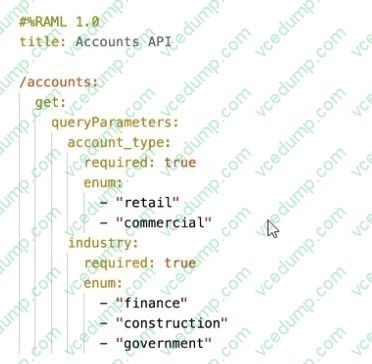
This RAML specification includes a resource and method to retrieve accounts by account_type and industry. What is the correct URI to get all retail finance accounts?
A. /accounts/retail/finance
B. /accounts?account_type=retailandindustry=finance
C. /accounts/account_type=retail/industry=finance
D. /accounts?account_type:retailandindustry:finance -
Question 20:
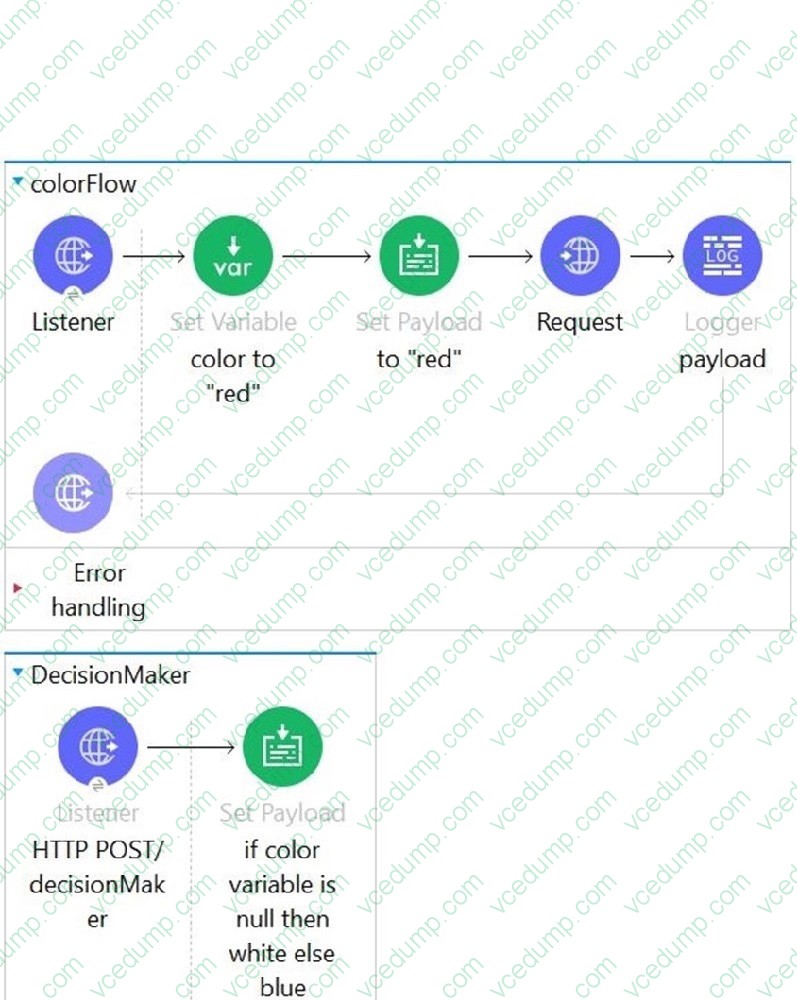
Refer to the exhibits. In the color flow , both the variable named color and payload are set to "red".
An HTTP POST request is then sent to the decideColor flow's HTTP Listener.
What is the payload value at the Logger component after the HTTP request completes?
A. white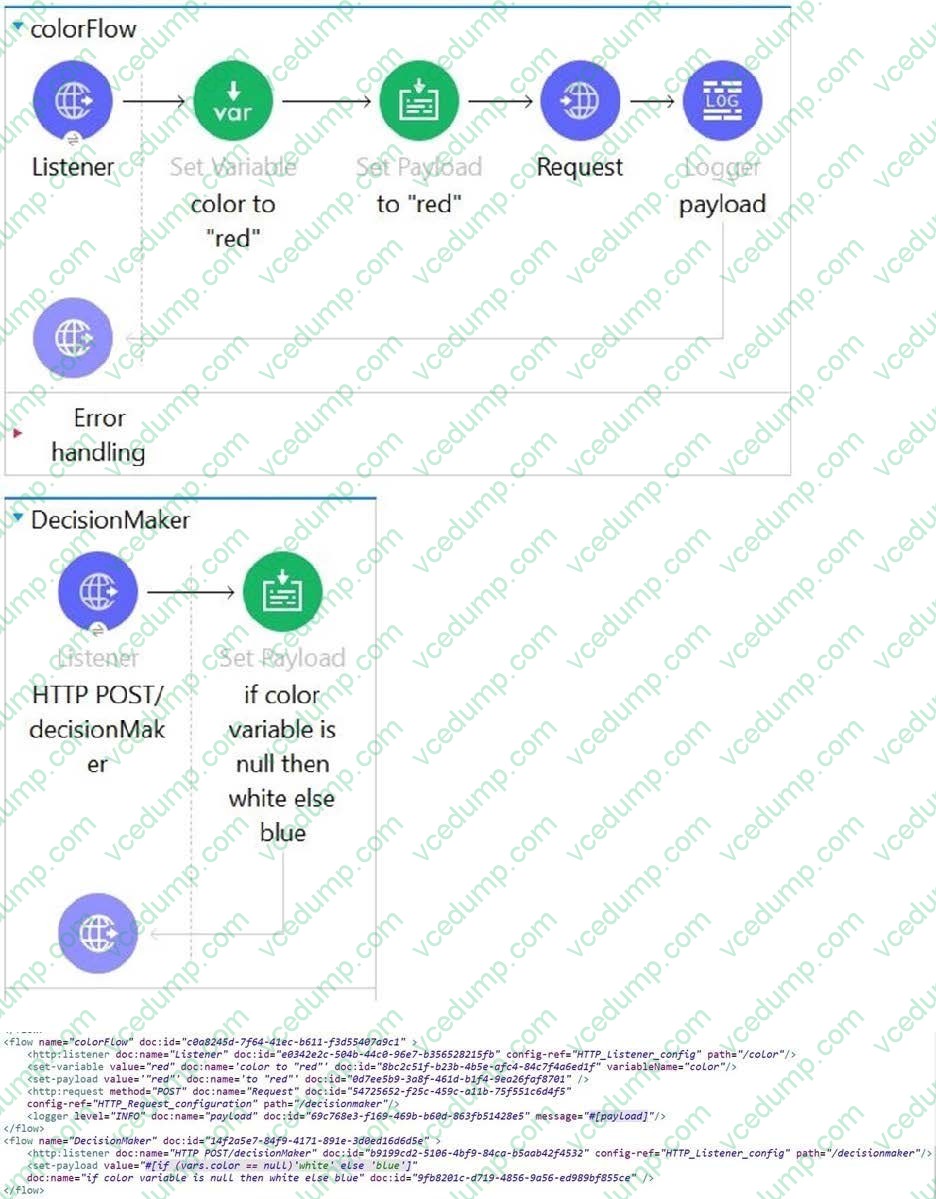
B. red
C. blue
D. Error message
Related Exams:
-
MCD-ASSOC
MuleSoft Certified Developer - Integration and API Associate (Mule 3) -
MCD-LEVEL1
MuleSoft Certified Developer - Level 1 (Mule 4) -
MCD-LEVEL1-DELTA
MuleSoft Certified Developer - Level 1 (Mule 4) DELTA -
MCD-LEVEL2
MuleSoft Certified Developer - Level 2 (Mule 4) -
MCIA-LEVEL1
MuleSoft Certified Integration Architect - Level 1 -
MCIA-LEVEL1-MAINTENANCE
MuleSoft Certified Integration Architect - Level 1 MAINTENANCE -
MCPA-LEVEL1
MuleSoft Certified Platform Architect - Level 1 -
MCPA-LEVEL1-MAINTENANCE
MuleSoft Certified Platform Architect - Level 1 MAINTENANCE
Tips on How to Prepare for the Exams
Nowadays, the certification exams become more and more important and required by more and more enterprises when applying for a job. But how to prepare for the exam effectively? How to prepare for the exam in a short time with less efforts? How to get a ideal result and how to find the most reliable resources? Here on Vcedump.com, you will find all the answers. Vcedump.com provide not only Mulesoft exam questions, answers and explanations but also complete assistance on your exam preparation and certification application. If you are confused on your MCD-LEVEL1 exam preparations and Mulesoft certification application, do not hesitate to visit our Vcedump.com to find your solutions here.