AZ-500 Exam Details
-
Exam Code
:AZ-500 -
Exam Name
:Microsoft Azure Security Technologies -
Certification
:Microsoft Certifications -
Vendor
:Microsoft -
Total Questions
:626 Q&As -
Last Updated
:Jul 12, 2026
Microsoft AZ-500 Online Questions & Answers
-
Question 341:
You have 15 Azure virtual machines in a resource group named RG1.
All virtual machines run identical applications.
You need to prevent unauthorized applications and malware from running on the virtual machines.
What should you do?
A. Apply an Azure policy to RG1.
B. From Azure Security Center, configure adaptive application controls.
C. Configure Azure Active Directory (Azure AD) Identity Protection.
D. Apply a resource lock to RG1. -
Question 342:
HOTSPOT
You have an Azure subscription that contains the resources shown in the following table.
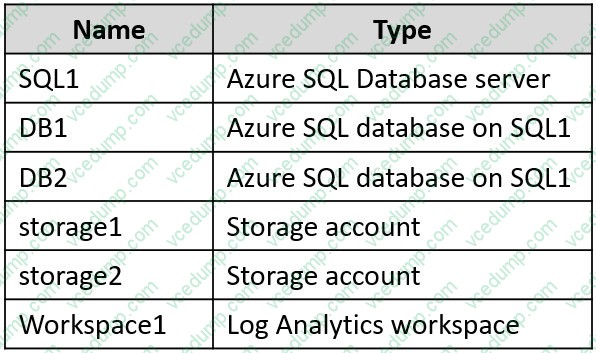
SQL1 has the following configurations:
1. Auditing: Enabled
2. Audit log destination: storage1, Workspace1
DB1 has the following configurations:
1. Auditing: Enabled
2. Audit log destination: storage2
DB2 has auditing disabled.
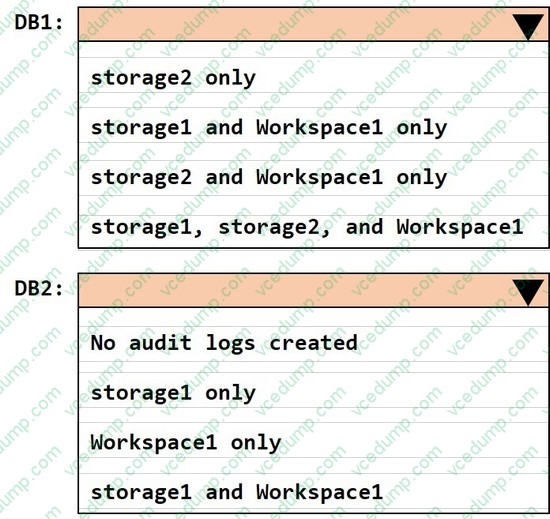
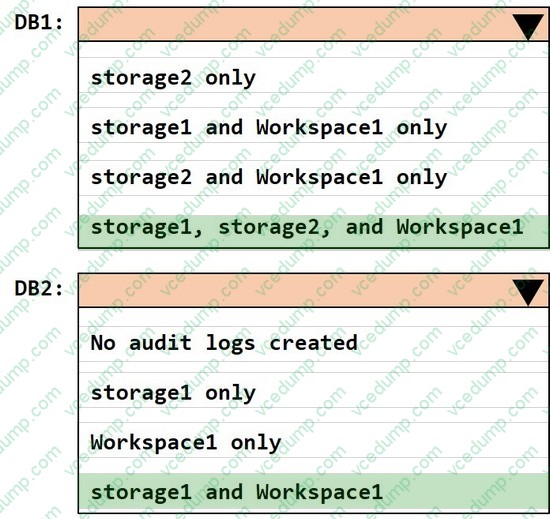
Where are the audit logs for DB1 and DB2 stored?
To answer, select the appropriate options in the answer area
NOTE: Each correct selection is worth one point.
-
Question 343:
You have an Azure Active Directory (Azure AD) tenant named contoso.com that contains a user named User1.
You plan to publish several apps in the tenant.
You need to ensure that User1 can grant admin consent for the published apps.
Which two possible user roles can you assign to User1 to achieve this goal? Each correct answer presents a complete solution.
NOTE: Each correct selection is worth one point.
A. Application developer
B. Security administrator
C. Application administrator
D. User administrator
E. Cloud application administrator -
Question 344:
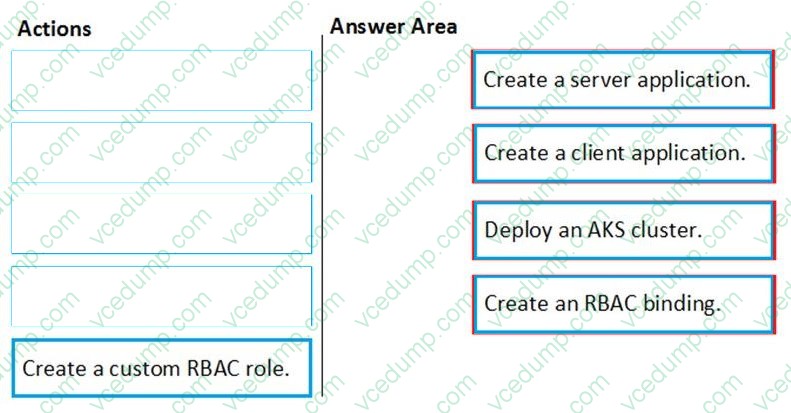
DRAG DROP
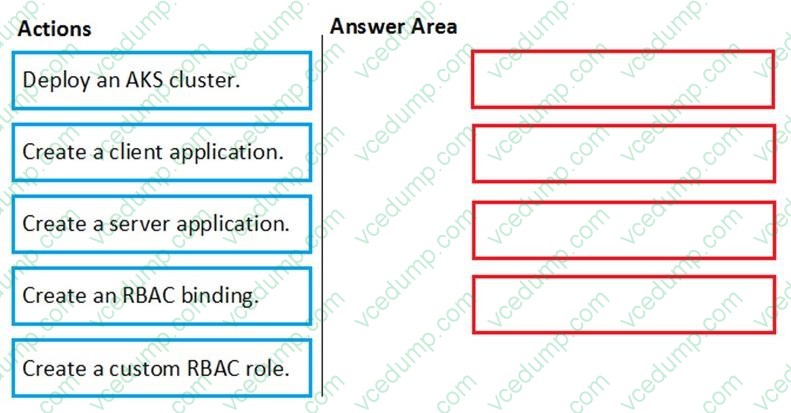
You need to deploy AKS1 to meet the platform protection requirements.
Which four actions should you perform in sequence? To answer, move the appropriate actions from the list of actions to the answer area and arrange them in the correct order.
NOTE: More than one order of answer choices is correct. You will receive credit for any of the correct orders you select.
Select and Place:
-
Question 345:
You have the Azure resource shown in the following table.
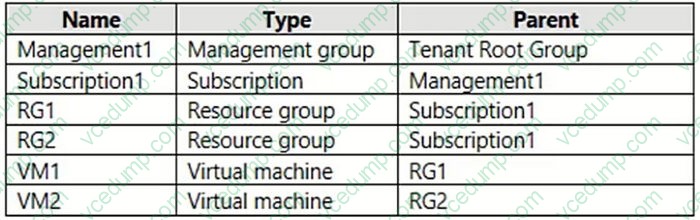
You need to meet the following requirements:
1. Internet-facing virtual machines must be protected by using network security groups (NSGs).
2. All the virtual machines must have disk encryption enabled.
What is the minimum number of security that you should create in Azure Security Center?
A. 1
B. 2
C. 3
D. 4 -
Question 346:
You need to configure WebApp1 to meet the data and application requirements.
Which two actions should you perform? Each correct answer presents part of the solution.
NOTE: Each correct selection is worth one point.
A. Upload a public certificate.
B. Turn on the HTTPS Only protocol setting.
C. Set the Minimum TLS Version protocol setting to 1.2.
D. Change the pricing tier of the App Service plan.
E. Turn on the Incoming client certificates protocol setting. -
Question 347:
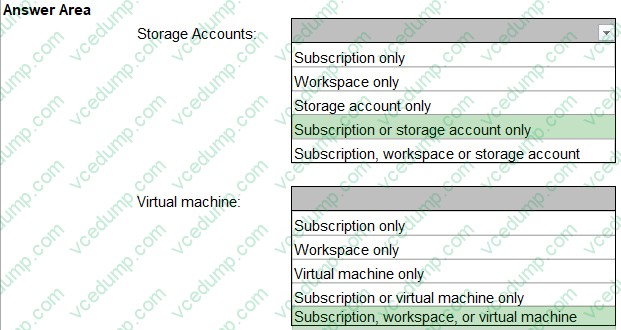
HOTSPOT
You have an Azure subscription named Sub1 that contains the resources shown in the following table.
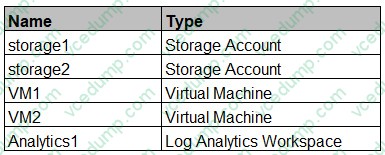
You need to enable Microsoft Defender for Cloud for storage accounts and virtual machines.
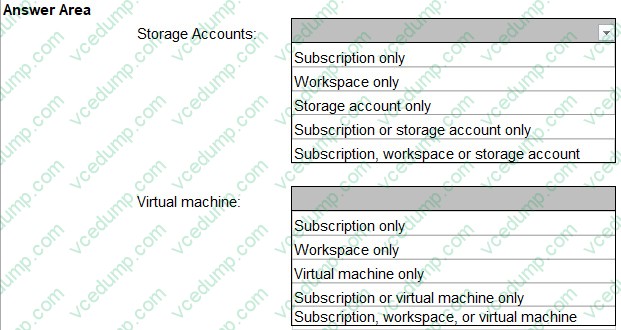
At which levels can you enable Defender for Cloud for the storage accounts and the virtual machines? To answer, select the appropriate options in the answer area
NOTE: Each correct selection is worth one point.
-
Question 348:
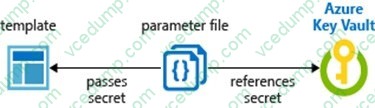
You plan to use Azure Resource Manager templates to perform multiple deployments of identically configured Azure virtual machines. The password for the administrator account of each deployment is stored as a secret in different Azure key vaults.
You need to identify a method to dynamically construct a resource ID that will designate the key vault containing the appropriate secret during each deployment. The name of the key vault and the name of the secret will be provided as inline parameters.
What should you use to construct the resource ID?
A. a key vault access policy
B. a linked template
C. a parameters file
D. an automation account -
Question 349:
HOTSPOT
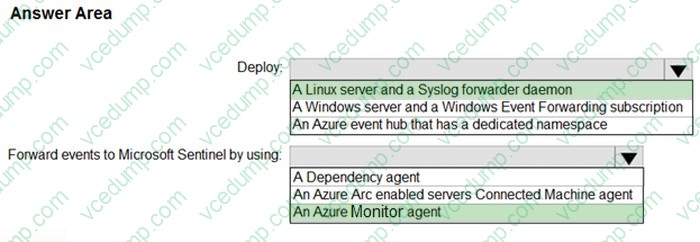
You have a Microsoft Sentinel deployment.
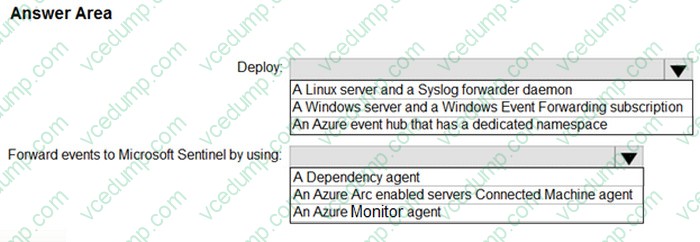
You need to connect a third-party security solution to the deployment. The third-party solution will send Common Event Format (CER-formatted messages.
What should you include in the solution? To answer, select the appropriate options in the answer area.
NOTE: Each correct selection is worth one point.
-
Question 350:
You have an Azure subscription that contains 100 virtual machines and has Azure Security Center Standard tier enabled.
You plan to perform a vulnerability scan of each virtual machine.
You need to deploy the vulnerability scanner extension to the virtual machines by using an Azure Resource Manager template.
Which two values should you specify in the code to automate the deployment of the extension to the virtual machines? Each correct answer presents part of the solution.
NOTE: Each correct selection is worth one point.
A. the user assigned managed identity
B. the Key Vault managed storage account Key
C. the Azure Active Directory (Azure AD) ID
D. the system-assigned managed identity
E. the primary shared key
F. the workspace ID
Related Exams:
-
62-193
Technology Literacy for Educators -
70-243
Administering and Deploying System Center 2012 Configuration Manager -
70-355
Universal Windows Platform – App Data, Services, and Coding Patterns -
77-420
Excel 2013 -
77-427
Excel 2013 Expert Part One -
77-725
Word 2016 Core Document Creation, Collaboration and Communication -
77-726
Word 2016 Expert Creating Documents for Effective Communication -
77-727
Excel 2016 Core Data Analysis, Manipulation, and Presentation -
77-728
Excel 2016 Expert: Interpreting Data for Insights -
77-731
Outlook 2016 Core Communication, Collaboration and Email Skills
Tips on How to Prepare for the Exams
Nowadays, the certification exams become more and more important and required by more and more enterprises when applying for a job. But how to prepare for the exam effectively? How to prepare for the exam in a short time with less efforts? How to get a ideal result and how to find the most reliable resources? Here on Vcedump.com, you will find all the answers. Vcedump.com provide not only Microsoft exam questions, answers and explanations but also complete assistance on your exam preparation and certification application. If you are confused on your AZ-500 exam preparations and Microsoft certification application, do not hesitate to visit our Vcedump.com to find your solutions here.