AZ-500 Exam Details
-
Exam Code
:AZ-500 -
Exam Name
:Microsoft Azure Security Technologies -
Certification
:Microsoft Certifications -
Vendor
:Microsoft -
Total Questions
:626 Q&As -
Last Updated
:Jul 12, 2026
Microsoft AZ-500 Online Questions & Answers
-
Question 241:
SIMULATION
You need to configure network connectivity between a virtual network named VNET1 and a virtual network named VNET2. The solution must ensure that virtual machines connected to VNET1 can communicate with virtual machines connected to VNET2.
To complete this task, sign in to the Azure portal and modify the Azure resources.
A. See the explanation below. -
Question 242:
You have an Azure subscription.
You plan to create a workflow automation in Microsoft Defender for Cloud that will automatically remediate a security vulnerability.
What should you create first?
A. an Azure function app
B. an automation account
C. a managed identity
D. an alert rule
E. an Azure logic app -
Question 243:
HOTSPOT
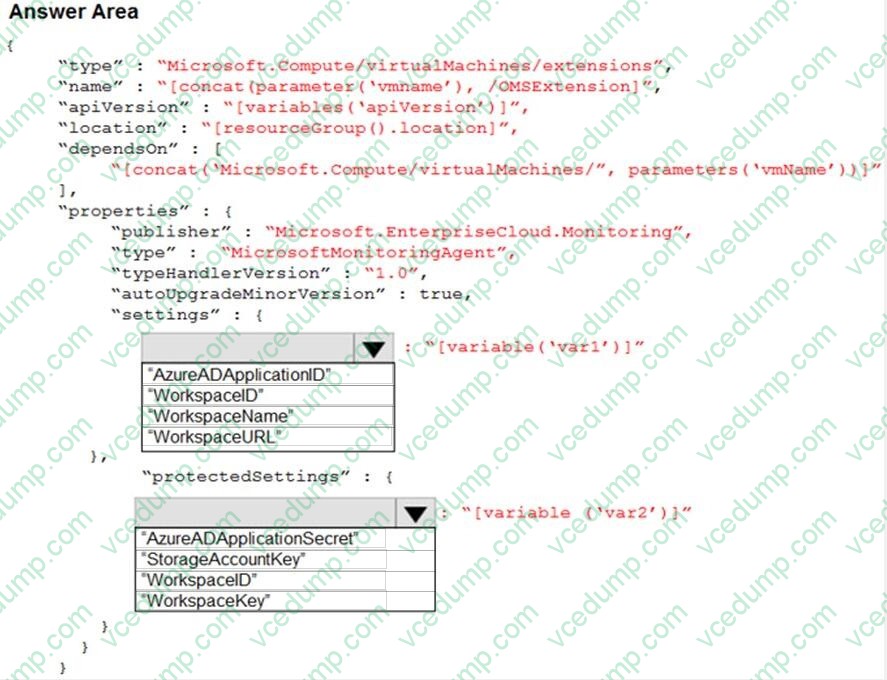
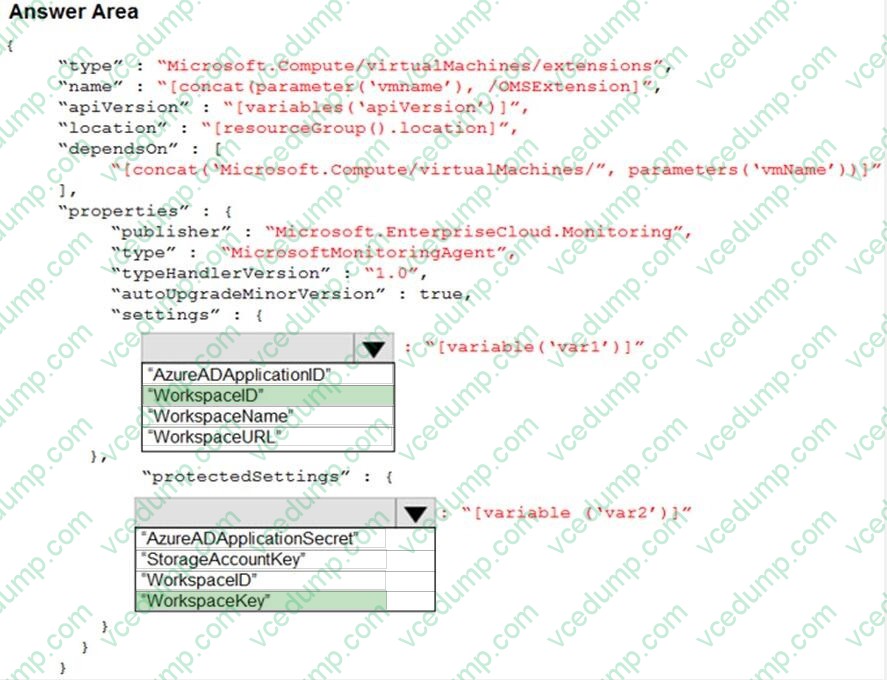
You plan to use Azure Log Analytics to collect logs from 200 servers that run Windows Server 2016.
You need to automate the deployment of the Microsoft Monitoring Agent to all the servers by using an Azure Resource Manager template.
How should you complete the template? To answer, select the appropriate options in the answer area.
NOTE: Each correct selection is worth one point.
-
Question 244:
You have 10 virtual machines on a single subnet that has a single network security group (NSG).
You need to log the network traffic to an Azure Storage account.
What should you do?
A. Install the Network Performance Monitor solution.
B. Create an Azure Log Analytics workspace.
C. Enable diagnostic logging for the NSG.
D. Enable NSG flow logs. -
Question 245:
DRAG DROP
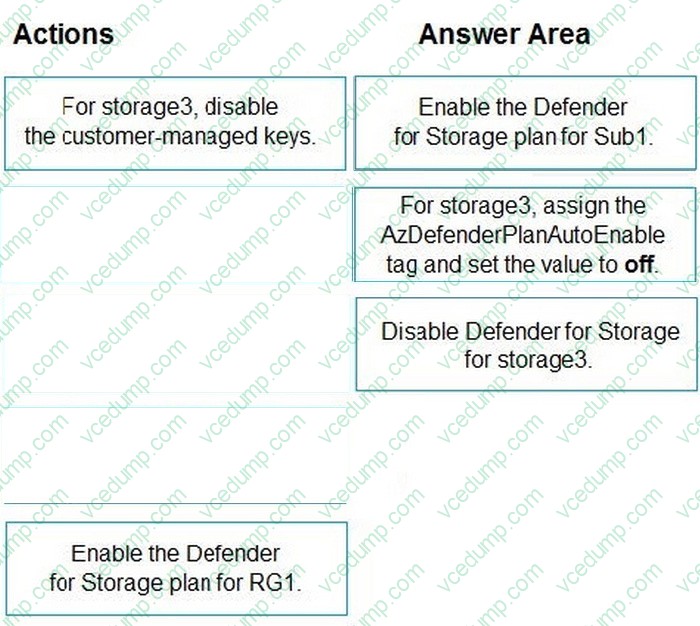
You have an Azure subscription named Sub1 that contains the storage accounts shown in the following table.
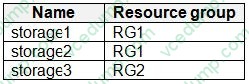
The storage3 storage account is encrypted by using customer-managed keys.
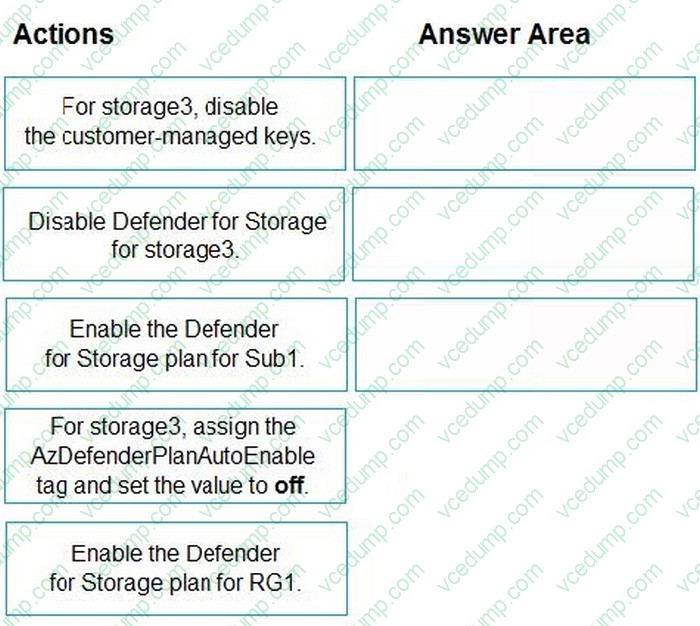
You need to enable Microsoft Defender for Storage to meet the following requirements:
1. The storage1 and storage2 accounts must be included in the Defender for Storage protections.
2. The storage3 account must be excluded from the Defender for Storage protections.
Which three actions should you perform in sequence? To answer, move the appropriate actions from the list of actions to the answer area.
Select and Place:
-
Question 246:
You have an Azure subscription that uses Microsoft Defender for Cloud. The subscription contains the Azure Policy definitions shown in the following table.
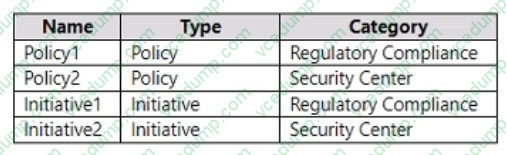
Which definitions can be assigned as a security policy in Defender for Cloud?
A. Policy1 and Policy2 only
B. Initiative1 and Initiative2 only
C. Policy1 and Initiative1 only
D. Policy2 and Initiative2 only
E. Policy1, Policy2, Initiative1, and Initiative2 -
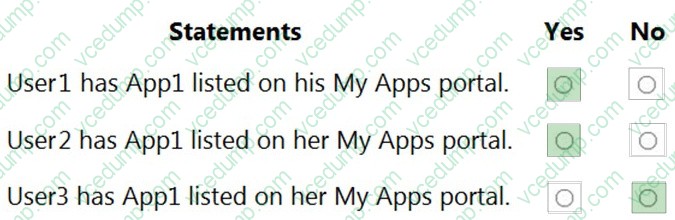
Question 247:
HOTSPOT
You have an Azure Active Directory (Azure AD) tenant named contoso.com that contains three security groups named Group1, Group2, and Group3 and the users shown in the following table.

Group3 is a member of Group2.
In contoso.com, you register an enterprise application named App1 that has the following settings:
1. Owners: User1
2. Users and groups: Group2
You configure the properties of App1 as shown in the following exhibit.
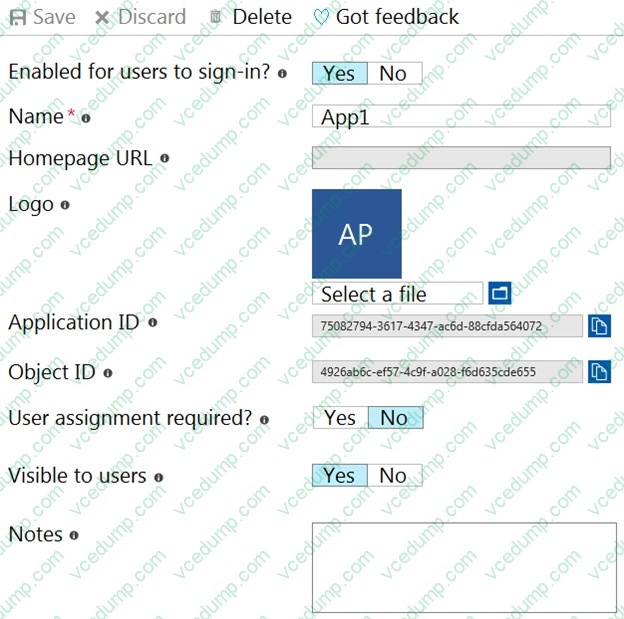
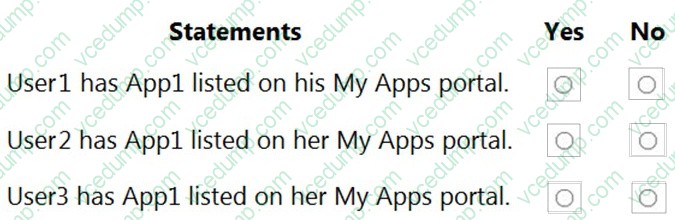
For each of the following statements, select Yes if the statement is true. Otherwise, select no.
NOTE: Each correct selection is worth one point.
-
Question 248:
A team of developers at your company plans to deploy, and then remove, 50 customized virtual machines each week. Thirty of the virtual machines run Windows Server 2016 and 20 of the virtual machines run Ubuntu Linux.
You need to recommend which Azure service will minimize the administrative effort required to deploy and remove the virtual machines.
What should you recommend?
A. Azure Reserved Virtual Machines (VM) Instances
B. Azure virtual machine scale sets
C. Azure DevTest Labs
D. Microsoft Managed Desktop -
Question 249:
You have an Azure subscription.
You configure the subscription to use a different Azure Active Directory (Azure AD) tenant.
What are two possible effects of the change? Each correct answer presents a complete solution.
NOTE: Each correct selection is worth one point.
A. Role assignments at the subscription level are lost.
B. Virtual machine managed identities are lost.
C. Virtual machine disk snapshots are lost.
D. Existing Azure resources are deleted. -
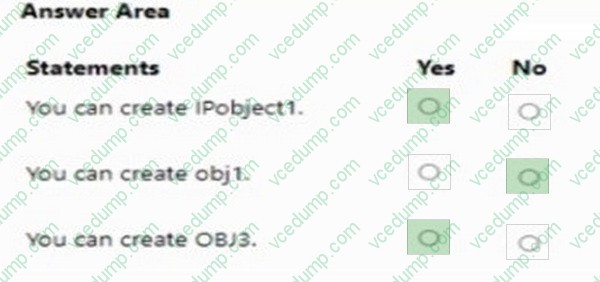
Question 250:
HOTSPOT
You have an Azure subscription named Sub1 that contains the resource groups shown in the following table.
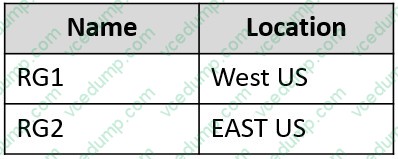
You create the Azure Policy definition shown in the following exhibit.
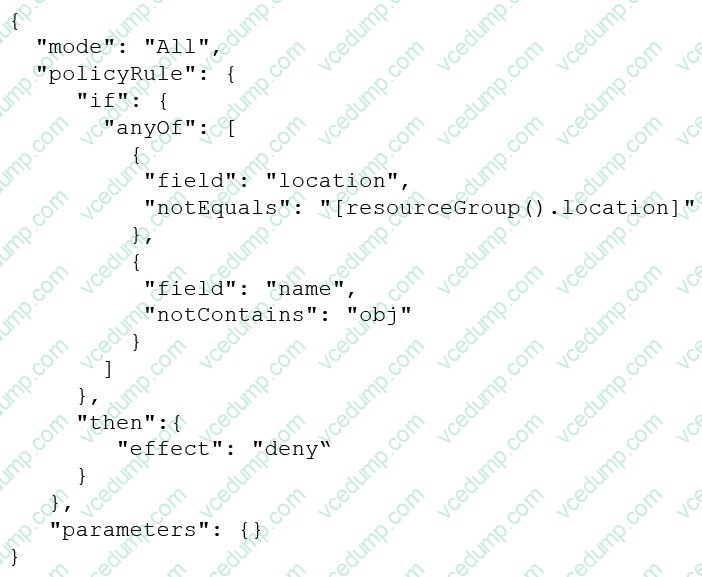
You assign the policy to Sub1.
You plan to create the resources shown in the following table.
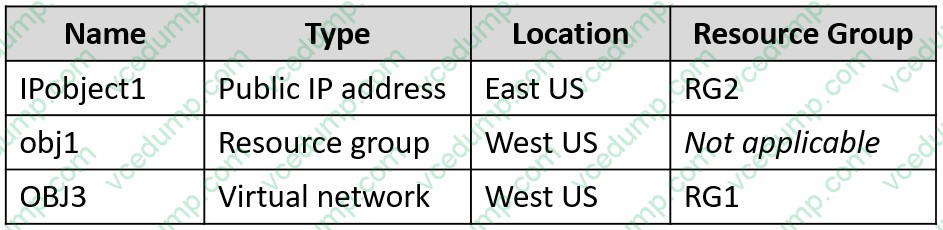
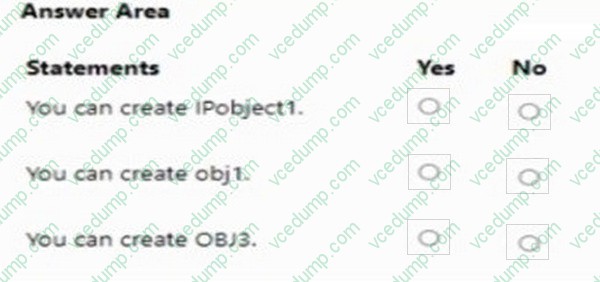
For each of the following statements, select Yes if the statement is true. Otherwise, select No.
NOTE: Each correct selection is worth one point.
Related Exams:
-
62-193
Technology Literacy for Educators -
70-243
Administering and Deploying System Center 2012 Configuration Manager -
70-355
Universal Windows Platform – App Data, Services, and Coding Patterns -
77-420
Excel 2013 -
77-427
Excel 2013 Expert Part One -
77-725
Word 2016 Core Document Creation, Collaboration and Communication -
77-726
Word 2016 Expert Creating Documents for Effective Communication -
77-727
Excel 2016 Core Data Analysis, Manipulation, and Presentation -
77-728
Excel 2016 Expert: Interpreting Data for Insights -
77-731
Outlook 2016 Core Communication, Collaboration and Email Skills
Tips on How to Prepare for the Exams
Nowadays, the certification exams become more and more important and required by more and more enterprises when applying for a job. But how to prepare for the exam effectively? How to prepare for the exam in a short time with less efforts? How to get a ideal result and how to find the most reliable resources? Here on Vcedump.com, you will find all the answers. Vcedump.com provide not only Microsoft exam questions, answers and explanations but also complete assistance on your exam preparation and certification application. If you are confused on your AZ-500 exam preparations and Microsoft certification application, do not hesitate to visit our Vcedump.com to find your solutions here.