ASCP-MLT Exam Details
-
Exam Code
:ASCP-MLT -
Exam Name
:MEDICAL LABORATORY TECHNICIAN - MLT(ASCP) -
Certification
:ASCP Certifications -
Vendor
:ASCP -
Total Questions
:572 Q&As -
Last Updated
:Jul 14, 2026
ASCP ASCP-MLT Online Questions & Answers
-
Question 541:
The electrolyte panel consists of potassium, sodium, chloride, carbon dioxide. These analytes are also typically ordered within other panels as well, including the basic metabolic and complete metabolic panels. An electrolyte panel (lytes, chem-4) consists of:
A. Potassium, Sodium, Chloride, Carbon dioxide
B. Potassium, Sodium, Chloride, Glucose
C. Potassium, Sodium, Chloride, Creatinine
D. Potassium, Sodium, Chloride, BUN -
Question 542:
Sally is seeing her new primary care provider for the first time. When she signs in, she is asked to sign papers for the release of medical records, including her laboratory results. According to the Health Insurance Portability and Accountability Act (HIPAA), she must authorize release of records before _______________would be permitted to receive and review her records.
A. Her insurance company
B. All answers are correct
C. Her husband
D. Her attorney -
Question 543:
The difference between glass and plastic red stopper tubes is that the:
Question options:
A. glass tubes contain heparin
B. plastic tubes contain a clot activator
C. plastic tubes are recommended for blood bank tests
D. glass tubes cannot be used for serology tests -
Question 544:
The results of this PT and aPTT are in normal range. These results can be reported and are not indicative of the need to: order a mixing study or request a redraw.
You have just performed stat PT and aPTT tests on your coagulation instrument. Your results are as follows:
PT = 12 seconds (normal range 10-13 seconds)
aPTT = 24 seconds (normal range 21-34 seconds)
What would be your next step?
A. Perform a mixing study
B. Report the results
C. Request a redraw of the specimen -
Question 545:
Microcontainer collection order of draw differs from regular peripheral blood collection order of draw. When performing a capillary draw, the lavender top container is obtained first. This decreases the possibility of clots in the container which would invalidate the results of the complete blood count test.
After the lavender is drawn, other containers with anticoagulants would be collected, and containers without anticoagulants would be collected last.
A phlebotomist must perform a skin puncture to obtain capillary specimens for a complete blood count (CBC), a plasma-based chemistry test, and a serum-based immunology test. The microcollection containers that will be used are lavender top containing EDTA anticoagulant, green top containing heparin anticoagulant, and gold top containing no anticoagulant. Which microcollection container should be collected first?
A. Lavender top
B. Green top
C. Gold top
D. The order of draw is not important. -
Question 546:
The molecular weight of a hapten is by itself not sufficient to elicit an antibody response alone, but requires a protein to do so.
A hapten is only antigenic when it is coupled with which of the following:
A. Enzymes
B. Proteins
C. Lymphocytes
D. Lipids -
Question 547:
Which of the following could reduce the risk of a patient becoming infected with a hospital acquired infection?
A. Antibiotic therapy
B. Chemotherapy
C. Proper handwashing procedure
D. Pre-surgical testing -
Question 548:
Entamoeba gingivalis resembles Entamoeba histolytica both in size and in nuclear characteristics. Entamoeba gingivalis may contain numerous cytoplasmic inclusions such as red blood cells, white blood cells, and bacteria.
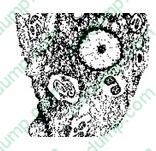
I reside in the mouth where I measure approximately 17 micro meters.
A. Entamoeba coli trophozoite
B. Entamoeba gingivalis trophozoite
C. Acanthamoeba species trophozoite
D. Trichomonas vaginalis trophozoite -
Question 549:
Vitamin K is needed to produce certain coagulation factors, in particular factors II, VII, IX, and X. Deficiencies in these factors can lead to increased clotting times and can cause hemorrhagic disease. A deficiency in which of these vitamins leads to increased clotting time and may result in hemorrhagic disease?
A. Riboflavin
B. Pyridoxine
C. Tocopherols
D. Vitamin K
E. Vitamin C -
Question 550:
As a general rule, CSF glucose is about two thirds of the serum glucose measured in a normal adult.
Chemistry
Which of the following would be considered a normal cerebrospinal fluid glucose if the serum glucose is 70 mg/dl?
A. 30 mg/dl
B. 45 mg/dl
C. 60 mg/dl
D. 70 mg/dl
E. 100 mg/dl
Related Exams:
Tips on How to Prepare for the Exams
Nowadays, the certification exams become more and more important and required by more and more enterprises when applying for a job. But how to prepare for the exam effectively? How to prepare for the exam in a short time with less efforts? How to get a ideal result and how to find the most reliable resources? Here on Vcedump.com, you will find all the answers. Vcedump.com provide not only ASCP exam questions, answers and explanations but also complete assistance on your exam preparation and certification application. If you are confused on your ASCP-MLT exam preparations and ASCP certification application, do not hesitate to visit our Vcedump.com to find your solutions here.