ASCP-MLT Exam Details
-
Exam Code
:ASCP-MLT -
Exam Name
:MEDICAL LABORATORY TECHNICIAN - MLT(ASCP) -
Certification
:ASCP Certifications -
Vendor
:ASCP -
Total Questions
:572 Q&As -
Last Updated
:Jul 14, 2026
ASCP ASCP-MLT Online Questions & Answers
-
Question 101:
Convert the following temperature from Celsius to Fahrenheit -10 degrees C Question options:
A. 39.2 degrees F
B. 77 degrees F
C. 68 degrees F
D. 14 degrees F -
Question 102:
Delayed hemolytic transfusion reactions (DHTR) usually occur within which time period?
A. 5 hours after transfusion
B. 24 hours after transfusion
C. 3-10 days after transfusion
D. one year after transfusion Answer: -
Question 103:
The approximate volume of CSF in an adult is 90-150 mL. What is the approximate volume of spinal fluid in an adult?
A. 10-40 mL
B. 50-70 mL
C. 90-150 mL
D. 200-500 mL -
Question 104:
Cryptococcus neoformans is the MOST likely identification of the encapsulated yeast in this question. C. neoformans is urease +, and grows brown colonies on birdseed agar. In addition, India ink stain can also be used for Cryptococus spp. identification.
What is the MOST likely identification of an encapsulated yeast in a blood culture bottle from a patient with septicemia with the following additional culture information?:
Failure to produce germ tubes
Urease positive
Produced brown pigment on bird seed agar
A. Candida albicans
B. Candida pseudotropicalis
C. Cryptococcus neoformans
D. Torulopsis glabrata
E. Saccharomyces cerevisiae -
Question 105:
In order to perform a venipuncture on a newly admitted hospital patient, a phlebotomist needs to
A. Ask for the patients' written permission to perform the procedure.
B. Verfity that the patient has specifically name the drawing of blood in the admission process.
C. Realize that an admitted hospital patient has given implied consent to routine procedures such as phlebotomy.
D. Verify with the patient's primary care provider that phlebotomy is covered as a routine procedure. -
Question 106:
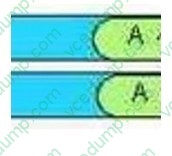
This drawing depicts beta thalassemia minor B+/B. In Beta thalassemia minor B+/B, one beta gene locus is partially deleted or inactive.
Hematology
This drawing depicts which beta chain genotype ?
A. Beta thalassemia minor
B. Beta thalassemia intermedia
C. Beta thalassemia major
D. Delta-beta thalassemia minor -
Question 107:
Report the isolate as coagulase negative Staphylococcus is the correct answer because this is an isolate from a urine specimen with a coagulase negative Staphylococcus susceptible to novobiocin. Staphylococcus saprophyticus is resistant to novobiocin. Further testing is required to speciate coagulase negative Staphylococci but only if the specimen is from a sterile body site, not urine. Gram positive cocci isolated from a catheterized urine culture on a 76-year-old male gave the following reactions: Blood agar- creamy, white, opaque colonies Catalase- positive Slide coagulase- negative Tube coagulase- negative Novobiocin- susceptible The next action the MLS should take is:
A. Report the isolate as coagulase negative staphylococcus
B. Report the isolate as Staphylococcus epidermidis
C. Report the isolate as Staphylococcus saprophyticus
D. Perform further testing to speciate the organism -
Question 108:
May-Hegglin anomaly is a rare autosomal dominant condition in which patients are at risk for bleeding and infections. It is characterized by the presence of large Dohle body like inclusions within neutrophils, eosinophils, basophils, and monocytes.
The WBC anomaly indicated by the arrow in this illustration is:
A. Alder-Reilly anomaly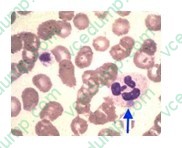
B. Pelger-Huet anomaly
C. May-Hegglin anomaly
D. Toxic granulation -
Question 109:
Which area of the laboratory can analyze a patient sample and be able to predict their risk of developing a disease?
A. Molecular testing
B. Immunology
C. Blood banking/transfusion medicine
D. Clinical chemistry -
Question 110:
Kell, Kidd, and Duffy are usually warm reacting IgG antibodies. The most common P system antibody is anti-P1, which is a frequently naturally occurring low titer IgM antibody, seen in most P2 individuals. Blood bank
Which of the following blood groups is most frequently associated with cold agglutinins:
A. Kell
B. Kidd
C. Duffy
D. P
Related Exams:
Tips on How to Prepare for the Exams
Nowadays, the certification exams become more and more important and required by more and more enterprises when applying for a job. But how to prepare for the exam effectively? How to prepare for the exam in a short time with less efforts? How to get a ideal result and how to find the most reliable resources? Here on Vcedump.com, you will find all the answers. Vcedump.com provide not only ASCP exam questions, answers and explanations but also complete assistance on your exam preparation and certification application. If you are confused on your ASCP-MLT exam preparations and ASCP certification application, do not hesitate to visit our Vcedump.com to find your solutions here.