640-802 Exam Details
-
Exam Code
:640-802 -
Exam Name
:Cisco Certified Network Associate(CCNA) -
Certification
:Cisco Certifications -
Vendor
:Cisco -
Total Questions
:364 Q&As -
Last Updated
:Dec 13, 2021
Cisco 640-802 Online Questions & Answers
-
Question 261:
Refer to the exhibit.

What set of commands was configured on interface Fa0/3 to produce the given output?
A. interface FastEthernet 0/3 channel-group 1 mode desirable switchport trunk encapsulation dot1q switchport mode trunk
B. interface FastEthernet 0/3 channel-group 2 mode passive switchport trunk encapsulation dot1q switchport mode trunk
C. interface FastEthernet 0/3 channel-group 2 mode active switchport trunk encapsulation dot1q switchport mode trunk
D. interface FastEthernet 0/3 channel-group 2 mode on switchport trunk encapsulation dot1q switchport mode trunk -
Question 262:
Refer to the exhibit.
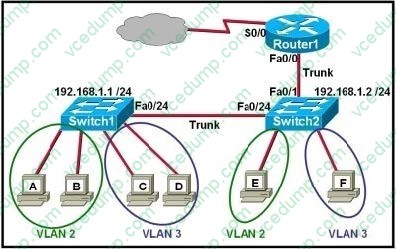
Which two statements are true about interVLAN routing in the topology that is shown in the exhibit? (Choose two.)
A. Host E and host F use the same IP gateway address.
B. Router1 and Switch2 should be connected via a crossover cable.
C. Router1 will not play a role in communications between host A and host D.
D. The FastEthernet 0/0 interface on Router1 must be configured with subinterfaces.
E. Router1 needs more LAN interfaces to accommodate the VLANs that are shown in the exhibit.
F. The FastEthernet 0/0 interface on Router1 and the FastEthernet 0/1 interface on Switch2 trunk ports must be configured using the same encapsulation type. -
Question 263:
Refer to the exhibit.
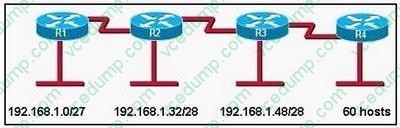
A new subnet with 60 hosts has been added to the network. Which subnet address should this network use to provide enough usable addresses while wasting the fewest addresses?
A. 192.168.1.56/26
B. 192.168.1.56/27
C. 192.168.1.64/26
D. 192.168.1.64/27 -
Question 264:
VLAN 3 is not yet configured on your switch. What happens if you set the switchport access vlan 3 command in interface configuration mode?
A. The command is rejected.
B. The port turns amber.
C. The command is accepted and the respective VLAN is added to vlan.dat.
D. The command is accepted and you must configure the VLAN manually. -
Question 265:
Refer to the exhibit.
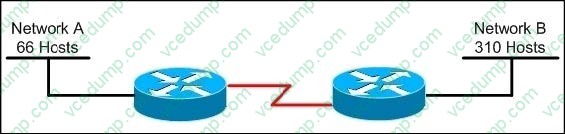
Which subnet mask will place all hosts on Network B in the same subnet with the least amount of wasted addresses?
A. 255.255.255.0
B. 255.255.254.0
C. 255.255.252.0
D. 255.255.248.0 -
Question 266:
Refer to the exhibit.
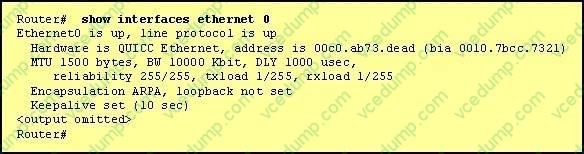
What is the meaning of the output MTU 1500 bytes?
A. The maximum number of bytes that can traverse this interface per second is 1500.
B. The minimum segment size that can traverse this interface is 1500 bytes.
C. The maximum segment size that can traverse this interface is 1500 bytes.
D. The minimum packet size that can traverse this interface is 1500 bytes.
E. The maximum packet size that can traverse this interface is 1500 bytes.
F. The maximum frame size that can traverse this interface is 1500 bytes. -
Question 267:
Scenario
Refer to the topology. Your company has connected the routers R1, R2, and R3 with serial links. R2 and R3 are connected to the switches SW1 and SW2, respectively. SW1 and SW2 are also connected to the routers R4 and R5.
The EIGRP routing protocol is configured.
You are required to troubleshoot and resolve the EIGRP issues between the various routers.
Use the appropriate show commands to troubleshoot the issues.
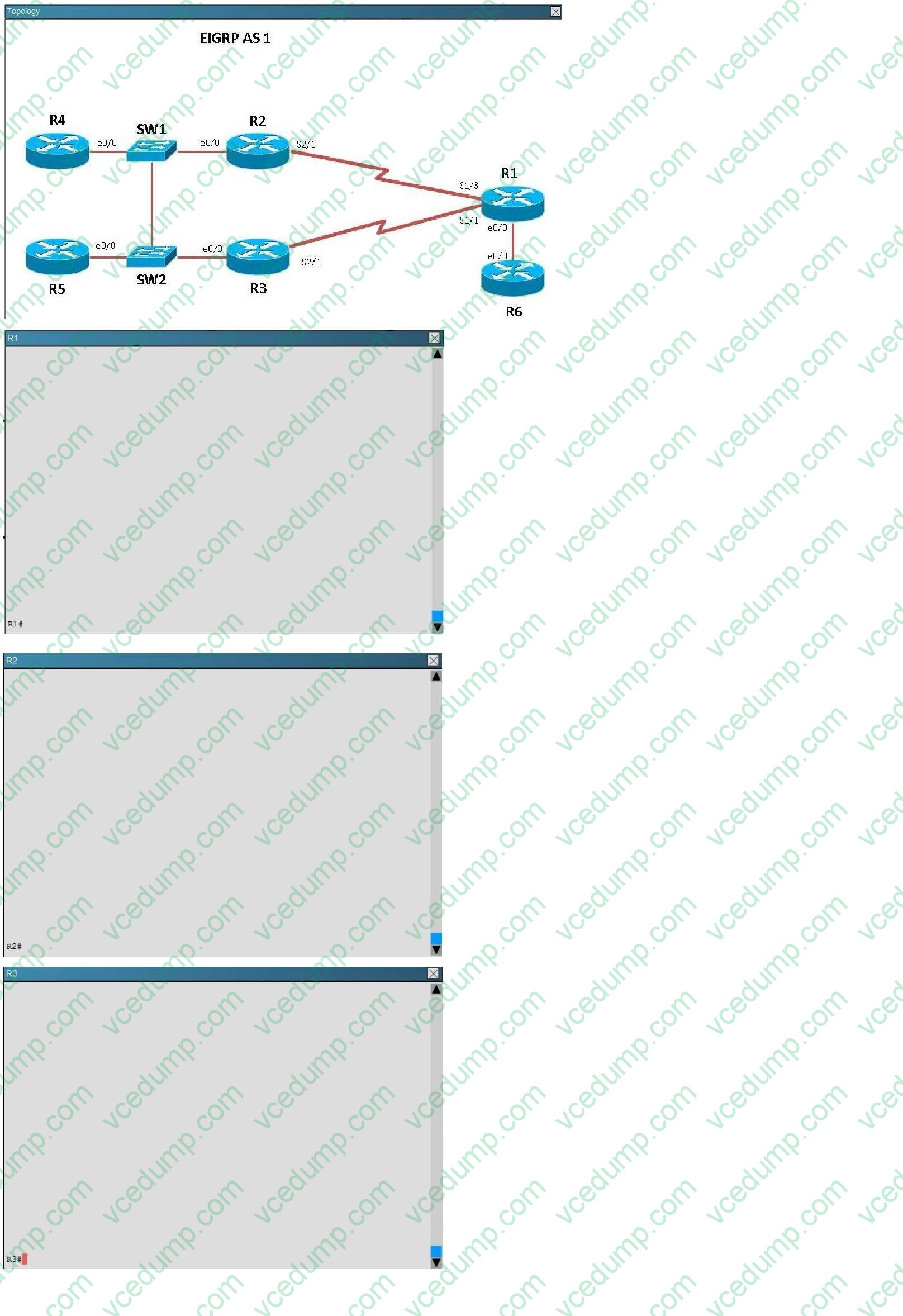

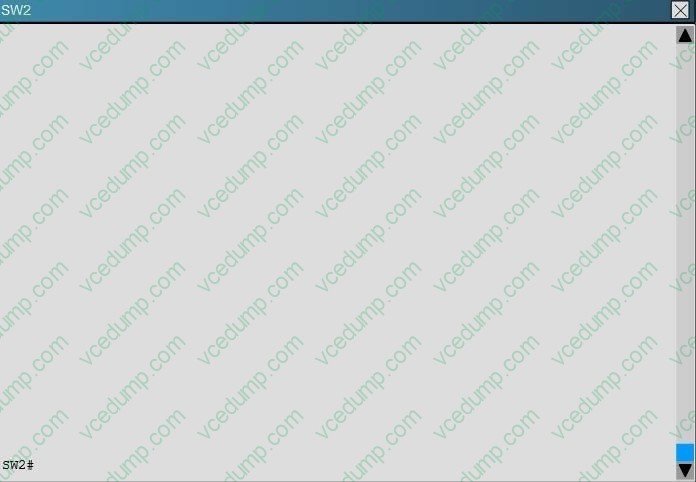
Study the following output taken on R1:
R1# Ping 10.5.5.55 source 10.1.1.1
Type escape sequence to abort.
Sending 5, 100-byte ICMP Echos to 10.5.5.55, timeout is 2 seconds:
Packet sent with a source address of 10.1.1.1
.......
Success rate is 0 percent (0/5)
Why are the pings failing?
A. The network statement is missing on R5.
B. The loopback interface is shut down on R5.
C. The network statement is missing on R1.
D. The IP address that is configured on the Lo1 interface on R5 is incorrect. -
Question 268:
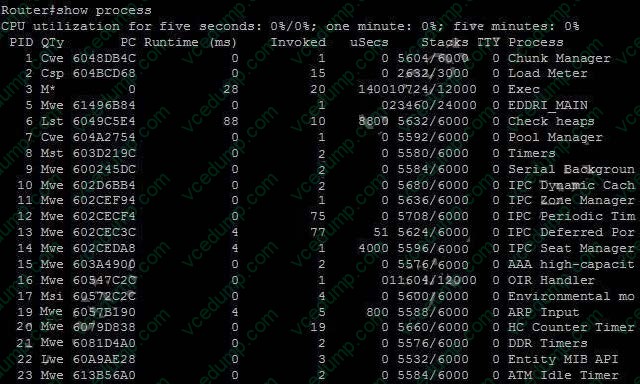
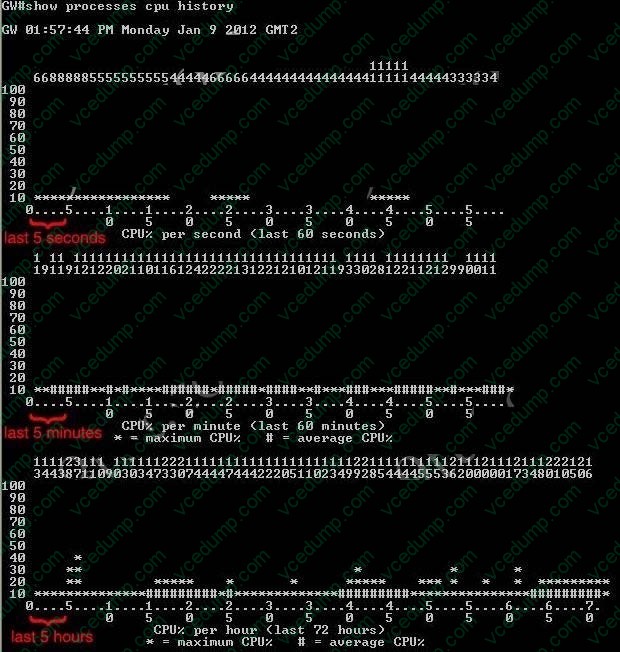
Which command displays CPU utilization?
A. show protocols
B. show process
C. show system
D. show version -
Question 269:
What OSPF command, when configured, will include all interfaces into area 0?
A. network 0.0.0.0 255.255.255.255 area 0
B. network 0.0.0.0 0.0.0.0 area 0
C. network 255.255.255.255 0.0.0.0 area 0
D. network all-interfaces area 0 -
Question 270:
SIMULATION Central Florida Widgets recently installed a new router in their office. Complete the network installation by performing the initial router configurations and configuring R1PV2 routing using the router command line interface (CLI) on the RC. Configure the router per the following requirements: Name of the router is R2 Enable. secret password is cisco The password to access user EXEC mode using the console is cisco2 The password to allow telnet access to the router is cisco3 IPV4 addresses must be configured as follows: Ethernet network 209.165.201.0/27 - router has fourth assignable host address in subnet Serial network is 192.0.2.176/28 - router has last assignable host address in the subnet.
Interfaces should be enabled.
Router protocol is RIPV2
Attention:
In practical examinations, please note the following, the actual information will prevail.
1.
Name or the router is xxx
2.
Enable. secret password is xxx
3.
Password In access user EXEC mode using the console is xxx
4.
The password to allow telnet access to the router is xxx
5.
IP information
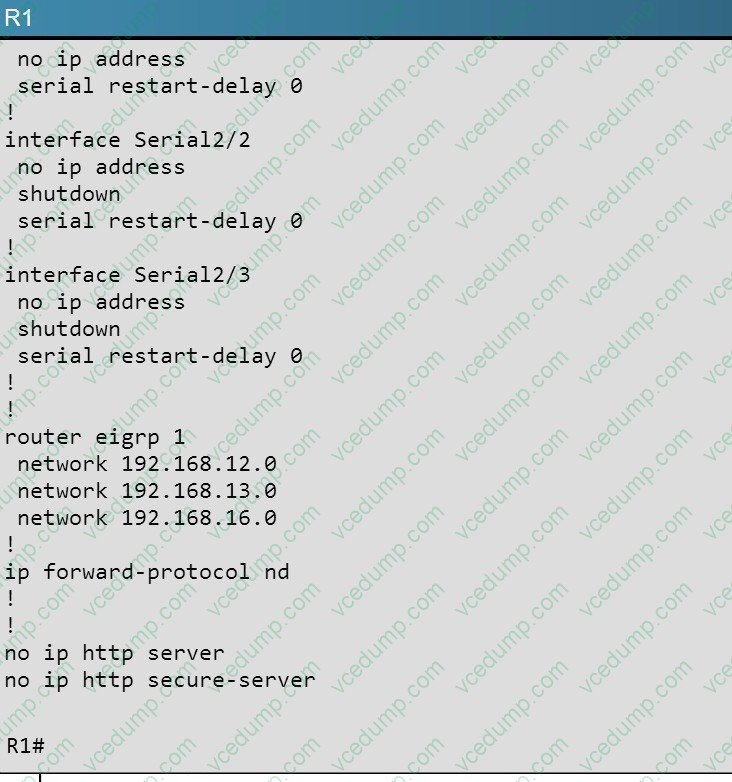
Correct Answer. Check the answer below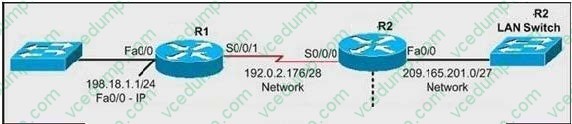

Related Exams:
-
300-745
Designing Cisco Security Infrastructure (300-745 SDSI) v1.0 -
350-101
Implementing and Operating Cisco Wireless Core Technologies (350-101 WLCOR)v1.0 -
352-011
Cisco Certified Design Expert Practical -
500-052
Cisco Unified Contact Center Express -
500-173
Designing the FlexPod Solution (FPDESIGN) -
500-201
Deploying Cisco Service Provider Mobile Backhaul Solutions -
500-210
SP Optical Technology Field Engineer Representative -
500-220
Engineering Cisco Meraki Solutions (ECMS) v2.2 -
500-230
Cisco Service Provider Routing Field Engineer -
500-240
Cisco Mobile Backhaul for Field Engineers
Tips on How to Prepare for the Exams
Nowadays, the certification exams become more and more important and required by more and more enterprises when applying for a job. But how to prepare for the exam effectively? How to prepare for the exam in a short time with less efforts? How to get a ideal result and how to find the most reliable resources? Here on Vcedump.com, you will find all the answers. Vcedump.com provide not only Cisco exam questions, answers and explanations but also complete assistance on your exam preparation and certification application. If you are confused on your 640-802 exam preparations and Cisco certification application, do not hesitate to visit our Vcedump.com to find your solutions here.