1Z0-082 Exam Details
-
Exam Code
:1Z0-082 -
Exam Name
:Oracle Database Administration I -
Certification
:Oracle Certifications -
Vendor
:Oracle -
Total Questions
:176 Q&As -
Last Updated
:Jul 15, 2026
Oracle 1Z0-082 Online Questions & Answers
-
Question 151:
Which two Oracle database space management features require the use of locally managed tablespaces? (Choose two.)
A. Automatic data file extension (AUTOEXTEND)
B. Server-generated tablespace space alerts
C. Online segment shrink
D. Free space management with bitmaps
E. Oracle Managed Files (OMF) -
Question 152:
Examine the description of the SALES table: The SALES table has 55,000 rows. Examine this statement:
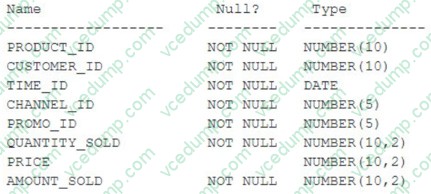

Which two statements are true? (Choose two.)
A. SALES1 has NOT NULL constraints on any selected columns which had those constraints in the SALES table.
B. SALES1 has primary KEY and UNIQUE constraints on any selected columns which had those constraints in the SALES table.
C. SALES1 is created with 55,000 rows.
D. SALES1 is created with no rows.
E. SALES1 is created with 1 row. -
Question 153:
Examine this command and some partial output:
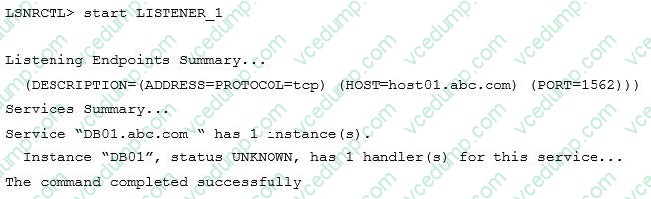
Why does the DB01.abc.com service show unknown status?
A. The service DB01.abc.com is dynamically registered
B. The LOCAL_LISTENER database parameter is not set to a service name that refers to LISTENER_1
C. The service DB01.abc.com is statically registered
D. The listener is not listening on the default port 1521
E. The SID_LIST_LISTENER section is not contained in the LISTENER.ORA file -
Question 154:
What is true about non-equijoin statement performance? (Choose two.)
A. The BETWEEN condition used with a non-equijoin always performs better than when using the >= and
B. The BETWEEN condition used with a non-equijoin sometimes performs better than using the >= and
C. The Oracle join syntax performs better than the SQL:1999 compliant ANSI join syntax.
D. The Oracle join syntax performs less well than the SQL:1999 compliant ANSI join syntax.
E. The join syntax used makes no difference to performance. -
Question 155:
DATADIR1 and DATATDIR2 are database directory objects.
Examine this command:
[oracle@host01 ~] expdp system/oracle \
> FULL=y \
> DUMPFiLe=datadir1:full%U.dmp, datadir2:full2%U.dmp \
> FILESIZE=2G \
> PARALLEL=4 \
> LOGFILE=datadirl:/expfull.log \
> JOB_NAME=expfull
Which two statements are true about the expdp operation? (Choose two.)
A. It fails if the total size of the dump file is more than 2GB.
B. It starts only when four worker processes are available.
C. It creates a master table to store details of the export operation.
D. It creates dump files for the entire database.
E. It creates dump files only for objects in the SYSTEM schema. -
Question 156:
Examine the description of the CUSTOMERS table:
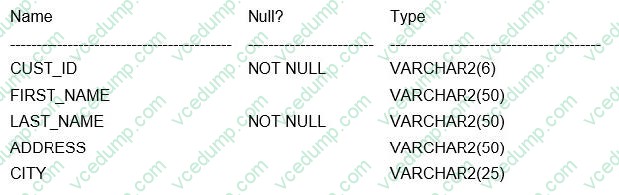
You want to display details of all customers who reside in cities starting with the letter D followed by at least two characters.
Which query can be used?
A. SELECT * FROM customers WHERE city LIKE `D_%';
B. SELECT * FROM customers WHERE city = `%D_';
C. SELECT * FROM customers WHERE city LIKE `D_';
D. SELECT * FROM customers WHERE city = `D_%'; -
Question 157:
The sales table has columns PROD_ID and QUANTITY_SOLD of data type number. Which two queries execute successfully? (Choose two.)
A. SELECT COUNT(prod_id) FROM sales WHERE quantity_sold > 55000 GROUP BY prod_id;
B. SELECT COUNT(prod_id) FROM sales GROUP BY prod_id WHERE quantity_sold > 55000;
C. SELECT prod_id FROM sales WHERE quantity_sold > 55000 AND COUNT(*) > 10 GROUP BY COUNT(*) > 10;
D. SELECT prod_id FROM sales WHERE quantity_sold > 55000 GROUP BY proa_id HAVING COUNT(*) > 10;
E. SELECT prcd_id FROM sales WHERE quantity_sold > 55000 AND COUNT (*) > 10 GROUP BY prod_id HAVING COUNT(*) > 10; -
Question 158:
Examine this query:
SELECT TRUNC(ROUND(156.00, -2), -1)
FROM DUAL;
What is the result?
A. 150
B. 16
C. 100
D. 160
E. 200 -
Question 159:
View the Exhibits and examine the structure of the COSTS and PROMOTIONS tables.
You want to display PROD_IDS whose promotion cost is less than the highest cost PROD_ID in a promotion time interval.
Examine this SQL statement:
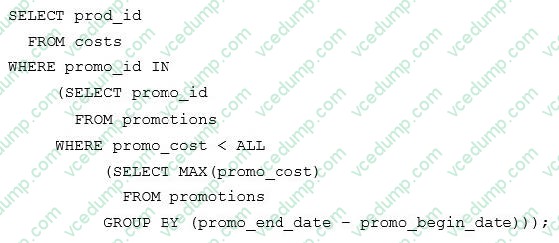
Exhibit 1.
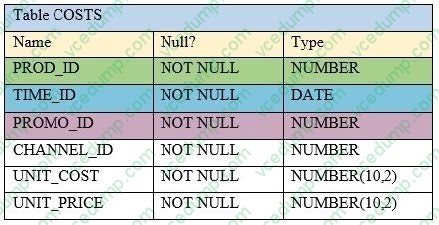
Exhibit 2.
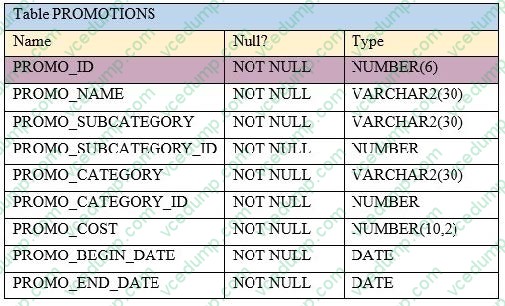
What will be the result?
A. It gives an error because the ALL keyword is not valid
B. It gives an error because the GROUP BY clause is not valid
C. It executes successfully but does not give the required result
D. It executes successfully and gives the required result -
Question 160:
You currently have an active transaction in your session and have been granted select access to vstransaction.
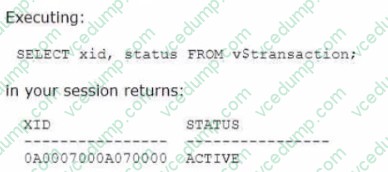
In which three situations will re-executing this query still return a row but with a different XID, indicating a new transaction has started?
A. after successfully executing a commit or rollback followed by a select statement
B. after successfully executing a create table as select statement followed by a select for update statement
C. after successfully executing a commit or rollback followed by a DML statement
D. after successfully executing a create table statement followed by a create index statement
E. after successfully executing a DML statement following a failed DML statement
F. after successfully executing a truncate statement followed by a DML statement
Related Exams:
-
1Z0-020
Oracle8i: New Features for Administrators -
1Z0-023
Architecture and Administration -
1Z0-024
Performance Tuning -
1Z0-025
Backup and Recovery -
1Z0-026
Network Administration -
1Z0-034
Upgrade Oracle9i/10g OCA to Oracle Database OCP -
1Z0-036
Managing Oracle9i on Linux -
1Z0-041
Oracle Database 10g: DBA Assessment -
1Z0-052
Oracle Database 11g: Administration Workshop I -
1Z0-053
Oracle Database 11g: Administration II
Tips on How to Prepare for the Exams
Nowadays, the certification exams become more and more important and required by more and more enterprises when applying for a job. But how to prepare for the exam effectively? How to prepare for the exam in a short time with less efforts? How to get a ideal result and how to find the most reliable resources? Here on Vcedump.com, you will find all the answers. Vcedump.com provide not only Oracle exam questions, answers and explanations but also complete assistance on your exam preparation and certification application. If you are confused on your 1Z0-082 exam preparations and Oracle certification application, do not hesitate to visit our Vcedump.com to find your solutions here.