A55-year-old man presents to the physician's office complaining of upper abdominal pain of 2 months' duration. The pain is described as gnawing, localized to the upper midline, and associated with nausea. The pain is exacerbated by food, and there is an associated 20-lb weight loss over 2 months. His past history is pertinent for a 30 pack-year smoking history, occasional alcohol intake, and a prior history of a benign gastric ulcer 5 years ago. Physical examination reveals normal vital signs, mild epigastric pain with deep palpation, and mildly hemepositive stool. An evaluation for recurrence of a gastric ulcer is recommended. In this patient, a benign gastric ulcer was found, and he was placed on a proton-pump inhibitor and triple antibiotics for Helicobacter pylori. He returns to the physician's office 3 months later with similar complaints and, on re-evaluation, the gastric ulcer was found to persist. Which of the following is the most appropriate next step in management?
-
A
a second trial of proton-pump inhibitors with triple antibiotics and re-evaluation in 2 months
-
B
a trial of H2 blockers with triple antibiotics and re-evaluation in 2 months
-
C
a trial of sucralfate and re-evaluation in 2 months
-
D
-
E
a trial of prostaglandins and re-evaluation in 2 months
Reveal answer details
Close answer details
Correct answerD
ExplanationGastric ulcers present with symptoms of abdominal pain, aggravated by food, and associated with nausea, vomiting, anorexia, and weight loss. The two principal means of diagnosing a gastric ulcer are UGI radiographs and fiberoptic endoscopy, the latter being the most reliable method. CT scan and endoscopic ultrasound may be helpful in staging gastric cancer, but are not routinely used with benign disease. The failure to respond to 12 weeks of medical management is an indication for surgical therapy to avoid potential complications and to exclude malignancy, despite biopsies obtained by endoscopy that show benign disease.
Identify the following personality disorders with the symptoms listed below. Is quick to perceive a slight as an attack or assault on one's character
-
A
-
B
-
C
-
D
-
E
-
F
-
G
-
H
-
I
-
J
Reveal answer details
Close answer details
Correct answerH
ExplanationPersons with personality disorders are rigidly bound to the use of patterns of defense and various traits that distinguish the disorders. All have problems with interpersonal relationships.
Multiple disease outcomes associated with smoking can be assessed with which type of study?
-
A
-
B
randomized, controlled trial
-
C
-
D
-
E
Reveal answer details
Close answer details
Correct answerC
ExplanationIn a randomized, controlled trial, the determination of treatment group assignment is left to chance. The procedure maximizes the probability that the two groups are similar in important background characteristics. Thus, it avoids self-selection of study subjects to different exposure groups. In a cross-sectional study design, it is generally difficult to ascertain the antecendent-consequent aspects of the hypothesized relationship. In other words, since the exposure and outcome are measured at a given point in time, it is difficult to determine which came first. Acohort study classifies study subjects by exposure status and follows them forward in time to determine development of disease. More than one disease can be targeted as outcomes of interest. Acase-control study defines cases and controls and retrospectively assesses the frequency of exposure. Multiple exposures can be assessed in connection with a specific disease.
Select the organism associated with the following clinical findings: Aparent of a 4-year-old child who goes to nursery school develops a chronic cough and lowgrade fever.
-
A
-
B
beta-hemolytic Streptococcus
-
C
respiratory syncytial virus (RSV)
-
D
-
E
-
F
-
G
-
H
-
I
-
J
Reveal answer details
Close answer details
Correct answerD
ExplanationGiardiasis may cause cramping and a chronic diarrheal syndrome, with malabsorption and weight loss. Its distribution is worldwide, particularly where hygienic standards are not high. It also occurs sporadically in high-risk individuals.
Streptococcal pyoderma, including erysipelas and impetigo, has been demonstrated to precede acute glomerulonephritis. Even when appropriate antibiotics are given in adequate dosage and duration for these conditions, renal damage may still result. Prevention thus consists of wound care, including cleaning wounds well and removal of crust. Mycoplasma infections are particularly common in families with younger children. They are frequently imported to the family by school-aged children, leading to a low-grade fever and persisting tracheobronchitis in the parents, or more acutely, an atypical pneumonia.
G. lamblia is found in up to 20% of homosexual males, and may cause chronic diarrhea, although in these patients it tends to be asymptomatic.
E. coli was first reported as a cause of watery diarrhea in nurseries in the 1940s. Although nursery epidemics with enteropathogenic serotypes had decreased in recent years in the United States, the increase of infant-child day care centers has resulted in their relatively frequent occurrence. Furunculosis is most frequently caused by coagulase-positive staphylococcal infections. The public health significance of this largely relates to the hazards of skin infections in food handlers and subsequent staphylococcal toxin in the food, leading to staphylococcal intoxication food-borne disease.
H. pylori has been associated with gastric ulcers, but not with duodenal ulcers. Otitis media, whether acute or with effusion, commonly results from viral infection, such as by RSV. Various other organisms may be responsible including Streptococcu pneumoniae,
H. influenzae, and others.
C. perfringens, with rare exceptions, is transmitted in a meat dish prepared in bulk. Under propitious circumstances for the organism, especially on cooling of the food, bacterial multiplication can be very rapid. Symptoms begin to occur in the affected population in about 12 hours.
Epidemic typhus is a rickettsial illness. Man is the host and long-term reservoir. The vectors are body lice (P. humanus corporis). The rickettsia are not present in human excretions and cannot be transmitted by person-to-person contact.
A 13-year-old boy presents for evaluation of short stature. His growth chart from ages 2 through 12 years is shown in Figure. His growth in the first 2 years of life was typically at the 25th percentile. He has been healthy, has a good appetite, and is doing well in school. He lives with his parents and is an only child. His parents' heights are both at the 50th percentile. His father states that he grew several inches after he completed high school. A complete physical examination is normal. His Tanner stage is
-
A
Which of the following is the most likely cause of this patient's short stature?
-
B
-
C
-
D
-
E
growth hormone deficiency
-
F
Reveal answer details
Close answer details
Correct answerA
ExplanationConstitutional delay is a normal pattern of growth, characterized by a relatively late pubertal growth spurt. It is recognized most commonly in boys. Patients typically show a moderate degree of short stature in early to middle childhood. The growth pattern is often similar to one or both parents. Final adult height is within the expected genetic potential. The children are otherwise well. Familial short stature is also a normal growth pattern in a short but otherwise normal family. One or both parents are typically 12 standard deviations below mean height for adults. The growth pattern parallels the normal growth curve at a percentile consistent with genetic potential. Deprivational dwarfism is due to psychosocial factors. It typically presents at a younger age, and weight is affected more than the height so that these children are not proportionately small. Hypothyroidism can affect growth but would cause a decrease in growth velocity when it occurred. The patient's height curve would flatten out, instead of paralleling the normal curves. Short stature from growth hormone deficiency typically presents by 3 years.
Match the antidepressant with the side effect or characteristic of an SSRI with a half-life of 46 days
-
A
-
B
-
C
-
D
-
E
-
F
-
G
Reveal answer details
Close answer details
Correct answerD
ExplanationFluoxetine has the longest half-life of the current SSRIs (escitalopram's half-life is shorter--less than 24 hours), phenelzine is an MAOI and foods rich in tyramine can induce a hypertensive crisis. Venlafaxine can induce hypertension, especially at higher doses. Trazodone can rarely induce priapism (a painful sustained erection). Nortriptyline is a tricyclic antidepressant, and at high doses, it can cause arrhythmias.
A middle-aged White male presents to your office complaining of arthralgias, diarrhea, abdominal pain, and weight loss. On examination, you note generalized increased skin pigmentation. Which of the following is true regarding Whipple disease?
-
A
Acute renal failure is a common complication.
-
B
This disease usually strikes young adults before the third decade.
-
C
It is predominantly a disease of women.
-
D
Microscopic examination of duodenal biopsies show extensive periodic acid-Schiff (PAS) positive material in the lamina propria and villous atrophy.
-
E
It is associated with gram-positive cocci.
Reveal answer details
Close answer details
Correct answerD
ExplanationWhipple disease is a systemic illness characterized by arthralgias, diarrhea, abdominal pain, and weight loss. The usual patient is a middle-aged White male. Reported in 1907 by George Whipple, it has been associated with a gram-positive bacillus related to Actinomycetes. The disease can affect nearly every organ system, although it usually involves the GI tract, heart, and CNS. Renal failure is not a common complication.
After an appropriate diagnostic evaluation, a 59-year-old woman with postmenopausal bleeding had a total abdominal hysterectomy and bilateral salpingo-oophorectomy (TAH-BSO). The pathologic diagnosis is adenocarcinoma of the endometrium.
An endometrial adenocarcinoma that is confined to the uterus and extends more than 50% through the myometrium is at which stage?
-
A
-
B
-
C
-
D
-
E
Reveal answer details
Close answer details
Correct answerA
ExplanationIn general, gynecologic cancers confined to the organ of origin are stage I. Thus, this patient has a stage I cancer. In 1988, FIGO revised the staging of endometrial cancer from a clinical staging to surgical staging. Cancer limited to the endometrium is stage IA. Myometrial invasion less than 50% is stage IB, and myometrial invasion more than 50%, but not involving the serosa, is stage IC.
The mother of a 3-year-old girl brings her daughter to see you because the girl developed breasts 6 months ago. The girl has had no vaginal bleeding, and there is no pubic hair. She takes no medication Which of the following is the most appropriate management of this girl?
-
A
pituitary suppression with a gonadotropin-releasing hormone (GnRH) agonist
-
B
-
C
assurance that the condition is benign and self-limiting
-
D
corticosteroid suppression of adrenal function
-
E
Reveal answer details
Close answer details
Correct answerC
ExplanationPremature thelarche is a benign, self-limited disorder that does not progress. Breast development may actually regress, though the regression may not be complete. The girl and her parents should be assured that the events of puberty will be normal at a normal age. Examination of the girl should be repeated at 3- to 6-month intervals for about 1 year to be certain that additional pubertal events do not occur (such as growth of pubic hair, accelerated linear growth, and vaginal bleeding). Because pituitary and adrenal functions are normal for a prepubertal girl, therapy with a GnRH agonist (Lupron, Synarel, and so forth) or a corticosteroid is ineffective and inappropriate. Although breast cancer is a rare possibility in prepubertal girls, the presence of bilateral breast buds effectively excludes this diagnosis. A breast biopsy may destroy breast analge, and these girls will not have breast development at puberty.
Question 10
Single choice
A 19-year-old primigravida at term has been completely dilated for 21/2 hours. The vertex is at 2 to 3 station, and the position is occiput posterior. She complains of exhaustion and is unable to push effectively to expel the fetus. She has an anthropoid pelvis. Which of the following is the most appropriate management to deliver the fetus?
-
A
immediate low transverse cesarean section
-
B
immediate classical cesarean section
-
C
apply forceps and deliver the baby as an occiput posterior
-
D
apply Kielland forceps to rotate the baby to occiput anterior
-
E
cut a generous episiotomy to make her pushing more effective
Reveal answer details
Close answer details
Correct answerC
ExplanationThe station of the vertex indicates that the fetal head is on the perineum. A cesarean section, either low transverse or classical, is inappropriate unless an operative vaginal delivery is unsuccessful. In women with an anthropoid pelvis, the transverse, interspinous diameter of the bony pelvis is narrow, and the anteroposterior diameter of the pelvis is relatively long. In this circumstance, a forceps rotation should not be done and delivery should be in the occiput posterior. The indication for forceps is maternal exhaustion; women with an anthropoid pelvis usually have a spontaneous vaginal delivery. In women with a gynecoid pelvis, the transverse and anteroposterior diameters are more equal, and rotation of the
fetal head to occiput anterior would be an acceptable choice. Soft-tissue resistance to delivery is not great enough that an episiotomy will permit slight expulsive efforts by the mother to deliver the fetal head
Question 11
Single choice
A15-month-old African American male, who is otherwise healthy, is found to have an emoglobin level of 8 g/dL on routine screening. The mean corpuscular volume (MCV) is decreased. His lead screen is within normal limits. You obtain a diet history, which reveals that he drinks about 3040 oz of whole cow's milk a day. He eats no meat and some fruits and vegetables. Which of the following is the most likely cause?
-
A
-
B
-
C
-
D
-
E
anemia of chronic disease
Reveal answer details
Close answer details
Correct answerD
ExplanationIron deficiency is the most common cause of microcytic anemia. In children it is often related to excessive consumption of cow's milk, which is low in iron content, and inadequate consumption of iron-rich foods. Allergy to cow's milk may also cause occult GI blood losses. In thalassemia major, there is usually physical evidence of chronic anemia with signs of bone marrow expansion (frontal bossing) and severe anemia often requiring transfusions. Lead poisoning may cause microcytic anemias; it may also be associated with iron-deficiency anemia, which enhances lead absorption and, therefore, should always be excluded. Anemia of chronic disease (renal disease) may be microcytic or normocytic and should
be excluded by history and examination.
Question 12
Single choice
A 12-year-old girl has had a sore throat over 2 days. She now has a fever of 39.5°C and has difficulty opening her mouth, swallowing, or speaking. Her throat can be visualized with difficulty, the right tonsil is significantly more enlarged than the left, and the uvula is displaced to the left side. Which of the following is the most likely diagnosis?
-
A
-
B
-
C
-
D
-
E
lateral pharyngeal abscess
Reveal answer details
Close answer details
Correct answerC
ExplanationThis is a classic presentation for a peritonsillar abscess. Development of a peritonsillar abscess is usually preceded by acute pharyngotonsillitis, followed by development of severe throat pain and trismus. It is usually caused by group A hemolytic Streptococci or oral anaerobes in preadolescent or adolescent patients. Speech is often with a "hot potato" voice. The affected tonsil is enlarged causing the uvula to be pushed to the other side. Antibiotics (penicillin) and incision and drainage are usually required. Retropharyngeal abscess is usually a complication of bacterial pharyngitis in younger children under age 34 years. It is caused by infection and further suppuration of nodes in the retropharyngeal area.
Symptoms include high fever, difficulty swallowing, feeding refusal, hyperextension of the head, and drooling. There is bulging of the posterior pharyngeal wall; diagnosis can be confirmed by widening of the retropharyngeal space on x-ray.
With lateral pharyngeal abscess there is bulging of the lateral pharyngeal wall. Acute uvulitis is caused by group Ahemolytic Streptococci and H. influenzae type B, often in association with tonsillitis and uvulitis.
Question 13
Single choice
A 65-year-old man presents to the emergency department with an abrupt onset of excruciating chest pain 1 hour ago. The pain is localized to the anterior chest, but radiates to the back and neck. On examination, the patient is afebrile, with a BP of 210/110 mmHg, pulse rate of 95/min, and a respiratory rate of 12/min. He appears pale and sweaty. Unequal carotid, radial, and femoral pulses are noted. An electrocardiogram (ECG) shows nonspecific ST-T segment changes. Chest x-ray shows a slightly widened mediastinum and normal lung fields. Which of the following is the preferred modality in establishing the diagnosis?
-
A
transcutaneous echocardiography
-
B
transesophageal echocardiography
-
C
-
D
-
E
Reveal answer details
Close answer details
Correct answerB
ExplanationThe diagnosis of an aortic dissection is strongly suggested by the history of an abrupt onset of excruciating pain in the chest and back with variable radiation patterns, and a hypertensive, illappearing patient. A chest x-ray showing a widened mediastinum may be noted, but the radiograph may be normal. The differential diagnosis of an acute myocardial infarction must be entertained and an ECG performed. Though aortography has historically been the definitive diagnostic procedure and may be required in some patients, transesophageal echocardiography has become the preferred diagnostic modality. It can be performed in the emergency department, thus obviating the need to move an extremely ill patient.
CT scan may also be helpful in establishing the diagnosis. Immediate drug therapy to control hypertension is mandatory, followed by definitive therapy, depending on the type of dissection. Involvement with the ascending aorta mandates immediate surgical repair. Dissections involving only the descending aorta can be managed medically, initially.Thrombolytic therapy and anticoagulation are not indicated and may precipitate exsanguination.
Question 14
Single choice
A 4-year-old child manifests symptoms of fever, sore throat, and swollen lymph nodes. The spleen tip is palpable. Throat culture and rapid slide (Monospot) test results are negative.
The next logical diagnostic procedure would involve which of the following?
-
A
rapid streptococcal antigen test
-
B
-
C
Epstein-Barr virus (EBV) titer
-
D
-
E
Reveal answer details
Close answer details
Correct answerC
ExplanationInfectious mononucleosis may affect children of all ages. The rapid slide (Monospot) test response is positive in approximately 90% of infected persons; however, younger children with mononucleosis may have a negative result. Moreover, many younger children have poor antibody response to the heterophil titer test. The specific serodiagnostic test for EBV, the agent responsible for most cases of infectious mononucleosis, confirms the diagnosis. A repeat throat culture, even if positive for betahemolytic Streptococcus, may be of only partial value, because both infectious mononucleosis and streptococcal pharyngitis may be present simultaneously. Bone marrow examinations potentially are painful and contribute little to the correct diagnosis.
Question 15
Single choice
A70-year-old man presents to urgent care complaining of a painful, swollen left knee. He previously has had no problems with this knee. Three days prior to onset, he went out dancing for 23 hours but recalls no specific injury. Examination of the knee reveals a moderatesized effusion and mild pain with any range of motion. Plain x-ray shows no fracture. Which of the following is the best next management?
-
A
-
B
aspiration of effusion fluid
-
C
rest, ice, and leg elevation
-
D
physical therapy referral
-
E
Reveal answer details
Close answer details
Correct answerB
ExplanationThe presence of effusion generally signifies significant disease. Aspiration of the effusion will help in evaluation for hemarthrosis, septic arthritis, and inflammatory crystal disease. Each of these is important to identify and treat early. An MRI and/or arthroscopy would be later considerations.
Orthopedic referral likely would be necessary.
Question 16
Single choice
A 35-year-old woman presents to the physician's office for evaluation of a left neck mass discovered 1 month ago on a routine physical examination. On examination, the mass measures 2 cm and is located anterolateral to the larynx and trachea. It is nontender and moves with swallowing. Past history is pertinent for a 15 pack-year smoking history and occasional alcohol intake. For the above patient with a neck mass, select the most likely diagnosis.
-
A
-
B
-
C
acute suppurative lymphadenitis
-
D
-
E
-
F
-
G
mixed parotid tumor (pleomorphic adenoma)
-
H
-
I
-
J
-
K
Reveal answer details
Close answer details
Correct answerA
ExplanationThe location of this neck mass and its movement with swallowing is strongly suggestive of a thyroid mass. The most common type of thyroid cancer is papillary carcinoma, which has an excellent prognosis under the age of 40. Needle biopsy should be performed as a diagnostic test, followed by operation.
Question 17
Single choice
A 4-year-old previously healthy girl presents to the emergency department with a 24-hour history of rectal bleeding and dizziness. She has no other gastrointestinal symptoms. On examination, she appears pale. Her heart rate is 140 beats/ min, and she has a 20 mmHg postural drop in systolic blood pressure. The child's abdomen is nondistended and nontender, and fresh blood and clots are in the rectal vault on rectal examination. Which of the following is the most appropriate diagnostic study to order for this patient?
-
A
-
B
-
C
-
D
UGI contrast study with small-bowel follow-through
-
E
Reveal answer details
Close answer details
Correct answerC
ExplanationHemorrhage associated with a Meckel's diverticulum classically presents with painless rectal bleeding in the absence of other gastrointestinal symptoms. The amount of hemorrhage may be enough to result in hypovolemia, with pallor, tachycardia, and postural hypotension. Abdominal examination is usually normal. Diagnosis is confirmed by technetium scan, with the isotope concentrated in the gastric mucosa of the diverticulum. Initial management should include IV fluid resuscitation and transfusion as needed, before laparotomy and diverticulectomy with resection of the adjacent ileum. Rectal polyps, hemorrhoids, and anal fissures may be associated with rectal bleeding. The bleeding is usually small in amount and often temporally related to defecation, typically on the surface of the stool or after defecation. Colonoscopy and proctoscopy are useful adjuncts to diagnosis. Bleeding associated with intussusception is described as "currant jelly" and is secondary to mucosal ischemia of the lead point. These children are most commonly between 2 months and 2 years of age, and often have a prodromal viral illness. They present with colicky abdominal pain and dehydration. Management includes hydrostatic reduction.
Question 18
Single choice
A 75-year-old woman is brought to the emergency department from the nursing home for jaundice and mental confusion. The nursing home notes state that she has become less responsive and has developed jaundice over the last 2 weeks.
Past history is pertinent for hypertension, diabetes, and prior colon resection for cancer at age 55. Examination reveals mild jaundice with vital signs of temperature 101.5°F, pulse rate 110/min, and BP 100/60 mmHg. She does not respond to verbal commands, but withdraws to pain. Abdominal examination reveals tenderness in the epigastrium and right upper quadrant. For above patient with jaundice, select the one most likely diagnosis.
-
A
-
B
-
C
-
D
-
E
-
F
-
G
-
H
-
I
Reveal answer details
Close answer details
Correct answerC
ExplanationCommon duct stones (choledocholithiasis) may be the cause of acute bile duct obstruction without warning, resulting in jaundice, pain, and sepsis. The sepsis may manifest as fever, hypotension, and altered mental status.
Question 19
Single choice
A wet smear of a vaginal discharge is illustrated in Figure. Which of the following is the most likely cause of the discharge? 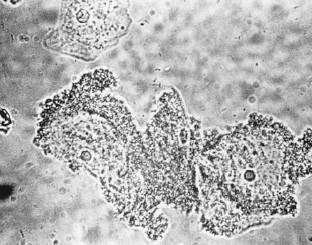
-
A
-
B
-
C
-
D
-
E
Reveal answer details
Close answer details
Correct answerE
ExplanationClue cells are shown in Figure. This indicates bacterial vaginosis. Clue cells are vaginal squamous cells with indistinct margins that are studded extensively with coccobacilli. Trichomonas infection is caused by a unicellular protozoon. The organism on wet smear with normal saline is fusiform, slightly larger than white blood cells, and has flagella at one end.
The flagella cause the motion on wet smear that is diagnostic. Monilial vaginitis is best demonstrated by placing a small amount of the discharge in 10% KOH and observing for branching hyphae.
N. gonorrhoeae and
C. trachomatis cannot be seen on a wet smear.
Question 20
Single choice
A 40-year-old woman with no previous psychiatric history seeks help from her internist for a sleep problem. Initially, she is able to fall asleep but then sleeps fitfully, and finally around 4:00 a.m. decides to stay up. She averages approximately 34 hours of sleep per night, and this has been occurring for the last 3 weeks. She finds herself quite tired and "blue" during the day but is unable to nap. Mornings are "the worst" for her, but she feels better toward the end of the day. There has been a 15-lb weight loss because "I'm just not hungry." She denies any physical problems except for constipation. As a gradeschool teacher, she feels extremely stressed but sees no way out and no way to improve the situation. At times, suicide seems like a possible option, and she admits to spending long hours brooding on how to do it. A physical examination is unremarkable. Which of the following is the most appropriate treatment choice?
-
A
-
B
-
C
-
D
-
E
Reveal answer details
Close answer details
Correct answerB
ExplanationFor a first, relatively acute episode of major depression, a tricyclic or SSRI is usually considered a first-choice drug. The SSRIs, considered as effective as the tricyclics, are often favored by clinicians because of their greater safety profiles.
Olanzapine is an example of an antipsychotic drug. Alprazolam is a benzodiazepine that does have some anxiolytic value in depression. Its addictive potential does not make it a drug of choice for depression. Tranylcypromine is an effective MAO inhibitor antidepressant selected for use after a depression has failed to respond to the tricyclics and SSRIs. ECT is also used after other treatments have failed. In very severe, debilitating depressions, however, a clinician may choose ECT as a first treatment.
Question 21
Single choice
An 11-year-old girl has become markedly withdrawn in the past 8 months and has complained of persisting abdominal pain and constipation, for which no organic cause has been found. Select the diagnosis with which it is most likely to be associated.
-
A
-
B
-
C
-
D
-
E
Reveal answer details
Close answer details
Correct answerA
ExplanationInfantile autism, called a pervasive developmental disorder in DSM-IV, typically is diagnosed when children do not demonstrate the acquisition of communication skills. Ability to form interpersonal relationships also is grossly impaired. Other behavioral manifestations of infantile autism include unusual repetitive mannerisms (e.g., spinning), marked anxiety during environmental changes, and high pain threshold. As to be expected, school performance is poor, though autistic children may display isolated areas (islands) of normal or superior intellectual functioning. Behavioral manipulation is useful in trying to contain the behavior of autistic children. Unlike infantile autism, childhood schizophrenia usually develops later in childhood and follows an intermittent course. Deterioration in social or school functioning is a characteristic presenting feature, along with hallucinations, delusions, and other manifestations of psychosis. Phenothiazine drugs offer effective treatment. Symptoms and signs of depression in children are similar to those in adults. However, children may not be able to recognize depressed feelings. Persistence of puzzling physical problems in association with apathetic, withdrawn behavior is a common presentation. The use of antidepressants is controversial; family and individual counseling often can be quite helpful. ADHD once was called hyperactivity and minimal brain dysfunction. Characteristic signs
include impulsivity, distractibility, inattention in school, and (usually but not universally) hyperactivity. A variety of pharmacologic agents, including imipramine, dextroamphetamine, and methylphenidate (Ritalin), have been recommended for treatment of ADHD.
Question 22
Single choice
Select the ONE best lettered option that is the most likely diagnosis of vaginal bleeding in pregnancy. Each lettered option may be selected once, more than once, or not at all. A21-year-old woman last menstruated 6 weeks ago. Her menses are usually every 2830 days. She has a past history of chlamydia. One week ago she had a positive home pregnancy test. She complains of mild left lower quadrant pain.
Quantitative serum chorionic gonadotropin (hCG) concentrations 2 days ago and today are 6850 and 7685 mIU/mL, respectively. No intrauterine pregnancy is identified by transvaginal ultrasound.
-
A
-
B
gestational trophoblastic disease
-
C
-
D
-
E
-
F
-
G
-
H
-
I
-
J
-
K
Reveal answer details
Close answer details
Correct answerK
ExplanationVaginal spotting accompanied by pelvic discomfort in a woman with a prior sexually transmitted infection suggests the diagnosis of an ectopic (tubal) pregnancy. Serum hCG concentrations should increase by at least 67% in 2 days during the first 68 weeks of pregnancy. The subnormal increase in this woman's serum hCG concentrations increases the probability of an ectopic pregnancy. However, approximately 15% of women with a normal intrauterine pregnancy will have a subnormal rise in hCG concentrations. Also, approximately 15% of women with an ectopic pregnancy will have a 48-hour rise in serum hCG concentrations greater than 67%. At hCG concentrations over 5000 mIU/mL, the absence of an intrauterine pregnancy by transvaginal ultrasound provides additional evidence for the diagnosis of an ectopic pregnancy.
Question 23
Single choice
Children with sickle cell disease are at risk for certain conditions with characteristic presentation.
Match the clinical scenario with the syndrome. An 8-month-old patient with sickle cell disease presents with a 2-day history of painful, swollen fingers and toes.
-
A
-
B
acute splenic sequestration
-
C
-
D
-
E
-
F
Reveal answer details
Close answer details
Correct answerD
ExplanationAcute sickle dactylitis or hand-foot syndrome is often the earliest clinical syndrome seen in children with sickle cell anemia. There is painful, symmetrical swelling of the hands and feet. Roentgenograms usually reveal bony destruction only in the later phase, 12 weeks later.
Question 24
Single choice
A 44-year-old woman had a normal Pap smear 3 years ago. Her menstrual periods occur monthly and last 5 days. She has had intermenstrual and postcoital spotting intermittently for the past 6 months. The pelvic examination is normal. All tests performed on the woman were normal. She returns 1 year later for her annual gynecologic examination. On speculum examination, she has a visible 7-mm lesion on her cervix that bleeds on contact. Which of the following is the most appropriate procedure to perform?
-
A
-
B
-
C
-
D
-
E
Reveal answer details
Close answer details
Correct answerB
ExplanationPap smear and colposcopy are screening tests appropriate when there is no visible cervical pathology. In the presence of a lesion, pathologic evaluation is necessary to make a diagnosis. An office cervical biopsy is the procedure of choice to establish the diagnosis. If the diagnosis from the biopsy is cancer, a conization of the cervix is indicated to determine the extent of the disease surface spread as well as depth of stromal invasion. As a general principle, cytology is a screening tool, not a diagnostic test, and any visible lesion (vulvar, vaginal, or cervical) should be biopsied for a definitive diagnosis
Question 25
Single choice
Apreviously healthy 19-year-old woman has a sudden onset of headache, profound myalgias, profuse vomiting, and diarrhea. The woman is near the end of her menstrual period and is using tampons. She appears to be suffering from toxic shock syndrome (TSS). Which of the following is the most likely skin finding?
-
A
papular rash on the trunk
-
B
-
C
pustular rash on the extremities
-
D
-
E
Reveal answer details
Close answer details
Correct answerD
ExplanationToxin-producing S. aureus organisms have been implicated in the pathogenesis of TSS and are frequently cultured from the vagina and cervix of affected women. There is no diagnostic laboratory test, and diagnosis is based on the typical clinical findings. Diffuse macular erythroderma (sunburn-like rash) occurs in the first few days of illness, followed by desquamation, usually of the palms and soles 12 weeks later. Fever, hypotension, and multiorgan-system involvement (GI, CNS, muscular, renal, hepatic, hematologic) are also part of the case definition. Platelet counts are usually reduced below 100,000. Disorientation may occur but without such focal neurologic signs as hyperreflexia. Complications include shock, arrhythmias, renal failure, respiratory failure, and coagulopathy.
Hypercalcemia is not a part of the picture.
Question 26
Single choice
Your patient has just had twins and wonders if there is any way to determine whether the twins are identical.
You correctly tell her which of the following?
-
A
Close examination of the placenta can often provide this answer.
-
B
There is no way to tell unless one is a girl and one a boy.
-
C
Only matching of human lymphocyte antigens could determine this with certainty.
-
D
Identical twins occur only once in about 80 births of twins.
-
E
It is unlikely because the birth weights differed by more than 200 g.
Reveal answer details
Close answer details
Correct answerC
ExplanationDifferent-sex twins must be dizygous. Prenatal ultrasound can detect monochorionic, monoamnionic twins, and these must be monozygous. For same-sex twins, careful examination of the amniotic membranes after birth can reveal monozygous twins if the placental membranes are monochorionic. Dichorionic membranes can occur with either monozygous or dizygous twins. Ultimately, assessment of DNA polymorphism is the best way to determine twin zygosity
Question 27
Single choice
An HMO has its annual medical directors, meeting, and new treatments are discussed. A recent study has just clearly demonstrated that a new drug can lower blood pressure significantly, although monitoring tests for renal function are required. The directors consider adding the treatment to their list of approved treatments but feel handicapped. Which of the following is one of the real disadvantages of making treatment decisions based on clinical outcomes alone?
-
A
Clinical tests cannot reliably tell which treatment works best.
-
B
Clinical trials ignore the difference in costs between treatments.
-
C
Results of clinical trials cannot possibly be applied to real-world situations.
-
D
Effects noted in the study population will not show up in the general population.
-
E
The advantages of improvement in clinical outcomes are always too significant to ignore.
Reveal answer details
Close answer details
Correct answerB
ExplanationAlthough clinical trials can determine which treatment works best, they cannot determine the cost of this success. Unfortunately, they do not take into account costs and ultimate benefits, which would be the role of a costbenefit study. If properly constructed, with study and control groups randomly drawn from the general population, the results should be applicable to the general population. In addition, they usually determine what works best by measurement of a clinical endpoint. In many cases, the treatment may achieve its objective, but the change in parameters may not be significant. It is worthy of note that the USPSTF is now taking cost-effectiveness into account when making recommendations.
Question 28
Single choice
Several members of a group of young adults camping, cooking, and traveling together in the developing world develop fever, malaise, nausea, and vomiting, and have dark urine. Two have yellow sclera. How could this best have been prevented?
-
A
avoiding eating local foods
-
B
washing hands before eating
-
C
taking prophylactic Pepto Bismol
-
D
-
E
cooking all foods thoroughly and drinking boiled water
Reveal answer details
Close answer details
Correct answerD
ExplanationHepatitis Awas first isolated in 1973. Since then, it has been demonstrated to be conveyed from person to person chiefly by the fecal-oral route. Humans appear to be the only natural host. Outbreaks attributed to food and water supplies are frequently reported. There were an estimated 61,000 new infections in the United States (particularly in the West) in 2003, continuing a trend downward. It does not cause chronic infection. Vaccination is effective and available for persons at risk, including travelers. Examples of where outbreaks occur include: among travelers, among young adults clustered together, and in day care environments.
Question 29
Single choice
A40-year-old man with a history of alcohol abuse presents after an episode of binge drinking. He is complaining of epigastric pain, radiating to the back, associated with nausea and vomiting. On examination, he has marked tenderness in the epigastrium, with guarding, decreased bowel sounds, and moderate abdominal distention. Laboratory findings include leukocytosis and increased serum amylase and lipase. Abdominal roentgenograms demonstrate several dilated bowel loops in the upper abdomen. For the above patient with abdominal pain, select the most likely diagnosis.
-
A
-
B
-
C
-
D
-
E
-
F
-
G
-
H
superior mesenteric artery embolism
-
I
ruptured abdominal aortic aneurysm
-
J
-
K
Reveal answer details
Close answer details
Correct answerF
ExplanationAcute appendicitis initially presents with periumbilical pain secondary to obstruction of the appendiceal lumen. This is mediated through visceral pain fibers, and because the appendix is from the embryologic midgut, the pain is referred to the umbilicus. With obstruction of a hollow viscus, there may be associated nausea. As the inflammatory process progresses to involve the visceral and parietal peritoneal surfaces, the pain becomes localized directly over the appendix in the right lower quadrant. Fever and leukocytosis are nonspecific signs of an inflammatory process. Gastroenteritis may be associated with nausea, anorexia, and lowgrade fever. Periumbilical pain is colicky and secondary to increased peristalsis.
Localized pain and signs of peritoneal irritation are uncommon. Aruptured right ovarian cyst may mimic appendicitis. Patients may exhibit right lower abdominal peritoneal irritation. However, the onset of pain is usually sudden, and the pain is initially felt in the right lower quadrant. These patients do not have anorexia or other gastrointestinal symptoms. The clinical picture of regional enteritis (Crohn's disease) is one of a chronic illness, often associated with weight loss, intermittent cramps, and diarrhea. Fever, tenderness, and a palpable right lower quadrant inflammatory mass may result from complications of ileal involvement. Sigmoid diverticulitis is more common in older patients, often with a prodromal history of irregular bowel habits. There may be left lower quadrant pain and tenderness, with a palpable left-sided inflammatory mass. A cecal volvulus presents with sudden onset of colicky abdominal pain and signs and symptoms of a bowel obstruction, including bilious emesis and abdominal distention. Alcohol-related acute pancreatitis presents with pain referred to the epigastrium, with radiation to the back mediated through the celiac ganglia. The patient may develop abdominal distention secondary to the associated paralytic ileus. Hyperamylasemia and an elevated serum lipase, in this clinical setting, are suggestive of pancreatitis. Perforated peptic ulcer and acute cholecystitis may also present with epigastric pain, and elevations of both serum lipase and amylase. Pain from a perforated ulcer, however, is sudden in onset and may be associated with shoulder-tip pain from diaphragmatic irritation. About 75% of patients with perforated duodenal ulcers have pneumoperitoneum on chest and abdominal radiographs. Acute cholecystitis will usually commence after a large meal and initially presents as colicky epigastric pain, progressing to pain localized in the right upper abdomen when transmural inflammation of the gallbladder wall produces peritoneal irritation. Acute mesenteric occlusion presents with sudden onset of severe but poorly localized periumbilical abdominal pain, associated with acidosis. There may be elevation of serum amylase and lipase. A ruptured abdominal aortic aneurysm will present with sudden onset of midabdominal pain, back pain, and hemodynamic instability.
Question 30
Single choice
From the below the clinical indications, choose an option for use of immune globulin (IG) in Hepatitis C prophylaxis
-
A
-
B
-
C
-
D
-
E
Reveal answer details
Close answer details
Correct answerB
ExplanationIG given before exposure or within 14 days of exposure is 7585% effective in preventing symptomatic illness from hepatitis
A. IG is produced from the plasma of normal adults and does not contain sufficient antibody to prevent hepatitis B infection. Hepatitis B immune globulin (HBIG) is prepared from plasma known to contain high antibody titers for hepatitis B surface antigen (HBsAg) and is specific for hepatitis
B. Given immediately postexposure, and again 1 month later, it
has a combined efficacy of about 75% in the prevention of hepatitis B. Postexposure IG has not been found effective in the prevention of hepatitis C infection; on the other hand, treatment of early hepatitis C infection is possible, and thus it is important to monitor exposed individuals to determine whether infection occurs. IG administered to individuals exposed to measles infection who are susceptible to the disease has been shown to be effective if given within 6 days of exposure. Recent use of IG is a contraindication to immunization with rubella vaccine. IG is not very effective at preventing in utero infection with rubella, and infants with congenital rubella syndrome have been born to women given IG shortly after exposure. IG is not routinely indicated, as it is indicated only if abortion is not elected.
Question 31
Single choice
A dentist asks you to evaluate a 42-year-old woman before tooth extraction. Which of the following would prompt you to prescribe prophylactic antibiotics?
-
A
midsystolic click at the left sternal border
-
B
insulin-dependent diabetes
-
C
a prior history of infective endocarditis
-
D
a history of congestive heart failure
-
E
Reveal answer details
Close answer details
Correct answerC
ExplanationGuidelines for antibiotic prophylaxis of infective endocarditis (IE) underwent a major revision in 2007. Prophylaxis is now only recommended for those patients at highest risk of IE including patients with a prosthetic valve, history of IE, cardiac transplant patients that develop valvulopathy, cyanotic congenital heart disease that remains unrepaired, cyanotic congenital heart disease that has been repaired with a prosthesis during the first 6 months after the procedure or if a defect remains at the site of the prosthesis after 6 months. Congestive heart failure, an S4 gallop, and diabetes do not increase risk. Recommended antibiotic coverage for high-risk patients before dental procedures is amoxicillin 2 g PO 1 hour before the procedures. Penicillin-allergic patients can receive clarithromycin, cephalexin, cefadroxil, or clindamycin as prophylaxis. Streptococci and S. aureus are responsible for the majority of community-acquired native valve endocarditis cases. In IV drug abusers,
S. aureus is responsible for more than 50% of cases, and Candida and Pseudomonas for about 6% each. Patients with prior endocarditis are at high risk. Bacterial endocarditis carries a mortality rate of about 25%, and prevention is of paramount importance. In
S. aureus endocarditis in injection drug users, mortality is only 1015%. As many as 40% of cases occur without underlying heart disease. VSD, patent ductus arteriosus, and tetralogy of Fallot are
most commonly associated; whereas, ASD is rarely a predisposing factor.
Question 32
Single choice
A 4-year-old girl presents to the emergency department with fever and a petechial rash. A sepsis workup is performed, and IV antibiotics are administered. Gram-negative diplococci are identified in the CSF. Which of the following is true of this condition?
-
A
Antibiotic prophylaxis of fellow daycare attendees is not necessary.
-
B
The most common neurologic residual is seizures.
-
C
The presence of meningitis decreases the survival rate.
-
D
Shock is the usual cause of death.
-
E
Vancomycin administered intravenously is the treatment of choice.
Reveal answer details
Close answer details
Correct answerD
ExplanationMeningococcemia is a fulminant systemic rapidly progressing infection that results in shock and is followed by death in 20% of afflicted children. The presence of meningitis has been shown to increase the survival rate to approximately 95%.
Sensorineural deafness is the most common residual following bacterial meningitis. Penicillin, ampicillin, or a third-generation cephalosporin would be an appropriate antibiotic to choose for treatment. Vancomycin's spectrum of activity is limited to gram-positive organisms.
Question 33
Single choice
For each organism causing food-related illness, choose the corresponding average incubation period. What is the average incubation period of Salmonella?
-
A
-
B
-
C
-
D
-
E
Reveal answer details
Close answer details
Correct answerC
ExplanationKnowing the incubation period (average and range) of a pathogen can be important in determining the source of infection in food-borne disease. Knowing what food was eaten on the day of an attack of food poisoning may not help in establishing
C. botulinum as the cause of illness, since certain strains of
S. aureus cause food-borne disease by the production of enterotoxin. As no time is required after ingestion for the growth of colonies in the infected host, and the toxin affects the vagus nerve in the stomach, the incubation period is under 4 hours.
C. perfringens, formerly known as Clostridium welchii, causes food-borne disease, after 824 hours when enterotoxin is released when
C. perfringens passes from stomach to intestine. Meat prepared in bulk for consumption at a banquet or in an institution is a possible source. Spores that survive incomplete cooking may start reproducing during cooling and may persist if subsequent rewarming is not completed to a temperature above 60°C (140°F) required to kill the organisms. Salmonella has an incubation time of 1236 hours. It may also survive in meat and other products if cooking is inadequate and heat does not penetrate below the surface of the food. The organisms multiply in the gut of the infected host, and low infective doses may therefore have longer incubation periods
Question 34
Single choice
A 33-year-old woman complains of generalized, throbbing headache that is worse in the morning and with coughing. She occasionally feels dizzy and nauseated. Examination is significant only for obesity and bilateral papilledema. ACT scan
of the head is normal. At lumbar puncture, the opening pressure is 220 mmH2O; CSF is clear, with protein of 12 mg/100 mL (normal, 1545), glucose of 68 mg/100 mL (normal, 4580), and no cells are seen. Which of the following is the most likely diagnosis?
-
A
-
B
-
C
-
D
-
E
Reveal answer details
Close answer details
Correct answerD
ExplanationPseudotumor cerebri is a disorder of increased intracranial pressure that has no obvious cause. The typical patient is an obese young woman who complains of headache and is found to have papilledema. Slight decrease in visual fields and enlargement of blind spots may also be observed. Neurologic examination is otherwise normal, and the patient appears to be healthy. CSF is under increased pressure and may have slightly low protein concentration, but is otherwise normal.
CT scan, arteriogram, and other x-ray studies are usually normal. The most serious complication is severe visual loss, which occurs in about 10% of affected persons. Treatment with a carbonic anhydrase inhibitor decreases intracranial pressure by decreasing production of CSF. Weight loss is important but often unsuccessful. If the carbonic anhydrase inhibitor and weight loss fail, or if visual loss develops, lumboperitoneal shunting or optic nerve sheath fenestration are important maneuvers to prevent blindness.
Question 35
Single choice
A 55-year-old man presents to the emergency department with left lower quadrant abdominal pain. The pain has been present for 1 week, but has increased in intensity over the last 2 days associated with nausea, constipation, and dysuria.
Past history is unremarkable. Examination reveals a temperature of 101°F, pulse rate of 95/min, BP of 130/70 mmHg, and normal heart and lung examinations. Abdominal examination reveals fullness and marked tenderness in the left lower quadrant, with voluntary guarding and decreased bowel sounds. Laboratory tests reveal a WBC count of 18,000 with a left shift and 20 50 WBCs in the urinalysis. A CT scan of the abdomen reveals a thickened sigmoid colon with pericolonic inflammation. He is admitted to the hospital for treatment. Which of the following is the most appropriate management of this patient?
-
A
NPO, IV fluids, and IV antibiotics for gram-negative and anaerobic coverage
-
B
NPO, IV fluid hydration, followed by immediate sigmoid colon resection
-
C
NPO, IV fluids, and anticoagulation
-
D
NPO, IV fluids, evaluation of stool for Clostridium difficile toxin, and eithermetronidazole or vancomycin antibiotic therapy
-
E
NPO, IV fluids, initiation of bowel preparation for elective sigmoid colon resection during the current hospitalization
Reveal answer details
Close answer details
Correct answerA
ExplanationThe gradual onset of left lower quadrant pain over a number of days with left lower quadrant abdominal tenderness and CT scan showing sigmoid colon inflammatory changes is most consistent with diverticulitis. Acontained perforation, either due to the diverticulitis or colon cancer, should be noted on the CT scan. There is no history of antecedent antibiotic therapy to suggest the diagnosis of pseudomembranous colitis. Though WBCs were present in the urinalysis, a diagnosis of pyelonephritis cannot be made on this basis alone, because pericolonic inflammation may be responsible for the WBCs. CT scanning is very accurate in diagnosing diverticulitis, so there is no need for any additional test. Barium enema and colonoscopy should not be performed in patients with suspected acute diverticulitis. The increased intraluminal pressure from either of these examinations may lead to free rupture of a contained abscess or phlegmon, leading to emergency surgery. However, either examination, or both, should be performed after complete resolution of diverticulitis (e.g., in 6 weeks' time) to evaluate for extent of disease, complications, and carcinoma. IVP and angiography are not indicated for diverticulitis. The appropriate management in this patient with his first episode of diverticulitis is medical management with IV antibiotics for gram-negative and anaerobic bacteria. Colon resection, either immediate or elective, should not be undertaken unless the patient's condition deteriorates or recurs. Bowel preparation cannot be performed safely in patients with acute diverticulitis. Anticoagulation has no role in therapy. Metronidazole or vancomycin therapy would be appropriate for pseudomembranous colitis, but not for diverticulitis
Question 36
Single choice
A22-year-old man complains of low back pain and stiffness that is worse on arising and improves with exercise. On examination, he is found to have limited mobility of the sacroiliac joints and lumbar spine. A serum test for histocompatibility antigen HLA-B27 is positive. What is the most common extraskeletal manifestation of this disease?
-
A
-
B
-
C
-
D
-
E
Reveal answer details
Close answer details
Correct answerC
ExplanationThe clinical features of the patient described in the question are most compatible with ankylosing spondylitis, an inflammatory arthritis that occurs most often in young men. Early findings of low back pain and stiffness may progress to involve the entire spine with straightening (poker spine). The most common extraskeletal manifestation is acute anterior iridocyclitis, occurring in 2530% of patients. Additional manifestations, which occur rarely, include heart block, aortitis with aortic insufficiency, and upper-lobe pulmonary fibrosis. Splenomegaly is associated with rheumatoid arthritis (Felty syndrome) but is not a feature of ankylosing spondylitis, nor are cataracts.
Question 37
Single choice
A4-month-old baby is in for a well-child check and routine immunizations. The baby had a fever of 39°C the day he received his 2-month immunizations. The parents have read about the vaccine on the Internet and express their concerns. Which of the following is an absolute contraindication to giving the diphtheria and tetanus toxoids and acellular pertussis (DTaP)?
-
A
history of fever >38°C after previous vaccination
-
B
history of local reaction after previous vaccination (redness, soreness, swelling)
-
C
family history of seizures
-
D
encephalopathy within 7 days of administration of previous dose of vaccine
-
E
current antibiotic therapy
Reveal answer details
Close answer details
Correct answerD
ExplanationAbsolute contraindications to use of DTP/DTaP include history of anaphylactic reaction to the vaccine or history of encephalopathy. The following are precautions. These circumstances should be carefully reviewed, and if vaccine benefits outweigh the risks, the vaccine should be given. Precautions include any of the following after a prior dose of DTP/DTaP: temperature of 40.5°C within 48 hours; collapse or sh ock-like state (hypotonichyporesponsive episode) within 48
hours; seizures within 3 days; persistent inconsolable crying lasting 3 hours within 48 hours. Moderate or severe illness with or without a fever may be considered a precaution; however, a mild illness, such as an upper respiratory infection, is not a contraindication. Low-grade fevers and local reactions are common and are not contraindications; nor are antibiotic therapy or a family history of seizures.
Question 38
Single choice
A 70-year-old man is brought to his primary care doctor by the man's son. According to his son, who had not seen his father for about a year, the father seemed to have some personality changes. He was no longer interested in his hobbies and seemed apathetic. He seemed to forget easily, and he repeatedly asked the same already answered questions. On at least two occasions, the father wandered out of the house and was found by neighbors, who thought he was confused.
Considering the information learned thus far, which of the following medications would be the most appropriate treatment here?
-
A
-
B
-
C
-
D
-
E
Reveal answer details
Close answer details
Correct answerA
ExplanationDonepezil is a cholinesterase inhibitor used for the treatment of mild-to-moderate impairment in Alzheimer's disease. Fluoxetine is an SSRI antidepressant. Aspirin would decrease clotting. Amitriptyline is a tricyclic antidepressant and with its anticholinergic properties, it would worsen cognition. Ginkgo is an herbal medicine.
Question 39
Single choice
A 30-year-old asymptomatic male presents to your office because his father just had a heart attack. He is concerned that he may have inherited his father's condition because a cholesterol level test done at his work site last year was 220 mg/ dL. You review his history and find that he smokes 25 cigarettes a day, eats mostly at fast food restaurants, sits at a desk job, and has no regular moderate intensity physical activities. His blood pressure is 130/85 mmHg and his body mass index (BMI) is 26. Which of the following is the most effective step to successfully help the patient quit smoking?
-
A
smoking cessation counseling sessions
-
B
-
C
-
D
physician recommendation to stop smoking
-
E
identifying social supports to help in his cessation attempts
Reveal answer details
Close answer details
Correct answerC
ExplanationWhereas all of the interventions have a positive effect on smoking cessation, the bupropion hydrochloride has the greatest effect at 6-month follow-up.
Question 40
Single choice
A 35-year-old pharmacist complains of "hurting all over." Her pain is particularly bad in her upper back and shoulders, and she notes morning stiffness. On examination, her joints are not inflamed, but she has symmetric "tender points" in the posterior neck, anterior chest, lateral buttocks, medial knees, and lateral elbows. You make a preliminary diagnosis of fibromyalgia. Which one of the following diagnostic tests should you order?
-
A
-
B
-
C
-
D
-
E
screening test for depression
Reveal answer details
Close answer details
Correct answerC
ExplanationSleep disturbance is a characteristic symptom associated with fibromyalgia. Patients awaken feeling tired. The examination, other than tenderness in 14 specific, symmetrical points, is usually normal. Fever, rash on the extremities, muscle weakness, and migratory joint inflammation point to Lyme disease or other rheumatologic disorders. Asedimentation rate should be normal. If elevated, it may point to another diagnosis. Lyme titers are not indicated unless the patient has symptoms or history suggestive of the disease. Electromyelography and spine radiographs are typically normal and unnecessary for help in establishing the diagnosis.
Depression can be associated with pain, but screening for it early on does not make sense and might offend the patient. Low-dose antidepressants often help to correct the sleep pattern and result in relief of pain. Nonsteroidal anti- inflammatory agents can also be used as needed; low-dose steroid is not indicated. Exercise is also helpful, and patients should be encouraged to stay physically active. Amoxicillin is not used for fibromyalgia. Benzodiazepines have addictive
potential and lose their effectiveness for sleep after a few weeks.
Question 41
Single choice
Select the ONE best lettered option that is the most likely diagnosis of vaginal bleeding in pregnancy. Each lettered option may be selected once, more than once, or not at all. A 23-year-old pregnant woman at 16 weeks' gestation begins to have light vaginal bleeding several hours after sexual intercourse. She has no abdominal discomfort. Her prenatal course has been uneventful and fetal heart tones were heard at 12 weeks. Her uterus is midway between her symphysis pubis and umbilicus, and is soft and nontender. Fetal heart tones are now 148 BPM. Her cervix is undilated.
-
A
-
B
gestational trophoblastic disease
-
C
-
D
-
E
-
F
-
G
-
H
-
I
-
J
-
K
Reveal answer details
Close answer details
Correct answerC
ExplanationLight vaginal bleeding following sexual intercourse is likely of cervical origin because of the increased blood flow to the pelvic organs in pregnancy and eversion of the endocervix that occurs as a result of the increased estrogen production.
The absence of abdominal pain and tenderness, the appropriate size of the uterus and the spotting rather than overt bleeding tend to exclude threatened abortion as the cause of this woman's bleeding.
Question 42
Single choice
A pregnant woman has been taking phenytoin (Dilantin) for a seizure disorder. She is concerned that the drug will cause fetal abnormalities. Which of the following defects is the most common anomaly associated with phenytoin?
-
A
-
B
ventricular septal defect
-
C
-
D
-
E
Reveal answer details
Close answer details
Correct answerC
ExplanationAs many as 30% of fetuses exposed to phenytoin had minor craniofacial and digital anomalies. Cleft lip/ palate, hypertelorism, broad nasal bridge, and epicanthal folds are the craniofacial anomalies observed. Hypoplasia of the distal phalanges and nails are the digital anomalies. In addition, these infants may have growth and cognitive deficiencies. Trimethadione, another anticonvulsant, causes similar anomalies. Spina bifida occurs in 12% of infants whose mothers took
valproic acid during pregnancy.
Question 43
Single choice
A40-year-old man has a history of severe alcohol dependence and is very interested in whatever help he can get to avoid relapsing in his alcohol use. According to the clinical vignette, select the pharmacotherapeutic agent which is most likely to be helpful to the patient.
-
A
-
B
-
C
-
D
-
E
-
F
Reveal answer details
Close answer details
Correct answerE
ExplanationLithium carbonate is an effective treatment for manic and depressive episodes due to bipolar I disorder, as well as for the prophylaxis of manic and depressive episodes in patients with bipolar I disorder. It can impede the release of thyroid hormone from the thyroid, and it can reduce the ability of the kidneys to concentrate urine; its use requires regular blood levels to ensure the avoidance of toxic blood levels that could cause tremor, dysarthria, ataxia, or death. Acamprosate
(Campral) is gabanergic and decreases the craving for alcohol in patients with alcohol dependence. Sertraline (Zoloft) is a SSRI which is effective in the treatment of major depressive disorder, as well as in the treatment of panic disorder, obsessive-compulsive disorder, and PTSD. Risperidone is an atypical antipsychotic that is effective in the treatment of psychotic conditions, including schizophrenia, and is associated with fewer serious longterm side effects, such as tardive dyskinesia, than traditional neuroleptics. Risperidone is a potent blocker of both 5-HT2 serotonin receptors and D2 dopamine receptors. Buspirone, a nonaddictive azapirone, acts as an agonist or partial agonist of 5-HT1 serotonin receptors, and is effective in the treatment of generalized anxiety disorder. Dextroamphetamine is a stimulant and is an effective treatment for ADHD.
Question 44
Single choice
A 7-year-old child is scheduled for an elective tonsillectomy.
The most important instruction to the parents should be to make sure that the child does which of the following?
-
A
avoids contact with other children
-
B
discontinues antibiotics 72 hour before surgery
-
C
avoids aspirin and antihistamines for 2 weeks before surgery
-
D
does not drink from siblings' cups
-
E
eats iron-laden foods for 3 weeks before surgery
Reveal answer details
Close answer details
Correct answerC
ExplanationAspirin and antihistamines have been shown to adversely affect platelet aggregation, leading to increased bleeding time. Moreover, this effect may persist for 710 days after discontinuing these medications. When possible, children undergoing surgery should not be receiving aspirin or antihistamines. The use of antibiotics would not be a contraindication to elective surgery. Children undergoing elective surgery should be free of respiratory infection. It is prudent to counsel the parents in ways to minimize infection, but avoiding social contacts and shared eating utensils would likely have little effect in the case described in the question. A child should be free of anemia before elective surgery, but eating iron-rich foods would not significantly elevate Hb in a short period of time.
Question 45
Single choice
A 55-year-old woman has a bloody discharge from her left breast. A mammogram discloses a cluster of microcalcifications 3 cm beneath her left nipple. Which of the following factors is associated with the greatest lifetime risk for developing breast cancer?
-
A
-
B
-
C
-
D
-
E
having a mother with a history of breast cancer
Reveal answer details
Close answer details
Correct answerD
ExplanationThe factor associated with the greatest lifetime risk for developing breast cancer is age of the woman. Hereditary breast cancers account for 510% of all breast cancers and give the woman a relative risk of approximately 2. The relative risk is 4 with two first-degree relatives. Increased lifetime estrogen exposure is a minor risk factor for breast cancer. Obesity, early menarche, late menopause, and low parity are associated with an increased lifetime estrogen exposure and are minor risk factors for breast cancer. The prevalence of breast cancer increased from 30 per 10,000 women years (no hormone replacement) to 38 per 10,000 women years (women on hormone replacement), according to data from the Women's Health Initiative. This increase was not statistically significant, but the hormone arms of the study were stopped after 5.56 years because a prestudy threshold defined by the investigators' Data Safety Monitoring Board was exceeded. Stated otherwise, the risk of breast cancer increases from 3.3 to 4.1 per 1000 women using hormone replacement. Estrogens are considered promoters of breast cancer rather than inducers or initiators.
Question 46
Single choice
A70-year-old man with a 60 pack-year smoking history presents with cough and weight loss. He describes recent diffuse darkening of his skin and his CXR shows a mass suspicious for lung cancer in the left hilum. His laboratory tests reveal hypokalemia. Which of the following is the most likely histology of his lung cancer?
-
A
-
B
-
C
-
D
-
E
Reveal answer details
Close answer details
Correct answerB
ExplanationEndocrine syndromes are seen in 12% of patients with lung cancer. Squamous cell carcinoma is associated with PTH-related peptide. Adrenocorticotrophic hormone (ACTH) and ADH secretion can be associated with small cell lung carcinoma. ACTH-secreting tumors are associated with darkening of the skin and hypokalemia.
Question 47
Single choice
For each item, select the ONE best lettered option that is most closely associated with it. Each lettered heading may be selected once, more than once, or not at all. A 55-year-old woman is having episodic palpitations, headaches, and sweating. On examination, her BP is elevated.
-
A
-
B
-
C
-
D
-
E
-
F
-
G
-
H
-
I
-
J
polycystic ovarian disease
Reveal answer details
Close answer details
Correct answerF
ExplanationPheochromocytoma is a secondary cause of hypertension. Pheochromocytomas secrete catecholamines; 80% are unilateral, solitary tumors, most often located in the adrenal gland. Patients present with episodes of headache, palpitations, sweats, and a sense of apprehension.
Question 48
Single choice
An 11-year-old girl has become uncharacteristically and markedly withdrawn in the past 8 months, staying in her room so that she can "talk to the ghosts in the attic." Select the diagnosis with which it is most likely to be associated.
-
A
-
B
-
C
-
D
-
E
Reveal answer details
Close answer details
Correct answerB
ExplanationInfantile autism, called a pervasive developmental disorder in DSM-IV, typically is diagnosed when children do not demonstrate the acquisition of communication skills. Ability to form interpersonal relationships also is grossly impaired. Other behavioral manifestations of infantile autism include unusual repetitive mannerisms (e.g., spinning), marked anxiety during environmental changes, and high pain threshold. As to be expected, school performance is poor, though autistic children may display isolated areas (islands) of normal or superior intellectual functioning. Behavioral manipulation is useful in trying to contain the behavior of autistic children. Unlike infantile autism, childhood schizophrenia usually develops later in childhood and follows an intermittent course. Deterioration in social or school functioning is a characteristic presenting feature, along with hallucinations, delusions, and other manifestations of psychosis. Phenothiazine drugs offer effective treatment. Symptoms and signs of depression in children are similar to those in adults. However, children may not be able to recognize depressed feelings. Persistence of puzzling physical problems in association with apathetic, withdrawn behavior is a common presentation. The use of antidepressants is controversial; family and individual counseling often can be quite helpful. ADHD once was called hyperactivity and minimal brain dysfunction. Characteristic signs
include impulsivity, distractibility, inattention in school, and (usually but not universally) hyperactivity. A variety of pharmacologic agents, including imipramine, dextroamphetamine, and methylphenidate (Ritalin), have been recommended for treatment of ADHD.
Question 49
Single choice
A 50-year-old woman with a history of essential hypertension presents to the emergency department with sudden onset of a severe headache, nausea and vomiting, and photophobia. On examination, her BP is 160/100 mmHg. She is mildly confused and has nuchal rigidity, without focal neurologic signs.
Once the diagnosis has been confirmed, which of the following is the next most important step in patient management?
-
A
admission to the ICU, close monitoring, and aggressive treatment of hypertension
-
B
urgent surgical intervention with aneurysm clipping
-
C
admission to the ICU, close monitoring, and IV antibiotics
-
D
serial lumbar punctures to drain cerebrospinal fluid (CSF)
-
E
anticoagulation and antiplatelet therapy
Reveal answer details
Close answer details
Correct answerB
ExplanationRuptured cerebral aneurysms often occur in the setting of hypertension. The severe headache, nausea and vomiting, photophobia, and nuchal rigidity are the result of meningeal irritation from subarachnoid blood. Subarachnoid hemorrhage is visualized on CT scan, with definitive diagnosis of the aneurysm and its location by cerebral angiography. Early surgical clipping is the current neurosurgical approach because of the significant risk of rebleeding in the first 24 hours after initial presentation. Hydrocephalus may occur as a late complication of subarachnoid hemorrhage and require serial lumbar puncture to drain CSF and control ICP. A hemorrhagic stroke can occur in association with malignant hypertension and may have concurrent subarachnoid hemorrhage. Focal neurologic signs are usually present. Meningitis will produce similar signs of meningeal irritation, but usually with other systemic signs of infection and a clinical prodromesuggesting an infectious etiology. Lumbar puncture is diagnostic, and if a bacterial source is suspected, systemic antibiotics are initiated pending culture of CSF. Ischemic cerebrovascular accidents and transient ischemic attacks are not associated with subarachnoid hemorrhage and, hence, do not present with signs of meningeal irritation. Focal neurologic signs are usually present. Evaluation of a possible cause includes Doppler examination of the carotid arteries. Management includes anticoagulation and antiplatelet therapy. EEG measures brain electrical activity and is indicated in the diagnostic evaluation of seizures.
Question 50
Single choice
Ayoung woman with a history of seizures has a series of grand mal seizures in the emergency room. She is lethargic and has a nonfocal neurologic examination. Her blood gas reveals a pH of 7.12, carbon dioxide of 48, PO2 of 86, and calculated bicarbonate of 16. How would you best characterize her underlying acid-base problem?
-
A
-
B
metabolic and respiratory acidosis
-
C
metabolic acidosis and respiratory alkalosis
-
D
metabolic alkalosis and respiratory acidosis
-
E
Reveal answer details
Close answer details
Correct answerB
ExplanationThe pH is 7.12, indicating acidosis as the primary disorder. Alow bicarbonate is consistent with a metabolic cause of the acidosis and a high carbon dioxide is consistent with a respiratory cause of the acidosis. Therefore, both are contributing as primary problems. The metabolic source likely is lactic acidosis from muscle breakdown resulting from the seizures. The respiratory source likely is related to the patient's postictal state and hypoventilation after the seizures.
Question 51
Single choice
A 45-year-old man presents to the physician's office for evaluation of a skin lesion on his abdomen. He states that the lesion has been present for 1 year, but has recently enlarged over the last 2 months. The mass is nontender, and he is otherwise asymptomatic. Past history is unremarkable. Examination reveals a 3-cm, pigmented, irregular skin lesion located in the left lower quadrant of the abdomen, as shown in Figure. Heart, lung, and abdominal examination are normal.
There are no palpable cervical, axillary, or inguinal lymph nodes. Chest x-ray and liver function tests are normal. Which of the following is the most likely diagnosis? 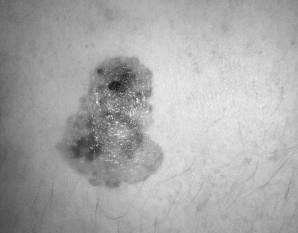
-
A
-
B
-
C
-
D
-
E
Reveal answer details
Close answer details
Correct answerD
ExplanationAmulticolored brown or black pigmented lesion with irregular borders should raise the concern of melanoma. Squamous cell carcinoma usually presents as an erythematous papular nodule. The most common type of basal carcinoma presents as an ulcerative, well-circumscribed nodule, although occasionally it may be pigmented and confused with melanoma. Merkel cell carcinoma appears as red to purple papular nodules. Keratoacanthoma is a well-circumscribed keratotic lesion that may regress without treatment. The most appropriate next step is to perform an excisional biopsy with narrow margins to confirm the diagnosis and determine depth of invasion. Shave biopsy would yield a pathologic diagnosis, but would not allow appropriate staging and is never recommended. The margin of resection and determination of lymph node management would depend on the depth of invasion of the melanoma measured in millimeters.
Therefore, wide excision is not recommended until the depth of invasion of the lesion is determined by excisional biopsy with narrow margins. Mohs' surgery should be considered for nonmelanoma tumors but is not recommended for melanoma.
Question 52
Single choice
A75-year-old man is brought to the emergency department by his family for evaluation of jaundice. He complains of pruritus of 2 weeks' duration and a recent 10-lb weight loss. On examination, he is deeply jaundiced and has a nontender, globular mass in the right upper quadrant of the abdomen that moves with respiration. For above patient with jaundice, select the one most likely diagnosis.
-
A
-
B
-
C
-
D
-
E
-
F
-
G
-
H
-
I
Reveal answer details
Close answer details
Correct answerF
ExplanationPancreatic carcinoma occurs in the head of the gland in 75% of cases. About 75% of the patients with carcinoma in the head of the pancreas present with obstructive jaundice, weight loss, and, in the presence of advanced disease, abdominal pain.
Question 53
Single choice
A9-year-old boy presents with a several-day history of progressive arm and leg weakness. He has been well except for an upper respiratory infection 2 weeks ago. The patient is alert and oriented. On repeated examination, the heart rate varies between 60 and 140 beats/min, and the blood pressure (BP) varies between 90/60 and 140/90 mmHg. Respirations are shallow, with a rate of 50/min. There is symmetric weakness of the face and all four extremities. Deep tendon reflexes are absent. Sensation is intact. Which of the following is the most likely diagnosis?
-
A
-
B
-
C
-
D
-
E
Reveal answer details
Close answer details
Correct answerD
ExplanationProgressive, symmetric motor weakness, areflexia, and autonomic instability, with mild or absent sensory signs, are typical features of Guillain-Barr?syndrome. Frequently, there is a history of infection (often respiratory) in the several weeks preceding clinical onset of the syndrome. Supportive evidence for the diagnosis includes elevation of CSF protein concentration with a mild (10 or fewer cells/mL) mononuclear pleocytosis, and slowing of nerve conduction velocities. In polymyositis, deep tendon reflexes would be intact. Myasthenia gravis is characterized by weakness aggravated by repetitive movement. In transverse myelitis, sensation would also be lost. Viral encephalitis is characterized by mental status abnormalities.
Question 54
Single choice
A 10-year-old boy presents with red discoloration of the urine since the morning. He is healthy and otherwise asymptomatic. He denies dysuria, frequency, urgency, flank, or abdominal pain. His BP is normal. His examination is within normal
limits including abdomen and genitourinary system. There is no rash or edema. His urine is pink in color; urinalysis is negative for hemoglobin or protein. No white cells, red cells, or bacteria are noted. Which of the following is the most appropriate next step?
-
A
obtain a recent dietary and drug history
-
B
-
C
test for myoglobin in the urine
-
D
obtain a renal ultrasound
-
E
obtain antistreptococcal antibodies
Reveal answer details
Close answer details
Correct answerA
ExplanationThere are many drugs and foods that cause red urine. These include azo dyes, beets, blackberries, ibuprofen, methyldopa, red food color, rifampin, phenolphthalein, pyridium, sulfasalazine, and many others. Dark brown or black urine can be associated with alanine, cascara, resocinol, and thymol. If the diet or drug history as well as dipstick are negative, porphyrinuria should be considered. A positive reagent strip (dipstick) indicates hemoglobin or myoglobin. Negative dipstick and normal urinalysis makes renal pathology unlikely. Because the urinalysis is negative, and the patient is asymptomatic, urine culture is not indicated at this time. Test for antistreptococcal antibodies should be done if poststreptococcal glomerulonephritis is suspected; it is characterized by proteinuria, hematuria, edema, and hypertension.
Question 55
Single choice
A 40-year-old woman presents to the emergency room with a 3-day history of worsening abdominal pain, with nausea and vomiting. Examination reveals a low-grade fever and abdominal tenderness in the right upper quadrant with guarding, especially during inspiration. Laboratory findings include a mild leukocytosis and a slightly elevated bilirubin. For the above patient with abdominal pain, select the most likely diagnosis.
-
A
-
B
-
C
-
D
-
E
-
F
-
G
-
H
superior mesenteric artery embolism
-
I
ruptured abdominal aortic aneurysm
-
J
-
K
Reveal answer details
Close answer details
Correct answerG
ExplanationAcute appendicitis initially presents with periumbilical pain secondary to obstruction of the appendiceal lumen. This is mediated through visceral pain fibers, and because the appendix is from the embryologic midgut, the pain is referred to the umbilicus. With obstruction of a hollow viscus, there may be associated nausea. As the inflammatory process progresses to involve the visceral and parietal peritoneal surfaces, the pain becomes localized directly over the appendix in the right lower quadrant. Fever and leukocytosis are nonspecific signs of an inflammatory process. Gastroenteritis may be associated with nausea, anorexia, and lowgrade fever. Periumbilical pain is colicky and secondary to increased peristalsis.
Localized pain and signs of peritoneal irritation are uncommon. Aruptured right ovarian cyst may mimic appendicitis. Patients may exhibit right lower abdominal peritoneal irritation. However, the onset of pain is usually sudden, and the pain is initially felt in the right lower quadrant. These patients do not have anorexia or other gastrointestinal symptoms. The clinical picture of regional enteritis (Crohn's disease) is one of a chronic illness, often associated with weight loss, intermittent cramps, and diarrhea. Fever, tenderness, and a palpable right lower quadrant inflammatory mass may result from complications of ileal involvement. Sigmoid diverticulitis is more common in older patients, often with a prodromal history of irregular bowel habits. There may be left lower quadrant pain and tenderness, with a palpable left-sided inflammatory mass. A cecal volvulus presents with sudden onset of colicky abdominal pain and signs and symptoms of a bowel obstruction, including bilious emesis and abdominal distention. Alcohol-related acute pancreatitis presents with pain referred to the epigastrium, with radiation to the back mediated through the celiac ganglia. The patient may develop abdominal distention secondary to the associated paralytic ileus. Hyperamylasemia and an elevated serum lipase, in this clinical setting, are suggestive of pancreatitis. Perforated peptic ulcer and acute cholecystitis may also present with epigastric pain, and elevations of both serum lipase and amylase. Pain from a perforated ulcer, however, is sudden in onset and may be associated with shoulder-tip pain from diaphragmatic irritation. About 75% of patients with perforated duodenal ulcers have pneumoperitoneum on chest and abdominal radiographs. Acute cholecystitis will usually commence after a large meal and initially presents as colicky epigastric pain, progressing to pain localized in the right upper abdomen when transmural inflammation of the gallbladder wall produces peritoneal irritation. Acute mesenteric occlusion presents with sudden onset of severe but poorly localized periumbilical abdominal pain, associated with acidosis. There may be elevation of serum amylase and lipase. A ruptured abdominal aortic aneurysm will present with sudden onset of midabdominal pain, back pain, and hemodynamic instability.
Question 56
Single choice
A45-year-old woman, seen by her medical internist, has been experiencing fears that she may have a serious illness. She complains that after eating she experiences "a lot of gas" and abdominal pain, followed by diarrhea on occasion. Her heart at times seems to be beating rapidly, and she feels faint at times, has chest "discomfort," and wonders if she is having a heart attack. Multiple tests have identified only a mild irritable bowel syndrome. The woman's fears are not allayed by this. She makes repeated calls to be seen by her doctors as well as seeking consultation from other specialists. She insists that "there's something there" and believes the doctors are not taking her seriously. Which of the following is the most likely diagnosis?
-
A
-
B
-
C
-
D
-
E
Reveal answer details
Close answer details
Correct answerD
ExplanationHypochondriasis is a somatoform disorder in which misperceptions or distortions of somatic signs and symptoms lead to preoccupation with fears of having a serious illness. In factitious disorders, one deliberately manufactures signs and symptoms to enter the sick role. The preoccupation with fear of serious illness is not part of factitious disorder. Major depression is characterized by symptoms of depression: sleep disturbance, appetite disturbance, and so forth. It may be complicated by hypochondriasis. In the case study, no supporting evidence for major depression (for which she would have been evaluated) is provided. This woman's symptoms as described are not of a psychotic level; thus, reactive psychosis would be inappropriate. In pain disorder, pain in a specific body site is the predominant focus, unlike the predominance of fear seen in hypochondriasis. Care of these patients is best managed supportively by developing a therapeutic alliance with them. Anticipating their needs by establishing regular office visits and physical examinations with them will help allay fears as well as reassure them of one's concern for them, and that if an occult condition becomes evident it will be diagnosed early. Certainly, regular consultation with other specialists is in order to manage these patients. Although the course of hypochondriasis tends to be chronic, there are indications that factor in for a good outcome.
One of these is the absence of secondary gain. This disorder is seen equally in both men and women. The prevalence in a general medical practice is approximately 46%. There is no relationship between hypochondriasis and increased
ESR.
Question 57
Single choice
Match the below medication with the potential blood dyscrasia side effect it can be associated with.
Lithium
-
A
-
B
-
C
-
D
-
E
Reveal answer details
Close answer details
Correct answerA
ExplanationValproate can be associated with thrombocytopenia and platelet dysfunction especially at high doses. Leukocytosis is a common benign effect of lithium. Clozaril can cause agranulocytosis in 12% of patients. Agranulocytosis can be an idiosyncratic adverse event with carbamazepine
Question 58
Single choice
A 35-year-old woman comes into the ER after cutting her wrists for the 10th time. She did this after her boyfriend of 2 weeks left her yesterday. She reports a history of unstable interpersonal relationships, chronic feelings of emptiness, impulsive sexual relationships, and problems with her sense of identity.
The one psychotherapeutic technique to avoid would be:
-
A
therapeutic physical holding sessions to help the patient feel in control
-
B
clear roles and responsibilities of patient and therapist are established
-
C
therapist conveys empathic validation
-
D
-
E
patient and therapist mutually develop a hierarchy of priorities
Reveal answer details
Close answer details
Correct answerA
ExplanationPhysically holding a patient would be a boundary violation. Conveying empathic validation, having clear roles and responsibilities, being flexible, and developing a hierarchy of priorities are all common features of recommended psychotherapy for a patient with borderline personality disorder.
Question 59
Single choice
The National Center for Health Statistics collects information on chronic disease risk factors such as obesity, treatment for blood pressure, exercise, and alcohol use.
These data are best captured using which of the following tools?
-
A
-
B
-
C
-
D
Reveal answer details
Close answer details
Correct answerA
ExplanationThe Behavioral Risk Factor Surveillance System is a health survey that uses telephone interviews to collect information about chronic disease risk factors such as obesity, treatment for blood pressure, alcohol use, and exercise. Review of hospital records may capture some of this information, but is not an efficient method of capturing information on multiple risk factors for chronic disease. Registries are primarily used to track clinical information regarding particular diseases or conditions. They do not tend to capture a large body of information on behavioral risk factors. Physician-based reports are usually generated as a consequence of state or federal mandates regarding the reporting of communicable disease, rather than behavioral risk factors for chronic disease.
Question 60
Single choice
18. A home pregnancy test was positive on September
20. At her first prenatal visit, she asks you what the duration of pregnancy is and what her due date is.
You tell her that the average number of days from the onset of menses to delivery is which of the following?
-
A
-
B
-
C
-
D
-
E
Reveal answer details
Close answer details
Correct answerD
ExplanationThe mean duration of human pregnancy is 266 days from conception. To this is added 14 days for the interval between the onset of the last menses and the conception date. Thus, it is important to ascertain the range of days for each woman's menstrual cycles. The more variable a woman's menstrual cycles are, the less certain is the estimated due date calculated from the LMP. The standard deviation of pregnancy duration is ?7 days. Thus, 95% of human pregnancies will deliver between 263 and 297 days after the onset of the LMP.
Question 61
Single choice
Six hundred asymptomatic men with prostatic nodules are given a PSA test to screen for prostate cancer. With a cutoff of 5 ng/mL, the PSA results are positive in 200 cases. Of these, 100 persons are confirmed on biopsy and follow-up
testing to have the disease; however, 50 of the individuals who had negative test results are also shown to have the disease based on biopsy. You have been asked to screen another similar group of 50 men using the PSA test. What proportion of persons having prostatic cancers will you correctly identify in the new group?
-
A
-
B
-
C
-
D
-
E
Reveal answer details
Close answer details
Correct answerC
ExplanationSeveral concepts are important in determining the sensitivity of tests. The percentage sensitivity is the percentage of individuals with the disease (true positives [TP]) detected by the tests. False negatives (FN) are those who have the disease, but who were not detected by the test. The percentage sensitivity is calculated as: TP/(TP + FN) . 100. In the example given in the question, the calculation is 100/(100 + 50) x 100 = 66.7%.
Question 62
Single choice
A 10-year-old boy comes to your office in the winter with a sore throat he has had for 2 days. In addition, he has had fever, headache, and abdominal pain. He does not have any allergies to medications. On examination, he has a temperature of 38.6°C, an ery thematous pharynx, and tender cervical adenopathy. Arapid screening test for group Astreptococcus is performed and is positive. Which of the following would be the most appropriate antimicrobial agent?
-
A
-
B
-
C
trimethoprim-sulfamethoxazole
-
D
-
E
Reveal answer details
Close answer details
Correct answerB
ExplanationPenicillin remains the drug of choice for treatment of streptococcal pharyngitis. Amoxicillin, macrolides, and cephalosporins are acceptable alternatives.
Question 63
Single choice
An 11-month-old girl presents to your office with a fever of 39°C she has had for 2 days. She has also vomited frequently and had decreased fluid intake. She looked tired and ill but on examination, had no apparent source of infection. She
appeared to be 510% dehydrated. Her urinalysis shows a urine specific gravity of 1.030, trace blood, and protein. Nitrite and leukocyte esterase are both positive. Microscopic examination of unspun urine shows >100 white blood cells (WBCs) and 05 red blood cells (RBCs) per high-power field, as well as many bacteria. Aurine culture is sent. Which of the following is the most appropriate management plan?
-
A
Treat only if the culture is positive.
-
B
Admit for intravenous (IV) hydration and IV antibiotics.
-
C
Treat with intramuscular ceftriaxone and have her follow-up in the office the following day.
-
D
Treat with trimethoprimsulfamethoxazole, and have her followup in the office the following day.
-
E
Prescribe amoxicillin and start oral hydration.
Reveal answer details
Close answer details
Correct answerB
ExplanationUrine for urinalysis and culture must be properly obtained. Catheterization is the most reliable method of the choices offered. Suprapubic tap is considered the "gold-standard" but is not always technically feasible, especially in an outpatient office setting. Amidstream, clean catch specimen would be acceptable in an older, toilet-trained child. "Bagged" specimens are not recommended because of possible skin or fecal contamination of the specimen. Similarly, obtaining a sample from a diaper or potty would be unacceptable. Urinalysis includes dipstick method and microscopic examination. Leukocyte esterase (an enzyme in WBC) and nitrites suggest probable infection. Microscopic analysis of unspun urine for WBC (>10/ highpower field) or bacteria is also predictive of infection. RBCs are often present in a UTI. The patient is vomiting and dehydrated; this may indicate possible pyelonephritis. The most appropriate course would be IV hydration and
empiric treatment with antibiotics (ceftriaxone) while awaiting cultures. Children with pyelonephritis are at increased risk of renal scarring, especially younger children, and should be treated early. E. coli is the most common organism cultured;
others include Proteus, Klebsiella, S saprophyticus, and Enterococcus. The occurrence of a UTI in a girl under age 35 years and in a boy of any age may be a marker for an underlying congenital anatomic abnormality, in particular, vesicourethral reflux. Radiologic investigation with renal ultrasound and VCUG is recommended
Question 64
Single choice
A 58-year-old woman with a history of chronic paranoid schizophrenia, who has been continuously treated with antipsychotics for the past 20 years, lives in a community-based residential facility. She has recently suffered an increase in auditory hallucinations, and her haloperidol dose has been increased from 2.5 to 10 mg/day. Four days later, she is brought by a visiting nurse to the emergency room, where she presents with confusion, marked flexor and extensor rigidity in her legs and arms, and a temperature of 103.5°F. Her blood pressure is160/120 mmHg, her pulse is 120/min and irregular. Which of the following is most likely to be an effective treatment for this condition?
-
A
intramuscular haloperidol
-
B
-
C
-
D
intramuscular benztropine
-
E
Reveal answer details
Close answer details
Correct answerB
ExplanationThe most effective treatments for the extremely serious, potentially fatal complication of antipsychotic treatment called NMS are oral bromocriptine, a dopaminergic agonist, and intravenous or oral dantrolene, a skeletal muscle relaxant.
Afurther increase in the patient's haloperidol dose would likely worsen her NMS. While the anticholinergic effects benztropine may alleviate some of the neuroleptic-induced muscular dystonia associated with the syndrome, and lorazepam may help relax the muscle rigidity, they are not likely to be life saving, and propranolol is not an effective medication in the treatment of NMS.
Question 65
Single choice
A 4-year-old child presents to his pediatrician with a complaint of a mild rash and fevers. His travel history is positive for a camping trip 2 weeks prior. The parents do not recall a tick bite on the child and do not remember if there were ticks in the area. No other members of the family complain of similar symptoms and the child does not attend day care. Physical examination is positive for a temperature of 100.9°F with an erythematous rash noted over the child's trunk. Which of the following factors would significantly increase the possibility that the child has Lyme disease?
-
A
The camping trip occurred in an area endemic for the tick Ixodes dentatus.
-
B
The camping trip occurred in Texas.
-
C
The camping trip occurred in an area with a high indigenous population of lizards.
-
D
The camping trip occurred in an area endemic for the white-footed mouse.
-
E
The camping trip occurred in an area which had recently been sprayed with pesticides.
Reveal answer details
Close answer details
Correct answerD
ExplanationThe principal risk factor for Lyme disease in the United States is residence in an area with high infestation rates of infected ticks. In the coastal northeastern United States, the whitefooted mouse is the most competent vertebrate reservoir of
B. burgdorferi, the organism responsible for Lyme disease, with infection rates of up to 80%. Therefore, residence in an area where there is a large population of whitefooted mice will also increase the likelihood ofexposure to Lyme disease.
The tick species
I. dentatus has maintained cryptic cycles of
B. burgdorferi, but it is not considered to be a public health risk because it rarely feeds on humans. Texas is not one of the endemic areas for Lyme disease. Lizards are actually considered to be a zooprophylactic host because they are an incompetent reservoir of
B. burgdorferi, and they are also a preferential feeding source for immature stages of the tick. Pesticide spraying is actually protective against tick infestation and therefore will reduce the chances of tick exposure.
Question 66
Single choice
A50-year-old man is admitted to the hospital with a UGI bleed from acute erosive gastritis, secondary to chronic nonsteroidal anti-inflammatory use. His hematocrit is 28%. With fluid resuscitation, his blood pressure normalizes, but he has a persistent hyperdynamic precordium, tachycardia, and flow murmur on auscultation. He complains of shortness of breath on ambulation. An ECG shows depressed ST-T segments. Which of the following is the next appropriate step in management?
-
A
initiation of iron supplementation therapy
-
B
-
C
continued IV fluid resuscitation
-
D
initiation of a calcium channel blocker
-
E
Reveal answer details
Close answer details
Correct answerC
ExplanationThis patient has symptomatic anemia. The decreased oxygen-carrying capacity has resulted in decreased tissue perfusion. The heart attempts to compensate with increased contractility and heart rate, in an attempt to improve cardiac output and oxygen delivery. In this patient, however, this is inadequate and has also placed excess metabolic demands on the myocardium with signs of ischemia. These changes can be ameliorated with a blood transfusion. Iron supplementation is indicated in the treatment of chronic iron-deficiency anemia. Restoration of iron stores and a normal red cell mass usually takes several months. Therefore, it is not appropriate in a patient with symptomatic anemia. Supplemental oxygen will not improve oxygen delivery in a patient with limited oxygen-carrying capacity and compensatory maximum oxygen extraction at the tissue level. IV fluid resuscitation will increase circulating blood volume, resulting in hemodilution and decreased red cell concentration. Calcium channel blockade is indicated for management of myocardial ischemia from primary coronary or myocardial pathology.
Question 67
Single choice
Otitis media occurring during the first 8 weeks of life deserves special consideration, because the bacteria responsible for infections during this time may be different from those that affect older infants and children. Which of the following organisms is the most likely to cause otitis media in these infants?
-
A
-
B
-
C
-
D
-
E
Reveal answer details
Close answer details
Correct answerB
ExplanationC. trachomatis is considered an unusual cause of otitis media at any age. N. gonorrhoeae causes conjunctivitis in the newborn. Syphilis and toxoplasmosis cause congenital infections. E. coli is one of the neonatal pathogens that also cause
otitis media in neonates. The symptoms of otitis media in newborns are often similar to those of sepsis; they are subtle and nonspecific and may include poor feeding, lethargy, vomiting, or diarrhea. Once the diagnosis is established, the initial therapy should be similar to that for neonatal sepsis, such as parenteral ampicillin and cefotaxime. Under ideal circumstances, the results of cultures obtained by tympanocentesis may then allow further treatment with a more specific antibiotic of low toxicity. Older infants may respond well to oral therapy but require frequent observation.
Question 68
Single choice
A 35-year-old woman comes into the ER after cutting her wrists for the 10th time. She did this after her boyfriend of 2 weeks left her yesterday. She reports a history of unstable interpersonal relationships, chronic feelings of emptiness, impulsive sexual relationships, and problems with her sense of identity. Which of the following is the most likely axis II diagnosis?
-
A
histrionic personality disorder
-
B
borderline personality disorder
-
C
antisocial personality disorder
-
D
dependent personality disorder
-
E
avoidant personality disorder
Reveal answer details
Close answer details
Correct answerB
ExplanationRecurrent suicidal behaviors, affective instability, unstable interpersonal relationships, chronic feelings of emptiness, and rejection sensitivity are all traits of borderline personality disorder.
Question 69
Single choice
Select the organism associated with the Furunculosis
-
A
-
B
beta-hemolytic Streptococcus
-
C
respiratory syncytial virus (RSV)
-
D
-
E
-
F
-
G
-
H
-
I
-
J
Reveal answer details
Close answer details
Correct answerA
ExplanationGiardiasis may cause cramping and a chronic diarrheal syndrome, with malabsorption and weight loss. Its distribution is worldwide, particularly where hygienic standards are not high. It also occurs sporadically in high-risk individuals.
Streptococcal pyoderma, including erysipelas and impetigo, has been demonstrated to precede acute glomerulonephritis. Even when appropriate antibiotics are given in adequate dosage and duration for these conditions, renal damage may still result. Prevention thus consists of wound care, including cleaning wounds well and removal of crust. Mycoplasma infections are particularly common in families with younger children. They are frequently imported to the family by school-aged children, leading to a low-grade fever and persisting tracheobronchitis in the parents, or more acutely, an atypical pneumonia.
G. lamblia is found in up to 20% of homosexual males, and may cause chronic diarrhea, although in these patients it tends to be asymptomatic.
E. coli was first reported as a cause of watery diarrhea in nurseries in the 1940s. Although nursery epidemics with enteropathogenic serotypes had decreased in recent years in the United States, the increase of infant-child day care centers has resulted in their relatively frequent occurrence. Furunculosis is most frequently caused by coagulase-positive staphylococcal infections. The public health significance of this largely relates to the hazards of skin infections in food handlers and subsequent staphylococcal toxin in the food, leading to staphylococcal intoxication food-borne disease.
H. pylori has been associated with gastric ulcers, but not with duodenal ulcers. Otitis media, whether acute or with effusion, commonly results from viral infection, such as by RSV. Various other organisms may be responsible including Streptococcu pneumoniae,
H. influenzae, and others.
C. perfringens, with rare exceptions, is transmitted in a meat dish prepared in bulk. Under propitious circumstances for the organism, especially on cooling of the food, bacterial multiplication can be very rapid. Symptoms begin to occur in the affected population in about 12 hours.
Epidemic typhus is a rickettsial illness. Man is the host and long-term reservoir. The vectors are body lice (P. humanus corporis). The rickettsia are not present in human excretions and cannot be transmitted by person-to-person contact.
Question 70
Single choice
A56-year-old woman presents to the clinic for routine health screening. Her concern is the development of breast cancer. She has no current breast-related complaints. Past history is pertinent for fibrocystic changes with atypical ductal hyperplasia and a single fibroadenoma, both diagnosed by open biopsy 5 years ago. She smokes one pack per day and drinks one can of beer daily. Family history is positive for breast cancer in her mother, diagnosed at the age of 85.
Current medications include a cholesterol lowering agent, an antihypertensive, and HRT, which she has taken for 5 years. Physical examination is unremarkable. Mammograms show dense breasts, decreasing the accuracy of the study, but no suspicious findings were noted. Which of the following is the most common risk factor in evaluating women for breast cancer?
-
A
fibrocystic changes with atypical ductal hyperplasia
-
B
-
C
-
D
-
E
Reveal answer details
Close answer details
Correct answerE
ExplanationAnumber of breast cancer risk factors have been identified. These include family history, benign breast disease with atypical epithelial hyperplasia, alcohol consumption, and HRT. The most common and clinically useful risk factors are age and female gender. In most patients (70%) with breast cancer, however, no other major risk factor can be identified.
Question 71
Single choice
A35-year-old man comes into the hospital with deep sadness and suicidal thoughts. He reports having experienced similar episodes in the past; he says he has also experienced two periods of extremely elated moods, during which he talked
nonstop, went without sleep, and believed he was God. Identify the diagnosis below that best describes the situation.
-
A
major depressive disorder, recurrent
-
B
-
C
-
D
-
E
-
F
mood disorder due to a general medical condition
-
G
substance-induced mood disorder
Reveal answer details
Close answer details
Correct answerB
ExplanationThe criteria for mood disorders depend on the presence or absence and duration of depressive and hypomanic or manic symptoms as well as on their severity, and also on the presence or absence of a causative general medical condition or the ingestion of substances. Major depressive disorder, recurrent, is marked by the lifetime occurrence of two or more major depressive episodes without intervening hypomanic or manic episodes. A major depressive episode is a severe depression which has lasted at least 2 weeks. Bipolar I disorder is characterized by a history of at least one full-blown manic episode, during which the patient's mood has been abnormally and persistently elevated, expansive or irritable for at least 1 week with marked impairment in occupational functioning. Bipolar II disorder, on the other hand, is marked by a history of at least one major depressive episode and at least one hypomanic episode, during which a patient's mood has been elevated, but not to the extent of causing marked impairment in social or occupational functioning. Apatient with bipolar II disorder may not, by definition, have had a full-blown manic episode. Cyclothymia is marked by periods of hypomanic symptoms alternating with depressive symptoms that do not meet the criteria for a major depressive episode. Dysthymic disorder is marked by a persistent, low-grade depression occurring more days than not for at least 2 years. Amood disorder due to a general medical condition is a prominent and persistent disturbance in mood that is judged to be the direct physiologic effect of a general medical condition, such as hyperthyroidism. A substance-induced mood disorder is a prominent and persistent disturbance in mood that is judged to be due to the direct effects of a substance, but which continues beyond the usual period of intoxication or withdrawal from a substance.
Question 72
Single choice
A24-year-old cocaine addict with no previous psychiatric history, reports that he had been bingeing on cocaine for 2 months earlier in the year. He stopped using cocaine 2 months ago, and he has been very sad and tearful for the entire period since he stopped his cocaine use. Identify the diagnosis below that best describes the situation.
-
A
major depressive disorder, recurrent
-
B
-
C
-
D
-
E
-
F
mood disorder due to a general medical condition
-
G
substance-induced mood disorder
Reveal answer details
Close answer details
Correct answerG
ExplanationThe criteria for mood disorders depend on the presence or absence and duration of depressive and hypomanic or manic symptoms as well as on their severity, and also on the presence or absence of a causative general medical condition or the ingestion of substances. Major depressive disorder, recurrent, is marked by the lifetime occurrence of two or more major depressive episodes without intervening hypomanic or manic episodes. A major depressive episode is a severe depression which has lasted at least 2 weeks. Bipolar I disorder is characterized by a history of at least one full-blown manic episode, during which the patient's mood has been abnormally and persistently elevated, expansive or irritable for at least 1 week with marked impairment in occupational functioning. Bipolar II disorder, on the other hand, is marked by a history of at least one major depressive episode and at least one hypomanic episode, during which a patient's mood has been elevated, but not to the extent of causing marked impairment in social or occupational functioning. Apatient with bipolar II disorder may not, by definition, have had a full-blown manic episode. Cyclothymia is marked by periods of hypomanic symptoms alternating with depressive symptoms that do not meet the criteria for a major depressive episode. Dysthymic disorder is marked by a persistent, low-grade depression occurring more days than not for at least 2 years. Amood disorder due to a general medical condition is a prominent and persistent disturbance in mood that is judged to be the direct physiologic effect of a general medical condition, such as hyperthyroidism. A substance-induced mood disorder is a prominent and persistent disturbance in mood that is judged to be due to the direct effects of a substance, but which continues beyond the usual period of intoxication or withdrawal from a substance.
Question 73
Single choice
A 59-year-old woman had a left modified radical mastectomy for intraductal carcinoma 2 years previously. She presents with confusion, lethargy, and thigh pain. X-rays reveal a lytic lesion in the shaft of the femur. Which of the following is the most appropriate initial therapy?
-
A
radiotherapy to the femur
-
B
-
C
-
D
-
E
Reveal answer details
Close answer details
Correct answerB
ExplanationHypercalcemia is a common complication of malignancy. Mechanisms include bone metastases, humoral secretion (e.g., osteoclast-activating factor), prostaglandin, or ectopic parathormone production and immobilization. Hypercalcemia is often manifested by confusion and lethargy. The other metabolic abnormalities usually are not associated with confusion. Therapy is directed at increasing renal calcium clearance and inhibiting further bone resorption. Saline infusion raises the glomerular filtration rate and decreases calcium reabsorption in the proximal tubule. Under life-threatening circumstances, the infusion may need to be aggressive, as much as 6 L of saline daily plus furosemide. Radiotherapy will do nothing for the calcium. Tamoxifen is an antiestrogen used in the treatment of breast carcinoma and other malignancies. When used in the presence of bone metastases, it may contribute to hypercalcemia. Chemotherapy will not decrease the calcium levels. Glucocorticoids have an antitumor effect and reduce tumor production of humoral mediators, but act slowly.
Question 74
Single choice
A 2-year-old boy has had a purulent drainage from the right nostril for a week. He is afebrile and has had no associated symptoms, such as cough. Which of the following is the most likely diagnosis?
-
A
-
B
-
C
an upper respiratory infection
-
D
a foreign body in the right nostril
-
E
Reveal answer details
Close answer details
Correct answerD
ExplanationChildren frequently insert foreign bodies into the nose. Initial symptoms are local obstruction, sneezing, and pain. Subsequently, there is swelling and infection leading to a purulent, malodorous, and often bloody discharge. The infection clears after removal of the foreign body. Nasal polyps cause obstruction of the nasal passages, hyponasal speech, and mouth breathing; gray, grape-like masses can be visualized on nasal examination. An upper respiratory infection is
usually suggested by a careful history. Initial symptoms include a scratchy throat, followed by development of thin nasal discharge and sneezing. Myalgia, low-grade fever, headache, malaise, and decreased appetite may be present. By the 2nd or 3rd day, the discharge becomes thicker and more purulent. Cough is common. Symptoms usually resolve by 710 days. Adolescents with sinusitis may have classic symptoms of headache and sinus tenderness. In children, cough and nasal discharge are common; the cough is worse when supine. If upper respiratory infection symptoms persist without improvement for >10 days, sinusitis should be considered. A more
acute form may occur, with a shorter duration and more severe symptoms such as fever >39°C, purulent nasal discharge, headache, and eye swelling. Children with allergic rhinitis present with sneezing, clear watery, rhinorrhea, and itching of the nose, palate, pharynx, and eyes. Itching, redness, and tearing of the eyes may be present. This occurs in response to exposure to an allergen such as pollen, mold spores, and animal or mite antigens
Question 75
Single choice
A 4-day-old infant presents with yellow discoloration of the skin and sclera. The baby was born at term by a normal vaginal delivery. Pregnancy was uncomplicated; there were no risk factors for sepsis and no history of maternal alcohol or drug use. The baby is breast-fed and has been nursing every 2 hours, about 10 minutes at each breast. The bilirubin level is 15 mg/dL (all unconjugated), the hematocrit is 45%, and the Coombs test is negative. Which of the following is the most likely diagnosis?
-
A
congenital biliary atresia
-
B
isoimmune hemolytic disease
-
C
-
D
-
E
Reveal answer details
Close answer details
Correct answerE
ExplanationThe most common causes of neonatal cholestasis are extrahepatic biliary atresia and idiopathic neonatal hepatitis. Infants usually develop icterus by 26 weeks of age. They have conjugated hyperbilirubinemia, dark urine, and acholic stools.
At time of presentation, there is usually hepatomegaly, as well as pruritis, splenomegaly, and ascites. The use of RhoGAM (anti-D gamma globulin) has reduced the incidence of Rh sensitization and resulting jaundice. ABO incompatibility can also cause a milder form of isoimmune hemolytic disease and jaundice. It is more common in infants with blood types Aand B born to mothers with blood type O. Anemia is usually present; direct Coombs test is weakly positive; and indirect
Coombs test is positive. Crigler-Najjar syndrome is autosomal recessive; there is usually marked hyperbilirubinemia (240 mg/dL) in an otherwise asymptomatic infant. The high levels result in kernicterus. Physiologic jaundice is the most common cause of unconjugated hyperbilirubinemia; it is characterized by peak bilirubin level of <13 mg/dL on day of life 35, decrease to normal within 2 weeks. In breast-fed infants, this is often exaggerated, with levels >13 mg/dL. This
occurs in 1025% of breastfed infants, as opposed to 47% of formulafed infants. It is known as "breast-feeding" jaundice. "Breast-milk" jaundice, develops after the first week of life, peaking between the 2nd and 3rd week to 1020 mg/dL. The cause of this has not been established.
Question 76
Single choice
A 5-year-old boy has a history of bed-wetting about four to five times a week. He has recently begun to attend kindergarten. He was toilet trained (dry during the day) by age 3 but has never been consistently dry at night. He denies any
dysuria or frequency. There is no history of increased thirst or frequent urination. The urinalysis is negative for blood, protein, glucose, or ketones; there are no white cells or bacteria; the specific gravity is 1.020. Which of the following is the most likely diagnosis?
-
A
a urinary tract infection (UTI)
-
B
primary nocturnal enuresis
-
C
secondary enuresis caused by stress of the new school
-
D
-
E
Reveal answer details
Close answer details
Correct answerB
ExplanationEnuresis may be primary (75%) where nocturnal control was never achieved; secondary enuresis (25%) is when the child was dry at night for at least a few months. Nocturnal enuresis is more common in boys, and family history is positive in at least 50%. This may affect as much as 20% of children at age 5 years, and it spontaneously stops in at least 15% of affected children every year. Psychological factors are often involved in secondary enuresis. A careful history should be obtained to rule out such organic factors as UTI (dysuria, frequency, urgency). Children with diabetes insipidus or diabetes mellitus have polydipsia and polyuria. Urinalysis should be considered to rule out an organic cause. In diabetes
mellitus, urinalysis may reveal glycosuria and ketonuria. Aurinespecific gravity of >1.015 makes diabetes insipidus unlikely.
Question 77
Single choice
A30-year-old man presents with sudden onset of severe epigastric pain 6 hours ago. Examination reveals a low-grade fever, tender abdomen throughout, with rigidity of the abdominal usculature.
Abdominal roentgenograms show pneumoperitoneum.
For the above patient with abdominal pain, select the most likely diagnosis.
-
A
-
B
-
C
-
D
-
E
-
F
-
G
-
H
superior mesenteric artery embolism
-
I
ruptured abdominal aortic aneurysm
-
J
-
K
Reveal answer details
Close answer details
Correct answerD
ExplanationAcute appendicitis initially presents with periumbilical pain secondary to obstruction of the appendiceal lumen. This is mediated through visceral pain fibers, and because the appendix is from the embryologic midgut, the pain is referred to the umbilicus. With obstruction of a hollow viscus, there may be associated nausea. As the inflammatory process progresses to involve the visceral and parietal peritoneal surfaces, the pain becomes localized directly over the appendix in the right lower quadrant. Fever and leukocytosis are nonspecific signs of an inflammatory process. Gastroenteritis may be associated with nausea, anorexia, and lowgrade fever. Periumbilical pain is colicky and secondary to increased peristalsis.
Localized pain and signs of peritoneal irritation are uncommon. Aruptured right ovarian cyst may mimic appendicitis. Patients may exhibit right lower abdominal peritoneal irritation. However, the onset of pain is usually sudden, and the pain is initially felt in the right lower quadrant. These patients do not have anorexia or other gastrointestinal symptoms. The clinical picture of regional enteritis (Crohn's disease) is one of a chronic illness, often associated with weight loss, intermittent cramps, and diarrhea. Fever, tenderness, and a palpable right lower quadrant inflammatory mass may result from complications of ileal involvement. Sigmoid diverticulitis is more common in older patients, often with a prodromal history of irregular bowel habits. There may be left lower quadrant pain and tenderness, with a palpable left-sided inflammatory mass. A cecal volvulus presents with sudden onset of colicky abdominal pain and signs and symptoms of a bowel obstruction, including bilious emesis and abdominal distention. Alcohol-related acute pancreatitis presents with pain referred to the epigastrium, with radiation to the back mediated through the celiac ganglia. The patient may develop abdominal distention secondary to the associated paralytic ileus. Hyperamylasemia and an elevated serum lipase, in this clinical setting, are suggestive of pancreatitis. Perforated peptic ulcer and acute cholecystitis may also present with epigastric pain, and elevations of both serum lipase and amylase. Pain from a perforated ulcer, however, is sudden in onset and may be associated with shoulder-tip pain from diaphragmatic irritation. About 75% of patients with perforated duodenal ulcers have pneumoperitoneum on chest and abdominal radiographs. Acute cholecystitis will usually commence after a large meal and initially presents as colicky epigastric pain, progressing to pain localized in the right upper abdomen when transmural inflammation of the gallbladder wall produces peritoneal irritation. Acute mesenteric occlusion presents with sudden onset of severe but poorly localized periumbilical abdominal pain, associated with acidosis. There may be elevation of serum amylase and lipase. A ruptured abdominal aortic aneurysm will present with sudden onset of midabdominal pain, back pain, and hemodynamic instability.
Question 78
Single choice
A 30-year-old man presents to the emergency department with sudden onset of severe epigastric pain and vomiting 3 hours ago. He reports a 6-month history of chronic epigastric pain occurring nearly every day and relieved by antacids. On examination, he appears sweaty and avoids movement. Vital signs reveal a temperature of 100°F, BP of 100/60 mmHg, pulse rate of 110/min, and respiratory rate of 12/min. The remainder of his examination reveals diminished bowel sounds and a markedly tender and rigid abdomen. A chest x-ray and abdominal films reveal pneumoperitoneum. Which of the following is the most appropriate next step in management?
-
A
-
B
nonoperative management with NG decompression and antibiotics
-
C
-
D
administration of H2 blockers
-
E
placement of a central venous line
Reveal answer details
Close answer details
Correct answerC
ExplanationPerforated duodenal ulcer usually presents as a sudden onset of acute abdominal pain.Examination usually reveals severe abdominal tenderness with rigidity of the abdominal musculature (i.e., an acute abdomen). With a prior history of abdominal pain relieved by antacids, a chronic ulcer that has now perforated is strongly suggested. Perforated colon cancer occurs in an older age group, as well as gastric ulcer. Following plain radiographs that show pneumoperitoneum, no additional diagnostic tests are required and serve only to delay treatment. The treatment is laparotomy and either patch closure of the perforation or definitive operation, the latter being preferred, depending on operative findings. However, the patient must receive fluid resuscitation before laparotomy to avoid hypotension and its consequences. Although nonoperative management for contained perforations has been suggested by some authors, an acute abdomen is an indication for operative management.
Question 79
Single choice
A 59-year-old woman complains of shortness of breath and aching left-sided chest pain that radiates to the left shoulder. Physical examination shows no abnormalities; her CXRs are shown in Figure below. Which of the following statements is true concerning this disease? 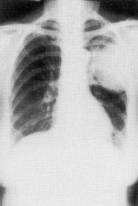
-
A
This tumor frequently metastasizes to distant sites.
-
B
Direct exposure to asbestos is required.
-
C
Most cases are associated with recent, massive exposure to asbestos.
-
D
Diffuse forms may be cured by chemotherapy alone.
-
E
Localized forms may be cured by surgery alone.
Reveal answer details
Close answer details
Correct answerE
ExplanationThe x-ray in Figure shows a large, pleural based tumor in the left upper chest; this is most likely a mesothelioma. The tumor is locally invasive, so there are no signs of extrathoracic disease. Direct exposure or contact with asbestos is not required-tumors have occurred in families of asbestos workers. The exposure may be brief and mild, and there is typically a long latent period before appearance of the tumor, about 2040 years. Surgery is curative in local cases. Diffuse malignant mesothelioma responds poorly to all treatments (surgery, radiotherapy, and chemotherapy).
Question 80
Single choice
The laboratory test has a sensitivity of 85% and a specificity of 70%. You want to have 1000 persons take the test.
To estimate the positive predictive value of the test for this population, you need to know which of the following?
-
A
-
B
-
C
negative predictive value
-
D
the cut off values for the test
-
E
the latest period of the disease
Reveal answer details
Close answer details
Correct answerB
ExplanationIn order to calculate predictive value, it is necessary to know prevalence. To illustrate this, onsider the extremes if prevalence is zero, positive predictive value will be zero, and negative predictive value will be 100%!
Question 81
Single choice
A 58-year-old woman with a history of chronic paranoid schizophrenia, who has been continuously treated with antipsychotics for the past 20 years, lives in a community-based residential facility. She has recently suffered an increase in auditory hallucinations, and her haloperidol dose has been increased from 2.5 to 10 mg/day. Four days later, she is brought by a visiting nurse to the emergency room, where she presents with confusion, marked flexor and extensor rigidity in her legs and arms, and a temperature of 103.5°F. Her blood pressure is160/120 mmHg, her pulse is 120/min and irregular. Which of the following is the most likely diagnosis that best describes this woman's current condition?
-
A
neuroleptic malignant syndrome (NMS)
-
B
-
C
-
D
-
E
Reveal answer details
Close answer details
Correct answerA
ExplanationNMS is a rare complication of neuroleptic therapy which involves symptoms of severe muscle rigidity, elevated temperature, and two or more of the following: diaphoresis, dysphagia, and tremor, and incontinence, changes in level of consciousness, tachycardia, mutism, leukocytosis, elevated CPK, or labile blood pressure. EPS would not explain the extensor rigidity, elevated temperature, and blood pressure. Metabolic syndrome refers to another neuroleptc side effect where lipid levels are elevated and adult onset diabetes can develop. Malingering would not easily explain the elevated vital signs. Though alcohol withdrawal would be in the differential with the elevated vital signs, the pipe-like rigidity could not be explained.
Question 82
Single choice
A 28-year-old woman with 28-day menstrual cycle is attempting to conceive and is considering the use of a home ovulation predictor kit to time intercourse at ovulation. She asks you what day of her menstrual cycle her luteinizing hormone (LH) peak is most likely to occur. What should you tell her?
-
A
-
B
-
C
-
D
-
E
Reveal answer details
Close answer details
Correct answerB
ExplanationThe LH surge classically triggers ovulation 14 days before the onset of the subsequent menstrual period. Subtract 14 days from the typical cycle length to estimate the cycle day of the LH surge and ovulation. It is pertinent to remind this woman that her probability of conceiving in each cycle is no higher than 1520%, even with intercourse timed to the preovulatory LH surge.
Question 83
Single choice
A 2-year-old child was recently adopted from India. She appears to be healthy, and there are no abnormal symptoms. Her weight and height are at 25th percentile for age. Her examination is normal. On screening, you find a positive TB skin test using purified protein derivative (PPD) with 20 mm induration. She has a history of receiving a BCG vaccination at birth.
Your management plan is to do which of the following?
-
A
Obtain a chest x-ray and treat only if this is abnormal.
-
B
Obtain a chest x-ray and initiate prophylactic treatment with isoniazid (INH).
-
C
Repeat the test in 36 months.
-
D
Attribute the positive PPD to the BCG vaccination and do serial yearly x-rays.
-
E
Reveal answer details
Close answer details
Correct answerB
ExplanationGenerally, the interpretation of tuberculin skin test (TST) is the same regardless of BCG status. Induration >5 mm is considered positive in children in close contact with known or suspected cases of tuberculosis disease or children suspected to have tuberculosis disease. Induration >10 mm is considered positive in children at greater risk of disseminated disease (age <4 years; other medical conditions such as lymphoma, diabetes, chronic renal failure, or malnutrition) or children
at greater risk of exposure to tuberculosis disease (born in, or parents born in high-prevalence regions, travel to these regions, exposure to adults at high risk, such as HIV infected, homeless, or drug abusers). Induration >15 mm is positive in children >4 years without any risk factors. Radiographic evaluation of all children with positive TST is recommended. Latent tuberculosis infection is defined as an infection in a person with a positive TST, no physical findings of the disease,
and a chest radiograph that is either normal or reveals only granulomas or calcifications in the lungs or regional lymph nodes. Children with latent tuberculosis infection should receive prophylaxis, usually 9 months of INH. Those with symptoms, signs, and/or radiographic manifestations are said to have tuberculosis dsease. There is no benefit to repeating the test in 36 months, and it will delay treatment. Sputum cultures are difficult to obtain in younger children. Gastric aspirate specimens obtained with a nasogastric tube are preferred. Culture material should be obtained in children with evidence of the disease in order to obtain information on drug susceptibility and resistance patterns.
Question 84
Single choice
A 47-year-old man with diabetes and hypertension travels with his family to Mexico. The next morning after eating out at a local restaurant and despite drinking bottled water, he develops severe crampy abdominal pain and watery, frequent diarrhea. Which of the following is the best approach for his care?
-
A
-
B
-
C
-
D
-
E
Reveal answer details
Close answer details
Correct answerA
ExplanationCiprofloxacin is the drug of choice in a dose of 500 mg bid for 13 days because most cases of travelers' diarrhea are from E. coli. This patient's symptoms are moderate to severe and warrant antibiotic treatment which will decrease the frequency of bowel movements and duration of illness. Erythromycin and tetracycline are effective for Vibrio which is an uncommon cause of travelers' diarrhea. Metronidazole is used for Clostridium difficile enteritis.
Question 85
Single choice
Select the ONE best lettered answer that is most closely associated with it. Each lettered answer may be selected once, more than once, or not at all.
Workers in certain occupations are exposed to diseases for which animals are the reservoir. These workers may then become a source of infection to others.
Butchers are most likely to acquire and transmit the infectious disease?
-
A
-
B
-
C
-
D
-
E
Reveal answer details
Close answer details
Correct answerA
ExplanationCutaneous anthrax is associated with a characteristic skin lesion, which becomes infected by the introduction of the bacillus through the skin. Occasionally, an infected carcass is not identified before butchering. A minor wound on the butcher may become infected. Human anthrax is secondary to the disease in animals, primarily mammals. In humans, the disease has three major clinical forms: cutaneous, inhalational, and GI.
Question 86
Single choice
A 17-year-old girl is brought in by her parents because of their concerns about her weight loss. She is petite, and a normal weight for someone her height is 100 lbs, but she weighs 78 lbs. She reports menstrual irregularity. The patient believes she is obese. She does not believe she has a problem. Her mother reports that she found laxatives on her daughter's nightstand, and heard her vomiting in the bathroom yesterday after dinner. Which of the following is the most likely diagnosis?
-
A
-
B
-
C
-
D
no diagnosis, normal presentation
-
E
Reveal answer details
Close answer details
Correct answerC
ExplanationAnorexia nervosa is an eating disorder that predominantly affects women in their teens and in early adulthood. It is defined as refusal to maintain a minimal normal weight, at least 85% of that weight considered normal for that person's age and height, and a morbid preoccupation with feeling obese. Common strategies to lose weight include avoidance of all fats and carbohydrates, self-induced vomiting, obsessive physical activity, and abuse of laxatives or diuretics or both.
Despite apparent aversion to gaining weight, anorectics frequently take very special care in preparation and consumption of food and may delight in preparing gourmet feasts for others. Menstrual irregularity and amenorrhea are also commonly reported but are not essential factors in making the diagnosis. It is not yet clear whether such menstrual problems are simply secondary to starvation or whether they reflect a more pervasive endocrine dysfunction. Perhaps the most striking clinical feature of this disorder is the misperception of body image. Regardless of the method of confrontation, including use of mirrors or photographs, sufferers see themselves as overweight. The patient often refuses to agree that there is any problem whatsoever. Numerous factors, including developmental, family, endocrine, and gastrointestinal disturbances have been implicated in anorexia nervosa, but the etiology has yet to be clearly established. Most commonly, the course consists of a single episode followed by remission. Some patients may suffer a series of relapses and remissions. Mortality rates have been estimated to be as high as 20%.
Question 87
Single choice
An 18-month-old boy is brought to the clinic for a checkup. As part of his routine care, a serum lead level is obtained. It is 25 g/mL. Which of the following is the most appropriate next step in his management?
-
A
-
B
-
C
investigation of his home for lead hazards
-
D
reassurance that this level is not a problem
-
E
repeating the level in 6 months
Reveal answer details
Close answer details
Correct answerC
ExplanationThe CDC has identified lead poisoning as one of the most common and preventable childhood health problems in the United States. Recent data indicate that undesirable behavioral and cognitive deficits can occur at levels previously thought to be "safe." Screening all children aged 672 months, by questionnaire or blood-lead level, is suggested. Children at greatest risk for lead poisoning include young inner-city children who live in housing constructed before 1960; children living
near lead processing smelters, battery recycling plants, or other industries that release lead; or children with siblings or playmates diagnosed with lead poisoning. Eliminating the lead source is the cornerstone of treatment. Chelation therapy generally is reserved for those children with blood-lead levels greater than 45 g/dL.
Question 88
Single choice
A 20-year-old asymptomatic college student presents to your clinic for contraception. She states that she has been sexually active for 2 years with one partner, and that they usually use condoms.
Along with a Papanicolaou (Pap) smear and pelvic examination, which of the following should you also recommend?
-
A
-
B
-
C
-
D
thyroid-stimulating hormone (TSH) test
-
E
Reveal answer details
Close answer details
Correct answerB
ExplanationThe USPSTF strongly recommends that clinicians routinely screen all sexually active women aged 25 years and younger, and other asymptomatic women at increased risk for infection, for chlamydial infection.
Question 89
Single choice
An obese 21-year-old woman complains of increased growth of coarse hair on her lip, chin, chest, and abdomen. She also notes menstrual irregularity with periods of amenorrhea. Which of the following is the most likely cause of this patient's symptoms?
-
A
-
B
-
C
-
D
-
E
Reveal answer details
Close answer details
Correct answerA
ExplanationAs many as 85% of women with hirsutism, obesity, and menstrual irregularities have polycystic ovary disease (Stein-Leventhal syndrome). Women with this disorder have chronic anovulation and frequent infertility despite the presence of adequate amounts of estrogen. Excessive luteinizing hormone (LH) response to gonadotropin-releasing hormone is thought by many to be the primary problem, resulting in ovarian theca-cell hyperplasia and hypersecretion of androgens.
Others have found deficiencies of the ovarian enzymes involved in estrogen biosynthesis. Diagnosis is based on an elevated LH level, decreased follicle-stimulating hormone (FSH) level, and an LH/FSH ratio greater than 2:5. Combination estrogen-progestin therapy suppresses the androgen production. Less common causes of hirsutism are drug induced (e.g., testosterone, anabolic steroids), adrenal tumor or hyperplasia, Cushing disease, and ovarian tumors. Familial hirsutism is not associated with menstrual abnormalities or obesity.
Question 90
Single choice
A 28-year-old man with a past history of bilateral orchiopexy for cryptorchidism presents with a painless, unilateral right scrotal enlargement. On examination, there is a palpable right testicular mass and enlarged inguinal nodes. Scrotal ultrasonography demonstrates heterogeneity of the testis, with an associated hydrocele. A CT scan of the abdomen and pelvis demonstrated right-sided retroperitoneal adenopathy. CT scan of the chest is normal. Which of the following would help confirm the diagnosis?
-
A
transscrotal needle biopsy
-
B
transscrotal aspiration of the hydrocele for cytology
-
C
radical orchiectomy through an inguinal incision
-
D
transscrotal exploration and orchiectomy
-
E
laparotomy with pelvic and retroperitoneal node dissection
Reveal answer details
Close answer details
Correct answerC
ExplanationCryptorchidism increases the risk of developing a testicular malignancy. This patient has a solid testicular mass which should be presumed to be secondary to a testicular malignancy. Optimal surgical management is inguinal exploration, control of the spermatic cord, biopsy of the mass, and radical orchiectomy with high ligation of the cord, if tumor is confirmed. Transscrotal aspiration, exploration, or needle biopsy is contraindicated because of risk of tumor spillage, and risk of altering the lymphatic drainage of the scrotum. Laparotomy and retroperitoneal node dissection is not indicated until after confirmation of the diagnosis and excision of the primary tumor. This patient has seminoma with disease spread to
ipsilateral regional lymph nodes.
Question 91
Single choice
A23-year-old university student has lost interest in his master's degree program. His two friends who bring him to the psychiatrist say he has been isolating himself in his room and has covered all electrical appliances and outlets with duct tape claiming that "electromagnetic waves are disturbing the microchip in my brain." He acknowledges that he once took a medication for the same problem with the "microchip," but then he became unbearably restless, could not sit still, and felt that he was "crawling" inside. According to the patient's psychiatric symptoms, select the most appropriate medication. Presume no medical problems other than those mentioned.
-
A
-
B
-
C
-
D
-
E
-
F
-
G
-
H
-
I
-
J
Reveal answer details
Close answer details
Correct answerF
ExplanationThis man's symptoms are psychotic in nature and somewhat bizarre. In addition, the information strongly suggests that he is very sensitive to the extrapyramidal effects of the traditional antipsychotics. Olanzapine, an atypical antipsychotic with very few extrapyramidal effects, would be a good choice here.
Question 92
Single choice
An 18-month-old boy has received 5 days of amoxicillin for otitis media. He continues to have fever, and on physical examination, the right tympanic membrane is bulging with purulent fluid behind it. Which of the following is the best antibiotic to use?
-
A
amoxicillin-clavulanic acid
-
B
-
C
-
D
-
E
Reveal answer details
Close answer details
Correct answerA
ExplanationPatients with persistent otitis media after 5 days of amoxicillin likely have resistant
S. pneumoniae, or a beta-lactamase-positive
M. catarrhalis or
H. influenzae. Cephalexin, erythromycin, dicloxacillin, and penicillin would not cover the beta-lactamase-positive organisms. Some would recommend that the patient would benefit from a higher dose of the amoxicillin component in the combination antibiotic to provide better coverage for resistant
S.
Question 93
Single choice
A 65-year-old woman presents to the physician's office for her yearly physical examination. She has no complaints except for a recent 10-lb weight loss. Past history is pertinent for a 40 pack-year smoking history, hypertension, asthma, and hypothyroidism. Examination reveals a thin woman with normal vital signs and unremarkable heart and abdominal examinations. Lung examination reveals mild wheezing and a few bibasilar rales. A chest x-ray is obtained and is shown in Figure. Achest x-ray obtained 3 years ago was normal. Yearly laboratory tests including a CBC, electrolytes, and lipid panels are normal. Which of the following is the most likely diagnosis? 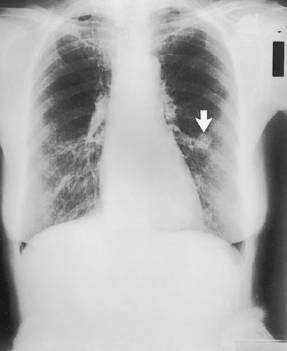
-
A
-
B
-
C
nonsmall cell lung cancer
-
D
-
E
Reveal answer details
Close answer details
Correct answerC
ExplanationThe finding of a new, irregular lesion in a patient with a long smoking history must be considered a lung carcinoma and should be managed accordingly. Nonsmall cell carcinoma is the most common lung neoplasm. Small cell carcinomas usually grow rapidly and disseminate widely by the time of diagnosis. Tuberculosis would present with systemic symptoms and apical disease on chest x-ray. Likewise, a lung abscess would be accompanied by systemic symptoms and may show air-fluid levels in the abscess cavity. A hamartoma presents as an extremely slowly growing nodule that may contain popcorn calcifications. The most appropriate test following suspicious findings on a chest x-ray would be a CT scan to evaluate further the nodule, evaluate the lymph node status, and triage subsequent diagnostic tests. If enlarged mediastinal nodes are seen, then mediastinoscopy may be indicated. Bronchoscopy may be helpful to assess for endobronchial lesions and to obtain tissue for diagnosis. Pulmonary function tests are necessary once a decision is made to consider operation. Percutaneous needle biopsy may be required to obtain tissue once CT scanning is performed.
Question 94
Single choice
A 65-year-old man presents to the physician's office for his yearly examination. His past history is pertinent for a 40 pack-year smoking history and colon cancer 3 years ago for which he underwent a sigmoid colectomy. The most recent colonoscopic follow-up 3 months ago was negative. His physical examination is normal. Laboratory results show a normal CBC and electrolytes, markedly elevated cholesterol, and a CEA of 12 compared to values of less than 5 obtained every 6 months since colectomy. A repeat CEA 4 weeks later was 15, and liver function tests revealed a minimally elevated alkaline phosphatase, with normal transaminases and bilirubin.
In your discussion with the patient regarding the risks and benefits of the different management options listed above, which of the following values should you quote regarding the expected 5-year survival rate following curative surgical resection?
-
A
-
B
-
C
-
D
-
E
Reveal answer details
Close answer details
Correct answerC
ExplanationIn a patient who has undergone surgical resection for colon cancer, elevated CEA, and liver function tests must be followed by an evaluation for metastatic disease, including the possibility of extrahepatic disease. The CT scan is the most useful examination to evaluate both intra-and extrahepatic disease. Various CT scans have been advocated for liver tumors, including dynamic and portography scans. PET scans may detect occult extrahepatic disease and studies are underway to define the role of this modality in metastatic colon cancer. MRI shows promise as a useful examination and can be useful to characterize lesions of uncertain significance. Radionuclide liver scans have been supplanted by more accurate scans. Surgical resection, if possible, is the treatment of choice for metastatic colorectal cancer to the liver. Chemotherapy is reserved for patients who are not surgical candidates or refuse surgical treatment. Radiation therapy is not usually used in these patients. Observation and repeat imaging delays the treatment for patients who may be respectable. The expected 5-year survival has been shown in multiple studies to be greater than 20%, usually in the range of 25 and 35%.
Question 95
Single choice
Apreviously healthy male postal worker complains of fever, headache, myalgia, and cough for the past 3 days. He reports that several of his coworkers have also been ill with similar complaints. His leukocyte count is normal with a relative lymphopenia. Achest x-ray shows only enlarged hilar shadows. Which of the following is the most likely cause of this infection?
-
A
-
B
-
C
-
D
-
E
Reveal answer details
Close answer details
Correct answerA
ExplanationOnset of influenza usually is abrupt, with fever, chills, fatigue, headache, myalgias, malaise, anorexia, scratchy throat, and nonproductive cough. Fever appears early and may reach 40°C (104°F). Myalgias affecting the back and legs, and retrobulbar headache are worse with high fever. There is a normal leukocyte count with relative lymphopenia. Chest x-ray may show enlarged hilar shadows. Fever lasts a few days. Upper and then lower respiratory symptoms become more prominent, and cough may persist for weeks. Respiratory anthrax is exceedingly rare. Initial symptoms may resemble influenza, but rhinorrhea is rare. X-rays generally show patchy lung infiltrate and mediastinal widening (due to enlarged hemorrhagic lymph nodes). Early treatment with antibiotics such as ciprofloxacin sometimes prevents death.
Question 96
Single choice
A65-year-old man presents with a 4-day history of worsening lower abdominal pain and constipation. On examination, he is febrile (38.5°C) and has lower a bdominal tenderness that is most intense in the midline and left lower quadrant associated with a palpable fullness. Laboratory findings demonstrate a moderate leukocytosis and abdominal roentgenograms show an ileus pattern. For the above patient with abdominal pain, select the most likely diagnosis.
-
A
-
B
-
C
-
D
-
E
-
F
-
G
-
H
superior mesenteric artery embolism
-
I
ruptured abdominal aortic aneurysm
-
J
-
K
Reveal answer details
Close answer details
Correct answerE
ExplanationAcute appendicitis initially presents with periumbilical pain secondary to obstruction of the appendiceal lumen. This is mediated through visceral pain fibers, and because the appendix is from the embryologic midgut, the pain is referred to the umbilicus. With obstruction of a hollow viscus, there may be associated nausea. As the inflammatory process progresses to involve the visceral and parietal peritoneal surfaces, the pain becomes localized directly over the appendix in the right lower quadrant. Fever and leukocytosis are nonspecific signs of an inflammatory process. Gastroenteritis may be associated with nausea, anorexia, and lowgrade fever. Periumbilical pain is colicky and secondary to increased peristalsis.
Localized pain and signs of peritoneal irritation are uncommon. Aruptured right ovarian cyst may mimic appendicitis. Patients may exhibit right lower abdominal peritoneal irritation. However, the onset of pain is usually sudden, and the pain is initially felt in the right lower quadrant. These patients do not have anorexia or other gastrointestinal symptoms. The clinical picture of regional enteritis (Crohn's disease) is one of a chronic illness, often associated with weight loss, intermittent cramps, and diarrhea. Fever, tenderness, and a palpable right lower quadrant inflammatory mass may result from complications of ileal involvement. Sigmoid diverticulitis is more common in older patients, often with a prodromal history of irregular bowel habits. There may be left lower quadrant pain and tenderness, with a palpable left-sided inflammatory mass. A cecal volvulus presents with sudden onset of colicky abdominal pain and signs and symptoms of a bowel obstruction, including bilious emesis and abdominal distention. Alcohol-related acute pancreatitis presents with pain referred to the epigastrium, with radiation to the back mediated through the celiac ganglia. The patient may develop abdominal distention secondary to the associated paralytic ileus. Hyperamylasemia and an elevated serum lipase, in this clinical setting, are suggestive of pancreatitis. Perforated peptic ulcer and acute cholecystitis may also present with epigastric pain, and elevations of both serum lipase and amylase. Pain from a perforated ulcer, however, is sudden in onset and may be associated with shoulder-tip pain from diaphragmatic irritation. About 75% of patients with perforated duodenal ulcers have pneumoperitoneum on chest and abdominal radiographs. Acute cholecystitis will usually commence after a large meal and initially presents as colicky epigastric pain, progressing to pain localized in the right upper abdomen when transmural inflammation of the gallbladder wall produces peritoneal irritation. Acute mesenteric occlusion presents with sudden onset of severe but poorly localized periumbilical abdominal pain, associated with acidosis. There may be elevation of serum amylase and lipase. A ruptured abdominal aortic aneurysm will present with sudden onset of midabdominal pain, back pain, and hemodynamic instability.
Question 97
Single choice
A 45-year-old man with HIV is being evaluated in the clinic. His HIV diagnosis was made 6 months ago and he wants to know more about medication treatment options. Which of the following is an indication to initiate HIV medication treatment?
-
A
-
B
HIV viral load less than 55,000
-
C
CD4 count greater than 700
-
D
-
E
HIV viral load greater than 55,000
Reveal answer details
Close answer details
Correct answerE
ExplanationAdherence to a drug regimen is critical to prevent antiretroviral drug resistance. Treatment usually should be offered to patients who are symptomatic from their HIV infection. Asymptomatic patients should have antiretroviral therapy offered if their CD4 counts are less than 350 or plasma HIV viral load is greater than 50,000 copies. A high viral load (>100,000 copies) correlates with poor prognosis and an increased likelihood of developing opportunistic infections.
Question 98
Single choice
A 44-year-old man undergoes evaluation for worsening headaches. His posteroanterior and lateral arteriograms are shown in the figure below.Which of the following is the patient most likely to develop?
-
A
-
B
-
C
-
D
-
E
Reveal answer details
Close answer details
Correct answerB
ExplanationThe arteriograms in figure demonstrate a large aneurysm arising from the basilar artery. Intracranial aneurysms occasionally present with new onset or worsening of headaches or may be asymptomatic and found coincidentally during evaluation of an unrelated disorder. Frequently, they leak or rupture, resulting in a subarachnoid hemorrhage with sudden onset of severe headache and meningeal symptoms and signs (e.g., nuchal rigidity, photophobia). Rapid progression to stroke, coma, or death may follow. Intracranial aneurysms are not usually associated with hypercalcemia, hypopituitarism, or chronic meningitis and rarely cause tentorial herniation without rupturing. Surgical approaches to intracranial aneurysms include excision and ligation.
Question 99
Single choice
An infant is due for her first dose of polio vaccine.Her parents have heard that there are two different types of vaccine for polio. They want to know why their daughter needs to get another shot rather than just taking the oral form of the vaccine.
You tell the parents the major advantage of the injectable vaccine is which of the following?
-
A
-
B
increased mucosal immunity
-
C
-
D
avoidance of vaccine-associated paralytic poliomyelitis
-
E
boosting her immunity through secondary transmission
Reveal answer details
Close answer details
Correct answerD
ExplanationIn 1997, the expanded use of IPV in the United States began. Before this, the risk of vaccine-associated paralytic polio was 1 case per 2.4 million doses of oral polio vaccine (OPV); the rate after the first dose was 1 per 750,000 doses, including vaccine recipient and contact cases. This is the main disadvantage of the OPV vaccine. Although it is contraindicated in children or their contacts with immunodeficiencies, they are at high risk in case of inadvertent exposure, because there is feco-oral transmission of the virus for 46 weeks after the vaccine is given. The advantages of the OPV include lower cost, fewer "shots," and boosting herd immunity. The OPV vaccine is still recommended for global polio eradication.
Question 100
Single choice
A 70-year-old man with a 50 pack-year history of smoking presents with a 6-week history of intermittent, painless, gross hematuria and urinary frequency. There are no masses palpable on abdominal examination, and rectal examination is normal. Urinalysis confirms the presence of hematuria, and urine culture is negative.
The initial diagnostic evaluation does not reveal any abnormalities. Which of the following is the best next step in the diagnostic workup?
-
A
-
B
cystourethroscopy and urinary cytology
-
C
-
D
-
E
re-evaluation in 24 weeks, with repeat urinalysis and urine culture
Reveal answer details
Close answer details
Correct answerB
ExplanationPatients with gross hematuria require aggressive diagnostic evaluation. A careful, planned approach will yield the cause in the majority of patients. Painless hematuria is often the first sign of a urinary tract malignancy. After confirmation of hematuria, and exclusion of infection, all patients should have plain radiographs and IVP. This is the optimal initial diagnostic approach to aid in distinguishing between upper tract (renal) pathology and lower tract (lower ureteric and bladder) pathology. Further diagnostic evaluation will be guided by these noninvasive studies. A voiding cystourethrogram is invasive. It is a limited examination of bladder function and anatomy, and although advanced invasive bladder tumors may be demonstrated as a filling defect, it is not sensitive for lower stages of bladder neoplasms. Cystourethroscopy is invasive and is, therefore, not the initial examination in the evaluation of hematuria. It is indicated in the evaluation of gross hematuria in patients with a normal IVP. It is the optimal tool for evaluation of potential bladder pathology. An abdominal ultrasound or CT scan is indicated in patients with a suspected renal mass, either by clinical examination or demonstrated on IVP. Urine for cytology is useful for screening of patients with suspected urinary tract malignancy, but it is falsely negative in approximately 20% of patients and should not be used as the only diagnostic evaluation.
Atransrectal ultrasound may be helpful in evaluating the extent of invasion of a bladder or prostatic neoplasm. Abdominal CT scan is a superior imaging study for this purpose.
|