A 26-year-old woman complains of the acute onset of anuria, purpura, and mental confusion. Her peripheral blood film displays marked thrombocytopenia and abundant schistocytes. Laboratory studies reveal elevations of bilirubin, creatinine, and lactose dehydrogenase. A skin biopsy shows numerous intravascular thrombi within the dermal microvasculature. What is the most likely diagnosis?
-
A
acute idiopathic thrombocytopenia purpura
-
B
-
C
-
D
-
E
thrombotic thrombocytopenic purpura
Reveal answer details
Close answer details
Correct answerE
ExplanationSection: Pathology and Path physiology Thrombotic thrombocytopenic purpura is an acute microangiopathic hemolytic anemia. The clinical picture usually includes mental alterations, anuria, mucosal bleeding, and purpura. An abnormal platelet-aggregating substance is the likely initiating event. Acute idiopathic thrombocytopenia (choice A) does not have a hemolytic component, lacks renal failure, and does not display thrombi in the skin biopsy. Bernard-Soulier syndrome (choice B) and Glanzmann thrombasthenia (choice C) are hereditary disorders of platelet aggregation. Clinical symptoms of a coagulopathy usually occur in infancy. MayHegglin anomaly (choice D) is an inherited condition with thrombocytopenia and morphologically abnormal WBCs.
Hemolysis, acute onset, and mental aberrations do not typify this disorder.
The change in elimination rate after hour 12 when sodium bicarbonate was administered is expected if drug W is which of the following chemical types?
-
A
-
B
-
C
-
D
-
E
Reveal answer details
Close answer details
Correct answerD
ExplanationSection: Pharmacology
By inspection of the graph, it is observed that administration of sodium bicarbonate increases the rate of elimination of the drug (the slope of the line increases and the half-life is shortened). Sodium bicarbonate causes alkalinization of the urine. Alkalinization causes increased ionization of weak acids and accelerates their urinary excretion because the ionized (charged) forms cannot be easily reabsorbed through the tubular epithelium, whereas the uncharged forms of many weak acids are readily reabsorbed. Urinary alkalinization is a strategy sometimes used to hasten the excretion of weak acids, such as aspirin, in overdose situations. Excretion of a nonelectrolyte (choice A) is unaffected by changes in urinary pH because the polarity of nonelectrolytes is insensitive to pH. A strong acid (choice B) is fully ionized (unprotonated) at all attainable urinary pH values so that alteration of urinary pH has no effect on its excretion. A strong base (choice C) is similarly fully charged at all attainable urinary pH values so that alteration of urinary pH has no effect on its excretion. Excretion of a weak base (choice E) is slowed by alkalinization of urinary pH because the uncharged form of a base is readily reabsorbed from the tubular urine predominates.
The graph in below figure shows the jugular vein pressure curve of this patient.
If the first heart sound occurs between letters C and D, which part of the curve represents the atrial contraction? 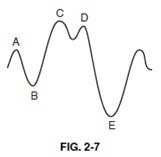
-
A
-
B
-
C
-
D
-
E
Reveal answer details
Close answer details
Correct answerB
ExplanationSection: Physiology
below figure shows the jugular vein pressure curve. Pressure in the jugular vein reflects atrial pressure and is highest during the atrial contraction (named the "a wave"). The "v wave" (choice A) represents the rise in atrial pressure before the tricuspid valve opens during diastole. The "y notch" (choice D) is due to the fall in atrial pressure during the ventricular filling phase. The "c wave" (choice C) is due to the rise in atrial pressure produced by the bulging of the tricuspid valve during isovolumetric contraction of the right ventricle. The "x notch" (choice E) coincides with the ventricular ejection phase.
A 7-year-old child has been exhibiting impulsivity and disruptive behaviors at school. When further evaluation reveals that the child has been unable to sleep at night for at least 3 months out of fear that his parents may divorce, which of the following is an important diagnostic possibility?
-
A
-
B
attention deficit hyperactivity disorder
-
C
-
D
generalized anxiety disorder
-
E
separation anxiety disorder
Reveal answer details
Close answer details
Correct answerE
ExplanationSection: Behavioral Science and Biostatics Separation anxiety disorder involves excessive anxiety concerning separation from the home or someone to whom the child is attached. The disturbance must continue for more than 4 weeks, with onset before age 18. Choices A, B, C, and D are not particularly indicated by the new information provided.
In an assay for the presence of a specific disease gene alelle in several individuals, you isolate genomic DNA from each and perfom polymerase chain reaction (PCR) using gene-specific primers. The PCR product is expected to have a recognition site for the restriction endonuclease BamHI. Following PCR and BamHI digestion, the products are separated by gel electrophoresis and the results are shown in below figure. Which lane corresponds to the individual demonstrating heterozygosity for the BamHI site? 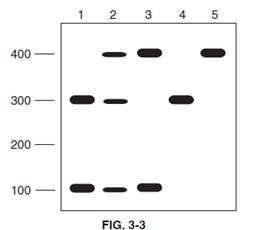
-
A
-
B
-
C
-
D
-
E
Reveal answer details
Close answer details
Correct answerB
ExplanationSection: Biochemistry
Someone who exhibits heterozygosity would harbor two distinct alelles. In the case of this analysis, they would be identified as containing a copy of the gene that does not harbor the BamHI site and a copy that does harbor the site. The presence of the BamHI site in the PCR product in this example would result in the generation of 300 and 100 bp fragments. The lack of the site would yield a product of 400 bp. Thus, following PCR amplification and BamHI digestion of DNA from a heterozygote, one would be able to observe three bands of equal intensity. A person who was homozygous for having the BamHI-containing sequence would result in two bands (choice A) whose intensities would be greater than the three of the heterozygote. A person homozygous for the lack of the BamHI site would yield a single 400 bp band (choice D). The banding patterns observed in lanes 3 (choice C) and 5 (choice E) would not be possible from this analysis.
Apatient calls 911 because of severe substernal crushing pain that has not responded to three nitroglycerin tablets taken sublingually. The paramedic team suspects that the patient has suffered an acute myocardial infarction. His blood pressure is 110/70 and his heart rate is 70, with occasional premature extra beats. After initial treatment in the hospital, the patient. is found to be suffering from more severe hypotension (his blood pressure is now 70/40) and reduction of cardiac function with reduced left ventricular ejection fraction. His urine output is low and he has mental clouding. Which of the following is the pharmacologic treatment of choice for this condition in this patient?
-
A
-
B
-
C
-
D
-
E
Reveal answer details
Close answer details
Correct answerC
ExplanationSection: Pharmacology
The description of the patient's reduced cardiac function and elevated left ventricular filling pressure, with reduced peripheral perfusion (clouded mentation, reduced urine output) indicates cardiogenic shock, decreased blood pressure due to decreased cardiac output. In cardiogenic shock, a drug is needed that increases myocardial contractility without increasing heart rate and peripheral resistance. In addition, renal artery dilation is desirable to prevent renal shutdown. Dopamine (choice C), an agonist at dopamine, beta-, and alphaadrenoceptors, increases myocardial contractility with little increase in peripheral resistance and lower renal arterial resistance. Atenolol (choice A), a beta-1-selective blocker, is inappropriate in the setting of reduced cardiac function, although it may be quite appropriate later when the patient's condition is stabilized. Digoxin (choice B), a cardiac glycoside, may increase cardiac contractility but has a slow onset of action and may exacerbate arrhythmias. Norepinephrine (choice D) increases myocardial contractility but also greatly increases peripheral resistance, a situation that must be avoided in cardiogenic shock. Procainamide (choice E), a group IA antiarrhythmic agent, is not indicated because the patient does not have an arrhythmia.
A 60-year-old male with a chronic cough, bloody sputum, and marked weight loss is diagnosed as having tuberculosis. A "serpentine-like" colonial morphology is noted on Lowenstein-Jensen agar.
This latter finding is due to which of the following factors?
-
A
-
B
-
C
-
D
trehalose-6,6'-dimycolate
-
E
Reveal answer details
Close answer details
Correct answerD
ExplanationSection: Microbiology/Immunology
Mycobacteria are rich in lipids. These include mycolic acids, waxes, and phosphatides. In the cell, the lipids are largely bound to proteins and polysaccharides and are, to some extent, responsible for acid-fastness. Virulent strains of tubercle bacilli form microscopic "serpentine cords" in which acid-fast bacilli are arranged in parallel chains. Cord formation is correlated with virulence and a "cord factor" (trehalose-6, 6-dimycolate choice D) has been extracted from virulent bacilli. It inhibits leukocyte migration, causes chronic granulomas, and may serve as an immulogical adjuvant. Virulent mycobacteria do not have endotoxin (choice B) as do the enteric bacteria which may cause inflammation. Nor do mycobacteria produce coagulase (choice A). Mycobacteria colonies are usually rough and dry, not "slimy" from a capsule (choice C). Wax D (choice D) is present in mycobacteria, but is not associated with cord factor.
Sean is 8 years old. He is referred by his school because he is habitually disruptive in class. Which of the following is the most useful area to explore at this point?
-
A
-
B
-
C
his relationship with his mother
-
D
history of cruelty to animals
-
E
Reveal answer details
Close answer details
Correct answerA
ExplanationSection: Behavioral Science and Biostatics Acommon cause of disruptiveness is attention deficit hyperactivity disorder (ADHD), which is characterized by inattention and hyperactivity. Enuresis (choice E), cruelty to animals (choice D), and trouble with the law (choice B) are often found in the childhoods of those who are eventually diagnosed as having an antisocial personality, but disruptiveness in class is more indicative of hyperactivity. Exploring Sean's relationship to his mother (choice C) may be useful, but not as much as assessing his attention span.
On otoscopic examination, a patient is found to have a 2-cm mass protruding from a retraction pocket in his right tympanic membrane. The lesion is removed and determined to be a cystic mass lined by squamous epithelium containing desquamated cellular debris and a mononuclear infiltrate. Which of the following is the most likely cause of this lesion?
-
A
-
B
-
C
exostosis formation in the external auditory canal
-
D
squamous cell carcinoma of the external auditory canal
-
E
Reveal answer details
Close answer details
Correct answerB
ExplanationSection: Pathology and Path physiology
A cholesteatoma is a cystic lesion lined by squamous epithelium and containing keratinaceous material. It is most probably formed by the protrusion of squamous epithelium from the middle ear canal through a perforation in the eardrum that was itself the result of chronic otitis media. Barotrauma (choice A) to the ear can be produced by sudden changes in atmospheric pressure compared to the relatively low middle ear pressure. This results in inflammation of the mucous membrane of the middle ear (serous otitis media). Exostosis formation in the external auditory canal (choice C) refers to the growth of a bony swelling that may occur with chronic exposure to cold water. Squamous cell carcinomas of the external auditory canal (choice D) are unusual and have a histological appearance similar to other squamous cell carcinomas (polygonal cells with prickles and pearls), which is quite different from the description given. Tympanosclerosis (choice E) of the tympanic membrane results from resolved acute otitis media producing acellular hyaline and calcific deposits in the tympanic membrane.
Question 10
Single choice
What would be the appearance of invasives C.
albicans in a Gram-stained abnormal vaginal smear?
-
A
arthrospores-alternating filled and empty
-
B
-
C
budding yeast cells and hyphae
-
D
endosporulating spherules
-
E
Reveal answer details
Close answer details
Correct answerC
ExplanationSection: Microbiology/Immunology
Candida species are considered to be opportunistic microorganisms. They are normal or usual members of the skin, mucus membranes, and the GI tract. The risk of endogenous opportunistic infection is ever-present. In culture or tissue, candida species grow as oval, budding yeast cells (36 m) which stain blue in the Gram-stain procedure. They also form pseudohyphae when the buds grow, but fail to detach. C. albicans is dimorphic, being also able to produce true hyphae.
Diagnostically, C. albicans will begin to form true hyphae (germ tubes) in serum at 37°C in the la boratory. With these characteristics in mind, choice C is correct. Alternating filled and empty arthrospores (choice A) is characteristic of coccidioides. Branching mycelia (choice B) is a general characteristic seen in any mold colony on agar and is not specific for candida. Endosporulating spherules (choice D) are also seen in tissue with coccidioides. Single yeast cells (choice E) may be occasionally seen with candida, but most candida spores will be associated with buds and pseudohyphae.
Question 11
Single choice
Which of the following is the hypophyseotropic hormone that regulates the activity of the lactotrophs of the anterior pituitary?
-
A
-
B
-
C
growth hormone-releasing hormone (GRH)
-
D
prolactin-releasing factor (PRF)
-
E
thyrotropin-releasing hormone (TRH)
Reveal answer details
Close answer details
Correct answerD
ExplanationSection: Biochemistry
The lactotrophs of the anterior pituitary secrete prolactin in response to the action of PRF. Corticotropin-releasing hormone, CRH (choice A) regulates primarily the secretion of ACTH, but also other products of the ACTH precursor protein, pro-opiomelanocortin, POMC. GnRH (choice B) controls the secretion of follicle-stimulating hormone (FSH) and luteinizing hormone (LH) from the pituitary gonadotrophs. GRH (choice C) stimulates growth hormone secretion from pituitary somatotrophs. TRH (choice E) stimulates the thyrotropes to secrete thyroid-stimulating hormone, TSH (also called thyrotropin).
Question 12
Single choice
A 73-year-old man is brought to his primary care physician by his wife who is concerned about her husband's progressive memory problems over the past year. She notes that he originally began forgetting to do his normal household chores,
and then started routinely misplacing things around the house; he has also forgotten to close or lock doors or turn off the oven and has left the car running in the garage. He is having trouble remembering the driving routes to familiar places and names of longtime friends and acquaintances. The patient's neurological examination reveals disorientation to place and time, inability to recall three objects, and difficulty following a threestage command.
Based on this information, which of the following best explains the pathogenesis of his condition?
-
A
cortical atrophy with neuronal cytoskeletal abnormalities and abnormal filamentous protein aggregation
-
B
gray matter damage to mammillary bodies and hemorrhage associated with nutritional deficiency
-
C
infiltrative mass of pleomorphic cells with areas of pseudopalisading, necrosis, and endothelial cell proliferation
-
D
injury of oligodendroglial cells with focal areas of demyelination, mononuclear infiltrate, and patchy gliosis
-
E
selective neuronal loss secondary to excitotoxicity associated with excessive glutamate levels
Reveal answer details
Close answer details
Correct answerA
ExplanationSection: Pathology and Path physiology.
This patient's symptoms are very consistent with a diagnosis of AD, the most common cause of dementia in patients over 55. Over the course of this disease, patients suffer progressive impairment in higher cognitive functioning, including memory loss, spatial disorientation, language deficits, and mood and behavior changes. In end-stage AD, patients become rigid, mute, and bedridden. Definitive diagnosis of AD requires histological examination of the brain; however, with
proficient clinical evaluation postmortem findings agree with clinical diagnosis in approximately 90% of cases. Grossly, brains affected by AD demonstrate cortical atrophy with widening of the sulci; changes are usually most pronounced in the frontal, temporal, and parietal lobes. With advanced disease, parenchymal atrophy results in compensatory dilation of the ventricles (hydrocephalus ex vacuo). The most severe pathology is found in the hippocampus and the nucleus basalis of Meynert of the anterior forebrain, which represent the main source of cholinergic input to the cerebral cortex. The characteristic microscopic lesions in AD are neuritic plaques and NFTs. Plaques consist of focal, spherical deposits of
aggregated amyloid beta (A) fibrils surrounded by degenerating neuronal processes (dystrophic neuritis), reactive astrocytes and microglia; A plays a major role in the pathogenesis of AD. NFTs represent twisted bundles of filaments within neuronal cell bodies that extend into dendrites. Their chief constituent is a hyperphosphorylated tau protein, an axonal microtubuleassociated protein important for proper assembly and stability of microtubules, which are involved in the transport of essential molecules through the neuron. NFTs are also seen in neurodegenerative diseases other than AD. They are well demonstrated with silver stain and particularly affect pyramidal neurons (e.g., frontal cortex, hippocampus,
amygdala) where they often have an elongated, flame-shaped appearance.
Choice B refers to injury caused by thiamine deficiency in alcoholism;
choice C describes the morphological appearance of a glioblastoma;
choice D reflects changes
seen in multiple sclerosis, and choice E describes biochemical changes that occur in cerebral ischemia.
Question 13
Single choice
A 50-year-old man is brought to the emergency room by the police because he was on the street screaming that the air was being poisoned. The man is very agitated, and requires restraint by the attendants. As you, the on-call physician, try to interview him, he tries to hit you and screams at you. Which of the following is the most appropriate first step in management?
-
A
administer amobarbital by mouth
-
B
give him an injection of haloperidol
-
C
give him an injection of naloxone
-
D
perform a physical examination
-
E
reason with him that the air is not poisoned
Reveal answer details
Close answer details
Correct answerB
ExplanationSection: Behavioral Science and Biostatics
The management of acute psychosis involves use of parenteral antipsychotic drugs, such as haloperidol. Reasoning with a delusional patient (choice E) is usually futile, and an agitated and uncooperative patient is unlikely to permit a physical examination (choice D) or take an oral medication (choice A). Unless you know that the patient is intoxicated with opiates, naloxone (choice C) is unlikely to be of benefit.
Question 14
Single choice
A 43-year-old woman with a long history of chronic allergies visits her primary care physician with a 2-week history of progressive left perinasal pain and nasal pressure, increasing episodes of yellowish-green nasal discharge, and a fever 1 day prior of 100.8. Sign ificant findings on physical examination include a temperature of 101.0, tenderness to palpation ove r the left maxillary sinus, and nasal speculum observation of obstruction of the left middle meatus by a large, pale, polypoid mass with a small focus of ulceration and a similar but smaller mass seen in the right middle meatus. A clinical diagnosis of left maxillary sinusitis is made and the patient is started on antibiotics. She is subsequently referred to an otolaryngologist who excises the bilateral masses to relieve the sinus obstruction. Which of the following findings would you expect the pathologist to see on microscopic examination of these masses?
-
A
hyperkeratotic squamous epithelium with a submucosal core of myxoid connective tissue, frequent blood vessels, mild fibrosis, and a mononuclear infiltrate
-
B
myofibroblastic proliferation in a dense fibrovascular stroma with numerous endothelial-lined channels
-
C
papillomatous proliferation of squamous epithelium extending downward through the submucosal connective tissue
-
D
respiratory epithelium containing an edematous, loose stroma and a mixed inflammatory infiltrate, with a prominence of neutrophils and eosinophils
-
E
undifferentiated large epithelial cells with round vesicular nuclei and prominent nucleoli in a syncytial arrangement with a marked lymphocytic infiltration
Reveal answer details
Close answer details
Correct answerD
ExplanationSection: Pathology and Path physiology Given the history of allergies and the finding of bilateral polypoid masses, it is most likely that this patient has nasal polyps, the typical histology of which is as described. Hyperkeratotic squamous epithelium with a submucosal core of myxoid connective tissue, frequent blood vessels, mild fibrosis, and a mononuclear infiltrate (choice A) is the histological description of a vocal cord polyp. Myofibroblastic proliferation in a dense fibrovascular stroma with numerous endothelial-lined channels (choice B) describes the histology of a nasopharyngeal angiofibroma. Papillomatous proliferation of quamous epithelium extending downward through the submucosal connective tissue (choice C) refers to an inverted papilloma. An undifferentiated large epithelial cells with round vesicular nuclei and prominent nucleoli in a syncytial arrangement with a marked lymphocytic infiltration (choice E) is the histological description of an undifferentiated nasopharyngeal carcinoma.
Question 15
Single choice
Which of the following antidiabetic agents acts on the peroxisome proliferator-activated receptor-gamma (PPAR-gamma) nuclear receptor?
-
A
-
B
-
C
-
D
-
E
Reveal answer details
Close answer details
Correct answerE
ExplanationSection: Pharmacology
The glitazone drugs (pioglitazone, rosiglitazone) reduce insulin resistance in peripheral tissues by activating the PPAR-gamma receptor, which promotes glucose uptake and utilization. Acarbose (choice A) interferes with the action of intestinal alpha-glucosidases and reduces absorption of glucose. Glyburide (choice B) and other sulfonylurea hypoglycemic drugs block the ATP-activated potassium channel in pancreatic cells and cause increased insulin release. Insulin lispro (choice C) is a modified insulin with rapid onset and offset of action. All insulins act by causing insertion of glucose transporters into cell membranes and several other mechanisms. The mechanism of action of metformin (choice D) and similar biguanide antidiabetic drugs is still unclear but may involve reduction of glucagon release, stimulation of glycolysis in peripheral tissues, or decreased hepatic and renal gluconeogenesis.
Question 16
Single choice
A 25-year-old male patient comes to your office experiencing inability to swallow and speech difficulty. The patient was in perfect health prior to the consumption of home-canned green beans. Which of the following is the most likely method of treatment?
-
A
administration of staphylococcal enterotoxin antiserum
-
B
administration of trivalent botulinum antitoxin
-
C
immunization with S. aureus enterotoxin toxoid
-
D
penicillin administration
-
E
placement of the patient in a hyperbaric oxygen chamber
Reveal answer details
Close answer details
Correct answerB
ExplanationSection: Microbiology/Immunology
The patient described in this question is showing the typical symptoms of botulism, which is commonly caused by types A, B, or E C. botulinum toxin. Therefore, early administration of potent botulinum antitoxin-containing antibodies to toxins
A, B, and E constitutes the most appropriate type of treatment. Administration of staphylococcal enterotoxin antiserum could have been helpful if the atient was suffering from staphylococcal food poisoning, but he is not (choice A).
Immunization with staphylococcal enterotoxin toxoid (choice C), administration of penicillin (choice A), or placing this patient in a hyperbaric chamber (choice E) are all useless.
Question 17
Single choice
Naloxone would be contraindicated in an apparently psychotic patient if one were to also discover which of the following?
-
A
The patient had a psilocybin-induced psychosis.
-
B
The patient has hypertension.
-
C
The patient has just suffered a fracture.
-
D
The patient is a placebo responder.
-
E
The patient is an alcohol abuser.
Reveal answer details
Close answer details
Correct answerC
ExplanationSection: Behavioral Science and Biostatics Naloxone is an opiate antagonist, and would be contraindicated in a patient with fracture who would require rapid pain relief. The placebo analgesic effect seems to be endorphin mediated, and naloxone would block it. The other choices do not deal with naloxone's specific anti-opioid activity.
Question 18
Single choice
A 57-year-old man has just returned from an overseas trip and reports having had severe substernal chest pain 3 days ago. Which of the following is the most appropriate laboratory test to order for this patient?
-
A
aspartate aminotransferase
-
B
creatine kinase, MB fraction
-
C
-
D
lactate dehydrogenase, LD1 fraction
-
E
lactate dehydrogenase, total
-
F
Reveal answer details
Close answer details
Correct answerF
ExplanationSection: Pathology and Path physiology Troponin I is now the method of choice for the laboratory diagnosis of MI. There is a detectable increase within 48 hours of the infarction and the peak level is reached within 1436 hours. Levels do not return to baseline for 310 days making it an appropriate test for this patient who was 3 days post-infarction. Aspartate aminotransferase (choice A) was the first serum enzyme marker used for the diagnosis of MI, but it has poor specificity and sensitivity compared to newer markers and is no longer used for this purpose. Creatine kinase, total (choice C) is not used for the diagnosis of MI since the cardiac fraction (MB) can be overwhelmed by the presence of the skeletal muscle fraction. Creatine kinase-MB (choice B) is still being used in some institutions but it returns to baseline in 23 days and would not be useful for this patient. Lactate dehydrogenase, either LD1 fraction (choice D) or lactate dehydrogenase, total (choice E) return to baseline later than creatine kinase but have been replaced by troponin I and are seldom used.
Question 19
Single choice
A 60-year-old woman is admitted to the hospital with a fever and severe diarrhea for the last 24 hours. Cultures of blood, cerebrospinal fluid, urine, and stool are all negative for pathogens. The profile of gut hormones reveals elevated levels of VIP.
An analogue of which of the following would most likely lower her VIP levels?
-
A
-
B
-
C
-
D
-
E
Reveal answer details
Close answer details
Correct answerD
ExplanationSection: Physiology
VIP is a neurotransmitter in the brain and in the parasympathetic nerves of the digestive tract. It also acts as a hormone. VIP has a secretin-like effect on the pancreas. It increases the volume of water and bicarbonate output and affects GI blood flow and motility. All this contributes to severe secretory diarrhea in the case of VIP overproduction. Somatostatin is the best choice because it has a broad range of inhibitory effects, inhibiting GI secretions, slowing GI motility, and reducing splanchnic blood flow. An analogue of somatostatin, called octreotide, was found useful for treatment of syndromes related with VIP overproduction. Octreotide has a longer half-life than physiologic somatostatin. Erythromycin (choice A) is known to have antibiotic features. This is not the best choice, since no pathogens were found. Histamine (choice B) is a physiologic stimulant of gastric hydrochloric acid secretion, potentiating the effects of acetylcholine and gastrin. Motilin (choice C) stimulates gastric motility, which is contraindicated for diarrhea. Trypsin (choice E) is a protease released by pancreatic cells, breaking peptide bonds as well as converting many other proteolytic enzymes to their active form. All of the negative choices will not affect, and in fact may even worsen the VIPrelated symptoms.
Question 20
Single choice
Which of the following is the best treatment for uncomplicated primary syphilis?
-
A
-
B
-
C
-
D
-
E
Reveal answer details
Close answer details
Correct answerE
ExplanationSection: Pharmacology
Penicillin is still the treatment of choice for treponemal infections due to continuing sensitivity in most areas and low toxicity. The other drugs listed (choices AD) offer no advantages and greater risk of lack of responsiveness and greater toxicity.
Question 21
Single choice
A 16-year-old boy fractured his leg while running track at school. X-ray studies revealed an abnormality at the lesion site indicating that this was a pathological fracture. Abiopsy of the area was taken and a photomicrograph of the tissue is shown in below figure.
The most likely diagnosis is which of the following? 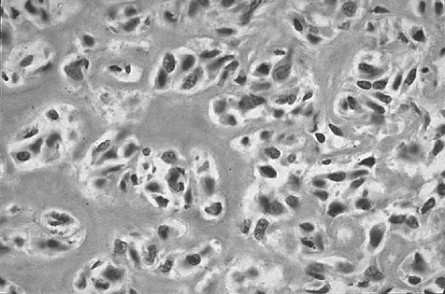
-
A
-
B
-
C
-
D
-
E
-
F
Reveal answer details
Close answer details
Correct answerF
ExplanationSection: Pathology and Path physiology.
This section in figure shows many large, hyperchromatic, pleomorphic cells that are producing osteoid, typical of an osteosarcoma. A chondroblastoma (choice A) would display sheets of primitive chondroblasts within a cartilage matrix that is irregularly calcified. Chondrosarcoma (choice B) most typically occur in the age range of 4060 with the most common locations being the pelvic girdle, ribs, shoulder girdle, and to a lesser extent the long bones, vertebrae, and sternum.
Microscopically, the lower grade tumors will show chondroid differentiation whereas a grade 3 tumor may appear as a spindle cell tumor with little chondroid differentiation. Osteoid osteoma (choice C) and osteoblastoma (choice D) have a very similar microscopic appearance consisting of a random pattern of woven bone with many osteoblasts in evidence within a stroma of granulation-like tissue. Osteoid osteomas are small, very painful tumors that are found in teenagers and young adults and respond very well to aspirin. It usually occurs in the long bones of the leg. Osteoblastomas are larger tumors that more usually affect the vertebrae. Osteochondromas (choice E) (or exostoses) are mushroom-like growths that usually bud from the metaphysic of long bones but may occur, less frequently, at many other sites. Microscopically, one sees irregular trabecular bone covered by a cartilaginous cap.
Question 22
Single choice
A 62-year-old woman has had atrial fibrillation since experiencing a myocardial infarction (MI) 7 months prior. Two weeks ago she was hospitalized following a car accident in which she suffered a compound fracture of her left femur and several severe contusions. She now returns to the emergency room with right flank pain, hematuria, and left-sided paralysis.
These newly developing problems are most likely the result of which of the following?
-
A
air embolism from the compound fracture
-
B
bone marrow embolus from the fractured femur
-
C
fat embolism from the fractured femur
-
D
systemic thromboemboli from the left atrium
-
E
venous thromboemboli from the deep leg veins
Reveal answer details
Close answer details
Correct answerD
ExplanationSection: Pathology and Path physiology Atrial fibrillation produces turbulence that is conducive to the formation of thrombi which can then embolize throughout the systemic circulation. In this patient the right flank pain and hematuria and left-sided paralysis suggest that thromboemboli traveled to the right kidney and the brain, respectively. Embolism of air (choice A) has variable effects, although small amounts are typically inconsequential. Larger volumes (~ >100 mL) can obstruct arteries and lead to
ischemia and necrosis; an air embolism that lodges in the right heart may lead to sudden death. However, air embolism is rare and is not the most likely event in this patient. Bone marrow embolism (choice B) can occur following a broken bone or cardiac resuscitation, but typically will have no clinical consequences. However, fat embolism (choice C) from a broken long bone or traumatized areas of adipose tissue can, when severe, produce clinical manifestations. These follow the trauma by about 13 days and usually include dyspnea, skin rash, and acute neurologic changes. In a few cases this has been fatal. Venous thromboemboli from deep leg veins (choice E) could not get past the lungs (with the unusual exception of paradoxical embolism in a person with a septal defect) so could not reach the kidneys or brain to cause the effects reported for this patient.
Question 23
Single choice
A 27-year-old man was treated with penicillin for gonorrhea. Thirty-five days later he was reinfected with the same germ, and his physician administered an intramuscular dose of penicillin. Two minutes following the injection of penicillin, the patient experienced hypotension and shock and became unconscious.
This reaction was most likely mediated by which of the following?
-
A
activation of the alternate complement pathway
-
B
activation of the classical complement
-
C
-
D
-
E
Reveal answer details
Close answer details
Correct answerD
ExplanationSection: Microbiology/Immunology
Anaphylaxis triggered by penicillin is an immediate hypersensitivity reaction, which is typically mediated by IgE antibodies. IgE antibodies bind to specific Fc receptors on the surface of mast cells and basophils. Upon cross-linking of the IgE antibodies with their specific antigen (penicillin in this case), mast cells and basophils release histamine within minutes along with other pharmacologically active shock mediators which produce the characteristic symptoms of anaphylaxis.
Activation of either the classical (choice B) or the alternate complement pathway (choice A) does not play any meaningful role in anaphylaxis. IgD (choice C) and IgG (choice E) are not involved in anaphylactic reactions.
Question 24
Single choice
Which of the following compounds directly functions in excitation contraction coupling in smooth but not skeletal muscle?
-
A
-
B
-
C
-
D
myosin light chain kinase
-
E
Reveal answer details
Close answer details
Question 25
Single choice
Referring to following figure what is the most likely source of this epithelium? 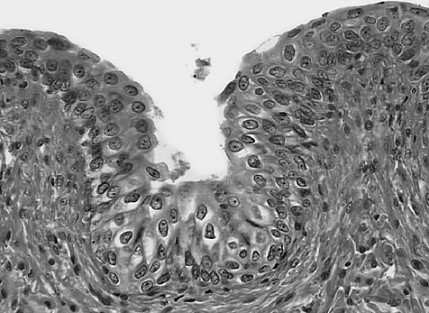
-
A
-
B
-
C
-
D
-
E
Reveal answer details
Close answer details
Correct answerE
ExplanationSection: Anatomy
The appearance of this epithelium reveals it to be transitional epithelium. It is stratified with a scalloped surface outline. The cells at the bottom layer are cuboidal in appearance and stained darkly; cells in the intermediate layer are polygonal.
Cells at the surface of the epithelium are pale-stained, rounded, and large. Transitional epithelium is characteristic of organs of the urinary system, such as the urinary bladder. The gall bladder (choice A) is characterized by simple columnar epithelium. The epithelium of the salivary gland (choice B) is simple cuboidal epithelium. Thick skin (choice C) is made up of stratified squamous epithelium and the trachea (choice D) is lined with pseudostratified columnar epithelium.
Question 26
Single choice
Which of the following ratios represents the estimated likelihood that a physician will become addicted to narcotics during his/her career?
-
A
-
B
-
C
-
D
-
E
Reveal answer details
Close answer details
Correct answerB
ExplanationSection: Behavioral Science and Biostatics Because of easy drug availability and their high-stress occupation, physicians are at high risk for narcotic drug addiction; the incidence is estimated to be 1 in 100, which is 30 to 100 times greater than that of the general population. Choices
A, C, D, and E are incorrect.
Question 27
Single choice
During development, the upper limb buds appear by day 27 and the lower limb buds by day 29. An apical ectodermal ridge at the tip of each limb bud promotes growth.
This multilayered epithelial structure interacts with which of the following to direct the growth of the limb?
-
A
-
B
-
C
-
D
-
E
Reveal answer details
Close answer details
Correct answerC
ExplanationSection: Anatomy
The apical ectodermal ridge secretes fibroblast growth factors, which act on mesenchymal cells in the zone of polarizing activity at the posterior margin of the limb bud. Activation of the zone of polarizing activity causes expression of the sonic hedgehog gene. Proteins expressed by the sonic hedgehog gene control the anteroposterior developmental pattern of the limb. The apical ectodermal ridge is contained within the ectoderm (choice A) and has no interaction with the endoderm (choice B). The notochord (choice D) and sclerotome (choice E) are structures involved in the development of the axial skeleton and not the limbs.
Question 28
Single choice
Which of the following colonizes the nasopharynx and produces toxins that kill ciliated epithelial cells, causes edema locally, and induces lymphocytosis systemically?
-
A
-
B
Hemophilus influenzae type b
-
C
-
D
-
E
Reveal answer details
Close answer details
Correct answerA
ExplanationSection: Microbiology/Immunology
B. pertussis (choice A) is a highly communicable small gram-negative coccobacillus that causes whooping cough (pertussis). It is isolated on Bordet-Gengou medium. B. pertussis produces a number of factors involved in the pathogenesis of
the disease. Ahemeagglutinin mediates attachment of the bacteria to ciliated epithelial cells. The pertussis toxin promotes lymphocytosis, histamine sensitization, and a mechanism of action similar to cholera toxin. Atracheal exotoxin inhibits DNA synthesis in ciliated cells. B pertussis survives only briefly outside the human host. During the catarrhal stage, large numbers of infectious bacteria are released in respiratory secretions. It is during the paroxysmal stage that the cough develops its explosive character and the "whoop" upon inhalation. Infants are especially at risk with persistent coughing in older children and even adults. An excellent vaccine is available to control this disease. The other choices (B, C, D, and E) are also upper respiratory pathogens capable of causing serious disease episodes. None of them produce the toxic products that are made by B. pertussis that are directly responsible for the action on cells and symptoms observed in whooping cough.
Question 29
Single choice
Additive and potentially dangerous sedative interactions may occur between sedativehypnotic drugs and which of the following herbal preparations?
-
A
-
B
-
C
-
D
-
E
Reveal answer details
Close answer details
Correct answerD
ExplanationSection: Pharmacology
Unregulated herbal preparations are in heavy use by the public and several have been documented to interact with regularly prescribed drugs. Kava (choice D) has sedative actions and interacts additively with sedativehypnotics and sedative-antihistaminics. Echinacea (choice A) has no reported drug interactions to date but many preparations contain alcohol, which may increase sedation with alcohol-containing beverages. Gingko biloba (choice B) has antiplatelet activity and should not be used with aspirin or other antiplatelet drugs. Ginseng (choice C) may cause CNS stimulation and should not be used by patients with epilepsy and those taking psychoactive drugs. St John's wort (choice E) may inhibit metabolism of certain drugs.
Question 30
Single choice
A healthy 17-year-old male tells his doctor during a normal check-up visit that "his muscles gave out" when he recently attempted to lift a heavy load. On questioning, he answers that he did not experience any other neuromuscular problems after this experience. What is the most likely mechanism responsible for the abrupt cessation of skeletal muscle contraction?
-
A
activation of alpha motor neurons
-
B
activation of gamma motor neurons
-
C
activation of Golgi tendon organs
-
D
activation of muscle spindles
-
E
Reveal answer details
Close answer details
Correct answerC
ExplanationSection: Physiology
When there is danger of damage to the tendons or bones to which the muscles are attached, Golgi tendon organs are activated and elicit rapid responses through neural connections located within the spinal cord that result in muscle relaxation. Golgi tendon organs are muscle proprioceptors that are found close to the junction between tendon and muscle fibers. They are in series with the muscle fibers and respond to the stretch of tendons which accompanies muscle tension. The threshold for activating them in this manner is high and it is therefore believed that they play an important role in the reflex response of a muscle after excessive force ("muscles give out"). In the spinal reflex pathways, the Ib afferent axons from the Golgi tendon organ synapse on inhibitory spinal cord interneurons, which then inhibit, not activate, alpha motor neuron activity serving the same muscles (choice A). Gamma motor neurons (choice B) innervate muscle spindles. These neurons control the sensitivity of the spindle by maintaining the proportions between spindle and muscle length and by dampening the function of the spindle, regardless of change in muscle length. This is important for normal movements. Muscle spindles (choice D) continuously signal information about the length of a muscle and the rate of change in length. They are important for conscious appreciation of the body's position, for planning and execution of controlled movements. Low oxygenation of the muscle or ischemia (choice E) is not the primary trigger for spinal reflexes, and will occur gradually, not suddenly as described in the question.
Question 31
Single choice
Mumps virus accounts for 1015% of all cases of aseptic meningitis in the United States. Which of the following is most true of infection with mumps virus?
-
A
It is apt to recur periodically in many affected persons.
-
B
It is maintained in large canine reservoir.
-
C
It is preventable by immunization.
-
D
It usually produces severe systemic manifestations.
-
E
It will always cause mumps orchitis in postpubertal males.
Reveal answer details
Close answer details
Correct answerC
ExplanationSection: Microbiology/Immunology
Mumps is an acute contagious disease characterized by nonsupportive enlargement of one or both salivary glands. While it is estimated that one-third of all infections are subclinical, mumps in children is mild. In adults, complications include meningitis and orchitis. Immunity is permanent after a single infection or vaccination with the single antigenic type live-attenuated vaccine (choice C). As stated, it does not recur in infected individuals (choice A) and is a human pathogen, not canine (choice B). Meningitis and orchitis are the main complications, but severe systemic manifestations (choice D) do not occur. Orchitis (choice E) occur in 2050% of infected men.
Question 32
Single choice
The abdominal aorta provides for the major blood supply in this region and its branches are organized into paired or unpaired and visceral or parietal branches. Which of the following are paired visceral branches of the abdominal aorta?
-
A
-
B
-
C
inferior phrenic arteries
-
D
-
E
superior mesenteric artery
Reveal answer details
Close answer details
Correct answerB
ExplanationSection: Anatomy
The gonadal arteries are paired visceral branches of the abdominal aorta. Other branches in this category are the suprarenal and renal arteries. The celiac trunk (choice A) and superior mesenteric artery (choice E) are unpaired visceral branches. The inferior phrenic (choice C) and lumbar (choice D) arteries are paired parietal branches.
Question 33
Single choice
Which of the following substances is most likely to prevent the attachment of the mold allergen to the sensitized mast cells in this patient?
-
A
-
B
-
C
-
D
-
E
Reveal answer details
Close answer details
Correct answerE
ExplanationSection: Microbiology/Immunology
The IgG anti-mold-blocking antibody will combine with the mold allergen and will not permit the mold allergen to reach the IgE antimold on the surface of the mast cells, thus inhibiting the allergic reaction. Corticosteroids suppress inflammation, but will not prevent the attachment of the mold allergen to the sensitized mast cells by the patient (choice B). Complement is not fixed by IgE allergen complexes and plays no role in the attachment of mold allergen to sensitized mast cells (choice A). Epinephrine reverses constriction of bronchioles and bronchi, and also has no effect on the attachment of mold allergen to sensitized mast cells (choice D). Cromolyn sodium stabilizes the membrane of mast cells and thus prevents release of histamine from mast cells (choice C).
Question 34
Single choice
Aurologist is teaching her resident to perform a vasectomy. She explains that he has to inject the anesthetic in the skin of the scrotum, in preparation for incision of its lateral aspect. This surgical location allows for easy access to the spermatic cord. Which of the following nerves innervates the skin of the scrotum?
-
A
-
B
-
C
-
D
-
E
Reveal answer details
Close answer details
Correct answerC
ExplanationSection: Anatomy
The anterior aspect of the scrotum is innervated by branches of the ilioinguinal nerve (L1).Other nerves innervating the scrotum are branches of the genitofemoral nerve (L1, L2), pudendal nerve (S2-S4), and posterior femoral cutaneous nerve (S2, S3). The femoral nerve (L2-L4, choice A) supplies sensory innervations to the anteromedial thigh, hip joint, and knee joint. It also innervates muscles of the anterior compartment of the thigh. The iliohypograstric nerve (L1, choice B) provides sensory innervations over the iliac crest and the hypogastric region. The obturator nerve (L2-L4, choice D) supplies motor innervation to the medial compartment of the thigh. The subcostal nerve (T12, choice E) provides motor
innervation for the lower part of the external oblique muscle and sensory innervations over the hip and anterior superior iliac spine.
Question 35
Single choice
A 64-year-old man with long-standing hypertension experiences severe abdominal pain and loses consciousness. He dies en route to the hospital. Significant autopsy findings include dilation of the aorta just above the iliac bifurcation and massive abdominal hemorrhage. Which of the following was most likely the initiating event that resulted in his fatal lesion?
-
A
antibody-mediated endothelial damage
-
B
autosomal dominant inheritance of an abnormal gene on chromosome 15
-
C
intimal proliferation with fibrous cap formation
-
D
luminal narrowing of the vasa vasorum leading to medial degeneration and fibrosis
-
E
ossification of calcific deposits in the tunica media
Reveal answer details
Close answer details
Correct answerC
ExplanationSection: Pathology and Path physiology.
This man had a ruptured abdominal aortic aneurysm. Most commonly, this is the result of severe atherosclerotic changes that lead to weakening, dilation, and possible rupture of the affected aorta. (In this case, the hypertension would have accelerated the atherosclerotic changes and increased the likelihood of rupture of the aneurysm.) Initial vascular changes found in atherosclerosis include intimal thickening and fibrous cap formation. Antibodymediated endothelial damage (choice A) is a common cause of vasculitis but is not involved in atherosclerosis. Of the diseases that result from autosomal dominant inheritance of an abnormal gene on chromosome 15 (choice B), the most common is probably adult polycystic disease but this has no bearing on the development of atherosclerosis. Luminal narrowing of the vasa vasorum leading to medial degeneration and fibrosis (choice D) is seen in the development of a syphilitic aortic aneurysm but has no role in this patient's disease process. Ossification of calcific deposits in the tunica media (choice E) and other areas of dystrophic calcification may occur as a complication of atherosclerotic plaques, but even if present in this patient, this process would not represent the initiating event.
Question 36
Single choice
Arrow 2 in following figure points to which of the following structures?
-
A
-
B
-
C
-
D
-
E
vascular pole of the renal corpuscle
Reveal answer details
Close answer details
Correct answerD
ExplanationSection: Anatomy
The macula densa indicated by arrow 2 is a modified segment of the distal tubule at the site of its passage adjacent to the vascular pole of the renal corpuscle. The name arises from the close spacing of nuclei of the epithelial cells forming this part of the distal tubule. These cells are thought tosense the chloride content in the passing filtrate and generate signals that regulate the caliber of the afferent arteriole. The glomerulus (choice A, arrow 1) is a network of capillaries derived from the afferent arteriole and suspended within Bowman's capsule by its vascular pole. The juxtaglomerular cells (choice B) form a cuff around the afferent arteriole prior to its entrance into the glomerulus and they secrete renin.
Lacis cells (choice C, arrow 4) are extraglomerular mesangial cells with an uncertain function. The vascular pole (choice E, arrow 3) feeds blood to the glomerulus and carries blood away from it. As part of the juxtaglomerular apparatus, it is closely apposed to the macula densa.
Question 37
Single choice
Lipoprotein lipase (LPL) is the endothelial cellassociated enzyme necessary for release of fatty acids from circulating lipoproteins. Which of the following apolipoproteins is required to activate LPL-mediated release of fatty acids from chylomicrons?
-
A
-
B
-
C
-
D
-
E
Reveal answer details
Close answer details
Question 38
Single choice
An advertisement promotes energy bars containing fructose as an ideal food to take on extreme mountain-climbing expeditions. Which of the following statements concerning fructose absorption is true?
-
A
absorption of fructose into an intestinal epithelial cell is by facilitated transport and thus does not require energy
-
B
metabolism of fructose generates more energy than glucose
-
C
some fructose is already absorbed in the mouth and hence is the fastest way to get energy
-
D
the presence of fructose aids in absorption of vitamin A, C, and D
-
E
the presence of fructose inhibits reabsorption of glucose, which is then more readily available for muscle activity
Reveal answer details
Close answer details
Correct answerA
ExplanationSection: Physiology
Carbohydrate absorption occurs at enterocytes of the upper region of small intestinal villi. Fructose absorption is via the facilitated transporters GLUT5 across the apical enterocyte membrane and GLUT2 across the basolateral enterocyte.
Glucose and galactose on the other hand are transported into enterocytes on carriers in combination with a sodium ion. The energy for this secondary active transport is provided by the electrochemical sodium gradient that is created by Na/
K-ATPases. Experimental conditions that collapse the sodium electrochemical gradient, hypoxia, or poisoning of the Na-KATPase by ouabain inhibit glucose, but not fructose absorption. Nevertheless, the physiological importance of "saving energy" under extreme conditions such as mountain climbing through the use of fructose as energy source is questionable. For instance, fructose absorption is much slower than absorption of glucose and galactose.
The statements in choices B, C, D, and E are incorrect.
Question 39
Single choice
below figure shows a gastric parietal cell with selected membrane transporters and channels. What do X, Y, and Z represent in the figure? 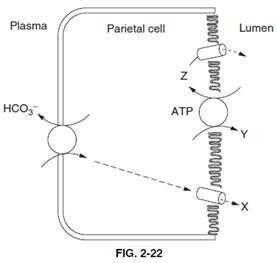 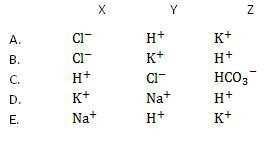
-
A
-
B
-
C
-
D
-
E
Reveal answer details
Close answer details
Question 40
Single choice
A 47-year-old man has been chronically ill for the past 18 months. He undergoes a lung biopsy and a ection is shown in below figure. Which of the following is the most likely diagnosis? 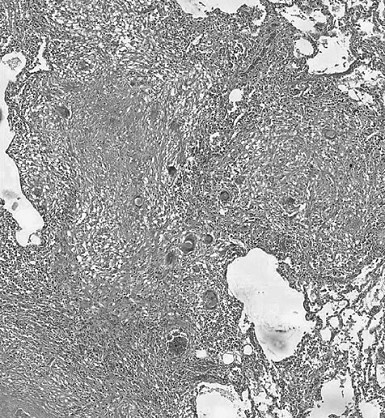
-
A
-
B
-
C
-
D
-
E
Reveal answer details
Close answer details
Correct answerE
ExplanationSection: Pathology and Path physiology Figure shows a microscopic section of lung in which there are a number of necrotizing granulomas-containing giant cells. Aspergillosis (choice A) and pneumocystosis (choice C) are not associated with granuloma formation. Leprosy (choice B) does (in tuberculoid leprosy) form granulomas and may be found in the upper airways, but does not involve viscera such as the lung. Sarcoidosis (choice D) is a granulomatous disease of unknown etiology that can involve the lung and
many other organs but the granulomas are non-necrotizing.
Question 41
Single choice
Which of the following drugs exerts its effects through inhibition of cyclic GMP phosphodiesterase?
-
A
-
B
-
C
-
D
-
E
Reveal answer details
Close answer details
Correct answerE
ExplanationSection: Pharmacology
Vasodilators act by one of three mechanisms: increasing cyclic GMP (cGMP) levels in vascular smooth muscle cells; opening potassium channels; or blocking calcium channels. The organic nitrates and nitroprusside (nitrovasodilators) increase cGMP synthesis by generating nitric oxide (NO), which subsequently activates a soluble form of guanylyl cyclase. Activation of muscarinic receptors on vascular endothelial cells results in formation of NO (earlier identified as endothelium-derived relaxing factor) that diffuses to smooth muscle cells and relaxes them through increased cGMP levels. Erection of the penis involves neuronally regulated formation of NO, increased cGMP levels in the corpus cavernosum, and relaxation of cavernosal and vascular smooth muscle in erectile tissue. Rather than stimulating guanylyl cyclase, sildenafil (Viagra) acts as a selective inhibitor of cGMP phosphodiesterase type 5 to increase the half-life of cGMP in the tissues. The fact that sildenafil acts downstream of NO stimulation of guanylyl cyclase accounts for the toxic interactions between it and nitrovasodilators. The mechanism for relaxation of vascular smooth muscle by hydralazine (choice A) is unknown, but may involve NO. Minoxidil (choice B) is metabolized to minoxidil sulfate, which activates an ATP-sensitive potassium channel in smooth muscle. Nitroprusside (choice C) is a nitrovasodilator that spontaneously releases NO by a mechanism distinct from that of the organic nitrates. Prazosin (choice D) produces vasodilation by inhibiting alpha-1- adrenoreceptors on arteriolar smooth muscle.
Question 42
Single choice
Continued consumption of calories in excess of energy expenditure will eventually lead to obesity, a current major health problem in the United States. A major contributing factor in obesity is a disorder in fuel partitioning, as evidenced by a lower rate of fat oxidation in obese individuals. Which of the following situations would best explain a reduction in overall fat metabolism in these individuals?
-
A
An increase in the hepatic ATP/ adenosine diphosphate (ADP) ratio increases incorporation of carbon into fatty acids by causing an inhibition in acetyl-CoA oxidation in the TCA cycle.
-
B
Decreased hepatic gluconeogenesis which requires acetyl-CoA from fatty acid oxidation, thus fat oxidation is secondarily inhibited.
-
C
Increased levels of malonyl-CoA occur in these individuals leading to inhibition of carnitine palmitoyltransferase I.
-
D
Insulin-induced decrease in the activity of acetyl-CoA carboxylase (ACC) causing reduction in fatty acid synthesis.
-
E
Insulin-induced repression of fatty acid synthase (FAS) activity.
Reveal answer details
Close answer details
Correct answerC
ExplanationSection: Biochemistry
The oxidation of long-chain fatty acids is initiated by the sequential action of carnitine palmitoyltransferase-I (CPTI), which is located in the outer mitochondrial membrane, and carnitine palmitoyltransferase II, which is located in the inner mitochondrial, together with a carnitine-acylcarnitine translocase. Major control over the process is exerted at the level of CPTI by virtue of the unique inhibitability of this enzyme by malonyl-CoA. Thus, CPTI has a pivotal role in lipid metabolism. Obese individuals have higher overall dietary intake of lipid and the disruption in fat metabolism exacerbates the increases in malonyl-CoA, which propagates the fuel partitioning disorder. Although an increase in hepatic ATP (choice A) will lower the flux through the TCA cycle, this does not constitute a mechanism for a disruption in fuel partitioning. The rate of hepaticgluconeogenesis (choice B) does not significantly affect fat metabolism. Obese individualsactually have reduced responses to insulin (choiceD) and thus any insulin-mediated effects on ACC would be minimal.
Insulin does not repress FAS activity (choice E).
Question 43
Single choice
An emaciated prisoner in a New York prison began coughing up sputum streaked with blood. Examination of the sputum revealed the presence of acid-fast bacilli. Which of the following would be least helpful in establishing a diagnosis of tuberculosis?
-
A
agglutination test for antibodies
-
B
-
C
-
D
rough, non-pigmented colonies
-
E
slow growth on Lowenstein-Jensen medium
Reveal answer details
Close answer details
Correct answerA
ExplanationSection: Microbiology/Immunology
Molecular amplification techniques provide fast diagnostic results when they are compared to traditional cultural procedures for
M. Tuberculosis, which often has to be incubated for several weeks. The rod-shaped, aerobic bacteria do not stain readily, but once stained they resist decoloration by acid or alcohol (hence, acid-fast bacilli). Cellular immunity is most important in how a host controls the growth and spread of the tubercle bacteria. There is evidence that mononuclear phagocytes ingest the organisms and even destroy them. The tuberculin skin test is based on cellular immune mechanisms, with the PPD causing a positive skin reaction in a person who has encountered the mycobacterium in the past. As a result, humoral immunity reactions are of little use diagnostically (choice A). Other mycobacteria are capable of accumulating niacin (choice B) and reducing nitrate (choice C). The development of rough, non-pigmented colonies on media (choice D) and slow growth on L-J medium (choice E) are also not specific for
M. tuberculosis since slow growth (weeks) and colony morphology (rough, no pigment) are characteristic of other species of Mycobacterium.
Question 44
Single choice
Ayoung woman presents to the physician with the chief complaint of palpitations. She also complains of feelings that she is going to die, with feelings of dizziness. Which of the following is the most useful question to ask?
-
A
-
B
Do you have a heart disease?
-
C
Has anything like this happened before?
-
D
-
E
Why do you think you will die?
Reveal answer details
Close answer details
Correct answerC
ExplanationSection: Behavioral Science and Biostatics
The patient presents with acute anxiety symptoms that might be due to panic or other acute situations. Panic disorder usually is recurrent and history of previous episodes would be extremely helpful. Choice A is inappropriate; the patient is obviously anxious. Choices B, D, and E may be useful but not yield as much information.
Question 45
Single choice
Which of the following is the drug of choice to reverse bronchoconstriction in an acute asthma attack?
-
A
-
B
-
C
-
D
-
E
Reveal answer details
Close answer details
Correct answerA
ExplanationSection: Pharmacology
Inhaled albuterol (or other beta-2-selective receptor agonists including bitolterol, metaproterenol, pirbuterol, and terbutaline) are the usual agents of choice for treating bronchoconstriction in an acute asthma attack. These beta-2-selective agonists produce bronchial relaxation by stimulating cyclic AMP (cAMP) formation in bronchiolar smooth muscle and cause less tachycardia than nonselective beta agonists. Unfortunately, they do cause some tachycardia and skeletal muscle tremor. Aminophylline (choice B) and other methylxanthines are rarely used to terminate acute episodes of asthma because they must be administered parenterally for rapid onset of effect. Cromolyn sodium (choice C) must be used prophylactically to prevent acute episodes and probably acts by stabilizing mast cells. It is not a smooth muscle relaxing agent and is not effective in reversing bronchospasm. Inhaled ipratropium (choice D) has less general efficacy in acute attacks than beta agonists. Salmeterol (choice E) is an effective beta-2- selective agonist but has a slow onset and long duration of action. Therefore, it is used for prophylaxis, not treatment of acute attacks.
Question 46
Single choice
Which of the following shows the correct effects of hormones, when increased in serum, on liver glycogen content? 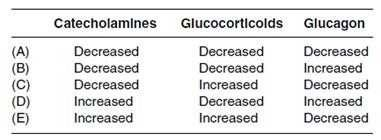
-
A
-
B
-
C
-
D
-
E
Reveal answer details
Close answer details
Correct answerC
ExplanationSection: Physiology
Glucagon and catecholamines such as epinephrine stimulate the mobilization of glycogen by triggering the cAMP cascade. Hormones that increase liver cell cAMP promote glycogen breakdown, and hormones that decrease liver cell cAMP promote glycogen synthesis. Cortisol, the main glucocorticoid, regulates the metabolism of proteins, fats, and carbohydrates. It acts on most organs catabolically. However, on the liver it has anabolic effects, increasing glycogen synthesis and accumulation in the liver. Choices A, B, D, and E do not correctly reflect the effects of the three different agents on glycogen metabolism.
Question 47
Single choice
Which of the following antidepressants is most selective in blocking reuptake of serotonin as compared with norepinephrine?
-
A
-
B
-
C
-
D
-
E
Reveal answer details
Close answer details
Correct answerB
ExplanationSection: Pharmacology
Citalopram is one of the highly selective SSRIs, as is its (S) isomer, escitalopram. Most older, tricyclic, and heterocyclic antidepressants block--to varying degrees--reuptake of both norepinephrine and serotonin amine neurotransmitters into the presynaptic nerve terminals. Different agents are relatively selective for one or the other amine. Amitriptyline (choice A), desipramine (choice C), imipramine (choice D), and trazodone (choice E) are members of the tricyclic/heterocyclic group and all have mixed effects on both norepinephrine and serotonin reuptake. Desipramine (choice C) is the most selective agent for blocking uptake of norepinephrine. The selective serotonin uptake inhibitors offer the advantage that they do not produce sedation or autonomic side effects, in contrast to many of the tricyclic and heterocyclic antidepressants.
Question 48
Single choice
Glucagon binding to liver cells induces an increase in intracellular cAMP concentration. The rate-limiting step in cholseterol biosynthesis is regulated as a consequence of this glucagon-mediated rise in cAMP.
The effect of increased cAMP on the rate of cholesterol biosynthesis occurs because of which of the following?
-
A
AMP-activated protein kinase (AMPK) is activated and directly phosphorylates human menopausal gonadotropin (HMG)-CoA reductase, leading to an increase in the activity of the latter enzyme.
-
B
Cyclic AMP-dependent protein kinase (PKA) is activated and directly phosphorylates HMG-CoA reductase, reducing the activity of the latter enzyme.
-
C
PKA is activated and phosphorylates AMP-regulated kinase, which then phosphorylates and activates HMGCoA reductase.
-
D
Removal of phosphate from HMG-CoA reductase increases its activity. Activated PKA results in a reduced level of phosphate removal from HMG-CoA reductase so that the latter enzyme is kept less active.
-
E
The increased cAMP directly inhibits HMG-CoA reductase.
Reveal answer details
Close answer details
Correct answerD
ExplanationSection: Biochemistry
Regulation of HMG-CoAreductase (the ratelimiting enzyme of cholesterol biosynthesis) activity is complex and involves a number of distinct enzyme activities (below figure). 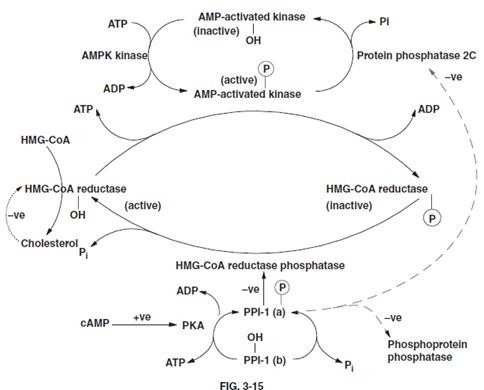 Since cholesterol biosynthesis consumes large amounts of energy, it needs to be regulated in response to energy demands, particularly in hepatocytes. The principal site for the action of the hypoglycemic response hormone, glucagon, is the liver. Glucagon binding to hepatocytes triggers the liver to stop catabolizing carbohydrate and to divert carbon atoms into the gluconeogenesis pathway. This change in hepatic metabolism, in response to glucagon, comes about through a change in the phosphorylation state of numerous enzymes. One of these enzymes is HMG-CoA reductase. HMG-CoA reductase is most active when in the nonphosphorylated state. The enzyme is phosphorylated and rendered less active through the action of AMP-regulated kinase. AMP levels rise as the energy charge in the cell declines and thus the cell is able to recognize this change, at the level of HMG-CoA reductase activity, by inducing its phosphorylation and inhibition. In order to reverse the effect of HMG-CoA phosphorylation the phosphates must be removed. This occurs through the action of HMG-CoA reductase phosphatase. HMGCoAreductase phosphatase is regulated through the action of protein phosphatase inhibitor-1 (PPI-1). In turn the activity of PPI-1 is regulated by its state of phosphorylation; it is more active when phosphorylated. When glucagon binds to hepatocytes, the result is a glucagon receptormediated activation
of adenylate cyclase, which in turn produces cAMP from ATP. The effect of cAMP is to activate cAMP-dependent protein kinase which then phosphorylates a number of substrates. With respect to glucagon-mediated regulation of cholesterol metabolism, PKA phosphorylates PPI-1. Phosphorylated PPI-1 is more active at inhibiting HMG-CoA reductase phosphatase so that the removal of phosphate from HMG-CoA reductase is inhibited. This keeps HMG-CoA reductase in the phosphorylated and less active state. AMPK is not directly affected by glucagon-mediated increases in the levels of cAMP (choice A). Although glucogon action leads to an increase in PKA activity, the latter enzyme does not itself phosphorylate HMG-CoA reductase (choice B). The activity of AMP-regulated kinase is affected by its level of phosphorylation but it is not phosphorylated by PKA(choice C). Cyclic AMPitself does not have a direct effect on HMG-
CoAreductase (choice E).
Question 49
Single choice
An adult male becomes hypotensive during surgery because of blood loss.
Intravenous administration of 500 ml of which of the following solutions will have the greatest effect in restoring blood volume, and thus blood pressure to normal?
-
A
-
B
-
C
-
D
isotonic dextrose solution
-
E
Reveal answer details
Close answer details
Correct answerA
ExplanationSection: Physiology
Intravenous solutions are distributed in the various body fluid compartments based on osmolality and their ability to penetrate the vascular wall and the cell membrane. The proteins in blood plasma will remain within the vascular compartment because of their low permeability across the vessel wall. Thus, 500 mL of blood plasma will remain in the vascular compartment. Water (choice B) passes across the cell membrane and the vascular wall easily. Hence distilled water will distribute itself between cellular and extracellular spaces, meaning only a small portion will actually contribute to blood volume, the other choices (C, D, and E) cross the vascular barrier and distribute partially to the extravascular space and thus are less effective intravascular volume expanders.
Question 50
Single choice
Which of the choices in the table below most accurately describes the actions of vitamin D and arathyroid hormone on calcium and phosphate in the blood? 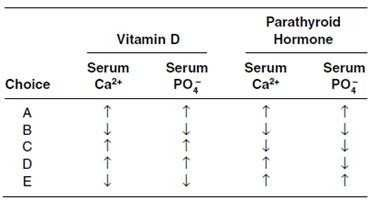
-
A
-
B
-
C
-
D
-
E
Reveal answer details
Close answer details
Correct answerD
ExplanationSection: Pharmacology
Although there are several forms of vitamin D and both vitamin D and parathyroid hormone act on the intestine, kidney, and bone, the net effect of vitamin D is to increase serum calcium and phosphate, while parathyroid hormone increases serum calcium and decreases phosphate. None of the other options (choices AC, E) correctly reflects the actions of vitamin D or parathyroid hormone.
Question 51
Single choice
A 37-year-old man presents with tophaceous deposits within the articular cartilage, synovium, tendons, tendon sheaths, pinnae, and the soft tissue on the extensor surface of the forearms.
These clinical observations suggest the patient is suffering from which of the following disorders?
-
A
-
B
-
C
-
D
purine nucleoside phosphorylase(PNP) deficiency
-
E
Reveal answer details
Close answer details
Correct answerB
ExplanationSection: Biochemistry
Gout is characterized by elevated levels of uric acid in the blood and urine. Uric acid is the end-product of purine catabolism and excess production results from a variety of metabolic abnormalities that lead to overproduction of purines via the de novo pathway. Uric acid is very insoluble and when generated in large amounts will precipitate as uric acid crystals in the joints of the extremities and in renal interstitial tissue. These deposits are gritty or sandy in nature and thus are termed tophaceous deposits. ADA (choice A) and PNP (choice D) deficiencies result in various degrees of immune dysfunction and are not associated with gouty episodes. Lesch-Nyhan disease (choice C) is due to loss of HGPRT activity.
Characteristic symptoms include severe mental retardation and self-mutilation. A much less severe symptom associated with Lesch-Nyhan disease is hyperuricemia, which leads to gouty episodes. However, other symptoms are of such severity that patients die very early in life. Deficiency in glucose-6-phosphatase results in von Gierke disease (choice E). Clinical symptoms of von Gierke disease include fasting hypoglycemia, lactic acidemia, and mild gouty episodes. The hyperuricemia of von Gierke disease is seldom severe enough to lead to the level of gouty deposits observed in this patient.
Question 52
Single choice
Numerous cancers are caused by a genetic phenomenon termed "loss of heterozygosity," LOH. This phenomenon led to the identification of genes termed tumor suppressors, because it is the loss of their function that leads to cancer. Which of the following has been shown to result from defects in a tumor suppressor gene as a consequence of LOH?
-
A
Creutzfeldt-Jakob disease (CJD)
-
B
-
C
-
D
Li-Fraumeni syndrome (LFS)
-
E
Reveal answer details
Close answer details
Correct answerD
ExplanationSection: Biochemistry
LFS is a rare inherited form of cancer that involves breast and colon carcinomas, softtissue sarcomas, osteosarcomas, brain tumors, leukemia, and adrenocortical carcinomas. These tumors develop at an early age in LFS patients. The tumor suppressor gene found responsible for LFS is p53. Mutant forms of p53 are found in approximately 50% of all tumors. The normal p53 protein functions as a transcription factor that can induce either cell-cycle arrest or apoptosis (programmed cell death) in response to DNA damage. CJD (choice A) encompasses three forms: infectious, sporadic, and inherited, with the vast majority of cases being sporadic. Clinical abnormalities of CJD are confined to the CNS and result from a pathogenic protein identified as prion protein (PrP). Crouzon syndrome (choice B) is haracterized by craniosynostosis (midface hypoplasia and ocular proptosis) and is the result of a mutation in one of the receptors for fibroblast growth factor (FGFR2). HD (choice C) is an autosomaldominant disorder resulting from expansion of the triplet CAG within the huntingtin gene. The exact function of the huntingtin protein is still unclear. Symptoms of HD include personality changes, memory loss, and involuntary leg and arm movements (chorea). The average age of onset is 37 years. PWS (choice E) is a relatively common cause of genetic obesity and mental retardation. Symptoms of severe hypotonia and poor suckling are evident at birth. PWS is caused by a deletion of a portion of the long arm of chromosome 15 [del(15q11q13)].
Question 53
Single choice
A 79-year-old woman presents with a complaint of chronic and progressive mid-back pain for several months but no other symptoms. Spinal x-rays reveal two compression fractures of the T10 vertebral body. Calcium, phosphate, and alkaline phosphatase levels are all within normal range.
Histological examination of the affected vertebral bone would most likely reveal which of the following?
-
A
bony necrosis with acute and chronic inflammation and granulomas
-
B
disorganized interconnecting trabeculae of woven bone rimmed by osteoblasts
-
C
thickened, irregular trabeculae with prominent cement lines
-
D
thinning of the cortical and trabecular bone
-
E
widened osteoid seams of peripheral trabeculae
Reveal answer details
Close answer details
Correct answerE
ExplanationSection: Pathology and Path physiology.
This woman is suffering from senile, or postmenopausal, osteoporosis. In such patients, the calcium and phosphate levels will typically be within the reference range. The alkaline phosphatase will also usually be normal, but may be increased following fractures. Microscopic examination of affected bones will reveal loss of bone mass tending to affect horizontal more than vertical trabeculae. Bony necrosis with acute and chronic inflammation and granulomas (choice A) occurs in tuberculosis infection of the spine, where it is referred to as Pott disease. Disorganized interconnecting trabeculae of woven bone rimmed by osteoblasts (choice B) describes the appearance of an osteoblastoma, a benign bone tumor that is histologically very similar to and often described in conjunction with an osteoid osteoma. A characteristic difference between these two benign bone tumors is that osteoid osteomas are very painful lesions (excess prostaglandin E production) that respond dramatically to aspirin, while osteoblastomas produce a dull, achy pain that does not respond to aspirin. Thickened, irregular trabeculae with prominent cement lines (choice C) describe the morphology seen in Paget disease.
Widened osteoid seams of peripheral trabeculae (choice E) reflect the appearance of unmineralized osteoid found in osteomalacia. Alkaline phosphatase levels are typically increased in osteomalacia (and rickets) and Paget disease.
Question 54
Single choice
A 9-year-old boy is stung on the arm by a wasp and very rapidly develops redness and swelling at the site of the sting. Which of the following substances is most responsible for these early changes?
-
A
-
B
-
C
-
D
-
E
Reveal answer details
Close answer details
Correct answerC
ExplanationSection: Pathology and Path physiology Histamine is a preformed inflammatory mediator found principally in mast cells and basophils that has a major role in the early vascular changes of inflammation; that is, dilation of precapillary arterioles which produces the local redness (rubor) and warmth (calor), and the increased permeability of postcapillary venules which produces the swelling (tumor). Bradykinin (choice A) has similar effects to histamine, but it is produced by the activation of the kinin system so it is not immediately available as is histamine. Complement 3a (choice B) and complement 5a are called anaphylatoxins because they can stimulate the release of histamine from mast cells. Leukotriene B4 (choice D) is a major activator and
chemotactic agent for leukocytes and potentiates their adhesion to vessel walls. Thromboxane A2 (choice E) promotes platelet aggregation and vasoconstriction; it functions in opposition to prostaglandin, which inhibits platelet aggregation
and causes vasodilation.
Question 55
Single choice
A 22-year-old Hispanic man worked for a company that processed animal products and provided no medical coverage benefits. One week after working with wool imported from a Caribbean island, he developed a small lesion on his arm resembling an insect bite. One week later, the lesion was 2.5 cm in diameter with a central, black sloughed-skin area. Two weeks later, he presented at an emergency room with early stages of sepsis. Which of the following microbes is responsible for the infection?
-
A
-
B
Bacteroides melanogenicus
-
C
-
D
-
E
Reveal answer details
Close answer details
Correct answerA
ExplanationSection: Microbiology/Immunology
A patient with cutaneous anthrax usually presents with a pruritic macule or papule that enlarges into a round ulcer in several days. Then 12 mm vesicles that discharge clear or sanguinous fluid might appear. Purulent drainage ordinarily does not occur. This is followed by the development of a painless, depressed, blackcolored eschar. If it is not treated early, dissemination of the disease in about 10% of cases results in septicemia and meningitis.
H. ducreyi (choice C) produces a disease called chancroid or soft chancre, which is not associated with the formation of black eschars.
T. pallidum (choice E) produces hard chancres without black eschars.
B. melanogenicus (choice B) causes abscesses.
M. scrofulaceum (choice D) is associated with scrofula which is cervical adenitis.
Question 56
Single choice
A patient suffering from Charcot-Marie-Tooth disease displays progressive degeneration of peripheral nerves, distal muscle weakness and atrophy, and defects in deep tendon reflexes. This condition is associated with an abnormal mutation in the gene encoding connexin-32.
Connexins are normally found in which type of cell junctions?
-
A
communicating (gap) junction
-
B
-
C
macula adherens (spot desmosome)
-
D
occluding (tight) junction
-
E
zonula adherens (belt desmosome)
Reveal answer details
Close answer details
Correct answerA
ExplanationSection: Anatomy
Communicating (gap) junctions are formed by connexins, which associate together in groups of six to form connexons. The alignment of connexions between two cells allows for direct channels of communication between their cytoplasms, facilitating the transfer of molecules such as calcium or cyclic adenosine monophosphate (cAMP). Hemidesmosome (choice B), macula adherens (spot desmosome; choice C), and zonula adherens (belt desmosome; choice E) are classified
as anchoring junctions. They are associated with intermediate filaments (hemidesmosome and macula adherens) or with actin microfilaments (zonula adherens), but not connexins. Occluding (tight) junctions (choice D) contain the proteins occludin and claudin but not connexin.
Question 57
Single choice
You are examining the biochemical characteristics of the liver dysfunction in your patient, who is exhibiting signs of a glycogen storage disease. You have isolated the microsomal fraction (contains the endoplasmic reticulum) of a liver biopsy homogenate from your patient and a control individual for your studies. Incubation with radioactive phosphate-labeled glucose-6-phosphate results in an increase in isotope associated with the microsomes from your control sample but no increase in association with the microsomes from your patient.
These results are best explained by a defect in which of the following?
-
A
glucose-6-phosphatase activity in the microsomes
-
B
microsomal glucose-6-phosphate transporter
-
C
cytosolic glucose-6-phosphatase
-
D
microsomal glucose transport
-
E
microsomal phosphate transporter
Reveal answer details
Close answer details
Question 58
Single choice
Severe combined immunodeficiency disease (SCID) is characterized by a complete lack of cell-mediated and humoral immunity.
This disorder results from a deficiency in which of the following enzymes?
-
A
-
B
asparatate transcarbamoylase
-
C
-
D
orotic acid decarboxylase
-
E
purine nucleotide phosphorylase
Reveal answer details
Close answer details
Correct answerA
ExplanationSection: Biochemistry
ADA catalyzes the deamination of adenosine to inosine during the catabolism of purines. Loss of ADAleads to significantly elevated levels of phosphorylated deoxyadenosine (in particular deoxyadenosine triphosphate, dATP). Levels of dATP in ADA deficiency can reach 50 times normal. High concentrations of dATP inhibit ribonucleotide reductase, which is required for the generation of deoxynucleotides from ribonucleotides. The inhibition of ribonucleotide reductase leads to severely impaired cellular DNA synthesis. Since lymphocytes must be able to proliferate dramatically in response to antigenic challenge, the loss of ADA activity results in a near complete lack of immune function. ATC (choice B) is a component of a multifunctional enzyme, which catalyzes the rate-limiting reaction of pyrimidine biosynthesis. No known deficiencies in this enzyme have been identified, likely due to the embryonic lethality predicted if the enzyme were defective. HGPRT (choice C) catalyzes the salvage of hypoxanthine to IMP and guanine to GMP. Deficiency in HGPRT results in Lesch-Nyhan syndrome. Orotic acid decarboxylase (choice D) catalyzes the decarboxylation of OMP to UMP.
Deficiency in this enzyme results in orotic aciduria, type II. PNP (choice E) is also a purine catabolic enzyme, which converts inosine to hypoxanthine and guanosine to guanine. Deficiency in PNP leads to a mild immunodeficiency.
Question 59
Single choice
A 28-year-old recently divorced man with no significant past medical history presents to the emergency room with progressive lower abdominal pain and cramping over the past 4 days, both of which are relieved by defecation. He has suffered from substantial bloody and mucoid diarrhea during this time. His temperature is 102.8. Laboratory studies reveal a n elevated white blood cell (WBC) count and a high erythrocyte sedimentation rate. Sigmoidoscopy reveals extensive rectal and sigmoid hyperemia and edema, numerous superficial ulcerations, and small focal mucosal hemorrhages, many of which have suppurative centers. Significant intestinal narrowing is seen in the distal transverse colon.
These findings most likely suggest a diagnosis of which of the following?
-
A
-
B
-
C
cytomegalovirus enterocolitis
-
D
-
E
Reveal answer details
Close answer details
Correct answerE
ExplanationSection: Pathology and Path physiology Clinical history and sigmoidoscopy findings are consistent with a diagnosis of ulcerative colitis, an idiopathic inflammatory bowel disease that involves the rectum in virtually all cases and extends proximally in a continuous manner without skip lesions to include variable lengths of the colon. Psychological stress (recent divorce) may serve to precipitate acute attacks of the disease. The significant narrowing seen in the transverse colon in this patient suggests the possible progression to toxic megacolon, a rare complication in severe acute disease that carries a high mortality rate and requires emergency colectomy. Amebic colitis (choice A) is characterized by acute inflammation with multiple areas of enzymatic tissue necrosis leading to submucosal, flask-shaped abscesses throughout the colon. Clinical features include bloody and mucoid diarrhea with low-grade fever. Collagenous colitis (choice B) is a more recently recognized form of colitis characterized clinically by episodic or chronic watery diarrhea that is not severe enough to cause dehydration, and pathologically by the presence of a distinct collagenous band beneath the colonic surface epithelium. Patients very often have a variety of autoimmune and other diseases. Cytomegalovirus enterocolitis (choice C) is a common GI infection in acquired immunodeficiency syndrome (AIDS) patients that infects the entire GI tract and produces severe, chronic diarrhea. Both mucosal epithelial and vascular endothelial cells are infected. Vasculitis may result in focal ischemic necrosis of the intestinal wall. Pseudomembranous colitis (choice D) is caused by a necrolytic enzyme produced by Clostridium difficile bacteria that most often proliferate secondary to a variety of antibiotic therapies; clindamycin is a frequent culprit. Diarrhea is most often watery and profuse. Gross findings include patchy areas of mucosal inflammation with multiple, discrete yellowish plaques constituting the pseudomembrane, which is composed of fibrin, mucin, and necrotic debris.
Question 60
Single choice
Regarding the axon of the second-order neuron in the pathway for conscious awareness of fine, discriminative touch and vibratory sensation from the upper limb, which of the following is correct?
-
A
ascends the brainstem in the medial lemniscus
-
B
decussates in the ventral white commissure of the spinal cord
-
C
has its cell body in the nucleus gracilis
-
D
is found in the dorsal funiculus of the spinal cord
-
E
terminates in the nucleus cuneatus
Reveal answer details
Close answer details
Correct answerA
ExplanationSection: Anatomy
The sensations of discriminative touch and vibration are transmitted through the medial lemniscus. Pain and temperature pathways decussate in the ventral white commisssure (choice B). The nucleus gracilis (choice C) contains neurons that process sensory signals from the lower extremity. The second-order fibers carrying discriminative touch and vibration from the upper limb originate from neurons in the nucleus cuneatus (choice E). First order fibers are found in the dorsal funiculus (choice D).
Question 61
Single choice
Which of the following diseases will result in left ventricular hypertrophy?
-
A
-
B
-
C
pulmonary valve regurgitation
-
D
tricuspid valve regurgitation
-
E
Reveal answer details
Close answer details
Correct answerA
ExplanationSection: Physiology
Stenosis of the outlet valve of the left ventricle greatly increases the work of the ventricle in ejecting blood and will result in left ventricular hypertrophy. Mitral valve stenosis (choice B) will impede filling of the left ventricle and will not cause left ventricular hypertrophy. Tricuspid valve regurgitation (choice D), pulmonary valve regurgitation (choice C), and tricuspid valve stenosis (choice E) cause congestion of the right atria and/or right ventricles and impede flow of blood toward the left ventricle and thus will not result in left ventricular hypertrophy.
Question 62
Single choice
A 68-year-old postmenopausal female with a history of osteoprosis and essential hypertension is placed on the thiazide diuretic chlorothiazide, which has a beneficial action toward both conditions. Which letter in below figure depicts the tubular location of epithelial cells containing a / cotransport  protein inhibited by thiazide diuretics? 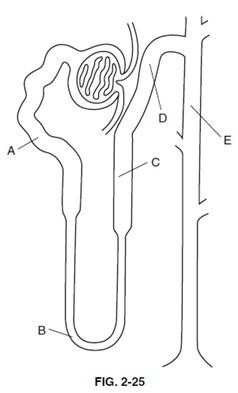
-
A
-
B
-
C
-
D
-
E
Reveal answer details
Close answer details
Question 63
Single choice
Following the consumption of fish at a local restaurant, a 17-year-old girl suddenly experiences severe dyspnea. Upon arrival at the local emergency room she is found to be severely hypotensive and in respiratory distress. Urticarial wheals are also noted all over her body. As the resident physician you quickly realize this to be a hypersensitivity reaction.
To which of the following immunoglobulins does the allergen bind rapidly during the activation stage of mast cells?
-
A
-
B
-
C
-
D
-
E
Reveal answer details
Close answer details
Correct answerC
ExplanationSection: Microbiology/Immunology
Within seconds after the allergen encounters human tissue, it binds to IgE antibodies which are attached to mast cells. When it engages at least two IgE molecules it forms a bridge between them. This cross-linking, in turn, draws the attached
IgE receptors close to one another. Such aggregation of receptors activates mast cells to release histamine and other vasoactive substances that generate the allergic reaction. IgA, IgG, IgM, or IgD are not the germane antibodies to which allergens bind (choices A, B, D, and E).
Question 64
Single choice
A 23-year-old man sees his physician to ask about the recent appearance of several large closely spaced bumps on his elbows. Suspecting that these are fatty eruptions, the physician tests the man's blood for lipid, cholesterol, and lipoprotein levels. Results show elevated cholesterol and triglycerides and the presence of a variant form of very low-density lipoprotein (VLDL) identified as beta-migrating VLDL (- VLDL). Amore careful analysis of the biochemical properties of the apoproteins associated with the beta-VLDL particles identifies a form of apo E that has a more negative charge than apo E from normal individuals.
These results indicate the individual is afflicted with which of the following hyperlipoproteinemias?
-
A
type I (familial LPL deficiency)
-
B
-
C
type III (dysbetalipoproteinemia)
-
D
type IV (familial hypertriglycerolemia)
-
E
Reveal answer details
Close answer details
Correct answerC
ExplanationSection: Biochemistry
Familial dysbetalipoproteinemia (type III hyperlipoproteinemia) results from a genetic variant in the apo E gene that causes poor interaction of chylomicron remnants and VLDLs with the apo E receptor. This results in the presence, in the serum, of beta-migrating VLDL (- VLDLs), which are cholesterol-rich remnants of both intestinal chylomicrons and hepatic VLDL. Diagnosis of type III hyperlipoproteinemia is indicated by elevated plasma cholesterol and triglyceride, xanthomas (fatty eruptions under the skin), and of course the presence of -VLDL. Type I hyperlipoproteinemia (choice A) results from defects in the activity or activation of LPL and results in the massive accumulation of chylomicrons in the plasma. The disease is usually detected in childhood following recurrent attacks of abdominal pain, hepatosplenomegaly, and pancreatitis. Familial hypercholesterolemia (choice B) is the result of defects in the LDL receptor. The defects lead to characteristic elevation in LDL, deposition of LDL-derived cholesterol in the tendons and skin and in the arteries. Individuals homozygous for defective LDL receptors have severe hypercholesterolemia (6501000 mg/dL) and coronary heart disease begins early in childhood with death caused by myocardial infarct before the age of 20. Type IV hyperlipoproteinemia (choice D) is associated with overproduction VLDLs. An associated glucose intolerance and hyperinsulinemia are also seen in this disorder. Wolman disease (choice E) is caused by a deficiency in lysosomal acid lipase and results in massive accumulation of cholesteryl esters and triglycerides in most tissues. The disease is almost always fatal before the age of 1 year.
Question 65
Single choice
A 48-year-old male patients is brought to the emergency room because of intense pain of the right face and neck with transient visual loss of the right eye. On examination, the patient has palsy of the oculomotor nerve on the right side with resulting diplopia, along with a right lateralized painful Horner syndrome. This constellation of signs is suggestive of a cervical carotid dissection, which is a separation of the arterial tunical intima from the subjacent tunica media. Which numbered structure in following figure, is the tunica intima?
-
A
-
B
-
C
-
D
-
E
Reveal answer details
Close answer details
Correct answerD
ExplanationSection: Anatomy
Arrow 3 points to the tunica intima. The carotid artery is an elastic artery, which contains the following layers aside from the tunica intima: Tunica externa (arrow 1), and tunica media (arrow 5). In a carotid dissection, the tunica intima can elevate or separate from the tunica media with accompanying hemorrhage of the arterial wall. The most common clinical signs are ophthalmological manifestations including painful Horner syndrome, palsy of the oculomotor nerve, diplopia, and transient monocular visual loss. Arrow 2 points to a vasa vasorum, vessels which nourish the thick wall of the aorta. Arrow 4 points to the adipose tissue in the tunica externa.
Question 66
Single choice
You are studying the effects of a compound on the respiratory activity of isolated mitochondria. Your experiments demonstrate that oxygen consumption is normal when pyruvate and malate are added. Oxygen consumption is also seen to be normal when succinate is added. However, you find that the production of ATP is severely impaired in the presence of pyruvate/malate or succinate when the compound is added to the reaction.
These results most closely resemble the effects that would be seen by the addition of which of the following inhibitors of oxidative phosphorylation?
-
A
-
B
-
C
-
D
-
E
Reveal answer details
Close answer details
Correct answerC
ExplanationSection: Biochemistry
The normal flow of electrons, through the proteins of the oxidative phosphorylation machinery, is coupled with the establishment of a proton gradient across the inner mitochondrial membrane. The establishment of this pH gradient is the chemiosmotic potential that is coupled with the production of ATP. If the process of proton movement is uncoupled from the normal pathway through the ATP synthase complex, oxygen can be consumed but no ATP will be synthesized. This is the effect of uncoupling agents such as DNP, which act to discharge the proton gradient. Antimycin A (choice A) is an antibiotic that functions by inhibiting cytochrome b of complex III. Azide (choice B) inhibits cytochrome oxidase of complex IV. Oligomycin (choice D), a streptomyces antibiotic, inhibits ATP synthase. Rotenone (choice E) inhibits complex I.
Question 67
Single choice
A 39-year-old man with normal sexual practices saw his doctor, complaining of a mild (38.5°C) but persistent fever. His physician observed pharyngitis and a bilateral conjunctivitis that the patient claimed was recent and painful. Which of the following microbes most likely caused the infection?
-
A
-
B
-
C
-
D
-
E
Reveal answer details
Close answer details
Correct answerA
ExplanationSection: Microbiology/Immunology
Adenoviruses are a frequent cause of infection characterized by a triad of symptoms, namely, pharyngitis, conjunctivitis, and fever.
S. pyogenes (choice D) causes 25% of cases of pharyngitis. However, the disease is often accompanied by tonsillitis. The infection is usually associated with fever which is higher than 38.5°C.
N. gonorrhoeae (choice C) normally causes gonorrhea.
C. pneumoniae (choice B) causes generally primary atypical pneumonia which is not usually associated with conjunctivitis.
T. gondii (choice E) in AIDS patients, or other immunosuppressed individuals can cause disseminated disease and encephalitis (choice E).
Question 68
Single choice
Which of the following symptoms can occur frequently in infants suffering from mediumchain acyl-CoA dehydrogenase (MCAD) deficiency if periods between meals are protracted?
-
A
bone and joint pain and thrombocytopenia
-
B
hyperammonemia with decreased ketones
-
C
hyperuricemia and darkening of the urine
-
D
hypoglycemia and metabolic acidosis with normal levels of ketones
-
E
metabolic alkalosis with decreased bicarbonate
Reveal answer details
Close answer details
Correct answerD
ExplanationSection: Biochemistry
In infants, the supply of glycogen lasts less than 6 hours and gluconeogenesis is not sufficient to maintain adequate blood glucose levels. Normally, during periods of fasting (in particular during the night) the oxidation of fatty acids provides the necessary ATP to fuel hepatic gluconeogenesis as well as ketone bodies for nonhepatic tissue energy production. In patients with MCAD deficiency there is a drastically reduced capacity to oxidize fatty acids. This leads to an increase in glucose usage with concomitant hypoglycemia. The deficit in the energy production from fatty acid oxidation, necessary for the liver to use other carbon sources, such as glycerol and amino acids, for gluconeogenesis further exacerbates the hypoglycemia. Normally, hypoglycemia is accompanied by an increase in ketone formation from the increased oxidation of fatty acids. In MCAD deficiency there is a reduced level of fatty acid oxidation, hence near normal levels of ketones are detected in the serum. None of the other choices (A, B, C, and E) reflect symptoms related in any way to MCAD deficiency and are not in themselves indicative of any specific disorder per se.
Question 69
Single choice
A 66-year-old woman is undergoing surgery to repair an abdominal aortic aneurism. During the procedure the abdominal aorta is momentarily clamped below the renal arteries. below figure shows the left ventricular pressure/ volume relationship immediately before (curve 1) and during (curve 2) the aortic occlusion.
The change in curve 2 represents an increase in which of the following? 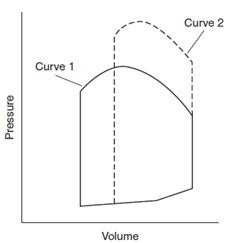
-
A
-
B
-
C
-
D
-
E
Reveal answer details
Close answer details
Correct answerA
ExplanationSection: Physiology
Clamping of the abdominal aorta suddenly increases peripheral vascular resistance to blood flow. Hence aortic pressure suddenly rises to a high level. This represents an increased afterload, that is, an increased ventricular pressure is required to eject blood into the aorta. below figure shows that momentary clamping of the aorta does not alter the preload, that is, the filling of the ventricle during diastole (choice D). below figure shows that the inverse relationship between afterload and stroke volume causes a reduced stroke volume (choice E) immediately after aortic clamping. Since end-diastolic volume (preload) is unchanged, while stroke volume is decreased, this represents a decreased ejection fraction (choice C). Cardiac output is calculated as stroke volume X heart rate. Since heart rate is not given, the cardiac output cannot be determined (choice B). However, it is likely, by Ohm's law that a momentary rise in peripheral vascular resistance will decrease cardiac output.
Question 70
Single choice
A 25-year-old male athlete has just completed a long distance bicycle race during a hot, humid day. At the conclusion of the race, he provides a urine sample for testing.
Assuming that his fluid intake during the race was zero, in what portion of the nephron shown in below figure is the tubular fluid osmolality the lowest? 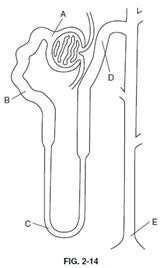
-
A
-
B
-
C
-
D
-
E
Reveal answer details
Close answer details
Correct answerD
ExplanationSection: Physiology
The bicycle racer is likely dehydrated from his exercise and ADH would be secreted by the posterior pituitary in response to increased extracellular osmolality. The area of the nephron with the lowest osmolality will be the early distal tubule (choice D), a nephrondiluting segment. The fluid in Bowman's capsule (choice A) will be at the same osmolality as the plasma entering the glomerular capillaries. The fluid at the end of the proximal tubule (choice B) is isoosmotic with the Bowman's capsule fluid while the fluid in the thin descending loop of Henle (choice C) is greatly concentrated due to water reabsorption into the hyperosmotic medullary interstitium. The fluid at the end of the collecting duct (choice E) can be very concentrated or very dilute, but since ADH greatly increases water reabsorption in this segment, the fluid becomes very concentrated.
Question 71
Single choice
A newborn infant suffers from cyanotic heart disease caused by transposition of the great arteries (TGA).
In this situation, the aorta arises from which of the following structures?
-
A
-
B
-
C
-
D
-
E
Reveal answer details
Close answer details
Correct answerE
ExplanationSection: Anatomy
In TGA, the aorta arises from the right ventricle and the pulmonary trunk arises from the left ventricle (choice C). This is the reverse of the normal situation and gives rise to the cyanotic condition in the newborn. The large arteries arise from the truncus arteriosus in the developing heart and thus could not develop from the atria (choices B and D), which are formed from the sinus venosus. The truncus arteriosus and the sinus venosus are at opposite ends of the heart. The ductus arteriosus (choice A) is the vessel that shunts oxygenated blood from the pulmonary trunk to the arch of the aorta in the fetus. It does not give rise to the aorta.
Question 72
Single choice
Exhibit: *missing*
A healthy 27-year-old male is given a treadmill stress test. His cardiovascular values at rest and during exercise were: 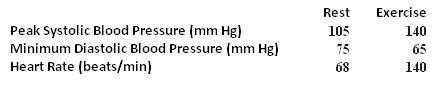 When compared to rest, what was the change in his arterial pulse pressure?
-
A
-
B
-
C
-
D
increased from 115 to 140
-
E
remained unchanged since heart rate and systolic pressure both increased
Reveal answer details
Close answer details
Correct answerB
ExplanationSection: Physiology
By definition, arterial pulse pressure is the difference between peak systolic and minimum diastolic pressure. His resting pulse pressure was 105 - 75 = 30 and his exercise pulse pressure increased to 140
- 65 = 75.
Question 73
Single choice
The structure indicated by arrow 1 in Fig.
1-2 is which of the following vessels?
-
A
-
B
left brachiocephalic vein
-
C
left common carotid artery
-
D
right brachiocephalic vein
-
E
Reveal answer details
Close answer details
Correct answerD
ExplanationSection: Anatomy
Remember that in viewing axial or transverse CT scans through the body, the right side of the patient is to your left and the left side to your right. In other words, the feet of the patient are toward you and the head away from you. The back of the patient is at the bottom of the image and the front of the patient toward the top. Directional terms are always in reference to the patient. The insert at the bottom right indicates the level of the section. Arrow 1 indicates the right brachiocephalic vein. The left brachiocephalic vein (choice B) is seen as the elongated structure immediately posterior to the manubrium of the sternum and to the left of the right brachiocephalic vein. Immediately posterior to the left brachiocephalic vein is the brachiocephalic artery (choice A, arrow 2). To the left of the latter are the left common carotid artery (choice C) and the left subclavian artery (arrow 3). The superior vena cava (choice E) is not seen at this level because the right and left brachiocephalic veins are still separate.
Question 74
Single choice
A 37-year-old man visiting a third world country drinks from a fecally contaminated source of water. During the next week he has gradually increasing fever, anorexia, myalgia, and headache. He subsequently develops a maculopapular rash on his abdomen and his fever increases to 104°F with abdominal pain and splenomegaly. During the third week, his condition rapidly deteriorates with intestinal bleeding, shock, and death. An autopsy reveals ulcerations overlying the Peyer patches of the small intestine, one of which is perforated. Which of the following is the most likely diagnosis?
-
A
-
B
-
C
-
D
-
E
Reveal answer details
Close answer details
Correct answerE
ExplanationSection: Pathology and Path physiology.
This is a case of typhoid fever. During the prodromal stage there is a gradual, step-like increase in fever with malaise, anorexia, myalgia, and headache. By the second week, the fever usually plateaus and the patient is very sick. There may be constipation or diarrhea with abdominal pain and distention, weakness, and a maculopapular rash (rose spots), particularly on the abdomen. If there are no complications, the patient may gradually improve over the next 2 weeks. One of the classic pathologic findings in typhoid is intestinal ulcerations over hyperplastic and necrotic Peyer patches. These may perforate and hemorrhage, as in this patient. Amebiasis (choice A) can produce a range of symptoms from being subclinical to producing fulminant dysentery. However, it involves the large bowel rather than the small intestine and produces flask-shaped ulcers separated by areas of normal bowel. Cholera (choice B) does not actually invade the intestinal epithelium and therefore causes insignificant microscopic changes and no ulceration. Cryptosporidiosis (choice C) causes a severe, chronic diarrhea in AIDS patients. The protozoa attach to the brush border of the intestinal epithelial cells but do not cause ulceration. Giardia (choice D) attaches to duodenal epithelial cells, but does not invade those cells and does not cause ulceration.
Question 75
Single choice
The changes seen in the kidney shown in below figure were an incidental finding in the autopsy of a 39- year-old woman.
The most likely cause is which of the following? 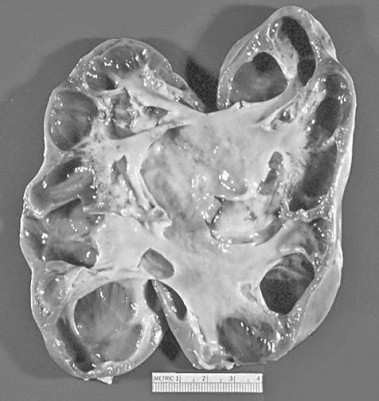
-
A
-
B
-
C
-
D
-
E
Reveal answer details
Close answer details
Correct answerC
ExplanationSection: Pathology and Path physiology
The kidney in figure demonstrates severe hydronephrosis characterized by dilation of the renal pelvis at the expense of the subadjacent renal medulla and cortex. Postrenal obstruction, such as a ureteral stone, is the most likely etiology.
Abuse of analgesics (choice A) may be associated with necrosis of the renal papillae. The papillae in the photo are not necrotic. Hypertension (choice B) mainly affects the blood vessels of the renal cortex, sparing the pelvic region of the kidney. Renal cell carcinoma (choice D) displays a yellowish cortical-based tumor, not hydronephrosis. An acute renal infarct (choice E) demonstrates a pale, wedge-shaped area with its base along the renal capsule. A chronic infarct shows either fibrous scarring or cyst formation. The renal pelvis is usually unaffected by renal infarcts.
Question 76
Single choice
Which of the following represents the enzyme deficiency that leads to "essential fructosuria"?
-
A
fructose-1-phosphate aldolase (aldolase B)
-
B
fructose-1,6-bisphosphate aldolase (aldolase A)
-
C
-
D
-
E
Reveal answer details
Close answer details
Correct answerC
ExplanationSection: Biochemistry
Essential fructosuria is an autosomal recessive disorder manifesting benign asymptomology due to a lack of fructokinase. The principal clinical signs of essential fructosuria are hyper-fructosemia and fructosuria. Deficiency in aldolase B (choice A) results in the clinically severe disorder, hereditary fructose intolerance. Symptoms include severe hypoglycemia and vomiting after ingestion of fructose. Prolonged fructose ingestion by infants with this disorder will lead to poor feeding, hepatomegaly, vomiting, jaundice, and eventually hepatic failure and death. Aldolase A deficiency (choice B) is very rare and has only been observed associated with erythrocytes and fibroblasts and leads to hemolytic anemia.
Hexokinase deficiency (choice D) is also rare and associated with erythrocyte disfuction leading to chronic hemolytic anemia. Deficiency in PFK-1 (choice E) results in the glycogen storage disease known as Tarui disease. Symptoms of PFK- 1 deficiency include exercise-induced cramping and pain, myoglobinuria, and hemolytic anemia.
Question 77
Single choice
Analysis of a tumor cell line indicates that there is a dramatically increased level in the activity of the transcription factor E2F. Which of the following is the most likely explanation for this observation?
-
A
an increase in the expression of pRB resulting in increased binding of pRB to E2F
-
B
hypophosphorylation of pRB so that it can no longer interact with E2F
-
C
loss of expression of pRB which normally activates E2F
-
D
mutation in pRB that prevents its phosphorylation so that it cannot interact with the gene to which it normally binds and coactivates with E2F
-
E
mutation in the domain of pRB to which E2F binds, the consequences of which lead to constitutive E2F activity
Reveal answer details
Close answer details
Correct answerE
ExplanationSection: Biochemistry Members of the E2F family of transcription factors play critical roles in regulating cell-cycle transit through the G1-S restriction point. The activity of E2F is regulated by interaction with the protein product of the retinoblastoma susceptibility tumor suppressor gene, pRB. Interaction of pRB and E2F occurs when pRB is in a hypophosphorylated state (below figure). 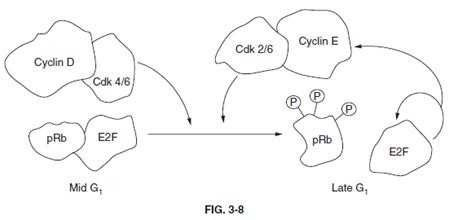 Members of the cyclin-dependent kinase family of cell-cycle regulating kinases target pRB for phosphorylation. When phosphorylated, pRB dissociates from E2F allowing E2F to enter the nucleus and transcriptionally activate genes involved in DNA synthesis, as well as activate its own transcription. Transcription of both cyclin E and CDK2 are activated by E2F. These two proteins form a complex that promotes progression through S-phase of the cell cycle and also act to keep
E2F active by adding to the phosphorylation state of pRB (below figure). Thus, any defect in the ability of pRB to bind to E2F will lead to constitutive activation of DNA synthesis leading to unrestrained proliferation. None of the other options (choices AD) represent viable phenomena to account for the observed increase in E2F activity.
Question 78
Single choice
A 70-year-old man presents with Parkinson's disease in an early stage. Which of the following drugs acts directly on dopamine receptors to reduce the signs and symptoms of Parkinson's disease?
-
A
-
B
-
C
-
D
-
E
Reveal answer details
Close answer details
Correct answerE
ExplanationSection: Pharmacology
Pramipexole is a dopamine receptor agonist unrelated to levodopa or ergot derivatives such as bromocriptine and pergolide (which are also useful dopamine agonists). Amantadine (choice A) acts to facilitate the release or slow the reuptake of dopamine, but does not act on the dopamine receptor. Carbidopa (choice B) blocks the peripheral conversion of levodopa to dopamine, it does not act on dopamine receptors. Entacapone (choice C) blocks the peripheral metabolism of levodopa by catechol- O- methyltransferase. Orphenadrine (choice D) is a centrally acting anticholinergic agent that is sometimes used in Parkinson's disease.
Question 79
Single choice
A 71-year-old woman suffers severe head injuries in a mugging and is hospitalized in a comatose state. While in the hospital, she develops severe pneumonia and on day 11 goes into cardiac arrest and cannot be resuscitated. At autopsy she is found to have advanced coronary atherosclerosis and a pulmonary embolism judged to have occurred within the past 23 days.
The coroner should list which of the following on the death certificate as the underlying (or proximate) cause of death?
-
A
-
B
blunt trauma to the head GI
-
C
-
D
-
E
Reveal answer details
Close answer details
Correct answerB
ExplanationSection: Pathology and Path physiology
The proximate or underlying cause of death is the initiating event that led to the person's death and is what should be listed on the death certificate as the cause of death. In this case, if the woman had not been struck on the head she would not have been hospitalized, not contracted a nosocomial pneumonia (choice D), not had a pulmonary embolism due to the prolonged immobilization (choice E), and not had a cardiopulmonary arrest (choice C). Atherosclerosis (choice A) must have been present for many years prior to the mugging and had no role in her death.
Question 80
Single choice
A 32-year-old female professional gardener complains of increasing muscle weakness and fatigue during the day, requiring her to take frequent rests. She also reports that she cannot enjoy her meals any more because her muscles of mastication quickly weaken and she has to stop chewing. When she watches television at night for a long period of time, her vision becomes blurry and she sees double. Her neurologist makes a preliminary diagnosis of myasthenia gravis. Which of the following is the cause of myasthenia gravis?
-
A
Acetylcholine synthesis in motor neurons is impaired.
-
B
Acetylcholinesterase synthesis is inhibited.
-
C
Autoantibodies destroy cholinergic receptors at the postsynaptic membrane preventing binding of acetylcholine.
-
D
Neurotransmitter release is impaired at the presynaptic membrane of the neuromuscular junction.
-
E
Signal transduction within the muscle is impaired.
Reveal answer details
Close answer details
Correct answerC
ExplanationSection: Anatomy
Myasthenia gravis is an autoimmune disorder where autoantibodies target the postsynaptic cholinergic receptors and destroy them. Acetylcholine released from motor neurons is thus unable to bind and the muscle contraction weakens due to decreased neurotransmitter communication. Acetylcholine synthesis in motor neurons (choice A) remains normal. Acetylcholinesterase (choice B) is the enzyme which degrades acetylcholine and its synthesis is not affected in myasthenia gravis. The cholinergic neurotransmitter release mechanism (choice D) at the presynaptic membrane, as well as the signal transduction mechanism (choice E) within the muscle, remain normal.
Question 81
Single choice
A 46-year-old woman with a 30-year history of juvenile diabetes undergoes a left renal allograft for advanced diabetic nephropathy. The transplant is initially successful; however, 3 months later she develops an unproductive cough with associated arthralgia, malaise, diarrhea, and fever of 101.6°F. Upon hospit al admission, she is found to be leukopenic. The patient continues to decompensate and dies 3 days following admission. A section of her right kidney taken at autopsy is shown in below figure.
This figure indicates an infection with which of the following agents? 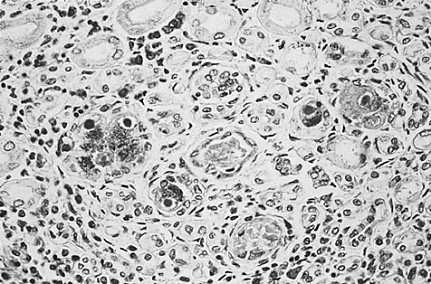
-
A
-
B
-
C
Human immunodeficiency virus
-
D
-
E
-
F
Reveal answer details
Close answer details
Correct answerA
ExplanationSection: Pathology and Path physiology Opportunistic infections can occur in posttransplant patients on immunosuppressive therapy. figure shows greatly enlarged renal tubular cells containing both nuclear and multiple cytoplasmic inclusion bodies. These findings in combination are diagnostic of cytomegalovirus infection. Epstein-Barr virus (choice B) has been associated with a number of diseases, including infectious mononucleosis, Burkitt lymphoma, and nasopharyngeal carcinoma. However, even though this is also a herpes virus, it does not give the morphologic appearance described. Human immunodeficiency virus (choice C) does not produce inclusion bodies in infected cells.
P. carinii (choice D) is an opportunistic fungus that can cause pneumonia in immunocompromised individuals, particularly AIDS patients. It may be visualized with silver staining methods.
S. epidermidis (choice E) and
S. Pyogenes (choice F) are bacteria that one would not associate with this histologic appearance.
Question 82
Single choice
Antibodies against acetylcholine neural receptors were measured in a 35-year-old woman and are thought to be involved in the pathogenesis of which of the following?
-
A
acute idiopathic polyneuritis
-
B
-
C
-
D
-
E
postpericardiotomy syndrome
Reveal answer details
Close answer details
Correct answerD
ExplanationSection: Microbiology/Immunology
Anti-acetylcholine receptor antibodies are found in more than 90% of myasthenia gravis patients. If the clinical symptoms are suggestive of myasthenia gravis, this finding alone is often considered diagnostic. Multiple sclerosis patients tend to have high levels of measles virus antibodies in their spinal fluid. However, the role of this agent in the disease is undetermined (choice C). Guillain-Barr syndrome (also called acute idiopathic polyneuritis) is a demyelinating disease of peripheral nerves. It commonly occurs after a viral infection or an injection, such as influenza immunization. The disease seems to be caused by a T-cell response to nervous tissue (choices A and B). Postpericardiotomy syndrome is a term used to describe a disorder following surgery of the pericardium to remove cysts or tumors or to correct a malformation (choice E).
Question 83
Single choice
A medical student has been immunized with hepatitis B virus (HBV) recombinant vaccine. The curve in below figure represents the production of protective antibodies to the viral component present in the recombinant vaccine. Which of the following is the known viral component of the HBV vaccine? 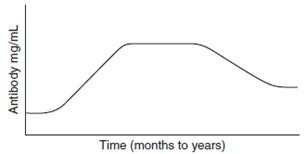
-
A
nucleocapsid proteins of HBV
-
B
-
C
viral core antigen (HBcAg)
-
D
-
E
viral surface antigen (HBsAg)
Reveal answer details
Close answer details
Correct answerE
ExplanationSection: Microbiology/Immunology
The envelope of hepatitis B virus contains an antigen known as HBsAg (hepatitis B surface antigen). This antigen is of importance because production of antibodies to HBsAg indicates immunity against hepatitis B virus, which resulted either from infection or vaccination with HBsAg. Treatment of HBV with a nonionic detergent removes the envelope and produces the viral core, which contains the hepatitis B core antigen (HBcAg). Antibodies to HBcAg are not protective (choice C). Treatment of the viral core with strong detergents results in the release of a soluble core antigen called hepatitis virus antigen e (HBeAg). Production of antibody to HBeAg signals active disease during which the patient is infectious (choice D). The DNA genome (choice B), or the nucleocapsid proteins of HBV (choice A) are not protective.
Question 84
Single choice
Exhibit: 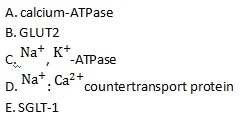 Please refer to the exhibit. Which of the following proteins uses the sodium electrochemical gradient to actively transport a solute into the cell?
-
A
-
B
-
C
-
D
-
E
Reveal answer details
Close answer details
Correct answerE
ExplanationSection: Physiology
SGLT-1 is a sodium-dependent cotransport protein that uses the sodium electrochemical gradient to actively move glucose into the cell. GLUT2 (choice B) does transport glucose, but it is a facilitated diffusion carrier that moves glucose down its concentration gradient. The Na, K-ATPase (choice C) is a primary active transport protein. It uses the energy liberated from ATP hydrolysis to actively transport sodium and potassium. It establishes and maintains the sodium electrochemical gradient. The sodium: calcium countertransport protein (choice D, also termed NCX) uses the sodium electrochemical gradient to move calcium ions out of, not into, the cell. The calcium ATPase (choice A, also termed PMCA) is a primary active transport protein that actively transports calcium out of the cell. Both NCX and PMCA serve to maintain a low intracellular calcium concentration.
Question 85
Single choice
A 47-year-old man has undergone a gradual personality change over the past 67 months with increasing moodiness and irritability During your examination you note some choreiform involuntary movements and also recognize some cognitive impairment. Afterward you talk to the man's brother who accompanied the patient to your office and he tells you that their father had similar problems for about a year prior to his death.
If you could examine this patient's brain, which of the following would you expect to find?
-
A
areas of demyelination of the white matter
-
B
atrophy and loss of neurons of the caudate nucleus
-
C
loss of pigmented neurons of the substantia nigra
-
D
neurons ballooned with cytoplasmic vacuoles
-
E
selective atrophy of anterior frontal and temporal lobes
Reveal answer details
Close answer details
Correct answerB
ExplanationSection: Pathology and Path physiology
In Huntington's disease there is a symmetric atrophy of the caudate nuclei with a great reduction in the number of neurons. The putamen is also affected but usually less so. Areas of demyelination of white matter (choice A) are the classic finding in multiple sclerosis. Loss of pigmented neurons of the substantia nigra (choice C) is a consistent change seen in Parkinson's disease. Neurons ballooned with cytoplasmic vacuoles (choice D) may be seen in a number of lysosomal storage diseases of which Tay-Sachs disease is the classic example. Selective atrophy of anterior, frontal, and temporal lobes (choice E) is seen in Pick disease. There is a severe atrophy of the frontal and temporal lobes which can be sufficient to produce the "knife-edge" appearance characteristic of this disease.
Question 86
Single choice
below figure illustrates uptake of two gases (nitrous oxide and carbon monoxide) from alveolar air to pulmonary capillary blood.
Based on this information what can we conclude about carbon monoxide? 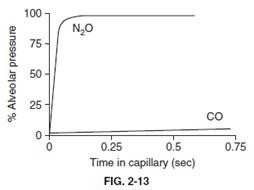
-
A
it does not dissolve in blood
-
B
it does not interact with hemoglobin
-
C
it has equilibrated with pulmonary capillary blood
-
D
it is a diffusion-limited gas
-
E
it is a perfusion-limited gas
Reveal answer details
Close answer details
Correct answerD
ExplanationSection: Physiology
The plot shows that carbon monoxide fails to equilibrate with pulmonary capillary blood during the time that blood is exposed to alveolar air. Since pulmonary partial pressure rises to only a few percent of alveolar partial pressure, carbon monoxide is a diffusion-limited gas. In contrast, nitrous oxide, which does equilibrate, is a perfusion-limited gas (choice E). Carbon monoxide does cross the respiratory membrane (choice C), dissolve in pulmonary capillary blood (choice A), and binds with hemoglobin (choice B). In fact, its affinity for hemoglobin is about 250-fold greater than that of oxygen.
Question 87
Single choice
Figure shows plasma concentrations of drug W in a patient following intravenous (IV) injection of a single dose of 10 mg of the drug, an agent eliminated from the body by renal excretion. At hour 12, the patient is treated with sodium bicarbonate (arrow). 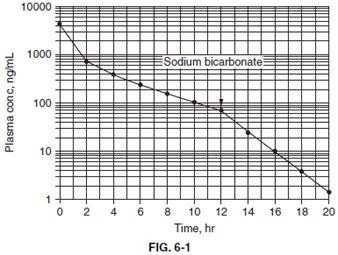 Use the data before hour 12 to calculate the half-life ( ) for drug W. 
-
A
-
B
-
C
-
D
-
E
Reveal answer details
Close answer details
Question 88
Single choice
A patient has been admitted for hematemesis (vomiting of blood). Endoscopic examination reveals bleeding esophageal varices resulting from portal obstruction.
These varices represent anastomoses between branches of which of the following?
-
A
inferior vena cava with a patent ductus venosus
-
B
left gastric, azygos, and hemiazygos veins
-
C
right gastric vein and the inferior vena cava
-
D
superior, middle, and inferior rectal veins
-
E
veins running on the ligamentum teres and the epigastric veins
Reveal answer details
Close answer details
Correct answerB
ExplanationSection: Anatomy
Obstruction of the portal vein results in an increase in the collateral circulation between veins that normally drain to the portal vein and those that drain to the systemic veins. Choices A, B, D, and E all represent possible collateral venous circulation in case of portal obstruction. Choice Ais rare because the ductus venosus closes after birth.
Choice B is correct because varicose veins in this region give rise to esophageal varices.
Choice D results in varicose veins in the rectal region.
Choice C is incorrect because there is no connection between the right gastric vein and the inferior vena cava. In choice E, enlargement of the epigastric veins results in varicose veins radiating from the umbilicus, the caput medusae.
Question 89
Single choice
Which of the following correctly describes Norwalk virus?
-
A
contains an RNA genome with a single open reading frame
-
B
generally causes a severe chronic gastroenteritis with diarrhea that may persist for several weeks
-
C
is a major cause of severe diarrhea in infants in the developing countries
-
D
is an important cause of epidemic gastroenteritis in the United States
-
E
is diagnosed by isolation and then growth of the virus in tissue culture
Reveal answer details
Close answer details
Correct answerD
ExplanationSection: Microbiology/Immunology
Many outbreaks of intestinal disease and diarrhea occur in crowded conditions like cruise ships, where hundreds of tourists become ill in a short time and the cruise must be terminated early so that treatment may be obtained and the ship sanitized. Norwalk virus belongs to the calicivirus classification and is an important cause of outbreaks of vomiting and diarrheal illness in families, communities, and institutions. It is widespread in the United States and is the most important cause of epidemic viral gastroenteritis in adults (choice D). Caliciviruses do have a single-stranded RNA genome which is positive-sense and nonsegmented. It has multiple open reading frames for translation (choice A). The gastroenteritis caused by Norwalk virus has a 2448 hour incubation, rapid onset, and a brief time course (1260 hours), not several weeks (choice B). Rotaviruses are the major cause of severe diarrhea in infants in developing and developed countries (choice C). Reverse transcriptase-- PCR is the most widely used method to diagnose Norwalk and other caliciviruses in outbreaks since the virus cannot be isolated, grown, and identified in diagnostic laboratories (choice E).
Question 90
Single choice
AIP is the major autosomal-dominant acute hepatic porphyria. This disease is caused by a deficiency in porphobilinogen (PBG) deaminase, an enzyme of heme biosynthesis.
Patients afflicted with this disease would be expected to excrete excess amounts of which of the following?
-
A
delta-aminolevulinic acid (ALA)
-
B
-
C
-
D
-
E
type III uroporphyrinogen
Reveal answer details
Close answer details
Correct answerA
ExplanationSection: Biochemistry
PBG deaminase (also called hydroxymethylbilane synthase) catalyzes the heme biosynthesis reaction involving the head-to-tail condensation of four molecules of PBG to produce the linear tetrapyrrole intermediate, hydroxymethylbilane.
Hydroxymethylbilane can nonenzymatically cyclize into uroporphyrinogen I, which is why PBG deaminase is also known as uroporphyrinogen I synthase. ALA is the precursor for PBG, thus a defect in PBG deaminase would lead to excess ALA excretion. The compounds in choices BE all represent products of reactions that are downstream of PBG deaminase in the heme biosynthetic pathway and thus would not be excreted in high amounts in someone with AIP.
Question 91
Single choice
An adult man suffered from stable angina pectoris for 15 years, during which time there was progressive heart failure and repeated pulmonary thromboembolism. On his death at age 63, autopsy disclosed enormous cardiomyopathy (1100 g), cardiac storage of globotriaosylceramide (11 mg lipid/g wet weight), and restricted cardiocytes. Which of the following lipid storage diseases would result in these clinical findings?
-
A
-
B
-
C
-
D
Niemann-Pick disease (NPD) type I A
-
E
Reveal answer details
Close answer details
Question 92
Single choice
If the RNA synthesized were translated in a eukaryotic in vitro translation system, what would be the composition of the resultant peptide? 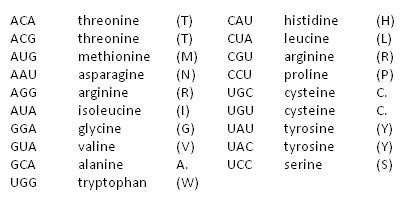
-
A
-
B
-
C
-
D
-
E
Reveal answer details
Close answer details
Correct answerC
ExplanationSection: Biochemistry
Translation in a eukaryotic in vitro translation system would begin at an AUG codon residing near the 5'- end of the mRNA. Therefore, translation of the correct RNA product would begin two nucleotides from the 5' end at the first AUG codon.
This would result in the translation of a protein of four amino acids. None of the other choices (A, B, D, and E) translate into a four-unit amino acid chain.
Question 93
Single choice
Which of the following is used in treating major depression and has the greatest sedative effect?
-
A
-
B
-
C
-
D
-
E
Reveal answer details
Close answer details
Correct answerD
ExplanationSection: Pharmacology
All of the agents listed are useful antidepressants but only mirtazapine has significant sedative effects.
Question 94
Single choice
The structure indicated by arrow 2 in following figure, is which of the following? 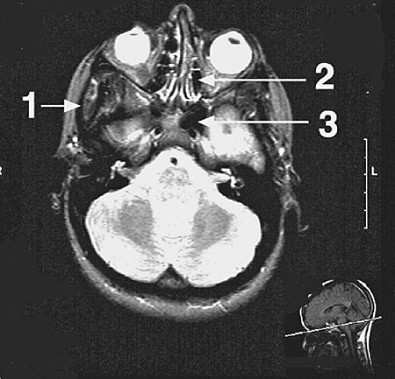
-
A
-
B
-
C
-
D
-
E
Reveal answer details
Close answer details
Correct answerA
ExplanationSection: Anatomy
This axial scan is at the level of the orbits as indicated by the insert at the bottom right and the eyeballs in the orbits. Arrow 2 points to the ethmoidal sinus located medial to the orbits. The sinus is divided into compartments by the air cells.
The maxillary sinus (choice D) and the inferior nasal meatus (choice B) are located inferior to the level of this scan and are not seen. The sphenoidal sinus (choice E) is indicated by arrow 3 and the infratemporal fossa (choice C) by arrow 1.
Question 95
Single choice
A 67-year-old woman presents with a 4-week history of headaches, facial pain, blurred vision, and intense pain and stiffness in her shoulders and hips. She is diagnosed with a vasculitis, and a biopsy of an affected artery is taken.
Histological examination is most likely to reveal which of the following characteristic findings?
-
A
concentric "onion skin" thickening and fibrosis
-
B
extensive intra-and extravascular granulomatous inflammation
-
C
fragmentation of the internal elastic lamina with giant cells
-
D
hyaline arteriolosclerosis and luminal narrowing
-
E
segmental fibrinoid necrosis and neutrophil infiltration
Reveal answer details
Close answer details
Correct answerC
ExplanationSection: Pathology and Path physiology
The most likely diagnosis in this case is giant cell (temporal) arteritis; it is both the most common systemic vasculitis in this woman's age group (>60) and is suggested by the clinical history. Giant cell arteritis may affect any medium-and large-sized arteries, but principally involves vessels in the head, that is, extracranial branches of the carotid arteries. Vascular insufficiency leads to symptoms of jaw or facial pain, headaches, and visual changes, as reported by this patient. In
particular, ischemic optic neuropathy may occur abruptly, resulting in permanent blindness; for this reason, patients with ocular disturbances in suspected cases demand immediate medical intervention. Temporal arteritis has a strong, well- known association with polymyalgia rheumatica, a systemic inflammatory disorder causing symmetrical, often severe muscle pain and stiffness in the shoulders and pelvic girdle (also reported by this patient); both conditions are associated
with the HLA-D4 haplotype. Microscopically, a section of a vessel affected by giant cell arteritis will demonstrate fragmentation of the internal elastic lamina and the presence of multinucleated giant cells. Concentric "onion skin" thickening and fibrosis (choice A) may be seen most commonly in malignant hypertension but also in other conditions such as primary sclerosing cholangitis. Extensive intra-and extravascular granulomatous inflammation (choice B) refers to Wegener granulomatosis which often includes: (i) acute necrotizing granulomas of the upper and/or lower respiratory tract; (ii) granulomatous vasculitis; and (iii) renal disease. Hyaline arteriolosclerosis and luminal narrowing (choice C) is found in
association with benign hypertension and in diabetes mellitus but is also seen in some normotensive, nondiabetic elderly individuals. Segmental fibrinoid necrosis and neutrophil infiltration (choice E) is a description of the acute phase of polyarteritis nodosa.
Question 96
Single choice
A 43-year-old man complains of a 25-lbs weight gain over the past 2 years distributed mostly in the trunk and face. He also states that he has developed abdominal stretch marks and facial acne during the same time period. Physical examination reveals BP 160/100 mm Hg and pulse 90 per minute. Significant laboratory tests were fasting glucose 145 mg/dL and 24-hour urinary free cortisol greatly increased at 390 g/d. The dexamethasone suppression test showed suppression of the urinary free cortisol at high but not low doses.
Based upon this information, you would expect to find a hormonally-active tumor in which of the following sites?
-
A
-
B
-
C
-
D
Reveal answer details
Close answer details
Correct answerC
ExplanationSection: Pathology and Path physiology.
This patient has the physical stigmata of excess cortisol or Cushing syndrome which is confirmed by the urinary free cortisol levels. Cortisol also has some mineralocorticoid activity producing sodium and water retention and hypertension.
Cortisol promotes gluconeogenesis leading to glucose intolerance, hyperinsulinism and, in some patients, frank diabetes. The fact that urinary cortisol levels were suppressed by high but not low doses of dexamethasone strongly suggests a pituitary-based Cushing syndrome due to excess ACTH production or Cushing disease. ACTH-producing cells or corticotropes are found in the anterior pituitary. The dexamethasone suppression test rules out the adrenal (choices Aand B) as a site for the tumor and posterior pituitary (choice D) is not the location of the ACTH-producing cells.
Question 97
Single choice
A 28-year-old, 166 cm (5.45 ft) tall woman, weighing 170 kg (375 lbs) successfully underwent biliopancreatic diversion surgery, in which a portion of her stomach was removed and the remaining portion of the stomach was connected to the lower portion of the small intestine (see below figure). What is her prevalence for peptic ulcer disease and for what reason? 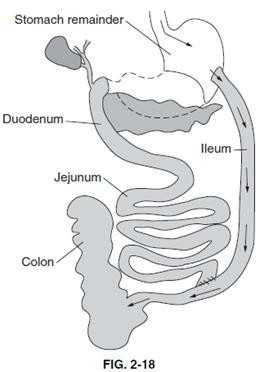
-
A
it is higher due to inflammation caused by the surgical staples
-
B
it is higher due to the loss of secretin release
-
C
it is lower since chief cells were surgically resected
-
D
it is lower since G cells were surgically resected
-
E
it is unchanged since the surgery was successful
Reveal answer details
Close answer details
Correct answerD
ExplanationSection: Physiology
Peptic ulcers refer to areas of the stomach or duodenal lining which became eroded by stomach acid. Stomach acid is produced by parietal cells which are stimulated by gastrin. Since gastrin-secreting G cells are primarily found in the gastric glands of the distal stomach (gastric antrum), the surgically removed stomach portion, the patient's prevalence for peptic ulcer disease is lower after the surgery, and not unchanged as stated in choice E. However, the surgery is a dramatic event and increases the risk for many GI problems, including symptoms resulting from nutritional deficiencies. Hence, the surgery is only used for morbidly obese people (the patient's body mass index is above 50), who had no success with
diet and medication. Inflammation potentially triggered by the surgical staples (choice A) might trigger prostaglandin release which has a protective function of the stomach lining. Although secretin (choice B) is known to suppress gastric acid release by inhibiting gastrin release, the lower number of G cells after surgery does not make this a good choice. Chief cells (choice C) are primarily present in the proximal stomach, the portion that remains after surgery.
Question 98
Single choice
A 75-year-old lady is slowly developing a chronic suppurative cervicofacial lesion, thought to be actinomycosis. Which of the following is most likely to promote the progress of this infection?
-
A
high levels of oxygen in tissues
-
B
presence of a foreign body at the site of infection
-
C
production of exotoxin by A. israelii
-
D
production of leukocidin by A. israelii
-
E
production of pili by A. israelii
Reveal answer details
Close answer details
Correct answerB
ExplanationSection: Microbiology/Immunology
A. israelii is an opportunistic microorganism that does not produce any known virulence factor. It seems that its pathogenesis is related to the ability of this organism to survive the host's inflammatory responses. Devitalized tissues, presence
of foreign bodies, broken mucous membranes, and immunosuppression promote development of actinomycosis. A. israelii is an anaerobic organism. Thus high levels of oxygen will kill this microbe (choice A). This bacterium does not produce leukocidin (choice D), exotoxin (choice C), or pili (choice E).
Question 99
Single choice
A deficiency of argininosuccinate synthetase (ASD) can be suspected in a 2448-hour-old neonate with elevated serum ammonia. To discriminate the fact that the hyperammonemia is indeed due to ASD and not due to a deficiency in other urea cycle enzymes, one can assay for the serum concentration of citrulline and urinary orotic acid concentration. Which of the following would best describe the expected findings?
-
A
Both citrulline and orotate levels will be low.
-
B
Citrulline levels will be absent but orotate will be elevated.
-
C
Citrulline levels will be between 100300 M and orotate levels will be elevated.
-
D
Citrulline levels will be >1000 M, orotate will be near normal.
Reveal answer details
Close answer details
Correct answerD
ExplanationSection: Biochemistry
A urea cycle disorder (UCD) is likely in a neonate that has elevated serum ammonia appearing, not before, but between 24 and 48 hours after a normal term delivery. There are three hallmark symptoms associated with UCDs. These are hyperammonemia, encephalopathy, and respiratory alkalosis. Thus, elevated serum ammonia is not, in and of itself, indicative of a specific defect in the urea cycle. An analysis of the levels of various amino and organic acids in the plasma and urine is the primary key to determining which defect led to the elevation in serum ammonia. Differential diagnosis of neonatal hyperammonemia, as a consequence of a UCD can be accomplished by measurement of plasma citrulline and urinary orotic acid levels. Shown in below figure is the standard differential diagnosis chart for determining which of four possible neonatal UCDs is the cause of the hyperammonemia. First, the hyperammonemia appears in the absence of any significant acidosis or ketosis. If analysis of serum citrulline demonstrates that it is >1000 M it is confirmation that the clinical symptoms are due to a deficiency in ASD. In this circumstance it is not necessary to assay for levels of urinary orotic acid but they would be expected to be normal. Since citrulline levels are dramatically elevated in cases of ASD, choices A, B, and C are not correct. 
Question 100
Single choice
On the basis of their mechanisms of action, which of the following combinations of drugs produces a beneficial additive or synergistic effect in therapy when each agent is present at its maximum effective concentration?
-
A
chlortetracycline plus amoxicillin
-
B
clomiphene plus chorionic gonadotropin
-
C
lovastatin plus cholestyramine
-
D
pentazocine plus morphine
-
E
succinylcholine plus atracurium
Reveal answer details
Close answer details
Correct answerC
ExplanationSection: Pharmacology
The hydroxymethylglutaryl-CoA (HMGCoA) reductase inhibitor lovastatin and the bile acid-binding resin cholestyramine (choice C) lower the concentration of cholesterol in the blood by different mechanisms. Because they act by different mechanisms, combination therapy is at least additive. The combination of chlortetracycline and amoxicillin (choice A) results in antagonism of amoxicillin's antibacterial action. The beta-lactam cell wall synthesis inhibitors such as the penicillins and cephalosporins are bactericidal, but are effective primarily when the bacteria proliferate rapidly. Tetracyclines are bacteriostatic agents that slow or inhibit the growth of bacterial cells by inhibiting protein synthesis. The combination of clomiphene and chorionic gonadotropin (choice B) does not produce any beneficial additive action. Both agents are used to treat female infertility. Clomiphene is an estrogen-receptor partial agonist that functions at the level of the hypothalamus to stimulate release of gonadotropinreleasing hormone (GnRH). The increased release of GnRH results in increased release of the gonadotropins LH and FSH from the anterior pituitary. This results in stimulation of ovulation. Administration of chorionic gonadotropin also stimulates ovulation. Because both preparations function through increases in gonadotropin levels and both are present at their maximum effective concentrations, a beneficial additive effect is unlikely. The combination of pentazocine and morphine (choice D) does not produce a beneficial interaction. Pentazocine exerts its pain-relieving activity by a weak (partial) agonist action at mu-opioid receptors. Morphine is a full agonist at the same receptors. When the two analgesic agents are combined, pentazocine acts as an antagonist for morphine at mu-receptors. The result is precipitation of withdrawal in addicted patients, and dysphoria and loss of morphine analgesia in nonaddicted patients. Succinylcholine and atracurium (choice E) are both skeletal musclerelaxing agents that block muscle contraction by actions at the neuromuscular junction. Succinylcholine is a depolarizing blocker that acts as an agonist at the nicotinic receptor. Atracurium is a competitive antagonist at the same receptor. Because they both act at the same receptor and are present at their effective concentrations, atracurium interferes with the action of succinylcholine.
|