For the distributions shown in the attached image, which will be the better measure of the center of the data set? 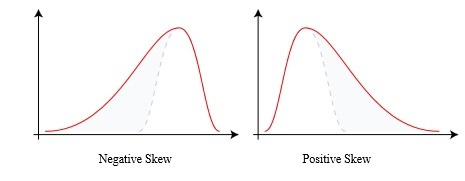
-
A
-
B
-
C
-
D
Reveal answer details
Close answer details
Case study
Case Study 1
Your friend Abbie is making a movie. She is filming a fancy dinner scene and she has two types of candles on the table. She wants to determine how long the candles will last. She takes a picture, lights the candles, and then lets them burn for 1 hour. She then takes a second picture. You can assume that each candle burns at its won constant rate. 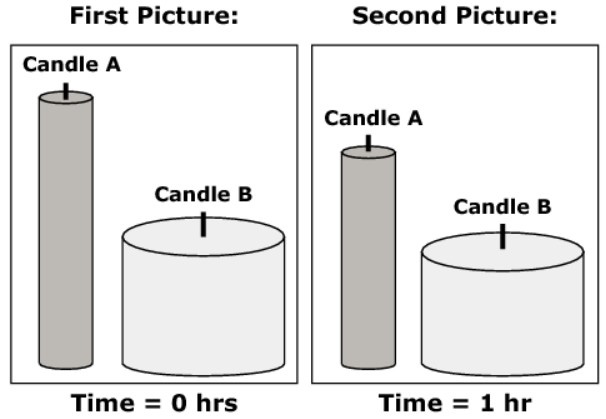 Candle Type A initial height = 20 cm
Candle Type B initial height = 10 cm Candle Type A height after burning for 1 hour = 16 cm
Candle Type B heignt after burning for 1 hour = 9 cm You will use this information to help Abbie think about the candles she might use for her film.
Testlet 1
Lab simulation
FILL BLANK Read the text and answer the question. Blue Crabs Provide Evidence of Oil Tainting Gulf Food Weeks ago, before engineers pumped in mud and cement to plug the gusher, scientists began finding specks of oil in crab larvae plucked from waters across the Gulf coast.
The government said last week that three-quarters of the spilled oil has been removed or naturally dissipated from the water. But the crab larvae discovery was an ominous sign that crude had already infiltrated the Gulf's vast food web - and could affect it for years to come.
"It would suggest the oil has reached a position where it can start moving up the food chain instead of just hanging in the water," said Bob Thomas, a biologist at Loyola University in New Orleans.
"Something likely will eat those oiled larvae . . . and then that animal will be eaten by something bigger and so on."
Tiny creatures might take in such low amounts of oil that they could survive, Thomas said. But those at the top of the chain, such as dolphins and tuna, could get fatal "megadoses."
Marine biologists routinely gather shellfish for study. Since the spill began, many of the crab larvae collected have had the distinctive orange oil droplets, said Harriet Perry, a biologist with the University of Southern Mississippi's Gulf Coast Research Laboratory.
"In my 42 years of studying crabs I've never seen this," Perry said.
She wouldn't estimate how much of the crab larvae are contaminated overall, but said about 40 percent of the area they are known to inhabit has been affected by oil from the spill.
While fish can metabolize dispersant and oil, crabs may accumulate the hydrocarbons, which could harm their ability to reproduce, Perry said in an earlier interview with Science magazine.
She told the magazine there are two encouraging signs for the wild larvae - they are alive when collected and may lose oil droplets when they molt.
Tulane University researchers are investigating whether the splotches also contain toxic chemical dispersants that were spread to break up the oil but have reached no conclusions, biologist Caz Taylor said.
If large numbers of blue crab larvae are tainted, their population is virtually certain to take a hit over the next year and perhaps longer, scientists say. The spawning season occurs between April and October, but the peak months are in July and August.
How large the die-off would be is unclear, Perry said. An estimated 207 million gallons of oil have spewed into the Gulf since an April 20 drilling rig explosion triggered the spill, and thousands of gallons of dispersant chemicals have been dumped.
Scientists will be focusing on crabs because they're a "keystone species" that play a crucial role in the food web as both predator and prey, Perry said.
Richard Condrey, a Louisiana State University oceanographer, said the crabs are "a living repository of information on the health of the environment."
Named for the light-blue tint of their claws, the crabs have thick shells and 10 legs, allowing them to swim and scuttle across bottomlands. As adults, they live in the Gulf's bays and estuaries amid marshes that offer protection and abundant food, including snails, tiny shellfish, plants and even smaller crabs. In turn, they provide sustenance for a variety of wildlife, from redfish to raccoons and whooping cranes.
Adults could be harmed by direct contact with oil and from eating polluted food. But scientists are particularly worried about the vulnerable larvae.
That's because females don't lay their eggs in sheltered places, but in areas where estuaries meet the open sea. Condrey discovered several years ago that some even deposit offspring on shoals miles offshore in the Gulf.
The larvae grow as they drift with the currents back toward the estuaries for a month or longer. Many are eaten by predators and only a handful of the 3 million or so eggs from a single female live to adulthood.
But their survival could drop even lower if the larvae run into oil and dispersants.
"Crabs are very abundant. I don't think we're looking at extinction or anything close to it," said Taylor, one of the researchers who discovered the orange spots.
Still, crabs and other estuary-dependent species such as shrimp and red snapper could feel the effects of remnants of the spill for years, Perry said.
"There could be some mortality, but how much is impossible to say at this point," said Vince Guillory, biologist manager with the Louisiana Department of Wildlife and Fisheries.
Perry, Taylor and Condrey will be among scientists monitoring crabs for negative effects such as population drop-offs and damage to reproductive capabilities and growth rates.
Crabs are big business in the region. In Louisiana alone, some 33 million pounds are harvested annually, generating nearly $300 million in economic activity, Guillory said.
Blue crabs are harvested year-round, but summer and early fall are peak months for harvesting, Guillory said.
Prices for live blue crab generally have gone up, partly because of the Louisiana catch scaling back due to fishing closures, said Steve Hedlund, editor of SeafoodSource.com, a website that covers the global seafood industry.
Fishers who can make a six-figure income off crabs in a good year now are now idled - and worried about the future.
"If they'd let us go out and fish today, we'd probably catch crabs," said Glen Despaux, 37, who sets his traps in Louisiana's Barataria Bay. "But what's going to happen next year, if this water is polluted and it's killing the eggs and the larvae? I think it's going to be a long-term problem."
Excerpt from "Blue Crabs Provide Evidence of Oil Tainting Gulf Food Web" by John Flesher. Copyright © 2010 by The Associated Press. Reprinted by permission of The Associated Press. Summarize the author's point about why scientists are monitoring the blue crab population so closely.
Support your summary using key evidence from the text. A. Correct Answer: See explanation below.
Reveal model answer
Close model answer
For example: Score 2 A response: Gives sufficient evidence of the ability to determine/summarize the author's message/claim/point/central idea, or to explain the support for a central idea Includes specific examples/details that make clear reference to the text Adequately explains the author's message/ claim/point/central idea or explanation with clearly relevant information based on the text Oil tainted water has contaminated populations of blue crabs, a species relatively low on the food chain.
The primary concern here is that while these crabs may survive the poisoning, their position on the food chain could be disastrous for the environment overall. For example, the oil may negate their ability to reproduce and the animals who hunt blue crab may die off-and in turn their predators will starve as well.
Poisoned blue crabs could also survive small doses of oil but those at the top of the food chain could consume fatal megadoses. "Something likely will eat those oiled larvae... and then that animal will be eaten by something bigger and so on." says the scientist in the text. Scientists must monitor the blue crab population because the effects that the oil may have had on them could disrupt the entire food chain. Score 1 A response: Gives limited evidence of the ability to determine/summarize the author's message/ claim/point/central idea, or to explain the support for a central idea Includes vague/limited examples/details that make reference to the text Explains the author's message/ claim/point/central idea or explanation with vague/limited information based on the text They are monitoring the blue crab population so closely because they are a key part to the food chain. If the species cannot reproduce then they will die off causing a chain reaction that will effect the consumers of the food chain. Score 0 A response: Gives no evidence of the ability to determine/summarize the author's message/claim/point/central idea, or to explain the support for a central idea OR Gives the author's message/claim/point/central idea or explanation, but includes no examples or no examples/details that make reference to the text OR Gives the author's message/claim/point/central idea or explanation, but includes no explanation or no relevant information from the text Scientists began finding specks of oil in crab larvae plucked from waters across the Gulf coast. The government said last week that three-quarters of the spilled oil has been removed or naturally dissipated from the water.
Read the story attached. "Roughing It"
by Mark Twain
My brother had just been appointed Secretary of Nevada Territory ?an office of such majesty that it concentrated in itself the duties and dignities of Treasurer, Comptroller, Secretary of State, and Acting Governor in the Governor's absence. A salary of eighteen hundred dollars a year and the title of "Mr.
Secretary," gave to the great position an air of wild and imposing grandeur. I was young and ignorant, and I envied my brother. I coveted his distinction and his financial splendor, but particularly and especially the long, strange journey he was going to make, and the curious new world he was going to explore. He was going to travel! I never had been away from home, and that word "travel" had a seductive charm for me.
Pretty soon he would be hundreds and hundreds of miles away on the great plains and deserts, and among the mountains of the Far West, and would see buffaloes and Indians, and prairie dogs, and antelopes, and have all kinds of adventures, and may be get hanged or scalped, and have ever such a fine time, and write home and tell us all about it, and be a hero. And he would see the gold mines and the silver mines, and maybe go about of an afternoon when his work was done, and pick up two or three pailfuls of shining slugs, and nuggets of gold and silver on the hillside. And by and by he would become very rich, and return home by sea, and be able to talk as calmly about San Francisco and the ocean, and "the isthmus" as if it was nothing of any consequence to have seen those marvels face to face. What I suffered in contemplating his happiness, pen cannot describe. And so, when he offered me, in cold blood, the sublime position of private secretary under him, it appeared to me that the heavens and the earth passed away, and the firmament was rolled together as a scroll! I had nothing more to desire. My contentment was complete. At the end of an hour or two I was ready for the journey. Not much packing up was necessary, because we were going in the overland stage from the Missouri frontier to Nevada, and passengers were only allowed a small quantity of baggage apiece. There was no Pacific railroad in those fine times of ten or twelve years ago ?not a single rail of it. I only proposed to stay in Nevada three months ?I had no thought of staying longer than that. I meant to see all I could that was new and strange, and then hurry home to business. I little thought that I would not see the end of that three-month pleasure excursion for six or seven uncommonly long years! I dreamed all night about Indians, deserts, and silver bars, and in due time, next day, we took shipping at the St. Louis wharf on board a steamboat bound up the Missouri River. We were six days going from St. Louis to "St. Jo."?a trip that was so dull, and sleepy, and eventless that it has left no more impression on my memory than if its duration had been six minutes instead of that many days. No record is left in my mind, now, concerning it, but a confused jumble of savage-looking snags, which we
deliberately walked over with one wheel or the other; and of reefs which we butted and butted, and then
retired from and climbed over in some softer place; and of sand-bars which we roosted on occasionally,
and rested, and then got out our crutches and sparred over. In fact, the boat might almost as well have gone to St. Jo. by land, for she was walking most of the time, anyhow ?climbing over reefs and clambering over snags patiently and laboriously all day long. The captain said she was a "bully" boat, and all she wanted was more "shear" and a bigger wheel. I thought she wanted a pair of stilts, but I had the deep sagacity not to say so. You are asked to describe the trustworthiness and reliability of the narrator of the attached passage. Which of these would be the best response?
-
A
The narrator is not trustworthy because he is too concerned about what he might be missing out on
because he says, "I never had been away from home, and that word `travel' had a seductive charm for
me." He'll be too busy being jealous that he's only a secretary and not selected to as high a position as his brother to accurately relate the events that will unfold. Jealousy between brothers can run deep and will skew the narrator's perspective as he recounts the events, so he will not be trustworthy.
-
B
The narrator is trustworthy because he admits to being both excited for his brother and jealous of the opportunity. He admits that what he "suffered in contemplating his happiness, pen cannot describe" and then when he is offered the opportunity to join his brother, his "contentment was complete" and he hurriedly packed his bags in preparation for departure. This honesty shows we can trust the narrator.
-
C
The narrator is not trustworthy because he clearly does not like his brother and is looking forward to him possibly being "hanged or scalped." This means that we can't trust his telling of the events because he will always have a negative slant toward his brother. He secretly wants him dead.
-
D
The narrator is trustworthy because he was there on the trip, too, after his brother invited him to go along as his "private secretary." Because he is so elated to go on this journey, we can trust that he will tell things exactly as they happened and we can trust his account.
Reveal answer details
Close answer details
A rectangular container whose dimensions are 5 ft. by 7 ft. by 2 ft. is filled with objects that weigh 15 oz. per cubic foot each. What is the total weight of the filled container?
-
A
-
B
-
C
-
D
Reveal answer details
Close answer details
-
A
-
B
-
C
-
D
Reveal answer details
Close answer details
Read the text and answer the question. Blue Crabs Provide Evidence of Oil Tainting Gulf Food Weeks ago, before engineers pumped in mud and cement to plug the gusher, scientists began finding specks of oil in crab larvae plucked from waters across the Gulf coast.
The government said last week that three-quarters of the spilled oil has been removed or naturally dissipated from the water. But the crab larvae discovery was an ominous sign that crude had already infiltrated the Gulf's vast food web - and could affect it for years to come.
"It would suggest the oil has reached a position where it can start moving up the food chain instead of just hanging in the water," said Bob Thomas, a biologist at Loyola University in New Orleans.
"Something likely will eat those oiled larvae . . . and then that animal will be eaten by something bigger and so on."
Tiny creatures might take in such low amounts of oil that they could survive, Thomas said. But those at the top of the chain, such as dolphins and tuna, could get fatal "megadoses."
Marine biologists routinely gather shellfish for study. Since the spill began, many of the crab larvae collected have had the distinctive orange oil droplets, said Harriet Perry, a biologist with the University of Southern Mississippi's Gulf Coast Research Laboratory.
"In my 42 years of studying crabs I've never seen this," Perry said.
She wouldn't estimate how much of the crab larvae are contaminated overall, but said about 40 percent of the area they are known to inhabit has been affected by oil from the spill.
While fish can metabolize dispersant and oil, crabs may accumulate the hydrocarbons, which could harm their ability to reproduce, Perry said in an earlier interview with Science magazine.
She told the magazine there are two encouraging signs for the wild larvae - they are alive when collected and may lose oil droplets when they molt.
Tulane University researchers are investigating whether the splotches also contain toxic chemical dispersants that were spread to break up the oil but have reached no conclusions, biologist Caz Taylor said.
If large numbers of blue crab larvae are tainted, their population is virtually certain to take a hit over the next year and perhaps longer, scientists say. The spawning season occurs between April and October, but the peak months are in July and August.
How large the die-off would be is unclear, Perry said. An estimated 207 million gallons of oil have spewed into the Gulf since an April 20 drilling rig explosion triggered the spill, and thousands of gallons of dispersant chemicals have been dumped.
Scientists will be focusing on crabs because they're a "keystone species" that play a crucial role in the food web as both predator and prey, Perry said.
Richard Condrey, a Louisiana State University oceanographer, said the crabs are "a living repository of information on the health of the environment."
Named for the light-blue tint of their claws, the crabs have thick shells and 10 legs, allowing them to swim and scuttle across bottomlands. As adults, they live in the Gulf's bays and estuaries amid marshes that offer protection and abundant food, including snails, tiny shellfish, plants and even smaller crabs. In turn, they provide sustenance for a variety of wildlife, from redfish to raccoons and whooping cranes.
Adults could be harmed by direct contact with oil and from eating polluted food. But scientists are particularly worried about the vulnerable larvae.
That's because females don't lay their eggs in sheltered places, but in areas where estuaries meet the open sea. Condrey discovered several years ago that some even deposit offspring on shoals miles offshore in the Gulf.
The larvae grow as they drift with the currents back toward the estuaries for a month or longer. Many are eaten by predators and only a handful of the 3 million or so eggs from a single female live to adulthood.
But their survival could drop even lower if the larvae run into oil and dispersants.
"Crabs are very abundant. I don't think we're looking at extinction or anything close to it," said Taylor, one of the researchers who discovered the orange spots.
Still, crabs and other estuary-dependent species such as shrimp and red snapper could feel the effects of remnants of the spill for years, Perry said.
"There could be some mortality, but how much is impossible to say at this point," said Vince Guillory, biologist manager with the Louisiana Department of Wildlife and Fisheries.
Perry, Taylor and Condrey will be among scientists monitoring crabs for negative effects such as population drop-offs and damage to reproductive capabilities and growth rates.
Crabs are big business in the region. In Louisiana alone, some 33 million pounds are harvested annually, generating nearly $300 million in economic activity, Guillory said.
Blue crabs are harvested year-round, but summer and early fall are peak months for harvesting, Guillory said.
Prices for live blue crab generally have gone up, partly because of the Louisiana catch scaling back due to fishing closures, said Steve Hedlund, editor of SeafoodSource.com, a website that covers the global seafood industry.
Fishers who can make a six-figure income off crabs in a good year now are now idled - and worried about the future.
"If they'd let us go out and fish today, we'd probably catch crabs," said Glen Despaux, 37, who sets his traps in Louisiana's Barataria Bay. "But what's going to happen next year, if this water is polluted and it's killing the eggs and the larvae? I think it's going to be a long-term problem."
Excerpt from "Blue Crabs Provide Evidence of Oil Tainting Gulf Food Web" by John Flesher. Copyright © 2010 by The Associated Press. Reprinted by permission of The Associated Press. The following question is divided into two parts. First, answer part A. Then, answer part B. Part A Read this section from the text and the directions that follow. Weeks ago, before engineers pumped in mud and cement to plug the gusher, scientists began finding specks of oil in crab larvae plucked from waters across the Gulf coast. The government said last week that three-quarters of the spilled oil has been removed or naturally dissipated from the water. But the crab larvae discovery was an ominous sign that crude had already infiltrated the Gulf's vast food web - and could affect it for years to come. "It would suggest the oil has reached a position where it can start moving up the food chain instead of just hanging in the water", said Bob Thomas, a biologist at Loyola University in New Orleans. "Something likely will eat those oiled larvae... and then that animal will be eaten by something bigger and so on." What is the central idea of the section?
-
A
Other organisms in the Gulf waters feed on the larvae of blue crabs.
-
B
Most of the spilled oil that contaminated the Gulf waters recently has been cleaned up.
-
C
Scientists recently discovered oil droplets on blue crab larvae in waters along the Gulf coast
-
D
Scientists fear long-term negative effects on Gulf coast organisms from contaminated blue crab larvae.
Reveal answer details
Close answer details
What is the greatest common factor for 3x2y + 6x4y3 - 12xy? 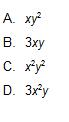
-
A
-
B
-
C
-
D
Reveal answer details
Close answer details
Aimee plans to open a lemonade stand. She wants to determine whether to sell an 8 ounce or 10 ounce cup of lemonade. Each 8-ounce cup costs 2 cents and 10 ounce cups are 3 cents each. The lemons to make a half-gallon of lemonade cost 5 dollars and the sugar for the half-gallon costs 85 cents. She already has all the materials needed to make the stand and she can use the location at no cost. Aimee notices that about 150 people pass by the location of her stand each day and thinks that 20 percent of these people will buy a cup of lemonade. You have made the 2 accompanying graphs to help Aimee make business decisions. 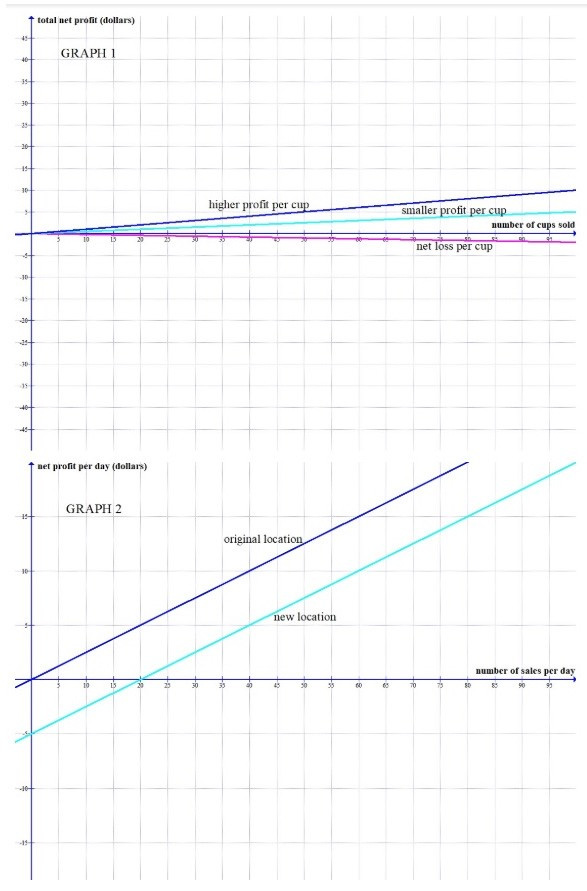 Read the attached passage and consult the attached graphs. Juanita has a location where 300 people per day pass by, but wants Aimee to pay $5 per day rent. Assume the same 20% of them will buy, and she is currently selling at a profit of 25 cents per cup. You show Aimee graph 2 to show the potential of the new site, but she thinks the slope of line 2 should be steeper since she is getting more customers. Explain why the slope is correct as shown.
-
A
Since there are more people each day, she will be using more cups.
-
B
The amount she makes per cup stays the same no matter how many people come by.
-
C
Since the new line starts lower the slope decreases to match the original slope.
-
D
Since she is paying rent, the slope has to decrease to match the original site.
Reveal answer details
Close answer details
In this survey (results attached), what is the relative frequency of seniors attending the game?
-
A
-
B
-
C
-
D
Reveal answer details
Close answer details
Question 10
Single choice
 After you paint of the walls in your bedroom, you realize you have painted 288 square feet. How many square feet of walls do you have left to paint in your bedroom?
-
A
-
B
-
C
-
D
Reveal answer details
Close answer details
Question 11
Single choice
Read the information attached Source 1: Military Supports Alternative Treatments for Treating Pain in Vets and Troops
The military has long worried that an over-reliance on prescription pain killers for the after-effects of tours of duty was putting both veterans and active-duty troops at risk of dependency, serious adverse reactions to the drugs and accidental death. The problem was found to be greatest among veterans returning from Iraq and Afghanistan ?particularly those with post-traumatic stress disorder ?who, according to a recent study published in the Journal of the American Medical Association (JAMA), may have been given
"inappropriate prescriptions" for opioids in a misguided attempt to relieve their suffering quickly.
Now, however, change appears to be coming as the military expands its use of alternative treatments such as chiropractic care.
Dr. Robert D. Kerns, the national program director for pain management at the Department of Veterans Affairs, told the New York Times that the study "encourages" both his department, as well as the Pentagon's health system, "to build on... existing initiatives."
If done, that would be good news to Congressional committees following up on last year's Veterans Health Administration scandal.
"We have said for a long time that sending a veteran out of the door with a bagful of pills is not a solution,"
Rep. Jeff Miller, R-Fla., said in investigating allegations that a Tomah, Wisconsin, Veterans Affairs hospital was prescribing "excessive dosages of opiates."
Even as more research pours in, chiropractic care continues to gain support. A 2013 study published in the journal Spine found that 73 percent of participating active-duty military patients with low back pain receiving a combination of chiropractic manipulative treatment and standard medical care rated their global improvement as "pain completely gone," "much better," or "moderately better." In the same study, only 17 percent who received standard medical care alone said likewise. Source 2: Relief for Weekend Warriors Comes From Chiropractic Care, Not a Pill Bottle Sports injuries can happen to anyone, and they may be more likely among amateur athletes than professionals.
Amateur athletes, whether they are weekend warriors or regular fitness buffs, can end up with an injury for a variety of reasons, from wearing the wrong shoes to an incorrect technique in a tennis or golf swing.
However, amateurs and pros alike want relief when they get hurt, and anyone can become addicted to strong, opioid painkillers, according to a recent article in Outside magazine. "The reality is that all athletes are one fall, twist, or tweak away from landing their own opioid prescription," the article notes.
In the wake of a directive from the Centers for Disease Control and Prevention to cut down on painkiller prescriptions, doctors and patients are seeking drug-free alternatives, and chiropractic care is one of them.
In fact, chiropractic care can provide not only short-term pain relief but long-term prevention of future pain by helping to address structural imbalances in the body that might be contributing to the problem.
Medications (including ibuprofen and other over-the-counter drugs as well as prescription drugs) can mask the pain from an injury but fail to address the cause. Doctors of chiropractic (DCs) use hands-on techniques to manipulate the joints and soft tissues of the body to address where pain syndromes may originate. DCs receive a minimum of seven years of higher education and are skilled in the diagnosis and art of spinal manipulation. In addition, according to Dr. Sherry McAllister of the Foundation for Chiropractic Progress, most insurance and health plans cover chiropractic care. A student is writing an informational essay about the benefits of chiropractic care as part of a comprehensive wellness plan. He has found two sources, the text of which is given in the attached document. His essay makes the claim that "Chiropractic care may be able to help alleviate pain symptoms and negate the need for dangerous and addictive pain medications." Decide if the information in source 1, source 2, both sources, or neither source supports the claim.
-
A
-
B
-
C
-
D
Reveal answer details
Close answer details
Question 12
Single choice
Ashley's class is doing experiments with probability. They have a box with 3 green balls, 2 blue balls, and 5 red balls. Ashley picks a ball, records its color, and puts it back in the box. Her classmate Julio then picks a ball from the box. What is the probability that both of them pick a green ball?
-
A
-
B
-
C
-
D
Reveal answer details
Close answer details
Question 13
Single choice
Which of these symmetries does not apply to a circle centered at the origin of the coordinate plane?
-
A
-
B
-
C
-
D
Reveal answer details
Close answer details
Question 14
Single choice
The graph of y = x26x + 1 has its ____ at the point (3, -8).
-
A
-
B
-
C
-
D
Reveal answer details
Close answer details
Question 15
Single choice
-
A
-
B
-
C
-
D
Reveal answer details
Close answer details
Question 16
Single choice
Read the passage attached. "From early in their educational careers, students in the United States are encouraged to attend college and are indoctrinated with the idea that a college education will open an increased number of doors in their future and allow them access to higher paying jobs that will result in an increased quality of life. However, today's college graduates find themselves heading out to the workforce saddled with tremendous debt from student loans taken out to pay for that college dream. Many of them find that those high-paying jobs they were promised are difficult to find as new graduates and the salaries they earn as they start their careers are barely enough to make ends meet, never mind making meaningful headway in paying off their student loans. As the cost of college continues to rise, so too does the student loan debt looming over new graduates. The college dream becomes a repayment nightmare for far too many highly educated young people." A student is writing an argumentative report about the rights of students to have free education through college. The attached passage is from a source she'd like to use. The student also wrote down some claims to use in her report. Which of these claims is best supported by the information in the attached source?
-
A
One in three college graduates cannot find full-time employment upon graduation.
-
B
Students have access to a variety of scholarship opportunities that may help alleviate some of the burden of borrowing money to pay for college expenses.
-
C
The threat of skyrocketing debt may change some students' minds about the value of attending college.
-
D
Tuition is only one of many expenses college students must pay for.
Reveal answer details
Close answer details
Question 17
Single choice
Alex is making bread dough. The amount of dough he makes is measured in pounds (lb). The amount of time he takes is measured in minutes (min). Choose the appropriate unit for Alex's rate of making dough.
-
A
-
B
-
C
-
D
Reveal answer details
Close answer details
Question 18
Single choice
Which sentence uses incorrect parallel structure?
-
A
Students who participate in sports also learn teamwork, confidence, and they learn to manage their time better.
-
B
My autumn Saturday work projects usually include raking the leaves, cleaning out the rain gutters, and putting away the garden hoses.
-
C
In order to achieve academic success, a student needs to study for tests, not have many absences, and complete all assigned readings.
-
D
Hoping to get in better physical shape, Janet started her workout program by jogging a mile a day, carrying light weights around the house, and eating healthier foods.
Reveal answer details
Close answer details
Question 19
Single choice
Read the text attached. Passage 1 Critical information needed in fight to save wildlife With global temperatures rising, an international group of 22 top biologists is calling for a coordinated effort to gather important species information that is urgently needed to improve predictions for the impact of climate change on future biodiversity. Current predictions fail to account for important biological factors like species competition and movement that can have a profound influence on whether a plant or animal survives changes to its environment, the scientists say in the September 9 issue of the journal Science. While more sophisticated forecasting models exist, much of the detailed species information that is needed to improve predictions is lacking. "Right now, we're treating a mouse the same way as an elephant or a fish or a tree. Yet we know that those are all very different organisms and they are going to respond to their environment in different ways," says University of Connecticut Ecologist Mark Urban, the Science article's lead author. "We need to pull on our boots, grab our binoculars, and go back into the field to gather more detailed information if we are going to make realistic predictions." The 22 top biologists affiliated with the article identify six key types of biological information, including life history, physiology, genetic variation, species interactions, and dispersal, that will significantly improve prediction outcomes for individual species. Obtaining that information will not only help the scientific community better identify the most at-risk populations and ecosystems, the scientists say, it will also allow for a more targeted distribution of resources as global temperatures continue to rise at a record rate. Current climate change predictions for biodiversity draw on broad statistical correlations and can vary widely, making it difficult for policymakers and others to respond accordingly. Many of those predictions tend not to hold up over time if they fail to account for the full range of biological factors that can influence an organism's survival rate: species demographics, competition from other organisms, species mobility, and the capacity to adapt and evolve. "We haven't been able to sufficiently determine what species composition future ecosystems will have, and how their functions and services for mankind will change," says co-author Dr. Karin Johst of the Helmholtz Centre for Environmental Research and the German Centre for Integrative Biodiversity Research. "This is because current ecological models often do not include important biological processes and mechanisms: so far only 23 percent of the reviewed studies have taken into account biological mechanisms." Generating more accurate predictions is essential for global conservation efforts. Many species are already moving to higher ground or toward the poles to seek cooler temperatures as global temperatures rise. But the capacity of different organisms to survive varies greatly. Some species of frog, for instance, can traverse their terrain for miles to remain in a habitable environment. Other species, such as some types of salamander, are less mobile and capable of moving only a few meters over generations. "New Zealand's strong foundation in ecological research will help," explains study co-author Dr. William Godsoe, a Lincoln University lecturer and member of New Zealand's Bio-Protection Research Centre.
"One of our hopes is to build on these strengths and highlight new opportunities to improve predictions by explicitly considering evolution, interactions among species, and dispersal." This will aid in the development of strategies to manage impacts on species and ecosystems before they become critical. With more than 8.7 million species worldwide, gathering the necessary biological information to improve predictions is a daunting task. Even a sampling of key species would be beneficial, the authors say, as the more sophisticated models will allow scientists to extrapolate their predictions and apply them to multiple species with similar traits. The researchers are calling for the launch of a global campaign to be spearheaded by the Intergovernmental Science-Policy Platform on Biodiversity and Ecosystem Services or IPBES. The IPBES operates under the auspices of four United Nations entities and is dedicated to providing scientific information to policymakers worldwide. One thousand scientists from all over the world currently contribute to the work of IPBES on a voluntary basis. The scientists are also encouraging conservation strategies to support biodiversity such as maintaining dispersal corridors, and preserving existing natural habitats and genetic diversity. "Our biggest challenge is pinpointing which species to concentrate on and which regions we need to allocate resources," says UConn Associate Professor Urban. In an earlier study in Science, Urban predicted that as many as one in six species internationally could be wiped out by climate change. "We are at a triage stage at this point. We have limited resources and patients lined up at the door." Passage 2 Forecasting climate change's effects on biodiversity hindered by lack of data An international group of biologists is calling for data collection on a global scale to improve forecasts of how climate change affects animals and plants. Accurate model predictions can greatly aid efforts to protect biodiversity from disturbances such as climate change and urban sprawl by helping scientists and decision-makers better understand, anticipate and respond to threats that imperil species and ecosystems. In a paper published in Science on Thursday (Sept. 8), biologists cite a critical lack of data on key biological mechanisms ?such as how animals and plants spread during their lifetime and how they evolve in response to changes in the environment - as the main obstacle to improving models' ability to forecast species' response to climate change. "This paper is a call to arms," said Patrick Zollner, article co-author and Purdue associate professor of wildlife science. "The world is in dire circumstances. We're losing a lot of species, and we're largely unaware why. How do we need to rethink the kind of data we're collecting so we can take advantage of modern modeling tools to understand the outcomes of climate change for ecological systems? This could help us forestall losing wildlife that we later deeply regret." The group outlines two key problems that hinder the capability of current models to make realistic predictions about biological responses to climate change. Most models are descriptive, based on statistical correlations and observations, and fail to capture the underlying processes that produce observed changes. For example, a descriptive model might show that lynx in the northern U.S. are declining while bobcat populations in the same region are on the rise.
Understanding what is driving this change requires a different sort of model, one that incorporates biological mechanisms. A mechanistic model that accounts for how warming temperatures affect snow depth, for instance, could provide insights into why bobcats - better adapted to habitats with less snow - are gaining a competitive edge over lynx. But 77 percent of current models of climate change's impacts on
wildlife do not include biological mechanisms. Another challenge is that as models have grown in sophistication, they have far outpaced data collection.
Put another way, a model is like a state-of-the-art kitchen, but the cupboards are bare. "We can now build videogame-like environments with computers where we can create multiple versions of Earth and ask what the implications under different scenarios are," Zollner said. "But our ability to learn from these tools is constrained by the kinds of data we have."
The group advanced several proposals on how to improve models, collect missing data and leverage available data to make broader predictions. They identified six biological mechanisms that influence wildlife's responses to climate change: physiology;
demography and life history; evolutionary potential and adaptation; interactions between species;
movement over land or water; and responses to changes in the environment. They ranked the information
needed to account for these mechanisms in models and suggested proxies for data that are missing or hard to collect. A globally coordinated effort to fill data gaps could greatly advance improvements in models and informed conservation approaches, the researchers wrote. They point to the Intergovernmental Panel on Climate Change and its consistent improvements in climate change modeling as a valuable blueprint for such a project. But local and regional conservation groups need not wait for a global body to coalesce to start using a mechanistic approach in their own region, Zollner said "If the ideas put forth in this paper start to be adopted and integrated into climate change work in a grass roots way, that could make a big difference in a region and could scale up over time," he said. Citizen scientists also have an important role to play in pitching in with data collection, he said. Working with citizen scientists offers "an opportunity to get huge amounts of data, and it's foolish not to take advantage of it," Zollner said. "The data might not be as rigorous and needs to be treated differently, but it's one more source of valuable information. The author's purpose in Passage 2 of the attached text is most likely to ____.
-
A
convince the reader to join the global effort to gather data about the effects of climate change on plant and animal species
-
B
scare the reader into being a more environmentally conscientious member of the planet, taking into consideration energy use and waste production
-
C
inform the reader about the need for more data to more accurately predict the effect of climate change on plant and animal species
-
D
persuade the reader that the current methods of modeling and predicting how plants and animals will respond to climate change are inadequate, and so funding for this kind of research needs to be increased
Reveal answer details
Close answer details
Case study
Case Study 1
Your friend Abbie is making a movie. She is filming a fancy dinner scene and she has two types of candles on the table. She wants to determine how long the candles will last. She takes a picture, lights the candles, and then lets them burn for 1 hour. She then takes a second picture. You can assume that each candle burns at its won constant rate. Candle Type A initial height = 20 cm
Candle Type B initial height = 10 cm Candle Type A height after burning for 1 hour = 16 cm
Candle Type B heignt after burning for 1 hour = 9 cm You will use this information to help Abbie think about the candles she might use for her film.
Testlet 1
Lab simulation
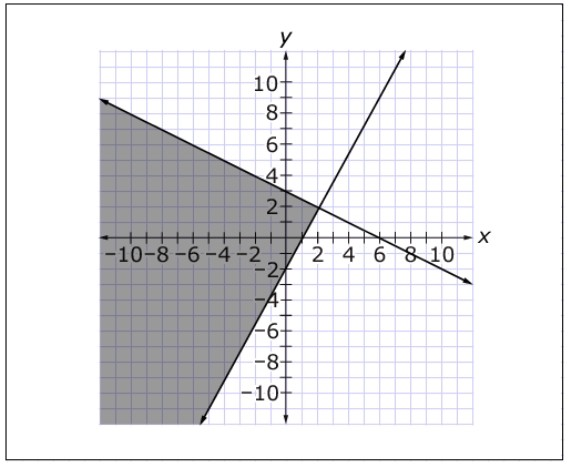
FILL BLANK Click on the region of the graph that contains the solution set of the system of linear inequalities. 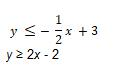 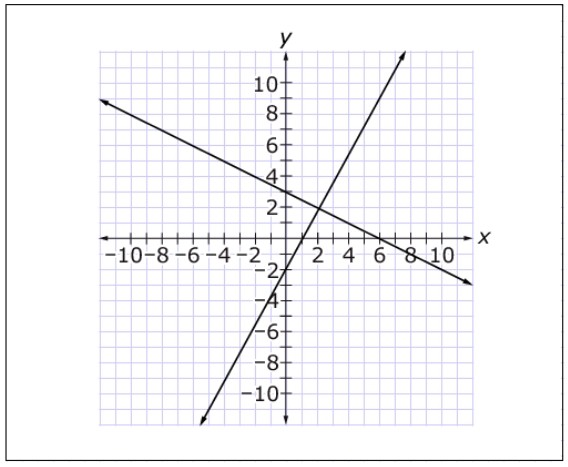 A. Correct Answer: See explanation below.
Reveal model answer
Close model answer
Question 21
Testlet 1
Lab simulation
A student earns $7.50 per hour at her part-time job. She wants to earn at least $200. Part A: Enter an inequality that represents all of the possible numbers of hours (h) the student could work to meet her goal. Part B: Enter the least whole number of hours the student needs to work in order to earn at least $200. A. Correct Answer: See explanation below.
Reveal model answer
Close model answer
Part A: 7.5h 200 or equivalent Part B: 27 or h = 27
Question 22
Single choice
Read the material attached. Source 1: Military Supports Alternative Treatments for Treating Pain in Vets and Troops The military has long worried that an over-reliance on prescription pain killers for the after-effects of tours of duty was putting both veterans and active-duty troops at risk of dependency, serious adverse reactions to the drugs and accidental death. The problem was found to be greatest among veterans returning from Iraq and Afghanistan ?particularly those with post-traumatic stress disorder ?who, according to a recent study published in the Journal of the American Medical Association (JAMA), may have been given
"inappropriate prescriptions" for opioids in a misguided attempt to relieve their suffering quickly. Now, however, change appears to be coming as the military expands its use of alternative treatments such as chiropractic care. Dr. Robert D. Kerns, the national program director for pain management at the Department of Veterans Affairs, told the New York Times that the study "encourages" both his department, as well as the Pentagon's health system, "to build on... existing initiatives." If done, that would be good news to Congressional committees following up on last year's Veterans Health Administration scandal. "We have said for a long time that sending a veteran out of the door with a bagful of pills is not a solution,"
Rep. Jeff Miller, R-Fla., said in investigating allegations that a Tomah, Wisconsin, Veterans Affairs hospital was prescribing "excessive dosages of opiates." Even as more research pours in, chiropractic care continues to gain support. A 2013 study published in the journal Spine found that 73 percent of participating active-duty military patients with low back pain receiving a combination of chiropractic manipulative treatment and standard medical care rated their global improvement as "pain completely gone," "much better," or "moderately better." In the same study, only 17 percent who received standard medical care alone said likewise. Source 2: Relief for Weekend Warriors Comes From Chiropractic Care, Not a Pill Bottle Sports injuries can happen to anyone, and they may be more likely among amateur athletes than professionals.
Amateur athletes, whether they are weekend warriors or regular fitness buffs, can end up with an injury for a variety of reasons, from wearing the wrong shoes to an incorrect technique in a tennis or golf swing.
However, amateurs and pros alike want relief when they get hurt, and anyone can become addicted to strong, opioid painkillers, according to a recent article in Outside magazine. "The reality is that all athletes are one fall, twist, or tweak away from landing their own opioid prescription," the article notes. In the wake of a directive from the Centers for Disease Control and Prevention to cut down on painkiller prescriptions, doctors and patients are seeking drug-free alternatives, and chiropractic care is one of them. In fact, chiropractic care can provide not only short-term pain relief but long-term prevention of future pain by helping to address structural imbalances in the body that might be contributing to the problem. Medications (including ibuprofen and other over-the-counter drugs as well as prescription drugs) can mask the pain from an injury but fail to address the cause. Doctors of chiropractic (DCs) use hands-on techniques to manipulate the joints and soft tissues of the body to address where pain syndromes may originate. DCs receive a minimum of seven years of higher education and are skilled in the diagnosis and art of spinal manipulation. In addition, according to Dr. Sherry McAllister of the Foundation for Chiropractic Progress, most insurance and health plans cover chiropractic care. In comparing the two sources in the attachment, which of these is not a valid comparison?
-
A
Source 1 uses emotional appeals of discussing the pain experienced by veterans and active-duty military members to make its point, while source 2 uses more factual statements and statistics to appeal to the audience's rational side.
-
B
Both sources explain the benefits of chiropractic care for a specific group of people.
-
C
Source 1 uses more credible and widely recognized references to support the claim, including the JAMA, a director with the Department of Veterans Affairs, and a Congressional Representative, while source 2 references Outside magazine and doctor from the Foundation for Chiropractic Progress.
-
D
Source 2 suggests that chiropractic care can alleviate the need for both prescription and over-the-counter medication by addressing the underlying causes of pain and not just masking the symptoms of pain, while source 1 concentrates on the movement away from prescription medication through the use of chiropractic care.
Reveal answer details
Close answer details
Question 23
Single choice
A drug company is evaluating a new method to measure levels of sugar in blood samples. The test is run hundreds of times on samples where the true level of sugar is already known. No test will be perfectly accurate all of the time, but it is important that the result of any test be as close to the correct value as possible.
Which of these statistical measures will be most helpful in determining if the testing method in the attached description meets this condition? 1. the mode of the test results
2. the mean of the test results
3. the minimum and maximum values of the test results
4. the standard deviation of the test results
-
A
-
B
-
C
-
D
Reveal answer details
Close answer details
Question 24
Single choice
In the table below are points on a linear function.
At what rate is y changing with respect to the change in x? 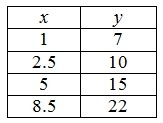
-
A
-
B
-
C
-
D
Reveal answer details
Close answer details
Question 25
Single choice
Fill in the blank in this chart to complete the proof for ABC, shown in the attached figure. 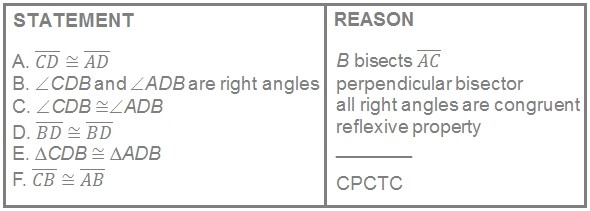 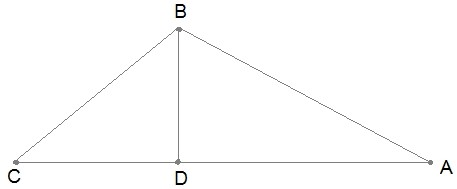
-
A
-
B
-
C
-
D
Reveal answer details
Close answer details
Question 26
Single choice
Andrea has a 78 average after taking 7 tests in math class. The 8th and final test is coming up. She needs an average of 80 to get a B in the class. Which statement explains whether or not she can get a B?
-
A
She can get the B. She needs to get an 82 or better on the last test.
-
B
She can't get the B. Since she has a C+ average, she cannot get above that on any test.
-
C
She can get the B. She needs to get a 94 or better on the last test.
-
D
She can't get the B. She would need to get more than 100 points on the last test.
Reveal answer details
Close answer details
Question 27
Single choice
-
A
-
B
-
C
-
D
Reveal answer details
Close answer details
Question 28
Single choice
If line / is perpendicular to line k and the equation for l is 3x + 2y = 5, then the slope for k is ____? 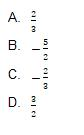
-
A
-
B
-
C
-
D
Reveal answer details
Close answer details
Question 29
Multiple choice
Read the text and answer the question. Blue Crabs Provide Evidence of Oil Tainting Gulf Food Weeks ago, before engineers pumped in mud and cement to plug the gusher, scientists began finding specks of oil in crab larvae plucked from waters across the Gulf coast.
The government said last week that three-quarters of the spilled oil has been removed or naturally dissipated from the water. But the crab larvae discovery was an ominous sign that crude had already infiltrated the Gulf's vast food web - and could affect it for years to come.
"It would suggest the oil has reached a position where it can start moving up the food chain instead of just hanging in the water," said Bob Thomas, a biologist at Loyola University in New Orleans.
"Something likely will eat those oiled larvae . . . and then that animal will be eaten by something bigger and so on."
Tiny creatures might take in such low amounts of oil that they could survive, Thomas said. But those at the top of the chain, such as dolphins and tuna, could get fatal "megadoses."
Marine biologists routinely gather shellfish for study. Since the spill began, many of the crab larvae collected have had the distinctive orange oil droplets, said Harriet Perry, a biologist with the University of Southern Mississippi's Gulf Coast Research Laboratory.
"In my 42 years of studying crabs I've never seen this," Perry said.
She wouldn't estimate how much of the crab larvae are contaminated overall, but said about 40 percent of the area they are known to inhabit has been affected by oil from the spill.
While fish can metabolize dispersant and oil, crabs may accumulate the hydrocarbons, which could harm their ability to reproduce, Perry said in an earlier interview with Science magazine.
She told the magazine there are two encouraging signs for the wild larvae - they are alive when collected and may lose oil droplets when they molt.
Tulane University researchers are investigating whether the splotches also contain toxic chemical dispersants that were spread to break up the oil but have reached no conclusions, biologist Caz Taylor said.
If large numbers of blue crab larvae are tainted, their population is virtually certain to take a hit over the next year and perhaps longer, scientists say. The spawning season occurs between April and October, but the peak months are in July and August.
How large the die-off would be is unclear, Perry said. An estimated 207 million gallons of oil have spewed into the Gulf since an April 20 drilling rig explosion triggered the spill, and thousands of gallons of dispersant chemicals have been dumped.
Scientists will be focusing on crabs because they're a "keystone species" that play a crucial role in the food web as both predator and prey, Perry said.
Richard Condrey, a Louisiana State University oceanographer, said the crabs are "a living repository of information on the health of the environment."
Named for the light-blue tint of their claws, the crabs have thick shells and 10 legs, allowing them to swim and scuttle across bottomlands. As adults, they live in the Gulf's bays and estuaries amid marshes that offer protection and abundant food, including snails, tiny shellfish, plants and even smaller crabs. In turn, they provide sustenance for a variety of wildlife, from redfish to raccoons and whooping cranes.
Adults could be harmed by direct contact with oil and from eating polluted food. But scientists are particularly worried about the vulnerable larvae.
That's because females don't lay their eggs in sheltered places, but in areas where estuaries meet the open sea. Condrey discovered several years ago that some even deposit offspring on shoals miles offshore in the Gulf.
The larvae grow as they drift with the currents back toward the estuaries for a month or longer. Many are eaten by predators and only a handful of the 3 million or so eggs from a single female live to adulthood.
But their survival could drop even lower if the larvae run into oil and dispersants.
"Crabs are very abundant. I don't think we're looking at extinction or anything close to it," said Taylor, one of the researchers who discovered the orange spots.
Still, crabs and other estuary-dependent species such as shrimp and red snapper could feel the effects of remnants of the spill for years, Perry said.
"There could be some mortality, but how much is impossible to say at this point," said Vince Guillory, biologist manager with the Louisiana Department of Wildlife and Fisheries.
Perry, Taylor and Condrey will be among scientists monitoring crabs for negative effects such as population drop-offs and damage to reproductive capabilities and growth rates.
Crabs are big business in the region. In Louisiana alone, some 33 million pounds are harvested annually, generating nearly $300 million in economic activity, Guillory said.
Blue crabs are harvested year-round, but summer and early fall are peak months for harvesting, Guillory said.
Prices for live blue crab generally have gone up, partly because of the Louisiana catch scaling back due to fishing closures, said Steve Hedlund, editor of SeafoodSource.com, a website that covers the global seafood industry.
Fishers who can make a six-figure income off crabs in a good year now are now idled - and worried about the future.
"If they'd let us go out and fish today, we'd probably catch crabs," said Glen Despaux, 37, who sets his traps in Louisiana's Barataria Bay. "But what's going to happen next year, if this water is polluted and it's killing the eggs and the larvae? I think it's going to be a long-term problem."
Excerpt from "Blue Crabs Provide Evidence of Oil Tainting Gulf Food Web" by John Flesher. Copyright © 2010 by The Associated Press. Reprinted by permission of The Associated Press. How does the last paragraph affect the presentation of information? (Choose three.)
-
A
It illustrates the possible economic effects of the Gulf oil spill.
-
B
It makes the report more personal by showing its effects on one individual.
-
C
It provides a contrasting point of view to those expressed earlier in the text.
-
D
It reinforces the idea that the oil contamination in the Gulf will have long-lasting effects.
-
E
It summarizes the main types of damage scientists have identified in the Gulf ecosystem.
-
F
It provides predictions about the length of time scientists expect the effects of the oil spill to last.
Reveal answer details
Close answer details
Question 30
Single choice
You are asked to write an argumentative essay in support of paternity leave being extended to new fathers. Which of these sentences would not be important to include in support of the argument?
-
A
Granting men paternity leave helps increase mothers' incomes as women can re-enter the workforce sooner, giving both partners an increased sense of self-worth.
-
B
Studies suggest that fathers who take paternity leave have an increased role in child-care-related tasks, and their involvement may have lasting impact on their children's performance in school.
-
C
There is a social stigma associated with men who want to take paternity leave after the birth of a child, and he may face negative criticism for this decision from friends, coworkers, and even family members
-
D
A child's brain develops significantly in the weeks and months following birth, and the interactions, relationships, and experiences babies are exposed to can set the stage for the rest of their lives.
Reveal answer details
Close answer details
Question 31
Multiple choice
Read the text and answer the question. Blue Crabs Provide Evidence of Oil Tainting Gulf Food Weeks ago, before engineers pumped in mud and cement to plug the gusher, scientists began finding specks of oil in crab larvae plucked from waters across the Gulf coast.
The government said last week that three-quarters of the spilled oil has been removed or naturally dissipated from the water. But the crab larvae discovery was an ominous sign that crude had already infiltrated the Gulf's vast food web-and could affect it for years to come.
"It would suggest the oil has reached a position where it can start moving up the food chain instead of just hanging in the water," said Bob Thomas, a biologist at Loyola University in New Orleans.
"Something likely will eat those oiled larvae . . . and then that animal will be eaten by something bigger and so on."
Tiny creatures might take in such low amounts of oil that they could survive, Thomas said. But those at the top of the chain, such as dolphins and tuna, could get fatal "megadoses."
Marine biologists routinely gather shellfish for study. Since the spill began, many of the crab larvae collected have had the distinctive orange oil droplets, said Harriet Perry, a biologist with the University of Southern Mississippi's Gulf Coast Research Laboratory.
"In my 42 years of studying crabs I've never seen this," Perry said.
She wouldn't estimate how much of the crab larvae are contaminated overall, but said about 40 percent of the area they are known to inhabit has been affected by oil from the spill.
While fish can metabolize dispersant and oil, crabs may accumulate the hydrocarbons, which could harm their ability to reproduce, Perry said in an earlier interview with Science magazine.
She told the magazine there are two encouraging signs for the wild larvae-they are alive when collected and may lose oil droplets when they molt.
Tulane University researchers are investigating whether the splotches also contain toxic chemical dispersants that were spread to break up the oil but have reached no conclusions, biologist Caz Taylor said.
If large numbers of blue crab larvae are tainted, their population is virtually certain to take a hit over the next year and perhaps longer, scientists say. The spawning season occurs between April and October, but the peak months are in July and August.
How large the die-off would be is unclear, Perry said. An estimated 207 million gallons of oil have spewed into the Gulf since an April 20 drilling rig explosion triggered the spill, and thousands of gallons of dispersant chemicals have been dumped.
Scientists will be focusing on crabs because they're a "keystone species" that play a crucial role in the food web as both predator and prey, Perry said.
Richard Condrey, a Louisiana State University oceanographer, said the crabs are "a living repository of information on the health of the environment."
Named for the light-blue tint of their claws, the crabs have thick shells and 10 legs, allowing them to swim and scuttle across bottomlands. As adults, they live in the Gulf's bays and estuaries amid marshes that offer protection and abundant food, including snails, tiny shellfish, plants and even smaller crabs. In turn, they provide sustenance for a variety of wildlife, from redfish to raccoons and whooping cranes.
Adults could be harmed by direct contact with oil and from eating polluted food. But scientists are particularly worried about the vulnerable larvae.
That's because females don't lay their eggs in sheltered places, but in areas where estuaries meet the open sea. Condrey discovered several years ago that some even deposit offspring on shoals miles offshore in the Gulf.
The larvae grow as they drift with the currents back toward the estuaries for a month or longer. Many are eaten by predators and only a handful of the 3 million or so eggs from a single female live to adulthood.
But their survival could drop even lower if the larvae run into oil and dispersants.
"Crabs are very abundant. I don't think we're looking at extinction or anything close to it," said Taylor, one of the researchers who discovered the orange spots.
Still, crabs and other estuary-dependent species such as shrimp and red snapper could feel the effects of remnants of the spill for years, Perry said. "There could be some mortality, but how much is impossible to say at this point," said Vince Guillory, biologist manager with the Louisiana Department of Wildlife and Fisheries.
Perry, Taylor and Condrey will be among scientists monitoring crabs for negative effects such as population drop-offs and damage to reproductive capabilities and growth rates.
Crabs are big business in the region. In Louisiana alone, some 33 million pounds are harvested annually, generating nearly $300 million in economic activity, Guillory said.
Blue crabs are harvested year-round, but summer and early fall are peak months for harvesting, Guillory said.
Prices for live blue crab generally have gone up, partly because of the Louisiana catch scaling back due to fishing closures, said Steve Hedlund, editor of SeafoodSource.com, a website that covers the global seafood industry.
Fishers who can make a six-figure income off crabs in a good year now are now idled - and worried about the future.
"If they'd let us go out and fish today, we'd probably catch crabs," said Glen Despaux, 37, who sets his traps in Louisiana's Barataria Bay. "But what's going to happen next year, if this water is polluted and it's killing the eggs and the larvae? I think it's going to be a long-term problem."
Excerpt from "Blue Crabs Provide Evidence of Oil Tainting Gulf Food Web" by John Flesher. Copyright © 2010 by The Associated Press. Reprinted by permission of The Associated Press. Choose the two sentences from the text that best support the inference that blue crabs may be less impacted by the oil spill than some scientists predict.
-
A
Tiny creatures might take in such low amounts of oil that they could survive, Thomas said.
-
B
"In my 42 years of studying crabs I've never seen this", Perry said.
-
C
She told he magazine there are two encouraging signs for the wild larvae-they are alive when collected and may lose oil droplets when they molt.
-
D
"Crabs are very abundant. I don't think we're looking at extinction or anything close to it," said Taylor, one of the researchers who discovered the orange spots.
-
E
Still crabs and other estuary-dependent species such as shrimp and red snapper could feel the effects of remnants of the spill for years, Perry said.
Reveal answer details
Close answer details
Question 32
Single choice
Read the material attached: Source 1: Military Supports Alternative Treatments for Treating Pain in Vets and Troops
The military has long worried that an over-reliance on prescription pain killers for the after-effects of tours of duty was putting both veterans and active-duty troops at risk of dependency, serious adverse reactions to the drugs and accidental death. The problem was found to be greatest among veterans returning from Iraq and Afghanistan ?particularly those with post-traumatic stress disorder ?who, according to a recent study published in the Journal of the American Medical Association (JAMA), may have been given
"inappropriate prescriptions" for opioids in a misguided attempt to relieve their suffering quickly. Now, however, change appears to be coming as the military expands its use of alternative treatments such as chiropractic care. Dr. Robert D. Kerns, the national program director for pain management at the Department of Veterans Affairs, told the New York Times that the study "encourages" both his department, as well as the Pentagon's health system, "to build on... existing initiatives." If done, that would be good news to Congressional committees following up on last year's Veterans Health Administration scandal. "We have said for a long time that sending a veteran out of the door with a bagful of pills is not a solution,"
Rep. Jeff Miller, R-Fla., said in investigating allegations that a Tomah, Wisconsin, Veterans Affairs hospital was prescribing "excessive dosages of opiates." Even as more research pours in, chiropractic care continues to gain support. A 2013 study published in the journal Spine found that 73 percent of participating active-duty military patients with low back pain receiving a combination of chiropractic manipulative treatment and standard medical care rated their global improvement as "pain completely gone," "much better," or "moderately better." In the same study, only 17 percent who received standard medical care alone said likewise. Source 2: Relief for Weekend Warriors Comes From Chiropractic Care, Not a Pill Bottle Sports injuries can happen to anyone, and they may be more likely among amateur athletes than professionals. Amateur athletes, whether they are weekend warriors or regular fitness buffs, can end up with an injury for a variety of reasons, from wearing the wrong shoes to an incorrect technique in a tennis or golf swing.
However, amateurs and pros alike want relief when they get hurt, and anyone can become addicted to strong, opioid painkillers, according to a recent article in Outside magazine. "The reality is that all athletes are one fall, twist, or tweak away from landing their own opioid prescription," the article notes. In the wake of a directive from the Centers for Disease Control and Prevention to cut down on painkiller prescriptions, doctors and patients are seeking drug-free alternatives, and chiropractic care is one of them. In fact, chiropractic care can provide not only short-term pain relief but long-term prevention of future pain by helping to address structural imbalances in the body that might be contributing to the problem. Medications (including ibuprofen and other over-the-counter drugs as well as prescription drugs) can mask the pain from an injury but fail to address the cause. Doctors of chiropractic (DCs) use hands-on techniques to manipulate the joints and soft tissues of the body to address where pain syndromes may originate. DCs receive a minimum of seven years of higher education and are skilled in the diagnosis and art of spinal manipulation. In addition, according to Dr. Sherry McAllister of the Foundation for Chiropractic Progress, most insurance and health plans cover chiropractic care. The student also makes the claim that "Chiropractic care offers immediate, but only short-term pain relief for patients. A balance of medication and chiropractic care should be considered." Using the attached material, decide if the information in source 1, source 2, both sources, or neither source supports the claim.
-
A
-
B
-
C
-
D
Reveal answer details
Close answer details
Question 33
Single choice
A student is writing a persuasive essay to the school board about school lunch options. This is a paragraph from that essay. Read the attached paragraph and complete this task: Which two sentences would be the best pieces of evidence to add to this paragraph? 1. Reports indicate that up to $5 million dollars a day in uneaten food is wasted in American schools.
2. Including more cafeteria staff will help increase the ease with which students can move through the lunch lines and get their food.
3. According to some sources, rates of childhood obesity have tripled in the last thirty years.
4. Students with food allergies face daily challenges when navigating school lunch options. 5.
5. Offering vegetarian and vegan options are expensive suggestions.
-
A
-
B
-
C
-
D
Reveal answer details
Close answer details
Question 34
Single choice
The distance between A = (2, 15) and B = (x, 3) is 13 units. The domain values for B could be ____.
-
A
-
B
-
C
-
D
Reveal answer details
Close answer details
|