The Product Owner is the person who will be held accountable if a product does not achieve its goals or deliver value. Does this mean that the Product Owner has the final say over the Definition of Done? (choose the best answer)
-
A
Yes, the Product Owner decides the Definition of Done. The Developers may be consulted.
-
B
No, the Scrum Team decides the Definition of Done, if it is not a standard of the organization. The Product Owner is just one member of the Scrum Team.
Reveal answer details
Close answer details
Correct answerB
ExplanationThe Definition of Done is a formal description of the state of the Increment when it meets the quality measures required for the product. The Definition of Done is used to assess when work is complete on the product Increment. The Definition of Done is defined by the Scrum Team, not by the Product Owner alone.
The Scrum Team consists of one Product Owner, one Scrum Master, and Developers. They are all accountable for creating a valuable, useful, and potentially releasable product Increment each Sprint. The Product Owner is accountable for maximizing the value of the product resulting from the work of the Scrum Team. The Product Owner is responsible for managing and refining the Product Backlog, collaborating with the stakeholders and the Developers, and ordering the items in a way that best achieves goals and missions. The Product Owner represents the interests of everyone with a stake in the product and ensures that the Scrum Team works on the right things at the right time.
The Developers are accountable for creating a "Done" Increment that meets the Definition of Done each Sprint. The Developers are responsible for planning and executing the Sprint Backlog, designing and building the product functionality, testing and improving the product quality, and delivering a potentially releasable Increment. The Developers work closely with the Product Owner to understand and clarify the Product Backlog items, provide feedback and estimates, and suggest improvements and innovations.
The Scrum Master is accountable for establishing Scrum as defined in the Scrum Guide. The Scrum Master is responsible for promoting and supporting Scrum as defined in the Scrum Guide. The Scrum Master does this by helping everyone understand Scrum theory and practice, both within the Scrum Team and the organization.
The Definition of Done may vary from one Scrum Team to another, depending on the context and domain of work. However, it must be consistent within one team. If there are multiple Scrum Teams working on one product, they must share a common Definition of Done. If there is an organizational standard for a Definition of Done, all Scrum Teams must follow it as a minimum.
References:
Scrum Guide: (https://www.scrumguides.org/scrum-guide.html)
Definition of Done: (https://www.scrum.org/resources/what-is-a-definition-of-done)
Product Owner: (https://www.scrum.org/resources/what-is-a-product-owner)
Developers: (https://www.scrum.org/resources/what-is-a-developer-in-scrum)
Scrum Master: (https://www.scrum.org/resources/what-is-a-scrum-master)
True or False: A Product Owner with multiple teams working on one product should maintain separate Product Backlogs for each team.
-
A
-
B
Reveal answer details
Close answer details
Correct answerB
ExplanationIn Scrum, there is only one product and one Product Backlog for a given product. The Product Backlog is the single source of truth for the Scrum Team and the stakeholders. It contains all the requirements, features, functions, enhancements, fixes, and anything else that can deliver value to the customers and users of the product. The Product Backlog is ordered by the Product Owner based on the product vision, goals, and value.
Having multiple Product Backlogs for one product would create confusion, duplication, inconsistency, and waste. It would also make it harder to align the Scrum Teams and the stakeholders on the same product direction and priorities. Therefore, a Product Owner with multiple teams working on one product should not maintain separate Product Backlogs for each team. The Product Owner is accountable for maximizing the value of the product resulting from the work of the Scrum Team. The Product Owner is responsible for managing and refining the Product Backlog, collaborating with the stakeholders and the Developers, and ordering the items in a way that best achieves goals and missions. The Product Owner represents the interests of everyone with a stake in the product and ensures that the Scrum Team works on the right things at the right time.
In some cases, when there are multiple Scrum Teams working on one product, it may be necessary to have some form of scaling or coordination mechanism to ensure alignment and collaboration among the teams. However, this does not mean that there should be multiple Product Owners or Product Backlogs.
Instead, there should be ways to facilitate communication, feedback, integration, and transparency among the teams and with the Product Owner. For example, some frameworks or practices that can help with scaling Scrum are Nexus, LeSS, SAFe, or Scrum of Scrums.
References:
Scrum Guide: (https://www.scrumguides.org/scrum-guide.html)
Nexus: [1] LeSS: [2] SAFe: [3] Scrum of Scrums: [4]
Question 3
Multiple choice
Several Sprints into a project, the Product Owner tells the Scrum Master that a key stakeholder just started using the product. The stakeholder is unhappy with the quality of the product. What are two good options for the Scrum Master? (choose the best two answers)
-
A
Coach the Product Owner on how to talk with the Developers about this concern.
-
B
Wait to bring this up until the Sprint Retrospective.
-
C
Explain to the Product Owner that it is up to the Developers to decide on acceptable quality standards.
-
D
Encourage the Product Owner to put quality specifications on the Product Backlog and express the stakeholder's concern to the Developers.
-
E
Bring the concern to the testers to improve how the Product is verified.
Reveal answer details
Close answer details
Correct answersA, D
ExplanationIf a stakeholder is unhappy with the quality of the product, the Scrum Master can coach the Product Owner on how to effectively communicate this concern to the Developers1. The Scrum Master can also encourage the Product Owner to put quality specifications on the Product Backlog1. This allows the Developers to understand the stakeholder's expectations and work towards meeting them 1. The Developers are responsible for building quality into the product, but the stakeholders (through the Product Owner) are responsible for setting what is expected in terms of product and process quality 1.
During a Sprint, when is new work or further decomposition of work added to the Sprint Backlog? (choose the best answer)
-
A
During the Daily Scrum after the Developers approve it.
-
B
When the Scrum Master has time to enter it.
-
C
When the Product Owner identifies new work.
-
D
As soon as possible after it is identified.
Reveal answer details
Close answer details
Correct answerD
ExplanationNew work or further decomposition of work is added to the Sprint Backlog as soon as possible after it is identified because: It reflects the current state of the Sprint. The Sprint Backlog is a plan that the Developers create and update throughout the Sprint, based on their progress, learnings, and changes. By adding new work or further decomposition of work to the Sprint Backlog promptly, the Developers can ensure that the Sprint Backlog is transparent, accurate, and up-to-date.
It enables the Developers to self-manage their work. The Developers are accountable for organizing and managing their own work, and they have the authority to change the Sprint Backlog as needed. By adding new work or further decomposition of work to the Sprint Backlog promptly, the Developers can exercise their autonomy and empowerment, and adjust their plan accordingly. It supports the achievement of the Sprint Goal. The Sprint Goal is a single objective that provides guidance and focus for the Developers throughout the Sprint. By adding new work or further decomposition of work to the Sprint Backlog promptly, the Developers can ensure that their work is aligned with and contributes to the Sprint Goal.
References:
6: "Developers are the people in the Scrum Team that are committed to creating any aspect of a usable Increment each Sprint." Scrum Guide 2020, page
6: "The Developers are accountable for ... organizing and managing their work."
10: "The Sprint Goal is a single objective for the Sprint." Scrum Guide 2020, page
14: "The purpose of each Sprint is to deliver Increments of potentially releasable functionality that adhere to the Scrum Team's current Definition of Done."
14: "The Sprint Backlog is composed of ... all of the work needed to deliver a product Increment that meets the Definition of Done." Scrum Guide 2020, page
14: "The Developers can change the content of the Sprint Backlog throughout the Sprint as more is learned."
True or False: Sprint Reviews are an opportunity to collect stakeholder feedback.
-
A
-
B
Reveal answer details
Close answer details
Correct answerA
ExplanationThe Sprint Review is an event that occurs at the end of each Sprint, where the Scrum Team and the stakeholders inspect the Increment and adapt the Product Backlog if needed. The Sprint Review is an opportunity for the Product Owner to validate that the Increment meets their expectations and delivers value to the customers and users. The Sprint Review is also an opportunity for the Developers to demonstrate their work and receive feedback from the Product Owner and the stakeholders.
Stakeholders are people external to the Scrum Team who have a stake or interest in the product, such as customers, users, sponsors, managers, or other teams. Stakeholders provide valuable input, feedback, and insights to the Scrum Team regarding the product vision, goals, value proposition, requirements, features, functions, quality, usability, or market conditions. Collecting stakeholder feedback is one of the main purposes of the Sprint Review. Stakeholder feedback can help the Scrum Team to:
References:
Scrum Guide: (https://www.scrumguides.org/scrum-guide.html)
Sprint Review: (https://www.scrum.org/resources/what-is-a-sprint-review)
Stakeholders: (https://www.agilealliance.org/glossary/stakeholders)
How much time is required after a Sprint to prepare for the next Sprint? (choose the best answer)
-
A
The break between Sprints is timeboxed to one-week for a one-month Sprint, and usually less for shorter Sprints.
-
B
Enough time for the requirements for the next Sprint to be determined and documented.
-
C
Enough time for the Developers to finish the testing from the last Sprint.
-
D
None. A new Sprint starts immediately following the end of the previous Sprint.
-
E
All of the above are allowed depending on the situation.
Reveal answer details
Close answer details
Correct answerD
ExplanationThe Scrum Guide states that "Sprints have consistent durations throughout a development effort. A new Sprint starts immediately after the conclusion of the previous Sprint."1 This means that there is no gap or break between Sprints, and the Scrum Team does not need to spend extra time to prepare for the next Sprint. The Scrum Team should be able to start the next Sprint Planning right after the Sprint Review and Sprint Retrospective of the previous Sprint. The Scrum Team should also ensure that the testing and documentation of the work are done within the Sprint, and not left for later.
References:
1: The Scrum Guide2, page 9
2: The Scrum Guide
Which of the following is required by Scrum? (choose the best answer)
-
A
-
B
Developers must stand up at the Daily Scrum.
-
C
-
D
-
E
Reveal answer details
Close answer details
Correct answerA
ExplanationThe Sprint Retrospective is one of the five events defined by Scrum. It is a formal opportunity for the Scrum Team to inspect itself and create a plan for improvements to be enacted during the next Sprint. The purpose of the Sprint Retrospective is to adapt the way of working so that it becomes more effective and enjoyable. The other options are not required by Scrum, but may be useful practices depending on the context. Developers do not have to stand up at the Daily Scrum, they can choose any format that works for them. A Sprint Burndown Chart is a common way to visualize the remaining work in a Sprint, but it is not mandated by Scrum. Release Planning is a topic that falls under the broader competency of Managing Products with Agility, but it is not a prescribed event in Scrum.
References:
The Scrum Guide
Understanding and Applying the Scrum Framework Professional Scrum Product OwnerTM I Certification
When must the Product Owner participate in the Daily Scrum? (choose the best answer)
-
A
When the Scrum Master asks the Product Owner to attend.
-
B
When the Product Owner is actively working on items on the Sprint Backlog; however, they participate
as a Developer.
-
C
When there are impediments to discuss.
-
D
When the Product Owner needs to represent the stakeholders' point of view to the Developers.
Reveal answer details
Close answer details
Who is accountable for managing the progress of work during a Sprint? (choose the best answer)
-
A
-
B
The most junior member of the team.
-
C
-
D
Reveal answer details
Close answer details
Correct answerA
ExplanationThe Developers are accountable for managing the progress of work during a Sprint, as they are the ones who plan, execute, and deliver the work. The Scrum Guide states that "The Developers are the people in the Scrum Team that are committed to creating any aspect of a usable Increment each Sprint."1 The Developers are also responsible for conducting the Daily Scrum, a 15-minute event for the Developers to synchronize activities and create a plan for the next 24 hours.1 The Developers are self-managing, which means they decide how best to accomplish their work, rather than being directed by others outside the Scrum Team.1
References:
1: The Scrum Guide2, page 7
2: The Scrum Guide
Question 10
Single choice
True or False: Multiple Scrum Teams working on the same product or system all select work from the same Product Backlog.
-
A
-
B
Reveal answer details
Close answer details
Question 11
Single choice
The length of a Sprint should be: (choose the best answer)
-
A
Short enough to keep the business risk acceptable to the Product Owner.
-
B
Short enough to be able to synchronize the development work with other business events.
-
C
No more than one calendar month.
-
D
Reveal answer details
Close answer details
Correct answerD
ExplanationThe length of a Sprint is the timebox within which the Scrum Team creates a potentially releasable product Increment. The Sprint is a container for all the other Scrum events, such as the Sprint Planning, the Daily Scrum, the Sprint Review, and the Sprint Retrospective. The Sprint is also a feedback loop that allows the Scrum Team and the stakeholders to inspect and adapt the product and the process.
The length of a Sprint should be no more than one calendar month. This is the maximum duration allowed by Scrum, as longer Sprints can increase the complexity and risk of the product development. Longer Sprints can also reduce the agility and responsiveness of the Scrum Team to changing customer needs and market conditions.
The length of a Sprint should also be short enough to keep the business risk acceptable to the Product Owner. The Product Owner is accountable for maximizing the value of the product resulting from the work of the Scrum Team. The Product Owner is responsible for managing and refining the Product Backlog, collaborating with the stakeholders and the Developers, and ordering the items in a way that best achieves goals and missions. The Product Owner represents the interests of everyone with a stake in the product and ensures that the Scrum Team works on the right things at the right time. The length of a Sprint affects how frequently and effectively the Product Owner can validate, verify, and deliver value to the customers and users.
The length of a Sprint should also be short enough to be able to synchronize the development work with other business events. The Scrum Team operates within a broader organizational context that may have other events, cycles, or deadlines that affect or depend on product development. For example, there may be marketing campaigns, sales promotions, regulatory compliance, or contractual obligations that require coordination and alignment with the product delivery. The length of a Sprint affects how well and timely the Scrum Team can synchronize their work with these other business events.
References:
Scrum Guide: (https://www.scrumguides.org/scrum-guide.html)
Sprint: (https://www.scrum.org/resources/)
what-is-a-sprint-in-scrum Product Owner: (https://www.scrum.org/resources/what-is-a-product-owner)
Question 12
Single choice
Who determines how work is performed during the Sprint? (choose the best answer)
-
A
-
B
-
C
-
D
-
E
Reveal answer details
Close answer details
Correct answerD
ExplanationExplanation: The Developers are the people in the Scrum Team who are committed to creating any aspect of a usable Increment each Sprint. The Developers are accountable for organizing and managing their work. Only the Developers can decide how to perform the work during the Sprint1. The Developers plan the work necessary to create an Increment that meets the Definition of Done during the Sprint Planning event. This is often done by decomposing Product Backlog items into smaller work items of one day or less. How this is done is at the sole discretion of the Developers2. The Developers also inspect their progress toward the Sprint Goal and adapt their plan during the Daily Scrum1. The Developers are self-managing, which means they decide internally who does what, when, and how 1. The Scrum Master, the Product Owner, the team manager, and the subject matter experts are not involved in determining how the work is performed during the Sprint. They may provide guidance, feedback, or support, but they do not interfere with the Developers' autonomy and accountability 134.
References:
Scrum Guide What is a Developer?
Who Determines How Work Is Performed During The Sprint? What is Sprint Planning?
Question 13
Single choice
How much of the Sprint Backlog must be defined during the Sprint Planning event? (choose the best answer)
-
A
Just enough to understand design and architectural implications.
-
B
Enough so the Developers can create their forecast of what work they can do.
-
C
The entire Sprint Backlog must be identified and estimated by the end of Sprint Planning.
-
D
Just enough tasks for the Scrum Master to be confident in the Developers' understanding of the Sprint.
Reveal answer details
Close answer details
Correct answerB
ExplanationThe amount of the Sprint Backlog that must be defined during the Sprint Planning event is enough so the Developers can create their forecast of what work they can do. This is because: Sprint Planning is an event where the Scrum Team plans for the upcoming Sprint. The purpose of Sprint Planning is to align the entire Scrum Team around a common goal and a plan for delivering an Increment that meets that goal. The Developers are accountable for creating a Sprint forecast, which is a selection of Product Backlog items that they intend to work on during the Sprint. The Sprint forecast should be realistic, achievable, and valuable. The Developers are also accountable for creating a plan for how they will deliver the selected Product Backlog items as a "Done" Increment. The plan may include tasks, dependencies, risks, estimates, or other information that helps them organize and manage their work.
The amount of the Sprint Backlog that must be defined during Sprint Planning may vary depending on the context, complexity, and uncertainty of the product development. However, it should be enough so that the Developers can create their forecast of what work they can do and have a clear direction for the first few days of the Sprint.
Other options, such as just enough to understand design and architectural implications, the entire Sprint Backlog being identified and estimated by the end of Sprint Planning, or just enough tasks for the Scrum Master to be confident in the Developers' understanding of the Sprint, are not valid answers as they do not reflect what must be defined during Sprint Planning or what is required for creating a Sprint forecast.
References:
[Scrum Guide], page 14, section "Sprint Planning" [Scrum Guide], page 7, section "Developers"
[Scrum Guide], page 15, section "Sprint Backlog" [Scrum Guide], page 14, section "Sprint Planning"
Question 14
Multiple choice
You have just been hired by a company new to Scrum. Your management has assigned you to be the Scrum Master of six new Scrum Teams. These teams will build one product. Select two conditions you should strive for in this scenario. (choose the best two answers)
-
A
Each Scrum Team should have a separate Product Backlog.
-
B
There should be only one Product Owner.
-
C
The product has one Product Backlog.
-
D
There should be six Product Owners, one for each Scrum Team.
-
E
There should be six Product Owners, reporting to a Chief Product Owner.
Reveal answer details
Close answer details
Correct answersB, C
ExplanationIn Scrum, there is only one product and one Product Backlog for a given product. The Product Backlog is the single source of truth for the Scrum Team and the stakeholders. It contains all the requirements, features, functions, enhancements, fixes, and anything else that can deliver value to the customers and users of the product. The Product Backlog is ordered by the Product Owner based on the product vision, goals, and value.
Having multiple Product Backlogs for one product would create confusion, duplication, inconsistency, and waste. It would also make it harder to align the Scrum Teams and the stakeholders on the same product direction and priorities. Therefore, each Scrum Team should not have a separate Product Backlog. The Product Owner is accountable for maximizing the value of the product resulting from the work of the Scrum Team. The Product Owner is responsible for managing and refining the Product Backlog, collaborating with the stakeholders and the Developers, and ordering the items in a way that best achieves goals and missions. The Product Owner represents the interests of everyone with a stake in the product and ensures that the Scrum Team works on the right things at the right time.
Having multiple Product Owners for one product would create conflicts, overlaps, gaps, and inefficiencies.
It would also make it harder to maintain a clear and consistent product vision, strategy, roadmap, and backlog. Therefore, there should be only one Product Owner for one product.
In some cases, when there are multiple Scrum Teams working on one product, it may be necessary to have some form of scaling or coordination mechanism to ensure alignment and collaboration among the teams. However, this does not mean that there should be multiple Product Owners or Product Backlogs.
Instead, there should be ways to facilitate communication, feedback, integration, and transparency among the teams and with the Product Owner. For example, some frameworks or practices that can help with scaling Scrum are Nexus, LeSS, SAFe, or Scrum of Scrums.
References:
Scrum Guide: (https://www.scrumguides.org/scrum-guide.html)
Nexus: (https://www.scrum.org/resources/)
what-is-nexus LeSS: (https://less.works/)
SAFe: (https://www.scaledagileframework.com/)
Scrum of Scrums: (https://www.agilealliance.org/glossary/scrum-of-scrums/)
Question 15
Single choice
Who can cancel a Sprint? (choose the best answer)
-
A
-
B
-
C
-
D
Reveal answer details
Close answer details
Correct answerC
ExplanationThe Product Owner is the sole person responsible for managing the Product Backlog and ensuring that the value of the work the Scrum Team performs is understood by everyone involved. The Product Owner is the only person who can cancel the Sprint, although he or she may do so under influence from the stakeholders, the Development Team, or the Scrum Master1. A Sprint can be cancelled before the Sprint time-box is over. Only the Product Owner has the authority to cancel the Sprint, although he or she may do so under influence from the stakeholders, the Development Team, or the Scrum Master. A Sprint would be cancelled if the Sprint Goal becomes obsolete. This might occur if the company changes direction or if market or technology conditions change. In general, a Sprint should be cancelled if it no longer makes sense given the circumstances. But, due to the short duration of Sprints, cancellation rarely makes sense 1.
References:
Scrum Guide
Sprint Cancellation
Can Scrum Master cancel a sprint?
Question 16
Single choice
How much work is required of the Developers to complete a Product Backlog item selected during the Sprint Planning? (choose the best answer)
-
A
As much as they can fit into the Sprint, with remaining work deferred to the next Sprint.
-
B
As much as is required to meet the Scrum Team's Definition of Done.
-
C
All development work and at least some testing.
-
D
A proportional amount of time on analysis, design, development, and testing.
Reveal answer details
Close answer details
Correct answerB
ExplanationThe Developers are the people in the Scrum Team who are accountable for creating a "Done" Increment that meets the Definition of Done each Sprint. The Developers are responsible for planning and executing the Sprint Backlog, designing and building the product functionality, testing and improving the product quality, and delivering a potentially releasable Increment. The Developers work closely with the Product Owner to understand and clarify the Product Backlog items, provide feedback and estimates, and suggest improvements and innovations.
The Definition of Done is a formal description of the state of the Increment when it meets the quality measures required for the product. The Definition of Done is used to assess when work is complete on the product Increment. The amount of work required of the Developers to complete a Product Backlog item selected during the Sprint Planning depends on the Definition of Done. The Definition of Done may vary from one Scrum Team to another, depending on the context and domain of work. However, it must be consistent within one team. If there are multiple Scrum Teams working on one product, they must share a common Definition of Done. If there is an organizational standard for a Definition of Done, all Scrum Teams must follow it as a minimum. The Developers must ensure that each Product Backlog item they complete during a Sprint meets the Definition of Done. This means that they must perform all the necessary tasks and activities to deliver a high-quality product functionality that is usable, valuable, and potentially releasable. This may include analysis, design, development, testing, documentation, integration, deployment, or any other aspects that contribute to the quality and usability of the product. The other options are not valid or relevant measures for the amount of work required of the Developers to complete a Product Backlog item. They are either too vague, arbitrary, or unrealistic. They are:
References:
Scrum Guide: (https://www.scrumguides.org/scrum-guide.html)
Definition of Done: (https://www.scrum.org/resources/what-is-a-definition-of-done)
Developers: (https://www.scrum.org/resources/what-is-a-developer-in-scrum)
Question 17
Single choice
Who is accountable for creating a valuable and usable Increment each Sprint? (choose the best answer)
-
A
-
B
-
C
-
D
-
E
Reveal answer details
Close answer details
Correct answerA
ExplanationExplanation: The Scrum Team member who is accountable for creating a valuable and usable Increment each Sprint is the Developers. This is because: The Developers are accountable for creating a "Done" Increment in every Sprint. They must ensure that every Product Backlog item they work on meets the Definition of Done before it is considered complete.
The Definition of Done is a formal description of the state of the Increment when it meets the quality measures required for the product. It is a shared understanding among the Scrum Team and the stakeholders of what "Done" means for any Product Backlog item that is selected for a Sprint. The Increment is a concrete and usable outcome of the Sprint that provides a measure of progress and value delivery. It must be in useable condition regardless of whether it will be released or not.
The Developers are self-managing professionals who organize and manage their own work. They decide how to best accomplish their work, rather than being directed by others outside the Scrum Team.
Other options, such as the CEO, the Product Owner, the Scrum Master, or the Scrum Team, are not accountable for creating a valuable and usable Increment each Sprint. They may have different roles and accountabilities in Scrum, but they do not do the actual work of creating a "Done" Increment.
References:
[Scrum Guide], page 7, section "Developers"
[Scrum Guide], page 10, section "Definition of Done" [Scrum Guide], page 10, section "Increment"
[Scrum Guide], page 7, section "The Scrum Team"
Question 18
Single choice
What is the responsibility of the Product Owner in crafting the Sprint Goal? (choose the best answer)
-
A
The Product Owner has no responsibility for the Sprint Goal. It is the sole responsibility of the Developers.
-
B
The Product Owner cannot attend Sprint Planning without having documented the Sprint Goal in advance.
-
C
The Product Owner should come to Sprint Planning with a business objective in mind and work with the Developers to craft the Sprint Goal.
-
D
The Product Owner must work with stakeholders to set each Sprint's Goal.
-
E
The Product Owner defines the scope for a Sprint and therefore also the Sprint Goal.
Reveal answer details
Close answer details
Correct answerC
ExplanationThe Sprint Goal is a short statement of what the Scrum Team intends to achieve during a Sprint. It provides guidance and direction for the Scrum Team, as well as a basis for inspecting and adapting the product and the process. The Sprint Goal is aligned with the product vision and goals, and it reflects the value and purpose of the Sprint.
The Product Owner is accountable for maximizing the value of the product resulting from the work of the Scrum Team. The Product Owner is responsible for managing and refining the Product Backlog, collaborating with the stakeholders and the Developers, and ordering the items in a way that best achieves goals and missions. The Product Owner represents the interests of everyone with a stake in the product and ensures that the Scrum Team works on the right things at the right time.
The Developers are accountable for creating a "Done" Increment that meets the Definition of Done each Sprint. The Developers are responsible for planning and executing the Sprint Backlog, designing and building the product functionality, testing and improving the product quality, and delivering a potentially releasable Increment. The Developers work closely with the Product Owner to understand and clarify the Product Backlog items, provide feedback and estimates, and suggest improvements and innovations.
The Sprint Planning is an event that occurs at the beginning of each Sprint, where the Scrum Team plans how to deliver a valuable product Increment. The Sprint Planning consists of two topics: What can be done this Sprint? and How will the chosen work get done? The outcome of the Sprint Planning is an agreed-upon Sprint Goal, a Sprint Backlog, and a plan for delivering the Increment. The responsibility of crafting the Sprint Goal is shared by both the Product Owner and the Developers. The Product Owner should come to Sprint Planning with a business objective in mind, based on their understanding of the product vision, goals, value proposition, stakeholder feedback, market conditions, or other relevant factors. The Product Owner should propose how this objective can be achieved by selecting some Product Backlog items that can deliver value to customers or users. The Developers should collaborate with the Product Owner to craft a clear and concise Sprint Goal that expresses what they want to accomplish as a team during this Sprint. The Developers should also ensure that they have enough capacity and skills to deliver on this Sprint Goal.
References:
Scrum Guide: (https://www.scrumguides.org/scrum-guide.html)
Sprint Goal: (https://www.scrum.org/resources/what-is-a-sprint-goal)
Product Owner: (https://www.scrum.org/resources/what-is-a-product-owner)
Developers: (https://www.scrum.org/resources/what-is-a-developer-in-scrum)
Sprint Planning: (https://www.scrum.org/resources/what-is-sprint-planning)
Question 19
Single choice
What is the Product Owner responsible for during the Sprint Retrospective? (choose the best answer)
-
A
Summarizing and reporting the discussions to the stakeholders that they represent in the Scrum Team.
-
B
The Product Owner should not take part in Sprint Retrospective.
-
C
Participating as a Scrum Team member.
-
D
Capturing requirements for the Product Backlog.
Reveal answer details
Close answer details
Question 20
Single choice
Who is accountable for creating a valuable and usable Increment each Sprint? (choose the best answer)
-
A
-
B
-
C
-
D
-
E
Reveal answer details
Close answer details
Correct answerB
Explanation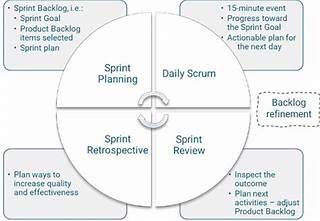 Scrum According to the Scrum Guide 2020, the entire Scrum Team is accountable for creating a valuable, useful Increment every Sprint1234. This includes the Developers, the Product Owner, and the Scrum Master4.
The Developers are committed to creating any aspect of a usable Increment each Sprint12, while the Product Owner is accountable for maximizing the value of the product resulting from the work of the Scrum Team12. The Scrum Master fosters an environment where the Scrum Team can work effectively 1.
Question 21
Single choice
Developers are self-managing, which of the following do they manage? (choose the best answer)
-
A
Product Backlog ordering.
-
B
When to release, based on its progress.
-
C
-
D
Stakeholders for the Sprint Review.
-
E
Reveal answer details
Close answer details
Correct answerC
ExplanationExplanation: Developers are self-managing, which means that they decide how much work they can do in a Sprint, and how they will do it1. They manage the Sprint Backlog, which is the plan for how the Developers will achieve the Sprint Goal, and the single source of truth for the work to be done in the Sprint2. The Developers create and update the Sprint Backlog throughout the Sprint as more is learned[3]
[3]. The other options are not managed by the Developers, but by the Product Owner or the Scrum Team as a whole. The Product Owner is accountable for ordering the Product Backlog, which is an ordered list of everything that is known to be needed in the product 4. The Product Owner also decides when to release the product, based on the value, risk, and stakeholder feedback 5. The Scrum Team collaborates on inviting the stakeholders for the Sprint Review, which is an event where the Scrum Team and the stakeholders inspect the product Increment and adapt the Product Backlog. The Scrum Team also decides the Sprint length, which is the time-box within which the Scrum Team delivers a product Increment.
References:
1: The Scrum Guide, November 2020, p. 6
2: The Scrum Guide, November 2020, p. 10
4: The Scrum Guide, November 2020, p. 6
5: Managing Products with Agility, Scrum.org, accessed on December 16, 2023 : The Scrum Guide, November 2020, p. 13
: The Scrum Guide, November 2020, p. 9
Question 22
Single choice
True or False: The Sprint Backlog is a result of Sprint Planning, and it includes the Sprint Goal.
-
A
-
B
Reveal answer details
Close answer details
Correct answerA
ExplanationIt is true that the Sprint Backlog is a result of Sprint Planning, and it includes the Sprint Goal. This is because: Sprint Planning is an event where the Scrum Team plans for the upcoming Sprint. The purpose of Sprint Planning is to align the entire Scrum Team around a common goal and a plan for delivering an Increment that meets that goal. The Sprint Backlog is the set of Product Backlog items selected for the Sprint, plus a plan for delivering them as a "Done" Increment. The Sprint Backlog is owned by the Developers who use it to organize and manage their work during the Sprint. The Sprint Goal is a short-term objective that provides guidance and focus to the Scrum Team throughout the Sprint. It is a flexible and negotiable commitment that can be adjusted as more is learned throughout the Sprint. The Sprint Backlog is created by the collaborative work of the entire Scrum Team during Sprint Planning. The Product Owner proposes how the product could increase its value and utility in the current Sprint. The Developers discuss how they can deliver a "Done" Increment that meets this proposal. Together, they define a Sprint Goal that summarizes why the Sprint is valuable to stakeholders. Then, they select enough Product Backlog items from the top of the ordered Product Backlog to satisfy the Sprint Goal. Finally, they create a plan for how they will deliver those items as a "Done" Increment.
References:
[Scrum Guide], page 14, section "Sprint Planning" [Scrum Guide], page 15, section "Sprint
Backlog" [Scrum Guide], page 15, section "Sprint Goal"
Question 23
Single choice
The Scrum Team should have all the skills needed to: (choose the best answer)
-
A
Complete the project within the date and cost as calculated by the Product Owner.
-
B
Do all of the development work, except for specialized testing that requires additional tools and environments.
-
C
Turn Product Backlog items into a valuable, useful Increment.
Reveal answer details
Close answer details
Correct answerC
ExplanationExplanation: The Scrum Team should have all the skills needed to turn Product Backlog items into a valuable, useful Increment, as this is the primary goal of each Sprint. The Scrum Guide states that "The Scrum Team consists of one Scrum Master, one Product Owner, and Developers. Within a Scrum Team, there are no sub-teams or hierarchies. It is a cohesive unit of professionals focused on one objective at a time, the Product Goal."1 The Scrum Team should be cross-functional, which means that the Developers have all the skills necessary to create a product Increment.1 The Scrum Team should also be self-managing, which means that they decide how best to accomplish their work, rather than being directed by References:
1: The Scrum Guide2, page 6
2: The Scrum Guide
Question 24
Single choice
When does the second Sprint start? (choose the best answer)
-
A
After the customer completes acceptance testing of the first Sprint.
-
B
Once the architectural changes for the second Sprint are approved by the senior architect.
-
C
Immediately after the first Sprint.
-
D
After the Product Backlog items for the second Sprint have been selected.
Reveal answer details
Close answer details
Correct answerC
ExplanationSprints are fixed-length events of one month or less that serve as a container for the other Scrum events and activities. Sprints have consistent durations throughout a development effort. A new Sprint starts immediately after the conclusion of the previous Sprint. There is no gap or downtime between Sprints. The second Sprint starts right after the first Sprint, regardless of the customer acceptance testing, the architectural changes, or the Product Backlog items.
References:
The Scrum Guide
Understanding and Applying the Scrum Framework Professional Scrum Product OwnerTM I Certification
Question 25
Single choice
What happens if the Scrum Team cannot complete its work by the end of the Sprint? (choose the best answer)
-
A
The Sprint length is unchanged and the Scrum Team continuously learns and adapts.
-
B
The Sprint is extended and future Sprints use this new duration.
-
C
The Sprint is extended temporarily. Lessons are taken to ensure it does not happen again.
Reveal answer details
Close answer details
Correct answerA
ExplanationIf the Scrum Team cannot complete its work by the end of the Sprint, the Sprint does not get extended.
Instead, the unfinished Sprint Backlog Items go back to the Product Backlog and can be addressed in the following Sprint12. This approach allows the team to get better at estimating and reduces complexity due to the consistency of the Scrum Events2. The Scrum Team continuously learns and adapts 12.
|