An insurance company is using a CIoudHub runtime plane. As a part of requirement, email alert should be sent to internal operations team every time of policy applied to an API instance is deleted.
As an integration architect suggest on how this requirement be met?
-
A
Use audit logs in Anypoint platform to detect a policy deletion and configure the Audit logs alert feature to send an email to the operations team
-
B
Use Anypoint monitoring to configure an alert that sends an email to the operations team every time a policy is deleted in API manager
-
C
Create a custom connector to be triggered every time of policy is deleted in API manager
-
D
Implement a new application that uses the Audit log REST API to detect the policy deletion and send an email to operations team the SMTP connector
Reveal answer details
Close answer details
According to MuteSoft, which principle is common to both Service Oriented Architecture (SOA) and API-led connectivity approaches?
-
A
-
B
-
C
-
D
Reveal answer details
Close answer details
An IT integration delivery team begins a project by gathering all of the requirements, and proceeds to execute the remaining project activities as sequential, non-repeating phases. Which IT project delivery methodology is this team following?
-
A
-
B
-
C
-
D
Reveal answer details
Close answer details
An organization is designing multiple new applications to run on CloudHub in a single Anypoint VPC and that must share data using a common persistent Anypoint object store V2 (OSv2). Which design gives these mule applications access to the same object store instance?
-
A
AVM connector configured to directly access the persistence queue of the persistent object store
-
B
An Anypoint MQ connector configured to directly access the persistent object store
-
C
Object store V2 can be shared across cloudhub applications with the configured osv2 connector
-
D
The object store V2 rest API configured to access the persistent object store
Reveal answer details
Close answer details
A stock trading company handles millions of trades a day and requires excellent performance and reliability within its stock trading system. The company operates a number of event-driven APIs Implemented as Mule applications that are hosted on various customer-hosted Mule clusters and needs to enable message exchanges between the APIs within their internal network using shared message queues. What is an effective way to meet the cross-cluster messaging requirements of its event-driven APIs?
-
A
Non-transactional JMS operations with a reliability pattern and manual acknowledgements
-
B
Persistent VM queues with automatic acknowledgements
-
C
JMS transactions with automatic acknowledgements
-
D
extended Architecture (XA) transactions and XA connected components with manual acknowledgements
Reveal answer details
Close answer details
Correct answerC
ExplanationJMS (Java Message Service): JMS is a robust messaging standard that supports reliable and asynchronous communication. It allows message producers and consumers to exchange messages via a common message broker. Transactions with Automatic Acknowledgements: Utilizing JMS transactions ensures that messages are processed reliably. The automatic acknowledgement mode means that once the consumer receives the message, it acknowledges the broker automatically, ensuring that no messages are lost. Performance and Reliability: JMS transactions offer both high performance and reliability. By enabling transactions, each message processing step can be committed or rolled back, ensuring data integrity. Cross-Cluster Messaging: For a stock trading company dealing with millions of trades, using JMS transactions allows for consistent and reliable message delivery across different clusters in their network.
This approach is more suitable compared to non-transactional or VM queues due to the scale and reliability requirements. Event-Driven APIs: The APIs can leverage the transactional nature of JMS to ensure that messages exchanged between different services are reliable and can recover gracefully from failures. References:
MuleSoft Documentation on JMS Connector: MuleSoft JMS Connector
JMS 2.0 Specification: Oracle JMS 2.0
A Mule application must handle temporary backend outages by retrying failed requests automatically. Which Mule component is most appropriate for this requirement?
-
A
-
B
-
C
-
D
Reveal answer details
Close answer details
Correct answerC
ExplanationThe Until Successful scope is designed to retry processing until it succeeds or a maximum retry count is reached. It is commonly used to handle transient failures such as temporary backend outages.
A banking company is developing a new set of APIs for its online business. One of the critical API's is a master lookup API which is a system API. This master lookup API uses persistent object store. This API will be used by all other APIs to provide master lookup data. 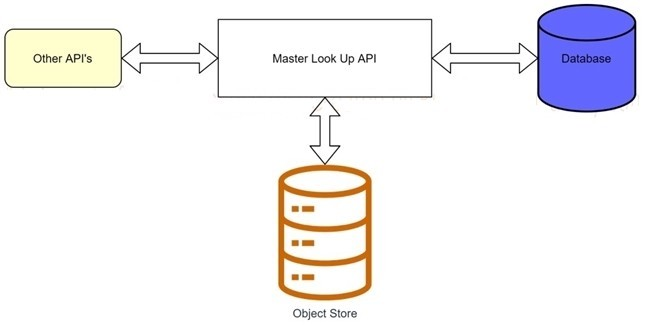 Master lookup API is deployed on two cloudhub workers of 0.1 vCore each because there is a lot of master data to be cached. Master lookup data is stored as a key value pair. The cache gets refreshed if they key is not found in the cache. Doing performance testing it was observed that the Master lookup API has a higher response time due to database queries execution to fetch the master lookup data. Due to this performance issue, go-live of the online business is on hold which could cause potential financial loss to Bank. As an integration architect, which of the below option you would suggest to resolve performance issue?
-
A
Implement HTTP caching policy for all GET endpoints for the master lookup API and implement locking to synchronize access to object store
-
B
Upgrade vCore size from 0.1 vCore to 0,2 vCore
-
C
Implement HTTP caching policy for all GET endpoints for master lookup API
-
D
Add an additional Cloudhub worker to provide additional capacity
Reveal answer details
Close answer details
An API client makes an HTTP request to an API gateway with an Accept header containing the value'' application''. What is a valid HTTP response payload for this request in the client requested data format?
-
A
-
B
-
C
-
D
Reveal answer details
Close answer details
A Mule application contains a Batch Job scope with several Batch Step scopes. The Batch Job scope is configured with a batch block size of 25. A payload with 4,000 records is received by the Batch Job scope. When there are no errors, how does the Batch Job scope process records within and between the Batch Step scopes?
-
A
The Batch Job scope processes multiple record blocks in parallel, and a block of 25 records can jump ahead to the next Batch Step scope over an earlier block of records Each Batch Step scope is invoked with one record in the payload of the received Mule event
For each Batch Step scope, all 25 records within a block are processed in parallel All the records in a block must be completed before the block of 25 records is available to the next Batch Step scope
-
B
The Batch Job scope processes each record block sequentially, one at a time Each Batch Step scope is invoked with one record in the payload of the received Mule event
For each Batch Step scope, all 25 records within a block are processed sequentially, one at a time
All 4000 records must be completed before the blocks of records are available to the next Batch Step scope
-
C
The Batch Job scope processes multiple record blocks in parallel, and a block of 25 records can jump ahead to the next Batch Step scope over an earlier block of records Each Batch Step scope is invoked with one record in the payload of the received Mule event
For each Batch Step scope, all 25 records within a block are processed sequentially, one record at a time
All the records in a block must be completed before the block of 25 records is available to the next Batch Step scope
-
D
The Batch Job scope processes multiple record blocks in parallel Each Batch Step scope is invoked with a batch of 25 records in the payload of the received Mule event
For each Batch Step scope, all 4000 records are processed in parallel Individual records can jump ahead to the next Batch Step scope before the rest of the records finish processing in the current Batch Step scope
Reveal answer details
Close answer details
Correct answerA
ExplanationReferences:
https://docs.mulesoft.com/mule-runtime/4.4/batch-processing-concept
Question 10
Single choice
Which type of communication is managed by a service mesh in a microservices architecture?
-
A
Communication between microservices runtime administrators
-
B
Communication between microservices developers
-
C
Communication between microservices
-
D
Communication between trading partner services
Reveal answer details
Close answer details
Question 11
Single choice
A Mule application is deployed to a cluster of two(2) cusomter-hosted Mule runtimes. Currently the node name Alice is the primary node and node named bob is the secondary node. The mule application has a flow that polls a directory on a file system for new files. The primary node Alice fails for an hour and then restarted. After the Alice node completely restarts, from what node are the files polled, and what node is now the primary node for the cluster?
-
A
Files are polled from Alice node Alice is now the primary node
-
B
Files are polled form Bob node Alice is now the primary node
-
C
Files are polled from Alice node
Bob is the now the primary node
-
D
Files are polled form Bob node
Bob is now the primary node
Reveal answer details
Close answer details
Correct answerD
Explanation* Mule High Availability Clustering provides basic failover capability for Mule. * When the primary Mule
Runtime becomes unavailable, for example, because of a fatal JVM or hardware failure or it's taken offline for maintenance, a backup Mule Runtime immediately becomes the primary node and resumes processing where the failed instance left off. * After a system administrator recovers a failed Mule Runtime server and puts it back online, that server automatically becomes the backup node. In this case, Alice, once up, will become backup ---------------------------------------------------------------------------------------------------
------------------------------------------- Reference: https://docs.mulesoft.com/mule-runtime/4.3/hadr-guide So correct choice is : Files are polled form Bob node Bob is now the primary node
Question 12
Single choice
As a part of design , Mule application is required call the Google Maps API to perform a distance computation. The application is deployed to cloudhub. At the minimum what should be configured in the TLS context of the HTTP request configuration to meet these requirements?
-
A
The configuration is built-in and nothing extra is required for the TLS context
-
B
Request a private key from Google and create a PKCS12 file with it and add it in keyStore as a part of
TLS context
-
C
Download the Google public certificate from a browser, generate JKS file from it and add it in key store as a part of TLS context
-
D
Download the Google public certificate from a browser, generate a JKS file from it and add it in Truststore as part of the TLS context
Reveal answer details
Close answer details
Question 13
Single choice
An organization has decided on a cloud migration strategy to minimize the organization's own IT resources. Currently the organization has all of its new applications running on its own premises and uses an on-premises load balancer that exposes all APIs under the base URL (https://api.rutujar.com). As part of migration strategy, the organization is planning to migrate all of its new applications and load balancer CloudHub. What is the most straightforward and cost-effective approach to Mule application deployment and load balancing that preserves the public URL's?
-
A
Deploy the Mule application to Cloudhub Create a CNAME record for base URL( httpsr://api.rutujar.com) in the Cloudhub shared load balancer that points to the A record of theon-premises load balancer Apply mapping rules in SLB to map URLto
their corresponding Mule applications
-
B
Deploy the Mule application to Cloudhub Update a CNAME record for base URL ( https://api.rutujar.com) in the organization's DNS server to point to the A record of the Cloudhub dedicated load balancer Apply mapping rules in DLB to map URLto their corresponding Mule applications
-
C
Deploy the Mule application to Cloudhub Update a CNAME record for base URL ( https://api.rutujar.com) in the organization's DNS server to point to the A record of the CloudHub shared load balancer Apply mapping rules in SLB to map URLto
their corresponding Mule applications
-
D
For each migrated Mule application, deploy an API proxy application to Cloudhub with all traffic to the mule applications routed through a Cloud Hub Dedicated load balancer (DLB)
Update a CNAME record for base URL ( https://api.rutujar.com) in the organization's DNS server to point to the A record of the CloudHub dedicated load balancer Apply mapping rules in DLB to map each API proxy application who is responding new application
Reveal answer details
Close answer details
Question 14
Single choice
What is a key benefit of using Anypoint Exchange within an enterprise integration program?
-
A
Automatic deployment of Mule applications
-
B
Centralized discovery and reuse of integration assets
-
C
Runtime monitoring of Mule applications
-
D
Enforcement of API policies
Reveal answer details
Close answer details
Correct answerB
ExplanationAnypoint Exchange acts as a central repository for APIs, connectors, templates, and other reusable assets. This promotes reuse, consistency, and faster delivery across teams.
Question 15
Single choice
A Mule application is being designed to do the following: Step 1: Read a SalesOrder message from a JMS queue, where each SalesOrder consists of a header and a list of SalesOrderLineltems. Step 2: Insert the SalesOrder header and each SalesOrderLineltem into different tables in an RDBMS. Step 3: Insert the SalesOrder header and the sum of the prices of all its SalesOrderLineltems into a table
In a different RDBMS. No SalesOrder message can be lost and the consistency of all SalesOrder-related information in both RDBMSs must be ensured at all times. What design choice (including choice of transactions) and order of steps addresses these requirements?
-
A
1) Read the JMS message (NOT in an XA transaction)
2) Perform BOTH DB inserts in ONE DB transaction
3) Acknowledge the JMS message
-
B
1) Read the JMS message (NOT in an XA transaction)
2) Perform EACH DB insert in a SEPARATE DB transaction
3) Acknowledge the JMS message
-
C
1) Read the JMS message in an XA transaction
2) In the SAME XA transaction, perform BOTH DB inserts but do NOT acknowledge the JMS message
-
D
1) Read and acknowledge the JMS message (NOT in an XA transaction)
2) In a NEW XA transaction, perform BOTH DB inserts
Reveal answer details
Close answer details
Correct answerA
ExplanationOption A says "Perform EACH DB insert in a SEPARATE DB transaction". In this case if first DB insert is successful and second one fails then first insert won't be rolled back causing inconsistency. This option is ruled out.
Option D says Perform BOTH DB inserts in ONE DB transaction. Rule of thumb is when one or more DB connections are required we must use XA transaction as local transactions support only one resource. So this option is also ruled out.
Option B acknowledges the before DB processing, so message is removed from the queue. In case of system failure at later point, message can't be retrieved.
Option C is Valid: Though it says "do not ack JMS message", message will be auto acknowledged at the end of transaction.
Here is how we can ensure all components are part of XA transaction:
https://docs.mulesoft.com/jms-connector/1.7/jms-transactionsAdditionalInformationabouttransactions:
XA Transactions - You can use an XA transaction to group together a series of operations from multiple transactional resources, such as JMS, VM or JDBC resources, into a single, very reliable, global transaction.
The XA (eXtended Architecture) standard is an X/Open group standard which specifies the interface between a global transaction manager and local transactional resource managers.
The XA protocol defines a 2-phase commit protocol which can be used to more reliably coordinate and sequence a series of "all or nothing" operations across multiple servers, even servers of different types
Use JMS ack if Acknowledgment should occur eventually, perhaps asynchronously
The performance of the message receipt is paramount
The message processing is idempotent
For the choreography portion of the SAGA pattern
Use JMS transactions
For all other times in the integration you want to perform an atomic unit of work When the unit of work comprises more than the receipt of a single message
To simply and unify the programming model (begin/commit/rollback)
Question 16
Single choice
The AnyAirline organization's passenger reservations center is designing an integration solution that combines invocations of three different System APIs (bookFlight, bookHotel, and bookCar) in a business transaction. Each System API makes calls to a single database. The entire business transaction must be rolled back when at least one of the APIs fails. What is the most idiomatic (used for its intended purpose) way to integrate these APIs in near real-time that provides the best balance of consistency, performance, and reliability?
-
A
Implement eXtended Architecture (XA) transactions between the API implementations Coordinate between the API implementations using a Saga pattern Implement caching in each API implementation to improve performance
-
B
Implement local transactions within each API implementation Configure each API implementation to also participate in the same eXtended Architecture (XA) transaction Implement caching in each API implementation to improve performance
-
C
Implement local transactions in each API implementation Coordinate between the API implementations using a Saga pattern Apply various compensating actions depending on where a failure occurs
-
D
Implement an eXtended Architecture (XA) transaction manager in a Mule application using a Saga pattern Connect each API implementation with the Mule application using XA transactions Apply various compensating actions depending on where a failure occurs
Reveal answer details
Close answer details
Correct answerC
ExplanationReferences:
https://aws.amazon.com/blogs/compute/building-a-serverless-distributed-application-using-a-saga-orchestration-pattern/
Question 17
Single choice
An IT integration tram followed an API-led connectivity approach to implement an order-fulfillment business process. It created an order processing AP that coordinates stateful interactions with a variety of microservices that validate, create, and fulfill new product orders Which interaction composition pattern did the integration architect who designed this order processing AP| use?
-
A
-
B
-
C
-
D
Reveal answer details
Close answer details
Question 18
Single choice
Customer has deployed mule applications to different customer hosted mule run times. Mule applications are managed from Anypoint platform. What needs to be configured to monitor these Mule applications from Anypoint monitoring and what sends monitoring data to Anypoint monitoring?
-
A
Enable monitoring of individual applications from runtime manager application settings Runtime manager agent sends monitoring data from the mule applications to Anypoint monitoring
-
B
Install runtime manager agent on each mule runtime Runtime manager agent since monitoring data from the mule applications to Anypoint monitoring
-
C
Anypoint monitoring agent on each mule runtime Anypoint monitoring agent sends monitoring data from the mule applications to Anypoint monitoring
-
D
By default, Anypoint monitoring agent will be installed on each Mule run time Anypoint Monitoring agent automatically sends monitoring data from the Mule applications to Anypoint monitoring
Reveal answer details
Close answer details
Question 19
Single choice
Which component of Anypoint platform belongs to the platform control plane?
-
A
-
B
-
C
-
D
Reveal answer details
Close answer details
Question 20
Single choice
The company's FTPS server login username and password
-
A
TLS context trust store containing a public certificate for the company. The company's PGP public key that was used to sign the files
-
B
The partner's PGP public key used by the company to login to the FTPS server. A TLS context key store containing the private key for the company
The partner's PGP private key that was used to sign the files
-
C
The company's FTPS server login username and password. A TLS context trust store containing a public certificate for ftps.partner.com
The partner's PGP public key that was used to sign the files
-
D
The partner's PGP public key used by the company to login to the FTPS server. A TLS context key store containing the private key for ftps.partner.com
The company's PGP private key that was used to sign the files
Reveal answer details
Close answer details
Correct answerC
ExplanationWhen configuring secure communication with an FTPS server and handling signed files, the necessary components include: FTPS Server Login Credentials: The username and password used to authenticate with the company's FTPS server. TLS Context Trust Store: This should contain the public certificate for the FTPS server (ftps.partner.com) to establish a secure SSL/TLS connection. Partner's PGP Public Key: This is used to verify the signature of the files received from the partner, ensuring data integrity and authenticity. These components collectively ensure secure communication and data validation. References
MuleSoft Documentation on FTPS and PGP Encryption Best Practices for Secure File Transfer and Encryption
Question 21
Single choice
Why would an Enterprise Architect use a single enterprise-wide canonical data model (CDM) when designing an integration solution using Anypoint Platform?
-
A
To reduce dependencies when integrating multiple systems that use different data formats
-
B
To automate Al-enabled API implementation generation based on normalized backend databases from separate vendors
-
C
To leverage a data abstraction layer that shields existing Mule applications from nonbackward compatible changes to the model's data structure
-
D
To remove the need to perform data transformation when processing message payloads in Mule applications
Reveal answer details
Close answer details
Correct answerA
ExplanationAn Enterprise Architect would use a single enterprise-wide canonical data model (CDM) when designing an integration solution to achieve the following benefits: Reduced Dependencies: By standardizing on a single data model, it simplifies the integration process between multiple systems that may use different data formats. This eliminates the need for numerous point-to-point transformations. Consistency and Reusability: A CDM ensures consistent data representation across the enterprise, which promotes data integrity and reusability of integration components. Simplified Maintenance: Having a single data model reduces the complexity of maintaining and updating integration solutions, as changes need to be made in only one place. The CDM acts as an abstraction layer that decouples systems, facilitating easier integration and reducing the potential for errors. References
MuleSoft Documentation on Canonical Data Models Best Practices for Data Integration with MuleSoft
Question 22
Single choice
What is the primary benefit of decoupling Experience APIs from System APIs?
-
A
-
B
Independent evolution of consumer and backend layers
-
C
Elimination of API governance
-
D
Simplified deployment pipelines
Reveal answer details
Close answer details
Correct answerB
ExplanationDecoupling allows Experience APIs and System APIs to evolve independently, improving agility and reducing the impact of changes.
Question 23
Single choice
What is an example of data confidentiality?
-
A
Signing a file digitally and sending it using a file transfer mechanism
-
B
Encrypting a file containing personally identifiable information (PV)
-
C
Providing a server's private key to a client for secure decryption of data during a two-way SSL handshake
-
D
De-masking a person's Social Security number while inserting it into a database
Reveal answer details
Close answer details
Question 24
Single choice
An Organization has previously provisioned its own AWS VPC hosting various servers. The organization now needs to use Cloudhub to host a Mule application that will implement a REST API once deployed to Cloudhub, this Mule application must be able to communicate securely with the customer-provisioned AWS VPC resources within the same region, without being interceptable on the public internet. What Anypoint Platform features should be used to meet these network communication requirements between Cloudhub and the existing customer-provisioned AWS VPC?
-
A
Add a Mulesoft hosted Anypoint VPC configured and with VPC Peering to the AWS VPC
-
B
Configure an external identity provider (IDP) in Anypoint Platform with certificates from the customer provisioned AWS VPC
-
C
Add a default API Whitelisting policy to API Manager to automatically whitelist the customer provisioned AWS VPC IP ranges needed by the Mule applicaton
-
D
Use VM queues in the Mule application to allow any non-mule assets within the customer provisioned AWS VPC to subscribed to and receive messages
Reveal answer details
Close answer details
Correct answerA
ExplanationCorrect answer is: Add a Mulesoft hosted Anypoint VPC configured and with VPC Peering to the AWS VPC * Connecting to your Anypoint VPC extends your corporate network and allows CloudHub workers to access resources behind your corporate firewall.
* You can connect on-premises data centers through a secured VPN tunnel, or a private AWS VPC through VPC peering, or by using AWS Direct Connect. MuleSoft Doc Reference :
https://docs.mulesoft.com/runtime-manager/virtual-private-cloud
Question 25
Single choice
How should the developer update the logging configuration in order to enable this package specific debugging?
-
A
In Anypoint Monitoring, define a logging search query with class property set to org.apache.cxf and level set to DEBUG
-
B
In the Mule application's log4j2.xml file, add an AsyncLogger element with name property set to org.apache.cxf and level set to DEBUG, then redeploy the Mule application in the CloudHub production environment
-
C
In the Mule application's log4j2.xmI file, change the root logger's level property to DEBUG, then
-
D
redeploy the Mule application to the CloudHub production environment
-
E
In Anypoint Runtime Manager, in the Deployed Application Properties tab for the Mule application, add a line item with DEBUG level for package org.apache.cxf and apply the changes
Reveal answer details
Close answer details
Correct answerA
ExplanationTo enable package-specific debugging for the org.apache.cxf package, you need to update the logging configuration in the Mule application's log4j2.xml file. The steps are as follows: Open the log4j2.xml file in your Mule application.
Add an AsyncLogger element with the name property set to org.apache.cxf and the level set to DEBUG .
This configuration specifies that only the logs from the org.apache.cxf package should be logged at the DEBUG level. Save the changes to the log4j2.xml file. Redeploy the updated Mule application to the CloudHub production environment to apply the new logging configuration.
This approach ensures that only the specified package's logging level is changed to DEBUG, minimizing the potential performance impact on the application. References
MuleSoft Documentation on Configuring Logging Log4j2 Configuration Guide
Question 26
Single choice
An organization is designing a mule application to support an all or nothing transaction between serval database operations and some other connectors so that they all roll back if there is a problem with any of the connectors Besides the database connector , what other connector can be used in the transaction.
-
A
-
B
-
C
-
D
Reveal answer details
Close answer details
Correct answerA
ExplanationCorrect answer is VM VM support Transactional Type. When an exception occur, The transaction rolls back to its original state for reprocessing. This feature is not supported by other connectors.
Here is additional information about Transaction management: 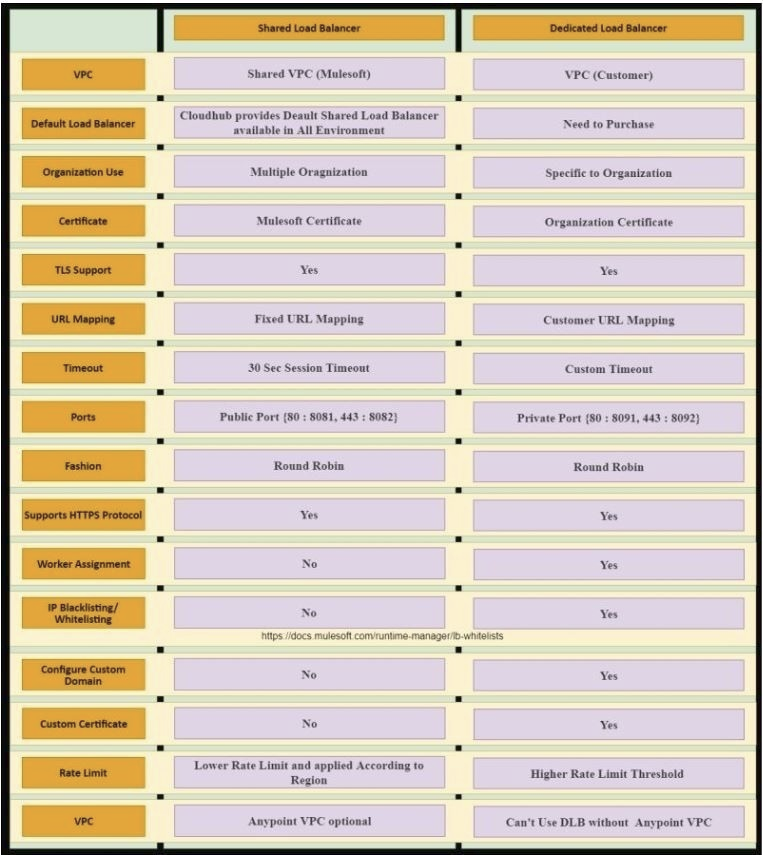
Question 27
Single choice
An organization has just developed a Mule application that implements a REST API. The mule application will be deployed to a cluster of customer hosted Mule runtimes. What additional infrastructure component must the customer provide in order to distribute inbound API requests across the Mule runtimes of the cluster?
-
A
-
B
-
C
-
D
Reveal answer details
Close answer details
Correct answerB
ExplanationCorrect answer is An HTTP Load Balancer.
Key thing to note here is that we are deploying application to customer hosted Mule runtime. This means we will need load balancer to route the requests to different instances of the cluster.
Rest all options are distractors and their requirement depends on project use case.
Question 28
Single choice
In one of the critical payment related mule application, transaction is being used . As an enhancement to implementation , scatter gather route is introduced which is also the part of transaction group. Scatter
gather route has 4 routes. What will be the behavior of the Mule application in case of error occurs in 4th route of the scatter-gather router and transaction needs to be rolled back?
-
A
Only errored route will be rolled back
-
B
All routes will be rolled back
-
C
Scatter Gather router cannot be part of transaction
Reveal answer details
Close answer details
Correct answerB
ExplanationScatter Gather: When running within a transaction, Scatter Gather does not execute in parallel. This means that the second route is executed after the first one is processed, the third after the second one, etc. In case of error, all routes will be rolled back
Question 29
Single choice
An organization heeds to procure an enterprise software system to increase cross-selling opportunities and better rack prospect data. Which category of enterprise software has these core capabilities, when used for its typical and intended purpose?
-
A
Supply Chain Management (SCM)
-
B
IT Service Management (ITSM)
-
C
Business-to-Business (A2B)
-
D
Customer Relationship Management (CRM)
Reveal answer details
Close answer details
Question 30
Single choice
A Mule application currently writes to two separate SQL Server database instances across the internet using a single XA transaction. It is 58. proposed to split this one transaction into two separate non-XA transactions with no other changes to the Mule application. What non-functional requirement can be expected to be negatively affected when implementing this change?
-
A
-
B
-
C
-
D
Reveal answer details
Close answer details
Correct answerB
ExplanationCorrect answer is Consistency as XA transactions are implemented to achieve this. XA transactions are added in the implementation to achieve goal of ACID properties. In the context of transaction processing, the acronym ACID refers to the four key properties of a transaction: atomicity, consistency, isolation, and durability. Atomicity : All changes to data are performed as if they are a single operation. That is, all the changes are performed, or none of them are. For example, in an application that transfers funds from one account to another, the atomicity property ensures that, if a debit is made successfully from one account, the corresponding credit is made to the other account. Consistency : Data is in a consistent state when a transaction starts and when it ends.For example, in an application that transfers funds from one account to another, the consistency property ensures that the total value of funds in both the accounts is the same at the start and end of each transaction. Isolation : The intermediate state of a transaction is invisible to other transactions. As a result, transactions that run concurrently appear to be serialized. For example, in an application that transfers funds from one account to another, the isolation property ensures that another transaction sees the transferred funds in one account or the other, but not in both, nor in neither. Durability: After a transaction successfully completes, changes to data persist and are not undone, even in the event of a system failure. For example, in an application that transfers funds from one account to another, the durability property ensures that the changes made to each account will not be reversed. MuleSoft
References:
https://docs.mulesoft.com/mule-runtime/4.3/xa-transactions
Question 31
Single choice
A corporation has deployed Mule applications to different customer-hosted Mule runtimes. Mule applications deployed to these Mule runtimes are managed by Anypoint Platform. What needs to be installed or configured (if anything) to monitor these Mule applications from Anypoint Monitoring, and how is monitoring data from each Mule application sent to Anypoint Monitoring?
-
A
Enable monitoring of individual Mule applications from the Runtime Manager application settings.
Runtime Manager sends monitoring data to Anypoint Monitoring for each deployed Mule application.
-
B
Install a Runtime Manager agent on each Mule runtime.
Each Runtime Manager agent sends monitoring data from the Mule applications running in its Mule runtime to Runtime Manager, then Runtime Manager sends monitoring data to Anypoint Monitoring.
-
C
Leave the out-of-the-box Anypoint Monitoring agent unchanged in its default Mule runtime installation.
Each Anypoint Monitoring agent sends monitoring data from the Mule applications running in its Mule runtime to Runtime Manager, then Runtime Manager sends
-
D
monitoring data to Anypoint Monitoring.
-
E
Install an Anypoint Monitoring agent on each Mule runtime.
Each Anypoint Monitoring agent sends monitoring data from the Mule applications running in its Mule runtime to Anypoint Monitoring.
Reveal answer details
Close answer details
Correct answerD
ExplanationTo monitor Mule applications deployed to different customer-hosted Mule runtimes using Anypoint Monitoring, follow these steps: Install Anypoint Monitoring Agent: Install an Anypoint Monitoring agent on each Mule runtime. This agent is responsible for collecting monitoring data from the Mule applications running on that runtime. Data Transmission: Each Anypoint Monitoring agent sends the collected monitoring data directly to Anypoint Monitoring. This ensures that performance metrics, logs, and other relevant data are available for analysis and monitoring within the Anypoint Platform. By using the Anypoint Monitoring agent, organizations can effectively monitor their Mule applications across various environments, ensuring visibility and operational efficiency. References
MuleSoft Documentation on Anypoint Monitoring Installing and Configuring Anypoint Monitoring Agent
Question 32
Single choice
What is required before an API implemented using the components of Anypoint Platform can be managed and governed (by applying API policies) on Anypoint Platform?
-
A
The API must be published to Anypoint Exchange and a corresponding API instance ID must be obtained from API Manager to be used in the API implementation
-
B
The API implementation source code must be committed to a source control management system (such as GitHub)
-
C
A RAML definition of the API must be created in API designer so it can then be published to Anypoint Exchange
-
D
The API must be shared with the potential developers through an API portal so API consumers can interact with the API
Reveal answer details
Close answer details
Correct answerA
ExplanationContext of the question is about managing and governing mule applications deployed on Anypoint platform.
Anypoint API Manager (API Manager) is a component of Anypoint Platform that enables you to manage, govern, and secure APIs. It leverages the runtime capabilities of API Gateway and Anypoint Service Mesh, both of which enforce policies, collect and track analytics data, manage proxies, provide encryption and authentication, and manage applications.
Mule Ref Doc :
https://docs.mulesoft.com/api-manager/2.x/getting-started-proxy
References:
https://docs.mulesoft.com/api-manager/2.x/api-auto-discovery-new-concept
Question 33
Single choice
A mule application uses an HTTP request operation to involve an external API. The external API follows the HTTP specification for proper status code usage. What is possible cause when a 3xx status code is returned to the HTTP Request operation from the external API?
-
A
The request was not accepted by the external API
-
B
The request was Redirected to a different URL by the external API
-
C
The request was NOT RECEIVED by the external API
-
D
The request was ACCEPTED by the external API
Reveal answer details
Close answer details
Correct answerB
Explanation3xx HTTP status codes indicate a redirection that the user agent (a web browser or a crawler) needs to take further action when trying to access a particular resource. References:
https://www.w3.org/Protocols/rfc2616/rfc2616-sec10.html
Question 34
Single choice
An organization has various integrations implemented as Mule applications. Some of these Mule applications are deployed to custom hosted Mule runtimes (on-premises) while others execute in the MuleSoft-hosted runtime plane (CloudHub). To perform the Integra functionality, these Mule applications connect to various backend systems, with multiple applications typically needing to access the backend systems. How can the organization most effectively avoid creating duplicates in each Mule application of the credentials required to access the backend systems?
-
A
Create a Mule domain project that maintains the credentials as Mule domain-shared resources Deploy the Mule applications to the Mule domain, so the credentials are available to the Mule applications
-
B
Store the credentials in properties files in a shared folder within the organization's data center Have the Mule applications load properties files from this shared location at startup
-
C
Segregate the credentials for each backend system into environment-specific properties files Package these properties files in each Mule application, from where they are loaded at startup
-
D
Configure or create a credentials service that returns the credentials for each backend system, and that is accessible from customer-hosted and MuleSoft-hosted Mule runtimes Have the Mule applications toad the properties at startup by invoking that credentials service
Reveal answer details
Close answer details
Correct answerD
Explanation* "Create a Mule domain project that maintains the credentials as Mule domain-shared resources" is wrong as domain project is not supported in Cloudhub * We should Avoid Creating duplicates in each Mule application but below two options cause duplication of credentials - Store the credentials in properties files in a shared folder within the organization's data center. Have the Mule applications load properties files from this shared location at startup - Segregate the credentials for each backend system into environment-specific properties files. Package these properties files in each Mule application, from where they are loaded at startup So these are also wrong choices * Credentials service is the best approach in this scenario. Mule domain projects are not supported on CloudHub. Also its is not recommended to have multiple copies of configuration values as this makes difficult to maintain Use the Mule Credentials Vault to encrypt data in a .properties file. (In the context of this document, we refer to the .properties file simply as the properties file.) The properties file in Mule stores data as key-value pairs which may contain information such as usernames, first and last names, and credit card numbers. A Mule application may access this data as it processes messages, for example, to acquire login credentials for an external Web service. However, though this sensitive, private data must be stored in a properties file for Mule to access, it must also be protected against unauthorized ?and potentially malicious ? use by anyone with access to the Mule application
Question 35
Single choice
An API implementation is being designed that must invoke an Order API which is known to repeatedly experience downtime. For this reason a fallback API is to be called when the Order API is unavailable. What approach to designing invocation of the fallback API provides the best resilience?
-
A
Redirect client requests through an HTTP 303 temporary redirect status code to the fallback API whenever the Order API is unavailable
-
B
Set an option in the HTTP Requester component that invokes the order API to instead invoke a fallback API whenever an HTTP 4XX or 5XX response status code is received from Order API
-
C
Create a separate entry for the order API in API manager and then invoke this API as a fallback API if the primary Order API is unavailable
-
D
Search Anypoint Exchange for a suitable existing fallback API and them implement invocations to their fallback API in addition to the Order API
Reveal answer details
Close answer details
Correct answerA
Explanation* Resilience testing is a type of software testing that observes how applications act under stress. It's meant to ensure the product's ability to perform in chaotic conditions without a loss of core functions or data; it
ensures a quick recovery after unforeseen, uncontrollable events.
* In case an API invocation fails -- even after a certain number of retries -- it might be adequate to invoke a different API as a fallback. A fallback API, by definition, will never be ideal for the purpose of the API client, otherwise it would be the primary API.
* Here are some examples for fallback APIs:
- An old, deprecated version of the same API.
- An alternative endpoint of the same API and version (e.g. API in another CloudHub region).
- An API doing more than required, and therefore not as performant as the primary API.
- An API doing less than required and therefore forcing the API Client to offer a degraded service, which is still better than no service at all.
* API clients implemented as Mule applications offer the `Until Successful Scope and Exception' strategies at their disposal, which together allow configuring fallback actions such as a fallback API invocation.
* All HTTP response status codes within the 3xx category are considered redirection messages. These codes indicate to the user agent (i.e. your web browser) that an additional action is required in order to complete the request and access the desired resource 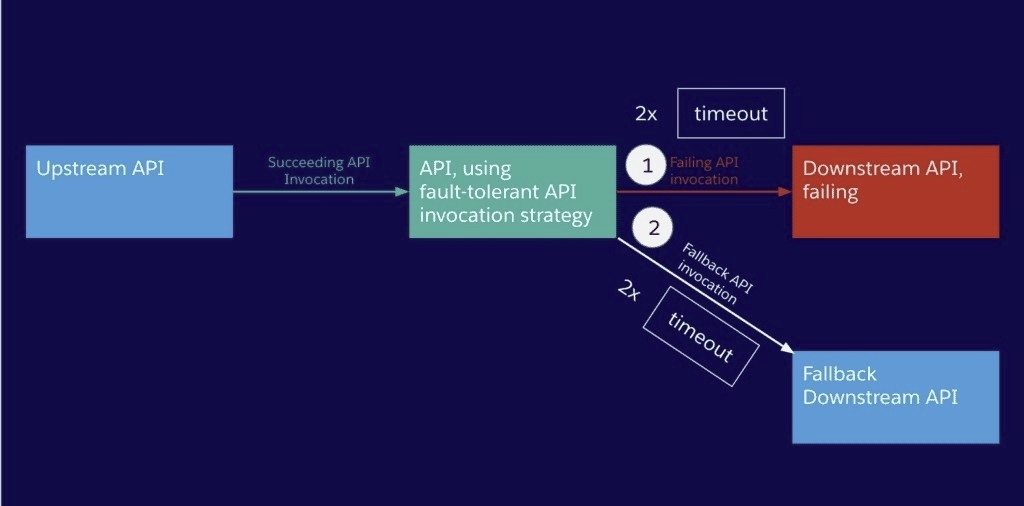 Hence correct answer is Redirect client requests through an HTTP 303 temporary redirect status code to the fallback API whenever the Order API is unavailable
Question 36
Multiple choice
An organization is building a test suite for their applications using m-unit. The integration architect has recommended using test recorder in studio to record the processing flows and then configure unit tests based on the capture events. What are the two considerations that must be kept in mind while using test recorder? (Choose two answers)
-
A
Tests for flows cannot be created with Mule errors raised inside the flow or already existing in the incoming event
-
B
Recorder supports smoking a message before or inside a ForEach processor
-
C
The recorder support loops where the structure of the data been tested changes inside the iteration
-
D
A recorded flow execution ends successfully but the result does not reach its destination because the application is killed
-
E
Mocking values resulting from parallel processes are possible and will not affect the execution of the processes that follow in the test
Reveal answer details
Close answer details
Question 37
Single choice
Which key DevOps practice and associated Anypoint Platform component should a MuteSoft integration team adopt to improve delivery quality?
-
A
A Continuous design with API Designer
-
B
Automated testing with MUnit
-
C
Passive monitoring with Anypoint Monitoring
-
D
Manual testing with Anypoint Studio
Reveal answer details
Close answer details
Question 38
Single choice
What is an advantage that Anypoint Platform offers by providing universal API management and Integration-Platform-as-a-Service (iPaaS) capabilities in a unified platform?
-
A
Ability to use a single iPaaS to manage and integrate all API gateways
-
B
Ability to use a single connector to manage and integrate all APis
-
C
Ability to use a single control plane for both full-lifecycle AP] management and integration
-
D
Ability to use a single iPaaS to manage all API developer portals
Reveal answer details
Close answer details
Correct answerC
ExplanationAnypoint Platform offers universal API management and Integration-Platform-as-a-Service (iPaaS) capabilities in a unified platform, meaning that it provides a single control plane to manage both full-lifecycle API management and integration. This allows organizations to easily manage their APIs and integrations, as well as deploy APIs and integrations quickly and efficiently. According to the MuleSoft Certified Integration Architect - Level 1 Course Book, "Anypoint Platform provides a unified platform for managing, deploying, and monitoring both API and integration solutions, allowing organizations to quickly and easily build and manage their APIs and integrations."
Question 39
Single choice
An organization has strict unit test requirement that mandate every mule application must have an MUnit test suit with a test case defined for each flow and a minimum test coverage of 80%. A developer is building Munit test suit for a newly developed mule application that sends API request to an external rest API. What is the effective approach for successfully executing the Munit tests of this new application while still achieving the required test coverage for the Munit tests?
-
A
Invoke the external endpoint of the rest API from the mule floors
-
B
Mark the rest API invocations in the Munits and then call the mocking service flow that simulates standard responses from the REST API
-
C
Mock the rest API invocation in the Munits and return a mock response for those invocations
-
D
Create a mocking service flow to simulate standard responses from the rest API and then configure the mule flows to call the marking service flow
Reveal answer details
Close answer details
Question 40
Single choice
An organization is not meeting its growth and innovation objectives because IT cannot deliver projects last enough to keep up with the pace of change required by the business. According to MuleSoft's IT delivery and operating model, which step should the organization lake to solve this problem?
-
A
Modify IT governance and security controls so that line of business developers can have direct access to the organization's systems of record
-
B
Switch from a design-first to a code-first approach for IT development
-
C
Adopt a new approach that decouples core IT projects from the innovation that happens within each line of business
-
D
Hire more |T developers, architects, and project managers to increase IT delivery
Reveal answer details
Close answer details
Question 41
Single choice
An API has been unit tested and is ready for integration testing. The API is governed by a Client ID
Enforcement policy in all environments. What must the testing team do before they can start integration testing the API in the Staging environment?
-
A
They must access the API portal and create an API notebook using the Client ID and Client Secret supplied by the API portal in the Staging environment
-
B
They must request access to the API instance in the Staging environment and obtain a Client ID and Client Secret to be used for testing the API
-
C
They must be assigned as an API version owner of the API in the Staging environment
-
D
They must request access to the Staging environment and obtain the Client ID and Client Secret for that environment to be used for testing the API
Reveal answer details
Close answer details
Correct answerB
Explanation* It's mentioned that the API is governed by a Client ID Enforcement policy in all environments.
* Client ID Enforcement policy allows only authorized applications to access the deployed API
implementation.
* Each authorized application is configured with credentials: client_id and client_secret.
* At runtime, authorized applications provide the credentials with each request to the API implementation.
References:
https://docs.mulesoft.com/api-manager/2.x/policy-mule3-client-id-based-policies
Question 42
Single choice
A key Cl/CD capability of any enterprise solution is a testing framework to write and run repeatable tests. Which component of Anypoint Platform provides the te6t automation capabilities for customers to use in their pipelines?
-
A
-
B
-
C
-
D
Reveal answer details
Close answer details
Question 43
Single choice
Following MuleSoft best practices, what MuleSoft runtime deployment option best meets the company's goals to begin its digital transformation journey?
-
A
Runtime Fabric on VMs/bare metal
-
B
-
C
Customer-hosted runtimes provisioned by a MuleSoft services partner
-
D
Customer-hosted self-provisioned runtimes
Reveal answer details
Close answer details
Correct answerB
ExplanationDigital Transformation Goals: The company aims to start its digital transformation journey, which typically involves adopting cloud-based solutions to enhance agility, scalability, and innovation. CloudHub Runtimes: Fully Managed Service: CloudHub is a fully managed, multi-tenant integration platform as a service (iPaaS) offered by MuleSoft. Ease of Use: It simplifies deployment and management, requiring minimal infrastructure setup and maintenance from the customer. Scalability: CloudHub provides seamless scalability to handle varying workloads, which is crucial for
growing digital transformation initiatives. High Availability: CloudHub ensures high availability and reliability through its underlying infrastructure and built-in failover mechanisms. Security: MuleSoft ensures that CloudHub meets stringent security and compliance standards, which is essential for enterprise applications. Suitability for Digital Transformation: Rapid Deployment: CloudHub enables rapid deployment of integrations and APIs, accelerating the digital transformation process. Cost-Effective: As a managed service, it reduces the total cost of ownership by eliminating the need for extensive infrastructure investments and ongoing operational costs. Integration Capabilities: CloudHub supports a wide range of integration patterns and connectors, facilitating seamless integration with various systems and data sources. References:
MuleSoft Documentation on CloudHub: CloudHub MuleSoft Digital Transformation Insights: MuleSoft Digital Transformation
Question 44
Single choice
Which component is responsible for collecting and visualizing metrics such as CPU and memory usage for Mule applications?
-
A
-
B
-
C
-
D
Reveal answer details
Close answer details
Correct answerC
ExplanationAnypoint Monitoring provides visibility into application and runtime metrics, enabling performance analysis and alerting.
|