Electromagnetic radiation from space constantly bombards the earth. Most wavelengths are absorbed by
the atmosphere; however, there are two "windows" of nonabsorption through which significant amounts of
radiation reach the ground. The first transmits ultraviolet and visible light, as well as infrared light or heat;
the second transmits radio waves. As a result, terrestrial organisms have evolved a number of pigments that interact with light in various ways: some capture light energy, some provide protection from light-induced damage, and some serve camouflage or signaling purposes. Among these compounds are many conjugated polyenes, which play important roles as photoreceptors.
For every chemical compound, there are certain wavelengths of light whose quanta possess exactly the correct amount of energy to raise electrons from their ground state to higher-energy orbitals. For most organic compounds, these wavelengths are in the UV range. However, conjugated double bond systems stabilize the electrons, so that they can be excited by lower-frequency photons with wavelengths in the visible spectrum. Such a pigment, known as a chromophore, will then transmit the "subtraction color," a color complementary to the one absorbed. For instance, carotene, a hydrocarbon compound with eleven conjugated double bonds, absorbs blue light and transmits orange. The wavelength that is absorbed
generally increases with the number of conjugated bonds; rings and side-chains also affect wavelength. Wavelength Color Subtraction Color
480 nm blue orange
580 nm yellow violet
680 nm red green Among the many biological molecules that are affected by light is DNA, the genetic material of living
organisms. DNA absorbs ultraviolet light, and may be damaged by UVC (< 280 nm) and UVB (280-315
nm). UVA (315-400 nm) and visible light can actually repair light-induced damage to DNA by a process called photorepair. For this reason, UVA, which also stimulates tanning, was once considered beneficial.
However, there is now increasing evidence that UVA can damage skin. Many crustaceans produce a blue or green caroteneprotein complex. What is the most likely cause of the color change from green to orange when a lobster is boiled?
-
A
Heat causes the prosthetic group to become partially hydrated.
-
B
The increase in temperature permits the prosthetic group to absorb shorter wavelengths.
-
C
The protein is separated from the carotenoid pigment.
-
D
Heat causes the prosthetic group to become oxidized.
Reveal answer details
Close answer details
Correct answerC
ExplanationThe green color comes from absorption of light by the entire carotene-protein complex; as you know from the passage, the carotene by itself is orange. The fact that boiled lobsters are red and not orange is due to other pigments that are also present. Anyway, when a lobster is cooked, the heat disrupts the intermolecular attractions that attach the carotene molecule, the protein's prosthetic group, to the protein itself. This change in the molecule causes the wavelength of light absorbed to change as well. As a matter of fact, it reduces the number of conjugated double bonds and therefore shortens the wavelength of light absorbed. The red color of the cooked lobster is the transmission color of the isolated carotenoid, with the conjugated bonds from the protein removed. Choices A and D are wrong because if carotene were hydrated or oxidized, it would break the chain of conjugation completely and produce a colorless compound. An increase in temperature, choice B, is only a physical change and won't change the absorption wavelength.
What happens to brain waves as an organism falls asleep?
-
A
The frequency increases and amplitude increases.
-
B
The frequency decreases and amplitude remains constant.
-
C
The frequency increases and amplitude decreases.
-
D
The frequency decreases and the amplitude increases.
Reveal answer details
Close answer details
Correct answerD
ExplanationAs an organism loses consciousness, bodily activity slows down and brain waves become slower and bigger.
TMS (tetramethylsilane) is commonly added to nuclear magnetic resonance (NMR) samples. It has a chemical shift which is upfield of most organic signals, and it gives a strong, sharp singlet peak and can be easily removed. Why is TMS added to NMR samples?
-
A
to reduce noise in the spectrum
-
B
to calibrate the NMR spectrum
-
C
-
D
Reveal answer details
Close answer details
Correct answerB
ExplanationThe sharp and distinct peak of TMS is used as a standard from which NMR spectra can be calibrated.
Which of the following is equivalent to one Pascal of gas pressure?
-
A
-
B
-
C
-
D
Reveal answer details
Close answer details
A student was given a sample of an unknown liquid and asked to determine as much as possible about its structure. He was told that the compound contained only carbon, hydrogen, and oxygen, and had only one type of functional group. The student found its boiling point to be 206. Using mass spectroscopy, he determined its molecular weight to be 138 g/mol. Finally, he took the infrared spectrum of the compound, which is shown below. 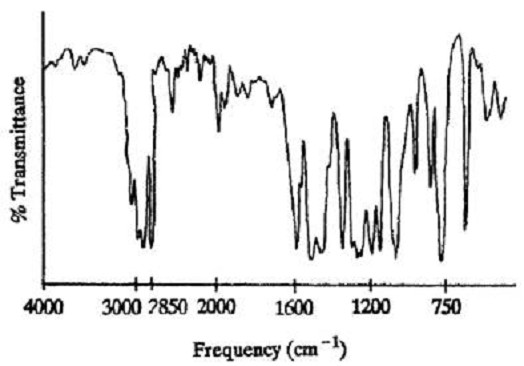 From this spectrum, the student quickly reached a conclusion about the functional group. He then turned his attention to the fingerprint region of the compound, which generally has a complicated pattern of peaks that are determined by the structure of the hydrocarbon portion of a molecule. The student decided that the large peak at 750 cm-1 must indicate that this was a disubstituted aromatic compound. The overlapping set of peaks near 3000 cm-1 includes one peak at 2850 cm-1. What type of functional group could this indicate?
-
A
-
B
-
C
-
D
Reveal answer details
Close answer details
Correct answerA
ExplanationThe peak at 2850 cm-1 is characteristic of the C-H stretch of an alkyl group; in the case, it is attributed to the methyl group of the alkoxide. That's not a terribly exciting functional group, so you might not have known this right off the top of your head, but you could get it by a process of elimination. Choice B, a phenol group, would produce a broad peak somewhere between 3600 and 3200 cm-1, which represents the oxygen-hydrogen bond that is characteristic of all hydroxyl groups and is pretty unmistakable. Since this peak is not present in this spectrum, choice B must be incorrect. Choice C, a carboxyl group, would
also produce a broad peak due to its hydroxyl group; this can be anywhere from 300 to 2400 cm-1, and tends to be even broader than a regular hydroxyl peak. The other peaks near the methoxy group peak are
much too sharp to belong to a carbonyl group; they actually represent the carbon-hydrogen bonds of the aromatic ring. Whenever you look at the IR spectrum of an organic compound, remember that there will always be some kind of peak or peaks between 2800 and 3300 cm-1 that's simply due to the carbon backbone -- alkane, alkene, alkyne, aromatic, or mixtures of all of these. Anyway, getting back to the question, a carboxyl group would also produce another peak associated with the carbon-oxygen double bond, around 1700 cm-1, and that's also lacking in this spectrum, so choice C is definitely wrong. Finally, choice D, an aldehyde group, would have the same peak at about 1700; it would also produce two
characteristic peaks in the range of 2720 and 2820 cm-1, called Fermi doublets. Neither of these are present, so D is also wrong.
One of the basic principles of ecology is that population size is to some extent a function of available food resources. Recent field experiments demonstrate that the interrelationship may be far more complex than hitherto imagined. Specifically, the browsing of certain rodents appears to trigger biochemical reactions in the plants they feed on that help regulate the size of the rodent populations. Two such examples of phytochemical regulation (regulation involving plant chemistry) have been reported so far.
Patricia Berger and her colleagues at the University of Utah have demonstrated that instrumentality of 6- methoxybenzoxazolinone (6-MBOA) in triggering reproductive behavior in the mountain vole (Microtus montanus), a small rodent resembling the field mouse. 6-MBOA forms in young mountain grasses in response to browsing by predators such as voles. The experimenters fed rolled oats coated with 6-MBOA to non-breeding winter populations of Microtus. After three weeks, the sample populations revealed a high incidence of pregnancy among the females and pronounced swelling of the testicles among the males.
Control populations receiving no 6- MBOA revealed no such signs. Since the timing of reproductive effort is crucial to the short-lived vole in an environment in which the onset of vegetative growth can vary by as much as two months, the phytochemical triggering of copulatory behavior in Microtus represents a significant biological adaptation.
A distinct example is reported by John Bryant of the University of Alaska. In this case, plants seem to have adopted a form of phytochemical self-defense against the depredations of the snowshoe hare (Lepus americanus) of Canada and Alaska. Every ten years or so, for reasons that are not entirely understood, the Lepus population swells dramatically. The result is intense overbrowsing of early and mid-successional deciduous trees and shrubs. Bryant has shown that, as if in response, four common boreal forest trees favored by Lepus produce adventitious shoots high in terpene and phenolic resins which effectively discourage hare browsing. He treated mature, non-resinous willow twigs with resinous extracts from the adventitious shoots of other plants and placed treated and untreated bundles at hare feeding stations, weighing them at the end of each day. Bryant found that bundles containing only half the resin concentration of natural twigs were left untouched. The avoidance of these unpalatable resins, he concludes, may play a significant role in the subsequent decline in the Lepus population to its normal level.
These results suggest obvious areas for further research. For example, observational data should be reviewed to see whether the periodic population explosions among the prolific lemming (like the vole and the snowshoe hare, a small rodent in a marginal northern environment) occur during years in which there
is an early onset of vegetative growth; if so, a triggering mechanism similar to that found in the vole may be
involved. Bryant's interpretation of the results of his experiment (lines 46?
8. depends on which of the following assumptions?
-
A
The response of Lepus to resinous substances in nature may be different from its response under experimental conditions.
-
B
The decennial rise in the Lepus population is triggered by an unknown phytochemical response.
-
C
Many Lepus will starve to death rather than eat resinous shoots or change their diet.
-
D
Lepus learns to search for alternative food sources once resinous shoots are encountered.
Reveal answer details
Close answer details
Correct answerC
ExplanationThis question asks for the assumption upon which Bryant's interpretation rests. Bryant concluded from his experiment that avoidance of unpalatable resins in the natural food source of Lepus may play a role in the decline in the Lepus population. He is assuming that hares will not eat anything at all, and thus starve to death, if they find resin on their food. The gist of this is captured in
Choice C. Certainly
Choice A is not an underlying assumption. Bryant's experiment would be worthless if the hares' behavior in the experiment didn't give us an idea of how they behaved in nature.
Choice B is out because Bryant's experiment does not investigate the reasons for the decennial rise in hare population.
Choice D makes no sense because if the hares learned to look for new sources of food once they couldn't eat the resinous shoots, their
population wouldn't decrease.
Which option is not an example of vertical social mobility?
-
A
An individual loses his job and becomes homeless.
-
B
An individual is promoted to a much more powerful position within the same company.
-
C
An individual changes jobs and moves to a similar position at another company.
-
D
All options are examples of vertical social mobility.
Reveal answer details
Close answer details
Correct answerC
ExplanationVertical social mobility involves a change in status. Moving to a similar position would not affect an individual's status.
Several techniques have been developed to determine the order of a reaction. The rate of a reaction cannot be predicted on the basis of the overall equation, but can be predicted on the basis of the rate-determining step. For instance, the following reaction can be broken down into three steps. 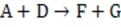 Step 1  (Slow)
Step 2 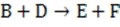 (fast)
Step 3  (fast) Reaction 1
In this case, the first step in the reaction pathway is the rate-determining step. Therefore, the overall rate of the reaction must equal the rate of the first step, k1 [A] where k1 is the rate constant for the first step. (Rate constants of the different steps are denoted by kx , where x is the step number.) In some cases, it is desirable to measure the rate of a reaction in relation to only one species. In a second-order reaction, for instance, a large excess of one species is included in the reaction vessel. Since a relatively small amount of this large concentration is reacted, we assume that the concentration essentially remains unchanged. Such a reaction is called a pseudo first-order reaction. A new rate constant, k', is established, equal to the product of the rate constant of the original reaction, k, and the concentration of the species in excess. This approach is often used to analyze enzyme activity. In some cases, the reaction rate may be dependent on the concentration of a short-lived intermediate. This can happen if the rate-determining step is not the first step. In this case, the concentration of the intermediate must be derived from the equilibrium constant of the preceding step. For redox reactions, the equilibrium can be correlated with the voltage produced by two half-cells by means of the Nernst equation.
This equation states that at any given moment: 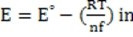  Equation 1
When  Reaction 2
Note: R = 8.314 J/K-mol; F = 9.6485 x 10⁴ C/mol.) In a test of the rate of Step 3 of Reaction 1, a solution is prepared containing a 0.1 M concentration of E and a 50 M concentration of C. The rate is calculated after the reaction has gone 50% to completion.
By what percent will the calculated rate differ from the true rate if we treat the reaction as pseudo first-order?
-
A
-
B
-
C
-
D
Reveal answer details
Close answer details
Correct answerC
ExplanationThis question may seem confusing, but you can find the right answer if you proceed carefully. We know that there is such an excess of reactant C that its concentration is virtually constant. So, as the passage says, we can treat this as a pseudo first-order reaction with respect to E. However, the rate predicted this way will be slightly larger than the true rate because the true concentration of C has been reduced slightly.
In the question, we start with a concentration of E equal to 0.1 mol/L and a concentration of C equal to 50 mol/L. When the reaction has gone 50% toward completion, the concentration of E will be 0.05 mol/L and the concentration of C will be 49.95 mol/L. So the actual rate of the reaction will be k x 0.05 x 49.95, not k x 50 as the pseudo first-order would predict. The percent difference between these two rates is just the amount of the difference divided by the true rate. So we find the difference between the two rates by subtracting the actual rate, (k x 0.05 x 49.95), from the calculated rate, (k x 0.05 x 50). This gives us a difference of k x 0.05 x 0.05. Next, divide this amount by the actual rate, k x 0.05 x 49.95. We can cancel out the first two factors, and we are left with 0.05 divided by 49.95, or approximately 0.001. Now multiply this by 100% to convert to a percent, and we're left with 0.1 %, choice C.
As Alice Echols went on to claim, "Nothing seems to conjure up the 1970s quite so effectively as disco.
Even at the time, critics remarked upon disco's neat encapsulation of that decade's zeitgeist. 'It must be clear by now to everyone with an ear or an eye that this era,' wrote journalist Andrew Kopkind in 1979, 'is already the Disco Years, whether it will be called by that name or not.' A former sixties radical, Kopkind was by turns fascinated, bemused, and appalled by the disco epoch, and he likely imagined that in years to come fellow cultural critics would share his interest. But the seventies have not loomed large in our national imagination, except perhaps as comic relief. For many Americans, these were the forgettable years. That forgettability owes a lot to the 1960s, the outsized decade that dwarfs all others in recent memory.
The sixties will always be remembered for their audacity, whether found in the courage of civil rights protesters who put their bodies on the line or in those doomed but beautiful rock stars who tried breaking through to the other side. By contrast, the seventies seem the decade when nothing, or nothing good, happened - an era memorable for the country's hapless presidents, declining prestige, bad fashions, ludicrous music, and such over-the-top narcissism that Tom Wolfe dubbed it the 'Me Decade.' Before the decade was out, this narrative of decline had become routine. 'After the poetry of the Beatles comes the monotonous bass-pedal bombardment of Donna Summer,' huffed one New York Times writer in 1979. It is a measure of the era's persistent bad press that a recent book challenging this view carries the pleading title Something Happened. As for the sixties, it doesn't matter how much silliness went down, we still invest those times with seismic significance. Take Joe Cocker's performance at Woodstock. His spasmodic thrashing about and his vocals, slurred to the point of incomprehensibility, are something of a joke today. Cringe-inducing though it may be, however, Cocker's performance is never made to stand in for the whole of the sixties. The sixties remain enveloped in the gauzy sentimentalism of what might have been. Yet the iconic image of John Travolta as dance-floor king Tony Manero in white polyester suit, arm thrust to the disco heavens, has come to symbolize the narcissistic imbecility and inconsequentiality of the disco years. Were it not for the Rubaiyat, I, too, might well regard the seventies as a lamentable and regrettable period in American history. The Rubaiyat was, yes, a disco. It was located in the heart of sixtiesland: Ann Arbor, Michigan, the home of the University of Michigan and legendary incubator of radical activism. At the height of the seventies, the town's annual Hash Bash - a smoke-in to reform marijuana laws - was still going strong and so were its two food co-ops-one reform, the other orthodox when it came to selling white foods (that is, rice, sugar, and flour of the white variety). Ann Arbor also had bookstores galore, including the original, wonderful Borders Bookstore, and any number of hippie-ish restaurants and bars such as the Fleetwood Diner, the Del Rio, and the Blind Pig. Musically, it prided itself on its vintage music (it hosted one of the earliest blues festivals), but at heart it was a rock town besotted with Iggy Pop and the Stooges and Sonic's Rendezvous, a band fronted by Patti Smith's future husband, Fred Smith. Its leading music store, Schoolkids' Records, stocked disco, but never played it. All of this is to say that disco-averse Ann Arbor came close to providing something of a safe haven from glitterball culture. The Rubaiyat was no red-velvet-rope disco where fashionista doormen determined who was sufficiently fabulous to gain entry. This would never have worked in a town where down jackets and army surplus were hardly an unusual sight. The club did have some pretensions to classiness, but the mismatched, sagging booths and bordello red defeated occasional efforts at upmarket sophistication. What the Rubaiyat did have were better-than-average speakers, a heterogeneous clientèle, and a weekend cover of three dollars." Echols, A. (2011). Hot stuff: Disco and the Remaking of American Culture. New York: W. W. Norton. What is the author's main argument in this passage about the public perception of disco?
-
A
The 70s were a time when people were becoming apathetic and shallow, so their music reflects this.
-
B
Disco has been made to stand in for the perceived silliness of the era as a whole.
-
C
While the music of the 70s had its foolish moments, the music and culture of the 60s have been overrated and were just as foolish.
-
D
Cultural critics in the 70s believed that their decade would become known as the "Disco Years," but they were proved wrong.
Reveal answer details
Close answer details
Correct answerB
ExplanationThis Foundations of Comprehension question is asking for the main idea in the passage's discussion of disco. The author begins by stating that disco was seen as a key component of 70s culture, and argues that "the seventies have not loomed large in our national imagination, except perhaps as "comic relief," and adds that the image of Tony Manero dancing in Saturday Night Fever has come to stand in for the decade. Thus, the argument is that this era is seen as foolish, and that disco is emblematic of that perceived foolishness.
A - incorrect. The remark from a New York Times writer in 1979 does imply the senselessness and shallowness of the era as reflected by their music. However, the author herself does not argue that people during the 70s were becoming apathetic and shallow, but rather cites this as one of the popular views about the era. (Note: The ability to distinguish the author's argument from those of the other authors quoted in the passage is commonly tested in CARS.)
C - incorrect. The author does argue in paragraph 3 that foolish moments in 60s popular culture have been overlooked, but this is not a main argument and she does not describe the 60s overall as overrated
D - incorrect. The author argues that the 70s have received less attention that might have been expected, but that the association of them with disco has remained.
Question 10
Single choice
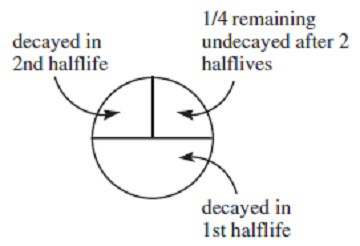
The nuclei of certain unstable isotopes will spontaneously decay, producing a more stable nucleus and releasing a particle or quantity of energy. Alpha decay releases a helium nucleus, beta decay emits an electron, while gamma decay is the emission of a high energy photon. Each type of radioactive decay is characterized, in part, by the half-life of the radioactive material--the time required for half of the nuclei in a sample to undergo decay. Examples of such decays are shown in Figure 1. 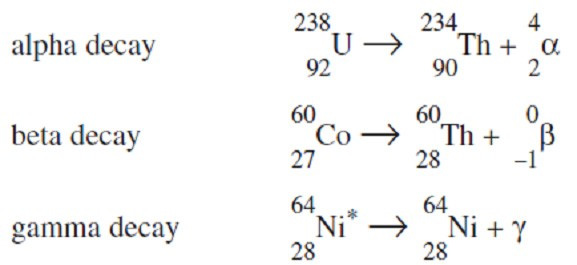 Figure 1
A Geiger counter can be used to detect the decay of radioactive materials. A simple Geiger counter consists of a hollow metal cylinder with a wire along its axis. The cylinder is filled with low pressure argon gas and a high voltage difference is applied between the wire and the cylinder. When alpha, beta, or gamma radiation passes through the cylinder, it interacts with the gas particles and leads to the formation of ions which cause a discharge between the wire and the cylinder. The consequent current may be used to drive a speaker, producing the characteristic clicking sound of the Geiger counter each time a pulse of current occurs. The Geiger counter circuitry is shown in Figure 2. 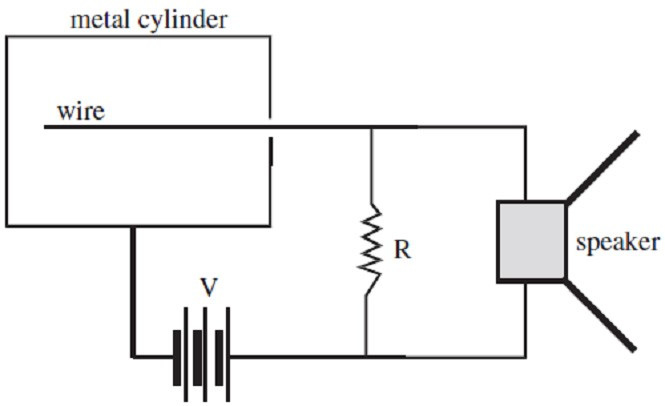 Figure 2 The half-life of 32P is 14.28 days. What fraction of an initially pure sample will have decayed after 28.56 days?
-
A
-
B
-
C
-
D
Reveal answer details
Close answer details
Question 11
Single choice
Alleles are created when a single gene undergoes several distinct mutations. These alleles may have
different dominance relationships with one another; for example, there are three alleles coding for the
human blood groups, the IA, IB, and i alleles. Both the IA and IB alleles are dominant to the i allele, but IA and IB are codominant to each other. A multiple-allele system has recently been discovered in the determination of hair coloring in a species of wild rat. The rats are found to have one of three colors: brown, red, or white. Let B = the gene for brown
hair; b = the gene for red hair; and w = the gene for white hair. The results from nine experimental crosses
are shown below. The males and females in Crosses 1, 2, and 3 are all homozygous for hair color. 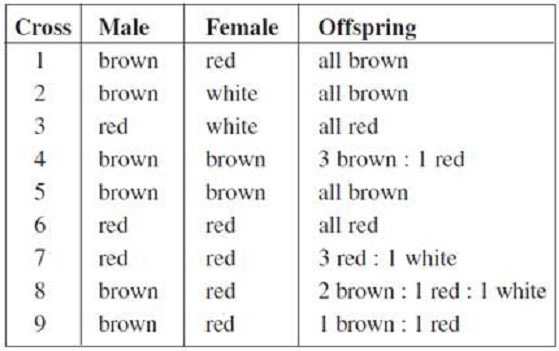 Based on the experimental results, what is the genotype of the male in Cross 6?
-
A
-
B
-
C
-
D
Reveal answer details
Close answer details
Correct answerC
ExplanationCross 6 is between a red male and a red female, and their offspring are 100% red. What we need to do is look at the offspring and work backwards to determine the genotypes of their parents. As we've just determined, there are two possible genotypes that correspond to a red phenotype -- little b, little b and little b, w, since the b allele is dominant to the w allele. With these two genotypes there are three possible types of crosses (you might want to write these down); little b, little b ?little b, little b; little b, little b ?little b, w; and
little b, w ?little b, w. Note that we're not taking into account the gender of the parents. By this I mean we're not bothering with the fact that the little b, little b ?little b, w cross can occur in two different ways -- the male can be little b, little b and the female can be little b, w, and vice versa. All of the offspring of Cross 6 are red, therefore, we can eliminate the possibility of a little b, w ?little b, w cross since 25% of their offspring would be white. So now we're left with the other two crosses, both of which produce 10% red offspring. If the male is little b, little b, then the female can be either little b, little b or little b, w; and if the
male is little b, w then the female must be little b, little b. Hence the male can either be little b, little b or little b, w and the correct answer is choice C.
Question 12
Single choice
One of the basic principles of ecology is that population size is to some extent a function of available food resources. Recent field experiments demonstrate that the interrelationship may be far more complex than hitherto imagined. Specifically, the browsing of certain rodents appears to trigger biochemical reactions in the plants they feed on that help regulate the size of the rodent populations. Two such examples of phytochemical regulation (regulation involving plant chemistry) have been reported so far.
Patricia Berger and her colleagues at the University of Utah have demonstrated that instrumentality of 6- methoxybenzoxazolinone (6-MBOA) in triggering reproductive behavior in the mountain vole (Microtus montanus), a small rodent resembling the field mouse. 6-MBOA forms in young mountain grasses in response to browsing by predators such as voles. The experimenters fed rolled oats coated with 6-MBOA to non-breeding winter populations of Microtus. After three weeks, the sample populations revealed a high incidence of pregnancy among the females and pronounced swelling of the testicles among the males.
Control populations receiving no 6- MBOA revealed no such signs. Since the timing of reproductive effort is crucial to the short-lived vole in an environment in which the onset of vegetative growth can vary by as much as two months, the phytochemical triggering of copulatory behavior in Microtus represents a significant biological adaptation.
A distinct example is reported by John Bryant of the University of Alaska. In this case, plants seem to have adopted a form of phytochemical self-defense against the depredations of the snowshoe hare (Lepus americanus) of Canada and Alaska. Every ten years or so, for reasons that are not entirely understood, the Lepus population swells dramatically. The result is intense overbrowsing of early and mid-successional deciduous trees and shrubs. Bryant has shown that, as if in response, four common boreal forest trees favored by Lepus produce adventitious shoots high in terpene and phenolic resins which effectively discourage hare browsing. He treated mature, non-resinous willow twigs with resinous extracts from the adventitious shoots of other plants and placed treated and untreated bundles at hare feeding stations, weighing them at the end of each day. Bryant found that bundles containing only half the resin concentration of natural twigs were left untouched. The avoidance of these unpalatable resins, he concludes, may play a significant role in the subsequent decline in the Lepus population to its normal level.
These results suggest obvious areas for further research. For example, observational data should be reviewed to see whether the periodic population explosions among the prolific lemming (like the vole and the snowshoe hare, a small rodent in a marginal northern environment) occur during years in which there
is an early onset of vegetative growth; if so, a triggering mechanism similar to that found in the vole may be
involved. The experiments described in the passage involved all of the following EXCEPT:
-
A
measuring physiological changes in reproductive organs after a specific compound was ingested.
-
B
testing whether breeding behavior could be induced in normally non-breeding animals by a change in diet.
-
C
measuring an animal's consumption of treated and untreated foods.
-
D
measuring changes in the growth cycle 6-MBOAproducing mountain grasses.
Reveal answer details
Close answer details
Correct answerD
ExplanationIn this All-Esxcept question, you have to identify the choice that is not an element of either experiment.
Choice A is mentioned in the middle of Paragraph 2 as part of the mountain vole experiment.
Choice B was part of that experiment as well, as indicated at the beginning of Paragraph 2. Measuring consumption of treated and untreated foods (Choice C) was the method used in the experiment on hares.
Choice D is the one choice that was not an element of either experiment discussed in the passage. The passage does discuss the use of a control group in the 6-MBOA experiment, but this experiment was not measuring changes in the birth rate of the animals, so D is the correct answer.
Question 13
Single choice
Each of the following are aspects of the McDonaldization of Society EXCEPT:
-
A
Rationalization of decisions into cost/benefit analysis structures and away from traditional modes of thinking
-
B
Bureaucratic organization that formalizes well-establish division of labor and impersonal structures
-
C
A dissolution of hierarchical modes of authority into collaborative team-based decision protocols
-
D
An intense effort on achieving sameness across diverse markets
Reveal answer details
Close answer details
Correct answerC
ExplanationSociologist George Ritzer coined the term McDonaldization to describe the modern form of the social phenomenon of rationalization discussed by Max Weber at the end of the nineteenth century. The rationalization of society involves a shift in social structures towards rational means/ends tests (like choice A) a focus on efficiency and formal methods of social control. The classic example of a rational social
structure is bureaucracy (as described in B) that aims to create a uniformity of outcomes (as described in D). The correct answer, (C) is not a part of McDonaldization, which would focus on strongly hierarchical methods of control.
Question 14
Single choice
Which of the following molecules will stop being produced first when oxygen is no longer supplied to the cell?
-
A
-
B
-
C
-
D
Reveal answer details
Close answer details
Correct answerC
ExplanationThis question is testing your understanding of the utilization of oxygen in the production of metabolic energy. Under aerobic conditions, oxygen serves as the final electron accepter in the electron transport chain, which yields water and ATP as final products. In the absence of oxygen, the cell switches from aerobic respiration to anaerobic respiration. As a result, the ETC chain will stop functioning and water will no longer be produced. Oxaloacetate (choice A), an intermediate in the citric acid cycle, is controlled by negative feedback from the ETC. Therefore, the production of oxaloacetate will eventually stop, but the production of water will stop first. Thus, C is the best answer. Without ATP production occurring via aerobic respiration, anaerobic respiration will become the source of ATP for the cell. As a result, glycolysis will increase in order to meet the energy requirements of the cell resulting in an increase in pyruvate (choice B), a product of glycolysis.
Question 15
Single choice
The lining of the digestive tract and the respiratory tract develops from which germ layer? I. Endoderm
II. Mesoderm
III. Ectoderm
-
A
-
B
-
C
-
D
Reveal answer details
Close answer details
Correct answerA
ExplanationThe lining of the digestive tract and the respiratory tract develops from the endoderm. As a rule of thumb for the MCAT, think of the fetus developing from a tube. Skin and nervous systems develop from ectoderm (outside of tube), digestive tract and respiratory tract from endoderm (inside of tube), and cardiovascular, skeletal, and muscle tissues develop from mesoderm (in-between outside and inside of tube). On MCAT questions, tissues will almost always develop from one germ-layer only.
Question 16
Single choice
Our sense of smell is arguably the most powerful of our five senses, but it also the most elusive. It plays a vital yet mysterious role in our lives. Olfaction is rooted in the same part of the brain that regulates such essential functions as body metabolism, reaction to stress, and appetite. But smell relates to more than physiological function: its sensations are intimately tied to memory, emotion, and sexual desire. Smell seems to lie somewhere beyond the realm of conscious thought, where, intertwined with emotion and experience, it shapes both our conscious and unconscious lives. The peculiar intimacy of this sense may be related to certain anatomical features. Smell reaches the brain more directly than do sensations of touch, sight, or sound. When we inhale a particular odor, air containing volatile odiferous molecules is warmed and humidified as it flows over specialized bones in the nose called turbinates. As odor molecules land on the olfactory nerves, these nerves fire a message to the brain. Thus olfactory neurons render a direct path between the stimulus provided by the outside environment and the brain, allowing us to rapidly perceive odors ranging from alluring fragrances to noisome fumes. Certain scents, such as jasmine, are almost universally appealing, while others, like hydrogen sulfide (which emits a stench reminiscent of rotten eggs), are usually considered repellent, but most odors evoke different reactions from person to person, sometimes triggering strong emotional states or resurrecting seemingly forgotten memories. Scientists surmise that the reason why we have highly personal associations with smells is related to the proximity of the olfactory and emotional centers of our brain.
Although the precise connection between emotion and olfaction remains a mystery, it is clear that emotion, memory, and smell are all rooted in a part of the brain called the limbic lobe. Even though we are not always conscious of the presence of odors, and are often unable to either articulate or remember their unique characteristics, our brains always register their existence. In fact, such a large amount of human brain tissue is devoted to smell that scientists surmise the role of this sense must be profound. Moreover, neurobiological research suggests that smell must have an important function because olfactory neurons can regenerate themselves, unlike most other nerve cells. The importance of this sense is further supported by the fact that animals experimentally denied the olfactory sense do not develop full and normal brain function. The significance of olfaction is much clearer in animals than in human beings. Animal behavior is strongly influenced by pheromones, which are odors that induce psychological or behavioral changes and often provide a means of communicating within a species. These chemical messages, often a complex blend of compounds, are of vital importance to the insect world. Honeybees, for example, organize their societies through odor: the queen bee exudes an odor that both inhibits worker bees from laying eggs and draws drones to her when she is ready to mate. Mammals are also guided by their sense of smell. Through odors emitted by urine and scent glands, many animals maintain their territories, identify one another, signal alarm, and attract mates. Although our olfactory acuity can't rival that of other animal species, human beings are also guided by smell. Before the advent of sophisticated laboratory techniques, physicians depended on their noses to help diagnose illness. A century ago, it was common medical knowledge that certain bacterial infections carry the musty odor of wine, that typhoid smells like baking bread, and that yellow fever smells like meat.
While medical science has moved away from such subjective diagnostic methods, in everyday life we continue to rely on our sense of small, knowingly or not, to guide us. It can be inferred from the passage that the emotional element of human olfaction would be better understood through investigation into:
-
A
the components and functions of the limbic lobe.
-
B
how pheromones regulate social behavior and organization.
-
C
the composition of certain highly evocative odors.
-
D
the pathway between outside environment and olfactory nerves.
Reveal answer details
Close answer details
Correct answerA
ExplanationThis asks the reader to choose a course of investigation that might lead to better understanding of the emotional element of human olfaction. Emotion and olfaction are discussed in the third paragraph. There it is stated that the "precise connection between emotion and olfaction remains a mystery" but that "it is clear that emotion, memory, and smell are all rooted in a part of the brain called the limbic lobe." From that it can be inferred that the role of olfaction in emotion would be better understood through investigation into the workings of the limbic lobe, or choice (A). Choice (C) suggests that investigation into the composition of highly evocative odors would shed light on human olfaction. But there's nothing in the passage that implies that the composition of smells effects our perception of them. So, one cannot infer choice (C) from the passage, and it's incorrect. Choice (B) states that the emotional element of human olfaction would be better understood through investigation into pheromones. However, the passage mentions pheromones in the fifth paragraph in considering animal, not human, olfaction. There's no connection made in the passage between pheromones and human olfaction, so that study of pheromones would not help scientists understand the emotional element of human olfaction. Choice (D) suggests that study of the pathway between outside environment and olfactory nerves would be helpful to our understanding of emotions and smell. The last sentence of the second paragraph states that olfactory neurons render a direct path between stimulus and brain. From this the author notes that smells reach the brain almost directly. But, the author say or imply that this anatomical fact has anything to do with the emotional aspect of olfaction. So, choice (D) is also wrong.
Question 17
Single choice
Which titration curve would be produced by titrating 25 mL of a 0.1 N weak base with a 0.1 N strong acid? 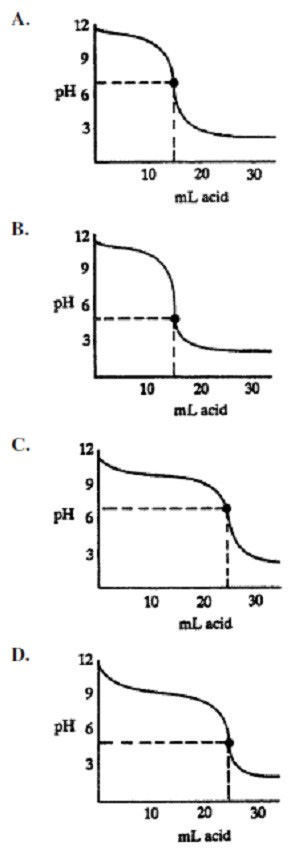
-
A
-
B
-
C
-
D
Reveal answer details
Close answer details
Correct answerD
ExplanationIn this question you are asked about the titration of a weak base with a strong acid. The points marked by the dotted lines in each graph are the equivalence points. These are the points at which the acid has been totally neutralized by the added base. To decide which of these graphs is accurate, there are two things you need to know. First, you need to decide how much of a weak base is required to neutralize a strong acid. Second, you must know what the pH will be after the acid has been completely neutralized. First, let's consider the amount of strong acid needed to neutralize a weak base. The question tells you that both the weak base and the strong acid are 0.1
N. Since the weak base is only partially dissociated, the actual hydroxide ion concentration of the base will be considerably lower than the hydrogen ion concentration of the strong acid. For this reason, it may seem likely that the volume of acid that you would have to add to the base to bring about neutralization would be lower than the volume of the base you started with. In choices A and B, only 15 mL of acid are added to bring 25 mL of base to the equivalence point. However, the problem with this line of reasoning is that as soon as the small amount of free hydroxide in the basic solution has been neutralized, more of the base will dissociate and there will be more hydroxide. As you continue to add acid, eventually all of the base will dissociate. Thus, you'll end up having to add enough acid to neutralize all of the hydroxide in the base, just as if it were a strong base. Since the number of equivalents are equal in this case due to the equal normalities, the neutralization of 25 mL of weak base will require a full 25 mL of strong acid and that means that you can eliminate choices A and
B. Next, you'll have to decide what the pH of the neutralized solution will be. When the base has been completely neutralized, a solution of salt water remains. But the cation, since it comes from a weak base, has a strong tendency to recombine with hydroxide ions from the water. The anion, since it comes from a strong acid,
remains completely dissociated. This means that the process of hydrolysis takes place; the cation combines with the hydroxide from water molecules while the resulting hydrogen ions remain free in solution. Thus, a neutralized solution formed from a weak base and a strong acid will be slightly acidic and choice D is correct.
Question 18
Single choice
Many nutrients required by plants exist in soil as basic cations:  A soil's cation-exchange capacity is a measure of its ability to adsorb these basic cations as well as exchangeable hydrogen and aluminum ions. The cation-exchange capacity of soil is derived from two sources: small clay particles called micelles consisting of alternating layers of alumina and silica crystals, and organic colloids.  Replacement of + and + by other cations of lower valence creates a net negative charge within the inner layers of the micelles. This is called the soil's permanent charge. For example, replacement of an atom of aluminum by calcium within a section where the net charge was previously zero, as shown below, produces a net charge of ?, to which other cations can become adsorbed.  Figure 1 A pH-dependent charge develops when hydrogen dissociates from hydroxyl moieties on the outer surfaces of the clay micelles. This leaves negatively-charged oxygen atoms to which basic cations may adsorb.
Likewise, a large pH-dependent charge develops when hydrogen dissociates from carboxylic acids and phenols in organic matter.
In most clays, permanent charges brought about by substitution account for anywhere from half to nearly all of the total cation-exchange capacity. Soils very high in organic matter contain primarily pH-dependent charges. In a research study, three samples of soil were leached with a 1 N solution of neutral KCl, and the displaced A13+ and basic cations measured. The sample was then leached again with a buffered solution of BaCl2 and triethanolamine at pH 8.2, and the displaced H+ measured. Table 1 gives results for three soils tested by this method.
Table 1 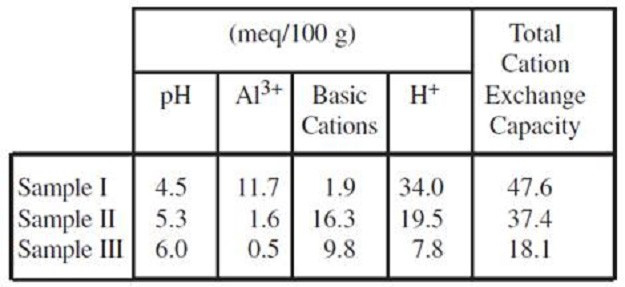 Due to the buffering effect of the soil's cation exchange capacity, just measuring the soil solution's pH will not indicate how much base is needed to change the soil pH. In another experiment, measured amounts of acid and base were added to 10-gram samples of well-mixed soil that had been collected from various locations in a field. The volumes of the samples were equalized by adding water. The results were recorded in Figure 2. Figure 2. 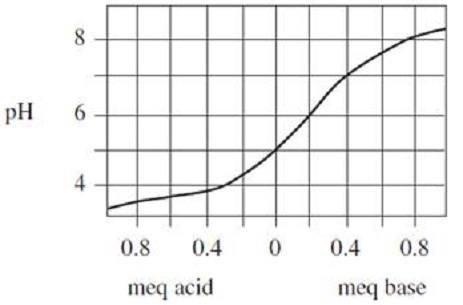 Which soil from Table 1 most likely has the highest percentage of organic matter?
-
A
-
B
-
C
-
D
Reveal answer details
Close answer details
Correct answerA
ExplanationAccording to the passage, soils that are high in organic matter contain primarily pH-dependent charges.
These are formed when hydrogen dissociates from the hydroxyl moieties of organic acids or alcohols. The pH-dependent charge is represented in the table by the column for H+, which was removed by leaching with a basic solution. When looking at the table, we see that sample I has far more than half its ion exchange capacity accounted for by pH-dependent charges. Samples II and III have roughly half of their total ion exchange capacity accounted for by pH-dependent charges. Therefore, sample I probably has the highest percentage of organic matter in it, choice A.
Question 19
Single choice
Alleles are created when a single gene undergoes several distinct mutations. These alleles may have
different dominance relationships with one another; for example, there are three alleles coding for the
human blood groups, the IA, IB, and i alleles. Both the IA and IB alleles are dominant to the i allele, but IA and IB are codominant to each other. A multiple-allele system has recently been discovered in the determination of hair coloring in a species of wild rat. The rats are found to have one of three colors: brown, red, or white. Let B = the gene for brown
hair; b = the gene for red hair; and w = the gene for white hair. The results from nine experimental crosses are shown below. The males and females in Crosses 1, 2, and 3 are all homozygous for hair color. 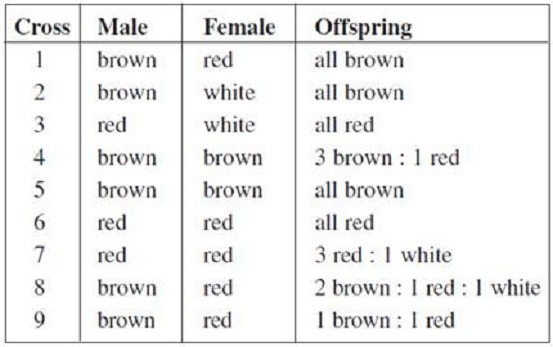 If a large number of brown offspring from Cross 8 are mated with each other, what is the expected percentage of white offspring?
-
A
-
B
-
C
-
D
Reveal answer details
Close answer details
Correct answerA
ExplanationCross 8 is between a brown male and a red female. The fact that 25% of their offspring are white indicates that both parents are heterozygotes, since white fur is a recessive trait. This means that the genotype of the brown male must be big B, w, and the genotype of the red female must be little b, w. Now we need to figure out the genotypes of the brown offspring. A cross between this brown male and red female results in 25% ww offspring, which are white; 25% little b, w, which are red; 25% big B, w, which are brown; and 25%
big B, little b, which are brown. So there are two different brown genotypes in the offspring - big B, little b and big B, w. If a large number of these brown offspring are mated with each other there are four different crosses possible, and you might want to write them down to avoid confusion; (1) big B, little b x big B, little
b; (2) big B, w x big B, w; (3) big B, little b x big B, w; and don't forget (4) big B, w x big B, little b - because this is the second way that the third cross can occur. Now we need to figure out what percentage of the offspring produced in these crosses will have white fur. Well, if we work out the Punnett squares, we find that neither the first, the third, nor the fourth crosses yield any white rats. On the other hand, the
second cross, big B, w x big B, w, yields 25% white offspring. But you're not through yet; 25% is not your answer. You have to take into account that only one fourth of the total number of possible crosses between two brown rats yields 25% white offspring. Well, one fourth of 25% is 6.25%, which is the correct answer, choice A.
Question 20
Single choice
Which of the following reactants should be used to form the product shown below? 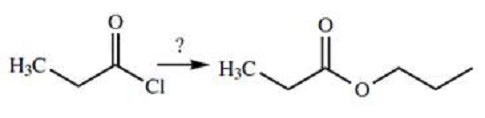
-
A
-
B
-
C
-
D
Reveal answer details
Close answer details
Correct answerB
ExplanationThis question is primarily testing your knowledge of nomenclature. Reacting an alkanoyl halide with an alcohol will lead to formation of an ester, as shown. Note that we have added 3 carbons to our molecule, and so the unknown reactant must have three carbons. Propanol is the only three carbon choice, and the only alcohol.
Question 21
Single choice
One distinguishing factor in a redox titration, as opposed to other titrations, is that it involves:
-
A
the determining of an unknown concentration in one reactant.
-
B
the quantitative analysis of a substance.
-
C
the use of a known concentration.
-
D
the use of oxidation and reduction.
Reveal answer details
Close answer details
Correct answerD
ExplanationThis is the only answer choice that is unique to a redox titration. The other choices are common to various types of titrations.
Question 22
Single choice
How will the gravitational force between two objects change if the distance between them is doubled?
-
A
-
B
It will decrease by a factor of 4.
-
C
It will increase by a factor of 4.
-
D
Reveal answer details
Close answer details
Correct answerB
ExplanationThe gravitational force between two objects is inversely proportional to the distance between them squared.
Question 23
Single choice
The percentage of arthropods in total animal kingdom is:
-
A
-
B
-
C
-
D
Reveal answer details
Close answer details
Question 24
Single choice
In the early nineteenth century a large number of communal experiments, both secular and religious, sprang up in the northeastern United States. Perhaps the most famous secular commune was Brook Farm, founded by transcendentalists George Ripley and William H. Channing to promote the pursuit of leisure and culture through the proper application of time and labor. Its members (among the more notable were Nathaniel Hawthorne and Margaret Fuller) pursued field labor by day, art and philosophy by night.
For a time the system worked so well that two afternoons a week were set aside for leisure and Brook Farm began outcompeting local farmers at the produce market. But by nature the Farm's members were
thinkers, not workers; despite their success they remained mainly interested in the theoretical and
philosophical implications of the experiment. Thus, when a devastating fire brought the community considerable financial burdens in its fifth year, the members felt little compunction about closing shop and returning to their comfortable Boston homes. One of the most notable religious utopias was the Oneida community. Its founder, John Humphrey Noyes, believed that Christ's second coming had already occurred and that everyone alive was favored by Divine grace, which Noyes saw as an imperative to live a better life. Perhaps surprisingly, the Oneidans embraced industry and commerce, achieving success in fruit packing, trap making, and silk thread winding. They owned everything communally, and this principle extended to each other. The Oneidans saw monogamy as a selfish act and asserted that the men and women of the community were united in
one "complex" marriage; sex between any two consenting members was perfectly acceptable. The
Oneidans maintained order solely through "criticism"--anyone acting out of line was made to stand before the other members and hear his or her faults recounted. Oneida remained viable for some thirty years, until the leadership devolved on Noyes' son, an agnostic. The old religious fervor died out, and the dream degenerated into a joint stock company.
Doubtless the most successful communalists were the Shakers, so called for the early propensity to
tremble ecstatically during religious worship. Their guiding light, Mother Ann, espoused four key principles:
Virgin Purity, Christian Communism, Confession, and Separation from the World. Though the Shakers were less adamant on the last point--maintaining social relations and some commerce with heir neighbors--they insisted on the other three, and renounced both personal property and sex. Men and women lived in a single large "Unitary Dwelling" and were considered complete equals, but they occupied separate wings and could speak together only if a third person were present. Despite their religious strictness, Shakers were known as simple, sincere, intelligent people, healthy and long-lived, producers of lovely books and hymns, and of furniture still prized for its quality and durability. In their eyday, six thousand Shakers lived in fifty-eight separate "families" throughout the Northeast. Later their celibacy, combined with their strict discipline, led to a decline in numbers, but even today a small number of elderly Shakers in two communities in Maine and New Hampshire continue to keep the faith. The passage implies that the end of the Brook Farm experiment was probably brought on by:
-
A
faltering commitment in the face of hardship.
-
B
a failure to attract members of sufficient intellect or ability.
-
C
the completion of the community's aims.
-
D
the incompetence of philosophers at field labor.
Reveal answer details
Close answer details
Correct answerA
ExplanationThis is an inference question regarding Brooke Farm's demise. The last half of the first paragraph suggests that Brook Farm failed because the Farm's members, although interested in the theoretical aspects of their community, were not committed to maintaining the Farm in the face of hardship, choice (A). The first paragraph does suggest that Brook Farm was successful in meeting its aims, but it does not imply that such success led to the end of the experiment, as choice (C) suggests. You probably know that Margaret Fuller and Nathaniel Hawthorne were major American intellectuals of the 19th century; even if you don't, you are told that these two are among the Farm's more notable members. Thus, you can infer that Brook Farm was indeed able to attract members of sufficient intellect or ability, so (B) is wrong.
Although the author notes that Brook Farm's members were thinkers, not workers, the fact that the members had more leisure than expected and outcompeted local farmers suggests that the Farm's philosophermembers were competent field hands; therefore, (D) is incorrect.
Question 25
Single choice
The simple harmonic motion of a mass suspended from vertical springs is investigated in two experiments.
The springs used in both experiments have a spring constant k and a natural length L0. The material used to make the springs has a Young's modulus of 2 x 10¹¹ Pa. In the first experiment a mass m is suspended from a spring. The mass stretches the spring to a new length L, called the equilibrium length. In the second experiment the mass m is suspended from two identical springs as shown in Figure 2 below.
When the mass m is in equilibrium, each spring is stretched from its natural length by the same amount xe. In both experiments the masses of the springs are negligible, and the elastic limits of the springs are never exceeded. 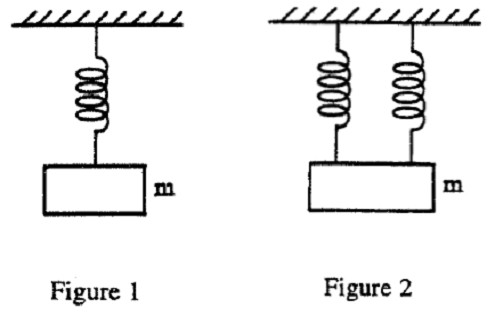 In the first experiment, what is the mass of the object hanging from the spring?
-
A
-
B
-
C
-
D
Reveal answer details
Close answer details
Question 26
Single choice
Although we know more about so-called Neanderthal men than about any other early population, their exact relation to present-day human beings remains unclear. Long considered sub-human, Neanderthals are now known to have been fully human. They walked erect, used fire, and made a variety of tools. They lived partly in the open and partly in caves. The Neanderthals are even thought to have been the first humans to bury their dead, a practice which has been interpreted as demonstrating the capacity for religious and abstract thought.
The first monograph on Neanderthal anatomy, published by Marcelling Boule in 1913, presented a somewhat misleading picture. Boule took the Neanderthals' lowvaulted cranium and prominent brow ridges, their heavy musculature, and the apparent overdevelopment of certain joints as evidence of a prehuman physical appearance. In postulating for the Neanderthal such "primitive" characteristics as a stooping, bent-kneed posture, a rolling gait, and a forward-hanging head, Boule was a victim of the rudimentary state of anatomical science. Modern anthropologists recognize the Neanderthal bone structure as that of a creature whose bodily orientation and capacities were very similar to those of present-day human beings. The differences in the size and shape of the limbs, shoulder blades, and other body parts are simply adaptations which were necessary to handle the Neanderthal's far more massive musculature. Current taxonomy considers the Neanderthals to have been fully human and thus designates them not as a separate species, Homo neanderthalensis, but as a subspecies of Homo sapiens: Homo sapiens neanderthalensis. The rise of the Neanderthals occurred over some 100,000 years -- a sufficient period to account for evolution of the specifically Neanderthal characteristics through free interbreeding over a broad geographical range. Fossil evidence suggests that the Neanderthals inhabited a vast area from Europe through the Middle East and into Central Asia from approximately 100,000 years ago until 35,000 years ago. Then, within a brief period of five to ten thousand years, they disappeared. Modern human, not found in Europe prior to about 33,000 years ago, thenceforth became the sole inhabitants of the region. Anthropologists do not believe that the Neanderthals evolved into modern human beings.
Despite the similarities between Neanderthal and modern human anatomy, the differences are great enough that, among a population as broad-ranging as the Neanderthals, such an evolution could not have taken place in a period of only ten thousand years. Furthermore, no fossils of types intermediate between Neanderthals and moderns have been found.
A major alternative hypothesis, advanced by E. Trinkaus and W.W. Howells, is that of localized evolution.
Within a geographically concentrated population, free interbreeding could have produced far more pronounced genetic effects within a shorter time. Thus modern human could have evolved relatively quickly, either from Neanderthals or from some other ancestral type, in isolation from the main Neanderthal population. These humans may have migrated throughout the Neanderthal areas, where they displaced or absorbed the original inhabitants. One hypothesis suggests that these "modern" humans immigrated to Europe from the Middle East. No satisfactory explanation of why modern human beings replaced the Neanderthals has yet been found. Some have speculated that the modern humans wiped out
the Neanderthals in warfare; however, there exists no archeological evidence of a hostile encounter. It has
also been suggested that the Neanderthals failed to adapt to the onset of the last Ice Age; yet their thick
bodies should have been heat-conserving and thus well-adapted to extreme cold. Finally, it is possible that the improved tools and hunting implements of the late Neanderthal period made the powerful Neanderthal physique less of an advantage than it had been previously. At the same time, the Neanderthals' need for a heavy diet to sustain this physique put them at a disadvantage compared to the less massive moderns. If this was the case, then it was improvements in human culture -- including some introduced by the Neanderthals themselves -- that made the Neanderthal obsolete. It can be inferred from the passage that the rate of evolution is directly related to the:
-
A
concentration of the species population.
-
B
anatomical features of the species.
-
C
rate of environmental change.
-
D
adaptive capabilities of the species.
Reveal answer details
Close answer details
Correct answerA
ExplanationAccording to the fourth paragraph, interbreeding in a concentrated population can produce more pronounced genetic effects in a shorter period of time than interbreeding in a sparser population would.
From this it can be inferred that the rate of evolution is directly related to the concentration of the species population (Choice A).
Changes in the anatomical features of a species (Choice B) may be a way to measure the rate of evolution, but anatomical features do not directly affect the rate of evolution. The rate of environmental change (Choice C) and the adaptive capabilities of a species (Choice D) may both affect a species' survival, but they too do not speed evolution up in the way that concentrating the population can.
Question 27
Single choice
The James-Lange Theory of Emotion proposes that:
-
A
a person's thoughts about physiological reactions determine emotions.
-
B
physiological changes have no influence on emotions.
-
C
emotions cause physiological reactions.
-
D
physiological changes influence emotions.
Reveal answer details
Close answer details
Correct answerD
ExplanationThe named theory states that physiological changes can have an effect on one's emotions. Another theory ?the Schachter and Singer one ?suggests that it is our thinking about these changes that produces emotions.
Question 28
Single choice
Yeast can be used to covert simple sugars into:
-
A
ethanoic acid and oxygen.
-
B
-
C
ethanol and carbon dioxide.
-
D
starch and carbon dioxide.
Reveal answer details
Close answer details
Question 29
Single choice
(1) Fluorescent proteins are found in bioluminescent sea creatures, such as jellyfish. (2) In 1969, the green fluorescent protein was discovered and, since then, prolific research has resulted in the discovery and development of many new fluorescent proteins. (3) Fluorescent proteins can be expressed in cells, making them easily visible under a microscope. (4) In fact, the use of fluorescent proteins revolutionized bio-imaging because the inherently natural nature meant that they could be incorporated into living cells with no deadly toxic effects. (5) Numerous other scientific and medical applications also exploit the unique properties of fluorescent proteins, which is why they were the subject of the 2008 Nobel Prize for Chemistry. (6) However, the science behind fluorescent proteins is still not fully understood, and there are many more avenues for exploration. What is implied by the fourth sentence of the passage?
-
A
The discovery of fluorescent proteins was not important in the field of bio-imaging.
-
B
Fluorescent proteins kill living cells.
-
C
Bio-imaging in living cells has always been possible.
-
D
Bio-imaging in living cells was not possible before the discovery of fluorescent proteins.
Reveal answer details
Close answer details
Correct answerD
ExplanationThe sentence states that bio-imaging was revolutionized because fluorescent proteins could be put into living cells without deadly toxic effects. The word "revolutionized" is very powerful and the sentence implies that "deadly toxic effects" prevented bio-imaging in live cells before fluorescent proteins were discovered.
Question 30
Single choice
Due to ever-increasing paranoia about the transmission of hepatitis and AIDS via blood transfusions and the frequent difficulty of procuring matching blood donors for patients, researchers have been working at a feverish pace to produce disease-free and easy-to-use blood substitutes. The difficulty most synthetic blood researches have had is in formulating a substance that combines qualities of sterility, high capacity for carrying oxygen to body tissues, and versatility within the human body. Three major substitute
technologies have been developed to date; each has certain advantages and shortcomings. "Red blood," the first of the blood substitute technologies, is derived from hemoglobin which has been recycled from old, dead, or worn-out red blood cells and modified so that it can carry oxygen outside the red blood cell. Hemoglobin, a complex protein, is the blood's natural oxygen carrier and is attractive to scientists for use in synthetic blood because of its oxygen-carrying capacity. However, hemoglobin can sometimes constitute a two-fold threat to humans when it is extracted from the red blood cell and introduced to the body in its naked form. First, hemoglobin molecules are rarely sterile and often remain contaminated by viruses to which they were exposed in the cell. Second, naked hemoglobin is extremely dangerous to the kidneys, causing blood flow at these organs to shut down and leading, ultimately, to renal failure. Additional problems arise from the fact that hemoglobin is adapted to operate optimally within the intricate environment of the red blood cell. Stripped of the protection of the cell, the hemoglobin molecule tends to suffer breakdown within several hours. Although modification has produced more durable hemoglobin molecules which do not cause renal failure, undesired side effects continue to plague patients and hinder the development of hemoglobin-based blood substitutes. Another synthetic blood alternative, "white blood," is dependent on laboratory synthesized chemicals called perfluorocarbons (PFCs). Unlike blood, PFCs are clear oil like liquids, yet they are capable of absorbing quantities of oxygen up to 50% of their volume, enough of an oxygen carrying potential for oxygen-dependent organisms to survive submerged in the liquid for hours by "breathing" it. Although PFCs imitate real blood by effectively absorbing oxygen, scientists are primarily interested in them as constituents of blood substitutes because they are inherently safer to use than hemoglobin-based substitutes. PFCs do not interact with any chemicals in the body and can be manufactured in near-perfect sterility. The primary pitfall of PFCs is in their tendency to form globules in plasma that can block
circulation. Dissolving PFCs in solution can mitigate globulation; however, this procedure also seriously
curtails the PFCs' oxygen capacity. The final and perhaps most ambitious attempt to form a blood substitute involves the synthesis of a modified version of human hemoglobin by genetically-altered bacteria. Fortunately, this synthetic hemoglobin seems to closely mimic the qualities of sterility, and durability outside the cellular environment, and the oxygen-carrying efficiency of blood. Furthermore, researchers have found that if modified hemoglobin genes are added to bacterial DNA, the bacteria will produce the desired product in copious quantities. This procedure is extremely challenging, however, because it requires the isolation of the human gene for the production of hemoglobin, and the modification of the gene to express a molecule that works without support from a living cell. While all the above technologies have serious drawbacks and difficulties, work to perfect an ideal blood substitute continues. Scientists hope that in the near future safe synthetic blood transfusions may ease blood shortages and resolve the unavailability of various blood types. According to the passage, all of the following are reasons for research into the development of synthetic bloods EXCEPT:
-
A
dangerous diseases can be transmitted by conventional blood transfusions.
-
B
synthetic bloods have greater oxygen-carrying capacities than naturally-produced human blood.
-
C
donor blood is sometimes in short supply.
-
D
certain blood types are not readily available.
Reveal answer details
Close answer details
Correct answerB
ExplanationThis requires the recollection of the reasons for synthetic blood research, discussed in the first paragraph of the passage, and infer which of the answer choices is not a reason for such research. Choice (A) suggests that patients fear the transmission of dangerous diseases such as AIDS, via blood transfusions.
This fear is mentioned in the opening sentence of the passage as one of the primary reasons for the desire to develop clean, sterile, blood substitutes. Choice (A), therefore, is a reasons for the development of synthetic bloods, and does not answer this question stem correctly. Choices (C) and (D) mention different aspects of the problem of procuring matching blood donors for patients, also described in the opening sentence as one of the reasons for the development of synthetic bloods. (C) and (D), then, do not correctly complete the question stem either. Choice (B) suggests that synthetic bloods have greater oxygen-carrying capacities than naturally-produced human blood. This is not supported anywhere in the passage.
The passage emphasizes that synthetic bloods should have high oxygen-carrying capacities, but there is no suggestion that synthetic bloods have higher oxygen-carrying capacities than blood.
Question 31
Single choice
As Alice Echols went on to claim, "Nothing seems to conjure up the 1970s quite so effectively as disco.
Even at the time, critics remarked upon disco's neat encapsulation of that decade's zeitgeist. `It must be
clear by now to everyone with an ear or an eye that this era,' wrote journalist Andrew Kopkind in 1979, `is
already the Disco Years, whether it will be called by that name or not.' A former sixties radical, Kopkind was by turns fascinated, bemused, and appalled by the disco epoch, and he likely imagined that in years to come fellow cultural critics would share his interest. But the seventies have not loomed large in our national imagination, except perhaps as comic relief. For many Americans, these were the forgettable years. That forgettability owes a lot to the 1960s, the outsized decade that dwarfs all others in recent memory.
The sixties will always be remembered for their audacity, whether found in the courage of civil rights protesters who put their bodies on the line or in those doomed but beautiful rock stars who tried breaking through to the other side. By contrast, the seventies seem the decade when nothing, or nothing good, happened ?an era memorable for the country's hapless presidents, declining prestige, bad fashions,
ludicrous music, and such over-the-top narcissism that Tom Wolfe dubbed it the `Me Decade.' Before the
decade was out, this narrative of decline had become routine. `After the poetry of the Beatles comes the
monotonous bass-pedal bombardment of Donna Summer,' huffed one New York Times writer in 1979. It is a measure of the era's persistent bad press that a recent book challenging this view carries the pleading title Something Happened. As for the sixties, it doesn't matter how much silliness went down, we still invest those times with seismic significance. Take Joe Cocker's performance at Woodstock. His spasmodic thrashing about and his vocals, slurred to the point of incomprehensibility, are something of a joke today. Cringe-inducing though it may be, however, Cocker's performance is never made to stand in for the whole of the sixties. The sixties remain enveloped in the gauzy sentimentalism of what might have been. Yet the iconic image of John Travolta as dance-floor king Tony Manero in white polyester suit, arm thrust to the disco heavens, has come to symbolize the narcissistic imbecility and inconsequentiality of the disco years. Were it not for the Rubaiyat, I, too, might well regard the seventies as a lamentable and regrettable period in American history. The Rubaiyat was, yes, a disco. It was located in the heart of sixtiesland: Ann Arbor, Michigan, the home of the University of Michigan and legendary incubator of radical activism. At the height of the seventies, the town's annual Hash Bash ?a smoke-in to reform marijuana laws ?was still going strong and so were its two food co-ops-one reform, the other orthodox when it came to selling white foods (that is, rice, sugar, and flour of the white variety). Ann Arbor also had bookstores galore, including the original, wonderful Borders Bookstore, and any number of hippie-ish restaurants and bars such as the Fleetwood Diner, the Del Rio, and the Blind Pig. Musically, it prided itself on its vintage music (it hosted one of the earliest blues festivals), but at heart it was a rock town besotted with Iggy Pop and the Stooges and Sonic's Rendezvous, a band fronted by Patti Smith's future husband, Fred Smith. Its leading music store, Schoolkids' Records, stocked disco, but never played it. All of this is to say that disco-averse Ann Arbor came close to providing something of a safe haven from glitterball culture. The Rubaiyat was no red-velvet-rope disco where fashionista doormen determined who was sufficiently fabulous to gain entry. This would never have worked in a town where down jackets and army surplus were hardly an unusual sight. The club did have some pretensions to classiness, but the mismatched, sagging booths and bordello red defeated occasional efforts at upmarket sophistication. What the Rubaiyat did have were better-than-average speakers, a heterogeneous cliente, and a weekend cover of three dollars." Echols, A. (2011). Hot stuff: Disco and the Remaking of American Culture. New York: W. W. Norton. The author most closely means which of the following in paragraph 2 by "narrative of decline"?
-
A
A work of history that focuses on a period when culture was becoming more stagnant, such as the 60s-
70s.
-
B
A version of 20th century history in which 60s idealism, peace and progress gave way to 70s crime, violence and racism.
-
C
A version of history in which an author fits the facts into an overarching schema in which things were becoming dramatically worse.
-
D
A version of 20th century history that claims the 60s was a failure because its ambitions were not fulfilled.
Reveal answer details
Close answer details
Correct answerC
ExplanationThis Reasoning Within the Text question is asking you to make sense of a phrase the author does not fully explain. In the surrounding text, the author writes that "The sixties will always be remembered for their audacity... By contrast, the seventies seem the decade when nothing, or nothing good, happened-an era memorable for the country's hapless presidents, declining prestige, bad fashions, ludicrous music." She then quotes a critic unfavorably comparing the Beatles to Donna Summer. Thus, the author is saying that when authors compare the 60s and 70s, they choose details that make the latter decade seem much worse, fitting this 10-year time period into a story in which culture is stagnant - and even in decline, at some points in the narrative.
A - incorrect. The author does not argue that culture was actually becoming stagnant in the 60s-70s, but that only the 70s was portrayed and remembered with negative overtones.
B - incorrect. The passage does not argue that the 70s was portrayed as a violent or turbulent time, but as a time of stagnation when "nothing happened," and "decline" was occurring.
D - incorrect. The author argues elsewhere that commentators see the 60s in an idealized way based on "what might have been," not that they were a failure altogether.
Question 32
Single choice
Fireworks have been used for centuries in celebrations around the world. One of the primary components of these devices, black powder, was developed by the Chinese over a thousand years ago and is still used today as a propellant and explosive. Black powder is composed of potassium nitrate (KNO3), charcoal (primarily C) and sulfur (S8) in a 75:15:10 ratio by weight. It is very stable if kept dry but can easily be ignited by a spark or burning fuse to undergo the following reaction:  Reaction 1
The basic firework is shown in Figure 1. Fireworks rely on a particular kind of combustion in which oxygen is supplied by oxidizing agents included in the pyrotechnic mixture. When ignited, the solid propellant begins to liquefy and vaporize allowing the fuel and oxidizing agents to interact more intimately leading to rapid expansion of gases. Delay fuses time the ignition of the other compartments to occur when the shell is high above ground. 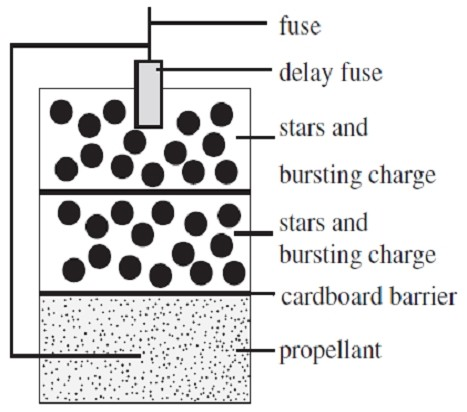 Figure 1 The light generating units of the firework are called stars and are dispersed and ignited by the bursting charge in each compartment. The intense colors of modern fireworks are generated by molecular emitters.
For example, barium chloride emits green light (510?30 nm) and strontium chloride emits vibrant red light (605?50 nm). Many of the molecular emitters are unstable at room temperature and so cannot be placed directly into the firework. Instead, they are synthesized in the flame of the pyrotechnic reaction and exist for a short time before decomposing. The flame temperature must be carefully adjusted so that these emitters
do not decompose too rapidly.  What is the energy of a photon of light emitted by a barium chloride emitter? 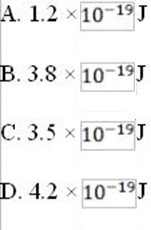
-
A
-
B
-
C
-
D
Reveal answer details
Close answer details
Correct answerB
ExplanationIn order to determine the energy of a photon, we plug the value of the frequency emitted into the equation:
E = hf
Note that if you did not remember this equation, you could use the constants provided at the bottom of the passage to determine the equation through dimensional analysis. Energy has units of J, so multiplying a s- 1 value by h would provide a calculation of energy.
The passage provides the wavelength of light produced by barium chloride as 510--530 nm. We can perform the calculation with the approximate value of 500 nm. 
Question 33
Single choice
Agonistic behavior, or aggression, is exhibited by most of the more than three million species of animals on this planet. Animal behaviorists still disagree on a comprehensive definition of the term, but aggressive behavior can be loosely described as any action that harms an adversary or compels it to retreat.
Aggression may serve many purposes, such as food gathering, establishing territory, and enforcing social hierarchy. In a general Darwinian sense, however, the purpose of aggressive behavior is to increase the individual animal's -- and thus, the species' -- chance of survival.
Aggressive behavior may be directed at animals of other species, or it may be conspecific -- that is, directed at members of an animal's own species. One of the most common examples of conspecific aggression occurs in the establishment and maintenance of social hierarchies. In a hierarchy, social
dominance is usually established according to physical superiority; the classic example is that of a pecking
order among domestic fowl. The dominance hierarchy may be viewed as a means of social control that reduces the incidence of attack within a group. Once established, the hierarchy is rarely threatened by disputes because the inferior animal immediately submits when confronted by a superior. Two basic types of aggressive behavior are common to most species: attack and defensive threat. Each type involves a particular pattern of physiological and behavioral responses, which tends not to vary regardless of the stimulus that provokes it. For example, the pattern of attack behavior in cats involves a series of movements, such as stalking, biting, seizing with the forepaws and scratching with the hind legs, that changes very little regardless of the stimulus -- that is, regardless of who or what the cat is attacking.
The cat's defensive threat response offers another set of closely linked physiological and behavioral patterns. The cardiovascular system begins to pump blood at a faster rate, in preparation for sudden physical activity. The eyes narrow and the ears flatten against the side of the cat's head for protection, and other vulnerable areas of the body such as the stomach and throat are similarly contracted. Growling or hissing noises and erect fur also signal defensive threat. As with the attack response, this pattern of responses is generated with little variation regardless of the nature of the stimulus.
Are these aggressive patterns of attack and defensive threat innate, genetically programmed, or are they learned? The answer seems to be a combination of both. A mouse is helpless at birth, but by its 12th day of life can assume a defensive threat position by backing up on its hind legs. By the time it is one month old, the mouse begins to exhibit the attack response. Nonetheless, copious evidence suggests that
animals learn and practice aggressive behavior; one need look no further than the sight of a kitten playing
with a ball of string. All the elements of attack -- stalking, pouncing, biting and shaking -- are part of the game which prepares the kitten for more serious situations later in life. The author suggests that the question of whether agonistic behavior is genetically programmed or learned:
-
A
still generates considerable controversy among animal behaviorists.
-
B
was first investigated through experiments on mice.
-
C
is outdated since most scientists now believe the genetic element to be most important.
-
D
has been the subject of extensive clinical study.
Reveal answer details
Close answer details
Correct answerD
ExplanationQuestion 12, an inference question, centers on the nature-versus-nurture argument discussed in the final paragraph. Keep the author's conclusion - that aggressive patterns are both innate and learned - in mind when you're looking for the right choice. It allows you to rule out Choice C immediately, since it is clear that scientists have not resolved the question in favor of genetics.
The only thing the passage says is controversial is the definition of aggression, so Choice A is wrong.
Choice B is out because the author never says that the experiments on mice were the first investigations done to answer the nature-nurture question. This leaves
Choice D as the only possible correct answer, and it seems reasonable to infer from the author's remark, "copious evidence suggests that animals learn and practice aggressive behavior," that there has been a lot of study devoted to this subject.
Question 34
Single choice
The process of depolarization triggers the cardiac cycle. The electronics of the cycle can be monitored by an electrocardiogram (EKG). The cycle is divided into two major phases, both named for events in the ventricle: the period of ventricular contraction and blood ejection, systole, followed by the period of ventricular relaxation and blood filling, diastole. During the very first part of systole, the ventricles are contracting but all valves in the heart are closed thus no blood can be ejected. Once the rising pressure in the ventricles becomes great enough to open the aortic and pulmonary valves, the ventricular ejection or systole occurs. Blood is forced into the aorta and pulmonary trunk as the contracting ventricular muscle fibers shorten. The volume of blood ejected from a ventricle during systole is termed stroke volume. During the very first part of diastole, the ventricles begin to relax, and the aortic and pulmonary valves close. No blood is entering or leaving the ventricles since once again all the valves are closed. Once ventricular pressure falls below atrial pressure, the atrioventricular (AV) valves open. Atrial contraction occurs towards the end of diastole, after most of the ventricular filling has taken place. The ventricle receives blood throughout most of diastole, not just when the atrium contracts. Figure 1: Electronic and pressure changes in the heart and aorta during the cardiac cycle. 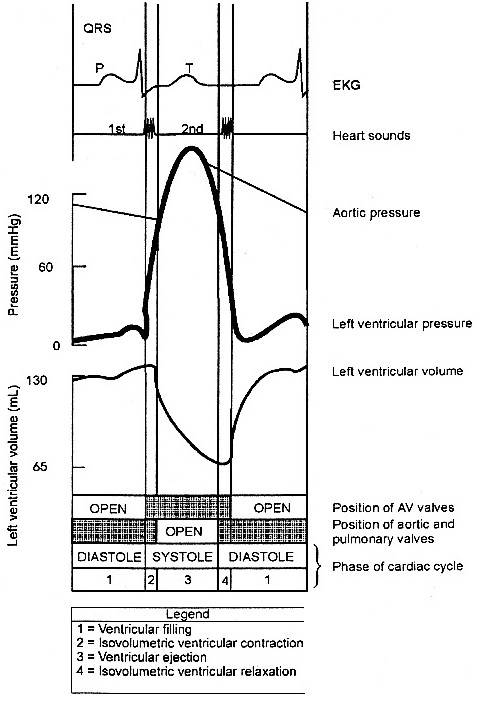 The first heart sound represented in Fig. 1 is probably made when:
-
A
During ventricular systole, blood in the ventricle is forced against the closed atrioventricular valve.
-
B
During ventricular diastole, blood in the ventricles is forced through the aortic and pulmonary artery valves.
-
C
During ventricular diastole, blood in the ventricle is forced against the closed atrioventricular valve.
-
D
During ventricular systole, blood in the arteries is forced through the aortic and pulmonary artery valves.
Reveal answer details
Close answer details
Correct answerA
ExplanationThis entire passage relies little on your previous knowledge or understanding of cardiovascular physiology;
rather, emphasis is on your ability to read a graph and, at times, correlate the information with the passage. This question indicates that we should be looking at the graph representing "Heart sounds" in Figure 1. The graph for heart sounds can be described thus: a horizontal line is followed by a narrow burst
of spikes or activity; prior to the spikes is the label "1st" implying that the spikes represent the 1st heart sound. The first heart sound begins immediately after the first long vertical line. By following this vertical line downwards, we can note any other events which may initiate or occur at the time as the first heart sound: beginning near the bottom of Figure 1, note that the first heart sound occurs (i) in phase 2 of the
cardiac cycle; (ii) at the beginning of ventricular SYSTOLE; (iii) during a period that the aortic and pulmonary valves are not opened (i.e. closed); and (iv) the first heart sound begins exactly when the
position of the AV valves just become closed. Therefore, strictly according to the figure, during ventricular systole the AV valves suddenly close just as the first heart sound is created. Thus, answer choice A is the only plausible answer.
Question 35
Single choice
The rich analyses of Fernand Braudel and his fellow Annales historians have made significant contributions to historical theory and research. In a departure from traditional historical approaches, the Annales historians, assume (as do Marxists) that history cannot be limited to a simple recounting of conscious human actions, but must be understood in the context of forces and material conditions that underlie human behavior. Braudel was the first Annales historian to gain widespread support of the idea that history should synthesize data from various social sciences, especially economics, in order to provide a broader view of human societies over time (although Febvre and Bloch, founders of the Annales school, had originated this approach).
Braudel conceived of history as the dynamic interaction of three temporalities. The first of these, the evenementielle, involved short-lived dramatic "events," such as battles, revolutions and the actions of great men, which had preoccupied traditional historians like Carlyle. Conjonctures was Braudel's term for larger cyclical processes that might last up to half a century. The longue duree, a historical wave of great length, was for Braudel the most fascinating of the three temporalities. Here he focused on those aspects of everyday life that might remain relatively unchanged for centuries. What people ate, what they wore, their means and routes of travel -- for Braudel these things create "structures" which define the limits of potential social change for hundreds of years at a time.
Braudel's concept of the longue duree extended the perspective of historical space as well as time. Until the Annales school, historians had taken the juridical political unit the nation-state, duchy, or whatever as their starting point. Yet, when such enormous timespans are considered, geographical features may well have more significance for human populations than national borders. In his doctoral thesis, a seminal work on the Mediterranean during the reign of Philip II, Braudel treated the geohistory of the entire region as a "structure" that had exerted myriad influences on human lifeways since the first settlements on the shores of the Mediterranean Sea. And so the reader is given such arcane information as the list of products that came to Spanish shores from North Africa, the seasonal routes followed by Mediterranean sheep and their shepherds, and the cities where the best ship timber could be bought. Braudel has been faulted for the imprecision of his approach. With his Rabelaisian delight in concrete detail, Braudel vastly extended the
realm of relevant phenomena; but this very achievement made it difficult to delimit the boundaries of
observation, a task necessary to beginning any social investigation. Further, Braudel and other Annales historians minimize the differences among the social sciences. Nevertheless, the many similarly-designed studies aimed at both professional and popular audiences indicate that Braudel asked significant questions which traditional historians had overlooked. The passage suggests that, compared with traditional historians, Annales historians are:
-
A
more interested in other social sciences than in history.
-
B
critical of the achievements of famous historical figures.
-
C
skeptical of the validity of most economic research.
-
D
more interested in the underlying context of human behavior.
Reveal answer details
Close answer details
Correct answerD
ExplanationThe author states in Paragraph 1 that unlike conventional historians, the Annales historians emphasized understanding history in the context of the forces and material conditions that underlying human behavior.
Choice D paraphrases this. Annales historians are interested in synthesizing data from social sciences in order to do history, but they are not more interested in other social sciences than in history, so
Choice A is wrong. Braudel incorporated the study of great figures into his framework of the three temporalities, so there is no reason to think Annales historians would be critical of the achievements of historical figures (Choice B).
Choice C is incorrect because the author states in Paragraph 1 that the Annales historians advocate using economic data in historical research.
Question 36
Single choice
The anthropomorphic bias of those who would relegate marsupials to an inferior evolutionary status is most apparent in their recourse to data on brain structure and behavior. Unlike humans and other placentals, marsupials lack the corpus callosum, which facilitates inter-hemisphere transfer of data acquired through the senses. Yet it cannot be inferred that marsupials are thus deprived of such function.
Didelphis Virginiana, one of the opossums, makes use of the anterior commissure, an adaptation that is also found in reptiles and monotremes. Diprodontons, including kangaroos and koalas, supplement the anterior commissure with the fasciculus aberrans. While the modes of neocortical interconnection may be diverse, the work of Johnson, Heath and Jones points to the conclusion that, functionally speaking the cortices and neocortices of both groups of mammals exhibit parallel connections. Parker also notes "a similar range of brain size to body weight ratios and of neocortical expansion".
Another stigma borne by marsupials is the consensus that they are less intelligent than placentals. Yet Williams argues that, all else being equal, natural selection will favor instinctive over learned behavior as being more biologically efficient and that it is the accidental death of the young that is the prime selective
pressure for the evolution of intelligence. Seen in this light, marsupials have a competitive edge; their
gestation period is brief and the young remain in the pouch for an extended period exposed only to those dangers which also affect the mother. There they are directly exposed to the mother's food supply and can observe her behavior at leisure. Placentals, on the other hand, not only have a longer gestation period but, once their young are born, must often leave while foraging. Such absences increase the risk of mortality and decrease the opportunity to learn. Thus, among placentals, selection would favor the apparent intelligence in the young and protective behavior in the mother.
Marsupials are not known to exhibit maternal protective behavior. In fact, Serventy has reported that frightened female kangaroos will drop their pouch-young as they flee, drawing a predator's attention to the less able offspring while the adult escapes. This behavior, whether purposeful or accidental, instantaneously relieves the female marsupial of the mechanical difficulties of pregnancy with which her placental counterpart would be burdened, while marsupials can replace any lost young quickly. Thus, in the absence of any need for close maternal supervision, sacrificing their offspring in this manner may well have been favored in selection. Pointing to the absence of the "virtue" of maternal protectiveness in marsupials is an instance of how mistaken are those theorists who see similarities with humans as marks of evolutionary sophistication. The author's primary purpose in this passage is to:
-
A
correct some common misconceptions about marsupials.
-
B
argue against the view that marsupials represent a less developed evolutionary stage than placentals.
-
C
provide support for the proposition that marsupials have adapted more successfully to the environment.
-
D
determine the place of marsupials in the evolutionary hierarchy.
Reveal answer details
Close answer details
Correct answerB
ExplanationThis is a main idea question. In this case, the first and last sentences of the passage are perfect book-ends summarizing the author's argument through the passage as a whole. The author is in disagreement with those who brand marsupials as inferior. Note that the word "argue" in this answer choice reflects the tone of the passage. Choice A is wrong because the passage doesn't describe common misconceptions; it's about very specific disagreements on points concerning the evolutionary status of marsupials versus placentals. Choice C is wrong because the passage doesn't deal directly with the question of environmental adaptation. The word
"determine" is the problem with incorrect answer choice D. This point is left open; by the end of the passage we're still not sure where marsupials fit into the evolutionary tree.
Question 37
Single choice
The atomic size of an atom is:
-
A
greater than the positive ion.
-
B
smaller than the positive ion.
-
C
greater than the negative ion.
-
D
equal to covalent radius.
Reveal answer details
Close answer details
Question 38
Single choice
The reaction below is NOT spontaneous at any temperature.
2ICl(g) I2(g) + Cl2(g) Which of the following is true? 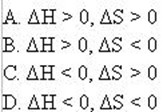
-
A
-
B
-
C
-
D
Reveal answer details
Close answer details
Correct answerB
ExplanationThe relationship between G , H, S, and temperature is G = H ?TS
For a reaction to be spontaneous, G must be less than zero. If a reaction is not spontaneous at any temperature, H must be positive and S must be negative. No matter what the temperature, G will always be positive and the reaction will be nonspontaneous.
Choice B is therefore the correct response.
Choice A is for a reaction that would be spontaneous if the temperature was sufficiently high.
Choice C is for a reaction that is spontaneous at ALL temperatures.
Choice D is for a reaction that would be spontaneous if the temperature was sufficiently low.
Question 39
Single choice
Oversecretion of gastric HCl can be treated by severing the vagus nerve in a procedure called a vagotomy which reduces parasympathetic activity. Which of the following effects is LEAST likely to be caused by a vagotomy?
-
A
-
B
Decreased gastric motility
-
C
-
D
Reveal answer details
Close answer details
Correct answerA
ExplanationThe parasympathetic nervous system is involved in "rest-and-digest" functions which include lowering the heart rate and promoting digestion. The question stem states that a vagotomy will reduce parasympathetic stimulation. This would tend to increase heart rate and reduce gastrointestinal activity. The question asks for the LEAST likely effect of a vagotomy. A vagotomy would not decrease heart rate.
Choices B and C are incorrect because decreased parasympathetic activity would decrease gastric motility and HCl production.
Choice D is incorrect because decreased parasympathetic activity would increase heart rate, and thus increase blood pressure.
Question 40
Single choice
Aski jump is an inclined track from which a ski jumper takes off through the air. After traveling down the track, the skier takes off from a ramp at the bottom of the track. The skier lands farther down on the slope. Figure 1 shows a ski jump, in which the ramp at the lower end of the track makes an angle of 30° to the horizontal. The track is inclined at an angle of to the horizontal and the slope is inclined at an angle of 45° to the horizontal. A ski jumper is stationary at the top of the track. Once the skier pushes off, she accelerates down the track, and then takes off from the ramp. The vertical height difference between the top of the track and its lowest point is 50 m, and the vertical height difference between the top of the ramp and its lowest point is 10 m. 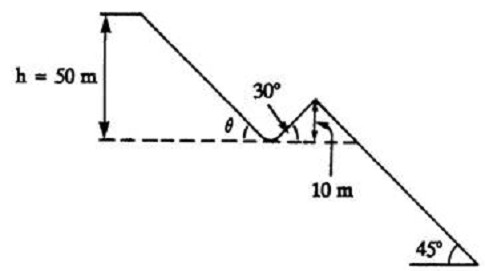 Figure 1 The distance traveled by the skier between leaving the ski jump ramp and making contact with the slope is called the jump distance. In some cases, in order to increase the jump distance a skier will jump slightly upon leaving the ramp, thereby increasing the vertical velocity. Unless otherwise stated, assume that friction between the skis and the slope is negligible, and ignore the effects of air resistance. How would the work done by gravity on the skier when she skis down the track compare with the work done by gravity on the skier if she fell the same vertical height?
-
A
Less work would be done on the skier when she skis down the track.
-
B
More work would be done on the skier when she skis down the track.
-
C
Equal amounts of work would be done.
-
D
The answer depends on the angle of the track.
Reveal answer details
Close answer details
Correct answerC
ExplanationThe work done by gravity equals mgh, where m is the object's mass, g is the acceleration due to gravity, and h is the vertical distance. The work depends only on the vertical distance and is independent of the actual path taken. When the work done by a force is independent of the actual path taken, the force is said to be a conservative force.
Question 41
Single choice
Aerobic respiration is the major process used by oxygen-requiring organisms to generate energy. During respiration, glucose is metabolized to generate chemical energy in the form of ATP:  The biochemical machinery necessary for cellular respiration is found in the mitochondria, small organelles scattered throughout the cytoplasm of most eukaryotic cells. The number of mitochondria per cell varies by tissue type and cell function. Mitochondria are unusual in that they have their own genetic systems that are entirely separate from the cell's genetic material. However, mitochondrial replication is still dependent upon the cell's nuclear DNA to encode essential proteins required for replication. Despite this fact, mitochondria seem to replicate randomly, out of phase with both the cell cycle and other mitochondria. The nature of the mitochondrial genome and protein synthesizing machinery has led many researchers to postulate that mitochondria may have arisen as the result of the ingestion of a bacterium by a primitive cell millions of years ago. It is postulated that the two may have entered into a symbiotic relationship and
eventually became dependent on each another; the cell sustained the bacterium, while the bacterium
provided energy for the cell. Gradually, the two evolved into the present-day eukaryotic cell, with the mitochondrion retaining some of its own DNA. This is known as the endosymbiotic hypothesis. Because mitochondrial DNA is inherited in a non-Mendelian fashion (mitochondria are inherited from the maternal parent, who supplies most of the cytoplasm to the fertilized egg), it has been used to look at evolutionary
relationships among different organisms. Scientists have demonstrated that human mitochondrial DNA mutates at a fairly slow rate. Because mitochondria play such an important role in the cell, these mutations are most likely to be:
-
A
-
B
-
C
-
D
Reveal answer details
Close answer details
Correct answerA
ExplanationThis question tests your knowledge of the things that can go wrong during the replication of mitochondrial DNA, or any DNA for that matter, and the consequences. In addition, you've got to apply this knowledge to the role that mitochondria play in the cell. Mitochondria are responsible for cellular energy production -- they supply the cell with ATP. Mitochondrial DNA directs the synthesis of mitochondrial proteins, which ultimately play a major role in cell survival. Since mitochondria are so essential to eukaryotic cell life, one would therefore expect replication of its DNA to be highly accurate. Mutations that would cause a dramatic change in its DNA and its ability to produce proteins needed for ATP formation would be lethal to the cell.
Since mutations do occur, the most likely type to occur would be one that causes the least damage. A point mutation fits the bill. Point mutations are defined as those in which only nitrogenous base is affected;
for example, a cytosine is substituted for an adenine during replication. Point mutations are not usually lethal because of the redundancy of the genetic code; that is, each amino acid is typically coded for by
more than one codon. Take the amino acid proline, for example. Proline is coded for by four codons: CCU, CCC, CCA, and CCG. Let's say that the codon is CCU; if there's a point mutation at the third base, no
matter which of the remaining three bases is substituted for the uracil, the net product will still be proline.
So a point mutation is the type of mutation least likely to affect their productivity. Thus, choice A is correct.
Choice B, frameshift mutation, is a mutation causing genetic material to be inserted or deleted during DNA replication or transcription. This produces a shift in the reading frame of the mRNA strand being translated, usually leading to the formation of nonsense polypetides. Changes in protein synthesis would most likely be dangerous for the mitochondria and the cell itself; therefore, choice B is incorrect. Lethal mutations,
choice C, are those that would cause the mitochondria to become nonfunctional, so choice C is incorrect.
Choice D is incorrect because nondisjunction is the failure of homologous chromosomes to separate during meiosis. First of all, mitochondria have one circular chromosome -- there aren't any homologous chromosomes. Second, mitochrondria do not undergo meiosis -- only specialized eukaryotic cells in sexually reproducing organisms undergo meiosis. So, choice D cannot even be a consideration.
Question 42
Single choice
Although we know more about so-called Neanderthal men than about any other early population, their exact relation to present-day human beings remains unclear. Long considered sub-human, Neanderthals are now known to have been fully human. They walked erect, used fire, and made a variety of tools. They lived partly in the open and partly in caves. The Neanderthals are even thought to have been the first humans to bury their dead, a practice which has been interpreted as demonstrating the capacity for religious and abstract thought.
The first monograph on Neanderthal anatomy, published by Marcelling Boule in 1913, presented a somewhat misleading picture. Boule took the Neanderthals' lowvaulted cranium and prominent brow ridges, their heavy musculature, and the apparent overdevelopment of certain joints as evidence of a prehuman physical appearance. In postulating for the Neanderthal such "primitive" characteristics as a stooping, bent-kneed posture, a rolling gait, and a forward-hanging head, Boule was a victim of the rudimentary state of anatomical science. Modern anthropologists recognize the Neanderthal bone structure as that of a creature whose bodily orientation and capacities were very similar to those of present-day human beings. The differences in the size and shape of the limbs, shoulder blades, and other body parts are simply adaptations which were necessary to handle the Neanderthal's far more massive musculature. Current taxonomy considers the Neanderthals to have been fully human and thus designates them not as a separate species, Homo neanderthalensis, but as a subspecies of Homo sapiens: Homo sapiens neanderthalensis. The rise of the Neanderthals occurred over some 100,000 years -- a sufficient period to account for evolution of the specifically Neanderthal characteristics through free interbreeding over a broad geographical range. Fossil evidence suggests that the Neanderthals inhabited a vast area from Europe through the Middle East and into Central Asia from approximately 100,000 years ago until 35,000 years ago. Then, within a brief period of five to ten thousand years, they disappeared. Modern human, not found in Europe prior to about 33,000 years ago, thenceforth became the sole inhabitants of the region. Anthropologists do not believe that the Neanderthals evolved into modern human beings.
Despite the similarities between Neanderthal and modern human anatomy, the differences are great enough that, among a population as broad-ranging as the Neanderthals, such an evolution could not have taken place in a period of only ten thousand years. Furthermore, no fossils of types intermediate between Neanderthals and moderns have been found.
A major alternative hypothesis, advanced by E. Trinkaus and W.W. Howells, is that of localized evolution.
Within a geographically concentrated population, free interbreeding could have produced far more pronounced genetic effects within a shorter time. Thus modern human could have evolved relatively quickly, either from Neanderthals or from some other ancestral type, in isolation from the main Neanderthal population. These humans may have migrated throughout the Neanderthal areas, where they displaced or absorbed the original inhabitants. One hypothesis suggests that these "modern" humans immigrated to Europe from the Middle East. No satisfactory explanation of why modern human beings replaced the Neanderthals has yet been found. Some have speculated that the modern humans wiped out
the Neanderthals in warfare; however, there exists no archeological evidence of a hostile encounter. It has
also been suggested that the Neanderthals failed to adapt to the onset of the last Ice Age; yet their thick
bodies should have been heat-conserving and thus well-adapted to extreme cold. Finally, it is possible that the improved tools and hunting implements of the late Neanderthal period made the powerful Neanderthal physique less of an advantage than it had been previously. At the same time, the Neanderthals' need for a heavy diet to sustain this physique put them at a disadvantage compared to the less massive moderns. If this was the case, then it was improvements in human culture -- including some introduced by the Neanderthals themselves -- that made the Neanderthal obsolete. All of the following are hypotheses about the disappearance of the Neanderthals EXCEPT:
-
A
the Neanderthal physique became a handicap instead of an advantage.
-
B
the Neanderthals failed to adapt to climatic changes.
-
C
the Neanderthals evolved into modern humans.
-
D
modern humans exterminated the Neanderthals.
Reveal answer details
Close answer details
Correct answerC
ExplanationThe hypotheses about the disappearance of the Neanderthals are all in Paragraph 5. Of the choices listed, only Choice C is not put forward in this paragraph as a possible explanation. Even if humans did evolve from an isolated group of Neanderthals, as Trinkaus and Howells suggest, knowing this would not shed light on the mystery of the disappearance of the entire population of Neanderthals.
Question 43
Single choice
Sugars are carbohydrates, that is, molecules usually with the empirical formula C(H2O), and structural formulas made up of polyhydroxy aldehydes or ketones. Because of their polyfunctional nature, sugars can undergo a wide variety of transformations upon treatment with acids, bases, or heat, and upon reaction with other simple reagents and enzymes. While many sugars occur in nature and are thus readily available, the synthesis and modification of simple sugars is a necessary step in studies of enzymatic processes.
Higher sugars can be synthesized from the simple carbohydrate D-glyceraldehyde with the following procedure: D-glyceraldehyde (Compound A) is reacted with HCN to produce a cyanohydrin (Compound B).
Compound B is then treated with hydrogen gas and a modified palladium catalyst (similar to the Lindlar reagent) to give Compound C. Compound C is hydrolyzed to give the higher sugars in Mixture D. This reaction is summarized in Figure 1. Mixture D contains two compounds, which can be separated by crystallization. Two doublets near 9.5 (, ppm) are observed in the 1H NMR spectrum of mixture D, with each doublet corresponding to one of the two products present in the mixture. IR spectroscopy shows broad absorptions for both products around 3300 cm?. 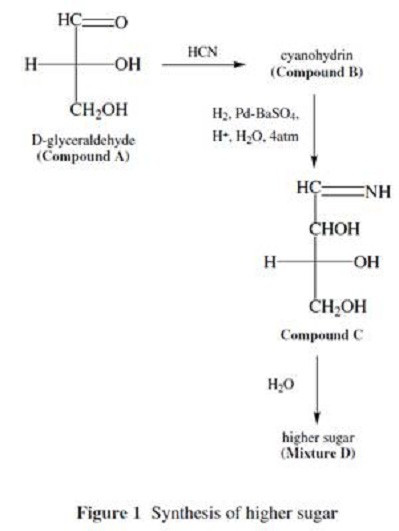 The hydroxyl groups of carbohydrates can also participate in reactions. For example, D-glyceraldehyde can react with chloromethane under basic conditions to yield a completely methylated product. This SN2 reaction is shown in Figure 2. 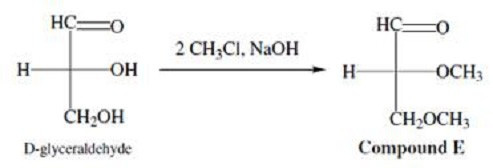 Figure 2 Methylation of D-glyceraldehyde The two sugars in Mixture D are:
-
A
-
B
-
C
-
D
Reveal answer details
Close answer details
Correct answerC
ExplanationEpimers are sugars that differ in the configuration about a single stereocenter. A new chiral center is formed in the first step of the sugar extension (cyanohydrin formation). This will lead to the formation of two different sugars in Mixture D. 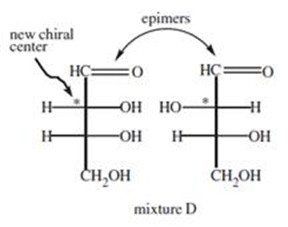 Choice A because enantiomers are mirror images that differ in configuration at every stereocenter. As shown above, these epimers differ at a single stereocenter.
Choice B is incorrect because anomers aresugars that differ in their configuration about the new stereocenter formed when they adopt a ring configuration. The sugars shown above would generally not form rings because of the ring strain of 4- membered rings.
Choice D is incorrect because dissaccharides are formed from the condensation of two monosaccharides (like the ones in mixture D).
Question 44
Single choice
A hovercraft is a versatile vehicle capable of traveling over land, water, or any other essentially flat surface.
The hovercraft consists of a body or hull onto which a rotor (lift fan) is mounted. The lift fan provides the vertical lift by propelling air into an area beneath the hovercraft called the skirt. The pocket of air in the skirt supports the moving hovercraft and reduces the friction between the vehicle and the ground to almost zero. As such, there is no contact between the hovercraft and the ground. A second fan, which generates a horizontal thrust, propels the hovercraft forward. Rudders which direct the airflow from this second fan are used by the pilot to control the movement of the hovercraft. The horizontal movement of the  hovercraft is opposed by air resistance which generates aerodynamic drag. A 600 kg hovercraft traveling across a frozen lake accelerates from rest to a speed of 60 kilometers per hour in 4 seconds. What is the average force produced by the thrust fan?
-
A
-
B
-
C
-
D
Reveal answer details
Close answer details
Correct answerC
ExplanationExplanation: This problem can be solved very quickly using dimensional analysis.  We can also solve it the longer way. The final velocity of the hovercraft in units of m/s is:  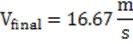 The average acceleration is: 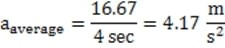 The force can be determined using Newton's Second Law: 
Question 45
Single choice
When a radio station is broadcasting a musical program, the antenna of its transmitter:
-
A
radiates AF electromagnetic waves.
-
B
radiates longitudinal waves.
-
C
radiates RF electromagnetic waves.
-
D
radiates AF longitudinal waves.
Reveal answer details
Close answer details
Question 46
Single choice
The pigment in blue-green algae that distinguishes them from other algae is:
-
A
-
B
-
C
-
D
Reveal answer details
Close answer details
Question 47
Single choice
Synthetic dyes constitute a commercially significant area of organic chemistry. The color producing properties of these compounds are the result of highly delocalized electron systems giving rise to electronic transitions whose absorptions occur in the visible region. Most commercially useful dyes can be classified as one of three types -- anthraquinones, azo dyes, or triarylmethyl salts. Examples of each type are illustrated in Figure 1. 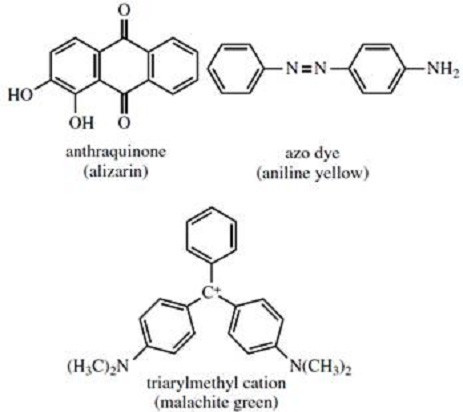 Figure 1 In order for a dye to be useful in the fabric industry, it must have sufficient affinity for the polymeric fibers of
which the material is composed; the dye must not only impart a color to the fabric, but must also do so in a
relatively permanent manner (color fastness). Proper design of synthetic polymers requires the placement of acidic or basic side chains along the polymer backbone such that binding sites are available for dying.
Similarly, dyes must be produced not only with the appropriate color-producing structure, but also with an affinity for the fabric in question. The structural units of several common synthetic fibers are shown in Figure 2. 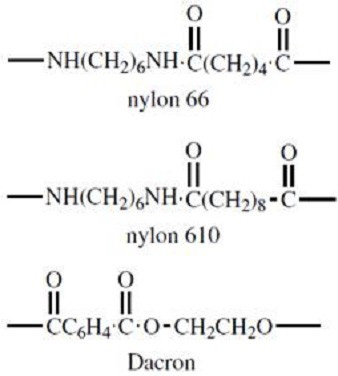 Figure 2 Dacron belongs to which of the following general classifications?
-
A
-
B
-
C
-
D
Reveal answer details
Close answer details
Correct answerB
ExplanationDacron, as shown in figure 2, is a polyester since it contains the COOR functionality in its monomer (subunit).
Choice A is incorrect since polyamides would need to contain nitrogen in their monomers in order to contain an amide functional group, CONR2. Dacron does not. (However, nylon, also shown in figure 2, is a polyamide.)
Choice C is wrong, like A, for lack of nitrogen, a necessary element to classify the monomeric compound as a urethane, ArNHCOOR.
Choice D is wrong since the monomer structure is not a peptide.
Question 48
Single choice
Sugars are carbohydrates, that is, molecules usually with the empirical formula C(H2O), and structural formulas made up of polyhydroxy aldehydes or ketones. Because of their polyfunctional nature, sugars can undergo a wide variety of transformations upon treatment with acids, bases, or heat, and upon reaction with other simple reagents and enzymes. While many sugars occur in nature and are thus readily available, the synthesis and modification of simple sugars is a necessary step in studies of enzymatic processes.
Higher sugars can be synthesized from the simple carbohydrate D-glyceraldehyde with the following procedure: D-glyceraldehyde (Compound A) is reacted with HCN to produce a cyanohydrin (Compound B).
Compound B is then treated with hydrogen gas and a modified palladium catalyst (similar to the Lindlar reagent) to give Compound C. Compound C is hydrolyzed to give the higher sugars in Mixture D. This reaction is summarized in Figure 1. Mixture D contains two compounds, which can be separated by crystallization. Two doublets near 9.5 (, ppm) are observed in the 1H NMR spectrum of mixture D, with each doublet corresponding to one of the two products present in the mixture. IR spectroscopy shows broad absorptions for both products around 3300 cm?. 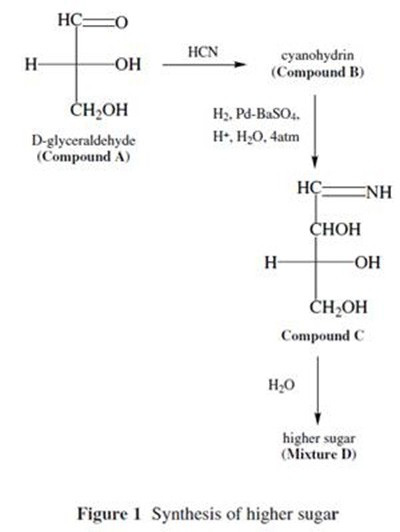 The hydroxyl groups of carbohydrates can also participate in reactions. For example, D-glyceraldehyde can react with chloromethane under basic conditions to yield a completely methylated product. This SN2 reaction is shown in Figure 2. 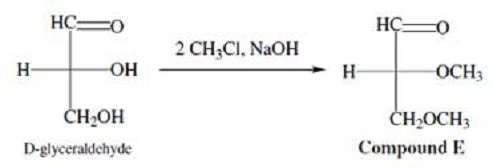 Figure 2 Methylation of D-glyceraldehyde The modified palladium catalyst is used instead of platinum to:
-
A
avoid reduction of the cyanohydrin to the amine.
-
B
make the reaction energetically favorable.
-
C
-
D
reduce the likelihood of attack at the carbonyl carbon.
Reveal answer details
Close answer details
Correct answerA
ExplanationThe cyanohydrin (compound B) is reduced to an imine (compound C). If platinum were used, reduction would proceed all the way to the amine as shown below. This must be avoided in order to produce the carbonyl group on the extended sugar. 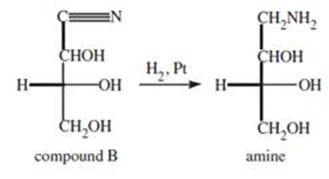 Choice B is incorrect because a catalyst will not alter the thermodynamic favorability of a reaction. A catalyst will only increase the rate of reaction by lowering the activation energy.
Choice C is incorrect because a Lewis acid is an electron pair acceptor. The palladium catalyst acts as an activator of hydrogen.
Platinum would function in the same way.
Choice D is incorrect because compound B does not even have a carbonyl group (carbon double bonded to oxygen).
Question 49
Single choice
When preparing for the MCAT exam, a student begins studying electrochemical cells. He learns the basic information needed by actively relating it to previous information he has learned about redox reactions. He then builds from that knowledge to learn the advanced concepts needed. The student's process is best characterized as:
-
A
-
B
-
C
-
D
Reveal answer details
Close answer details
Correct answerD
ExplanationThe student is learning new information by actively relating it to old information he previously learned. This describes the elaborative rehearsal process of learning new information (and is, incidentally, one of the best ways to study for the MCAT). Thus (D) is the correct answer.
A: Chunking is a way of mentally dividing information into discrete whole chunks of information, thus reducing the overall number of things to be memorized. For example, phone numbers are chunked into area code, exchange, and ending 4- digit number. For someone learning the phone number of a neighbor (who would have the same area code and exchange), chunking the information this way makes it much easier to remember.
B: The network model describes one theory about how information is stored in the brain once it has been memorized. The situation described in the question discusses the processes of memorizing new information (encoding), rather that the storage itself.
C: Maintenance rehearsal is learning something through brute repetition, with no attempt to understand meaning or actively relate the information to previous memories.
Question 50
Single choice
A student was given a sample of an unknown liquid and asked to determine as much as possible about its structure. He was told that the compound contained only carbon, hydrogen, and oxygen, and had only one type of functional group. The student found its boiling point to be 206°C. Using mass spectroscopy, he determined its molecular weight to be 138 g/mol. Finally, he took the infrared spectrum of the compound, which is shown below. 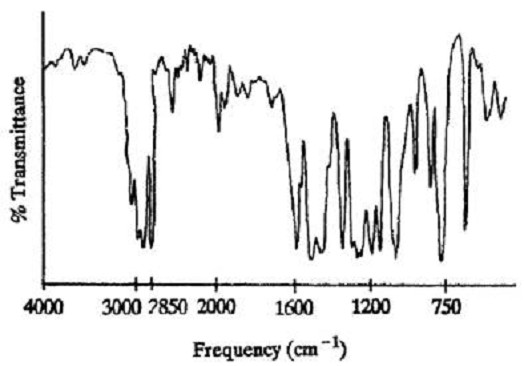 From this spectrum, the student quickly reached a conclusion about the functional group. He then turned his attention to the fingerprint region of the compound, which generally has a complicated pattern of peaks that are determined by the structure of the hydrocarbon portion of a molecule. The student decided that the large peak at 750 cm-1 must indicate that this was a disubstituted aromatic compound. Assuming that all of the student's deductions were correct, which of the following could be the structure of the unknown compound? 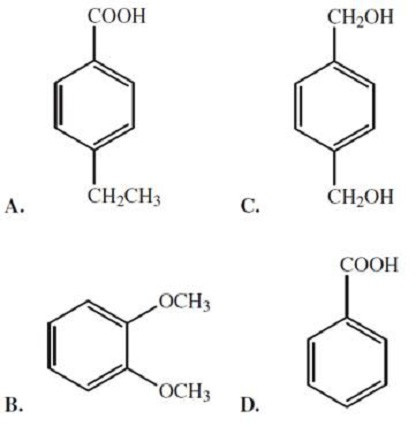
-
A
-
B
-
C
-
D
Reveal answer details
Close answer details
Correct answerB
ExplanationThe student theorized that the peak at 750 cm-1 indicates a disubstituted aromatic compound, and since we're told to assume that all of his deductions were correct, this allows us to eliminate choice D, which has only one substituent on the ring. The passage also says that the compound contains only one type of functional group and so choice A, which contains two different functional groups, is also clearly wrong. By the way, neither
choice A nor choice D corresponds to the correct molecular weight anyway
You are now left with choices B and C, and to decipher between these, you have to look back at the spectrum. If this were an alcohol, as in choice C, the spectrum would contain a broad peak at about 3350 cm-1 to 3250 cm-1, which is characteristic of a hydroxyl group. This is much like the peak we mentioned for a phenol and for the O-H group of a carboxyl group; like those, it's broadened by the fact that it can
form hydrogen bonds. This is a very characteristic feature of ANY type of hydroxyl-bearing group, and since it's not here, choice C must be incorrect.
Question 51
Single choice
If volume of a given mass of a gas is doubled without changing its temperature, the density of the gas:
-
A
-
B
-
C
-
D
is reduced to 1/4 of the original value.
Reveal answer details
Close answer details
Question 52
Single choice
Breast milk is proven to be the best form of nutrition for infants and is recommended for at least 1 year after birth. Unfortunately, a recent survey of breastfeeding mothers revealed that only 20% continue breastfeeding or to provide breast milk through pumping after 4 months, after which they switch to formula.
When asked about reasons for stopping breastfeeding, the top three reasons were: going back to work, lack of support, and difficulties pumping. A socioeconomic study of the mothers revealed that women who choose to breastfeed for longest tend to have a higher level of education and come from more affluent backgrounds. Conversely, those mothers who breastfeed for the least amount of time tend to belong to minority groups and are from poorer backgrounds. It has been proposed that cultural differences also have a significant impact on the duration of breastfeeding. According to the passage, if the Department of Health specifically wants to increase the minimum length of breastfeeding time, on whom should they focus their campaign?
-
A
women from affluent backgrounds
-
B
-
C
women from poor backgrounds
-
D
Reveal answer details
Close answer details
Correct answerD
ExplanationThe passage states that minority groups from poor backgrounds tend to breastfeed for the least amount of time and also highlights the importance of cultural differences. These factors imply that minority groups would need to be primarily considered when developing a campaign.
Question 53
Single choice
Bebop lives! cries the newest generation of jazz players. During the 1980s, musicians like Wynton Marsalis revived public interest in bebop, the speedy, angular music that first bubbled up out of Harlem in the early 1940s, changing the face of jazz. That Marsalis and others thought of themselves as celebrating and preserving a noble tradition is, in one sense, inevitable. After the excesses of experimental or "free" jazz in the 1960s and the electronic jazz-rock "fusion" of the 70s, it is hardly surprising that people should hearken back to a time when jazz was "purer," perhaps even at the apex of its development. But the recent enthusiasm for bebop is also ironic in light of the music's initial public reception. In its infancy, during the first two decades of the 20th century, jazz was played by small groups of musicians improvising variations on blues tunes and popular songs. Most of the musicians were unable to read music, and their improvisations were fairly rudimentary. Nevertheless, jazz attained international recognition in the 1920s. Two of the people most responsible for its rise in popularity were Louis Armstrong, the first great jazz soloist, and Fletcher Henderson, leader of the first great jazz band.
Armstrong, with his buoyant personality and virtuosic technical skills, greatly expanded the creative range and importance of the soloist in jazz. Henderson, a pianist with extensive training in music theory, foresaw the orchestral possibilities of jazz played by a larger band. He wrote out arrangements of songs for his band members that preserved the spirit of jazz, while at the same time giving soloists a more structured musical background upon which to shape their solo improvisations. In the 1930s, jazz moved further into the mainstream with the advent of the Swing Era. Big bands in the Henderson mold, led by musicians like Benny Goodman, Count Basie and Duke Ellington, achieved unprecedented popularity with jazz-oriented
"swing" music that was eminently danceable. Against this musical backdrop, bebop arrived on the scene. Like other modernist movements in art and literature, bebop music represented a departure from tradition in both form and content, and was met with initial hostility. Bebop tempos were unusually fast, with the soloist often playing at double time to the backing musicians. The rhythms were tricky and complex, the melodies intricate and frequently dissonant, involving chord changes and notes not previously heard in jazz. Before bebop, jazz players had improvised on popular songs such as those produced by Tin-Pan Alley, but bebop tunes were often originals with which jazz audiences were unfamiliar. Played mainly by small combos rather than big bands, bebop was not danceable; it demanded intellectual
concentration. Soon, jazz began to lose its hold on the popular audience, which found the new music disconcerting. Compounding public alienation was the fact that bebop seemed to have arrived on the scene in a completely mature state of development, without that early phase of experimentation that typifies so many movements in the course of Western music. This was as much the result of an accident of history as anything else. The early development of bebop occurred during a three-year ban on recording in this country made necessary by the petrol and vinyl shortages of World War II. By the time the ban was lifted, and the first bebop records were made, the new music seemed to have sprung fully-formed like Athena from the forehead of Zeus. And though a small core of enthusiasts would continue to worship bebop pioneers like Charlie Parker and Dizzy Gillespie, many bebop musicians were never able to gain acceptance with any audience and went on to lead lives of obscurity and deprivation. Based on the information in the passage comparing bebop to other movements in the history of Western music, it is reasonable to conclude that: I. most movements in music history passed through a stage of experimentation before reaching mature
expression.
II. World War II prevented bebop from reaching a more appreciative audience.
III. bebop did not go through a developmental stage before reaching mature expression.
-
A
-
B
-
C
-
D
Reveal answer details
Close answer details
Correct answerA
ExplanationThis is in Roman Numeral format. It asks one to draw a reasonable conclusion from information in the passage "comparing bebop to other movements in the history of Western music". That phrase "Western music" appears only once in the passage. It's in the third sentence of the final paragraph. That's where the author compares bebop to "other movements in the course of Western music." The author says there that public alienation or estrangement toward bebop was intense because bebop seemed to have arrived "in a completely mature state of development, without that early phase of experimentation that typifies so many movements in the course of Western music". This not only indicates something about bebop, it educates about most movements in the course of Western music -- namely, that they go through at least two phases: an early, experimental phase, and a later, more mature, more fully developed phase. This is the substance of Roman Numeral statement I, which is a reasonable conclusion and therefore will be part of the correct answer. Notice that choices (B) and (D) do not include Roman Numeral Statement I; thus, they
can be eliminated. Since either choice (A), which offers statement I only, or choice (C), which offers statements I and II, must be the correct answer. One can review only statement II to determine the right answer. Statement II says that W.W.II prevented bebop from reaching a more appreciative audience. This is a distortion of the fifth sentence of the final paragraph, which says that a petrol shortage during World
War II necessitated a three-year ban on the making of records. But, according to the author, it was not the recording ban that prevented bebop from reaching a more appreciative audience. Instead, the recording ban was responsible for making it seem to audiences as if bebop had bypassed that early, experimental stage and instantly achieved mature development. It was the radical elements of bebop itself that prevented the music from appealing to a wider audience. So statement II is false, and choice (A), statement I only, is the correct answer. Statement III says that bebop did not go through a developmental stage before reaching mature expression. This is not true. Bebop did go through a developmental stage, and it is discussed in the middle of the last paragraph. The key point here is that few people heard the music during this phase because of the ban on recording. Statement III is false.
Question 54
Single choice
Today's new urban Asia is just as sophisticated and in many ways more exciting than Western cities.
Urban Asian consumers are knowledgeable, modern, and keen to embrace the global lifestyle. Young, urban Asians have grown up accustomed to many things that originated in the West. They have, for example, completely embraced pizza, some even claiming that it is a part of their heritage. The story is told about a young Singaporean boy who was taken by his father to Rome. "Hey, look, Dad," the little boy exclaimed, "they have pizza here too!" On sampling the product, the boy decided that it was not as good as the original back home. Nury Vitachi, who writes for the South China Post and the Far Eastern Economic Review, describes the Asian middle-class phenomenon: "Executives in Asia have become rich at warp speed by taking full control of their own lives. They invest a great deal of time in their work, they use strategy to scramble up the corporate ladder, and they demand payment in cash -- so they can make their money work as hard as they do." Signs of affluence are everywhere, but don't get carried away.
Traveling around Asia, no matter how rich the Asians become, signs of their frugal nature are still apparent. And they are very cost-conscious. Shopkeepers in many Asian cities, most notably in Hong Kong, demand payments for discounted merchandise in cash instead of plastic, and many Asians are accustomed to that. Most people save the increases in their income, and many prefer to put it into fixed or other income-generating assets. Stock, land, and property are their favorites.
Many affluent Asians still regard financial security as the most important form of security, and they are confident that Asia is the place to be to achieve that. While many have begun to savor the good life, they are not letting go of their top priority of education for their children. Education is looked upon as the most important contributing factor to success in life. And in many of Asia's competitive urban centers, there is a rush to acquire a second degree and other forms of professional qualification to ensure personal competitiveness in the workplace. There are extraordinary opportunities in Asia for education and training programs from language to software programming. Despite the rise in their assertiveness, Asians still look to the United States and not so much to Europe for ideas and trends. In general, except for those in Hong Kong and Japan, they are not particularly concerned with being fashionable. For today's Asia, Japan and Hong Kong are the sources of Asian fashion ideas, but as Asia becomes more affluent, there is a great opportunity to develop an indigenous fashion industry. For example, a huge market potential exists in introducing new materials and simplified but fashionable designs for countries in tropical Asia with a hot humid climate throughout the year. The population density and lack of space in urban areas has prohibited Asians from exercising frequently and few indulge in outdoor activities. This is changing. Most Asians consider themselves in good health. Compared with Americans, few are overweight -- largely as a result of their Asian diet. But now health clubs are becoming popular among younger Asians. Potential for indoor exercise equipment holds great promise. It is also important to dress for the gym, and younger Asians are serious about looking good, complete with makeup, sunglasses, designer exercise shoes and outfits, and a gym bag.
In trying to hit Asia's moving targets, regardless of what you are selling, it is a good idea to stick with market density -- not country by country, but, mostly, city by city. Asian markets can be a marketer's dream in that their densities are among the highest in the world. Java, Indonesia's main island, has 115 million people. On Nanjing Road, Shanghai's busiest street, businesses are open twelve hours a day almost every day of the year. More than 1.5 million people visit the shops there and spend more than $50 million every day.
Someone said that you can only become rich if you sell to the rich. I would add that you can become rich faster if you sell to the new rich. For investors in the West, watch for Western companies that are preparing a big push in Asia. The world has not yet seen anything like it before, and you can reap handsome dividends if you back those stocks that are going eastward. It can be inferred from the passage that:
-
A
the Asian fashion market is already saturated with indigenous designs and manufacturers.
-
B
credit cards are gaining acceptance slowly as a form of payment for merchandise in Asia.
-
C
the comparative lack of space in urban Asia has led to increased health problems.
-
D
competitive professionals often pursue additional education and training.
Reveal answer details
Close answer details
Correct answerD
ExplanationIt is stated in paragraph four that there is a rush to enhance personal competitiveness through further education and training.
Choice A is negated in the fifth paragraph, which states that great opportunities exist in developing an indigenous fashion industry.
Choice B is incorrect. Nothing in the passage hints at an increased acceptance of the credit card as a method of payment. In fact, in paragraph three, the author gives an example in which the notion of paying by credit card is still meeting resistance.
Choice C is incorrect. Paragraph six discusses the increased congestion but does not judge its impact on public health. The author even implies that opportunities for outdoor activities are not as important in Asia as they are in America because of the healthfulness of the Asian diet.
Question 55
Single choice
Several models have been developed for relating changes in dissociation constants to changes in the tertiary and quaternary structures of oligomeric proteins. One model suggests that the protein's subunits can exist in either of two distinct conformations, R and T. At equilibrium, there are few R conformation molecules: 10 000 T to 1 R and it is an important feature of the enzyme that this ratio does not change.
The substrate is assumed to bind more tightly to the R form than to the T form, which means that binding of the substrate favors the transition from the T conformation to R. The conformational transitions of the individual subunits are assumed to be tightly linked, so that if one subunit flips from T to R the others must do the same. The binding of the first molecule of substrate thus promotes the binding of the second and if substrate is added continuously, all of the enzyme will be in the R form and act on the substrate. Because the concerted transition of all of the subunits from T to R or back, preserves the overall symmetry of the protein, this model is called the symmetry model. The model further predicts that allosteric activating enzymes make the R conformation even more reactive with the substrate while allosteric inhibitors react with the T conformation so that most of the enzyme is held back in the T shape. Experiment Evaluating Non-Symmetry Model Enzymes Experiments were performed with enzyme conformers that did not obey the symmetry model. The data is summarized in Figure 1. 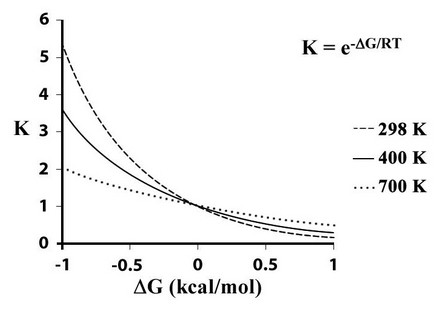 Figure 1: Equilibrium distribution of two conformers at different temperatures given the free energy of their interconversion. (modified from Mr.Holmium). The substrate binds more tightly to R because:
-
A
T has a higher affinity for the substrate than R.
-
B
R has a higher affinity for the substrate than T.
-
C
there are 10 000 times more T conformation molecules than R conformation molecules.
-
D
the value of the equilibrium constant does not change.
Reveal answer details
Close answer details
Correct answerB
ExplanationIf a molecule has a high affinity for something, it is likely to be associated with it maximally. The substrate binds more tightly to the R conformation even though the R conformation is present in small amounts because R has a higher affinity for the substrate than T.
Question 56
Single choice
Band theory explains the conductivity of certain solids by stating that the atomic orbitals of the individual atoms in the solid merge to produce a series of atomic orbitals comprising the entire solid. The closely-spaced energy levels of the orbitals form bands. The band corresponding to the outermost occupied subshell of the original atoms is called the valence band. If partially full, as in metals, it serves as a conduction band through which electrons can move freely. If the valence band is full, then electrons must be raised to a higher band for conduction to occur. The greater the band gap between the separate valence and conduction bands, the poorer the material's conductivity. Figure 1 shows the valence and conduction bands of a semiconductor, which is intermediate in conductivity between conductors and insulators. 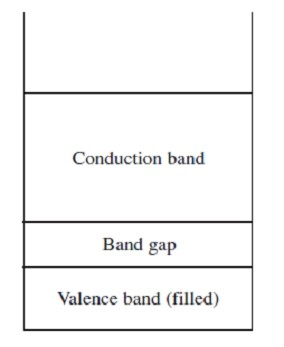 Figure 1 When silicon, a semiconductor with tetrahedral covalent bonds, is heated, a few electrons escape into the conduction band. Doping the silicon with a few phosphorus atoms provides unbonded electrons that escape more easily, increasing conductivity. Doping with boron produces holes in the bonding structure, which may be filled by movement of nearby electrons within the lattice. When a semiconductor in an electric circuit has excess electrons on one side and holes on the other, electron flow occurs more easily from the side with excess electrons to the side with holes than in the reverse direction. 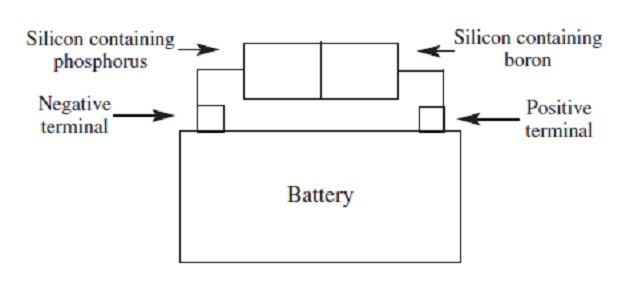 Figure 2 The energy of the band gap for pure silicon is about 1.1 electron volts. If a 1.5-volt electrical potential is connected across a sample of silicon:
-
A
the electrons would jump to the conduction band and the silicon would conduct.
-
B
the holes in the silicon lattice would move.
-
C
the energy of the band gap would be lowered.
-
D
the silicon would not conduct.
Reveal answer details
Close answer details
Correct answerA
ExplanationSince the band gap is 1.1 eV, an applied voltage in excess of 1.1 V would give the electrons enough energy to cross the band gap and populate the conduction band. (You should know that an electron volt is equal to the energy required to move an electron through a potential difference of one volt.)
Choice A is therefore the correct response.
Choice B is wrong because pure, undoped silicon doesn't have any holes.
The passage states that holes are produced when the silicon is doped with boron choice C is wrong because there is no information in the passage that suggests that the band gap is affected by an external potential.
Choice D is wrong because the electrons do have enough energy to overcome the band gap and would move into the conduction band.
Question 57
Single choice
In 1972, Georges Ungar reported the discovery of a peptide that appeared to transfer learning. Ungar's claim was based on experiments in which rats placed in a chamber with specially designed dark and light regions were trained to avoid the dark regions of the chamber. Following their training, the rats were killed and brain extracts were prepared. These brain extracts were injected into naive rats which were then observed to acquire the fear of darkness without training. Two hypotheses were proposed to explain these remarkable results: Hypothesis 1
Ungar concluded that the extracts contained some chemical that transmitted the learned fear of darkness to the naive rats. A fifteen amino-acid polypeptide was isolated from the brain extracts and sequenced.
Ungar claimed that this peptide, called scotophobin, was a chemical transmitter of learning. The peptide had the primary structure shown below: C-ser-asp-asn-arg-gln-gln-gly-lys-ser-ala-arg-gln-glygly-tyr-N scotophobin Hypothesis 2
Other researchers, who tested scotophobin but could not reproduce Ungar's results, argued that scotophobin did not transfer the learned fear of darkness. Instead, they suggested that scotophobin, which is structurally similar to ACTH and vasopressin, acted to increase stress in the rats. Since stress increases sympathetic nervous activity, rats injected with scotophobin would become hyperactive and tend to spend less time in the dark regions of the experimental chamber. They argued that such stress responses in the rats could be misinterpreted as a fear of darkness. Ungar's claim was further weakened by chemical analysis in which both the scotophobin extracts which Ungar had injected into the naive rats and a sample of synthesized scotophobin peptide were subjected to SDS polyacrylamide gel electrophoresis, as shown in Figure 1. 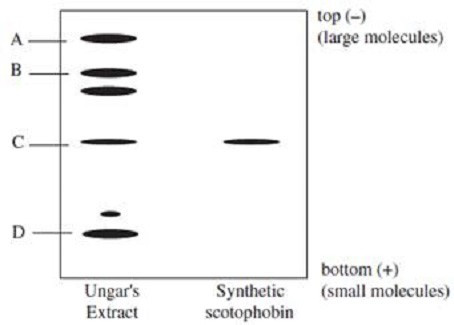 Figure 1 In a follow-up experiment, researchers administered scotophobin to rats in order to examine its physiological effects. Which of the following observations of physiological effects in the rat would provide the best support for Hypothesis 2?
-
A
-
B
The rat pupils dilate causing the rat to prefer darkness and avoid light
-
C
-
D
Dilation of arterioles regulating blood flow to the digestive tract
Reveal answer details
Close answer details
Correct answerC
ExplanationHypothesis 2 states that scotophobin, which is similar to ACTH and ADH, increases sympathetic activity.
Thus, any observation of ACTH or ADH-like effects, or of increased sympathetic activity (fight-or-flight) would support Hypothesis 2.
Only Choice C, increased heart rate, is a result of increased sympathetic activity.
Choice A is incorrect because ADH-like activity would tend to decrease urine volume by increasing water reabsorption in the collecting duct of the nephron.
Choice B is incorrect because, although sympathetic activity will lead to pupil dilation, if this causes the rats to prefer darkness then it does not support Hypothesis 2 which tries to explain why an increase in sympathetic activity would cause the rats to avoid darkness.
Choice D is incorrect because sympathetic activity will tend to decrease blood flow to the digestive tract.
Dilating arterioles would increase blood flow. Also, vasopressin acts to constrict blood vessels and increase blood pressure.
Question 58
Single choice
The body compensates for increased environmental temperature by:
-
A
decreasing salt retention.
-
B
increasing respiration rate.
-
C
-
D
increasing water lost through skin.
Reveal answer details
Close answer details
Correct answerD
ExplanationThe body compensates for increased environmental temperature by sweating and losing water through the skin. Respiration and heart rate increase during exercise in response to internal demand for more oxygen.
Salt retention has little to do with environmental temperature.
Question 59
Single choice
Artificial kidneys have been used for almost 50 years to treat patients with different forms of renal failure.
The artificial kidney (dialysis machine) removes unwanted substances from the blood by diffusion. A patient's blood is passed through channels bounded by a porous, semi-permeable membrane that allows the free diffusion in both directions of all plasma constituents except the plasma proteins. Erythrocytes and other cellular components of blood cannot pass through the membrane. The other side of the membrane is exposed to the dialyzing fluid which carries away the unwanted materials.
If the concentration of a material in the blood is greater than in the dialyzing fluid, there will be a net flow of the material from the plasma to the dialyzing fluid. If the concentration of a material in the blood is less than in the dialyzing fluid, there will be a net flow of the material from the dialyzing fluid into the blood. The composition of normal plasma, plasma in an individual suffering renal failure, and dialyzing fluid are shown in Table 1. 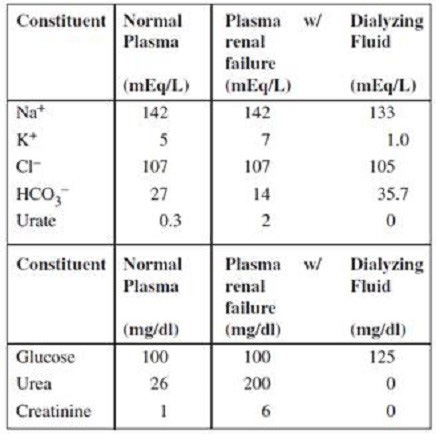 Table 1 Dialysis replaces some functions of the kidneys and attempts to correct the effects of renal failure. For example, patients with renal failure develop acidosis due to a buildup of metabolically produced acids in the circulation. Without dialysis, the pH of the blood will drop and coma may occur. Dialyzing fluid contains a relatively high concentration of bicarbonate which diffuses into the circulation and neutralizes the acid. The semi-permeable membrane of the dialysis machine functions in a manner most analogous to which part of the kidney?
-
A
-
B
-
C
Descending loop of Henle endothelium
-
D
Reveal answer details
Close answer details
Correct answerA
ExplanationThe glomerulus functions like a sieve, allowing the filtration (movement from the circulation into the nephron tubule) of small molecules while blocking the filtration of the plasma proteins. The semi-permeable membrane serves an analogous function in the dialysis machine.
Choice B is incorrect because the ureter is merely a tube connecting the kidney to the bladder.
Choice C is incorrect because the descending loop of Henle endothelium does not serve a filtration function. The primary action of the descending loop is reabsorption of water.
Choice D is incorrect because the vasa recta are the capillaries that supply nutrients to the nephron.
Question 60
Single choice
...Squeaking sand produces sounds with very high frequencies -- between 500 and 2,500 hertz, lasting less than a quarter of a second. The peals are musically pure, often containing four or five harmonic overtones. Booming sand makes louder, low-frequency sounds of 50 to 300 hertz, which may last as long as 15 minutes in larger dunes (although typically they last for seconds or less). In addition, they are rather noisy, containing a multitude of nearby frequencies. Booms have never been observed to contain more than one harmonic of the fundamental tone.
These dramatic differences once led to a consensus that although both types of sand produce acoustic emissions, the ways in which they do so must be substantially different.... In the late 1970s, however, Peter K. Haff, then at the California Institute of Technology, produced squeaks in booming sand, suggesting a closer connection between the two.
Both kinds of sand must be displaced to make sounds. Walking on some sand, for example, forces the sand underfoot to move down and out, producing squeaks. In the case of booming sand, displacement occurs during avalanches. It is within the avalanche that sound begins and where the answers must be hiding.
Before an avalanche can occur, winds must build a dune up to a certain angle, usually about 35 degrees for dry desert sand. Once an angle is achieved, the sand on the leeward side of the dune begins to slump.
Intact layers of sand slip over the layers below, like a sheared deck of cards. At the same time, the individual grains in the upper layers tumble over the grains underneath, momentarily falling into the spaces between them and bouncing out again to continue their downward journey. Their concerted up-and-down motion is believed to be the secret source of sound. Fully developed avalanches, in which sliding plates of sand remain intact for most of their motion, have the greatest acoustic output. In some places, where large amounts of sand are involved, booming can be heard up to 10 kilometers away.
Because it is caused by large volumes of shearing sand, the roaring is also loud. In fact, sounds made by booming sand can be nearly deafening, and the vibrations causing them can be so intense that standing in their midst is nearly impossible.
A good place to start in exploring the vibrational properties of sand is with the grains themselves. The mean diameter of most sand grains, whether acoustically active or not, is about 300 microns. Usually the grains in a booming dune are very similar in size, especially near the leeward crest, where the sound most
often originates; such uniformity allows for more efficient shearing. Otherwise, the smaller grains impede
the smooth motion of the larger ones. Similar sizes do not alone allow sand to boom. On the contrary, the booming sands of Korizo and Gelf Kebib, also in Libya, feature an uncharacteristically broad range of particle sizes. Moreover, silent dune sand often contains grains somewhat similar to nearby booming sand.
Grains of booming sand also tend to have uncommonly smooth surfaces, with protrusions on the scale of
mere microns. Booming dunes are often found at the downwind end of large sand sources; having
bounced and rolled across the desert for long distances, the sand grains in these dunes are usually highly polished. Over time a grain can also be polished by repeated shifts within a moving dune. And squeaking sand as well tends to be exceptionally smooth.... ...Another important factor is humidity, because moisture can modify the friction between grains or cause sand to clump together, thus precluding shearing. Sounds occur in those parts of the dune that dry the fastest. Precipitation may be rare in the desert, but dunes retain water with remarkable efficiency. Sand near the surface dries quickly, however, and sand around a dune's crest tends to dry the fastest. Which of the following discoveries would give the most support to the hypothesis that squeaking sand and booming sand differ only in the mechanism by which the sounds are produced?
-
A
Avalanches can be induced in squeaking sand.
-
B
Squeaking sand can be made to generate booming sounds.
-
C
Booming sounds made by dunes can be generated by mechanisms other than avalanches.
-
D
Smooth grains are not a requirement for booming sand.
Reveal answer details
Close answer details
Correct answerB
ExplanationParagraph two of the passage contains a rather tantalizing piece of information about the two kinds of sand: squeaking sounds can be produced by sand that normally "booms." This is however not developed in the rest of the passage. In this question we are asked to consider what may be a rather radical hypothesis: that there is nothing unique about either squeaking or booming sand in terms of intrinsic physical or chemical properties; the same sand can be either kind, depending simply upon how the sound
is created. We already know that booming sand can generate squeaking sounds; if, conversely, sand that is traditionally characterized as squeaking can actually produce booming, then this would strongly suggest that the hypothesis may be correct.
All the other answer choices fail to address the hypothesis.
Choice A is very close to the correct choice: we know that avalanches are what create booming in booming sand. If squeaking sand can be induced to undergo avalanches, this might lead us to think that squeaking sand is similar to booming sand. However, we are not told in choice A that these avalanches produce the booming sound that essentially defines booming sand: it may be that the avalanches in squeaking sand are silent, and thus there may be something about booming sand that produces noise when undergoing an avalanche.
Choice C is incorrect because even if we discover that there are alternate ways to generate "booming," there is no reason to believe that squeaking sand will boom via these mechanisms. It is possible that only sand with certain characteristics will boom through these processes, but that squeaking sand just does not possess these characteristics.
Choice D is also incorrect since even if rough sand grains can boom, there may be other requirements for the sand that squeaking sand does not satisfy.
Question 61
Single choice
X-rays are produced by a device which beams electrons with an energy between 103 and 106 eV at a metal plate. The electrons interact with the metal plate and are stopped by it. Much of the energy of the incoming electrons is released in the form of X-rays, which are highenergy photons of electromagnetic radiation. An example of such a device is shown below. Electrons are accelerated from the cathode towards the anode by an electric field. 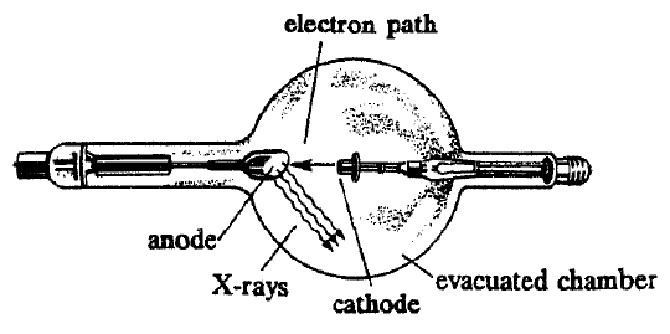 There are two mechanisms by which the X-rays are produced within the metal. The first mechanism is called bremsstrahlung, which is German for "breaking radiation." X-rays are emitted by the electrons as they are brought to rest by interactions with the positive nuclei of the anode. The second mechanism occurs when an incoming electron knocks an inner electron out of one of the metal atoms of the anode. This electron is replaced by an electron from a higher energy level of the atom, and a photon making up the energy difference is emitted.
X-rays are absorbed by a material when they pass through it. The amount of X-rays absorbed increases with the density of the material. In addition, lower energy X-rays are more likely to be absorbed than higher
energy X-rays. (Note: 1 eV = 1.6 x 10¹⁹J; Planck's constant h = 4.1 x 10⁻¹⁵ eV-s; speed of light c = 3 x
108 m/s.) Which of the following graphs best represents the relationship between the amount of X-rays absorbed per unit length of material and the energy of the X-rays, for lead, bone, and air? 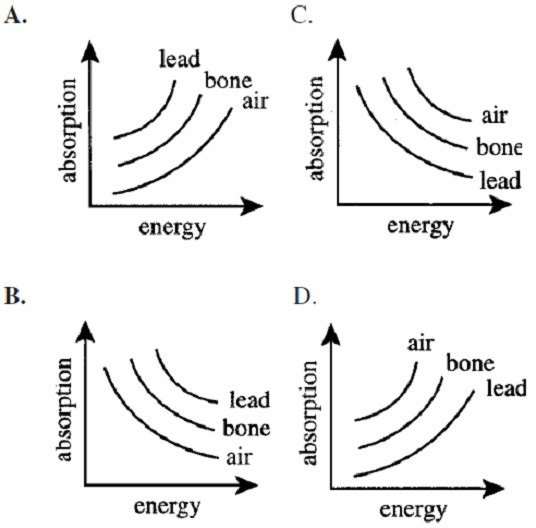
-
A
-
B
-
C
-
D
Reveal answer details
Close answer details
Correct answerB
ExplanationIn this question we are asked to choose which of the four graphs best represents the absorption of X-rays versus the energy of X-rays for three materials with different densities. Now, we are told in the passage that lower energy X-rays are absorbed more readily than higher energy X-rays. Therefore, we are looking for a graph in which the absorption increases as the energy decreases, and this allows us to eliminate answer choices A and D, leaving us with choices B and C. We are also told in the passage that materials with high densities absorb X-rays more readily than materials with lower densities. Recall that lead has a higher density than air, and that bone is intermediate between the two. Therefore, we are looking for a graph that shows the materials in the following order for a particular energy; lead with highest absorption,
then bone, then air. The only answer choice that fits this is B, and this is indeed the correct answer.
Question 62
Single choice
The automobile airbag was designed to inflate upon impact and decrease the risk of injury to drivers and passengers. Among the challenges to its development was the need to find a reliable inflation mechanism that was sufficiently rapid, controllable, and nontoxic. Prototypes employing compressed gases failed to meet these criteria. Researchers thus turned their attention to chemical alternatives. The ideal inflatant requires a chemical reaction in which the reactants are stable and relatively dense in the condensed phase while the products are mostly or completely gaseous at ambient temperature and pressure. Additionally, the ideal chemical reaction would require a low activation energy and have a high kinetic rate constant, without the large exothermicity characteristic of most such reactions. Traditional explosives such as nitroglycerin, C3H5N3O9(l), were rejected almost immediately because of the extremely exothermic nature of their conversion. Benign solids such as calcium carbonate, CaCO3 , were similarly rejected, because of their large activation requirements. The desired attributes were finally found in sodium azide, NaN3, a stable, dense, ionic solid which rapidly decomposes into elemental sodium and nitrogen gas when ignited by an electrical impulse.  Reaction 1 The gas generating mixture includes excess KNO3 which reacts with the sodium metal from Reaction 1 to produce additional N2 and potassium and sodium oxides (Reactions 2 and 3). These oxides react with SiO2 to produce a non-toxic and stable alkaline silica (glass).  Reaction 2  Reaction 3 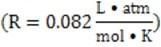 Potassium chlorate, KClO3(s), decomposes when heated, yet it is unsuitable as an airbag inflatant. All of the following characteristics of KClO3 make it a poor candidate for an air bag inflatant EXCEPT:
-
A
the decomposition requires a steady supply of energy due to its high activation energy and low exothermicity.
-
B
the oxygen gas formed upon decomposition creates a combustion hazard during an automobile accident.
-
C
the potassium chloride formed upon decomposition is a dense solid.
-
D
the oxygen gas formed upon decomposition leads to rapid expansion of the reaction mixture.
Reveal answer details
Close answer details
Correct answerD
ExplanationD is correct because rapid expansion is a key requirement of any airbag inflatant. The airbag must inflate before the driver and passenger hit the windshield. All the other statements are true and are reasons why potassium chlorate is not suitable as an airbag inflatant.
Question 63
Single choice
If tension in the string remains constant but the diameter of the sitting is doubled, what will be the effect on speed of transverse waves in the string?
-
A
-
B
-
C
-
D
Reveal answer details
Close answer details
Question 64
Single choice
What is the structure associate with BF3 molecule?
-
A
-
B
-
C
-
D
Reveal answer details
Close answer details
Question 65
Single choice
The simple harmonic motion of a mass suspended from vertical springs is investigated in two experiments.
The springs used in both experiments have a spring constant k and a natural length L0. The material used to make the springs has a Young's modulus of 2 x 10¹¹ Pa. In the first experiment a mass m is suspended from a spring. The mass stretches the spring to a new length L, called the equilibrium length. In the second experiment the mass m is suspended from two identical springs as shown in Figure 2 below.
When the mass m is in equilibrium, each spring is stretched from its natural length by the same amount xe. In both experiments the masses of the springs are negligible, and the elastic limits of the springs are never exceeded. 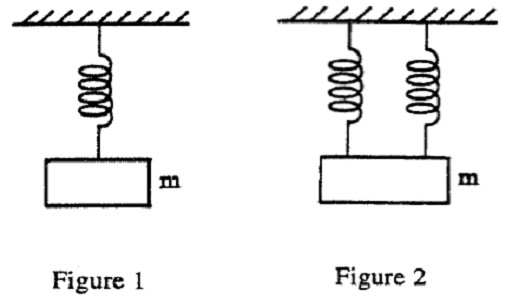 The two springs in Experiment 2 are replaced by a single spring having a spring constant k' such that the equilibrium length xe does not change. What is the ratio of k' to k? 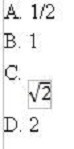
-
A
-
B
-
C
-
D
Reveal answer details
Close answer details
Question 66
Single choice
Which of the following phases are common to cells undergoing meiosis and mitosis? I. G0 phase
II. G2 phase
III. S phase
-
A
-
B
-
C
-
D
Reveal answer details
Close answer details
Correct answerC
ExplanationThis question asks the examinee to determine a phase within the cell life cycle that is common to both mitotic-dividing cells and meiotic-dividing cells. The cell cycle is composed of interphase and M phase. In mitotic-dividing cells, interphase includes G1 phase, S phase, G2 phase, and in highly specialized cells, such as neurons, a G0 phase. Similarly, meiotic-dividing cells include interphase and M phase, but germ cells do not exist in growth arrest phase (G0). Thus, II and III are correct making answer choice C the best answer.
Question 67
Single choice
Which of the following best illustrates the contracted state of the sarcomere shown below? 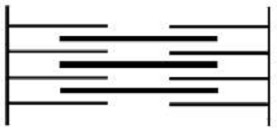 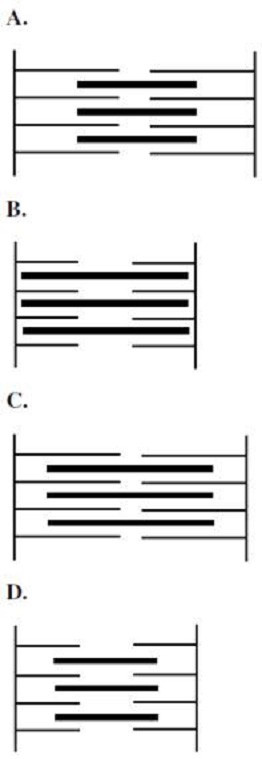
-
A
-
B
-
C
-
D
Reveal answer details
Close answer details
Correct answerC
ExplanationThe sarcomere illustrated in the question stem consists of thin and thick filaments. Contraction occurs through the sliding of the thin filaments along the thick filaments, towards the center of the sarcomere. During this contraction, the length of both the thick and thin filaments remains unchanged. This sliding can be seen in the increased overlap between thick and thin filaments.
Choice A is incorrect because it indicates that the thick filaments have shortened.
Choice B is incorrect because it indicates that the thin filaments have shortened.
Choice D is incorrect because it indicates that both the thick and thin filaments have shortened.
Question 68
Single choice
Electromagnetic radiation from space constantly bombards the earth. Most wavelengths are absorbed by
the atmosphere; however, there are two "windows" of nonabsorption through which significant amounts of
radiation reach the ground. The first transmits ultraviolet and visible light, as well as infrared light or heat;
the second transmits radio waves. As a result, terrestrial organisms have evolved a number of pigments that interact with light in various ways: some capture light energy, some provide protection from light-induced damage, and some serve camouflage or signaling purposes. Among these compounds are many conjugated polyenes, which play important roles as photoreceptors.
For every chemical compound, there are certain wavelengths of light whose quanta possess exactly the correct amount of energy to raise electrons from their ground state to higher-energy orbitals. For most organic compounds, these wavelengths are in the UV range. However, conjugated double bond systems stabilize the electrons, so that they can be excited by lower-frequency photons with wavelengths in the visible spectrum. Such a pigment, known as a chromophore, will then transmit the "subtraction color," a color complementary to the one absorbed. For instance, carotene, a hydrocarbon compound with eleven conjugated double bonds, absorbs blue light and transmits orange. The wavelength that is absorbed
generally increases with the number of conjugated bonds; rings and side-chains also affect wavelength. Wavelength Color Subtraction Color
480 nm blue orange
580 nm yellow violet
680 nm red green
Among the many biological molecules that are affected by light is DNA, the genetic material of living
organisms. DNA absorbs ultraviolet light, and may be damaged by UVC (< 280 nm) and UVB (280-315
nm). UVA (315-400 nm) and visible light can actually repair light-induced damage to DNA by a process called photorepair. For this reason, UVA, which also stimulates tanning, was once considered beneficial.
However, there is now increasing evidence that UVA can damage skin. Two pigments are identical except for the lengths of their conjugated polyene chains. The first transmits yellow light and the second red. What can be said about the sizes of the chromophores?
-
A
-
B
-
C
One of the chromophores must be a dimer.
-
D
The comparative lengths cannot be determined.
Reveal answer details
Close answer details
Correct answerB
ExplanationFor each compound, the light that's transmitted is complementary in color to the light absorbed; thus, the first chromophore must absorb violet light and the second must absorb green light. Violet light has a shorter wavelength than green, meaning it has a higher energy. You're told that longer chromophores generally absorb longer-wavelength light than shorter ones, so the one that absorbs the green light, and therefore has a red color, must be the longer one. This makes B correct and A and D incorrect. Even though you know one pigment is longer, there's no basis for concluding that it is a dimer (meaning a compound made up of two identical subunits), so choice C is definitely wrong.
Question 69
Single choice
A person suffering from severe dehydration and starvation would NOT be expected to have elevated plasma concentrations for which of the following hormones?
-
A
Antidiuretic hormone (ADH)
-
B
-
C
-
D
Reveal answer details
Close answer details
Correct answerD
ExplanationThis question asks you to determine the body's physiological response to the extreme conditions of dehydration and starvation. In such cases, the person would be expected to have low blood pressure and low nutrients (i.e. proteins, carbohydrates, and lipids). As a result, the body will respond by producing hormones that increase blood pressure and mobilize stored nutrients (glycogen, fat, etc.). ADH and aldosterone both increase blood pressure so they would be expected to appear in high plasma concentrations in response to the low blood pressure, eliminating choices A and
C. Cortisol would be expected in high plasma to increase carbohydrate, protein, and fat availability, making B false. That leaves answer choice
D. Insulin lowers blood glucose levels, which is expected to appear in the blood after a sugary meal. In the case of starvation, the body would respond by increasing blood glucose levels via the production of glucagon.
Question 70
Single choice
Several techniques have been developed to determine the order of a reaction. The rate of a reaction cannot be predicted on the basis of the overall equation, but can be predicted on the basis of the rate-determining step. For instance, the following reaction can be broken down into three steps. 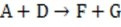 Step 1  (Slow)
Step 2 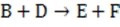 (fast)
Step 3  (fast) Reaction 1
In this case, the first step in the reaction pathway is the rate-determining step. Therefore, the overall rate of the reaction must equal the rate of the first step, k1 [A] where k1 is the rate constant for the first step. (Rate constants of the different steps are denoted by kx , where x is the step number.) In some cases, it is desirable to measure the rate of a reaction in relation to only one species. In a second-order reaction, for instance, a large excess of one species is included in the reaction vessel. Since a relatively small amount of this large concentration is reacted, we assume that the concentration essentially remains unchanged. Such a reaction is called a pseudo first-order reaction. A new rate constant, k', is established, equal to the product of the rate constant of the original reaction, k, and the concentration of the species in excess. This approach is often used to analyze enzyme activity. In some cases, the reaction rate may be dependent on the concentration of a short-lived intermediate. This can happen if the rate-determining step is not the first step. In this case, the concentration of the intermediate must be derived from the equilibrium constant of the preceding step. For redox reactions, the equilibrium can be correlated with the voltage produced by two half-cells by means of the Nernst equation.
This equation states that at any given moment: 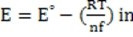  Equation 1
When  Reaction 2
Note: R = 8.314 J/K-mol; F = 9.6485 x 10⁴ C/mol.) Catalysts are effective in increasing the rate of a reaction because they:
-
A
increase the energy of the activated complex.
-
B
increase the value of the equilibrium constant.
-
C
decrease the number of collisions between reactant molecules.
-
D
lower the activation energy
Reveal answer details
Close answer details
Correct answerD
ExplanationActivation energy is the minimum energy needed for a reaction to occur. Catalysts are effective because they lower the activation energy of the reaction; as a result, there are more reactant molecules with
sufficient kinetic energy to collide and react with each other. An increase in the number of colliding molecules will result in a faster reaction, so choice D is correct.
Choice C is incorrect because a catalyst ensures that the number of collisions between reactant molecules increases. In a chemical equilibrium, the rate of the forward reaction is equal to the rate of the reverse reaction. If a catalyst is added to increase the rate of the forward reaction, the system adjusts so that the reverse rate can rise to match the forward rate.
A catalyst, therefore, does not affect the value of the equilibrium constant, but does affect the speed at which the equilibrium is reached. So, choice B is incorrect. Finally,
choice A is incorrect because increasing the energy of the activated complex is the same as increasing the activation energy of the reaction. An activated complex forms when reactant molecules meet. These molecules can combine to form products, or fall apart into their original reactants. Obviously, if the energy barrier to form this complex is higher, the reactant molecules would decrease the rate of reaction, and choice A is incorrect.
Question 71
Single choice
Researchers are currently trying to develop materials which could be used to replace damaged or destroyed human muscle tissue. One of the more promising avenues of research involves the use of substances that contract with the application of a small electric current. Two physicists published an article relating to their work with Substance Q42, a material which contracts with the application of very small electric currents. The atomic structure of the substance, they report, is designed so that the magnetic fields from each atom maintain a certain distance between adjacent atoms. With the application of an electrical current, the atoms' magnetic fields are dampened slightly, causing them to draw closer together. The extent to which it contracts is dependent upon the strength of the current passing through it, but will at any rate never exceed a 20% reduction in length. Moreover, the physicists report, Substance Q42 essentially operated like a spring, but one which can compress itself. The force generated by a spring, Fs, is given by the following equation: Fs = -kx, where k is the spring of constant in N/m, and x is the distance of compression (or expansion, but that is irrelevant for this example, since Substance Q42 only compresses). With this in mind, it is possible to calculate the feasibility of using Substance Q42 as a replacement for human muscle tissue. Assume a section of test Substance Q42 is hooked to a scalable electrical source.
The section is 10 cm long at its fully extended state, and 8 cm long when fully compressed due to an electrical current. If an artificial arm muscle must be capable of doing 8 J work in 0.5 seconds time in order to efficiently substitute for human tissue, what average power must the section of Substance Q42 be capable of?
-
A
-
B
-
C
-
D
Reveal answer details
Close answer details
Correct answerA
ExplanationAverage power is given by equation Pavg = W/T. Here, Pavg = 8J/0.5 sec = 8/(1/2) = 2(8)/1 = 16 J/s = 16
watts.
Question 72
Single choice
The lead-acid battery, also called a lead storage battery, is the battery of choice for starting automobiles. It contains 6 cells connected in series, each composed of a lead oxide cathode "sandwiched" between 2 lead anodes. Insulating separators are placed between the electrodes to prevent internal short-circuits.
Aqueous sulfuric acid is the electrolyte. When the battery is being discharged, the following reaction takes place:  Reaction 1
The electrode reactions, both written as reductions, are shown in Table 1. Table 1
Half-reaction
E?V)
PbO2(s) + SO42-(aq) + 4H+(aq) + 2e-
PbSO4(s) + 2H2O
PbSO4(s) + 2e- Pb(s) + SO42-(aq)
1.69 ?.36 As a car operates, the battery is recharged by electricity produced by the car's alternator, an AC generator whose ultimate power source is the car's internal combustion engine. In spite of this, batteries eventually lose their power. The battery is said to be "dead" when Reaction 1 has proceeded completely to the right. Which of the following occurs as the battery is being recharged? 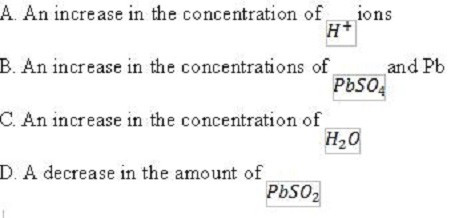
-
A
-
B
-
C
-
D
Reveal answer details
Close answer details
Correct answerA
ExplanationThe battery is being recharged, so Reaction 1 is proceeding to the left. Since aqueous sulfuric acid, H2SO4, is one of the products of recharging, the concentration of H+ will increase, making choice A the correct answer.
Choice B is wrong because PbSO4 (s) is serving as a reactant during recharging, and is therefore consumed during the reaction.
Choice C is wrong because water is also a reactant during recharging.
Choice D is wrong because the amount of lead oxide increases, not decreases as the battery is being recharged.
Question 73
Single choice
A student conducts a chemical analysis of the components of a popular soft drink. The beverage label shows that the drink contains carbonated water, phosphoric acid, caffeine, and caramel color, but does not indicate the concentrations of these chemicals. 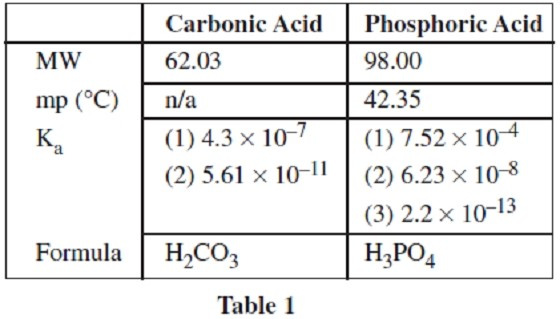 Dissolved carbon dioxide will react reversibly with water to form carbonic acid. In an attempt to analyze the beverage composition, the student conducts the following experiments on a one liter sample of the beverage.
Experiment 1
The sample is placed in a sealed beaker cooled to 10?C and a vacuum is created in the space above the beverage. The gas pumped from this space is passed through a solution of BaCl2, producing a white precipitate. The process continues until no more precipitate forms. The precipitate is dried and found to have a mass of 9.5 grams.
Experiment 2
The remaining solution left in the sealed beaker is then titrated with 0.01 M NaOH to give the titration curve shown in Figure 1. 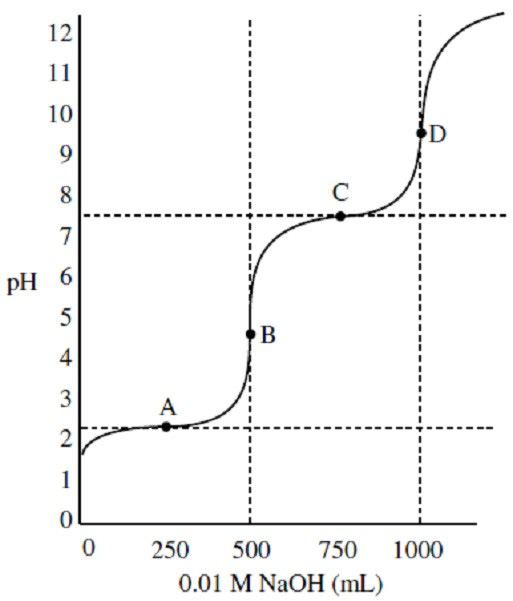 Figure 1
The student uses the data from Experiment 1 and Experiment 2 to calculate the initial pH of the beverage.
If a significant quantity of precipitate was lost in the drying process of Experiment 1, the calculated pH:
-
A
would be less than the actual pH.
-
B
would be greater than the actual pH.
-
C
would be the same as the actual pH.
-
D
would differ from the actual pH in a random manner.
Reveal answer details
Close answer details
Correct answerB
ExplanationIf a significant quantity of precipitate were lost, the student would conclude that there was less carbonic acid than was actually present. This would lead to the calculation of a less acidic, higher pH, than the actual pH.
Question 74
Single choice
Gauguin's attitude toward art marked a break from the past and a beginning to modern art. Like all Post-
Impressionist artists, he passed through an Impressionist phase but became quickly dissatisfied with the limitations of the style, and went on to discover a new style that had the directness and universality of a symbol and that concentrated on impressions, ideas and experiences. The beginning of his modern tradition lay in his rejection of Impressionism. He considered naturalism an error to be avoided. He was preoccupied with suggestion rather than description, seeking to portray not the exterior, but the essence of things in their purest, simplest, and most primitive form, which could only be achieved through simplification of the form. He firmly believed throughout his life that "art is an abstraction" and that "this abstraction [must be derived] from nature while dreaming before it." One must think of the creation that will result rather than the model, and not try to render the model exactly as one sees it. This was the birth of "Synthetism" or rather Synthetist-Symbolic, as Gauguin referred to it, using the term "symbolic" to indicate that the forms and patterns in his pictures were meant to suggest mental images or ideas and not simply to record visual experience. Symbolism flourished around the period of 1885 to 1910 and can be defined as the rejection of direct, literal representation in favor of evocation and suggestion. Painters tried to give a visual expression to emotional experiences, and therefore the movement was a reaction against the naturalistic aims of Impressionism. Satisfying the need for a more spiritual or emotional approach in art, Symbolism is characterized by the desire to seek refuge in a dreamworld of beauty and the belief that color and line in themselves could express ideas. Stylistically, the tendency was towards flattened forms and broad areas of color, and features of the movement were an intense religious feeling and an interest in subjects of death, disease, and sin. Similarly, "Synthetism" involved the simplification of forms into large-scale patterns and the expressive purification of colors. Form and color had to be simplified for the sake of expression. This style reacted against the "formlessness" of Impressionism and favored painting subjectively and expressing one's ideas rather than relying on external objects as subject matters. It was characterized by areas of pure colors, very defined contours, an emphasis on pattern and decorative qualities, and a relative absence of shadows. Gauguin's new art form merged these two movements and succeeded in freeing color, form, and line, bringing it to express the artists' emotions, sensibilities, and personal experiences of the world around them. His style created a break with the old tradition of descriptive naturalism and favored the synthesis of observation and imagination. Gauguin sustained that forms are not discovered in nature but in one's wild imagination, and it was in himself that he searched rather than in his surroundings. For this reason, he scorned the Impressionists for their lack of imagination and their mere scientific reasoning. Furthermore, Gauguin used color unnaturalistically for its decorative or emotional effect and reintroduced emphatic outlines. "Synthetism" signified for him that the forms of his pictures were constructed from symbolic patterns of color and linear rhythms and were not mere scientific reproductions of what is seen by the eye. Dempsey, A., & Dempsey, A. (2010). Styles, Schools and Movements: The Essential Encyclopaedic Guide to Modern Art. London: Thames & Hudson. Which of the following hypothetical pieces of evidence would diminish the author's claims about the importance of Gauguin?
-
A
Evidence that Gauguin's style of painting was based on work by van Gogh and other painters active during the 1870s and 80s.
-
B
Evidence that both Gauguin and the Impressionists rejected the more formal and conventional realism of the early 1800s.
-
C
Photographic evidence that some of Gauguin's works bear no apparent resemblance to the landscape they were supposedly based on.
-
D
Evidence that the Impressionists' works were considered just as shocking and revolutionary in their time as Gauguin's work would later be.
Reveal answer details
Close answer details
Correct answerA
ExplanationThis Reasoning Beyond the Text question requires you to understand the author's main claims about Gauguin. The passage states that Gauguin's work "marked a break from the past" and describes him as a key originator of many aspects of Symbolism. If he instead borrowed these ideas and techniques from others, his influence and originality would be less, and his painting would represent less of a dramatic break from earlier work.
B - incorrect. The fact that both groups rejected an earlier style does not diminish the importance of the break between the two of them.
C - incorrect. This choice would reinforce the author's claims, since the passage focuses on Gauguin's lack of interest in accuracy.
D - incorrect. The passage does not imply that the Impressionists' work was never revolutionary.
Question 75
Single choice
Band theory explains the conductivity of certain solids by stating that the atomic orbitals of the individual atoms in the solid merge to produce a series of atomic orbitals comprising the entire solid. The closely-spaced energy levels of the orbitals form bands. The band corresponding to the outermost occupied subshell of the original atoms is called the valence band. If partially full, as in metals, it serves as a conduction band through which electrons can move freely. If the valence band is full, then electrons must be raised to a higher band for conduction to occur. The greater the band gap between the separate valence and conduction bands, the poorer the material's conductivity. Figure 1 shows the valence and conduction bands of a semiconductor, which is intermediate in conductivity between conductors and insulators. 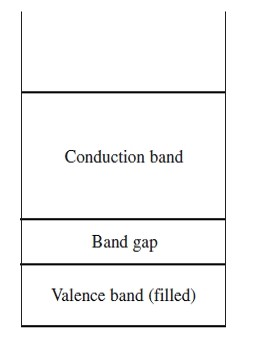 Figure 1 When silicon, a semiconductor with tetrahedral covalent bonds, is heated, a few electrons escape into the conduction band. Doping the silicon with a few phosphorus atoms provides unbonded electrons that escape more easily, increasing conductivity. Doping with boron produces holes in the bonding structure, which may be filled by movement of nearby electrons within the lattice. When a semiconductor in an electric circuit has excess electrons on one side and holes on the other, electron flow occurs more easily from the side with excess electrons to the side with holes than in the reverse direction. 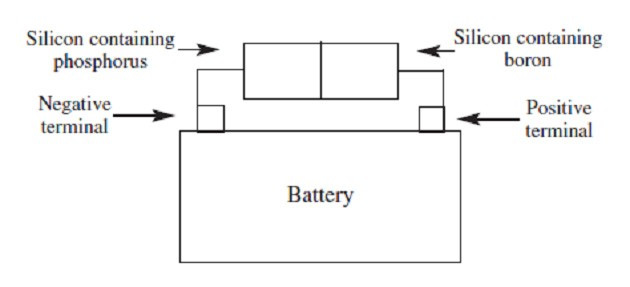 Figure 2 Why is iron a good conductor of electricity?
-
A
Its 3d electrons only partially fill the valence band.
-
B
-
C
The 4s and 3d orbitals form a filled valence band.
-
D
The energy levels of the atomic orbitals are closely separated.
Reveal answer details
Close answer details
Correct answerA
ExplanationThe passage mentions that metals have partially filled valence bands. This means that there are low energy unoccupied atomic orbitals in metals through which electrons may move freely. Therefore, the valence band for metals is the conduction band, and consequently, there is no band gap. Metals such as iron are good conductors of electricity because of these unoccupied low energy orbitals. All of this information is contained in the passage and requires little or no background knowledge.
Choice A is therefore the correct response.
Choice B is incorrect because metals, unlike semiconductors, do not have a band gap. Choice C is wrong because iron's 3d orbital is not filled; it has only six electrons, not ten.
Choice D is true of many solids including metals, semiconductors, and insulators, but it does not answer the question and so is incorrect.
Question 76
Single choice
A researcher investigated the equilibrium between CO2, C, and CO as a function of temperature. The equation is given below:  CO2(g) + C(s) 2 CO(g) Carbon dioxide, at 298 K and 1 atm, and an excess of powdered carbon were introduced into a furnace, which was then sealed so that pressure would increase as the temperature rose. The furnace was heated to, and held constant at, a predetermined temperature. The pressure within the furnace chamber was recorded after it had remained unchanged for one hour. The table below shows the pressures recorded for a series of temperatures together with the pressures expected if no reaction had taken place.
Table 1 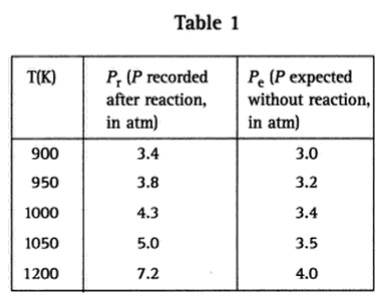 How are the values of Pe calculated?
-
A
-
B
-
C
-
D
Reveal answer details
Close answer details
Correct answerB
ExplanationPe as the table explains, is the expected pressure at each temperature if no reaction had taken place.
When the carbon dioxide is introduced into the furnace chamber, it is at a pressure of 1 atmosphere and a temperature of 298
K. Above 298 K, Pe is greater than 1 atmosphere because, at constant volume, the pressure increases as the temperature increases. Since Pe is the pressure if no reaction had taken place, any change in the number of moles of gas present does not have to be considered. Since the pressure of a gas is directly proportional to its temperature in Kelvins, the ratio of the EXPECTED pressure to the original pressure of 1 atmosphere must be equal to the ratio of the temperature of the trial to the original temperature of 298
K. The equation is as follows: Pe /(1 atm) = T/298 Solving for Pe yields answer choice B.
Question 77
Single choice
A local politician starts a task force to reduce prejudice and hate crimes, and the task force provides recommendations for increased access to education, paid community improvement projects open to people from different, possibly conflicted, groups, and stricter anti-hate ordinances to be passed at the local level. These recommendations are based on: I. Self-esteem hypothesis
II. Contact hypothesis
III. Hypothesis
IV. Legal hypothesis
-
A
-
B
-
C
-
D
Reveal answer details
Close answer details
Correct answerD
ExplanationFour main hypotheses are speculated to reduce prejudice. The self-esteem hypothesis states that when people have access to education and greater self-esteem, prejudices will go away. The contact hypothesis states that when members of different groups are brought together in order to appreciate their common experiences, prejudices will go away. Similarly, the cooperation hypothesis (not an answer choice) suggests that when conflicting groups work together towards shared goals, prejudices will go away.
Finally, the legal hypothesis suggests that when laws are enforced against discriminatory behavior, prejudices will go away. There is no assimilation hypothesis, assimilation refers to blending of minority groups into the dominant society. In this question, the task-force has recommended increased access to education (I. Self-esteem hypothesis), paid community improvement projects open to people from varied backgrounds (II. Contact hypothesis, and would include Cooperation hypothesis if this were a choice), and stricter anti-hate ordinances (IV. Legal hypothesis). All choices are correct except for III.
Question 78
Single choice
-
A
-
B
oxidation and hydrolysis.
-
C
hydrolysis and reduction.
-
D
Reveal answer details
Close answer details
Question 79
Single choice
The equation of state of an ideal gas is given by the ideal gas law:
PV = nRT
where P is the pressure, V is the volume, n is the number of moles of gas, R is the ideal gas constant, and T is the temperature of the gas. The gas particles in a container are constantly moving at various speeds.
These speeds are characterized by the Maxwell shown in the figure below. 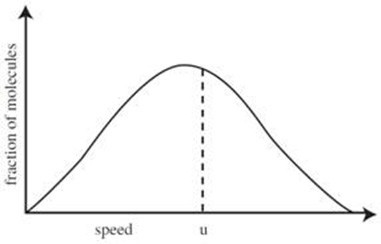 If two particles collide, their velocities change. However, if the gas is in thermal equilibrium, the velocity distribution of the gas as a whole will remain unchanged by the collision. The average kinetic energy (E) of a gas particle is given by: 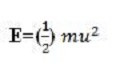 Equation 1
where m is the mass of one particle and u is the root mean square speed (rms speed) of the gas particles: 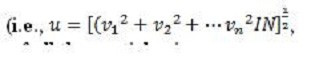 where N is the number of gas particles; this is different from the average speed). For an ideal gas, the
kinetic energy of all the particles is: 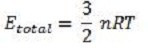 Equation 2
where n is the number of moles of gas. Combining these equations gives: 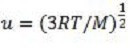 Equation 3
where M is the molar mass of the gas particles. The average distance a particle travels between collisions is known as the mean free path l. Intuitively, the mean free path (mfp) could be expected to be larger for gases at low pressure, since there is a lot of space between particles. Similarly, the mfp should be larger when the gas particles are small. The following expression for the mfp shows this to be correct. 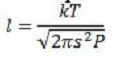 Equation 4
In this equation, s is the atomic diameter (typically on the order of 10?), k is the Boltzmann constant, and P is the pressure. In addition to colliding with one another, gas particles also collide with the walls of their container. If the container wall has a pinhole that is small compared to the mfp of the gas, and a pressure differential exists across the wall, the particles will effuse (or escape) through this pinhole without disturbing the Maxwellian distribution of the particles. The rate of effusion can be described by: 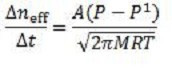 Equation 5
Where neff is the number of moles of effusing particles, A is the area of the pinhole, p and p1 are the
pressures on the inside and outside of the container wall respectively, and p>p1. Which of the following gives values for both standard temperature and pressure?
-
A
-
B
-
C
-
D
Reveal answer details
Close answer details
Correct answerD
ExplanationStandard temperature is usually expressed in either Celsius or Kelvin; for pressure, there are 3 different commonly used units. These are Torr, atmospheres, and millimeters of mercury. Conversion to other commonly used units is possible given standard temperature and pressure in one set of units. Conversion factors were not given in this problem because it is general knowledge that 1 atmosphere of pressure is equal to 760 Torr and 760 millimeters of mercury. To convert from Celsius to Kelvin, simply add 273. If you recall that standard temperature is 0 degrees Celsius, then it is a simple matter to convert to Kelvin to get choice D.
Question 80
Single choice
Studies of photosynthesis began in the late eighteenth century. One scientist found that green plants produce a substance (later shown to be oxygen) that supports the flame of a candle in a closed container.
Several years later it was discovered that a plant must be exposed to light in order to replenish this flame- sustaining "substance". Soon another discovery showed that the oxygen is formed at the expense of
another gas, carbon dioxide. In 1804, de Saussure conducted experiments revealing that equal volumes of carbon dioxide and oxygen are exchanged between a plant and the air surrounding it. De Saussure determined that the weight gained by a plant grown in a pot equals the sum of the weights of carbon derived from absorbed carbon dioxide and water absorbed through plant roots. Using this information, de Saussure was able to postulate that in photosynthesis carbon dioxide and water combine using energy in the form of light to produce carbohydrates, water, and free oxygen. Much later, in 1845, scientists' increased understanding of concepts of chemical energy led them to perceive that, through photosynthesis, light energy is transformed and stored as chemical energy. In the twentieth century, studies comparing photosynthesis in green plants and in certain sulfur bacteria yielded important information about the photosynthetic process. Because water is both a reactant and a product in the central reaction, it had long been assumed that the oxygen released by photosynthesis comes from splitting the carbon dioxide molecule. In the 1930s, however, this popular view was decisively altered by the studies of C. B. Van Niel. Van Niel studied sulfur bacteria, which use hydrogen sulfide for photosynthesis in the same way that green plants use water, and produce sulfur instead of oxygen. Van Niel saw that the use of carbon dioxide to form carbohydrates was similar in the two types of organisms.
He reasoned that the oxygen produced by green plants must derive from water -- rather than carbon dioxide, as previously assumed -- in the same way that the sulfur produced by the bacteria derives from hydrogen sulfide. Van Niel's finding was important because the earlier belief had been that oxygen was split off from carbon dioxide, and that carbon then combined with water to form carbohydrates. The new postulate was that, with green plants, hydrogen is removed from water and then combines with carbon dioxide to form the carbohydrates needed by the organism. Later, Van Niel's assertions were strongly backed by scientists who used water marked with a radioactive isotope of oxygen in order to follow photosynthetic reactions. When the photosynthetically-produced free oxygen was analyzed, the isotope was found to be present. According to the passage, C. B. Van Niel's experiments:
-
A
provided the first model of photosynthesis.
-
B
showed that the carbon dioxide molecule is split during photosynthesis.
-
C
proved that some organisms combine hydrogen sulfide with carbon dioxide in photosynthesis.
-
D
provided evidence that weakened the accepted model of photosynthesis.
Reveal answer details
Close answer details
Correct answerD
ExplanationThis is a detail question regarding Van Niel's experiments. Van Niel's work is discussed in paragraph 3.
The first three and final two sentences of the paragraph make it clear that Van Niel's studies "decisively altered" the traditional model of the photosynthetic reaction and supported a substitute conception. This idea is paraphrased in choice (D), making choice (D) correct.de Saussure worked with a model of photosynthesis back in the early nineteenth century -- a full century before Van Niel -- so choice (A) is incorrect. Choice (B) summarizes an assumption that Van Niel disproved. Choice (B) is incorrect. As for choice (C), the passage never states that Van Niel discovered or proved that sulfur bacteria used hydrogen sulfide, merely that Van Niel studied these bacteria in order to make inferences about photosynthesis in green plants. In all likelihood it was another scientist who saw that these organisms used hydrogen sulfide to make their food.
Question 81
Single choice
Hypoxia refers to a physiological condition in which the body lacks sufficient oxygen for normal cellular functioning. Prolonged hypoxia generally leads to an inhibition of mental capacity and a reduction in the work capacity of muscle. Severe cases of hypoxia can lead to coma or even death. Depending on the cause, hypoxia can be classified into four general types: Hypoxic hypoxia is a type of hypoxia that occurs when the partial pressure of oxygen in the blood is too low. For example, climbers at high altitude, where the air contains less oxygen, might experience hypoxic hypoxia because the partial pressure of oxygen in the air inhaled is very low, leading to insufficient partial pressure of oxygen in the blood. Anemic hypoxia describes a diminished ability of the blood to transport oxygen. Several factors can influence the oxygen-carrying capacity of the blood. Primary causes of anemic hypoxia include a lower than normal number of functional erythrocytes or an insufficient quantity of hemoglobin, the oxygen-carrying molecules of the blood. Abnormal hemoglobin can also decrease the blood's capacity to carry oxygen and lead to anemic hypoxia. Ischemic hypoxia is caused by a decreased delivery of blood to the tissues. Localized circulatory deficiencies, such as blood clots, and global circulatory deficiencies, such as heart failure, decrease the delivery of blood to the tissues, and can therefore cause ischemic hypoxia. Histotoxic hypoxia results from the inability of cells to utilize the oxygen available in the blood. Causes of histotoxic hypoxia include the poisoning of cellular enzymes involved in aerobic respiration, as well as the decreased metabolic capacity of the oxidative enzymes due to vitamin deficiency. Cyanide poisoning causes histotoxic hypoxia by blocking the action of cytochrome oxidase in the electron transport chain so that tissues cannot use oxygen even though it is available. A patent foramen ovale occurs when an infant's foramen ovale does not close completely at birth. Based on the information presented in the passage, this can lead to:
-
A
hypoxic hypoxia because much of the blood does not reach the lungs to be oxygenated leading to a low
-
B
anemic hypoxia because the blood does not carry enough oxygen.
-
C
ischemic hypoxia because the flow of blood is shunted away from the lungs.
-
D
Reveal answer details
Close answer details
Correct answerA
ExplanationThe foramen ovale is a shunt that diverts blood away from the lungs in the fetal circulatory route. The foramen ovale allows blood to enter the left atrium directly from the right atrium. If an infant's foramen ovale does not close completely at birth, deoxygenated blood will continue to flow from the right atrium directly to the left atrium without ever being oxygenated in the lungs. In the left atrium, the deoxygenated blood will mix with the oxygenated blood returning from the lungs.
The overall effect will be hypoxic hypoxia as the PO2 of the blood flowing to the body is decreased.
Choice B is incorrect because the defining characteristic of anemic hypoxia is the reduction of the oxygen-carrying capacity of the blood. In this case, the carrying capacity of the blood has not changed (there is no anemia or damage to hemoglobin). The problem is that much of the infant's blood never reaches the lungs to be oxygenated. The infant's blood is capable of carrying oxygen, it just does not receive enough oxygen to carry.
Choice C is incorrect because the blood flow is not shunted away from the tissues which need oxygen. In ischemic hypoxia, the movement of blood is reduced, thus reducing delivery of oxygen to the tissues. In this case, the flow of blood throughout the body is not affected. It is true that the flow of blood through the heart and lungs is not normal, but the flow of blood to the tissues is normal.
Choice D is incorrect because Choice A is correct.
Question 82
Single choice
Myoclonic epilepsy and ragged-red fiber (MERRF) is an extremely rare disorder that affects neuromuscular systems. MERRF results from a mutation in mitochondrial DNA (mtDNA) that impairs protein synthesis, oxygen consumption, and energy production. When an affected male and a normal female reproduce, which of the following best predicts the expected phenotypic ratios of the offspring?
-
A
None of the offspring will be affected.
-
B
All males and no females will be affected.
-
C
Half of males and half of females will be affected.
-
D
One-fourth of the offspring will be affected.
Reveal answer details
Close answer details
Correct answerA
ExplanationThis question is asking the examinee to determine offspring phenotypes for a gene that is located on mitochondrial DNA. Since mtDNA follows maternal inheritance, all the offspring receive their mitochondrial DNA from the mother. In this case, the MERRF-causing mutation is located on the father's mtDNA.
Therefore, the mutations are not passed on to the offspring. Since all of the offspring will receive functioning mtDNA from the mother, none of the offspring will inherit mutated genes causing MERRF.
Thus, answer choice A correct.
Question 83
Single choice
An automatic external defibrillator (AED) is simply a series of capacitors used to store a very large charge, which is then discharged through the patient's chest in a short time.
If the capacitor in an AED is fully charged and the AED is no longer connected to the power source, what will happen to the energy stored in the AED if the dielectric (k = 1.5) is removed?
-
A
increase by a factor of 1.5
-
B
increase by a factor of 2.25
-
C
decrease by a factor of 1.5
-
D
decrease by a factor of v1.5
Reveal answer details
Close answer details
Correct answerA
ExplanationExplanation: The MCAT will expect you to know a handful of equations for capacitors. The three needed to solve this question are: C = eoA / d  C = Q / V PE = (?QV According to the first equation, we see that if the dielectric is removed, capacitance will decrease by a factor of 1.5. According to the second equation, we see that a decreased capacitance can either be the result of a change in Q or a change in V. In this question, the AED is no longer connected to the battery, so there is no source of additional charges. Thus, Q will remain the same and V will increase by a factor of 1.5. Finally, by the third equation we see that if V is increased by a factor of 1.5, the potential energy will increase by a factor of 1.5. Thus, choice (A) is the correct answer.
Question 84
Single choice
Arginine is one of the 20 most common natural amino acids. Most healthy people do not need to supplement with arginine because the body usually produces sufficient quantities. The pathway for arginine synthesis was studied using cells from a red bread mold. This natural form of arginine is illustrated below. 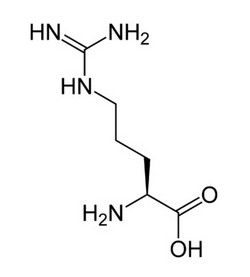 The red bread mold Neurospora crassa grows well on a cultural plate with "minimal" medium which is a fluid containing only a few simple sugars, inorganic salts, and vitamin. Neurospora that grows normally in nature (wild type) has enzymes that convert these simple substances into the amino acids necessary for growth. Mutating any one of the genes that makes an enzyme can produce a Neurospora strain that cannot grow on minimal medium. The mutant would only grow if the enzyme product were to be added as a supplement. On the other hand, if a "complete" medium is provided, containing all required amino acids, then Neurospora would grow, with or without mutation. 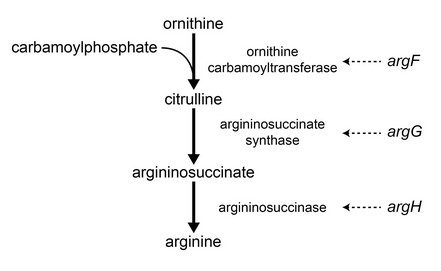 Figure 1 A synthesis pathway for the amino acid arginine. Each gene in italics in the diagram produces one enzyme necessary for the synthesis of this essential amino acid required for growth.  Table 1 Growth response of mutant strains in "minimal" media with supplements (ornithine, citrulline, argininosuccinate, and arginine) as indicated. Strain growth is indicated by (+) and no strain growth is indicated by (-). Consider tetrapeptides containing 2 equivalents each of the natural forms of arginine and proline. How many different linear tetrapeptides can be synthesized?
-
A
-
B
-
C
-
D
Reveal answer details
Close answer details
Correct answerC
ExplanationKeep in mind when considering linear polypeptides that there must be an amino end and a carboxyl end, thus RRPP is a different molecule than PPRR (Note the IUPAC official abbreviations. Arginine is abbreviated as arg or R, proline is abbreviated as pro or P). Thus, there are 6 possibilities: RRPP, RPPR, RPRP, PPRR, PRPR, PRRP. Side Notes. If you have a statistics background, you can do "4 choose 2" = 4!/2!2! = (4)(3)(2)(1)/4 = 24/4 =
6. The ability to form multiple H-bonds make arginine ideal for binding negatively charged groups. For this reason, arginine prefers to be on the outside of proteins, where it can interact with the polar environment. A tetrapeptide is an oligopeptide since it only consists of four amino acids joined by peptide bonds.
Tetrapeptides can be pharmacologically active including affinity to receptors involved in protein-protein signaling. Both linear and cyclic tetrapeptides can be found in nature.
Question 85
Single choice
The automobile airbag was designed to inflate upon impact and decrease the risk of injury to drivers and passengers. Among the challenges to its development was the need to find a reliable inflation mechanism that was sufficiently rapid, controllable, and nontoxic. Prototypes employing compressed gases failed to meet these criteria. Researchers thus turned their attention to chemical alternatives. The ideal inflatant requires a chemical reaction in which the reactants are stable and relatively dense in the condensed phase while the products are mostly or completely gaseous at ambient temperature and pressure. Additionally, the ideal chemical reaction would require a low activation energy and have a high kinetic rate constant, without the large exothermicity characteristic of most such reactions. Traditional explosives such as nitroglycerin, C3H5N3O9(l), were rejected almost immediately because of the extremely exothermic nature of their conversion. Benign solids such as calcium carbonate, CaCO3 , were similarly rejected, because of their large activation requirements. The desired attributes were finally found in sodium azide, NaN3, a stable, dense, ionic solid which rapidly decomposes into elemental sodium and nitrogen gas when ignited by an electrical impulse.  Reaction 1 The gas generating mixture includes excess KNO3 which reacts with the sodium metal from Reaction 1 to produce additional N2 and potassium and sodium oxides (Reactions 2 and 3). These oxides react with SiO2 to produce a non-toxic and stable alkaline silica (glass).  Reaction 2  Reaction 3 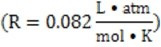 A researcher wishes to make the decomposition of sodium azide (Reaction 1) less favorable. Which of the following adjustments to the reaction would NOT drive it to the left? 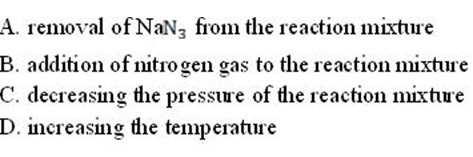
-
A
-
B
-
C
-
D
Reveal answer details
Close answer details
Correct answerC
ExplanationOnly choice C would drive the reaction towards the right, according to Le Chatelier's principle. The products include 3 moles of gas (N2). The reaction is exothermic (although not excessively so according to the passage); increasing the temperature, therefore, would make the reactants more favorable
thermodynamically.
Question 86
Single choice
Which option occurs as a result of inbreeding?
-
A
-
B
-
C
-
D
Reveal answer details
Close answer details
Correct answerC
ExplanationInbreeding increases the chances of inheriting identical genes from parents.
Question 87
Single choice
Agonistic behavior, or aggression, is exhibited by most of the more than three million species of animals on this planet. Animal behaviorists still disagree on a comprehensive definition of the term, but aggressive behavior can be loosely described as any action that harms an adversary or compels it to retreat.
Aggression may serve many purposes, such as food gathering, establishing territory, and enforcing social hierarchy. In a general Darwinian sense, however, the purpose of aggressive behavior is to increase the individual animal's -- and thus, the species' -- chance of survival.
Aggressive behavior may be directed at animals of other species, or it may be conspecific -- that is, directed at members of an animal's own species. One of the most common examples of conspecific aggression occurs in the establishment and maintenance of social hierarchies. In a hierarchy, social
dominance is usually established according to physical superiority; the classic example is that of a pecking
order among domestic fowl. The dominance hierarchy may be viewed as a means of social control that reduces the incidence of attack within a group. Once established, the hierarchy is rarely threatened by disputes because the inferior animal immediately submits when confronted by a superior. Two basic types of aggressive behavior are common to most species: attack and defensive threat. Each type involves a particular pattern of physiological and behavioral responses, which tends not to vary regardless of the stimulus that provokes it. For example, the pattern of attack behavior in cats involves a series of movements, such as stalking, biting, seizing with the forepaws and scratching with the hind legs, that changes very little regardless of the stimulus -- that is, regardless of who or what the cat is attacking.
The cat's defensive threat response offers another set of closely linked physiological and behavioral patterns. The cardiovascular system begins to pump blood at a faster rate, in preparation for sudden physical activity. The eyes narrow and the ears flatten against the side of the cat's head for protection, and other vulnerable areas of the body such as the stomach and throat are similarly contracted. Growling or hissing noises and erect fur also signal defensive threat. As with the attack response, this pattern of responses is generated with little variation regardless of the nature of the stimulus.
Are these aggressive patterns of attack and defensive threat innate, genetically programmed, or are they learned? The answer seems to be a combination of both. A mouse is helpless at birth, but by its 12th day of life can assume a defensive threat position by backing up on its hind legs. By the time it is one month old, the mouse begins to exhibit the attack response. Nonetheless, copious evidence suggests that
animals learn and practice aggressive behavior; one need look no further than the sight of a kitten playing
with a ball of string. All the elements of attack -- stalking, pouncing, biting and shaking -- are part of the game which prepares the kitten for more serious situations later in life. Which of the following would be most in accord with the information presented in the passage?
-
A
The aggressive behavior of sharks is closely linked to their need to remain in constant motion.
-
B
The inability of newborn mice to exhibit the attack response proves that aggressive behavior must be learned.
-
C
Most animal species that do not exhibit aggressive behavior are prevented from doing so by environmental factors.
-
D
Members of a certain species of hawk use the same method to prey on both squirrels and gophers.
Reveal answer details
Close answer details
Correct answerD
ExplanationThis is an Application question. You already know a considerable amount from the passage about aggressive behavior in animals; you just have to decide which new assertion fits in with what you already
know. The author doesn't say anything about a link between aggressive behavior and breathing (the reason a shark has to stay in motion), so
Choice A is out. The inability of newborn mice to exhibit the attack response is NOT proof that aggressive behavior must be learned, as Choice B claims. On the contrary, mice attack after only a month, too short a time to have learned this behavior -- which is why the author cites this as evidence that aggressive behavior is partially genetic.
Choice C is wrong because the author never discusses animal species that don't exhibit aggressive behavior.
That leaves us with Choice D, which says that certain hawks use the same means of attack on both squirrels and gophers. This fits right in with the facts of the passage, since the second sentence of Paragraph 3 states that the physiological and behavioral patterns that make up aggressive behavior change very little regardless of the stimuli that provoke them (the stimuli here being the squirrels and the gophers). Thus Choice D is the correct answer.
Question 88
Single choice
Synthetic dyes constitute a commercially significant area of organic chemistry. The color producing properties of these compounds are the result of highly delocalized electron systems giving rise to electronic transitions whose absorptions occur in the visible region. Most commercially useful dyes can be classified as one of three types -- anthraquinones, azo dyes, or triarylmethyl salts. Examples of each type are illustrated in Figure 1. 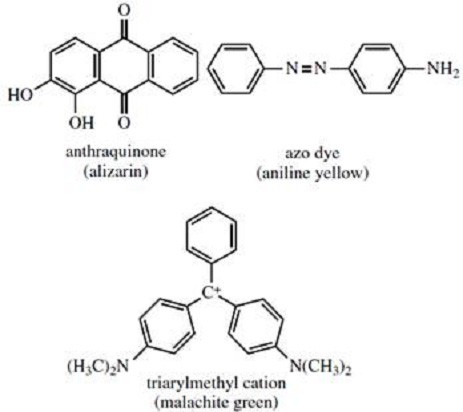 Figure 1 In order for a dye to be useful in the fabric industry, it must have sufficient affinity for the polymeric fibers of
which the material is composed; the dye must not only impart a color to the fabric, but must also do so in a
relatively permanent manner (color fastness). Proper design of synthetic polymers requires the placement of acidic or basic side chains along the polymer backbone such that binding sites are available for dying.
Similarly, dyes must be produced not only with the appropriate color-producing structure, but also with an affinity for the fabric in question. The structural units of several common synthetic fibers are shown in Figure 2.  Figure 2 Nylon, Dacron, and many other synthetic fibers are produced via condensation reactions. Which of the following would be the best starting materials for the production of nylon 66?
-
A
cis-2-butenoic acid and 1,6-hexanediamine
-
B
butanedioic acid and 1,6-hexanediamine
-
C
n-hexanoic acid and 2,5-hexanediamine
-
D
hexanedioic acid and 1,6-hexanediamine
Reveal answer details
Close answer details
Correct answerD
ExplanationAmides are produced by the condensation of amines with carboxylic acids:  To produce a repeating chain, or polyamide, one would need to condense a diamine with a dicarboxylic acid. As indicated in figure 2, nylon 66 has a straight chain of six carbons between the two nitrogen atoms and six more carbon atoms, also unbranched, in the dicarbonyl portion of the monomer. As such, the amine starting material must therefore be 1,6-hexanediamine, while the carboxylate reactant is hexanedioic acid: Choice A is incorrect because cis-2-butenoic acid has only one carboxylate functionality and therefore would not condense on both ends, and it would produce a condensation product in which the butane double bond is still present. It also contains only four carbon atoms, rather than the required six.
Choice B is incorrect since, while butanedioic acid can polymerize with the diamine, it would produce a polymer with only two methylene groups between the carbonyl carbons in each monomer. (This product would be called nylon 64.)
Choice C is wrong on two counts: first, the hexanoic acid is a monocarboxylic acid, and thus will not combine with two amine molecules; second, any polyamide formed via condensation
of an appropriate diacid and the suggested amine, 2,5- hexanediamine, would have two methyl group side chains.
Question 89
Single choice
The force restraining an object's motion on an inclined plane:
-
A
is directed into the plane.
-
B
-
C
-
D
Reveal answer details
Close answer details
Question 90
Single choice
Early experimentation on the single-celled organism Acetabularia led to important discoveries about the role of the nucleus in regulating cell function. Acetabularia is an enormous single cell with three distinct regions: a cap, a root-like rhizoid, and a stalk which connects the two. The following experiments were conducted to study the development of the cell: Experiment 1 The stalk of an Acetabularia was cut, fragmenting the cell. The fragment which included the cap died shortly afterwards while the fragment containing the rhizoid regenerated to form a complete Acetabularia. Experiment 2 The nucleus from Acetabularia mediterranea, which has a flat cap, was transplanted into Acetabularia crenulata, which has a tufted cap, following removal of the Acetabularia crenulata nucleus. The Acetabularia crenulata cap eventually assumed the flat shape. Experiment 3 The nucleus of Acetabularia mediterranea was removed from the young cell before it first formed a cap. A normal cap formed several weeks later. The cell proved to be inviable and died shortly thereafter. Experiment 4 A young Acetabularia was fractioned into a number of portions before it first formed a cap. Several weeks later, both the portion containing the nucleus and the portion containing the apical tip of the stalk formed caps. The other portions did not form caps. Which of the following conclusions can be logically drawn from the fact that the Acetabularia segment containing the rhizoid regenerated a complete and viable Acetabularia in Experiment 1?
-
A
The cell nucleus is located in the rhizoid.
-
B
Acetabularia reproduces by budding.
-
C
The Acetabularia cap is a vestigial structure.
-
D
Cap-coding mRNA is stored in the rhizoid.
Reveal answer details
Close answer details
Correct answerA
ExplanationIn order for a cell fragment to survive, it must contain all of the necessary machinery for maintaining life.
This requires the production of proteins which are coded for by DNA. In Acetabularia, the region with the rhizoid survives, indicating that the nucleus must be located there.
Choice B is incorrect because, while some prokaryotes multiply by budding, eukaryotic cells multiply by mitosis. Also, this information cannot be concluded from the fact that the rhizoid bearing fragment survives.
Choice C is incorrect because while there is indication in Experiment 1 that the cap alone is not sufficient for the Acetabularia to survive, there is no indication that the cap is a vestigial (unnecessary) structure.
Choice D is incorrect because although the statement may be true, it is not unambiguously proven by the experiment. The experiment demonstrates that cap-coding mRNA is present in the rhizoid region of the fragmented Acetabularia at some point during regeneration. The cap-coding mRNA may have been stored in the rhizoid region when the Acetabularia was cut or it could have been transcribed only after the cell was fragmented.
Question 91
Single choice
Morphine alkaloids derived from the opium poppy have long been used as analgesics. Codeine, the methyl ether of morphine, is a naturally occurring alkaloid with medicinal properties very similar to those of morphine. Thousands of derivatives of morphine have been synthesized and tested for their biological effects. For example, the diacylated derivative of morphine, heroin, is a highly addictive drug. Much effort has gone into understanding how morphine and its derivatives function.  Studies have shown that certain common structural features of alkaloids are required for the compound to exhibit biological activity. These structural requirements are summarized by the so called "morphine rule": Demerol and methadone, shown in Figure 2, are two synthetic alkaloids designed to satisfy the "morphine rule." Synthetic alkaloids such as these have been found to mimic certain physiological properties of morphine and its derivatives, and have found pharmacological application due to other, more desirable biological effects. Methadone has been used widely in the United States and Great Britain as a treatment
for heroin addiction; it reduces the physical symptoms accompanying withdrawal without producing many
of the other effects of heroin.  Meperidine
(demerol)
Figure 2 Which of the following compounds would be most likely to have morphine-like biological effects? 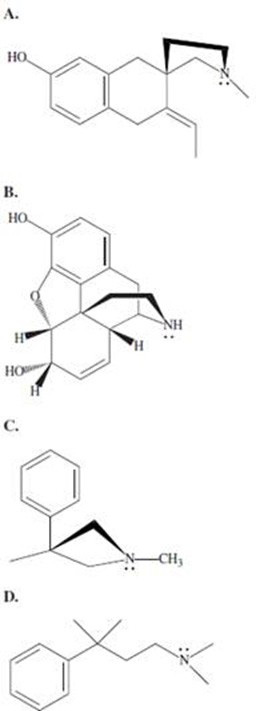
-
A
-
B
-
C
-
D
Reveal answer details
Close answer details
Correct answerD
ExplanationThe passage states that there are certain requirements, the "morphine rules," that give a compound morphine-like biological activity. These requirements are an aromatic ring attached to a quaternary carbon and a tertiary amine situated two carbons away from that quaternary carbon. A quaternary carbon is a carbon bonded to four alkyl groups. A tertiary amine is bonded to three alkyl groups. The only structure that meets these requirements is structure D. The other answer choices look like the structures in the passage but do not meet all of the "morphine rules". Note that if the written description of the "morphine rules" is not clear enough, you can look at the figures in the passage as well.
Choice A is incorrect because the aromatic ring is not attached to a quaternary carbon. It is attached to two secondary carbons.
Choice B is incorrect because it lacks a tertiary amine. It has a secondary amine bonded to only 2 alkyl groups.
Choice C is incorrect because the tertiary amine is not located two carbons away from the quaternary carbon. It is only one carbon away from the quaternary carbon.
Question 92
Single choice
Many nutrients required by plants exist in soil as basic cations:  A soil's cation-exchange capacity is a measure of its ability to adsorb these basic cations as well as exchangeable hydrogen and aluminum ions. The cation-exchange capacity of soil is derived from two sources: small clay particles called micelles consisting of alternating layers of alumina and silica crystals, and organic colloids.  Replacement of + and + by other cations of lower valence creates a net negative charge within the inner layers of the micelles. This is called the soil's permanent charge. For example, replacement of an atom of aluminum by calcium within a section where the net charge was previously zero, as shown below, produces a net charge of ?, to which other cations can become adsorbed.  Figure 1 A pH-dependent charge develops when hydrogen dissociates from hydroxyl moieties on the outer surfaces of the clay micelles. This leaves negatively-charged oxygen atoms to which basic cations may adsorb.
Likewise, a large pH-dependent charge develops when hydrogen dissociates from carboxylic acids and phenols in organic matter.
In most clays, permanent charges brought about by substitution account for anywhere from half to nearly all of the total cation-exchange capacity. Soils very high in organic matter contain primarily pH-dependent charges. In a research study, three samples of soil were leached with a 1 N solution of neutral KCl, and the displaced A13+ and basic cations measured. The sample was then leached again with a buffered solution of BaCl2 and triethanolamine at pH 8.2, and the displaced H+ measured. Table 1 gives results for three soils tested by this method.
Table 1 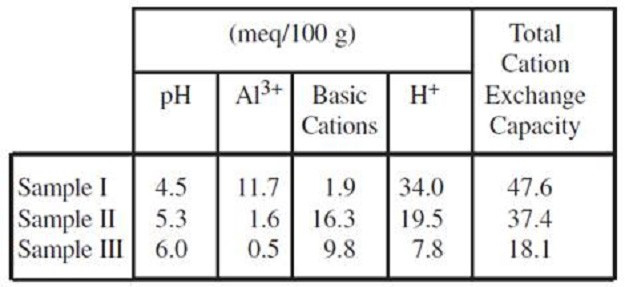 Due to the buffering effect of the soil's cation exchange capacity, just measuring the soil solution's pH will not indicate how much base is needed to change the soil pH. In another experiment, measured amounts of acid and base were added to 10-gram samples of well-mixed soil that had been collected from various locations in a field. The volumes of the samples were equalized by adding water. The results were recorded in Figure 2. Figure 2. 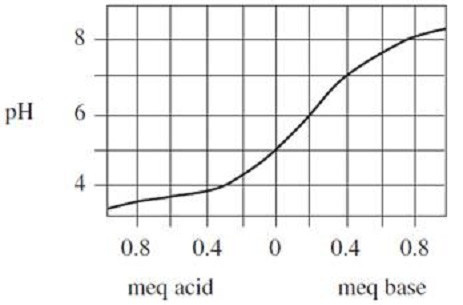 The amount of soil on a particular one-acre field down to a depth of one furrow slice weighs 9 ?105 kilograms.
Based on Figure 2, how many kilograms of CaCO3 would have to be added to this field to raise the pH from 5 to 6? 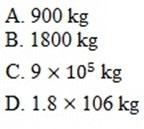
-
A
-
B
-
C
-
D
Reveal answer details
Close answer details
Correct answerA
ExplanationBeginning at pH 5, the graph tells you how much of a change in pH is produced by adding a given number of milliequivalents of acid or base to 10 grams of soil. You can see by examining the graph that 0.2 milliequivalents of base would raise the pH of the sample from 5 to 6. Since one equivalent equals a thousand milliequivalents, and one kilogram equals a thousand grams, you can convert this ratio from 0.2 milliequivalents per 10 grams, to 0.2 equivalents per 10 kilograms, or 0.02 equivalents per one kilogram.
Since one mole of carbonate can take up two moles of hydrogen ions, a mole of calcium carbonate acts as two equivalents of base. Remember that as the concentration of hydrogen ions goes down, the pH of the solution goes up. The molecular weight of calcium carbonate is 100, so 100 grams of calcium carbonate will provide 2 equivalents of base. We have determined that you need 0.02 equivalents of calcium per kg of soil. Since 2 equivalents are provided by 100 grams of calcium carbonate, 0.02 equivalents are provided by 1 gram. So you need 1 gram of calcium carbonate for each kilogram of soil in the acre furrow slice. This comes to 9 105 grams of calcium carbonate, or 900 kilograms, choice A.
Question 93
Single choice
According to the reaction coordinate diagram shown below, which of the following forward reactions would proceed most rapidly at high temperatures? 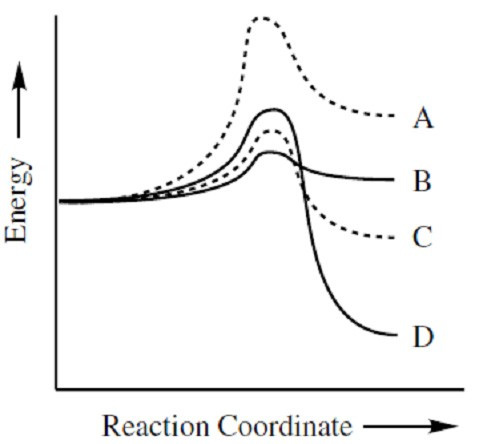
-
A
-
B
-
C
-
D
Reveal answer details
Close answer details
Correct answerB
ExplanationThe rate of a reaction is dependent on the activation energy. The lower the activation energy, the more rapid the reaction. Choice B has the lowest activation energy of all of the choices. Note that Reaction B indicates an increase in the total energy of the compounds in the reaction. Although the reaction is not energetically favorable, it is still the most rapid. Do not confuse thermodynamics with kinetics.
Question 94
Single choice
If a man having blood group AB marries a woman who is heterozygous for blood group, what is the probability of their first child having blood group B?
-
A
-
B
-
C
-
D
Reveal answer details
Close answer details
Question 95
Single choice
When Gwendolyn Brooks published her first collection of poetry A Street In Bronzeville in 1945 most reviewers recognized Brooks' versatility and craft as a poet. Yet, while noting her stylistic successes few of her contemporaries discussed the critical question of Brooks' relationship to the Harlem Renaissance. How had she addressed herself, as a poet, to the literary movement's assertion of the folk and African culture, and its promotion of the arts as the agent to define racial integrity?
The New Negro poets of the Harlem Renaissance expressed a deep pride in being Black; they found
reasons for this pride in ethnic identity and heritage; and they shared a common faith in the fine arts as a
means of defining and reinforcing racial pride. But in the literal expression of this impulse, the poets were either romantics, or realists and, quite often within the same poem, both. The realistic impulse, as defined best in the poems of McKay's Harlem Shadows (1922), was a sober reflection upon Blacks as second class citizens, segregated from the mainstream of American socio-economic life, and largely unable to realize the wealth and opportunity that America promised. The romantic impulse, on the other hand, as defined in the poems of Sterling Brown's Southern Road (1932), often found these unrealized dreams in the collective strength and will of the folk masses. In comparing the poems in A Street in Bronzeville with various poems from the Renaissance, it becomes apparent that Brooks brings many unique contributions to bear on this tradition. The first clue that A Street In Bronzeville was, at its time of publication, unlike any other book of poems by a Black American is its insistent emphasis on demystifying romantic love between Black men and women. During the Renaissance, ethnic or racial pride was often focused with romantic idealization upon the Black woman. A casual streetwalker in Hughes' poem, "When Sue Wears Red," for example, is magically transformed into an Egyptian Queen. In A Street In Bronzeville, this romantic impulse runs headlong into the biting ironies of racial discrimination. There are poems in which Hughes, McKay and Brown recognize the realistic underside of urban life for Black women. But for Brooks, unlike the Renaissance poets, the victimization of poor Black women becomes not simply a minor chord but a predominant theme.
...Brooks' relationship with the Harlem Renaissance poets, as A Street in Bronzeville ably demonstrates, was hardly imitative. As one of the important links with the Black poetic tradition of the 1920s and 1930s, she enlarged the element of realism that was an important part of the Renaissance world-view. Although her poetry is often conditioned by the optimism that was also a legacy of the period, Brooks rejects outright their romantic prescriptions for the lives of Black women. And in this regard, she serves as a vital link with the Black Arts Movement of the 1960s that, while it witnessed the flowering of Black women as poets and social activists as well as the rise of Black feminist aesthetics in the 1970s, brought about a curious revival of romanticism in the Renaissance mode. Suppose that a recently-discovered collection of Gwendolyn Brooks' poems contained female protagonists that embodied the ideal woman. This information would:
-
A
support the author's contention that women poets were self-serving.
-
B
negate the author's view that black poets presented women and men with inequality.
-
C
contradict the author's opinion that Gwendolyn Brooks allowed readers to experience a more accurate description of the modern Black woman.
-
D
neither support nor contradict the author's claim that Brooks served as an integral link between Harlem Renaissance poets and the Black Arts Movement poets.
Reveal answer details
Close answer details
Correct answerC
ExplanationOne of the major points of this passage is that Gwendolyn Brooks was one of the first poets to take her readers away from the overidealized Black woman represented as an "Egyptian Queen." Choices A and B are incorrect because the author never indicates women poets to be selfserving, or how men and women were presented differently in the context of poetry. Choice D is a distracter choice because it touches on the theme of Brooks having served as a link between the Renaissance and the Black Arts Movement.
However, upon close examination, we see that this would contradict with the author's view that Brooks did indeed serve as a vital link between the two periods of poetry, seen in her visionary portrayal of women.
Question 96
Single choice
An automobile reaches a velocity of 30 m/s after accelerating at 4 ms-2 for 5 seconds. What was its initial velocity?
-
A
-
B
-
C
-
D
Reveal answer details
Close answer details
Question 97
Single choice
When electric current passes through an aqueous solution, which of the following ionic migrations is correct?
-
A
H+ ions move towards anode
-
B
Cl-ions move towards anode
-
C
Cl-ions move towards cathode
-
D
Both move towards cathode
Reveal answer details
Close answer details
Question 98
Single choice
When humans are submerged in water, the mammalian dive reflex acts to alter circulation. Heart rate decreases, blood flow to the extremities is reduced, and mean arterial blood pressure is increased. These accomodations lead to:
-
A
decreased oxygen demand by the tissues.
-
B
increased heat retention by the body.
-
C
decreased partial pressure of oxygen in the blood.
-
D
Reveal answer details
Close answer details
Correct answerB
ExplanationThe question stem describes the effects of the mammalian dive reflex, indicating that blood flow to the extremities is reduced. This would increase heat retention of the body.
Choice A is incorrect because oxygen demand by the tissues depends on the metabolic rate of the tissues, which is not affected by changes in blood pressure, heart rate, or blood flow to the extermities.
Choice C is incorrect because the dive reflex will not lead to a decrease in oxygen partial pressure. The partial pressure of oxygen will decrease during a dive because the individual is holding their breath, not because of the accomodations of the dive reflex.
Choice D is incorrect because venous return, the amount of blood returned to the heart by the venous circulation, will not be increased. If stroke volume (the volume of blood pumped with each beat) remains constant, the decrease in heart rate caused by the dive reflex would lead to a decrease in venous return.
Question 99
Single choice
Aclown stands with her toes touching a fun house mirror with a convex bottom and a concave top. Which of the following best describes the distortion of the clown's image as she walks away from the mirror?
-
A
Her head will shrink; her feet will grow, then shrink.
-
B
Her head will shrink then grow; her feet will shrink, then grow.
-
C
Her head will grow; her feet will grow.
-
D
Her head will grow, then shrink; her feet will shrink.
Reveal answer details
Close answer details
Correct answerD
ExplanationNote that we can determine either the convex or concave mirror distortion to answer the question. We do not need to determine both. Solving for the convex bottom, we first note that the focal length of a convex mirror must be some negative value (while for the convex mirror it will be negative). We will solve this problem by drawing a diagram.Let's draw a diagram and examine the distortion of the clown's feet in the convex bottom of the mirror as she walks away from it. Recall that we can draw three kinds of rays in a ray tracing diagram:1.Rays that pass through the focal point will be reflected parallel. For a convex mirror, rays directed towards the focal point will be reflected parallel (because the focal point is in the virtual space behind the mirror).2. Rays that hit the axis of the mirror will be reflected with the same angle on the other side of the axis (like a plane mirror).3. Parallel rays will be reflected through the focal point. For a convex mirror, parallels rays will appear to pass through the focal point (because the focal point is in the virtual space behind the mirror. 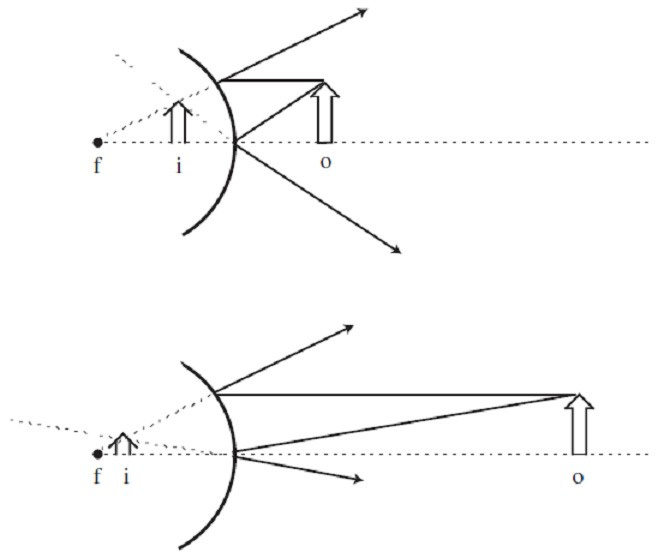 The image shrinks as the object moves farther from a convex mirror.
From the diagram above, it is clear that the image in a convex mirror shrinks as the object moves away.
Thus, the image of the clown's feet will shrink in the convex bottom of the mirror as she walks away.
Question 100
Single choice
...Squeaking sand produces sounds with very high frequencies -- between 500 and 2,500 hertz, lasting less than a quarter of a second. The peals are musically pure, often containing four or five harmonic overtones. Booming sand makes louder, low-frequency sounds of 50 to 300 hertz, which may last as long as 15 minutes in larger dunes (although typically they last for seconds or less). In addition, they are rather noisy, containing a multitude of nearby frequencies. Booms have never been observed to contain more than one harmonic of the fundamental tone.
These dramatic differences once led to a consensus that although both types of sand produce acoustic emissions, the ways in which they do so must be substantially different.... In the late 1970s, however, Peter K. Haff, then at the California Institute of Technology, produced squeaks in booming sand, suggesting a closer connection between the two.
Both kinds of sand must be displaced to make sounds. Walking on some sand, for example, forces the sand underfoot to move down and out, producing squeaks. In the case of booming sand, displacement occurs during avalanches. It is within the avalanche that sound begins and where the answers must be hiding.
Before an avalanche can occur, winds must build a dune up to a certain angle, usually about 35 degrees for dry desert sand. Once an angle is achieved, the sand on the leeward side of the dune begins to slump.
Intact layers of sand slip over the layers below, like a sheared deck of cards. At the same time, the individual grains in the upper layers tumble over the grains underneath, momentarily falling into the spaces between them and bouncing out again to continue their downward journey. Their concerted up-and-down motion is believed to be the secret source of sound. Fully developed avalanches, in which sliding plates of sand remain intact for most of their motion, have the greatest acoustic output. In some places, where large amounts of sand are involved, booming can be heard up to 10 kilometers away.
Because it is caused by large volumes of shearing sand, the roaring is also loud. In fact, sounds made by booming sand can be nearly deafening, and the vibrations causing them can be so intense that standing in their midst is nearly impossible.
A good place to start in exploring the vibrational properties of sand is with the grains themselves. The mean diameter of most sand grains, whether acoustically active or not, is about 300 microns. Usually the grains in a booming dune are very similar in size, especially near the leeward crest, where the sound most
often originates; such uniformity allows for more efficient shearing. Otherwise, the smaller grains impede
the smooth motion of the larger ones. Similar sizes do not alone allow sand to boom. On the contrary, the booming sands of Korizo and Gelf Kebib, also in Libya, feature an uncharacteristically broad range of particle sizes. Moreover, silent dune sand often contains grains somewhat similar to nearby booming sand.
Grains of booming sand also tend to have uncommonly smooth surfaces, with protrusions on the scale of
mere microns. Booming dunes are often found at the downwind end of large sand sources; having
bounced and rolled across the desert for long distances, the sand grains in these dunes are usually highly polished. Over time a grain can also be polished by repeated shifts within a moving dune. And squeaking sand as well tends to be exceptionally smooth.... ...Another important factor is humidity, because moisture can modify the friction between grains or cause sand to clump together, thus precluding shearing. Sounds occur in those parts of the dune that dry the fastest. Precipitation may be rare in the desert, but dunes retain water with remarkable efficiency. Sand near the surface dries quickly, however, and sand around a dune's crest tends to dry the fastest. A dune is found to be comprised of smooth grains and produces sounds that last less than a second. What further information, if any, would enable one to unambiguously characterize the sand as squeaking sand?
-
A
The grains are not uniform in size.
-
B
The sound is generated by walking upon it rather than through avalanches.
-
C
The information given is already sufficient to conclude that the sand is squeaking sand.
-
D
The sand cannot possibly be squeaking sand from the information given.
Reveal answer details
Close answer details
Correct answerB
ExplanationThe information given in the question stem is not sufficient to determine whether the sand is of the booming or squeaking variety: smooth grains are characteristic of both kinds of sand, and both booming and squeaking sounds last (or may last) for less than a second. Choices C and D can therefore be eliminated. The most helpful piece of information would be the frequency of the sound produced, but unfortunately that is not one of our answer choices. Choice A, non-uniformity in grain size, is not enough:
we know that booming sand grains tend to be similar in size, but that is not always the case; in other words, grains that are not similar in size can be booming sand. Furthermore, nothing is said about the grain sizes of squeaking sand in the passage. Choice B, however, describes the process by which the sound is produced: paragraph 3 tells us that squeaking sounds are produced by walking upon certain types of sand. If the sound in question is produced not by avalanches but by this mechanism, then it must be squeaking sand that we are dealing with.
|