Which of the following is NOT listed as a potential consequence of compromising IACS according to the ISA99 Committee scope?
-
A
-
B
Endangerment of public safety
-
C
Loss of proprietary information
-
D
Economic and operational losses
Reveal answer details
Close answer details
Correct answerA
ExplanationThe ISA99 Committee (which develops the ISA/IEC 62443 series) clearly outlines four key consequences of compromising an Industrial Automation and Control System (IACS): Endangerment of public or employee safety Loss of public confidence Violation of regulatory requirements Loss of proprietary or confidential information Economic and operational losses "Increased product sales" is not listed - in fact, a compromise would likely result in the opposite, such as brand damage and loss of customer trust.
"The scope of the ISA99 Committee includes addressing risks such as the endangerment of public safety, loss of information, and economic harm arising from cyber incidents affecting IACS."
- ISA/IEC 62443-1-1:2007, Clause 1 - Scope and Purpose References:
ISA/IEC 62443-1-1:2007 - Clause 1 ISA99 Committee Charter and Scope
Which is a PRIMARY reason why network security is important in IACS environments?
Available Choices (select all choices that are correct)
-
A
PLCs are inherently unreliable.
-
B
PLCs are programmed using ladder logic.
-
C
PLCs use serial or Ethernet communications methods.
-
D
PLCs under cyber attack can have costly and dangerous impacts.
Reveal answer details
Close answer details
Correct answerD
Explanation.Network security is important in IACS environments because PLCs, or programmable logic controllers, are devices that control physical processes and equipment in industrial settings. PLCs under cyber attack can have costly and dangerous impacts, such as disrupting production, damaging equipment, compromising safety, and harming the environment. Therefore, network security is essential to protect PLCs and other IACS components from unauthorized access, modification, or disruption. The other choices are not primary reasons why network security is important in IACS environments. PLCs are not inherently unreliable, but they can be affected by environmental factors, such as temperature, humidity, and electromagnetic interference. PLCs are programmed using ladder logic, which is a graphical programming language that resembles electrical schematics. PLCs use serial or Ethernet communications methods, depending on the type and age of the device, to communicate with other IACS components, such as human-machine interfaces (HMIs), supervisory control and data acquisition (SCADA) systems, and distributed control systems (DCSs). References:
ISA/IEC 62443 Standards to Secure Your Industrial Control System training course1
ISA/IEC 62443 Cybersecurity Fundamentals Specialist Study Guide2
Using the ISA/IEC 62443 Standard to Secure Your Control Systems3
Question 3
Multiple choice
Which of the following is an element of monitoring and improving a CSMS? Available Choices (select all choices that are correct)
-
A
Increase in staff training and security awareness
-
B
Restricted access to the industrial control system to an as-needed basis
-
C
Significant changes in identified risk round in periodic reassessments
-
D
Review of system logs and other key data files
Reveal answer details
Close answer details
Correct answersA, D
ExplanationMonitoring and improving a Cybersecurity Management System (CSMS) as per ISA/IEC 62443 standards involves several key activities that ensure the system remains effective and responsive to emerging threats. Two critical elements of this ongoing process are:
A. Increase in staff training and security awareness: Regular training and increasing security awareness
among staff are vital to maintaining a secure operating environment. This proactive measure helps in reducing human error and enhancing the ability to respond effectively to cybersecurity incidents. D. Review of system logs and other key data files: Continuous review and analysis of system logs and other relevant data files are essential for detecting, investigating, and responding to potential security incidents. This monitoring helps in identifying anomalies that may indicate a security breach or operational issues needing attention.
Which statement is TRUE regarding Intrusion Detection Systems (IDS)? Available Choices (select all choices that are correct)
-
A
Modern IDS recognize IACS devices by default.
-
B
They are very inexpensive to design and deploy.
-
C
They are effective against known vulnerabilities.
-
D
They require a small amount of care and feeding
Reveal answer details
Close answer details
Correct answerC
Explanation.Intrusion detection systems (IDS) are tools that monitor network traffic and detect suspicious or malicious activity based on predefined rules or signatures. They are effective against known vulnerabilities, as they can alert the system administrators or security personnel when they encounter a match with a known attack pattern or behavior. However, IDS have some limitations and challenges, especially when applied to industrial automation and control systems (IACS). Some of these are: Modern IDS do not recognize IACS devices by default, as they are designed for general-purpose IT networks and protocols. Therefore, they may generate false positives or negatives when dealing with IACS-specific devices, protocols, or traffic patterns. To overcome this, IDS need to be customized or adapted to the IACS environment and context, which may require additional expertise and resources. They are not very inexpensive to design and deploy, as they require careful planning, configuration, testing, and maintenance. They also need to be integrated with other security tools and processes, such as firewalls, antivirus, patch management, incident response, etc. Moreover, they may introduce additional costs and risks, such as network performance degradation, data privacy issues, or legal liabilities. They are not effective against unknown or zero-day vulnerabilities, as they rely on predefined rules or signatures that may not cover all possible attack scenarios or techniques. Therefore, they may fail to detect novel or sophisticated attacks that exploit new or undiscovered vulnerabilities. To mitigate this, IDS need to be complemented with other security measures, such as anomaly detection, threat intelligence, or machine learning. They require a significant amount of care and feeding, as they need to be constantly updated, tuned, and monitored. They also generate a large amount of data and alerts, which may overwhelm the system administrators or security personnel. Therefore, they need to be supported by adequate tools and processes, such as data analysis, alert filtering, prioritization, correlation, or visualization.
References:
.ISA/ IEC 62443-2-1:2010 - Establishing an industrial automation and control system security program,.ISA/IEC
62443-3-3:2013 - System security requirements and security levels,.ISA/IEC 62443 Cybersecurity Fundamentals Specialist Training Course, [Enhancing Modbus/TCP-Based Industrial Automation and Control Systems Security Using Intrusion Detection Systems]
Which steps are included in the ISA/IEC 62443 assess phase? Available Choices (select all choices that are correct)
-
A
Cybersecurity requirements specification and detailed cyber risk assessment
-
B
Cybersecurity requirements specification and allocation of IACS assets to zones and conduits
-
C
Detailed cyber risk assessment and cybersecurity maintenance, monitoring, and management of change
-
D
Allocation of IACS assets to zones and conduits, and detailed cyber risk assessment
Reveal answer details
Close answer details
Correct answerB
Explanation.The ISA/IEC 62443 standards are focused on industrial automation and control systems security. The assess phase within the ISA/IEC 62443 framework is designed to identify and analyze potential vulnerabilities in the industrial control system (ICS) environment. One of the key steps in this phase is the specification of cybersecurity requirements. Additionally, it involves the allocation of industrial automation and control system (IACS) assets to defined zones and conduits to manage and segregate the network and improve security. These measures help to ensure that security requirements are met and that the assets are protected according to their security needs. Therefore, the correct answer is B, which mentions both the cybersecurity requirements specification and the allocation of IACS assets to zones and conduits as part of the assess phase.
What do packet filter firewalls examine?
Available Choices (select all choices that are correct)
-
A
The packet structure and sequence
-
B
The relationships between packets in a session
-
C
Every incoming packet up to the application layer
-
D
Only the source, destination, and ports in the header of each packet
Reveal answer details
Close answer details
Correct answerD
ExplanationPacket filter firewalls, as defined by ISA/IEC 62443 standards on cybersecurity, primarily examine the source, destination, and ports in the header of each packet. This type of firewall does not inspect the packet content deeply (such as its structure or sequence) or maintain awareness of the relationships between packets in a session. Instead, it operates at a more superficial level, filtering packets based solely on IP addresses and TCP/UDP ports. This approach allows packet filter firewalls to quickly process and either accept or block packets based on these predefined criteria without delving into the complexities of session management or the content of the packets up to the application layer.
What are the four main categories for documents in the ISA-62443 (IEC 62443) series?
Available Choices (select all choices that are correct)
-
A
General. Policies and Procedures. System, and Component
-
B
End-User, Integrator, Vendor, and Regulator Assessment.
-
C
Mitigation. Documentation, and Maintenance People.
-
D
Processes. Technology, and Training
Reveal answer details
Close answer details
Correct answerA
ExplanationThe ISA/IEC 62443 series of standards is organized into four main categories for documents, based on the topics and perspectives that they cover.These categories are: General, Policies and Procedures, System, and Component12.
General:.This category covers topics that are common to the entire series, such as terms, concepts, models, and overview of the standards1.For example, ISA/IEC 62443-1-1 defines the terminology, concepts, and models for industrial automation and control systems (IACS) security 3. Policies and Procedures:.This category focuses on methods and processes associated with IACS security, such as risk assessment, system design, security management, and security program development1.For example, ISA/ IEC 62443-2-1 specifies the elements of an IACS security management system, which defines the policies, procedures, and practices to manage the security of IACS4. System:.This category is about requirements at the system level, such as security levels, security zones, security lifecycle, and technical security requirements1.For example, ISA/IEC 62443-3-3 specifies the system security requirements and security levels for zones and conduits in an IACS5. Component:.This category provides detailed requirements for IACS products, such as embedded devices, network devices, software applications, and host devices 1.
For example, ISA/IEC 62443-4-2 specifies the technical security requirements for IACS components, such as identification and authentication, access control, data integrity, and auditability. The other options are not valid categories for documents in the ISA/IEC 62443 series of standards, as they either do not reflect the structure and scope of the standards, or they mix different aspects of IACS security that are covered by different categories. For example, end-user, integrator, vendor, and regulator are not categories for documents, but rather roles or stakeholders that are involved in IACS security. Assessment, mitigation, documentation, and maintenance are not categories for documents, but rather activities or phases that are part of the IACS security lifecycle. People, processes, technology, and training are not categories for documents, but rather elements or dimensions that are essential for IACS security. References:
ISA/IEC 62443 Series of Standards - ISA1 IEC 62443 - Wikipedia2 ISA/IEC 62443-1-1:
Concepts and models3 ISA/IEC 62443-2-1: Security management system4 ISA/IEC 62443-3-3: System security requirements and security levels5 ISA/IEC 62443-4-2: Technical security requirements for IACS components
Which role is responsible for defining cybersecurity requirements during the system design phase?
-
A
-
B
-
C
-
D
Reveal answer details
Close answer details
Correct answerC
ExplanationIn the ISA/IEC 62443 framework, the asset owner is responsible for defining cybersecurity requirements based on risk tolerance, operational needs, and business objectives. These requirements guide system design, including zoning, conduits, and target security levels. References:
ISA/IEC 62443-2-1:2010 ?Clause 4.2
ISA/IEC 62443-3-2:2020 ?Clause 4.1
What is the name of the missing layer in the Open Systems Interconnection (OSI) model shown below? 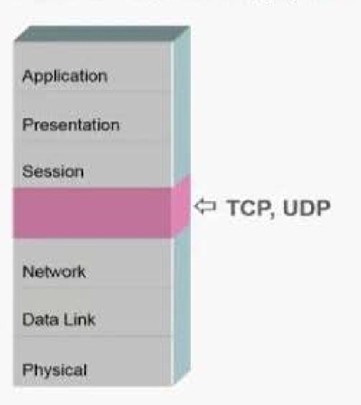
-
A
-
B
-
C
-
D
Reveal answer details
Close answer details
Correct answerC
ExplanationThe Open Systems Interconnection (OSI) model is a framework that describes the functions of a networking system.The OSI model categorizes the computing functions of the different network components, outlining the rules and requirement needed to support the interoperability of the software and hardware that make up the network 1. The OSI model consists of seven abstraction layers arranged in a top-down order: Physical, Data Link, Network, Transport, Session, Presentation, and Application.The Transport layer is the fourth layer in the OSI model, and it is responsible for ensuring reliable and efficient data transfer between the Network layer and the Session layer2.The Transport layer uses protocols such as Transmission Control Protocol (TCP) and User Datagram Protocol (UDP) to provide end-to-end communication services, such as error detection and correction, flow control, congestion control, and segmentation 2.
The image that you sent shows a 3D representation of the OSI model, with the layers stacked on top of each other. The missing layer is the Transport layer, which is represented by a pink box with a white arrow pointing to it. The arrow is labeled "TCP, UDP".
1:.What is the OSI Model? 7 Network Layers Explained | Fortinet.2:.What is OSI Model | 7 Layers
Explained
-GeeksforGeeks
Question 10
Single choice
Why were PLCs originally designed?
-
A
-
B
To service I/O exclusively
-
C
To enhance network security
-
D
To improve Ethernet functionality
Reveal answer details
Close answer details
Correct answerA
ExplanationProgrammable Logic Controllers (PLCs) were originally designed to replace relay-based control systems in industrial automation. Early manufacturing and process control systems relied on hard-wired relays, timers, and sequencers, which were inflexible and difficult to modify. PLCs offered a software-based alternative that could easily be reprogrammed for various automation tasks, making plant operations more efficient and flexible. Their purpose was not specifically to enhance network security or Ethernet functionality, but rather to modernize and simplify control logic implementation.
References:
ISA/IEC 62443-1-1:2007, Section 3.2.2
IEC 61131-3, Foreword and Introduction.
Question 11
Single choice
How should outreach be handled with product suppliers and service providers?
-
A
Communication should only occur after a system failure.
-
B
Asset owners should be informed about how to report vulnerabilities. Only
-
C
system integrators need to be informed about lifecycle support. Patch
-
D
management policies should be kept confidential from asset owners.
Reveal answer details
Close answer details
Correct answerB
ExplanationAccording to ISA/IEC 62443-2-4 and 62443-4-1, it is critical that clear and open communication channels are established with asset owners and service providers for reporting vulnerabilities and managing patches. Outreach is a proactive activity, not a post-incident reaction.
"The supplier shall provide the asset owner with documented vulnerability disclosure procedures, including how to report vulnerabilities or suspicious behavior."
- ISA/IEC 62443-4-1:2018, SR 6.2.2
Further, 62443-2-4 emphasizes that maintenance and patching communications must be timely, transparent, and structured.
"The service provider shall ensure the asset owner is informed of known vulnerabilities, and provided with the necessary information to assess and manage associated risks."
- ISA/IEC 62443-2-4:2015, Clause 4.4.3.4 References:
ISA/IEC 62443-4-1:2018 - SR 6.2.2 ISA/
IEC 62443-2-4:2015 - Clause 4.4.3.4
ISA/IEC 62443-2-1 - Asset Owner responsibilities in vulnerability management
Question 12
Single choice
What.are the two elements of the risk analysis category of an IACS? Available Choices (select all choices that are correct)
-
A
Risk evaluation and risk identification
-
B
Business rationale and risk reduction and avoidance
-
C
Business rationale and risk identification and classification
-
D
Business recovery and risk elimination or mitigation
Reveal answer details
Close answer details
Correct answerC
ExplanationThe risk analysis category of an IACS consists of two elements: business rationale and risk identification and classification 1. Business rationale is the process of defining the scope, objectives, and criteria for the risk analysis, as well as the roles and responsibilities of the stakeholders involved.Risk identification and classification is the process of identifying the assets, threats, vulnerabilities, and consequences of a cyberattack on the IACS, and assigning a risk level to each scenario based on the likelihood and impact of the attack1.These elements are essential for establishing a baseline of the current risk posture of the IACS and determining the appropriate risk treatment measures to reduce the risk to an acceptable level.
References:
.1: ISA/IEC 62443-3-2:2020, Security for industrial automation and control systems - Part 3-2: Security risk assessment for system design, International Society of Automation, Research Triangle Park, NC, USA, 2020.
Question 13
Single choice
Which of the following starts at a high level and includes all ANSI/ISA-95 Level 0,1,2,3,4 equipment and information systems?
-
A
-
B
-
C
-
D
Reveal answer details
Close answer details
Correct answerC
ExplanationThe reference model described in ISA/IEC 62443-1-1 (see Figure 2) starts at a high level and encompasses all levels of the ISA-95 model (Levels 0 to 4), which range from field devices up to business logistics systems. This model provides a holistic, layered view of all the equipment, systems, and information flows in industrial automation.
References:
ISA/IEC 62443-1-1:2007, Section 4.2 ("Reference Model")
Figure 2 (Relationship to ANSI/ISA-
95 Levels).
Question 14
Single choice
An industrial control system requires strong protection against intentional violations using sophisticated means and moderate skills.
According to the Security Level (SL) definitions, which SL should be targeted?
-
A
-
B
-
C
-
D
Reveal answer details
Close answer details
Correct answerC
ExplanationSecurity Levels (SLs) in the ISA/IEC 62443 framework define the degree of protection against specific threat actors. SL 3 is designed to protect against intentional violations using sophisticated means with moderate skills, moderate motivation, and IACS-specific knowledge. "SL 3: Protection against intentional violation using sophisticated means with moderate skills, moderate motivation, and IACS-specific knowledge."
- ISA/IEC 62443-3-3:2013, Table 3 - Target Security Level definitions
This level is commonly applied to systems facing well-resourced threat actors such as organized cybercriminals or advanced persistent threats (APTs), where higher assurance is necessary than what SL1 or SL2 would provide. References:
ISA/IEC 62443-3-3:2013 - Table 3 ISA/IEC 62443-1-1 - Security Level Definitions ISA/IEC
62443-3-2 - Security level selection and justification guidance
Question 15
Single choice
Which ISA/IEC 62443 part covers technical security requirements used by product suppliers, integration service providers, and asset owners?
-
A
-
B
-
C
-
D
Reveal answer details
Close answer details
Correct answerD
ExplanationISA/IEC 62443-4-2 specifies technical security requirements (TSRs) for individual IACS components such as: Embedded devices Software applications Network components Host devices These TSRs are relevant for product suppliers who design the components, integration service providers who implement them, and asset owners who operate them.
"This standard specifies the technical security requirements for components used in an IACS, and is applicable to product suppliers, system integrators, and asset owners responsible for security implementation."
- ISA/IEC 62443-4-2:2018, Clause 1 - Scope
The 62443-3-3 standard complements it by specifying system-level requirements, while 62443-2-4 focuses on service providers and 62443-2-1 on security program management. References:
ISA/IEC 62443-4-2:2018 - Clause 1 ISA/IEC 62443-4-2 - Table 1: Component types and SRs
ISA/IEC 62443-1-1 - Roles and document mapping
Question 16
Single choice
If an asset owner wants to demonstrate compliance with ISA/IEC 62443-2-1 requirements during an external audit, which type of evidence would be MOST appropriate?
-
A
Financial investment records in cybersecurity tools only
-
B
Anecdotal reports from employees about security practices
-
C
Documentation verifying use and configuration of technologies
-
D
Marketing materials describing the company's commitment to security
Reveal answer details
Close answer details
Correct answerC
ExplanationTo demonstrate compliance with ISA/IEC 62443-2-1, the most effective evidence is formal documentation that shows the actual use, configuration, and operation of required cybersecurity policies and controls.
"The asset owner shall document procedures, configuration settings, and evidence of operational security controls to support compliance assessments and audits."
- ISA/IEC 62443-2-1:2010, Clause 4.3.1 - Documented Security Program
Auditors require verifiable, written proof - not informal reports or promotional material. References:
ISA/IEC 62443-2-1:2010 - Clause 4.3.1
ISA/IEC 62443-2-4 - Supporting audit evidence for service providers
Question 17
Single choice
Which threat source is MOST commonly addressed by SL 1 controls?
-
A
-
B
Insider with advanced skills
-
C
-
D
Highly coordinated attack teams
Reveal answer details
Close answer details
Correct answerC
ExplanationSecurity Level 1 focuses on protection against unintentional or accidental misuse, such as operator errors or basic mistakes. References:
ISA/IEC 62443-3-3:2013 ?Clause 5.2.1
Question 18
Single choice
If an asset owner wants to improve their organization's ability to respond during a cyberattack, which of the following activities would be MOST appropriate to implement?
-
A
-
B
Password hygiene campaign
-
C
Architecture awareness workshops
-
D
Anomaly detection drills for operators
Reveal answer details
Close answer details
Correct answerA
ExplanationTabletop exercises simulate cybersecurity incidents in a non-disruptive setting, helping teams test and improve their incident response plans and communication protocols.
"Tabletop exercises allow personnel to rehearse roles, responsibilities, and actions in a simulated event scenario. This enhances coordination, preparedness, and decision-making during actual incidents."
- ISA/IEC 62443-2-1:2010, Clause 4.3.3.3 - Incident Response Preparedness
They are essential for verifying that the incident handling process (SP Element 7) is both understood and effective. References:
ISA/IEC 62443-2-1:2010 - Clause 4.3.3.3
NIST SP 800-61 - Computer Security Incident Handling Guide
Question 19
Single choice
What is the purpose of ISO/IEC 15408 (Common Criteria)?
Available Choices (select all choices that are correct)
-
A
To define a security management organization
-
B
To describe a process for risk management
-
C
To define a product development evaluation methodology
-
D
To describe what constitutes a secure product
Reveal answer details
Close answer details
Correct answerC
ExplanationISO/IEC 15408, also known as the Common Criteria for Information Technology Security Evaluation, is an international standard that provides a framework for evaluating the security of IT products and systems.
The purpose of the standard is to define a common set of requirements for the security functions and assurance measures of IT products and systems, and to establish a common methodology for conducting security evaluations. The standard allows users to specify their security needs and expectations in a Security Target (ST), which may be based on one or more Protection Profiles (PPs) that define security requirements for a class of products or systems. Vendors can then implement or claim compliance with the ST or PPs, and have their products or systems evaluated by independent testing laboratories against the security criteria defined in the standard. The standard also defines a scale of Evaluation Assurance Levels (EALs) that indicate the degree of confidence in the security of the evaluated product or system. The standard is intended to facilitate the development, procurement, and use of secure IT products and systems, and to promote the recognition and acceptance of evaluation results across different countries and regions. References:
ISO/IEC 15408-1:2009 - Common Criteria Evaluation for IT Security - Nemko1 Common
Criteria - Wikipedia2 ISO/IEC Standard 15408 - ENISA3
Question 20
Single choice
What are the connections between security zones called? Available Choices (select all choices that are correct)
-
A
-
B
-
C
-
D
Reveal answer details
Close answer details
Correct answerD
ExplanationAccording to the ISA/IEC 62443 standard, the connections between security zones are called conduits. A conduit is defined as a logical or physical grouping of communication channels connecting two or more zones that share common security requirements. A conduit can be used to control and monitor the data flow between zones, and to apply security measures such as encryption, authentication, filtering, or logging. A conduit can also be used to isolate zones from each other in case of a security breach or incident. A conduit can be implemented using various technologies, such as firewalls, routers, switches, cables, or wireless links. However, these technologies are not synonymous with conduits, as they are only components of a conduit. A firewall, for example, can be used to create multiple conduits between different zones, or to protect a single zone from external threats. Therefore, the other options (firewalls, tunnels, and pathways) are not correct names for the connections between security zones. References:
ISA/IEC 62443-3-2:2016 - Security for industrial automation and control systems - Part 3-2: Security risk assessment and system design1 ISA/IEC 62443-3-3:2013 - Security for industrial automation and control systems - Part 3-3: System security requirements and security levels2
Zones and Conduits | Tofino Industrial Security Solution3
Key Concepts of ISA/IEC 62443: Zones & Security Levels | Dragos4
Question 21
Single choice
Which security level indicates protection against intentional violation using simple means?
-
A
-
B
-
C
-
D
Reveal answer details
Close answer details
Correct answerC
ExplanationSecurity Level 2 addresses protection against intentional misuse with simple means, low resources, and limited skills, consistent with insider or casual attacker threats. References:
ISA/IEC 62443-3-3:2013 ?Clause 5.2
Question 22
Single choice
During the operation of an IACS, who is responsible for executing the Security Protection Scheme (SPS) process measures and responding to emerging risks?
-
A
-
B
-
C
-
D
Reveal answer details
Close answer details
Correct answerA
ExplanationThe asset owner holds ultimate responsibility for implementing and maintaining security measures, including the Security Protection Scheme (SPS) during the operational phase of the lifecycle. According to ISA/IEC 62443-2-1 and ISA/IEC 62443-1-1, the asset owner is tasked with ensuring that the necessary security policies, procedures, and controls are effectively executed and maintained.
"The asset owner shall define and maintain the operational security policies and procedures, ensuring the execution of the protection scheme and risk mitigation actions."
- ISA/IEC 62443-2-1:2010, Section 4.3
Furthermore, ISA/IEC 62443-1-1 clearly defines the roles and responsibilities of the asset owner in terms of operational security enforcement and ongoing risk response. References:
ISA/IEC 62443-2-1:2010 - Section 4.3 ISA/IEC 62443-1-1:2007 - Role of Asset Owner ISA/
IEC 62443-3-2 - Risk assessment and management responsibilities
Question 23
Single choice
What is the PRIMARY benefit of aligning ISA/IEC 62443 with an ISMS such as ISO/IEC 27001?
-
A
-
B
-
C
Consistent governance and risk management
-
D
Replacement of technical controls
Reveal answer details
Close answer details
Correct answerC
ExplanationAligning ISA/IEC 62443 with an ISMS enables consistent governance, policy management, and risk treatment across IT and OT environments while addressing their different requirements. References:
ISA/IEC 62443-2-1:2010 ?Clause 4.2.1
ISO/IEC 27001 ?ISMS integration principles
Question 24
Single choice
The ISA/IEC 62443 Profiles Group will include parts starting with which number?
-
A
-
B
-
C
-
D
Reveal answer details
Close answer details
Correct answerA
ExplanationThe ISA/IEC 62443-6-x series is currently being developed to provide "Profiles" - guidance documents that define how to apply the existing ISA/IEC 62443 standards within specific industry contexts or use cases.
From official ISA/IEC documentation and roadmap: "The 6-x series will contain profile documents, which are intended to guide specific sectors (e.g., oil & gas, automotive, medical devices) or applications (e.g., remote access, cloud-based systems) in tailoring the implementation of the 62443 requirements."
These profiles are not requirements documents themselves, but serve as interpretive guidance to help different industries apply the core principles of 62443 in a meaningful and relevant way.
Incorrect Options:
B. 5-x - Not defined in the ISA/IEC 62443 roadmap.
C. 4-x - Covers component-level requirements.
D. 3-x - Deals with system-level requirements, not profiles. References:
ISA/IEC 62443 Development Roadmap
ISA/IEC 62443 Study Guide
ISA99 Committee Announcements
Question 25
Single choice
At Layer 4 of the Open Systems Interconnection (OSI) model, what identifies the application that will handle a packet inside a host?
Available Choices (select all choices that are correct)
-
A
-
B
-
C
-
D
Reveal answer details
Close answer details
Correct answerC
ExplanationAt layer 4 of the OSI model, also known as the transport layer, the application that will handle a packet inside a host is identified by a TCP/UDP port number. A port number is a 16-bit integer that is assigned to a specific application or service that runs on a host. Port numbers are used to multiplex and demultiplex the data streams that are exchanged between hosts and end systems. Multiplexing is the process of combining multiple data streams into one, while demultiplexing is the process of separating one data stream into multiple ones. Port numbers are part of the header of the transport layer protocol data unit (PDU), which is called a segment for TCP and a datagram for UDP. The header contains the source port number and the destination port number, which indicate the applications that are involved in the communication. For example, if a host sends a packet to another host using the HTTP protocol, which runs on port 80 by default, the source port number would be a random number chosen by the sender, and the destination port number would be 80. The receiver would then use the destination port number to demultiplex the packet and deliver it to the HTTP application.
Port numbers are divided into three ranges: well-known ports (0-1023), registered ports (1024-49151), and dynamic or private ports (49152-65535). Well-known ports are reserved for common and standardized applications and services, such as HTTP (80), FTP (21), and SSH (22). Registered ports are assigned by the Internet Assigned Numbers Authority (IANA) to specific applications and services that request them, such as Skype (49175) and Minecraft (25565). Dynamic or private ports are not assigned by any authority and can be used by any application or service that needs them, such as ephemeral ports that are used for temporary connections.
The other options are not valid identifiers for the application that will handle a packet inside a host at layer 4 of the OSI model. A TCP/UDP application ID is not a term that is used in the OSI model or the TCP/IP model. A TCP/UDP host ID is not a term that is used in the OSI model or the TCP/IP model, and it would be more appropriate for layer 3, which is the network layer, where the host is identified by an IP address. A TCP /UDP registry number is not a term that is used in the OSI model or the TCP/IP model, and it would be more appropriate for layer 5, which is the session layer, where the registry number is used to identify a
session between two hosts. References:
Transport Layer | Layer 4 | The OSI-Model1
OSI model - Wikipedia2
What is Layer 4 of the OSI Model?.| Glossary | A10 Networks3
What Are the 7 Layers of the OSI Model?.| Webopedia4
Question 26
Single choice
What does Part 6-1 of the ISA/IEC 62443 series specify?
-
A
Patch management guidance
-
B
Security technologies for ICS and IACS
-
C
Security evaluation methodology for Part 2-4
-
D
System security requirements, phases, and levels
Reveal answer details
Close answer details
Correct answerC
ExplanationISA/IEC 62443-6-1 defines a security evaluation methodology specifically intended for use with 62443-2-4 (Service Providers) and 62443-4-1 (Secure Development Lifecycle). It provides assessment techniques and scoring models for verifying conformance.
"This part specifies requirements and provides guidance for the assessment of conformity to selected parts of the ISA/IEC 62443 series. It supports evaluation of suppliers per 62443-2-4 and 62443-4-1."
- ISA/IEC 62443-6-1:2020, Clause 1 - Scope
It is not focused on patching, technologies, or security phases, but rather on evaluating and validating conformance to the standards. References:
ISA/IEC 62443-6-1:2020 - Clauses 1 and 4
ISA/IEC 62443-2-4 and 4-1 - Reference to evaluation applicability
Question 27
Single choice
How many element groups are in the "Addressing Risk" CSMS category?
-
A
-
B
-
C
-
D
Reveal answer details
Close answer details
Correct answerC
ExplanationIn ISA/IEC 62443-2-1, the Cyber Security Management System (CSMS) includes multiple categories. One of these is "Addressing Risk", which is composed of 4 element groups, as outlined in Figure 3 - CSMS Elements of the standard.
The 4 element groups under "Addressing Risk" are: Risk analysis and management Security policy, organization, and awareness Selected security countermeasures Personnel security "The Addressing Risk category of the CSMS consists of four element groups: risk analysis and management, security policy and awareness, selected countermeasures, and personnel security."
- ISA/IEC 62443-2-1:2010, Figure 3 and Clause 4.2.2 References:
ISA/IEC 62443-2-1:2010 - Clause 4.2.2 and Figure 3 ISA/IEC 62443-1-1 - Supporting
definitions
Question 28
Single choice
Which of the following is an industry sector-specific standard? Available Choices (select all choices that are correct)
-
A
-
B
-
C
-
D
Reveal answer details
Close answer details
Correct answerC
ExplanationAPI 1164 is an industry sector-specific standard that provides guidance on the cybersecurity of pipeline supervisory control and data acquisition (SCADA) systems. API stands for American Petroleum Institute, which is the largest U.S. trade association for the oil and natural gas industry. API 1164 was first published in 2004 and revised in 2009 and 2021. The latest version of the standard aligns with the ISA/IEC 62443 series of standards and incorporates the concepts of security levels, zones, and conduits. API 1164 covers the security lifecycle of pipeline SCADA systems, from risk assessment and policy development to implementation and maintenance. The standard also defines roles and responsibilities, security requirements, security controls, and security assessment methods for pipeline SCADA systems. References:
API 1164: Pipeline SCADA Security, Fourth Edition, September 2021
ISA/IEC 62443 Cybersecurity Fundamentals Specialist Study Guide, Section 2.2.2, Industry Sector-
Specific Standards ISA/IEC 62443 Cybersecurity Fundamentals Specialist Exam Specification, Section
2.2.2, Industry Sector-Specific Standards
Question 29
Single choice
Using the risk matrix below, what is the risk of a medium likelihood event with high consequence? 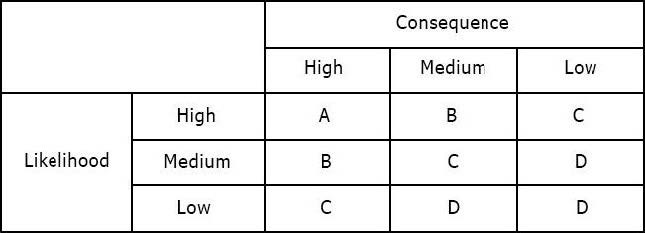
-
A
-
B
-
C
-
D
Reveal answer details
Close answer details
Correct answerB
ExplanationAccording to the ISA/IEC 62443 Cybersecurity Fundamentals, the risk matrix is a tool used to assess the risk of a particular event. The risk matrix is divided into three categories: likelihood, consequence, and risk.
The likelihood is the probability that an event will occur, the consequence is the impact that the event will have, and the risk is the combination of the two. In this case, the risk of a medium likelihood event with high consequence is a high risk, as shown by the red cell in the matrix. References:
ISA/IEC 62443 Cybersecurity Fundamentals
[ISA/IEC 62443 Cybersecurity Certificate Program]
[Cybersecurity Library]
[Using the ISA/IEC 62443 Standard to Secure Your Control Systems]
Question 30
Single choice
As related to IACS Maintenance Service Providers, when do maintenance activities generally start?
-
A
-
B
At the beginning of the project
-
C
After the handover of the solution
-
D
Before the handover of the solution
Reveal answer details
Close answer details
Correct answerC
ExplanationMaintenance service activities typically begin after the system is deployed and handed over to the asset owner. This is aligned with the Operation and Maintenance phase of the IACS lifecycle.
"Maintenance service providers typically become responsible for cybersecurity-related activities after the asset owner takes ownership of the system, following handover."
- ISA/IEC 62443-2-4:2015, Clause 4.2.3 - Transition and Handover Prior to handover, integrators and product suppliers manage the system. Maintenance providers take over only post-commissioning. References:
ISA/IEC 62443-2-4:2015 - Clause 4.2.3
ISA/IEC 62443-1-1 - IACS lifecycle phases
Question 31
Single choice
Why is OPC Classic considered firewall unfriendly?
-
A
It allows use of only port 80.
-
B
It dynamically assigns several ports.
-
C
It is an obsolete communication standard.
-
D
It works with control devices from different manufacturers.
Reveal answer details
Close answer details
Correct answerB
ExplanationOPC Classic uses Microsoft's DCOM (Distributed Component Object Model) for communication, which dynamically opens multiple ports, making it extremely difficult to manage with firewalls.
"OPC Classic is firewall-unfriendly because DCOM requires dynamic port negotiation, making it difficult to
define consistent firewall rules."
- ISA/IEC 62443-3-3:2013, Annex A - Communication Protocols and Security Concerns
This lack of port predictability presents a significant security and operational risk, which led to the development of OPC UA, which uses fixed ports and supports encryption. References:
ISA/IEC 62443-3-3 - Annex A
OPC Foundation Security Guidelines
Question 32
Single choice
Why is it important for the asset owner to incorporate the IACS into its organization and security program during the Operation and Maintenance phase?
-
A
To embed the IACS within organizational processes and people
-
B
To ensure that the system can be decommissioned immediately if needed
-
C
To allow the product supplier to update the system remotely without oversight
-
D
To guarantee that the maintenance service provider has full control over the system
Reveal answer details
Close answer details
Correct answerA
ExplanationDuring the Operation and Maintenance phase, the asset owner is responsible for ensuring that the IACS is integrated into their broader security program, including processes, training, and monitoring.
"The asset owner shall ensure that the IACS is incorporated into their operational and security governance programs, including process ownership, personnel responsibilities, and continuous security monitoring."
- ISA/IEC 62443-2-1:2010, Clause 4.3.2 - Organizational Security Measures
This ensures that cybersecurity becomes a continuous organizational function, not a one-time setup or third-party responsibility. References:
ISA/IEC 62443-2-1:2010 - Clause 4.3.2 ISA/IEC 62443-1-1 - Lifecycle Model, Operation
Phase
Question 33
Single choice
What does ISASecure primarily focus on?
-
A
Developing internal testing labs
-
B
Certifying IACS products and systems for cybersecurity
-
C
Offering assessments for integrator site engineering practices
-
D
Managing asset owner operations and maintenance practices
Reveal answer details
Close answer details
Correct answerB
ExplanationISASecure is a conformity assessment scheme developed under the ISA Security Compliance Institute (ISCI), an affiliate of ISA. Its primary focus is the certification of IACS (Industrial Automation and Control System) products, systems, and supplier processes for cybersecurity. The program's aim is to facilitate and ensure the cybersecurity of automation and control systems by certifying that products and systems meet the requirements set forth in the ISA/IEC 62443 standards. ISASecure offers certifications such as ISASecure EDSA (Embedded Device Security Assurance), SSA (System Security Assurance), and CSA (Component Security Assurance), all of which are tightly mapped to the 62443 series requirements.
References:
ISA/IEC 62443-4-2:2019, Section 1
ISASecure Certification Program Description, 2024.
Question 34
Single choice
What is a frequent mistake made with cybersecurity management?
-
A
Ignoring organizational culture
-
B
Focusing solely on technology solutions
-
C
Implementing too many security practices at once
-
D
Initially addressing smaller pieces of the entire system
Reveal answer details
Close answer details
Correct answerB
ExplanationOne of the most frequent mistakes in cybersecurity management-according to ISA/IEC 62443 guidance-is focusing only on technological solutions and neglecting other critical components such as people, process, and culture. Effective cybersecurity management must include policies, training, incident response, and continual improvement, not just technical controls. This holistic approach is emphasized throughout the standards, particularly in the sections describing CSMS program elements and organizational responsibilities.
References:
ISA/IEC 62443-2-1:2009, Section 4.2.3 ("Cybersecurity is not just a technology problem")
Section 6.2.4 (Organizational awareness and training).
Question 35
Single choice
Which layer specifies the rules for Modbus Application Protocol Available Choices (select all choices that are correct)
-
A
-
B
-
C
-
D
Reveal answer details
Close answer details
Correct answerD
ExplanationThe Modbus Application Protocol is a messaging protocol that provides client/server communication between devices connected on different types of buses or networks. It is positioned at level 7 of the OSI model, which is the application layer. The application layer is the highest level of the OSI model and defines the rules and formats for data exchange between applications. The Modbus Application Protocol is independent of the underlying communication layers and can be implemented using different transport protocols, such as TCP /IP, serial, or Modbus Plus.The Modbus Application Protocol defines the function codes, data formats, and error codes for Modbus transactions 123. References:
MODBUS APPLICATION PROTOCOL SPECIFICATION V1
Modbus - Wikipedia
Overview of Modbus - EPICS support for Modbus - GitHub Pages
Question 36
Single choice
How should patching be approached within an organization?
-
A
By ignoring downtime and costs
-
B
Only after a cyberattack has occurred
-
C
As part of the broader risk management strategy
-
D
As a purely technical task with no business implications
Reveal answer details
Close answer details
Correct answerC
ExplanationPatching in industrial environments must align with the broader risk management strategy due to the potential impact on system availability, safety, and compliance. According to ISA/IEC 62443-2-1, patch management is considered a part of operational security controls, and the standard emphasizes that patching decisions must be risk-informed. "Patch management procedures shall consider the risk of system impact and ensure minimal disruption to IACS operation. The decision to apply patches must be based on risk assessments and business impact evaluations."
- ISA/IEC 62443-2-1:2010, Section 4.3.4.3
Additionally, ISA/IEC 62443-2-3 also supports the integration of patch management within the broader context of security maintenance planning. References:
ISA/IEC 62443-2-1:2010 - Section 4.3.4.3 ISA/IEC 62443-2-3:2015 - Patch management
processes ISA/IEC 62443-1-2 - Definitions and risk-based approach guidance
|