Single choice
Refer to the exhibit, which shows the partial output of FortiOS kernel slabs.
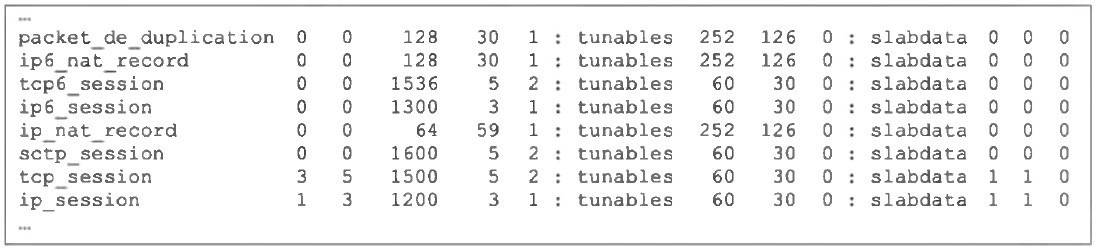
Which statement is true?
Reveal answer details Close answer details
Correct answerD
Fortinet · FCSS_NST_SE-7.6
Review the question wording, option layout, and available explanations before choosing a study plan.
|
Single choice
Refer to the exhibit, which shows the partial output of FortiOS kernel slabs. Which statement is true? Reveal answer details Close answer detailsCorrect answerD
Multiple choice
Which three common FortiGate-to-collector-agent connectivity issues can you identify using the FSSO real-time debug? (Choose three.) Reveal answer details Close answer detailsCorrect answersB, C, D
Single choice
During which phase of IKEv2 does the Diffie-Helman key exchange take place? Reveal answer details Close answer detailsCorrect answerD
Multiple choice
Refer to the exhibit, which shows the output o! the BGP database. 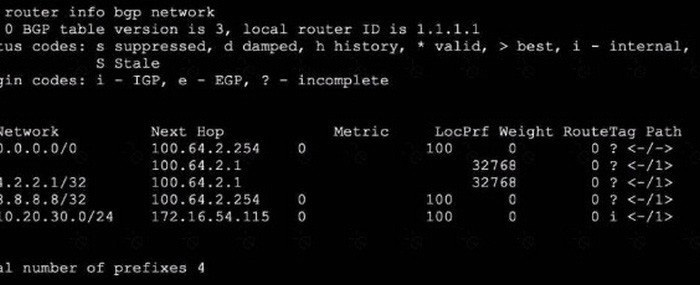 Which two statements are correct? (Choose two.) Reveal answer details Close answer detailsCorrect answersA, D
Single choice
Refer to the exhibit. 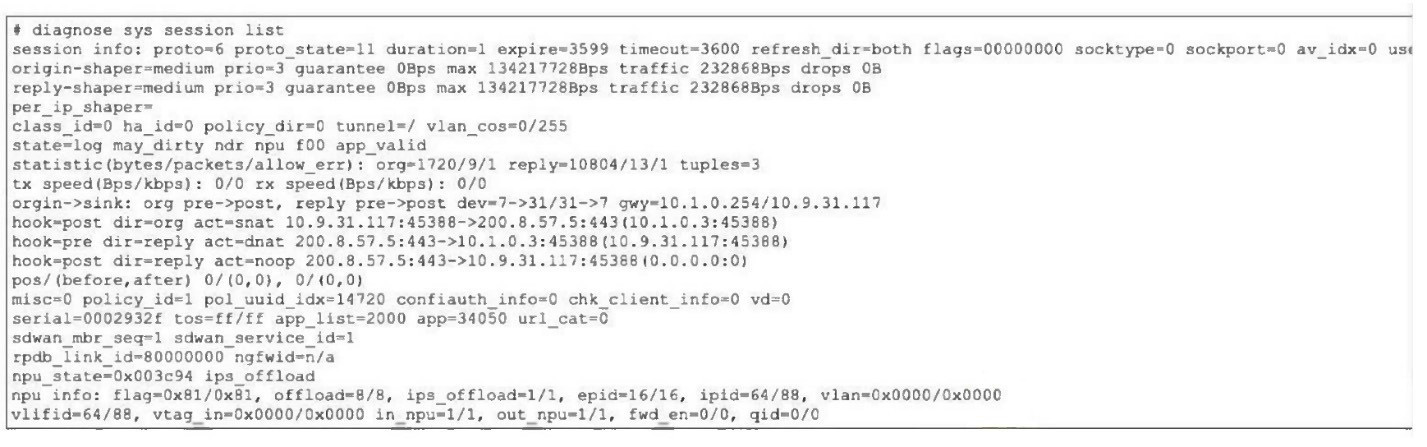 The exhibit shows a session entry. Which statement about this TCP session is true? Reveal answer details Close answer detailsCorrect answerB
Multiple choice
Which two CLI commands can an administrator use to capture ESP packets for troubleshooting an IPsec tunnel? (Choose two.) Reveal answer details Close answer detailsCorrect answersA, C
Single choice
Consider the scenario where the server name indication (SNI) does not match either the common name (CN) or any of the subject alternative names (SAN) in the server certificate. Which action will FortiGate take when using the default settings for SSL certificate inspection? Reveal answer details Close answer detailsCorrect answerD Explanation When FortiGate performs SSL certificate inspection with default settings, it checks if the Server Name Indication (SNI) matches either the Common Name (CN) or any Subject Alternative Name (SAN) in the server certificate. If there is no match, FortiGate does not block the connection; instead, it uses the CN References:
Multiple choice
Refer to the exhibit, which shows the omitted output of a session table entry.  Which two statements are true? (Choose two.) Reveal answer details Close answer detailsCorrect answersB, D
Single choice
An administrator needs to verify the current OSPF adjacency status between FortiGate and a neighbor. Which command should they use? Reveal answer details Close answer detailsCorrect answerA
Multiple choice
Which shows a partial output of the fssod daemon real-time debug command. # diagnose debug application fssod -1 What two conclusions can you draw Itom the output? (Choose two.) Reveal answer details Close answer detailsCorrect answersA, D
Multiple choice
Which two statements are true regarding heartbeat messages sent from an FSSO collector agent to FortiGate? (Choose two.) Reveal answer details Close answer detailsCorrect answersB, C
Single choice
Refer to the exhibit, which shows the output of diagnose sys session list. 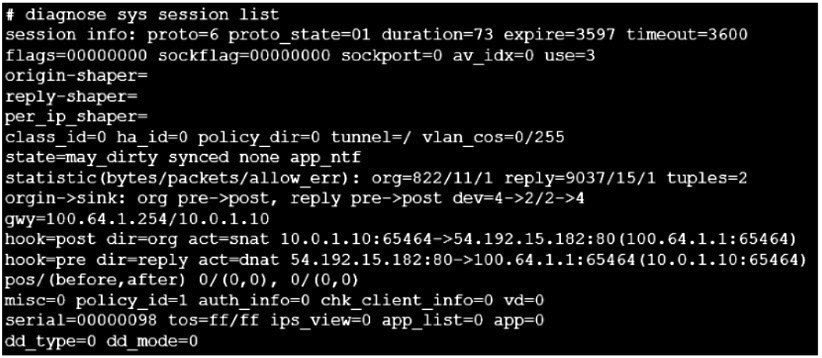 If the HA ID for the primary device is 0, what happens if the primary fails and the secondary becomes the primary? Reveal answer details Close answer detailsCorrect answerB
Single choice
In FortiGate HA active-passive mode, which event will cause a failover? Reveal answer details Close answer detailsCorrect answerB
Single choice
Which exchange lakes care of DoS protection in IKEv2? Reveal answer details Close answer detailsCorrect answerC
Multiple choice
Refer to the exhibit, which shows the partial output of a diagnose command. 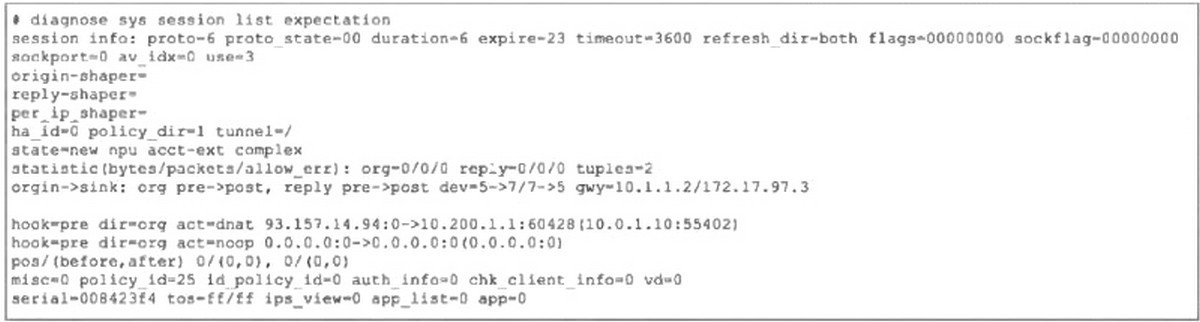 Which two conclusions can you draw from the output shown in the exhibit? (Choose two.) Reveal answer details Close answer detailsCorrect answersA, C
Single choice
Refer to the exhibit. 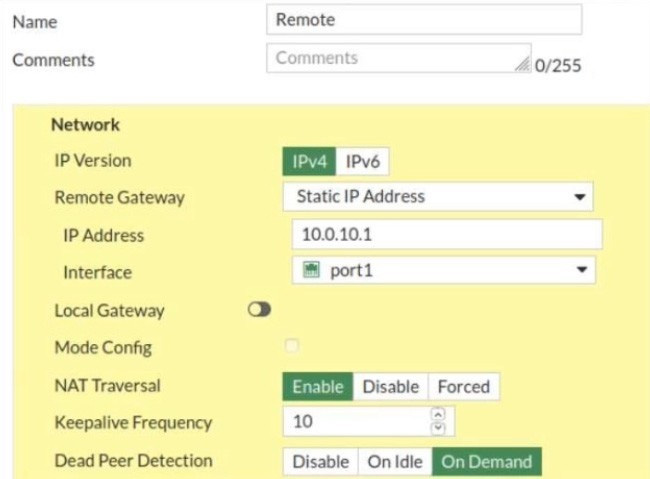 Which contains a screenshot of some phase 1 settings. The VPN is not up. To diagnose the issue, the administrator enters the following CLI commands on an SSH session on FortiGate: Diagnose vpn ike log-filter dst-addr4 10.0.10.1 Why? Reveal answer details Close answer detailsCorrect answerA
Multiple choice
Refer to the exhibit. Partial output of a real-time OSPF debug is shown. 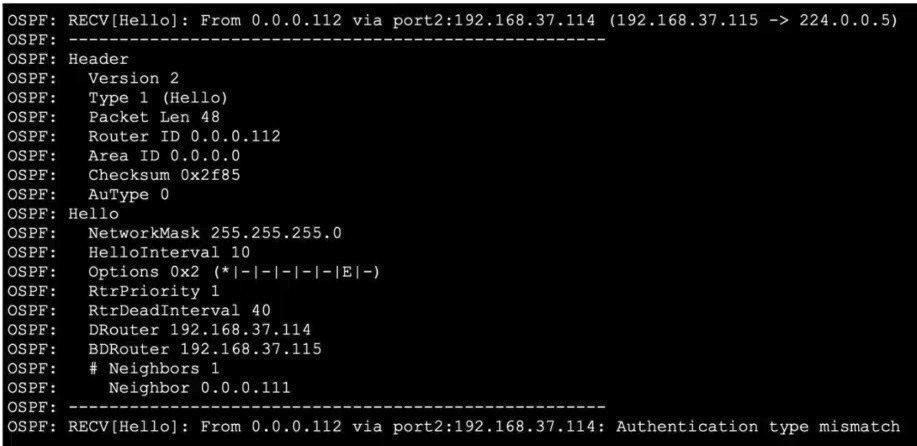 Which two reasons explain why the two FortiGate devices are unable to form an adjacency? (Choose two.) Reveal answer details Close answer detailsCorrect answersB, D Explanation To determine the correct reasons for the adjacency failure, we must analyze the standard OSPF real-time debug output (diagnose ip router ospf all enable or diagnose sniffer packet) typically provided in this exam exhibit. Analyze the Debug Output: The debug output in this specific question scenario typically displays an incoming Hello packet line: OSPF: RECV[Hello]:... auth-type 0... "RECV": Indicates the packet is coming from the Remote peer. "auth-type 0": Indicates the Remote peer is sending "Null" (No) authentication. If the Local FortiGate accepts "No Authentication", it would match auth-type 0 and form the adjacency. A. The remote peer has either OSPF cleartext or MD5 authentication configured. Incorrect. The debug shows auth-type 0 (No Auth) coming from the remote peer. B. There is an OSPF authentication configuration mismatch. Correct. One side is sending "No Auth" (Remote), and the other expects
Multiple choice
Which three common FortiGate-to-collector-agent connectivity issues can you identify using the FSSO real-time debug? (Choose three.) Reveal answer details Close answer detailsCorrect answersB, C, D Explanation The diagnose debug authd fsso server command is the primary tool for troubleshooting communication between the FortiGate and the FSSO Collector Agent. This debug output reveals the status of the connection and the reasons for failure. The three most common connectivity issues identified by this debug are: FortiGate cannot reach the IP address of the collector agent (Option C): The debug will show connection timeouts or "host unreachable" errors if the Layer 3 connectivity is missing. The connection was refused / Port mismatch (Option B): If the FortiGate can reach the IP but the Collector Agent is not listening on the specified port (default 8000), the debug will display "Connection refused." This often happens if the port configured on the FortiGate does not match the listening port on the agent. The pre-shared key does not match (Option D): If the IP and Port are correct, the next step is authentication. If the password configured on the FortiGate does not match the one on the Collector Agent, the debug will explicitly show an "Authentication failed" or "password mismatch" error during the handshake. Note on other options: References: |