Refer to the exhibits.
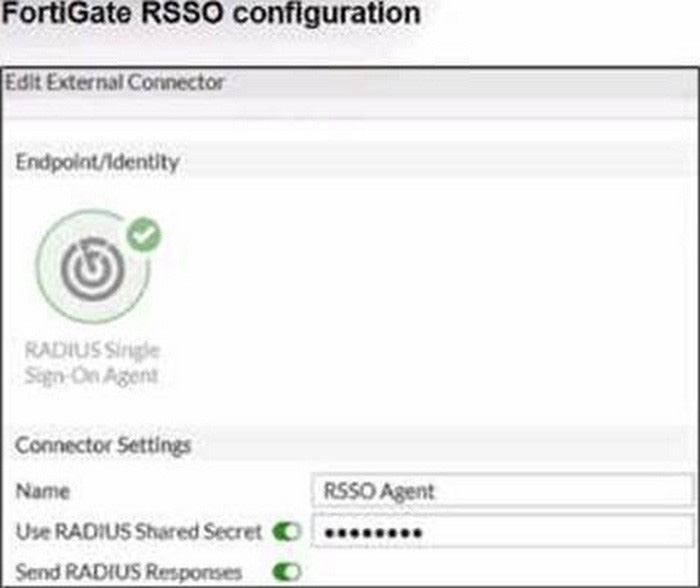
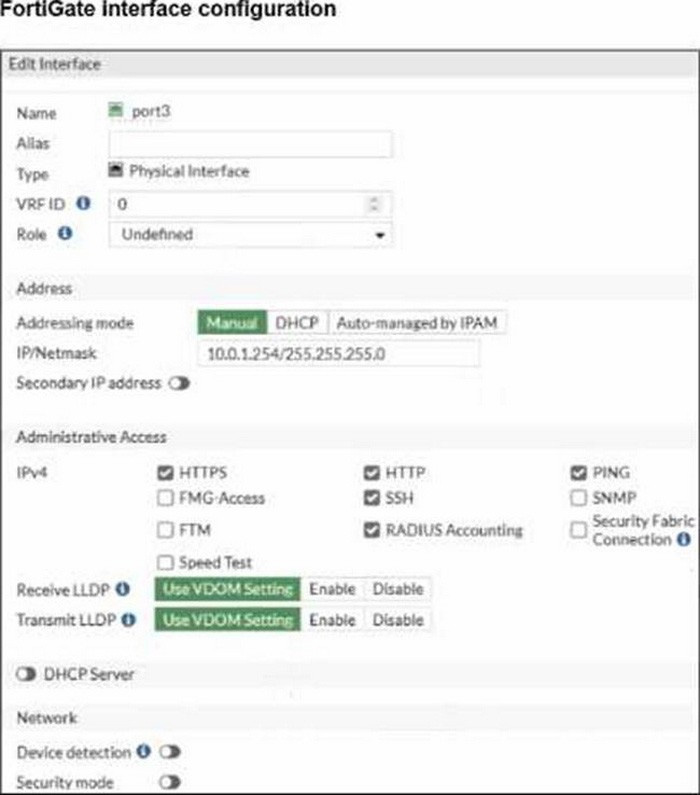
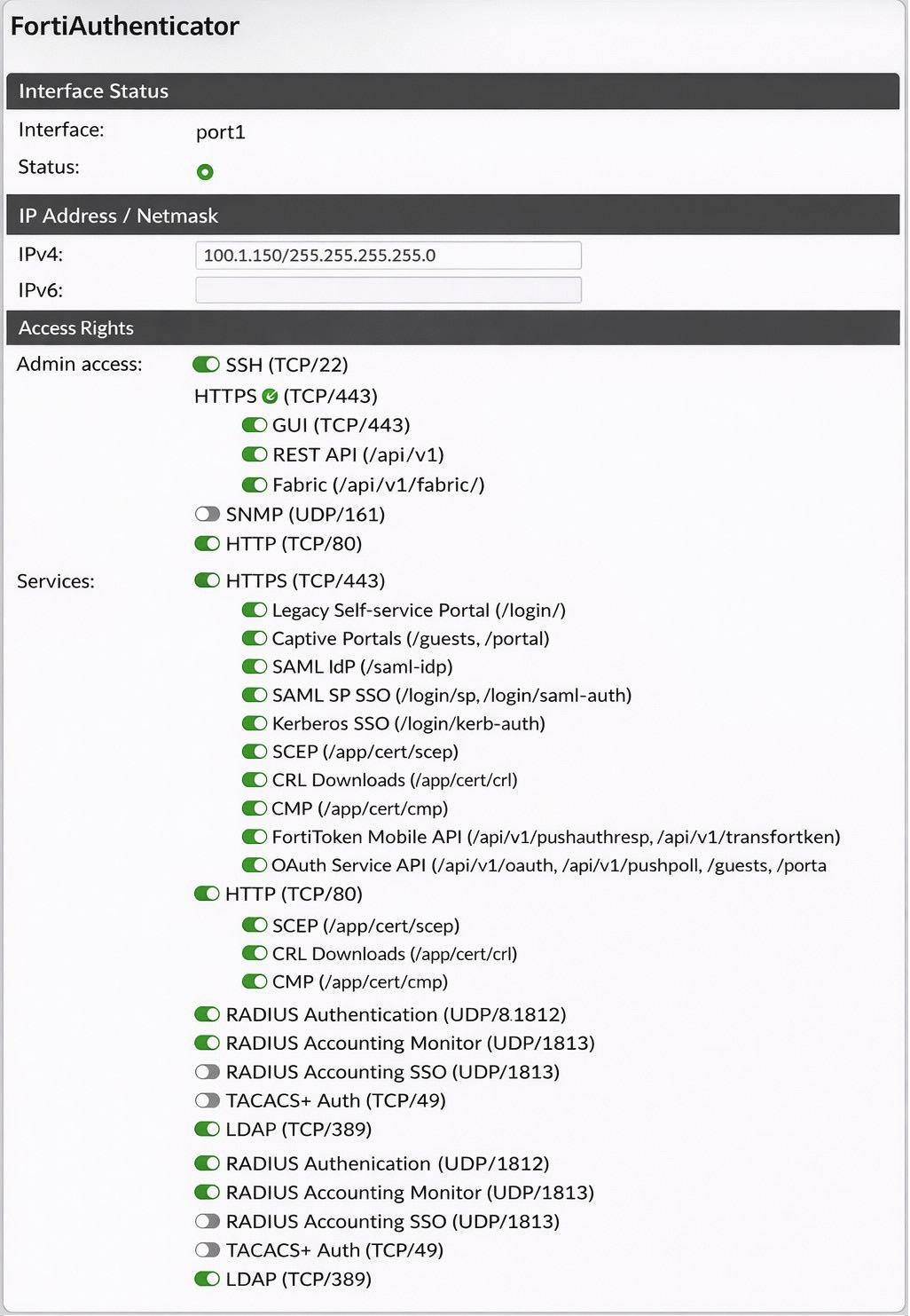
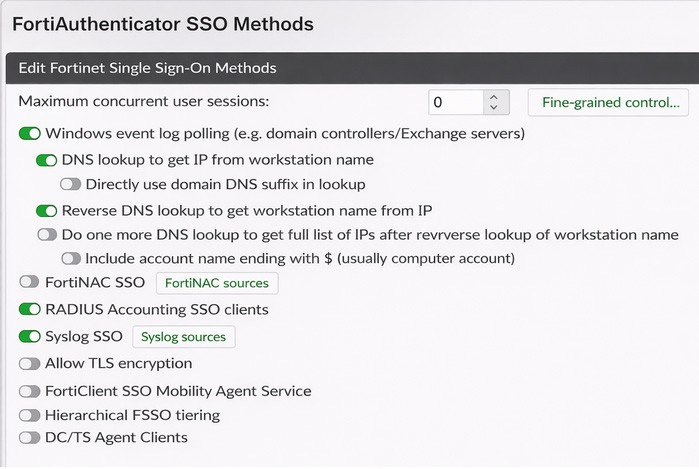
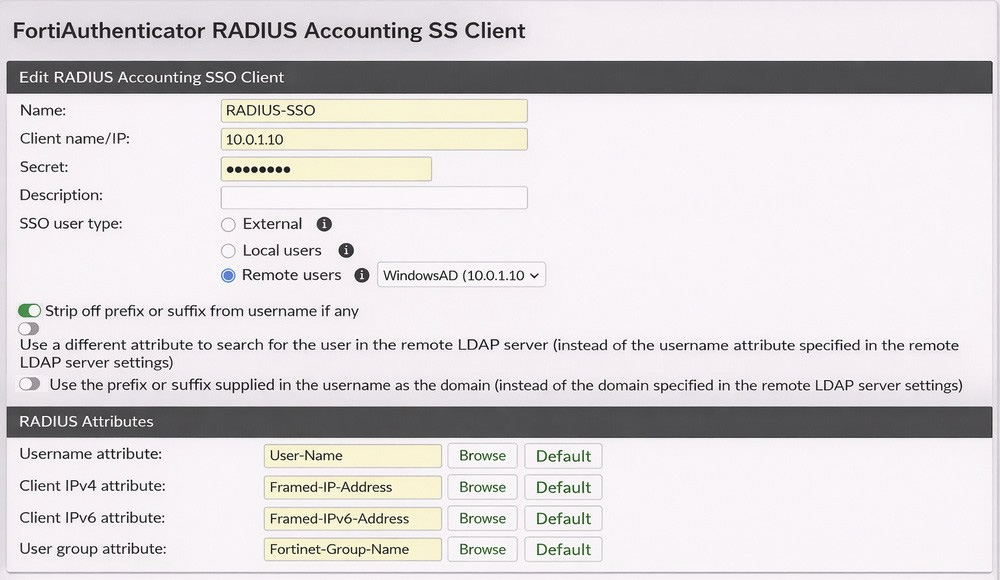
Examine the FortiGate RSSO configuration shown in the exhibit. FortiGate is set up to use RSSO for user authentication. It is currently receiving RADIUS accounting messages through port3. The incoming RADIUS accounting messages contain the username in the User-Name attribute and group membership in the Class attribute. You must ensure that the users are authenticated through these RADIUS accounting messages and accurately mapped to their respective RSSO user groups.
Which three critical configurations must you implement on the FortiGate device? (Choose three.)
Reveal answer details Close answer details
Correct answersA, D, E
The problem states:
FortiGate receives RADIUS accounting messages on port3 .
User-Nameattribute contains the username.
Classattribute contains the group membership.
Goal: authenticate users through RSSO and map them to the correct user groups.
To achieve this, three critical components must be configured:
#A. RADIUS Attribute Value in the RSSO group must match the Class attribute
This is mandatory because:
RSSO user groups on FortiGate match users based on the value inside the RADIUS attribute (usually Class).
For group assignment to work, FortiGate must compare:
RSSO User Group # RADIUS Class Attribute Value
This is exactly how FortiGate maps RSSO users to groups .
#D. RSSO agent's sso-attribute must be set to Class
The sso-attribute defines which RADIUS attribute contains the group information .
Because group membership is carried in:
#Class attribute
You must configure:
config user radius
set sso-attribute Class
end
This tells FortiGate:
"Use the Class attribute to derive user group membership."
#E. rsso-endpoint-attribute must be set to User-Name This identifies which RADIUS attribute carries the actual username .
In this scenario:
RADIUS accounting messages contain the username in User-Name .
So the correct setting is:
config user radius
set rsso-endpoint-attribute User-Name end
This ensures the RSSO user object uses the correct username.
#Incorrect Options Explained
B. Assign RSSO user groups to all firewall policies
Not required.
You only assign them to policies where RSSO authentication is used.
C. Device detection and Security Fabric Connection should be enabled on port3
Totally irrelevant to RSSO.
RSSO only needs RADIUS accounting, not device detection or Fabric services.