SY0-601 Exam Details
-
Exam Code
:SY0-601 -
Exam Name
:CompTIA Security+ -
Certification
:CompTIA Certifications -
Vendor
:CompTIA -
Total Questions
:1334 Q&As -
Last Updated
:Jul 15, 2026
CompTIA SY0-601 Online Questions & Answers
-
Question 811:
Which of the following BEST describes data streams that are compiled through artificial intelligence that provides insight on current cyberintrusions, phishing, and other malicious cyberactivity?
A. Intelligence fusion
B. Review reports
C. Log reviews
D. Threat feeds -
Question 812:
A nationwide company is experiencing unauthorized logins at all hours of the day. The logins appear to originate from countries in which the company has no employees. Which of the following controls should the company consider using as part of its IAM strategy? (Select TWO).
A. A complex password policy
B. Geolocation
C. An impossible travel policy
D. Self-service password reset
E. Geofencing
F. Time-based logins -
Question 813:
A security administrator is seeking a solution to prevent unauthorized access to the internal network. Which of the following security solutions should the administrator choose?
A. MAC filtering
B. Anti-malware
C. Translation gateway
D. VPN -
Question 814:
A recent audit cited a risk involving numerous low-criticality vulnerabilities created by a web application using a third-party library. The development staff state there are still customers using the application even though it is end of life and it would be a substantial burden to update the application for compatibility with more secure libraries. Which of the following would be the MOST prudent course of action?
A. Accept the risk if there is a clear road map for timely decommission
B. Deny the risk due to the end-of-life status of the application.
C. Use containerization to segment the application from other applications to eliminate the risk
D. Outsource the application to a third-party developer group -
Question 815:
Which of the following is a known security risk associated with data archives that contain financial information?
A. Data can become a liability if archived longer than required by regulatory guidance
B. Data must be archived off-site to avoid breaches and meet business requirements
C. Companies are prohibited from providing archived data to e-discovery requests
D. Unencrypted archives should be preserved as long as possible and encrypted -
Question 816:
Which of the following is a risk that is specifically associated with hosting applications in the public cloud?
A. Unsecured root accounts
B. Zero day
C. Shared tenancy
D. Insider threat -
Question 817:
A software company adopted the following processes before releasing software to production;
1.
Peer review
2.
Static code scanning
3.
Signing
A considerable number of vulnerabilities are still being detected when code is executed on production Which of the following security tools can improve vulnerability detection on this environment?
A. File integrity monitoring for the source code
B. Dynamic code analysis tool
C. Encrypted code repository
D. Endpoint detection and response solution -
Question 818:
A company is receiving emails with links to phishing sites that look very similar to the company's own website address and content. Which of the following is the BEST way for the company to mitigate this attack?
A. Create a honeynet to trap attackers who access the VPN with credentials obtained by phishing.
B. Generate a list of domains similar to the company's own and implement a DNS sinkhole for each.
C. Disable POP and IMAP on all Internet-facing email servers and implement SMTPS.
D. Use an automated tool to flood the phishing websites with fake usernames and passwords. -
Question 819:
A network administrator has been alerted that web pages are experiencing long load times. After determining it is not a routing or DNS issue, the administrator logs in to the router, runs a command, and receives the following output:
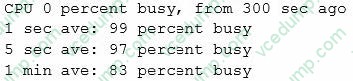
Which of the following is the router experiencing?
A. DDoS attack
B. Memory leak
C. Buffer overflow
D. Resource exhaustion -
Question 820:
Which of the following is the MOST effective way to detect security flaws present on third- party libraries embedded on software before it is released into production?
A. Employ different techniques for server- and client-side validations.
B. Use a different version control system for third-party libraries.
C. Implement a vulnerability scan to assess dependencies earlier on SDLC.
D. Increase the number of penetration tests before software release.
Related Exams:
-
220-1001
CompTIA A+ Certification: Core 1 -
220-1002
CompTIA A+ Certification: Core 2 -
220-1101
CompTIA A+ Certification: Core 1 -
220-1102
CompTIA A+ Certification: Core 2 -
220-1201
CompTIA A+ Certification: Core 1 -
220-1202
CompTIA A+ Core 2 (2026) -
220-902
CompTIA A+ Certification -
CAS-004
CompTIA Advanced Security Practitioner (CASP+) -
CAS-005
CompTIA SecurityX -
CLO-001
CompTIA Cloud Essentials+
Tips on How to Prepare for the Exams
Nowadays, the certification exams become more and more important and required by more and more enterprises when applying for a job. But how to prepare for the exam effectively? How to prepare for the exam in a short time with less efforts? How to get a ideal result and how to find the most reliable resources? Here on Vcedump.com, you will find all the answers. Vcedump.com provide not only CompTIA exam questions, answers and explanations but also complete assistance on your exam preparation and certification application. If you are confused on your SY0-601 exam preparations and CompTIA certification application, do not hesitate to visit our Vcedump.com to find your solutions here.