CKA Exam Details
-
Exam Code
:CKA -
Exam Name
:Linux Foundation Certified Kubernetes Administrator (CKA) -
Certification
:Linux Foundation Certifications -
Vendor
:Linux Foundation -
Total Questions
:83 Q&As -
Last Updated
:Jul 10, 2026
Linux Foundation CKA Online Questions & Answers
-
Question 1:
SIMULATION
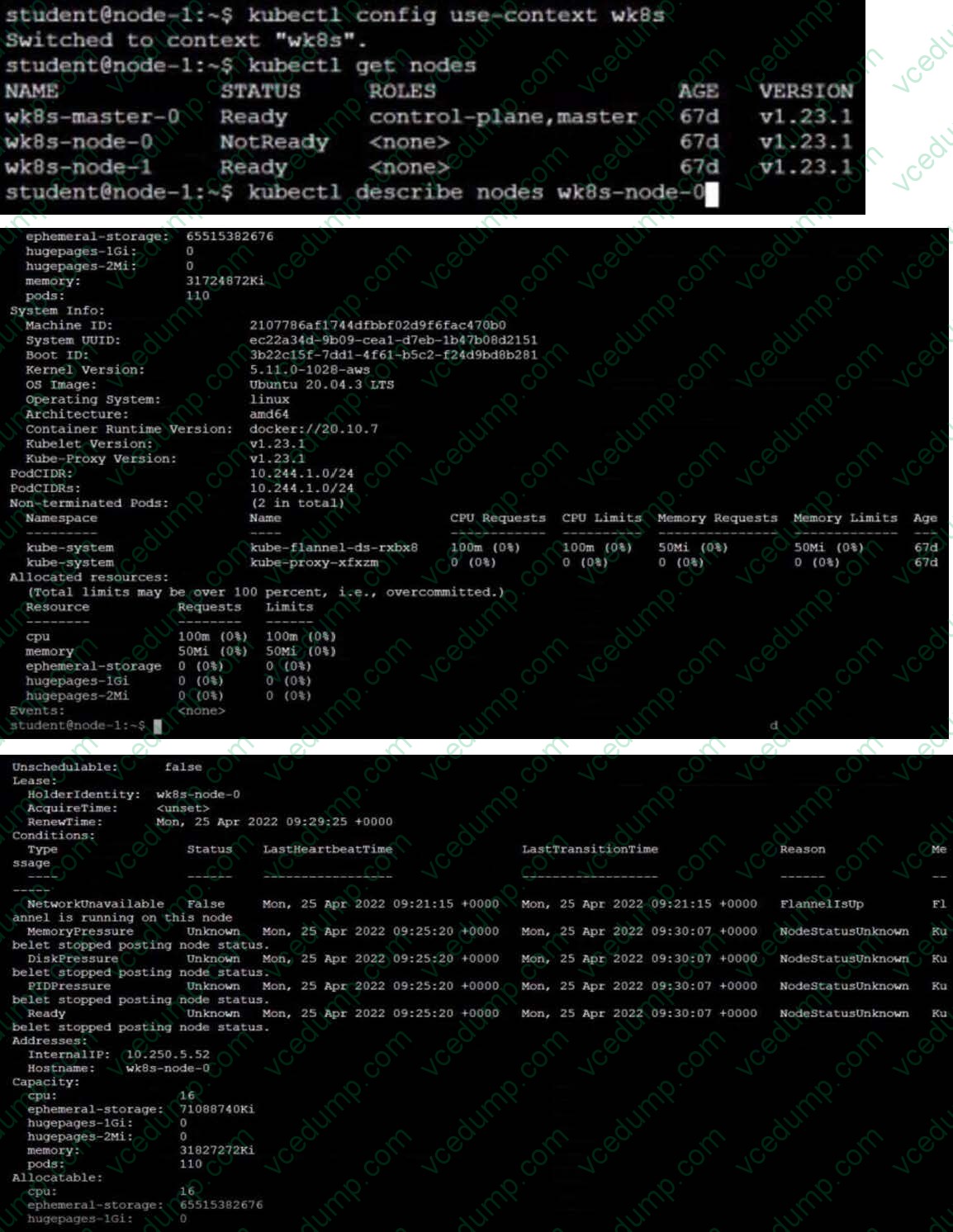
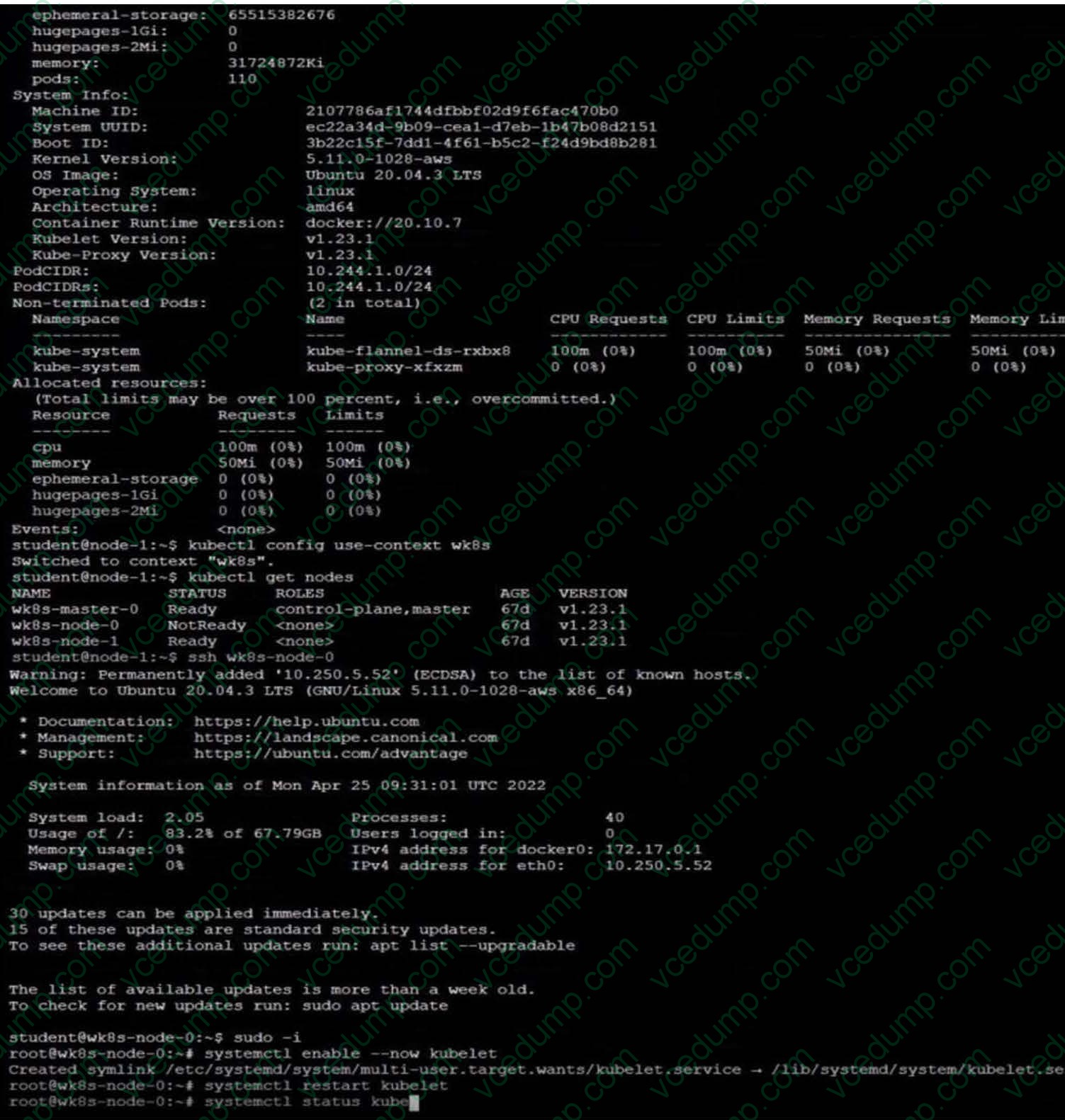
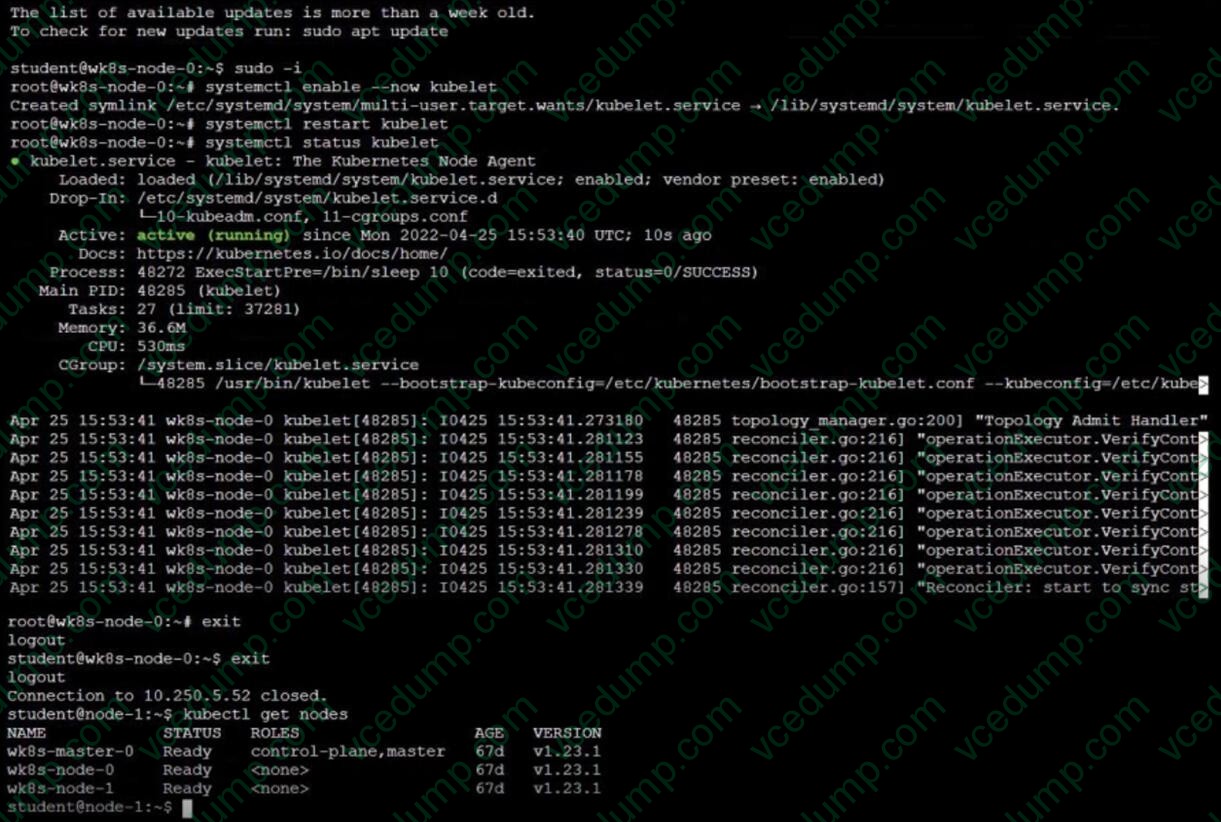
Configure the kubelet systemd- managed service, on the node labelled with name=wk8s-node-1, to launch a pod containing a single container of Image httpd named webtool automatically. Any spec files required should be placed in the /etc/kubernetes/manifests directory on the node.
You can ssh to the appropriate node using:
[student@node-1] $ ssh wk8s-node-1 You can assume elevated privileges on the node with the following command: [student@wk8s-node-1] $ | sudo -i
Correct Answer. Check the answer in explanation. -
Question 2:
SIMULATION List all the pods sorted by name
Correct Answer. Check the answer in explanation. -
Question 3:
SIMULATION
Create a busybox pod and add "sleep 3600" command
Correct Answer. Check the answer in explanation. -
Question 4:
SIMULATION
port: 80
policyTypes:
Context
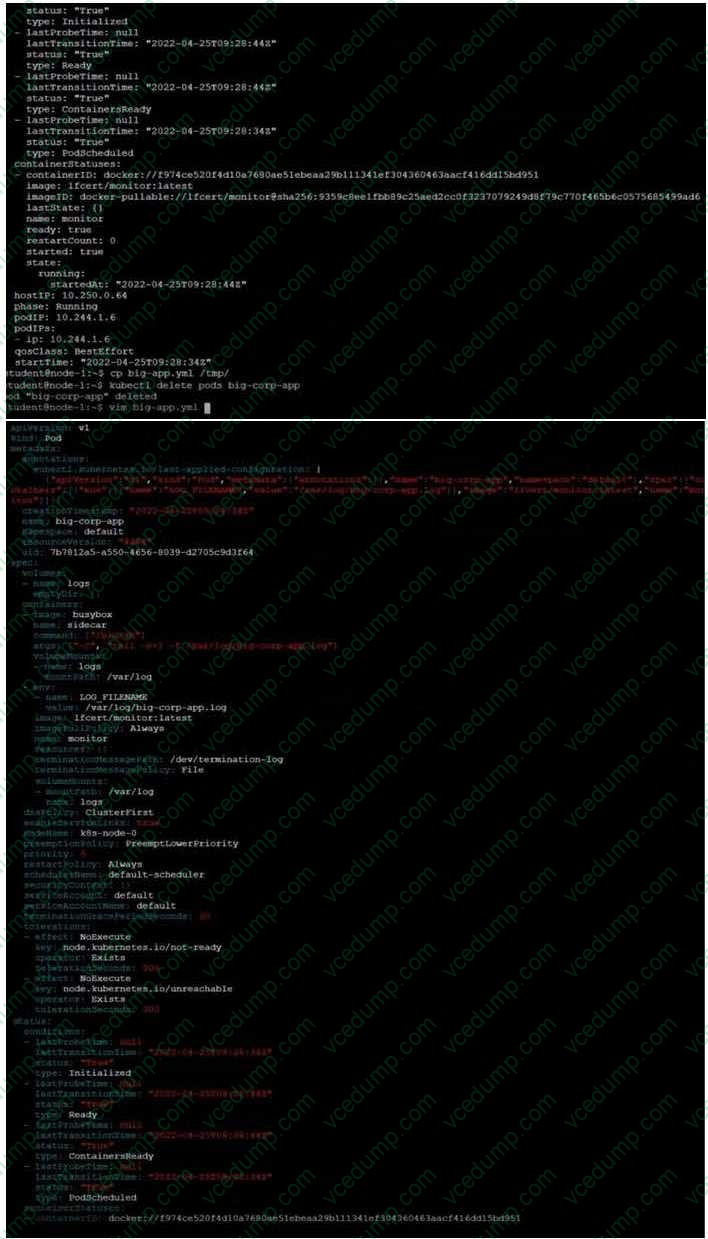
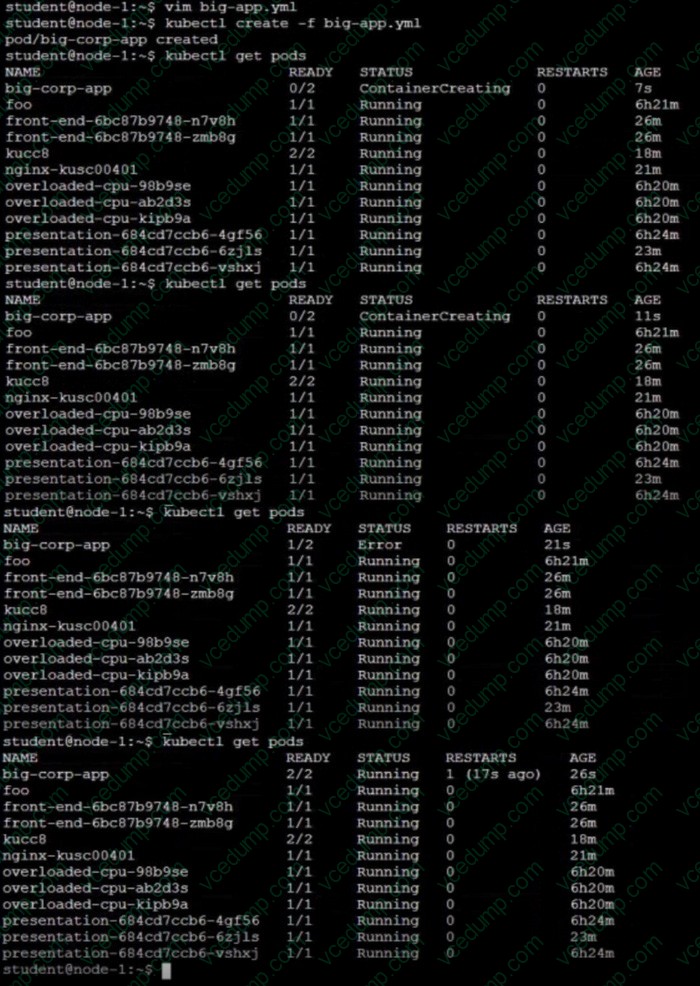
An existing Pod needs to be integrated into the Kubernetes built-in logging architecture (e.g. kubectl logs). Adding a streaming sidecar container is a good and common way to accomplish this requirement.
Task
Add a sidecar container named sidecar, using the busybox image, to the existing Pod big-corp-app. The new sidecar container has to run the following command:

Use a Volume, mounted at /var/log, to make the log file big-corp-app.log available to the sidecar container.
Correct Answer. Check the answer in explanation.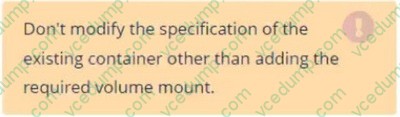
-
Question 5:
SIMULATION
Task
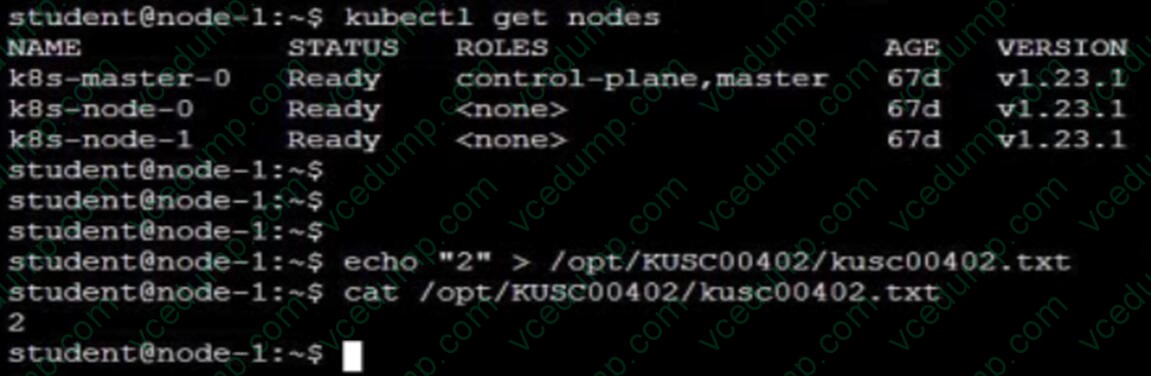
Check to see how many nodes are ready (not including nodes tainted NoSchedule ) and write the number to /opt/KUSC00402/kusc00402.txt.
Correct Answer. Check the answer in explanation. -
Question 6:
SIMULATION
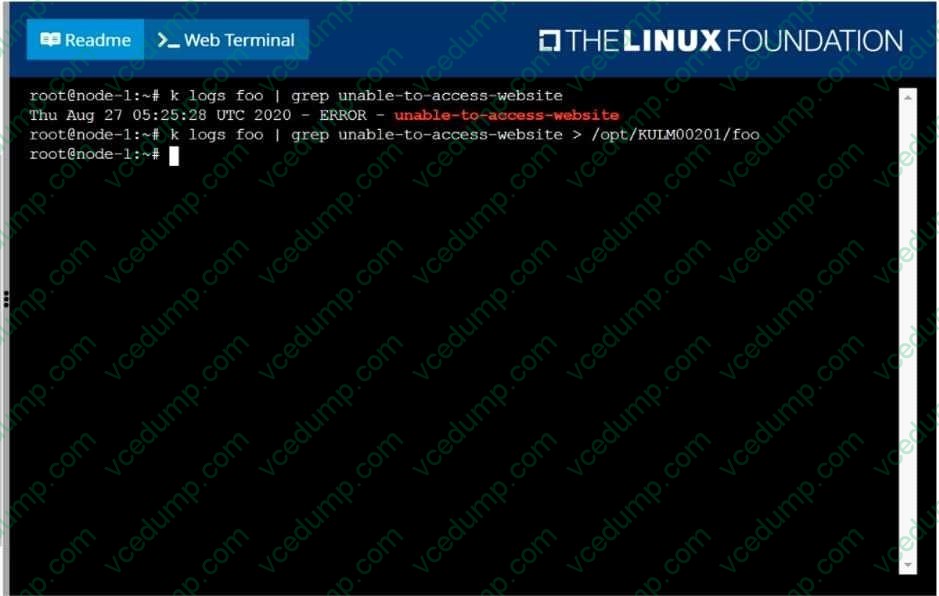
Monitor the logs of pod foo and:
1. Extract log lines corresponding to error
2. unable-to-access-website Write them to /opt/KULM00201/foo
Correct Answer. Check the answer in explanation.
-
Question 7:
SIMULATION
Get list of all the pods showing name and namespace with a jsonpath expression.
Correct Answer. Check the answer in explanation. -
Question 8:
SIMULATION List all the pods sorted by created timestamp
Correct Answer. Check the answer in explanation. -
Question 9:
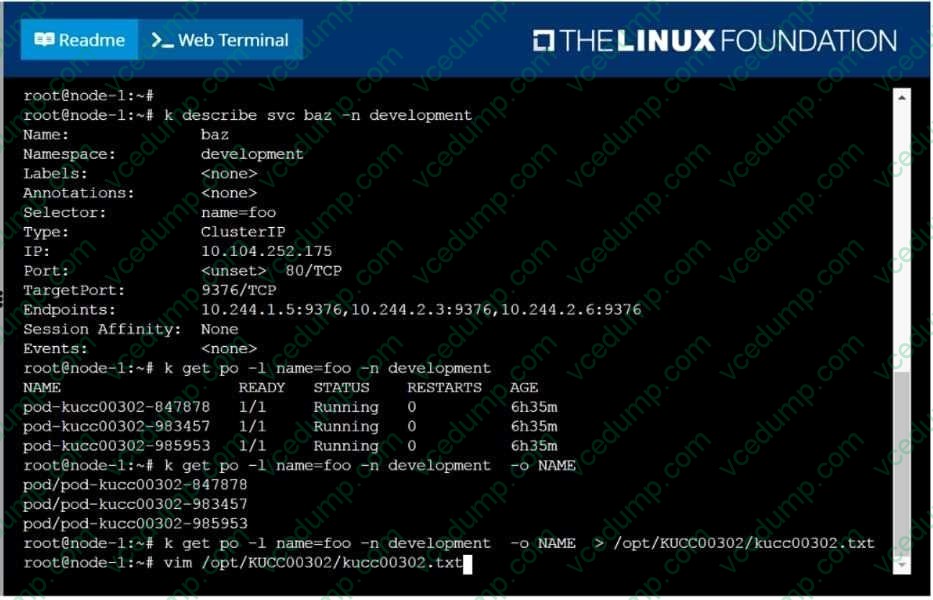
SIMULATION
Create a file:
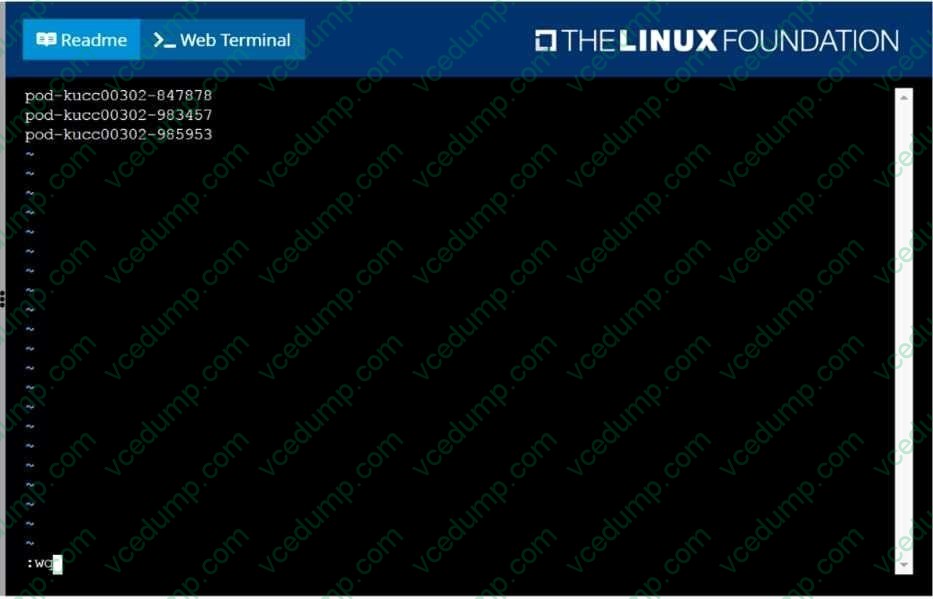
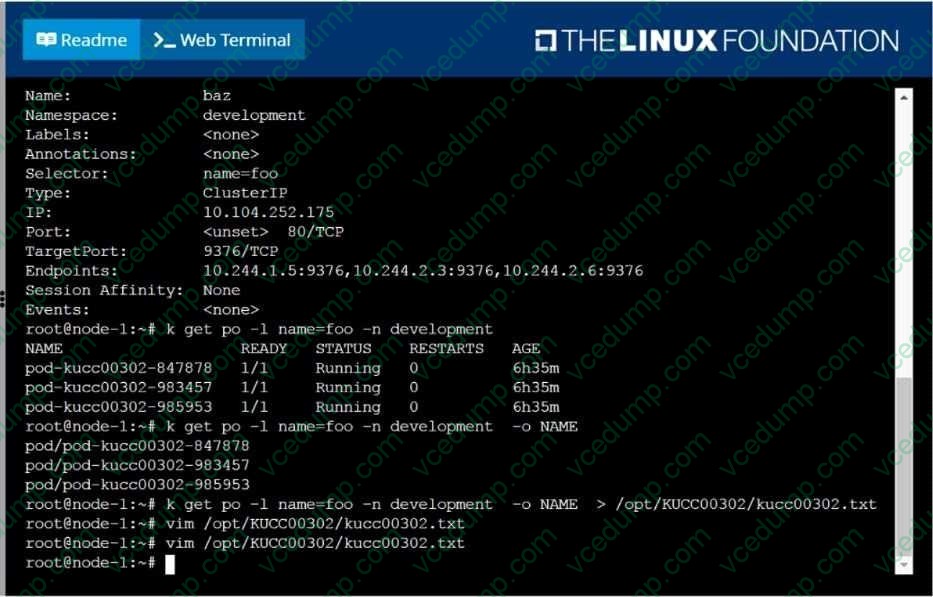
/opt/KUCC00302/kucc00302.txt that lists all pods that implement service baz in namespace development.
The format of the file should be one pod name per line.
Correct Answer. Check the answer in explanation. -
Question 10:
SIMULATION
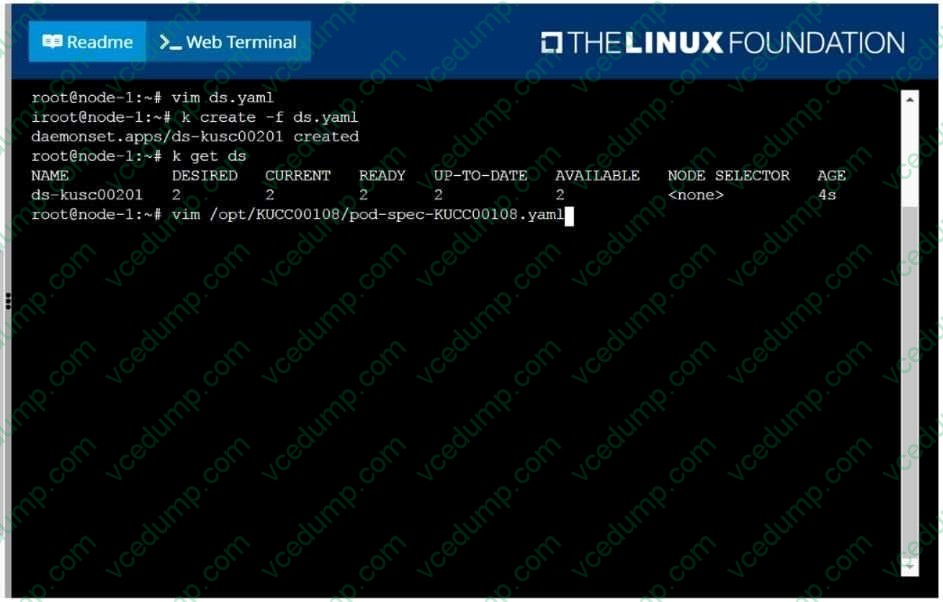
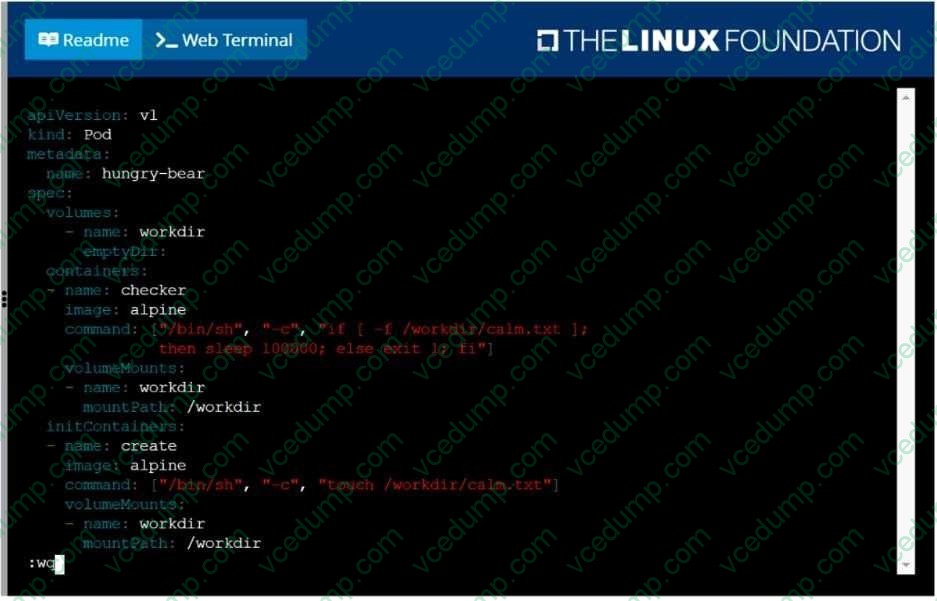
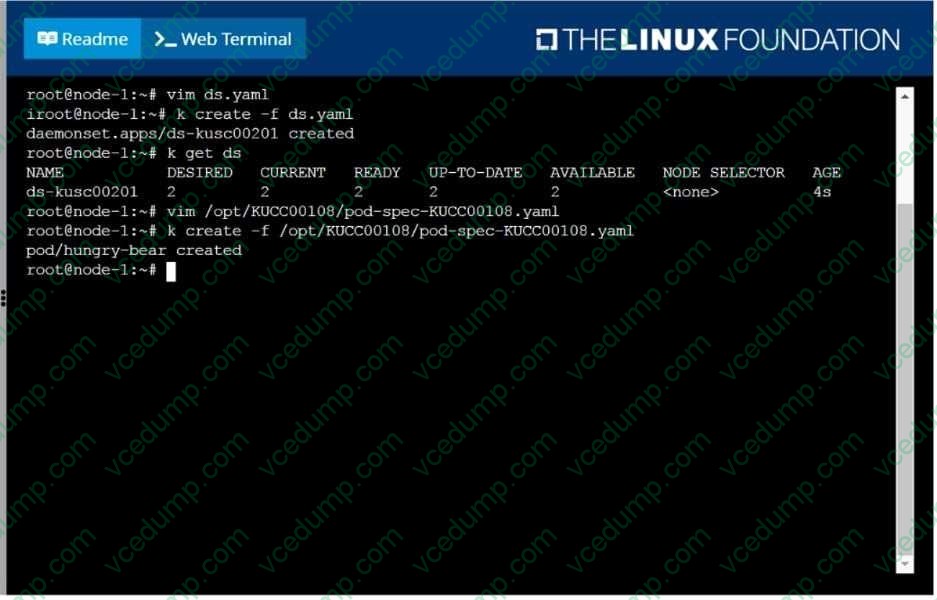
Perform the following tasks: Add an init container to hungry-bear (which has been defined in spec file /opt/KUCC00108/pod- spec-KUCC00108.yaml) The init container should create an empty file named /workdir/calm.txt If /workdir/calm.txt is not detected, the pod should exit Once the spec file has been updated with the init container definition, the pod should be created
Correct Answer. Check the answer in explanation.
Related Exams:
-
CKA
Linux Foundation Certified Kubernetes Administrator (CKA) -
CKAD
Linux Foundation Certified Kubernetes Application Developer (CKAD) -
CKS
Linux Foundation Certified Kubernetes Security Specialist (CKS) -
HFCP
Linux Foundation Certified Hyperledger Fabric Certified Practitioner (HFCP) -
KCNA
Linux Foundation Certified Kubernetes and Cloud Native Associate (KCNA) -
LFCA
Linux Foundation Certified IT Associate (LFCA) -
LFCS
Linux Foundation Certified System Administrator (LFCS) -
LUX-CGOA
Certified GitOps Associate (CGOA) -
LUX-CNPA
Certified Cloud Native Platform Engineering Associate (CNPA) -
LUX-KCSA
Kubernetes and Cloud Native Security Associate (KCSA)
Tips on How to Prepare for the Exams
Nowadays, the certification exams become more and more important and required by more and more enterprises when applying for a job. But how to prepare for the exam effectively? How to prepare for the exam in a short time with less efforts? How to get a ideal result and how to find the most reliable resources? Here on Vcedump.com, you will find all the answers. Vcedump.com provide not only Linux Foundation exam questions, answers and explanations but also complete assistance on your exam preparation and certification application. If you are confused on your CKA exam preparations and Linux Foundation certification application, do not hesitate to visit our Vcedump.com to find your solutions here.