A Chief Information Security Officer is concerned about the operational impact of ransomware. In the event of a ransomware attack, the business requires the integrity of the data to remain intact and an RPO of less than one hour. Which of the following storage strategies best satisfies the business requirements?
-
A
-
B
-
C
-
D
Reveal answer details
Close answer details
Correct answerB
ExplanationRemote journaling continuously sends log updates to a remote system, ensuring near-real-time backup and an RPO (Recovery Point Objective) under one hour.
Key concepts:
RPO under one hour means minimal data loss.
Remote journaling provides rapid recovery by keeping near-live backups.
Other options:
A (Full disk encryption) protects against unauthorized access but does not aid recovery.
C (Immutable storage) prevents modification but does not ensure real-time backups.
D (RAID 10) improves redundancy but does not help against ransomware.
A security administrator is reviewing the following code snippet from a website component: <link rel="stylesheet" type="text/css" font-weight: normal; font-style: normal;
if (!is_admin() * (function_exists ('get_hex_cache')) != true /add action('wp-head', 'get_hex_cache'/12)
function get_hex_cache () {return print ((hex2bin('3c7',
(file_get_contents ('dir_'/inc.tmp )... A review of the inc.tmp file shows the following: 2184755257932534203050934508034534324525234352353455523453242533424523453453234534896276
563857932577839537854362038263053
2800450825 Which of the following is most likely the reason for inaccuracies?
-
A
A content management solution plug-in has been exploited.
-
B
A search engine's bots are being blocked at the firewall.
-
C
The relevant stylesheet has become corrupted.
-
D
The WAF is configured to be in transparent mode.
Reveal answer details
Close answer details
Correct answerA
ExplanationThe code indicates that a WordPress (CMS) plug-in has likely been exploited. The function get_hex_cache() combines obfuscated PHP code (hex2bin) with external file retrieval (inc.tmp). This is characteristic of malicious plug-in injections in content management systems such as WordPress, where attackers inject backdoors or malicious scripts through vulnerable plug-ins. Option B (search engine bots blocked) and C (corrupted stylesheet) would not explain injected PHP logic.
Option D (WAF in transparent mode) reduces security controls but does not create malicious functions inside the CMS code. The presence of obfuscated data in inc.tmp strongly suggests tampering. Exploited CMS plug-ins are a common initial access vector, often used to hide persistent malware or web shells. This aligns with CAS-005 objectives on secure coding, monitoring for tampering, and conducting regular code reviews of third-party dependencies.
A company'sSIEMis designed to associate the company'sasset inventorywith user events.
Given the following report: 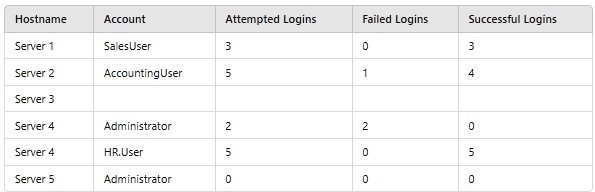 Which of the following should asecurity engineer investigate firstas part of alog audit?
-
A
Anendpointthat is not submitting any logs
-
B
Potential activity indicating an attackermoving laterally in the network
-
C
Amisconfigured syslog servercreating false negatives
-
D
Unauthorized usage attempts of the administrator account
Reveal answer details
Close answer details
Correct answerD
ExplanationExplanation: Comprehensive and Detailed Explanation:
Understanding the Security Event: Why Option D is Correct: Why Other Options Are Incorrect:
References:
CompTIA SecurityX CAS-005 Official Study Guide:SIEM & Incident Analysis
MITRE ATT&CK (T1078.002):Valid Accounts - Administrator Compromise
A help desk analyst suddenly begins receiving numerous calls from remote employees who state they are unable to connect to the VPN. The employees indicate the VPN client software is warning about an expired certificate. The help desk analyst determines the VPN certificate is valid. Which of the following is the most likely cause of the issue?
-
A
The certificate has been compromised and needs to be replaced.
-
B
The VPN concentrator is running an old version of code and needs to be upgraded.
-
C
The NTP settings on the VPN concentrator are incorrectly configured.
-
D
The end users are using outdated VPN client software.
Reveal answer details
Close answer details
Correct answerC
ExplanationThe issue described--where remote employees are unable to connect to the VPN due to warnings about an expired certificate despite the certificate being valid--is likely caused by incorrect NTP (Network Time Protocol) settings on the VPN concentrator. NTP is crucial for ensuring that the system clocks across network devices are synchronized with accurate time. Certificates have a validity period defined by start and end dates, and they rely on the system clock to determine whether they are valid or expired. If the system clock on the VPN concentrator is incorrect due to misconfigured NTP settings, the VPN concentrator may mistakenly believe that the certificate has expired when it actually hasn't. This would result in VPN clients displaying warnings about expired certificates and refusing to connect. Therefore, ensuring correct NTP configuration on the VPN concentrator is essential to resolve this issue.
A social media company wants to change encryption ciphers after identifying weaknesses in the implementation of the existing ciphers. The company needs the new ciphers to meet the following requirements: Utilize less RAM than competing ciphers. Be more CPU-efficient than previous ciphers. Require customers to use TLS 1.3 while broadcasting video or audio. Which of the following is the best choice for the social media company?
-
A
-
B
-
C
-
D
Reveal answer details
Close answer details
Correct answerC
ExplanationChaCha20-Poly1305is a cipher suite specifically designed for efficiency on systems with limited hardware resources. It offers high security with lower memory and CPU consumption compared to AES on certain platforms, especially mobile devices. TLS 1.3 supports ChaCha20-Poly1305 natively. CBC (Cipher Block
Chaining) modes like IDEA-CBC and Camellia-CBC are less efficient and not recommended under TLS 1.3, and AES-GCM, while secure, can be less efficient than ChaCha20 on devices without AES hardware acceleration. References:
CompTIA SecurityX CAS-005, Domain 3.0: Implement secure protocols including TLS 1.3 and lightweight cipher selections for performance efficiency.
A security officer received several complaints from users about excessive MFA push notifications at night.
The security team investigated and suspects malicious activity related to user account authentication. Which of the following is the best way for the security officer to restrict MFA notifications?
-
A
Provisioning FIDO2 devices
-
B
Deploying a text message-based MFA
-
C
-
D
Configuring prompt-driven MFA
Reveal answer details
Close answer details
Correct answerD
ExplanationExcessive MFA push notifications can be a sign of an attempted push notification attack, where attackers repeatedly send MFA prompts hoping the user will eventually approve one by mistake. To mitigate this:
A. Provisioning FIDO2 devices: While FIDO2 devices offer strong authentication, they may not be practical
for all users and do not directly address the issue of excessive push notifications.
B. Deploying a text message-based MFA: SMS-based MFA can still be vulnerable to similar spamming
attacks and phishing.
C. Enabling OTP via email: Email-based OTPs add another layer of security but do not directly solve the
issue of excessive notifications. D. Configuring prompt-driven MFA: This option allows users to respond to prompts in a secure manner, often including features like time-limited approval windows, additional verification steps, or requiring specific actions to approve. This can help prevent users from accidentally approving malicious attempts. Configuring prompt-driven MFA is the best solution to restrict unnecessary MFA notifications and improve security.
References:
CompTIA Security+ Study Guide
NIST SP 800-63B, "Digital Identity Guidelines"
"Multi-Factor Authentication: Best Practices" by Microsoft
The following messages are displayed when a VPN client is attempting to connect to an OpenVPN server: OpenSSL: error: 140760FC:SSL routines: SSL23_GET_CLIENT_HELLO: unknown protocol' TLS_ERROR:
BIO read tls_read_plaintext error' TLS_ERROR: TLS object->incoming plaintext read error' TLS_ERROR:
TLS handshake failed'
SIGUSR1 [soft, tls_error] received, client_instance restarting' Which of the following best explains the cause of these messages?
-
A
The client is attempting to establish an unencrypted connection with the server.
-
B
The server is unreachable to the client and a connection cannot be established.
-
C
The client is using LibreSSL libraries while the server is using OpenSSL libraries.
-
D
A TLS version mismatch exists between the client and the server.
Reveal answer details
Close answer details
Correct answerD
ExplanationThe TLS handshake errors indicate a TLS version mismatch between the VPN client and the OpenVPN server. Ensuring that both client and server configurations are aligned with compatible TLS versions and configurations is essential to resolving these errors and establishing a successful VPN connection.
An organization hires a security consultant to establish a SOC that includes a threat-modeling function.
During initial activities, the consultant works with system engineers to identify antipatterns within the environment. Which of the following is most critical for the engineers to disclose to the consultant during this phase?
-
A
Results from the most recent infrastructure access review
-
B
A listing of unpatchable IoT devices in use in the data center
-
C
Network and data flow diagrams covering the production environment
-
D
Results from the most recent software composition analysis
-
E
A current inventory of cloud resources and SaaS products in use
Reveal answer details
Close answer details
Correct answerC
ExplanationIn the context of establishing a Security Operations Center (SOC) with a threat-modeling function, it's crucial to understand how data flows within the organization's systems. Network and data flow diagrams provide a visual representation of the system's architecture, illustrating how data moves between components, which is essential for identifying potential security weaknesses and antipatterns. Antipatterns are common responses to recurring problems that are ineffective and risk-inducing. By analyzing these diagrams, the consultant can pinpoint areas where security controls may be lacking or misconfigured, thereby facilitating the development of effective threat models. While other options like unpatchable IoT devices (Option B) and inventories of cloud resources (Option E) are important for comprehensive security assessments, they are more pertinent during later stages, such as vulnerability management and asset inventory. The initial phase of threat modeling focuses on understanding the system's structure and data flows to identify potential threats, making network and data flow diagrams the most critical information at this stage. References:
CompTIA SecurityX CAS-005 Official Study Guide, Chapter 3: "Threat Modeling and Security Assessments,"
Section 3.2: "Understanding Data Flow Diagrams."
A company recently deployed new servers to create an additional cluster to support a new application. The corporate security policy states that all new servers must be resilient. The new cluster has a high-availability configuration for a smooth failover. The failover was successful following a recent power outage, but both clusters lost critical data, which impacted recovery time. Which of the following needs to be configured to help ensure minimal delays when power outages occur in the future?
-
A
-
B
-
C
-
D
-
E
Reveal answer details
Close answer details
Correct answerA
ExplanationBased on the requirement to reduce delays during power outages and the scenario's description of data loss despite high availability, configuring replication (option A) is crucial. Replication ensures that critical data is duplicated across clusters, allowing seamless failover and access to data from alternative locations in the event of server failures or power outages. This approach directly addresses the need for data resilience and
continuity, ensuring minimal impact on operations during unforeseen disruptions. Thus, replication is the most suitable solution to enhance the company's data resilience and reduce recovery times during power outages.
Question 10
Single choice
A security engineer wants to enhance the security posture of end-user systems in a Zero Trust environment. Given the following requirements: 1. Reduce the ability for potentially compromised endpoints to contact command-and-control infrastructure.
2. Track the requests that the malware makes to the IPs.
3. Avoid the download of additional payloads. Which of the following should the engineer deploy to meet these requirements?
-
A
-
B
-
C
-
D
Reveal answer details
Close answer details
Question 11
Multiple choice
A security administrator is performing a gap assessment against a specific OS benchmark.
The benchmark requires the following configurations be applied to endpoints: 1. Full disk encryption
2. Host-based firewall
3. Time synchronization
4. Password policies
5. Application allow listing
6. Zero Trust application access Which of the following solutions best addresses the requirements? (Select two).
-
A
-
B
-
C
-
D
-
E
Reveal answer details
Close answer details
Correct answersC, D
ExplanationTo address the specific OS benchmark configurations, the following solutions are most appropriate: C. SCAP (Security Content Automation Protocol): SCAP helps in automating vulnerability management and
policy compliance, including configurations like full disk encryption, host-based firewalls, and password policies.
D. SASE (Secure Access Service Edge): SASE provides a framework for Zero Trust network access and
application allow listing, ensuring secure and compliant access to applications and data. These solutions together cover the comprehensive security requirements specified in the OS benchmark, ensuring a robust security posture for endpoints.
References:
CompTIA SecurityX Study Guide: Discusses SCAP and SASE as part of security configuration management and Zero Trust architectures.
NIST Special Publication 800-126, " The Technical Specification for the Security Content Automation Protocol (SCAP) ": Details SCAP ' s role in security automation.
" Zero Trust Networks: Building Secure Systems in Untrusted Networks " by Evan Gilman and Doug Barth: Covers the principles of Zero Trust and how SASE can implement them.
By implementing SCAP and SASE, the organization ensures that all the specified security configurations are applied and maintainedeffectively.
Question 12
Single choice
A security analyst needs to ensure email domains that send phishing attempts without previous communications are not delivered to mailboxes.
The following email headers are being reviewed 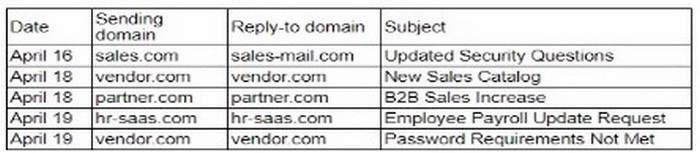 Which of the following is the best action for the security analyst to take?
-
A
Block messages from hr-saas.com because it is not a recognized domain.
-
B
Reroute all messages with unusual security warning notices to the IT administrator
-
C
Quarantine all messages with sales-mail.com in the email header
-
D
Block vendor com for repeated attempts to send suspicious messages
Reveal answer details
Close answer details
Correct answerD
ExplanationIn reviewing email headers and determining actions to mitigate phishing attempts, the security analyst should focus on patterns of suspicious behavior and the reputation of the sending domains. Here's the analysis of the options provided:
A. Block messages from hr-saas.com because it is not a recognized domain: Blocking a domain solely
because it is not recognized can lead to legitimate emails being missed. Recognition alone should not be the criterion for blocking. B.
Reroute all messages with unusual security warning notices to the IT administrator: While rerouting suspicious messages can be a good practice, it is not specific to the domain sending repeated suspicious messages.
C. Quarantine all messages with sales-mail.com in the email header: Quarantining messages based on the
presence of a specific domain in the email header can be too broad and may capture legitimate emails.
D. Block vendor com for repeated attempts to send suspicious messages: This option is the most
appropriate because it targets a domain that has shown a pattern of sending suspicious messages. Blocking a domain that repeatedly sends phishing attempts without previous communications helps in preventing future attempts from the same source and aligns with the goal of mitigating phishing risks.
References:
CompTIA SecurityX Study Guide: Details best practices for handling phishing attempts, including blocking domains with repeated suspicious activity. NIST Special Publication 800-45 Version 2, "Guidelines on Electronic Mail Security": Provides guidelines on email security, including the management of suspicious email domains.
"Phishing and Countermeasures: Understanding the Increasing Problem of Electronic Identity Theft" by Markus Jakobsson and Steven Myers: Discusses effective measures to counter phishing attempts, including blocking persistent offenders.
By blocking the domain that has consistently attempted to send suspicious messages, the security analyst can effectively reduce the risk of phishing attacks.
Question 13
Single choice
An organization is required to 1. Respond to internal and external inquiries in a timely manner
2. Provide transparency.
3. Comply with regulatory requirements The organization has not experienced any reportable breaches but wants to be prepared if a breach occurs in the future. Which of the following is the best way for the organization to prepare?
-
A
Outsourcing the handling of necessary regulatory filing to an external consultant
-
B
Integrating automated response mechanisms into the data subject access request process
-
C
Developing communication templates that have been vetted by internal and external counsel
-
D
Conducting lessons-learned activities and integrating observations into the crisis management plan
Reveal answer details
Close answer details
Correct answerC
ExplanationPreparing communication templates that have been vetted by both internal and external counsel ensures that the organization can respond quickly and effectively to internal and external inquiries, comply with regulatory requirements, and provide transparency in the event of a breach.
Why Communication Templates?
Timely Response: Pre-prepared templates ensure that responses are ready to be deployed quickly, reducing response time.
Regulatory Compliance: Templates vetted by counsel ensure that all communications meet legal and regulatory requirements. Consistent Messaging: Ensures that all responses are consistent, clear, and accurate, maintaining the organization's credibility. Crisis Management: Pre-prepared templates are a critical component of a broader crisis management plan, ensuring that all stakeholders are informed appropriately.
Other options, while useful, do not provide the same level of preparedness and compliance:
A. Outsourcing to an external consultant: This may delay response times and lose internal control over the
communication.
B. Integrating automated response mechanisms: Useful for efficiency but not for ensuring compliant and
vetted responses.
D. Conducting lessons-learned activities: Important for improving processes but does not provide immediate
preparedness for communication.
References:
CompTIA SecurityX Study Guide
NIST Special Publication 800-61 Revision 2, "Computer Security Incident Handling Guide"
ISO/IEC 27002:2013, "Information technology -- Security techniques -- Code of practice for information security controls"
Question 14
Single choice
A user reports application access issues to the help desk. The help desk reviews the logs for the user: 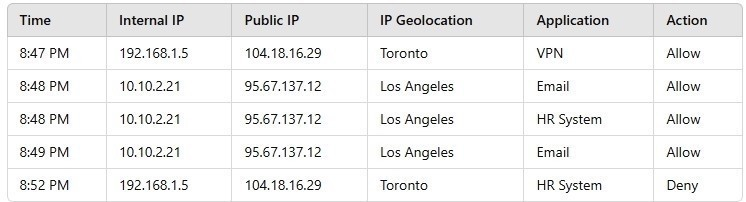 Which of the following is most likely the reason for the issue?
-
A
The user inadvertently tripped the geoblock rule in NGFW.
-
B
A threat actor has compromised the user's account and attempted to log in.
-
C
The user is not allowed to access the human resources system outside of business hours.
-
D
The user did not attempt to connect from an approved subnet.
Reveal answer details
Close answer details
Question 15
Single choice
Which of the following best describes the challengesassociated with widespread adoption of homomorphic encryption techniques?
-
A
Incomplete mathematical primitives
-
B
No use cases to drive adoption
-
C
Quantum computers not yet capable
-
D
Insufficient coprocessor support
Reveal answer details
Close answer details
Correct answerD
ExplanationHomomorphic encryption allows computations to be performed on encrypted data without decrypting it, preserving confidentiality. However, its adoption faces significant challenges due to performance overhead.
According to the CompTIA SecurityX CAS-005 study materials (Domain 3: Cybersecurity Technology, 3.3), homomorphic encryption requires substantial computational resources, which standard processors struggle to provide efficiently. Specialized hardware, such as coprocessors (e.g., GPUs or TPUs), is oftenneeded to handle the complex mathematical operations involved. The lack of widespread, optimized coprocessor support in existing infrastructure is a primary barrier to adoption. Option A (Incomplete mathematical primitives):While early homomorphic encryption schemes had limitations, modern schemes (e.g., CKKS, BFV) have mature mathematical foundations, making this less of a challenge today.
Option B (No use cases):Use cases exist, such as secure cloud computing and privacy-preserving data analytics, so this is not accurate.
Option C (Quantum computers):Homomorphic encryption is not dependent on quantum computing, and quantum computers are unrelated to its current challenges.
Option D (Insufficient coprocessor support):This is the most accurate, as performance bottlenecks require specialized hardware that is not yet widely available or integrated. References:
CompTIA SecurityX CAS-005 Official Study Guide, Domain 3: Cybersecurity Technology, Section 3.3:
"Evaluate emerging cryptographic technologies, including homomorphic encryption challenges." CAS-005
Exam Objectives, 3.3: "Analyze barriers to adopting advanced encryption techniques."
Question 16
Single choice
Users must accept the terms presented in a captive petal when connecting to a guest network. Recently, users have reported that they are unable to access the Internet after joining the network A network engineer observes the following: 1. Users should be redirected to the captive portal.
2. The Motive portal runs Tl. S 1 2
3. Newer browser versions encounter security errors that cannot be bypassed
4. Certain websites cause unexpected re directs Which of the following mow likely explains this behavior?
-
A
The TLS ciphers supported by the captive portal ate deprecated
-
B
Employment of the HSTS setting is proliferating rapidly.
-
C
Allowed traffic rules are causing the NIPS to drop legitimate traffic
-
D
An attacker is redirecting supplicants to an evil twin WLAN.
Reveal answer details
Close answer details
Correct answerA
ExplanationThe most likely explanation for the issues encountered with the captive portal is that the TLS ciphers supported by the captive portal are deprecated. Here's why: TLS Cipher Suites: Modern browsers are continuously updated to support the latest security standards and often drop support for deprecated and insecure cipher suites. If the captive portal uses outdated TLS ciphers, newer browsers may refuse to
connect, causing security errors.
HSTS and Browser Security: Browsers with HTTP Strict Transport Security (HSTS) enabled will not allow connections to sites with weak security configurations. Deprecated TLS ciphers would cause these browsers to block the connection.
References:
By updating the TLS ciphers to modern, supported ones, the security engineer can ensure compatibility with newer browser versions and resolve the connectivity issues reported by users.
Question 17
Single choice
Which of the following includes best practices for validating perimeter firewall configurations?
-
A
-
B
-
C
-
D
Reveal answer details
Close answer details
Correct answerA
ExplanationThe Center for Internet Security (CIS) Controls provide prescriptive best practices for validating and securing perimeter firewalls. These controls are specifically designed to offer detailed, actionable steps that organizations can follow to ensure firewall rules are configured properly, access is restricted to least privilege, and unnecessary services are disabled. CIS benchmarks also provide specific configuration guidance for different vendors, making them highly practical for real-world implementation and validation. MITRE ATT&CK (B) is a framework for adversary tactics, techniques, and procedures, valuable for threat modeling but not a direct standard for firewall validation. NIST CSF (C) provides a high-level framework for cybersecurity risk management but lacks specific configuration guidance for firewalls.
ISO 27001 (D) defines an information security management system (ISMS) framework, focusing on governance and certification rather than hands-on configuration best practices. Therefore, the CIS Controls and Benchmarks represent the most direct and practical resource for validating firewall configurations in line with recognized industry best practices.
Question 18
Single choice
A Chief Information Security Officer requests an action plan to remediate vulnerabilities. A security analyst reviews the output from a recent vulnerability scan and notices hundreds of unique vulnerabilities. The output includes the CVSS score, IP address, hostname, and the list of vulnerabilities. The analyst determines more information is needed in order to decide which vulnerabilities should be fixed immediately. Which of the following is the best source for this information?
-
A
-
B
-
C
Incident response playbook
-
D
Reveal answer details
Close answer details
Correct answerB
ExplanationThe correct source is the Business Impact Analysis (BIA). A BIA provides context about which systems and applications are most critical to business operations, regulatory compliance, and customer obligations. While CVSS scores indicate severity in technical terms, they do not reflect the business impact of exploitation. For example, a medium-severity vulnerability on a critical payment system may pose more business risk than a high-severity vulnerability on a test server. Option A (third-party risk review) focuses on vendor security posture, not internal remediation priorities.
Option C (incident response playbook) guides response during active incidents, not vulnerability
prioritization.
Option D (crisis management plan) addresses executive-level communications during crises, not technical
risk assessment. By combining vulnerability scan data with BIA context, security teams can prioritize remediation efforts based on business-critical systems, ensuring the highest-risk vulnerabilities are remediated first. This aligns with CAS-005's guidance on risk-based prioritization of remediation efforts.
Question 19
Single choice
Which of the following most likely explains the reason a security engineer replaced ECC with a lattice-based cryptographic technique?
-
A
It is computationally efficient and provides perfect forward secrecy.
-
B
It is more resilient to brute-force attacks than ECC.
-
C
It supports ephemeral key exchange and digital signatures.
-
D
It is currently considered a robust PQC technique.
-
E
It enables processing on data while remaining in an encrypted state.
Reveal answer details
Close answer details
Question 20
Single choice
A security analyst received a report that an internal web page is down after a company-wide update to the web browser Given the following error message: Your connection is not private.
Attackers might be trying to steal your information for
www.internalwebsite.company.com.NET::ERR_CERT_WEAK_SIGNATURE_ALGORITHM Which of the following is the best way to fix this issue?
-
A
Rewriting any legacy web functions
-
B
Disabling all deprecated ciphers
-
C
Blocking all non-essential pons
-
D
Discontinuing the use of self-signed certificates
Reveal answer details
Close answer details
Correct answerD
ExplanationThe error message "NET::ERR_CERT_WEAK_SIGNATURE_ALGORITHM" indicates that the web browser is rejecting the certificate because it uses a weak signature algorithm. This commonly happens with self-signed certificates, which often use outdated or insecure algorithms.
Why Discontinue Self-Signed Certificates?
Security Compliance: Modern browsers enforce strict security standards and may reject certificates that do not comply with these standards. Trusted Certificates: Using certificates from a trusted Certificate Authority (CA) ensures compliance with security standards and is less likely to be flagged as insecure.
Weak Signature Algorithm: Self-signed certificates might use weak algorithms like MD5 or SHA-1, which are considered insecure.
Other options do not address the specific cause of the certificate error:
A. Rewriting legacy web functions: Does not address the certificate issue. B. Disabling deprecated ciphers: Useful for improving security but not related to the certificate error.
C. Blocking non-essential ports: This is unrelated to the issue of certificate validation.
References:
CompTIA SecurityX Study Guide
"Managing SSL/TLS Certificates," OWASP
"Best Practices for Certificate Management," NIST Special Publication 800-57
Question 21
Single choice
A threat intelligence company's business objective is to allow customers to integrate data directly to different TIPs through an API. The company would like to address as many of the following objectives as possible: 1. Reduce compute spend as much as possible.
2. Ensure availability for all users.
3. Reduce the potential attack surface.
4. Ensure the integrity of the data provided. Which of the following should the company consider to best meet the objectives?
-
A
Configuring a unique API secret key for accounts
-
B
Publishing a list of IoCs on a public directory
-
C
Implementing rate limiting for each registered user
-
D
Providing a hash of all data that is made available
Reveal answer details
Close answer details
Correct answerD
ExplanationThe best solution is to provide a hash of all data made available (D). Hashing ensures the integrity of the threat intelligence data provided to customers. Clients can verify that the data received via API matches the published hash, ensuring no tampering occurred in transit or at rest. This supports customer trust and aligns with the objective of protecting data integrity while maintaining availability. Option A (API secret keys) improves authentication and reduces attack surface but does not address integrity or compute efficiency.
Option B (publishing IoCs publicly) increases attack surface and reduces control over distribution, which conflicts with security objectives.
Option C (rate limiting) helps availability and cost control but does not guarantee data integrity. By providing hashes, the company ensures customers can validate authenticity regardless of delivery method, reducing the risk of manipulated IoCs. This approach also minimizes compute spend since hashing is lightweight compared to continuous verification processes. Therefore, the strongest alignment with all stated objectives--availability, reduced spend, reduced attack surface, and integrity--is achieved by providing hashes of all threat intelligence data.
Question 22
Single choice
A company needs to define a new roadmap for improving secure coding practices in the software development life cycle and implementing better security standards. Which of the following is the best way for the company to achieve this goal?
-
A
Performing a Software Assurance Maturity Model (SAMM) assessment and generating a roadmap as a final result
-
B
Conducting a threat-modeling exercise for the main applications and developing a roadmap based on the necessary security implementations
-
C
Developing a new roadmap including secure coding best practices based on the security area roadmap and annual goals defined by the CISO
-
D
Using the best practices in the OWASP secure coding manual to define a new roadmap
Reveal answer details
Close answer details
Correct answerA
ExplanationThe best way is to perform a Software Assurance Maturity Model (SAMM) assessment. SAMM provides a structured framework to evaluate current software security maturity across people, process, and technology. The assessment highlights gaps and generates a roadmap tailored to the organization's development environment.
Option B (threat modeling) only applies to specific applications, not the entire SDLC process.
Option C risks misalignment with technical practices by relying only on CISO goals.
Option D (OWASP secure coding manual) is useful but provides guidelines, not a maturity-based roadmap. CAS-005 stresses leveraging maturity models for structured, measurable improvements. SAMM directly addresses this by producing a customized, actionable roadmap for secure coding practices.
Question 23
Single choice
A senior cybersecurity engineer is solving a digital certificate issue in which the CA denied certificate issuance due to failed subject identity validation.
At which of the following steps within the PKI enrollment process would the denial have occurred?
-
A
-
B
-
C
-
D
Reveal answer details
Close answer details
Correct answerC
ExplanationWhile the CA is responsible for issuing the certificates, it relies on the RA (if one is used) to perform the identity validation. If the RA performs its duties correctly, any failed identity validation would be handled at the RA level, and the CA would not issue the certificate.
Question 24
Single choice
Which of the following best describes the reason a network architect would enable forward secrecy on all VPN tunnels?
-
A
This process is a requirement to enable hardware-accelerated cryptography.
-
B
This process reduces the success of attackers performing cryptanalysis.
-
C
The business requirements state that confidentiality is a critical success factor.
-
D
Modern cryptographic protocols list this process as a prerequisite for use.
Reveal answer details
Close answer details
Correct answerB
ExplanationForward secrecy, also known as perfect forward secrecy, is a feature of certain key agreement protocols that ensures session keys will not be compromised even if the server's private key is compromised in the future.
By enabling forward secrecy on VPN tunnels, each session uses a unique key, and these keys are not derived from a common master key. This means that even if an attacker obtains the server's private key, they cannot decrypt past sessions, thereby significantly reducing the effectiveness of cryptanalysis attacks.
References:
CompTIA SecurityX CAS-005 Official Study Guide, Chapter 10:
"Cryptography," Section 10.5: "Implementing Secure Protocols."
Question 25
Single choice
A company would like to move its payment card data to a cloud provider. Which of the following solutions will best protect account numbers from unauthorized disclosure?
-
A
Storing the data in an encoded file
-
B
Implementing database encryption at rest
-
C
Only storing tokenized card data
-
D
Implementing data field masking
Reveal answer details
Close answer details
Correct answerC
ExplanationTokenization: Tokenization replaces sensitive payment card data with a non-sensitive token that has no meaningful value outside the specific context of the tokenization system. This method ensures that even if the
Question 26
Single choice
A company must meet the following security requirements when implementing controls in order to be compliant with government policy: 1. Access to the system document repository must be MFA enabled.
2. Ongoing risk monitoring must be displayed on a system dashboard.
3. Staff must receive email notifications about periodic tasks. Which of the following best meets all of these requirements?
-
A
-
B
Configuring a privileged access management system
-
C
Launching a vulnerability management program
-
D
Reveal answer details
Close answer details
Question 27
Single choice
A company is rewriting a vulnerable application and adding the mprotect() system call in multiple parts of the application's code that was being leveraged by a recent exploitation tool. Which of the following should be enabled to ensure the application can leverage the new system call against similar attacks in the future?
-
A
-
B
-
C
-
D
Reveal answer details
Close answer details
Correct answerC
ExplanationEnabling the NX bit ensures that the rewritten application can effectively use the mprotect() system call to manage memory execution permissions, thereby strengthening its defenses against exploitation tools that attempt to execute code from unauthorized memory regions. This approach aligns with best practices in modern application security to mitigate memory-based vulnerabilities
Question 28
Single choice
An organization purchased a new manufacturing facility and the security administrator needs to: Implement security monitoring.
Protect any non-traditional device(s)/network(s).
Ensure no downtime for critical systems. Which of the following strategies best meets these requirements?
-
A
Configuring honeypots in the internal network to capture malicious activity
-
B
Analyzing system behavior and responding to any increase in activity
-
C
Applying updates and patches soon after they have been released
-
D
Observing the environment and proactively addressing any malicious activity
Reveal answer details
Close answer details
Question 29
Single choice
Company A and Company D ate merging Company A's compliance reports indicate branch protections are not in place A security analyst needs to ensure that potential threats to the software development life cycle are addressed. Which of the following should me analyst cons<der when completing this basic?
-
A
If developers are unable to promote to production
-
B
If DAST code is being stored to a single code repository
-
C
If DAST scans are routinely scheduled
-
D
If role-based training is deployed
Reveal answer details
Close answer details
Correct answerC
ExplanationDynamic Application Security Testing (DAST) is crucial for identifying and addressing security vulnerabilities during the software development life cycle (SDLC). Ensuring that DAST scans are routinely scheduled helps in maintaining a secure development process.
Why Routine DAST Scans?
Continuous Security Assessment: Regular DAST scans help in identifying vulnerabilities in real-time, ensuring they are addressed promptly. Compliance: Routine scans ensure that the development process complies with security standards and regulations.
Proactive Threat Mitigation: Regular scans help in early detection and mitigation of potential security threats, reducing the risk of breaches. Integration into SDLC: Ensures security is embedded within the development process, promoting a security-first approach.
Other options, while relevant, do not directly address the continuous assessment and proactive identification of threats:
A. If developers are unable to promote to production: This is more of an operational issue than a security
assessment.
B. If DAST code is being stored to a single code repository: This concerns code management rather than
security testing frequency. D. If role-based training is deployed: While important, training alone does not ensure continuous security assessment.
References:
CompTIA SecurityX Study Guide
OWASP Testing Guide
NIST Special Publication 800-53, "Security and Privacy Controls for Information Systems and Organizations"
Question 30
Single choice
All organization is concerned about insider threats from employees who have individual access to encrypted material. Which of the following techniques best addresses this issue?
-
A
-
B
-
C
Account federation with hardware tokens
-
D
-
E
Reveal answer details
Close answer details
Correct answerE
ExplanationThe technique that best addresses the issue of insider threats from employees who have individual access to encrypted material is key splitting. Here's why: Key Splitting: Key splitting involves dividing a cryptographic key into multiple parts and distributing these parts among different individuals or systems. This ensures that no single individual has complete access to the key, thereby mitigating the risk of insider threats.
Increased Security: By requiring multiple parties to combine their key parts to access encrypted material, key splitting provides an additional layer of security. This approach is particularly useful in environments where sensitive data needs to be protected from unauthorized access by insiders. Compliance and Best Practices: Key splitting aligns with best practices and regulatory requirements for handling sensitive information, ensuring that access is tightly controlled and monitored.
References:
By employing key splitting, organizations can effectively reduce the risk of insider threats and enhance the overall security of encrypted material.
Question 31
Single choice
A security engineer wants to improve the security of an application as part of the development pipeline. The engineer reviews the following component of an internally developed web application that allows employees to manipulate documents from a number of internal servers: response = requests.get(url) Users can specify the document to be parsed by passing the document URL to the application as a parameter. Which of the following is the best solution?
-
A
-
B
-
C
-
D
Reveal answer details
Close answer details
Question 32
Multiple choice
Emails that the marketing department is sending to customers are pomp to the customers' spam folders. The security team is investigating the issue and discovers that the certificates used by the email server were reissued, but DNS records had not been updated. Which of the following should the security team update in order to fix this issue? (Select three.)
-
A
-
B
-
C
-
D
-
E
-
F
-
G
-
H
Reveal answer details
Close answer details
Correct answersA, B, C
ExplanationTo prevent emails from being marked as spam, several DNS records related to email authentication need to be properly configured and updated when there are changes to the email server's certificates:
A. DMARC (Domain-based Message Authentication, Reporting & Conformance):
DMARC records help email servers determine how to handle messages that fail SPF or DKIM checks, improving email deliverability and reducing the likelihood of emails being marked as spam.
B. SPF (Sender Policy Framework): SPF records specify which mail servers are authorized to send email on
behalf of your domain. Updating the SPF record ensures that the new email server is recognized as an authorized sender.
C. DKIM (DomainKeys Identified Mail): DKIM adds a digital signature to email headers, allowing the
receiving server to verify that the email has not been tampered with and is from an authorized sender.
Updating DKIM records ensures that emails are properly signed and authenticated.
D.
DNSSEC (Domain Name System Security Extensions): DNSSEC adds security to DNS by enabling DNS responses to be verified. While important for DNS security, it does not directly address the issue of emails being marked as spam. E.
SASC: This is not a relevant standard for this scenario.
F. SAN (Subject Alternative Name): SAN is used in SSL/TLS certificates for securing multiple domain names,
not for email delivery issues.
G. SOA (Start of Authority): SOA records are used for DNS zone administration and do not directly impact
email deliverability.
H. MX (Mail Exchange): MX records specify the mail servers responsible for receiving email on behalf of a
domain. While important, the primary issue here is the authentication of outgoing emails, which is handled by
SPF, DKIM, and
DMARC.
References:
CompTIA Security+ Study Guide
RFC 7208 (SPF), RFC 6376 (DKIM), and RFC 7489 (DMARC) NIST SP 800-45, "Guidelines on Electronic
Mail Security"
Question 33
Single choice
An incident response team is analyzing malware and observes the following:
1. Does not execute in a sandbox 2. No network loCs
3. No publicly known hash match
4. No process injection method detected Which of the following should the team do next to proceed with further analysis?
-
A
Use an online vims analysis tool to analyze the sample
-
B
Check for an anti-virtualization code in the sample
-
C
Utilize a new deployed machine to run the sample.
-
D
Search oilier internal sources for a new sample.
Reveal answer details
Close answer details
Correct answerB
ExplanationMalware that does not execute in a sandbox environment often contains anti-analysis techniques, such as anti-virtualization code. This code detects when the malware is running in a virtualized environment and alters its behavior to avoid detection. Checking for anti-virtualization code is a logical next step because: It helps determine if the malware is designed to evade analysis tools. Identifying such code can provide insights into the malware's behavior and intent. This step can also inform further analysis methods, such as running the malware on physical hardware.
References:
CompTIA Security+ Study Guide
SANS Institute, "Malware Analysis Techniques"
"Practical Malware Analysis" by Michael Sikorski and Andrew Honig
Question 34
Single choice
A company experienced a data breach, resulting in the disclosure of extremely sensitive data regarding a merger. As a regulated entity, the company must comply with reporting and disclosure requirements. The company is concerned about its public image and shareholder values. Which of the following best supports the organization in addressing its concerns?
-
A
Data subject access request
-
B
-
C
Supply chain management program
-
D
Reveal answer details
Close answer details
Question 35
Single choice
A security analyst identified a vulnerable and deprecated runtime engine that is supporting a public-facing banking application. The developers anticipate the transition to modern development environments will take at least a month. Which of the following controls would best mitigate the risk without interrupting the service during the transition?
-
A
Shutting down the systems until the code is ready
-
B
Uninstalling the impacted runtime engine
-
C
Selectively blocking traffic on the affected port
-
D
Configuring IPS and WAF with signatures
Reveal answer details
Close answer details
Correct answerC
ExplanationSelectively blocking traffic on the affected port strikes a balance between security and operational continuity.
It effectively mitigates the risk posed by the vulnerable and deprecated runtime engine while allowing the banking application to remain operational until the transition to a modern development environment is completed. This approach ensures that customer service is maintained without compromising security during the transitional phase. While IPS and WAF are valuable security measures, they are not specifically tailored to address the risks associated with a deprecated runtime engine. Configuring IPS and WAF with signatures is more effective for protecting against specific types of attacks but may not comprehensively mitigate the vulnerabilities in the runtime engine itself. Selectively blocking traffic on the affected port directly addresses the immediate risk posed by the deprecated component without introducing potential operational disruptions or incomplete protection scenarios that could arise from relying solely on IPS and WAF.
Question 36
Multiple choice
A company's SICM is continuously reporting false positives and false negatives. The security operations team has implemented configuration changes to troubleshoot possible reporting errors. Which of the following sources of information best supports the required analysts process? (Select two).
-
A
Third-party reports and logs
-
B
-
C
-
D
-
E
Network traffic summaries
-
F
Reveal answer details
Close answer details
Correct answersA, B
ExplanationWhen dealing with false positives and false negatives reported by a Security Information and Event Management (SIEM) system, the goal is to enhance the accuracy of the alerts and ensure that actual threats are identified correctly. The following sources of information best support the analysis process:
A. Third-party reports and logs: Utilizing external sources of information such as threat intelligence reports,
vendor logs, and other third-party data can provide a broader perspective on potential threats. These
sources often contain valuable
insights and context that can help correlate events more accurately, reducing the likelihood of false positives and false negatives. B. Trends: Analyzing trends over time can help in understanding patterns and anomalies in the data. By observing trends, the security team can distinguish between normal and abnormal behavior, which aids in fine-tuning the SIEM configurations to better detect true positives and reduce false alerts. Other options such as dashboards, alert failures, network traffic summaries, and manual review processes are also useful but are more operational rather than foundational for understanding the root causes of reporting errors in SIEM configurations.
References:
CompTIA SecurityX Study Guide: Emphasizes the importance of leveraging external threat intelligence and historical trends for accurate threat detection. NIST Special Publication 800-92, "Guide to Computer Security
Log Management": Highlights best practices for log management, including the use of third-party sources and trend analysis to improve incident detection. "Security Information and Event Management (SIEM)
Implementation" by David Miller: Discusses the use of external intelligence and trends to enhance SIEM accuracy.
Question 37
Single choice
An enterprise is deploying APIs that utilize a private key and a public key to ensure the connection string is protected. To connect to the API, customers must use the private key. Which of the following would best secure the REST API connection to the database while preventing the use of a hard-coded string in the request string?
-
A
Implement a VPN for all APIs
-
B
-
C
Deploy MFA for the service accounts
-
D
Utilize HMAC for the keys
Reveal answer details
Close answer details
Correct answerD
ExplanationHMAC (Hash-based Message Authentication Code)ensures the integrity and authentication of API requests without exposing static or hard-coded private keys. It uses a secret key and a hash function, preventing replay attacks and tampering. VPNs secure the transport layer, MFA protects user accounts (not API-to-database communications), and DSA is a signature algorithm but does not address hard-coding risk directly. References:
CompTIA SecurityX CAS-005, Domain 3.0: Implement secure API practices including the use of HMAC for key protection.
Question 38
Single choice
A user tried to access a web page at http://10.1.1.1. Previously the web page did not require authentication, and now the browser is prompting for credentials. Which of the following actions would best prevent the issue from reoccurring and reduce the likelihood of credential exposure?
-
A
Implementing 802.1x EAP-TTLS on access points to reduce the risk of evil twins.
-
B
Transitioning internal services to use DNS security.
-
C
Modifying web server configuration and utilizing X509 certificates for authentication.
-
D
Installing new rules for the IDS to detect impersonation attacks.
Reveal answer details
Close answer details
Question 39
Single choice
Audit findings indicate several user endpoints are not utilizing full disk encryption. During the remediation process, a compliance analyst reviews the testing details for the endpoints and notes the endpoint device configuration does not
support full disk encryption. Which of the following is the most likely reason me device must be replaced?
-
A
The HSM is outdated and no longer supported by the manufacturer
-
B
The vTPM was not properly initialized and is corrupt.
-
C
The HSM is vulnerable to common exploits and a firmware upgrade is needed
-
D
The motherboard was not configured with a TPM from the OEM supplier.
-
E
The HSM does not support sealing storage
Reveal answer details
Close answer details
Correct answerD
ExplanationThe most likely reason the device must be replaced is that the motherboard was not configured with a TPM (Trusted Platform Module) from the OEM (Original Equipment Manufacturer) supplier.
Why TPM is Necessary for Full Disk Encryption: Hardware-Based Security: TPM provides a hardware-based mechanism to store encryption keys securely, which is essential for full disk encryption. Compatibility: Full disk encryption solutions, such as BitLocker, require TPM to ensure that the encryption keys are securely stored and managed. Integrity Checks: TPM enables system integrity checks during boot, ensuring that the device has not been tampered with.
Other options do not directly address the requirement for TPM in supporting full disk encryption:
A. The HSM is outdated: While HSM (Hardware Security Module) is important for security, it is not typically
used for full disk encryption. B. The vTPM was not properly initialized: vTPM (virtual TPM) is less common and not typically a reason for requiring hardware replacement.
C. The HSM is vulnerable to common exploits: This would require a firmware upgrade, not replacement of
the device.
E. The HSM does not support sealing storage: Sealing storage is relevant but not the primary reason for
requiring TPM for full disk encryption.
References:
CompTIA SecurityX Study Guide
"Trusted Platform Module (TPM) Overview," Microsoft Documentation "BitLocker Deployment Guide,"
Microsoft Documentation
Question 40
Single choice
An administrator needs to craft a single certificate-signing request for a web server certificate. The server should be able to use the following identities to mutually authenticate with other resources over TLS: www.int.comptia.org
webserver01.int.comptia.org
10.5.100.10 Which of the following certificate fields must be set properly to support this objective?
-
A
-
B
-
C
-
D
Reveal answer details
Close answer details
Question 41
Multiple choice
A building camera is remotely accessed and disabled from the remote console application during off-hours. A security analyst reviews the following logs: 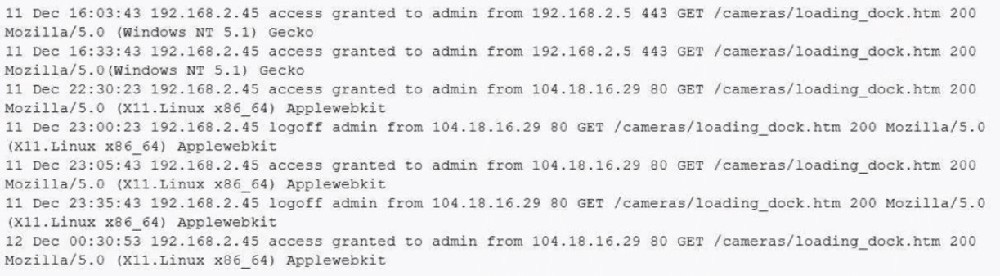 A security architect is onboarding a new EDR agent on servers that traditionally do not have internet access.
In order for the agent to receive updates and report back to the management console, some changes must be made. Which of the following should the architect do to best accomplish this requirement? (Select two).
-
A
Create a firewall rule to only allow traffic from the subnet to the internet via a proxy.
-
B
Configure a proxy policy that blocks all traffic on port 443.
-
C
Configure a proxy policy that allows only fully qualified domain names needed to communicate to a portal.
-
D
Create a firewall rule to only allow traffic from the subnet to the internet via port 443.
-
E
Create a firewall rule to only allow traffic from the subnet to the internet to fully qualified names that are not identified as malicious by the firewall vendor.
-
F
Configure a proxy policy that blocks only lists of known-bad, fully qualified domain names.
Reveal answer details
Close answer details
Question 42
Single choice
Source code snippets for two separate malware samples are shown below: Sample 1: knockEmDown(String e) { if(target.isAccessed()) { target.toShell(e); System.out.printIn(e.toString()); c2.sendTelemetry(target.hostname.toString + " is " + e.toString()); } else { target.close(); }
} Sample 2: targetSys(address a) { if(address.islpv4()) { address.connect(1337); address.keepAlive("paranoid"); String status = knockEmDown(address.current);
remote.sendC2(address.current + " is " + status); } else { throw Exception e; } } Which of the following describes the most important observation about the two samples?
-
A
Telemetry is first buffered and then transmitted in paranoid mode.
-
B
The samples were probably written by the same developer.
-
C
Both samples use IP connectivity for command and control.
-
D
Sample 1 is the target agent while Sample 2 is the C2 server.
Reveal answer details
Close answer details
Correct answerB
ExplanationBoth samples share similar function names, variable naming styles, and logic flow, indicating that they were likely written by the same developer. This is a key observation in malware attribution, as cyber threat analysts often look for unique coding styles to link malware to specific threat actors. The presence of C2 (Command and Control) communication in both samples supports this theory, as attackers often reuse parts of their own malware code across different attacks.
Question 43
Single choice
A security architect is mitigating a vulnerability that previously led to a web application data breach. An analysis into the root cause of the issue finds the following: An administrator's account was hijacked and used on several Autonomous System Numbers within 30 minutes.
All administrators use named accounts that require multifactor authentication. Single sign-on is used for all company applications. Which of the following should the security architect do to mitigate the issue?
-
A
Configure token theft detection on the single sign-on system with automatic account lockouts.
-
B
Enable context-based authentication when network locations change on administrator login attempts.
-
C
Decentralize administrator accounts and force unique passwords for each application.
-
D
Enforce biometric authentication requirements for the administrator's named accounts.
Reveal answer details
Close answer details
Correct answerB
ExplanationExplanation: Comprehensive and Detailed Explanation:
The hijacked administrator account was used across multiple ASNs (indicating different network locations) in a short time, despite MFA and SSO. This suggests a stolen session or token misuse. Let's analyze:
A. Token theft detection with lockouts:Useful for detecting stolen SSO tokens, but it's reactive and may not
prevent initial misuse across networks.
B. Context-based authentication:This adds real-time checks (e.g., geolocation, IP changes) to verify login attempts. Given the rapid ASN changes, this proactively mitigates the issue by challenging suspicious logins, aligning with CAS-005's focus on adaptive security.
C. Decentralize accounts:This removes SSO, increasing complexity and weakening MFA enforcement, which isn't practical or secure.
References:
CompTIA SecurityX (CAS-005) objectives, Domain 2: Security Operations, emphasizing context-aware
authentication for SSO environments.
Question 44
Single choice
A security engineer reviews an after action report from a previous security breach and notes a long lag time between detection and containment of a compromised account. The engineer suggests using SOAR to address this concern. Which of the following best explains the engineer's goal?
-
A
To prevent accounts from being compromised
-
B
To enable log correlation using machine learning
-
C
To orchestrate additional reporting for the security operations center
-
D
To prepare runbooks to automate future incident response
Reveal answer details
Close answer details
Question 45
Single choice
A company uses a CSP to provide a front end for its new payment system offering. The new offering is currently certified as PCI compliant. In order for the integrated solution to be compliant, the customer:
-
A
must also be PCI compliant, because the risk is transferred to the provider.
-
B
still needs to perform its own PCI assessment of the provider's managed serverless service.
-
C
needs to perform a penetration test of the cloud provider's environment.
-
D
must ensure in-scope systems for the new offering are also PCI compliant.
Reveal answer details
Close answer details
Question 46
Single choice
A government agency implements a configuration that disables cellular network access on government-issued devices while roaming internationally. The agency issues mobile hot-spots and requires employees to use them for internet access. Which of the following best describes the agency's rationale?
-
A
To protect against SIM hijack vulnerabilities
-
B
To defend from carrier OTA attack vectors
-
C
To block malicious radio connections
-
D
To prevent attempts to downgrade the protocol to legacy 3G
-
E
To filter directed electromagnetic interference
Reveal answer details
Close answer details
Correct answerC
ExplanationThe best answer is C. To block malicious radio connections. The agency is preventing the government-issued endpoint itself from directly attaching to foreign cellular networks while roaming. That reduces the exposure of the endpoint to hostile or untrusted cellular infrastructure, including rogue or malicious radio environments. Requiring the use of agency-issued hotspots keeps the endpoint off direct cellular attachment and places the radio exposure on a controlled intermediary device instead. In CompTIA SecurityX CAS-005, one of the core expected skills is to "utilize cryptographic technologies and techniques while evaluating the impact of emerging trends... on information security" and to design secure solutions across complex environments. This question fits that theme of managing risk from modern communications technologies through architecture and control choices. Why the other options are less accurate: A is too specific because the scenario is broader than SIM hijacking; disabling direct cellular service on the endpoint is not solely about SIM theft.
B is less accurate because the hotspot still depends on a carrier, so this does not fully eliminate over-the-air carrier-related risks.
D is possible as a radio-security concern, but the question is framed more broadly around disallowing direct endpoint cellular connections altogether, so malicious radio connections is the more complete rationale. E is incorrect because directed electromagnetic interference is not what mobile hotspots are primarily designed to mitigate in this context.
References:
CompTIA SecurityX (CAS-005) official certification page and exam objectives summary, including secure solution design across complex environments and evaluating emerging technology impacts on security.
Question 47
Multiple choice
The material finding from a recent compliance audit indicate a company has an issue with excessive permissions. The findings show that employees changing roles or departments results in privilege creep. Which of the following solutions are the best ways to mitigate this issue? (Select two). Setting different access controls defined by business area
-
A
Implementing a role-based access policy
-
B
Designing a least-needed privilege policy
-
C
Establishing a mandatory vacation policy
-
D
Performing periodic access reviews
-
E
Requiring periodic job rotation
Reveal answer details
Close answer details
Correct answersA, D
ExplanationTo mitigate the issue of excessive permissions and privilege creep, the best solutions are: Implementing a Role-Based Access Policy: Role-Based Access Control (RBAC): This policy ensures that access permissions are granted based on the user ' s role within the organization, aligning with the principle of least privilege. Users are only granted access necessary for their role, reducing the risk of excessive permissions. References:
CompTIA Security+ SY0-601 Study Guide by Mike Chapple and David Seidl NIST Special Publication 800-53: Security and Privacy Controls for Information Systems and Organizations Performing Periodic Access Reviews: RegularAudits: Periodic access reviews help identify and rectify instances of privilege creep by ensuring that users ' access permissions are appropriate for their current roles. These reviews can highlight unnecessary or outdated permissions, allowing for timely adjustments.
References:
CompTIA Security+ SY0-601 Study Guide by Mike Chapple and David Seidl
ISO/IEC 27001:2013 - Information Security Management
Question 48
Single choice
A security analyst is participating in a risk assessment and is helping to calculate the exposure factor associated with various systems and processes within the organization. Which of the following resources would be most useful to calculate the exposure factor in this scenario?
-
A
-
B
-
C
-
D
Information security policy
-
E
Reveal answer details
Close answer details
Question 49
Single choice
An external threat actor attacks public infrastructure providers. In response to the attack and during follow-up activities, various providers share information obtained during their response efforts. After the attack, energy sector companies share their status and response data:  Which of the following is the most important issue to address to defend against future attacks?
-
A
Failure to implement a UEBA system
-
B
Failure to implement a DLP system
-
C
Failure to join the industry ISAC
-
D
Failure to integrate with the TIP
Reveal answer details
Close answer details
Correct answerC
ExplanationThe data provided shows that all companies have SIEM systems, but they differ in their implementation of UEBA, DLP, ISAC membership, and TIP integration. The key metric to evaluate is the effectiveness in detecting and responding to attacks, as shown by the "Time to Detect" and "Time to Respond" columns. Company 1, which is an ISAC member, has the fastest detection (10 minutes) and response (20 minutes) times.
Company 3, which is not an ISAC member, has slower detection (12 minutes) and response (24 minutes) times, despite having UEBA and TIP integration. Company 2, which lacks TIP integration but is an ISAC member, has the slowest times (20 minutes to detect, 40 minutes to respond). This suggests that ISAC membership correlates with faster detection and response, likely due to access to shared threat intelligence. According to the CompTIA SecurityX CAS-005 objectives (Domain 2: Security Operations, Section 2.2), Information Sharing and Analysis Centers (ISACs) are critical for enabling organizations to share real-time threat intelligence within their industry. ISACs provide access to actionable intelligence, best practices, and coordinated response strategies, which are essential for defending against sophisticated attacks targeting critical infrastructure like the energy sector. The lack of ISAC membership (Company 3) limits access to this intelligence, hindering proactive defense and response capabilities. While UEBA, DLP, and TIP integration are valuable, they are more focused on internal monitoring, data protection, and individual threat intelligence feeds, respectively, and do not provide the same industry-wide collaboration as an ISAC. References:
CompTIA SecurityX CAS-005 Official Study Guide, Domain 2: Security Operations, Section 2.2:
"Explain the importance of threat intelligence sharing and collaboration, including ISACs." CAS-005 Exam Objectives, Section 2.2: "Analyze the impact of information sharing on incident response efficiency."
Question 50
Single choice
Before launching a new web application, an organization would like to perform security testing. Which of the following resources should the organization use to determine the objectives for the test?
-
A
-
B
-
C
-
D
Reveal answer details
Close answer details
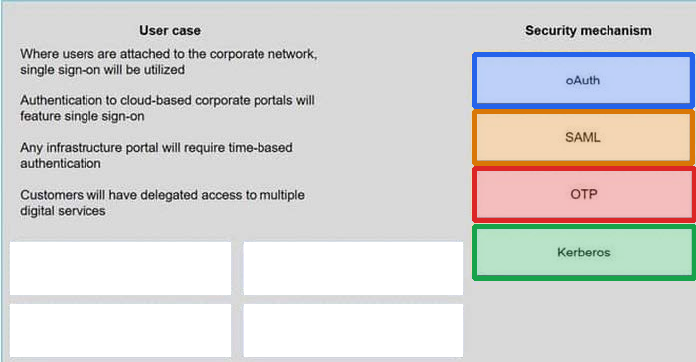
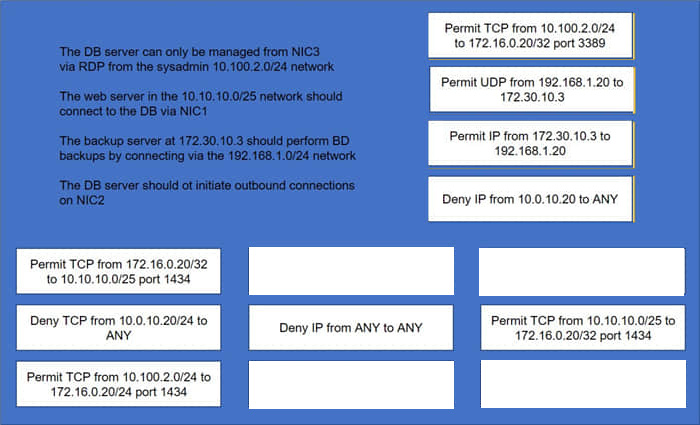
A security consultant is considering authentication options for a financial institution. The following authentication options are available security mechanism to the appropriate use case. Options may be used once. 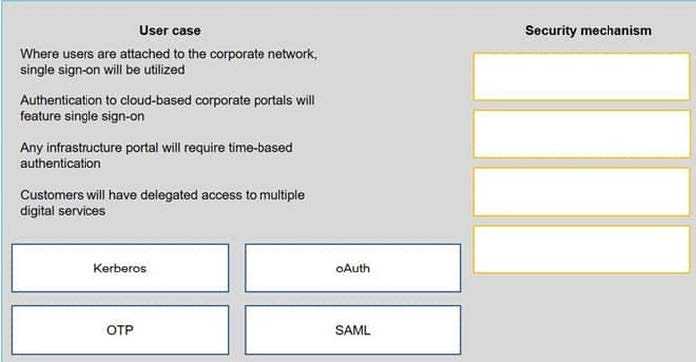
Reveal answer details
Close answer details
Question 52
Single choice
A security analyst reviews the following report:  Which of the following assessments is the analyst performing?
-
A
-
B
-
C
-
D
Reveal answer details
Close answer details
Correct answerB
ExplanationThe table shows detailed information about products, including location, chassis manufacturer, OS, application developer, and vendor. This type of information is typically assessed in a supply chain assessment to evaluate the security and reliability of components and services from different suppliers.
Why Supply Chain Assessment? Component Evaluation: Assessing the origin and security of each component used in the products, including hardware, software, and third-party services. Vendor Reliability: Evaluating the security practices and reliability of vendors involved in providing components or services.
Risk Management: Identifying potential risks associated with the supply chain, such as vulnerabilities in third-party components or insecure development practices.
Other types of assessments do not align with the detailed supplier and component information provided:
A. System: Focuses on individual system security, not the broader supply chain. C. Quantitative: Focuses on
numerical risk assessments, not supplier information. D. Organizational: Focuses on internal organizational practices, not external suppliers.
References:
CompTIA SecurityX Study Guide
NIST Special Publication 800-161, "Supply Chain Risk Management Practices for Federal Information Systems and Organizations"
"Supply Chain Security Best Practices," Gartner Research
Question 53
Single choice
A company wants to install a three-tier approach to separate the web, database, and application servers.
A security administrator must harden the environment which of the following is the best solution?
-
A
Deploying a VPN to prevent remote locations from accessing server VLANs
-
B
Configuring a SASb solution to restrict users to server communication
-
C
Implementing microsegmentation on the server VLANs
-
D
Installing a firewall and making it the network core
Reveal answer details
Close answer details
Correct answerC
ExplanationThe best solution to harden a three-tier environment (web, database, and application servers) is to implement microsegmentation on the server VLANs. Here's why: Enhanced Security: Microsegmentation creates granular security zones within the data center, allowing for more precise control over east-west traffic between servers. This helps prevent lateral movement by attackers who may gain access to one part of the network.
Isolation of Tiers: By segmenting the web, database, and application servers, the organization can apply specific security policies and controls to each segment, reducing the risk of cross-tier attacks. Compliance and Best Practices: Microsegmentation aligns with best practices for network security and helps meet compliance requirements by ensuring that sensitive data and systems are properly isolated and protected.
Question 54
Multiple choice
During a gap assessment, an organization notes that BYOD usage is a significant risk. The organization
implemented administrative policies prohibiting BYOD usage; however, the organization has not
implemented technical controls to prevent the unauthorized use of BYOD assets when accessing the organization's resources. Which of the following solutions should the organization implement to best reduce the risk of BYOD devices? (Select two.)
-
A
Cloud IAM to enforce the use of token-based MFA
-
B
Conditional access to enforce user-to-device binding
-
C
NAC to enforce device configuration requirements
-
D
PAM to enforce local password policies
-
E
SD-WAN to enforce web content filtering through external proxies
-
F
DLP to enforce data protection capabilities
Reveal answer details
Close answer details
Correct answersB, C
ExplanationTo reduce the risk of unauthorized BYOD (Bring Your Own Device) usage, the organization should implement Conditional Access and Network Access Control (NAC).
Why Conditional Access and NAC?
Conditional Access:
Network Access Control (NAC):
Other options, while useful, do not address the specific need to control and secure BYOD devices effectively:
A. Cloud IAM to enforce token-based MFA: Enhances authentication security but does not control device
compliance.
D. PAM to enforce local password policies: Focuses on privileged account management, not BYOD control.
E. SD-WAN to enforce web content filtering: Enhances network performance and security but does not
enforce BYOD device compliance. F. DLP to enforce data protection capabilities: Protects data but does not
control BYOD device access
and compliance.
References:
CompTIA SecurityX Study Guide
"Conditional Access Policies," Microsoft Documentation "Network Access Control (NAC)," Cisco
Documentation
Question 55
Single choice
A company has the following requirements for a cloud-based web application: 1. Must authenticate customers
2. Must prevent data exposure
3. Must allow customer access to data throughout the cloud environment
4. Must restrict access by specific regions Which of the following solutions best addresses these security requirements?
-
A
Applying role-based access controls and configuring geolocation policies
-
B
Replicating the data in each customer environment
-
C
Hosting the data regionally and providing each customer with a unique link
-
D
Moving to a cloud provider that operates only in one specific region
Reveal answer details
Close answer details
Correct answerA
ExplanationThe best way to address these requirements is to apply Role-Based Access Controls (RBAC) combined with geolocation policies. RBAC ensures that customers are authenticated and authorized to access only the data they are entitled to, thereby minimizing data exposure risks. At the same time, geolocation policies enforce restrictions on which regions customers can access data from, helping with compliance requirements such as GDPR or regional sovereignty laws. Option B (replicating data in each customer environment) is inefficient, expensive, and introduces additional risks related to data sprawl.
Option C (regional hosting with unique links) complicates access management and does not inherently prevent exposure or enforce strong authentication.
Option D (restricting to a single region provider) removes flexibility and may conflict with customer needs for global access. Therefore, implementing RBAC along with geolocation controls provides fine-grained access management, ensures compliance, prevents unnecessary data exposure, and is scalable for a global cloud environment.
Question 56
Single choice
A security engineer needs 10 secure the OT environment based on me following requirements 1. Isolate the OT network segment
2. Restrict Internet access.
3. Apply security updates two workstations
4. Provide remote access to third-party vendors Which of the following design strategies should the engineer implement to best meet these requirements?
-
A
Deploy a jump box on the third party network to access the OT environment and provide updates using a physical delivery method on the workstations
-
B
Implement a bastion host in the OT network with security tools in place to monitor access and use a dedicated update server for the workstations.
-
C
Enable outbound internet access on the OT firewall to any destination IP address and use the centralized update server for the workstations
-
D
Create a staging environment on the OT network for the third-party vendor to access and enable automatic updates on the workstations.
Reveal answer details
Close answer details
Correct answerB
ExplanationTo secure the Operational Technology (OT) environment based on the given requirements, the best approach is to implement a bastion host in the OT network. The bastion host serves as a secure entry point for remote access, allowing third-party vendors to connect while being monitored by security tools. Using a dedicated update server for workstations ensures that security updates are applied in a controlled manner without direct internet access.
References:
CompTIA SecurityX Study Guide: Recommends the use of bastion hosts and dedicated update servers for securing OT environments. NIST Special Publication 800-82, "Guide to Industrial Control Systems (ICS)
Security": Advises on isolating OT networks and using secure remote access methods."Industrial Network Security" by Eric D. Knapp and Joel Thomas Langill: Discusses strategies for securing OT networks, including the use of bastion hosts and update servers.
Question 57
Single choice
Based on the results of a SAST report on a legacy application, a security engineer is reviewing the following snippet of code flagged as vulnerable: Which of the following is the vulnerable line of code that must be changed? [01] #include <stdio.h>
[02] #include <string.h>
[03] ...
[04] char input[256] =
"AAAAAAAAAAAAAAAAAAAAAAAAAAAAAAAAAAAAAAAAAAAAAAAAAAAAAAAAAAAAAAAA"; [05] ...
[06] char transmit[20] = "0000";
[07] char *ret_xmit;
[08] printf("To be submitted: \"%s\"\n", input);
[09] result in ret_xmit
[10] ret_xmit = strcpy(transmit, input);
[11] return 0;
[12] }
[13]
-
A
-
B
-
C
-
D
-
E
Reveal answer details
Close answer details
Correct answerE
ExplanationThe vulnerability lies in line [10], where the function strcpy(transmit, input) is used. The strcpy function does not perform boundary checking when copying strings. Since input is defined with a size of 256 characters and transmit only has 20 characters allocated, the strcpy operation will cause a buffer overflow when the contents of input exceed the allocated size of transmit. This creates a significant security vulnerability, as attackers can overwrite adjacent memory, potentially injecting malicious code or altering program execution. Lines [02], [04], [07], and [08] are not inherently vulnerable by themselves. Line [04] defines the oversized input, but the vulnerability only materializes when combined with the unsafe copy in line [10]. Secure coding practices recommend using safer alternatives like strncpy, which includes a length parameter, or implementing runtime checks to ensure the destination buffer size is not exceeded. Thus, the vulnerable line that must be changed is line [10], where strcpy is used.
Question 58
Multiple choice
After remote desktop capabilities were deployed in the environment, various vulnerabilities were noticed. 1. Exfiltration of intellectual property
2. Unencrypted files
3. Weak user passwords Which of the following is the best way to mitigate these vulnerabilities? (Select two).
-
A
Implementing data loss prevention
-
B
Deploying file integrity monitoring
-
C
Restricting access to critical file services only
-
D
Deploying directory-based group policies
-
E
Enabling modem authentication that supports MFA
-
F
Implementing a version control system
-
G
Implementing a CMDB platform
Reveal answer details
Close answer details
Correct answersA, E
ExplanationTo mitigate the identified vulnerabilities, the following solutions are most appropriate:
A. Implementing data loss prevention (DLP): DLP solutions help prevent the unauthorized transfer of data
outside the organization. This directly addresses the exfiltration of intellectual property by monitoring, detecting, and blocking sensitive data transfers.
E. Enabling modern authentication that supports Multi-Factor Authentication (MFA): This significantly
enhances security by requiring additional verification methods beyond just passwords. It addresses the issue of weak user passwords by making it much harder for unauthorized users to gain access, even if they obtain the password.
Other options, while useful in specific contexts, do not address all the vulnerabilities mentioned:
B. Deploying file integrity monitoring helps detect changes to files but does not prevent data exfiltration or
address weak passwords. C. Restricting access to critical file services improves security but is not comprehensive enough to mitigate all identified vulnerabilities.
D. Deploying directory-based group policies can enforce security policies but might not directly prevent data
exfiltration or ensure strong authentication.
F. Implementing a version control system helps manage changes to files but is not a security measure for
preventing the identified vulnerabilities.
G. Implementing a CMDB platform (Configuration Management Database) helps manage IT assets but does
not address the specific security issues mentioned.
References:
CompTIA Security+ Study Guide
13: Data Protection" and "Control
16: Account Monitoring and Control"
DRAG DROP A security administrator must configure the database server shown below the comply with the four requirements listed. Drag and drop the appropriate ACL that should be configured on the database server to its corresponding requirement.
Answer options may be used once or not at all. 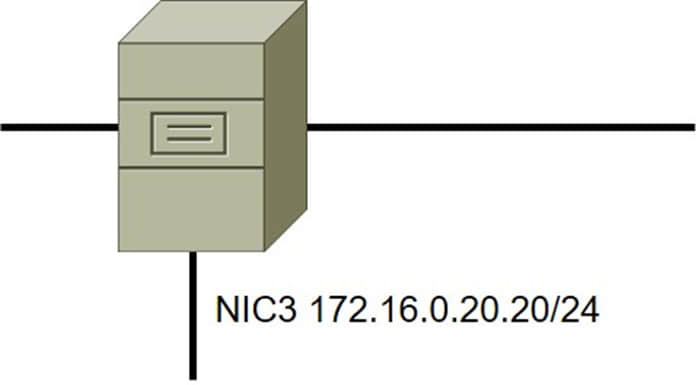 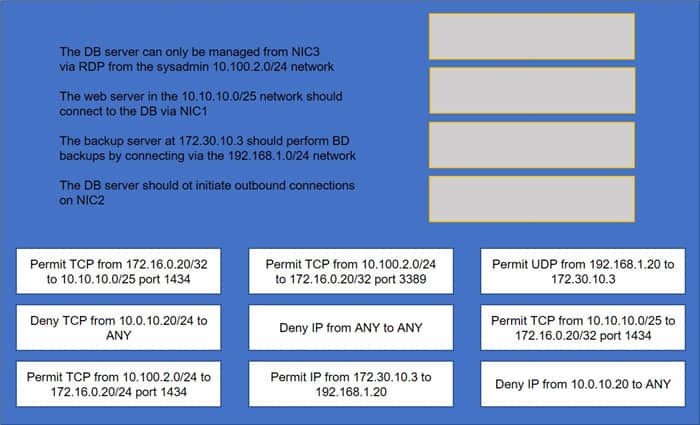
Reveal answer details
Close answer details
Question 60
Single choice
A software development company needs to mitigate third-party risks to its software supply chain. Which of the following techniques should the company use in the development environment to best meet this objective?
-
A
Performing software composition analysis
-
B
Requiring multifactor authentication
-
C
Establishing coding standards and monitoring for compliance
-
D
Implementing a robust unit and regression-testing scheme
Reveal answer details
Close answer details
Question 61
Single choice
Which of the following best describes the challenges associated with widespread adoption of homomorphic encryption techniques?
-
A
Incomplete mathematical primitives
-
B
No use cases to drive adoption
-
C
Quantum computers not yet capable
-
D
insufficient coprocessor support
Reveal answer details
Close answer details
Correct answerD
ExplanationHomomorphic encryption allows computations to be performed on encrypted data without decrypting it, providing strong privacy guarantees. However, the adoption of homomorphic encryption is challenging due to several factors:
A. Incomplete mathematical primitives: This is not the primary barrier as the theoretical foundations of
homomorphic encryption are well-developed. B. No use cases to drive adoption: There are several compelling use cases for homomorphic encryption, especially in privacy-sensitive fields like healthcare and finance.
C. Quantum computers not yet capable: Quantum computing is not directly related to the challenges of
adopting homomorphic encryption. D. Insufficient coprocessor support: The computational overhead of homomorphic encryption is significant, requiring substantial processing power. Current general-purpose processors are not optimized for the intensive computations required by homomorphic encryption, limiting its practical deployment.
Specialized hardware or coprocessors designed to handle these computations more efficiently are not yet widely available.
References:
CompTIA Security+ Study Guide
"Homomorphic Encryption: Applications and Challenges" by Rivest et al.
NIST, "Report on Post-Quantum Cryptography"
Question 62
Single choice
Due to an infrastructure optimization plan, a company has moved from a unified architecture to a federated architecture divided by region. Long-term employees now have a better experience, but new employees are experiencing major performance issues when traveling between regions. The company is reviewing the following information: 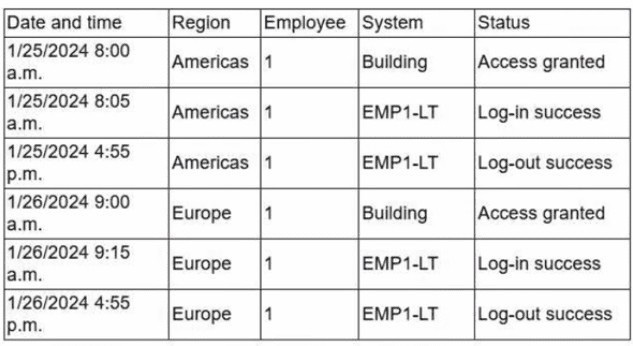 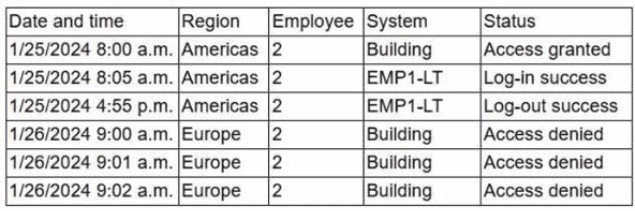 Which of the following is the most effective action to remediate the issue?
-
A
Creating a new user entry in the affected region for the affected employee.
-
B
Synchronizing all regions' user identities and ensuring ongoing synchronization.
-
C
Restarting European region physical access control systems.
-
D
Resyncing single sign-on application with connected security appliances.
Reveal answer details
Close answer details
Question 63
Single choice
In order to follow new regulations, the Chief Information Security Officer plans to use a defense-in-depth approach for a perimeter network. Which of the following protections would best achieve this goal?
-
A
-
B
-
C
-
D
Reveal answer details
Close answer details
Question 64
Single choice
An IoT device implements an encryption module built within its SoC, where the asymmetric private key has been defined in a write-once read-many portion of the SoC hardware. Which of the following should the IoT manufacture do if the private key is compromised?
-
A
Use over-the-air updates to replace the private key.
-
B
Manufacture a new IoT device with a redesigned SoC.
-
C
Replace the public portion of the IoT key on its servers.
-
D
Release a patch for the SoC software.
Reveal answer details
Close answer details
Correct answerB
ExplanationManufacture a new IoT device with a redesigned SoC: Write-Once Read-Many (WORM) is specifically designed to adhere to the highest level of integrity. Once written, it cannot be replaced. As for the Private
Key compromise, OTA updates and software patches don't work and replacing the public key does nothing.
Your only option is to burn it to the ground and start again.
Question 65
Single choice
A systems administrator works with engineers to process and address vulnerabilities as a result of continuous scanning activities. The primary challenge faced by the administrator is differentiating between valid and invalid findings. Which of the following would the systems administrator most likely verify is properly configured?
-
A
-
B
-
C
-
D
Reveal answer details
Close answer details
Correct answerB
ExplanationWhen differentiating between valid and invalid findings from vulnerability scans, the systems administrator should verify that the scanning credentials are properly configured. Valid credentials ensure that the scanner can authenticate and access the systems being evaluated, providing accurate and comprehensive results.
Without proper credentials, scans may miss vulnerabilities or generate false positives, making it difficult to prioritize and address the findings effectively.
References:
CompTIA SecurityX Study Guide: Highlights the importance of using valid credentials for accurate vulnerability scanning.
"Vulnerability Management" by Park Foreman: Discusses the role of scanning credentials in obtaining accurate scan results and minimizing false positives. "The Art of Network Security Monitoring" by Richard Bejtlich: Covers best practices for configuring and using vulnerability scanning tools, including the need for valid credentials.
|