Preview real exam questions, verified answers and available explanations before choosing a study plan.
Question 1
Single choice
During system verification, an issue has been noted where the microphone becomes very quiet when any laptop audio is played.
What should be reviewed in the audio DSP?
A
Limiter
B
Ducker
C
Gain structure
D
Feedback suppressor
Reveal answer detailsClose answer details
Correct answerB
Explanation
A ducker is a feature in audio DSPs that automatically reduces the level of one audio signal when another signal is present. In this scenario, the ducker is likely set to reduce the microphone level when laptop audio is detected. Reviewing and adjusting the ducker settings will resolve the issue. References: CTS Certified Technology Specialist Exam Guide, Third Edition
Question 2
Single choice
Determining the expectations of the end users of a presentation space is called a(n):
A
Needs analysis
B
Program report
C
Executive summary
D
Performance verification
Reveal answer detailsClose answer details
Correct answerA
Explanation
A needs analysis is a foundational step in any AV project. It involves interviewing stakeholders to identify how the space will be used, what user expectations are, and any special functionality required. This guides the design process to ensure the system aligns with client goals. "Needs analysis is the process of identifying the user's goals, expectations, and functional requirements before proceeding with system design." -CTS Exam Guide, Project Management and Needs Analysis Chapter
Question 3
Single choice
What is the MAIN difference between OLED displays and LED displays?
A
luminosity
B
higher brightness
C
self-emitting light source
D
determined screen shape
Reveal answer detailsClose answer details
Correct answerC
Explanation
The main difference between OLED (Organic Light Emitting Diode) displays and LED (Light Emitting Diode) displays is that OLED displays use self-emitting light sources. In OLED technology, each pixel emits its own light, allowing for better contrast ratios and deeper blacks, as pixels can be turned off completely. In contrast, LED displays use a backlight to illuminate the screen, which can result in less precise control over brightness and contrast.
Question 4
Single choice
Reverberant sound reaches the listener's ears.
A
after
B
before
C
synchronized with D at the same level as the direct sound.
Reveal answer detailsClose answer details
Correct answerA
Explanation
Reverberant sound reaches the listener's ears after the direct sound. This occurs because reverberant sound is reflected off various surfaces within a space, such as walls, ceilings, and floors, before arriving at the listener. The time delay between the arrival of the direct sound and the reverberant sound contributes to the sense of space and ambience in an environment.
Question 5
Single choice
During the needs analysis stage, it is MOST IMPORTANT to determine the client's.
A
budget.
B
application.
C
mission statement.
D
installation time frame.
Reveal answer detailsClose answer details
Correct answerB
Explanation
During the needs analysis stage, understanding the client's application is critical, as it defines how the AV system will be used. This information guides the design to ensure the system meets the functional requirements for the specific use case, such as conferencing, presentations, or entertainment. CTS Technology Specialist Reference The CTS guidelines on needs analysis emphasize determining the application as a foundation for tailoring the AV solution to fit client-specific operational needs and goals.
Question 6
Single choice
The bending or changing direction of a light ray as it passes through material is called.
A
scattering.
B
refraction.
C
reflection.
D
dispersion.
Reveal answer detailsClose answer details
Correct answerB
Explanation
Refraction is the bending of light as it passes from one medium to another with a different density, such as from air to glass. This change in direction occurs because the speed of light changes in different media. CTS Technology Specialist Reference In AV, understanding refraction is essential for systems involving optics, such as projectors and lenses, where light paths affect image quality and focus.
Question 7
Single choice
The description and pricing for an AV solution is submitted during which phase of an AV project?
A
Proposal
B
Execution
C
Needs Analysis
D
Request for Information (RFI)
Reveal answer detailsClose answer details
Correct answerA
Explanation
The proposal phase is when the description and pricing of an AV solution are submitted to the client. This phase involves presenting a detailed plan that includes system components, costs, and how the solution meets the client's needs. The proposal allows the client to review and approve the solution before moving forward to execution. CTS Technology Specialist Reference. The CTS project management guidelines state that the proposal phase includes submitting a comprehensive description of the AV system and associated costs, forming the basis for client approval and contract negotiation.
Question 8
Single choice
Which rack installation practice best supports reliability and future service?
A
Maintain airflow, provide service loops where appropriate, dress and label cables, and keep power and signal routing orderly.
B
Bundle all cables tightly against equipment vents so the rack looks compact.
C
Remove labels after testing so the front of the rack appears cleaner.
D
Place high-heat equipment wherever open rack space is available without checking ventilation.
Reveal answer detailsClose answer details
Correct answerA
Explanation
Rack work should preserve cooling, service access, and documentation. Airflow, service loops, labeling, cable dressing, and orderly routing make the system easier to verify and maintain. Blocking vents, removing labels, or ignoring heat output can cause failures and make troubleshooting slower.
Question 9
Single choice
When specifying a paging system for a large building, what kind of speaker system should be recommended?
A
near field
B
line array
C
direct coupled
D
constant voltage
Reveal answer detailsClose answer details
Correct answerD
Explanation
Constant voltage speaker systems (70V or 100V systems) are ideal for large-scale installations like paging systems in large buildings. These systems allow easy distribution over long distances with minimal signal loss and support multiple speakers connected to the same amplifier. Near field (Option A) is for close-proximity applications. Line arrays (Option B) are used in concert settings, and direct-coupled systems (Option C) are not as efficient for large-scale distributed audio.
References: AVIXA CTS Exam Guide, Chapter on Audio Distribution CTS Handbook, Section on Constant Voltage Systems.
Question 10
Single choice
Which type of contract involves ongoing support for an AV system, regardless of the age of the facility or who did the initial installation?
A
system warranty
B
service agreement
C
manufacturer warranty
D
preventive maintenance
Reveal answer detailsClose answer details
Correct answerB
Explanation
A service agreement involves ongoing support for an AV system, regardless of the age of the facility or who did the initial installation. This type of contract ensures that the AV system is maintained and serviced regularly, providing long-term support and upkeep. Axis documentation outlines service agreements as essential for ensuring the continued reliability and performance of AV systems, providing clients with peace of mind and consistent technical support.
Question 11
Single choice
Which of the following documents includes details about equipment type, model, location, and expected service frequency?
A
Warranty form
B
Maintenance plan
C
Program document
D
Handover document
Reveal answer detailsClose answer details
Correct answerB
Explanation
A maintenance plan provides structured information about how and when to service each component in the AV system. It includes model numbers, service intervals, and locations to ensure operational integrity over time. "The maintenance plan outlines the type and frequency of service for each piece of equipment. It ensures the client has a roadmap for sustaining system performance." -CTS Exam Guide, Maintenance and Service Planning
Question 12
Single choice
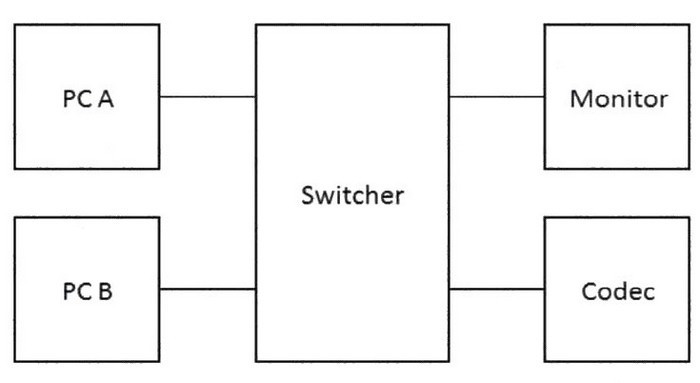
Two computers are connected to a videoconferencing system through a switcher using HDMI cables. Computer content from PC A is being properly transmitted. However, when PC B is selected by the switcher, it does not work through the videoconferencing system. They both work when connected directly to the videoconferencing system or the monitor. The solution is to add a device that enables____management.
A
DDC
B
DHCP
C
HDCP
D
TMDS
Reveal answer detailsClose answer details
Correct answerC
Explanation
The issue described is likely due to HDCP (High-bandwidth Digital Content Protection) incompatibility. Since PC B does not work through the switcher but works directly, it indicates an HDCP handshake issue between the switcher and PC B. Adding an HDCP-compliant device, such as an HDCP-compliant switcher or repeater, can resolve this issue by ensuring that content protection protocols are properly managed. CTS Technology Specialist Reference CTS materials on digital video highlight the importance of HDCP management when dealing with protected content in HDMI connections, especially in videoconferencing systems.
Question 13
Single choice
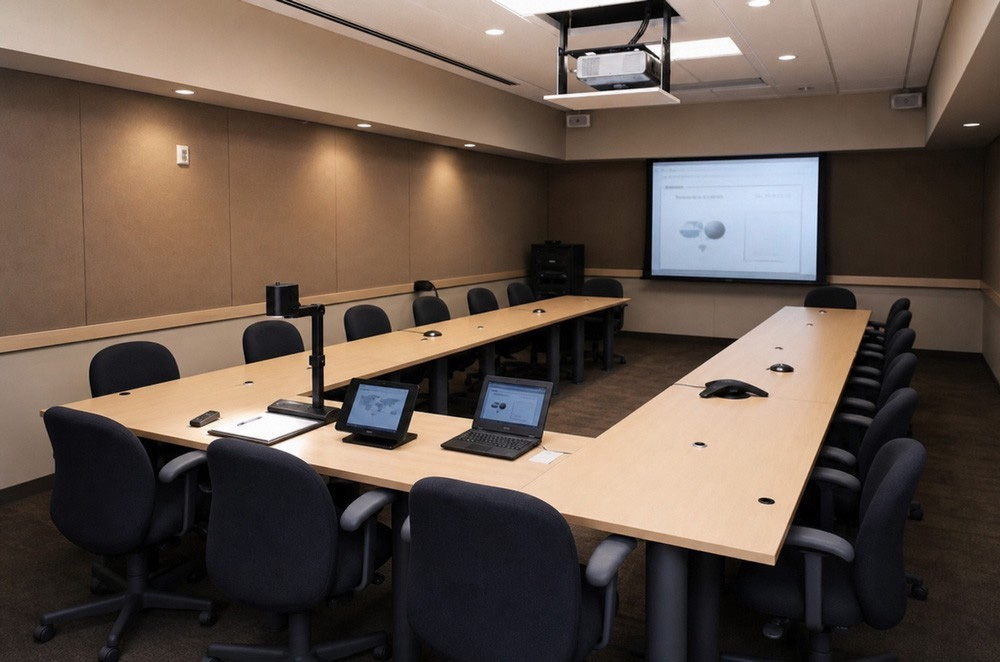
What PRIMARY concern should the sales representative have had during the site survey of this room?
A
room orientation
B
length of cable runs
C
ceiling clearance for the projector lift
D
combination of fluorescent and Incandescent lighting
Reveal answer detailsClose answer details
Correct answerC
Explanation
The primary concern for the sales representative during the site survey should be the ceiling clearance for the projector lift. Ensuring that there is sufficient space for the projector lift to operate without obstruction is crucial for proper installation and operation. Inadequate clearance can lead to difficulties in mounting and deploying the projector, potentially compromising the projection quality and system functionality. Additionally, it is important to verify that the projector can be positioned at the correct height and angle to achieve the desired image size and alignment.
Question 14
Single choice
The amount of light emitted through a projection system lens is TYPICALLY specified and measured.
A
in lux.
B
in lumens.
C
in footcandles.
D
by its contrast ratio.
Reveal answer detailsClose answer details
Correct answerB
Explanation
The light output of a projection system is typically measured in lumens, which quantify the total amount of visible light emitted by the projector. Lumens measure the projector's brightness, making it a standard metric for comparing different projectors' output capacities. Lux is used to measure illuminance or the amount of light falling on a surface. Footcandles is another unit of illuminance, similar to lux but based on the imperial system. Contrast ratio describes the difference in luminance between the brightest white and the darkest black a projector can produce, not the brightness itself. CTS Technology Specialist Reference According to CTS training materials, projector brightness should be specified in lumens, which provides a clear indication of the projector's suitability for different environments and screen sizes.
Question 15
Single choice
A vendor proposes a lower-cost display as an alternate to the specified model.
What is the best CTS-level response?
A
Compare the alternate against required performance, inputs, mounting, control, power, availability, warranty, and acceptance criteria.
B
Accept the alternate automatically because it reduces the purchase price.
C
Reject the alternate automatically because it is not the originally specified model.
D
Delay the comparison until after the display has been installed.
Reveal answer detailsClose answer details
Correct answerA
Explanation
An alternate can be acceptable only if it satisfies the functional and technical requirements of the project. Performance, connectivity, mounting, control compatibility, power, lead time, support, warranty, and acceptance criteria should be reviewed before approval. Price alone is not enough, and rejecting every alternate without evaluation can also harm the project.
Question 16
Single choice
When evaluating site conditions for an AV project that requires a free-standing rack that is 49 RU or taller, the condition that will force assembly on site instead of building the rack in the shop and delivering it fully assembled is when the:
A
Lighting is better onsite
B
Elevator/lift is only 7 feet [2.13 meters] tall
C
Room is only accessible after normal working hours
D
Construction dumpster is located close to the loading dock
Reveal answer detailsClose answer details
Correct answerB
Explanation
A 49 RU rack is approximately 7 feet tall. If the elevator is also 7 feet or less, there won't be sufficient clearance to transport the pre-assembled rack. Therefore, it must be assembled onsite. "Site constraints, such as doorway and elevator clearances, must be reviewed. Racks over 49 RU often require onsite assembly due to height limitations." -CTS Exam Guide, Equipment Installation and Logistics Planning
Question 17
Single choice
Which of the following translates the IP address of a computer in a local network to a single IP address?
A
HTTP
B
MAC
C
NAT
D
TCP
Reveal answer detailsClose answer details
Correct answerC
Explanation
Network Address Translation (NAT) is a method used to translate the private IP addresses of computers within a local network to a single public IP address. This allows multiple devices on a local network to access external networks (such as the internet) using a single IP address, conserving the number of public IP addresses needed and providing a layer of security by masking internal IP addresses from the outside world.
Question 18
Single choice
During the site survey, the client indicates that the space that will become a rear projection room is currently an off-white color.
What should be recommended to the client?
A
paint the room gray
B
paint the room black
C
leave the room as it is
D
use carpeting on the walls
Reveal answer detailsClose answer details
Correct answerB
Explanation
For a rear projection room, it is recommended to paint the room black. Black walls minimize reflections and ambient light, which can negatively impact the quality of the projected image. By reducing these reflections, the contrast and clarity of the projection are improved, providing a better viewing experience. While gray is also a common choice for minimizing light reflections, black is more effective for creating the optimal environment for projection purposes.
Question 19
Single choice
During an initial customer visit, it is important to determine whether or not one is
A
going to get the job.
B
being competitive enough.
C
meeting with the decision maker.
D
going to have enough cable in stock to do the job.
Reveal answer detailsClose answer details
Correct answerC
Explanation
During an initial customer visit, it is crucial to determine whether you are meeting with the decision maker. This ensures that the person who has the authority to approve the project and allocate resources is involved from the beginning. Identifying and engaging with the decision maker helps streamline the process, address their specific needs and concerns, and increases the likelihood of project approval. This practice is a standard approach in sales and project management to ensure efficient communication and decision-making.
References: Axis Communications - Sales and Customer Engagement Guidelines Project Management Best Practices
Question 20
Single choice
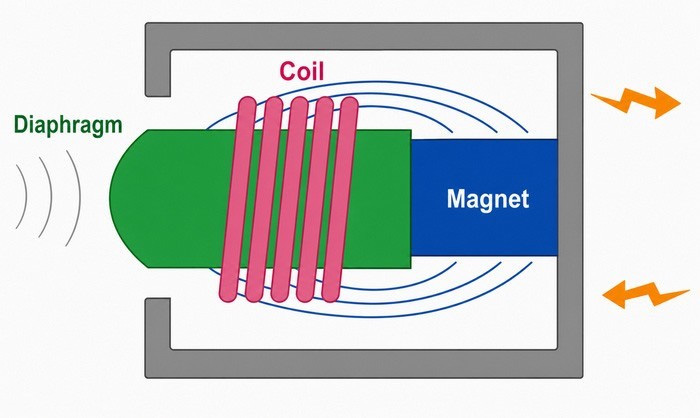
This image shows the workings of which type of microphone?
A
ribbon
B
dynamic
Reveal answer detailsClose answer details
Correct answerB
Explanation
The image shows a dynamic microphone, which works through electromagnetic induction. In a dynamic microphone, sound waves cause the diaphragm to move, which in turn moves a coil of wire within the magnetic field of a magnet. This movement generates an electrical signal that corresponds to the sound. The visible components, such as the diaphragm, coil, and magnet, are characteristic of a dynamic microphone's internal structure. CTS Technology Specialist Reference The CTS curriculum details the workings of various microphone types, explaining that dynamic microphones are durable and suitable for live sound due to their ability to handle high sound pressure levels.
Question 21
Single choice
A meeting room has high ambient noise and poor speech intelligibility during conferencing.
Which design approach best addresses the core issue?
A
Improve signal-to-noise ratio through microphone placement, loudspeaker coverage, gain structure, and acoustic treatment where needed.
B
Increase amplifier output until speech is louder than every other sound in the room.
C
Disable all ceiling microphones and rely only on the camera microphone.
D
Add more display inputs so presenters can connect faster.
Reveal answer detailsClose answer details
Correct answerA
Explanation
Speech intelligibility depends on usable speech level compared with noise and reverberation. Good microphone placement, loudspeaker coverage, gain structure, and acoustic improvements help the system capture and reproduce speech clearly. Simply making the system louder can increase feedback or listener fatigue, and changing video connectivity does not solve the audio problem.
Question 22
Single choice
According to AVIXA's AV Performance Verification standard, at what point should the loudspeaker transformer tap setting be verified?
A
Closeout
B
Pre-integration
C
Post-integration
D
Systems integration
Reveal answer detailsClose answer details
Correct answerD
Explanation
The systems integration phase is when devices are installed and configured together. Verifying loudspeaker transformer taps during this phase ensures that each speaker receives the correct power level, which is critical for achieving uniform audio coverage and system performance. "Loudspeaker transformer taps should be verified during the systems integration phase to ensure proper audio balance and coverage before final verification." -AVIXA Standard - AV System Performance Verification (ANSI/INFOCOMM 10:2013)
Question 23
Single choice
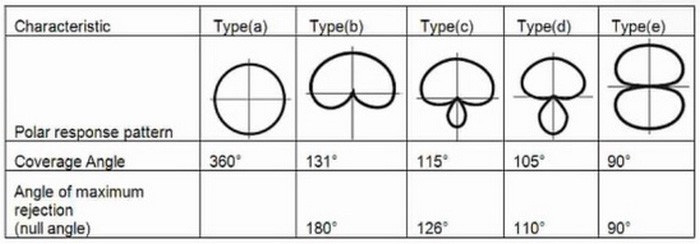
Which microphone type has a basic cardioid pick up pattern?
A
Type(a)
B
Type(b)
C
Type(c)
D
Type(d)
Reveal answer detailsClose answer details
Correct answerB
Explanation
A cardioid microphone has a heart-shaped (or "cardioid") pick-up pattern that captures sound primarily from the front while rejecting sound from the rear. The pattern shown for Type(b) aligns with a typical cardioid response, featuring a coverage angle of approximately 131 degrees, which indicates its directional sensitivity towards the front and rejection from the back.
References: AVIXA CTS Exam Guide, Chapter on Microphone Types and Polar Patterns CTS Handbook, Section on Microphone Selection and Directional Patterns.
Question 24
Hotspot
HOTSPOT
What section of the color chart is used to calibrate brightness?
Select the answer by clicking on the appropriate area of the chart
Reveal answer detailsClose answer details
Explanation
The section with the grayscale bars (bottom row, from white to black) Brightness calibration is typically done using the grayscale section of a color chart. The grayscale bars provide a range of luminance levels from white to black, allowing the calibration process to adjust the display so that each shade is distinct and accurately represented. Proper calibration ensures that the display shows details in both bright and dark areas of the image, achieving the correct overall brightness.
Question 25
Single choice
When is the optimal time to conduct training of end users in a new AV installation?
A
after all participants have reviewed equipment manuals
B
when all users of the facility can be trained at the same time
C
at the time of system handover with accompanying user guides
D
during installation so that the system can be configured and modified in line with the user's knowledge
Reveal answer detailsClose answer details
Correct answerC
Explanation
The optimal time to conduct training of end users in a new AV installation is at the time of system handover with accompanying user guides. This ensures that users receive hands-on training with the actual equipment they will be using, allowing them to understand its operation fully and ask questions while a technician is present. Providing user guides during this time also gives them a reference to consult after the training session. Axis Technology Specialist documentation stresses the importance of comprehensive training and support at the system handover phase to maximize user proficiency and satisfaction.
Question 26
Single choice
During the installation of an audiovisual system, a client states that they wish to add a videoconferencing system that was not considered in the initial scope of the project.
What form is required?
A
Request for Quotes (RFQ)
B
Request for Change (RFC)
C
Request for Proposals (RFP)
D
Request for Information (RFI)
Reveal answer detailsClose answer details
Correct answerB
Explanation
When a client requests an addition to the project that wasn't included in the original scope, such as a videoconferencing system, a Request for Change (RFC) is needed. An RFC formally documents the change in scope, budget, or timeline and ensures that all parties agree to the modifications. CTS Technology Specialist Reference The CTS guidelines discuss the use of RFCs to manage scope changes, helping avoid misunderstandings and ensuring all modifications are approved and documented.
Question 27
Single choice
After field changes are made during installation, which documentation should be updated before project closeout?
A
As-built drawings, cable labels or schedules, IP information, configuration notes, and operation or maintenance documents.
B
Only the original proposal, because field changes should not appear in technical records.
C
Only the client's marketing brochure for the room.
D
Only the invoice total, without recording what changed.
Reveal answer detailsClose answer details
Correct answerA
Explanation
Closeout documentation should describe the system as it was actually installed. Updated drawings, cable schedules, labels, addresses, configuration notes, and operating or maintenance information help the client operate and service the room. Leaving records at the original design state makes future support slower and less accurate.
Question 28
Single choice
Which addressing scheme is used to define a fixed, routable IPv4 address that is locally assigned?
A
static
B
DHCP
C
link-local
D
DHCP reservation
Reveal answer detailsClose answer details
Correct answerA
Explanation
A static IP address is a fixed IP address that is manually assigned and does not change. This scheme is suitable for devices that require a constant address, allowing them to be easily located and accessed within a network. Static IP addresses are commonly used for routers, servers, and other essential devices in AV networks. CTS Technology Specialist Reference. The CTS curriculum covers IP addressing schemes, noting that static IP addresses provide reliability and are preferred for AV equipment requiring stable and consistent network access.
Question 29
Single choice
An application requires Its equipment to be operational 24 hours a day and the owner considers the system mission critical.
What type of warranty would be BEST for the equipment?
A
limited warranty
B
implied warranty
C
manufacturer's factory warranty
D
advanced replacement warranty
Reveal answer detailsClose answer details
Correct answerD
Explanation
For a system that is mission-critical and requires 24-hour operation, an advanced replacement warranty is the best option. This type of warranty ensures that if a piece of equipment fails, a replacement is shipped immediately, often before the defective unit is returned. This minimizes downtime and ensures that the system remains operational, which is crucial for mission-critical applications.
References: Axis Communications - Warranty and Service Options Industry Standards for Critical Systems Maintenance
Question 30
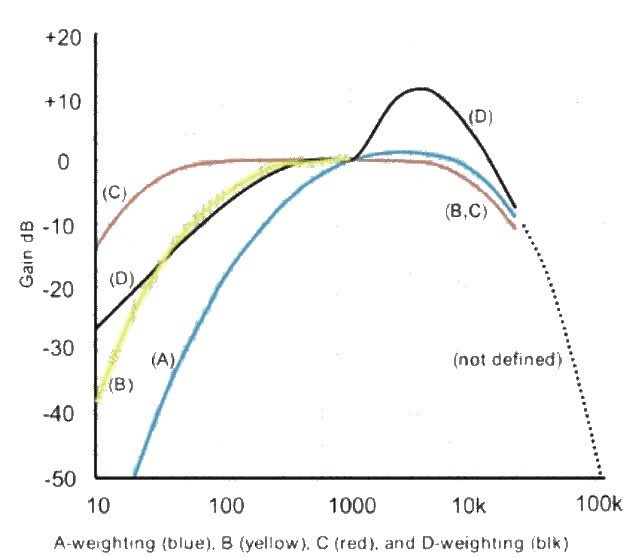
Single choice
When calibrating a loudspeaker system, which weight setting on the SPi. meter is used for its mdus>on of low frequency sound levels in the measurement?
A
A-weighted
B
B-weighted
C
C-weighted
D
D-weighted
Reveal answer detailsClose answer details
Correct answerC
Explanation
When calibrating a loudspeaker system, the C-weighted setting on an SPL (Sound Pressure Level) meter is typically used because it provides a relatively flat frequency response, including low-frequency sound levels. This makes it more suitable for accurately measuring the overall sound pressure level, especially in environments where low-frequency performance is critical, such as in audio and home theater systems. The C-weighted setting captures the full range of audible frequencies, ensuring a comprehensive and precise calibration.
Question 31
Single choice
According to the AVIXA Rack Design standard, what should be the MINIMUM distance between an AC Power cable and a Data Twisted Pair cable?
A
25 mm (~1 in)
B
50 mm (-2 in)
C
100 mm (~4 in)
D
300 mm (~12 in)
Reveal answer detailsClose answer details
Correct answerC
Explanation
According to AVIXA standards for rack design, there should be a minimum distance of 100 mm (approximately 4 inches) between AC power cables and data twisted pair cables. This spacing helps to reduce the potential for electromagnetic interference (EMI) between power and data cables, ensuring signal integrity and reducing noise. CTS Technology Specialist Reference The AVIXA standards emphasize proper cable management to minimize interference in AV installations. Maintaining a 100 mm separation aligns with best practices for reducing crosstalk and preserving data quality in networked systems.
Question 32
Single choice
When addressing system functionality with a client, an integrator should:
A
Discuss future technologies
B
Ignore currently installed systems
C
Suggest sustainable building guidelines
D
Assess specific requirements and expectations
Reveal answer detailsClose answer details
Correct answerD
Explanation
Understanding a client's current and anticipated needs is essential for designing a system that truly supports their workflow. This involves asking targeted questions and assessing the functionality they expect from the AV system. "Assessing user requirements is foundational to delivering an effective AV solution. Integrators must understand functional expectations to ensure alignment with the delivered system." -CTS Exam Guide, Needs Analysis and Client Interaction
Question 33
Single choice
A technician sets up a 1080p LCD screen and connects a 720p source via an 8 m (26 ft) HDMI cable. Later, the source is switched to 1080p output and the image appears on screen, but with sparkling pixels and occasional dropouts.
Why has the image quality degraded?
A
Color depth requirement
B
Change to aspect ratio needs to register
C
Signal bandwidth exceeds cable capabilities
D
EDID information is incorrect for new image
Reveal answer detailsClose answer details
Correct answerC
Explanation
Higher resolution (like 1080p) increases bandwidth demands. While the cable was sufficient for 720p, switching to 1080p may exceed its capabilities-especially over longer distances (like 8 meters), leading to sparkling, dropouts, or signal instability. "HDMI signal degradation over long runs is often caused by insufficient bandwidth handling, particularly at higher resolutions like 1080p or 4K." -CTS Exam Guide, Signal Integrity and Cabling Standards
Question 34
Single choice
When designing an AVB system, ensuring that these are AVB compliant is critical.
A
displays
B
loudspeakers
C
microphone cables
D
network electronics
Reveal answer detailsClose answer details
Correct answerD
Explanation
When designing an AVB (Audio Video Bridging) system, ensuring that the network electronics (such as switches, routers, and network interface cards) are AVB compliant is critical. AVB is a set of standards developed to facilitate the transmission of audio and video data over Ethernet networks with precise timing and low latency. AVB-compliant network electronics are essential for maintaining the quality and synchronization of audio and video streams in such systems.
Question 35
Single choice
Remotely monitoring system health of a deployed conference room and rebooting it when faulty is an example of
A
a service call.
B
troubleshooting.
C
a service contract.
D
proactive maintenance.
Reveal answer detailsClose answer details
Correct answerD
Explanation
Proactive maintenance involves regularly monitoring and maintaining systems to prevent issues before they occur. Remotely monitoring system health and performing actions like rebooting faulty equipment are preventive measures that help maintain system reliability and functionality. This approach reduces the likelihood of system failures and downtime, ensuring that the conference room equipment operates smoothly.
Question 36
Single choice
When planning to use audio equipment on a converged enterprise network, it may be desirable to separate broadcast domains in order to
A
avoid audio feedback between devices.
B
avoid crosstalk between multi track channel packets.
C
avoid delaying time sensitive AV traffic on the network.
D
comply with local electrical and telecommunication regulations.
Reveal answer detailsClose answer details
Correct answerC
Explanation
When using audio equipment on a converged enterprise network, separating broadcast domains is essential to avoid delaying time-sensitive AV traffic. AV traffic, such as audio and video streams, requires low latency and minimal jitter to maintain quality. By segregating these streams from other types of network traffic, such as data and general communications, network performance can be optimized, ensuring that AV services operate smoothly without interruption.
References: Axis Communications - Network Design and AV Integration IT and Network Management Best Practices
Question 37
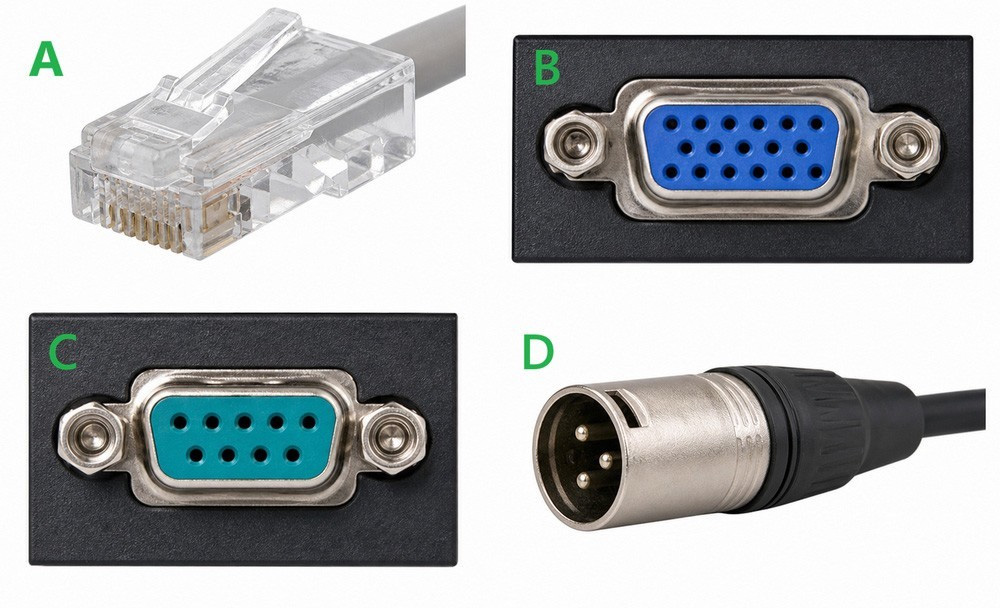
Single choice
Which connector is TYPICALLY used for RS232 connections?
A
A
B
B
C
C
D
D
Reveal answer detailsClose answer details
Correct answerC
Explanation
The RS-232 standard is a common serial communication protocol often used for connecting and controlling various AV devices. It typically employs a DB9 connector, which is illustrated in Option C. The DB9 connector is a 9-pin D-sub connector, widely used in RS-232 connections due to its reliable performance in transmitting serial data. Here's an overview of the connector options in the image: Option A: This is an RJ-45 connector, commonly used for Ethernet networking (data communication), not for RS-232. Option B: This is a VGA connector, often used for video signals, typically between computers and monitors. Option C: This is a DB9 (DE-9) connector, which is most commonly associated with RS-232 serial connections. Option D: This is an XLR connector, generally used for audio signals, especially in professional audio applications. CTS Technology Specialist Reference In AV systems integration, RS-232 is frequently employed for control and communication between devices such as projectors, displays, and control processors. According to CTS training materials, the DB9 connector is the most recognized form of connection for RS-232 due to its reliability and ease of integration in various AV systems.
Question 38
Single choice
A saeen is 144 in (3658 mm) wide and the throw ratio is 2.3:1.
How far from the screen should the projector be placed?
A
288 In (7303 mm)
B
302 in (7681 mm)
C
331 in (8413 mm)
D
446 in (11339 mm)
Reveal answer detailsClose answer details
Correct answerC
Explanation
The throw distance of a projector can be calculated using the throw ratio formula: Throw Distance=Throw RatioxScreen Width\text{Throw Distance} = \text{Throw Ratio} \times \text{Screen Width}Throw Distance=Throw RatioxScreen Width Given: Throw Ratio=2.3\text{Throw Ratio} = 2.3Throw Ratio=2.3 Screen Width=144 in\text{Screen Width} = 144 \text{ in}Screen Width=144 in Throw Distance=2.3x144\text{Throw Distance} = 2.3 \times 144Throw Distance=2.3x144 Throw Distance=331.2 in\text{Throw Distance} = 331.2 \text{ in}Throw Distance=331.2 in Therefore, the projector should be placed approximately 331 inches (8413 mm) from the screen.
Question 39
Single choice
A client approves the business need for a divisible training room.
What should a functional AV project scope primarily define?
A
Required functions, operating modes, constraints, deliverables, responsibilities, and acceptance criteria.
B
Only the exact model numbers selected by the dealer at the time of quoting.
C
Only the installation crew list and the expected daily start time.
D
Only the decorative finish of the wall plates and rack panels.
Reveal answer detailsClose answer details
Correct answerA
Explanation
A functional scope states what the AV solution must do and how success will be judged. It should describe room combine modes, source routing, conferencing behavior, control expectations, constraints, deliverables, responsibilities, and acceptance criteria. Model numbers, staffing details, and finish choices may appear elsewhere, but they do not define the complete functional requirement.
Question 40
Single choice
In a basic AV rack, what is the most effective method to promote proper airflow?
A
Close unused rack spaces with blanking panels
B
Install fans at the front and rear of the rack
C
Leave extra space between all rack-mounted units
D
Remove all rear rack panels for passive exhaust
Reveal answer detailsClose answer details
Correct answerA
Explanation
Blanking panels help direct airflow front-to-back, minimizing air recirculation in open areas and improving cooling efficiency. This method helps the cool air reach heat-producing components more effectively. "Blanking panels eliminate hot air recirculation and promote efficient front-to-back cooling-a best practice in AV rack design." -CTS Exam Guide, Equipment Ventilation and Rack Design
Question 41
Single choice
When should preventive maintenance be undertaken?
A
when a projector lamp has failed
B
after a customer has reported a system failure
C
when there is more than one failure in the system
D
at scheduled times independent of system failures
Reveal answer detailsClose answer details
Correct answerD
Explanation
Preventive maintenance is planned maintenance conducted at regular intervals to ensure system reliability and prevent issues before they occur, rather than in response to system failures. CTS Technology Specialist Reference CTS training on maintenance highlights the importance of scheduled preventive maintenance to keep systems operating smoothly and extend equipment lifespan.
Question 42
Single choice
The MOST important information to come away with from an initial site survey is the
A
key decision maker.
B
final budget for the entire project.
C
overall scope AV solution needed.
D
manufacturers which will be used in the AV system.
Reveal answer detailsClose answer details
Correct answerC
Explanation
During an initial site survey, understanding the overall scope of the AV solution provides the foundational insight needed for designing a system that meets client requirements. This ensures alignment with objectives and informs subsequent phases of the project. CTS Technology Specialist Reference
The CTS curriculum advises focusing on the AV solution scope to guide design and implementation processes effectively, ensuring client needs are addressed.
During system verification, an issue has been noted where the microphone becomes very quiet when any laptop audio is played.
What should be reviewed in the audio DSP?
A.
Limiter
B.
Ducker
C.
Gain structure
D.
Feedback suppressor
Correct Answer: B
Explanation
Explanation/Reference:
A ducker is a feature in audio DSPs that automatically reduces the level of one audio signal when another signal is present. In this scenario, the ducker is likely set to reduce the microphone level when laptop audio is detected. Reviewing and adjusting the ducker settings will resolve the issue. References: CTS Certified Technology Specialist Exam Guide, Third Edition
QUESTION 2
Determining the expectations of the end users of a presentation space is called a(n):
A.
Needs analysis
B.
Program report
C.
Executive summary
D.
Performance verification
Correct Answer: A
Explanation
Explanation/Reference:
A needs analysis is a foundational step in any AV project. It involves interviewing stakeholders to identify how the space will be used, what user expectations are, and any special functionality required. This guides the design process to ensure the system aligns with client goals. "Needs analysis is the process of identifying the user's goals, expectations, and functional requirements before proceeding with system design." -CTS Exam Guide, Project Management and Needs Analysis Chapter
QUESTION 3
What is the MAIN difference between OLED displays and LED displays?
A.
luminosity
B.
higher brightness
C.
self-emitting light source
D.
determined screen shape
Correct Answer: C
Explanation
Explanation/Reference:
The main difference between OLED (Organic Light Emitting Diode) displays and LED (Light Emitting Diode) displays is that OLED displays use self-emitting light sources. In OLED technology, each pixel emits its own light, allowing for better contrast ratios and deeper blacks, as pixels can be turned off completely. In contrast, LED displays use a backlight to illuminate the screen, which can result in less precise control over brightness and contrast.
QUESTION 4
Reverberant sound reaches the listener's ears.
A.
after
B.
before
C.
synchronized with D at the same level as the direct sound.
Correct Answer: A
Explanation
Explanation/Reference:
Reverberant sound reaches the listener's ears after the direct sound. This occurs because reverberant sound is reflected off various surfaces within a space, such as walls, ceilings, and floors, before arriving at the listener. The time delay between the arrival of the direct sound and the reverberant sound contributes to the sense of space and ambience in an environment.
QUESTION 5
During the needs analysis stage, it is MOST IMPORTANT to determine the client's.
A.
budget.
B.
application.
C.
mission statement.
D.
installation time frame.
Correct Answer: B
Explanation
Explanation/Reference:
During the needs analysis stage, understanding the client's application is critical, as it defines how the AV system will be used. This information guides the design to ensure the system meets the functional requirements for the specific use case, such as conferencing, presentations, or entertainment. CTS Technology Specialist Reference The CTS guidelines on needs analysis emphasize determining the application as a foundation for tailoring the AV solution to fit client-specific operational needs and goals.
QUESTION 6
The bending or changing direction of a light ray as it passes through material is called.
A.
scattering.
B.
refraction.
C.
reflection.
D.
dispersion.
Correct Answer: B
Explanation
Explanation/Reference:
Refraction is the bending of light as it passes from one medium to another with a different density, such as from air to glass. This change in direction occurs because the speed of light changes in different media. CTS Technology Specialist Reference In AV, understanding refraction is essential for systems involving optics, such as projectors and lenses, where light paths affect image quality and focus.
QUESTION 7
The description and pricing for an AV solution is submitted during which phase of an AV project?
A.
Proposal
B.
Execution
C.
Needs Analysis
D.
Request for Information (RFI)
Correct Answer: A
Explanation
Explanation/Reference:
The proposal phase is when the description and pricing of an AV solution are submitted to the client. This phase involves presenting a detailed plan that includes system components, costs, and how the solution meets the client's needs. The proposal allows the client to review and approve the solution before moving forward to execution. CTS Technology Specialist Reference. The CTS project management guidelines state that the proposal phase includes submitting a comprehensive description of the AV system and associated costs, forming the basis for client approval and contract negotiation.
QUESTION 8
Which rack installation practice best supports reliability and future service?
A.
Maintain airflow, provide service loops where appropriate, dress and label cables, and keep power and signal routing orderly.
B.
Bundle all cables tightly against equipment vents so the rack looks compact.
C.
Remove labels after testing so the front of the rack appears cleaner.
D.
Place high-heat equipment wherever open rack space is available without checking ventilation.
Correct Answer: A
Explanation
Explanation/Reference:
Rack work should preserve cooling, service access, and documentation. Airflow, service loops, labeling, cable dressing, and orderly routing make the system easier to verify and maintain. Blocking vents, removing labels, or ignoring heat output can cause failures and make troubleshooting slower.
QUESTION 9
When specifying a paging system for a large building, what kind of speaker system should be recommended?
A.
near field
B.
line array
C.
direct coupled
D.
constant voltage
Correct Answer: D
Explanation
Explanation/Reference:
Constant voltage speaker systems (70V or 100V systems) are ideal for large-scale installations like paging systems in large buildings. These systems allow easy distribution over long distances with minimal signal loss and support multiple speakers connected to the same amplifier. Near field (Option A) is for close-proximity applications. Line arrays (Option B) are used in concert settings, and direct-coupled systems (Option C) are not as efficient for large-scale distributed audio.
References: AVIXA CTS Exam Guide, Chapter on Audio Distribution CTS Handbook, Section on Constant Voltage Systems.
QUESTION 10
Which type of contract involves ongoing support for an AV system, regardless of the age of the facility or who did the initial installation?
A.
system warranty
B.
service agreement
C.
manufacturer warranty
D.
preventive maintenance
Correct Answer: B
Explanation
Explanation/Reference:
A service agreement involves ongoing support for an AV system, regardless of the age of the facility or who did the initial installation. This type of contract ensures that the AV system is maintained and serviced regularly, providing long-term support and upkeep. Axis documentation outlines service agreements as essential for ensuring the continued reliability and performance of AV systems, providing clients with peace of mind and consistent technical support.
QUESTION 11
Which of the following documents includes details about equipment type, model, location, and expected service frequency?
A.
Warranty form
B.
Maintenance plan
C.
Program document
D.
Handover document
Correct Answer: B
Explanation
Explanation/Reference:
A maintenance plan provides structured information about how and when to service each component in the AV system. It includes model numbers, service intervals, and locations to ensure operational integrity over time. "The maintenance plan outlines the type and frequency of service for each piece of equipment. It ensures the client has a roadmap for sustaining system performance." -CTS Exam Guide, Maintenance and Service Planning
QUESTION 12
Two computers are connected to a videoconferencing system through a switcher using HDMI cables. Computer content from PC A is being properly transmitted. However, when PC B is selected by the switcher, it does not work through the videoconferencing system. They both work when connected directly to the videoconferencing system or the monitor. The solution is to add a device that enables____management.
A.
DDC
B.
DHCP
C.
HDCP
D.
TMDS
Correct Answer: C
Explanation
Explanation/Reference:
The issue described is likely due to HDCP (High-bandwidth Digital Content Protection) incompatibility. Since PC B does not work through the switcher but works directly, it indicates an HDCP handshake issue between the switcher and PC B. Adding an HDCP-compliant device, such as an HDCP-compliant switcher or repeater, can resolve this issue by ensuring that content protection protocols are properly managed. CTS Technology Specialist Reference CTS materials on digital video highlight the importance of HDCP management when dealing with protected content in HDMI connections, especially in videoconferencing systems.
QUESTION 13
What PRIMARY concern should the sales representative have had during the site survey of this room?
A.
room orientation
B.
length of cable runs
C.
ceiling clearance for the projector lift
D.
combination of fluorescent and Incandescent lighting
Correct Answer: C
Explanation
Explanation/Reference:
The primary concern for the sales representative during the site survey should be the ceiling clearance for the projector lift. Ensuring that there is sufficient space for the projector lift to operate without obstruction is crucial for proper installation and operation. Inadequate clearance can lead to difficulties in mounting and deploying the projector, potentially compromising the projection quality and system functionality. Additionally, it is important to verify that the projector can be positioned at the correct height and angle to achieve the desired image size and alignment.
QUESTION 14
The amount of light emitted through a projection system lens is TYPICALLY specified and measured.
A.
in lux.
B.
in lumens.
C.
in footcandles.
D.
by its contrast ratio.
Correct Answer: B
Explanation
Explanation/Reference:
The light output of a projection system is typically measured in lumens, which quantify the total amount of visible light emitted by the projector. Lumens measure the projector's brightness, making it a standard metric for comparing different projectors' output capacities. Lux is used to measure illuminance or the amount of light falling on a surface. Footcandles is another unit of illuminance, similar to lux but based on the imperial system. Contrast ratio describes the difference in luminance between the brightest white and the darkest black a projector can produce, not the brightness itself. CTS Technology Specialist Reference According to CTS training materials, projector brightness should be specified in lumens, which provides a clear indication of the projector's suitability for different environments and screen sizes.
QUESTION 15
A vendor proposes a lower-cost display as an alternate to the specified model.
What is the best CTS-level response?
A.
Compare the alternate against required performance, inputs, mounting, control, power, availability, warranty, and acceptance criteria.
B.
Accept the alternate automatically because it reduces the purchase price.
C.
Reject the alternate automatically because it is not the originally specified model.
D.
Delay the comparison until after the display has been installed.
Correct Answer: A
Explanation
Explanation/Reference:
An alternate can be acceptable only if it satisfies the functional and technical requirements of the project. Performance, connectivity, mounting, control compatibility, power, lead time, support, warranty, and acceptance criteria should be reviewed before approval. Price alone is not enough, and rejecting every alternate without evaluation can also harm the project.
QUESTION 16
When evaluating site conditions for an AV project that requires a free-standing rack that is 49 RU or taller, the condition that will force assembly on site instead of building the rack in the shop and delivering it fully assembled is when the:
A.
Lighting is better onsite
B.
Elevator/lift is only 7 feet [2.13 meters] tall
C.
Room is only accessible after normal working hours
D.
Construction dumpster is located close to the loading dock
Correct Answer: B
Explanation
Explanation/Reference:
A 49 RU rack is approximately 7 feet tall. If the elevator is also 7 feet or less, there won't be sufficient clearance to transport the pre-assembled rack. Therefore, it must be assembled onsite. "Site constraints, such as doorway and elevator clearances, must be reviewed. Racks over 49 RU often require onsite assembly due to height limitations." -CTS Exam Guide, Equipment Installation and Logistics Planning
QUESTION 17
Which of the following translates the IP address of a computer in a local network to a single IP address?
A.
HTTP
B.
MAC
C.
NAT
D.
TCP
Correct Answer: C
Explanation
Explanation/Reference:
Network Address Translation (NAT) is a method used to translate the private IP addresses of computers within a local network to a single public IP address. This allows multiple devices on a local network to access external networks (such as the internet) using a single IP address, conserving the number of public IP addresses needed and providing a layer of security by masking internal IP addresses from the outside world.
QUESTION 18
During the site survey, the client indicates that the space that will become a rear projection room is currently an off-white color.
What should be recommended to the client?
A.
paint the room gray
B.
paint the room black
C.
leave the room as it is
D.
use carpeting on the walls
Correct Answer: B
Explanation
Explanation/Reference:
For a rear projection room, it is recommended to paint the room black. Black walls minimize reflections and ambient light, which can negatively impact the quality of the projected image. By reducing these reflections, the contrast and clarity of the projection are improved, providing a better viewing experience. While gray is also a common choice for minimizing light reflections, black is more effective for creating the optimal environment for projection purposes.
QUESTION 19
During an initial customer visit, it is important to determine whether or not one is
A.
going to get the job.
B.
being competitive enough.
C.
meeting with the decision maker.
D.
going to have enough cable in stock to do the job.
Correct Answer: C
Explanation
Explanation/Reference:
During an initial customer visit, it is crucial to determine whether you are meeting with the decision maker. This ensures that the person who has the authority to approve the project and allocate resources is involved from the beginning. Identifying and engaging with the decision maker helps streamline the process, address their specific needs and concerns, and increases the likelihood of project approval. This practice is a standard approach in sales and project management to ensure efficient communication and decision-making.
References: Axis Communications - Sales and Customer Engagement Guidelines Project Management Best Practices
QUESTION 20
This image shows the workings of which type of microphone?
A.
ribbon
B.
dynamic
Correct Answer: B
Explanation
Explanation/Reference:
The image shows a dynamic microphone, which works through electromagnetic induction. In a dynamic microphone, sound waves cause the diaphragm to move, which in turn moves a coil of wire within the magnetic field of a magnet. This movement generates an electrical signal that corresponds to the sound. The visible components, such as the diaphragm, coil, and magnet, are characteristic of a dynamic microphone's internal structure. CTS Technology Specialist Reference The CTS curriculum details the workings of various microphone types, explaining that dynamic microphones are durable and suitable for live sound due to their ability to handle high sound pressure levels.
QUESTION 21
A meeting room has high ambient noise and poor speech intelligibility during conferencing.
Which design approach best addresses the core issue?
A.
Improve signal-to-noise ratio through microphone placement, loudspeaker coverage, gain structure, and acoustic treatment where needed.
B.
Increase amplifier output until speech is louder than every other sound in the room.
C.
Disable all ceiling microphones and rely only on the camera microphone.
D.
Add more display inputs so presenters can connect faster.
Correct Answer: A
Explanation
Explanation/Reference:
Speech intelligibility depends on usable speech level compared with noise and reverberation. Good microphone placement, loudspeaker coverage, gain structure, and acoustic improvements help the system capture and reproduce speech clearly. Simply making the system louder can increase feedback or listener fatigue, and changing video connectivity does not solve the audio problem.
QUESTION 22
According to AVIXA's AV Performance Verification standard, at what point should the loudspeaker transformer tap setting be verified?
A.
Closeout
B.
Pre-integration
C.
Post-integration
D.
Systems integration
Correct Answer: D
Explanation
Explanation/Reference:
The systems integration phase is when devices are installed and configured together. Verifying loudspeaker transformer taps during this phase ensures that each speaker receives the correct power level, which is critical for achieving uniform audio coverage and system performance. "Loudspeaker transformer taps should be verified during the systems integration phase to ensure proper audio balance and coverage before final verification." -AVIXA Standard - AV System Performance Verification (ANSI/INFOCOMM 10:2013)
QUESTION 23
Which microphone type has a basic cardioid pick up pattern?
A.
Type(a)
B.
Type(b)
C.
Type(c)
D.
Type(d)
Correct Answer: B
Explanation
Explanation/Reference:
A cardioid microphone has a heart-shaped (or "cardioid") pick-up pattern that captures sound primarily from the front while rejecting sound from the rear. The pattern shown for Type(b) aligns with a typical cardioid response, featuring a coverage angle of approximately 131 degrees, which indicates its directional sensitivity towards the front and rejection from the back.
References: AVIXA CTS Exam Guide, Chapter on Microphone Types and Polar Patterns CTS Handbook, Section on Microphone Selection and Directional Patterns.
QUESTION 24
HOTSPOT
What section of the color chart is used to calibrate brightness?
Select the answer by clicking on the appropriate area of the chart
Correct Answer:
Explanation
Explanation/Reference:
The section with the grayscale bars (bottom row, from white to black) Brightness calibration is typically done using the grayscale section of a color chart. The grayscale bars provide a range of luminance levels from white to black, allowing the calibration process to adjust the display so that each shade is distinct and accurately represented. Proper calibration ensures that the display shows details in both bright and dark areas of the image, achieving the correct overall brightness.
QUESTION 25
When is the optimal time to conduct training of end users in a new AV installation?
A.
after all participants have reviewed equipment manuals
B.
when all users of the facility can be trained at the same time
C.
at the time of system handover with accompanying user guides
D.
during installation so that the system can be configured and modified in line with the user's knowledge
Correct Answer: C
Explanation
Explanation/Reference:
The optimal time to conduct training of end users in a new AV installation is at the time of system handover with accompanying user guides. This ensures that users receive hands-on training with the actual equipment they will be using, allowing them to understand its operation fully and ask questions while a technician is present. Providing user guides during this time also gives them a reference to consult after the training session. Axis Technology Specialist documentation stresses the importance of comprehensive training and support at the system handover phase to maximize user proficiency and satisfaction.
QUESTION 26
During the installation of an audiovisual system, a client states that they wish to add a videoconferencing system that was not considered in the initial scope of the project.
What form is required?
A.
Request for Quotes (RFQ)
B.
Request for Change (RFC)
C.
Request for Proposals (RFP)
D.
Request for Information (RFI)
Correct Answer: B
Explanation
Explanation/Reference:
When a client requests an addition to the project that wasn't included in the original scope, such as a videoconferencing system, a Request for Change (RFC) is needed. An RFC formally documents the change in scope, budget, or timeline and ensures that all parties agree to the modifications. CTS Technology Specialist Reference The CTS guidelines discuss the use of RFCs to manage scope changes, helping avoid misunderstandings and ensuring all modifications are approved and documented.
QUESTION 27
After field changes are made during installation, which documentation should be updated before project closeout?
A.
As-built drawings, cable labels or schedules, IP information, configuration notes, and operation or maintenance documents.
B.
Only the original proposal, because field changes should not appear in technical records.
C.
Only the client's marketing brochure for the room.
D.
Only the invoice total, without recording what changed.
Correct Answer: A
Explanation
Explanation/Reference:
Closeout documentation should describe the system as it was actually installed. Updated drawings, cable schedules, labels, addresses, configuration notes, and operating or maintenance information help the client operate and service the room. Leaving records at the original design state makes future support slower and less accurate.
QUESTION 28
Which addressing scheme is used to define a fixed, routable IPv4 address that is locally assigned?
A.
static
B.
DHCP
C.
link-local
D.
DHCP reservation
Correct Answer: A
Explanation
Explanation/Reference:
A static IP address is a fixed IP address that is manually assigned and does not change. This scheme is suitable for devices that require a constant address, allowing them to be easily located and accessed within a network. Static IP addresses are commonly used for routers, servers, and other essential devices in AV networks. CTS Technology Specialist Reference. The CTS curriculum covers IP addressing schemes, noting that static IP addresses provide reliability and are preferred for AV equipment requiring stable and consistent network access.
QUESTION 29
An application requires Its equipment to be operational 24 hours a day and the owner considers the system mission critical.
What type of warranty would be BEST for the equipment?
A.
limited warranty
B.
implied warranty
C.
manufacturer's factory warranty
D.
advanced replacement warranty
Correct Answer: D
Explanation
Explanation/Reference:
For a system that is mission-critical and requires 24-hour operation, an advanced replacement warranty is the best option. This type of warranty ensures that if a piece of equipment fails, a replacement is shipped immediately, often before the defective unit is returned. This minimizes downtime and ensures that the system remains operational, which is crucial for mission-critical applications.
References: Axis Communications - Warranty and Service Options Industry Standards for Critical Systems Maintenance
QUESTION 30
When calibrating a loudspeaker system, which weight setting on the SPi. meter is used for its mdus>on of low frequency sound levels in the measurement?
A.
A-weighted
B.
B-weighted
C.
C-weighted
D.
D-weighted
Correct Answer: C
Explanation
Explanation/Reference:
When calibrating a loudspeaker system, the C-weighted setting on an SPL (Sound Pressure Level) meter is typically used because it provides a relatively flat frequency response, including low-frequency sound levels. This makes it more suitable for accurately measuring the overall sound pressure level, especially in environments where low-frequency performance is critical, such as in audio and home theater systems. The C-weighted setting captures the full range of audible frequencies, ensuring a comprehensive and precise calibration.
QUESTION 31
According to the AVIXA Rack Design standard, what should be the MINIMUM distance between an AC Power cable and a Data Twisted Pair cable?
A.
25 mm (~1 in)
B.
50 mm (-2 in)
C.
100 mm (~4 in)
D.
300 mm (~12 in)
Correct Answer: C
Explanation
Explanation/Reference:
According to AVIXA standards for rack design, there should be a minimum distance of 100 mm (approximately 4 inches) between AC power cables and data twisted pair cables. This spacing helps to reduce the potential for electromagnetic interference (EMI) between power and data cables, ensuring signal integrity and reducing noise. CTS Technology Specialist Reference The AVIXA standards emphasize proper cable management to minimize interference in AV installations. Maintaining a 100 mm separation aligns with best practices for reducing crosstalk and preserving data quality in networked systems.
QUESTION 32
When addressing system functionality with a client, an integrator should:
A.
Discuss future technologies
B.
Ignore currently installed systems
C.
Suggest sustainable building guidelines
D.
Assess specific requirements and expectations
Correct Answer: D
Explanation
Explanation/Reference:
Understanding a client's current and anticipated needs is essential for designing a system that truly supports their workflow. This involves asking targeted questions and assessing the functionality they expect from the AV system. "Assessing user requirements is foundational to delivering an effective AV solution. Integrators must understand functional expectations to ensure alignment with the delivered system." -CTS Exam Guide, Needs Analysis and Client Interaction
QUESTION 33
A technician sets up a 1080p LCD screen and connects a 720p source via an 8 m (26 ft) HDMI cable. Later, the source is switched to 1080p output and the image appears on screen, but with sparkling pixels and occasional dropouts.
Why has the image quality degraded?
A.
Color depth requirement
B.
Change to aspect ratio needs to register
C.
Signal bandwidth exceeds cable capabilities
D.
EDID information is incorrect for new image
Correct Answer: C
Explanation
Explanation/Reference:
Higher resolution (like 1080p) increases bandwidth demands. While the cable was sufficient for 720p, switching to 1080p may exceed its capabilities-especially over longer distances (like 8 meters), leading to sparkling, dropouts, or signal instability. "HDMI signal degradation over long runs is often caused by insufficient bandwidth handling, particularly at higher resolutions like 1080p or 4K." -CTS Exam Guide, Signal Integrity and Cabling Standards
QUESTION 34
When designing an AVB system, ensuring that these are AVB compliant is critical.
A.
displays
B.
loudspeakers
C.
microphone cables
D.
network electronics
Correct Answer: D
Explanation
Explanation/Reference:
When designing an AVB (Audio Video Bridging) system, ensuring that the network electronics (such as switches, routers, and network interface cards) are AVB compliant is critical. AVB is a set of standards developed to facilitate the transmission of audio and video data over Ethernet networks with precise timing and low latency. AVB-compliant network electronics are essential for maintaining the quality and synchronization of audio and video streams in such systems.
QUESTION 35
Remotely monitoring system health of a deployed conference room and rebooting it when faulty is an example of
A.
a service call.
B.
troubleshooting.
C.
a service contract.
D.
proactive maintenance.
Correct Answer: D
Explanation
Explanation/Reference:
Proactive maintenance involves regularly monitoring and maintaining systems to prevent issues before they occur. Remotely monitoring system health and performing actions like rebooting faulty equipment are preventive measures that help maintain system reliability and functionality. This approach reduces the likelihood of system failures and downtime, ensuring that the conference room equipment operates smoothly.
QUESTION 36
When planning to use audio equipment on a converged enterprise network, it may be desirable to separate broadcast domains in order to
A.
avoid audio feedback between devices.
B.
avoid crosstalk between multi track channel packets.
C.
avoid delaying time sensitive AV traffic on the network.
D.
comply with local electrical and telecommunication regulations.
Correct Answer: C
Explanation
Explanation/Reference:
When using audio equipment on a converged enterprise network, separating broadcast domains is essential to avoid delaying time-sensitive AV traffic. AV traffic, such as audio and video streams, requires low latency and minimal jitter to maintain quality. By segregating these streams from other types of network traffic, such as data and general communications, network performance can be optimized, ensuring that AV services operate smoothly without interruption.
References: Axis Communications - Network Design and AV Integration IT and Network Management Best Practices
QUESTION 37
Which connector is TYPICALLY used for RS232 connections?
A.
A
B.
B
C.
C
D.
D
Correct Answer: C
Explanation
Explanation/Reference:
The RS-232 standard is a common serial communication protocol often used for connecting and controlling various AV devices. It typically employs a DB9 connector, which is illustrated in Option C. The DB9 connector is a 9-pin D-sub connector, widely used in RS-232 connections due to its reliable performance in transmitting serial data. Here's an overview of the connector options in the image: Option A: This is an RJ-45 connector, commonly used for Ethernet networking (data communication), not for RS-232. Option B: This is a VGA connector, often used for video signals, typically between computers and monitors. Option C: This is a DB9 (DE-9) connector, which is most commonly associated with RS-232 serial connections. Option D: This is an XLR connector, generally used for audio signals, especially in professional audio applications. CTS Technology Specialist Reference In AV systems integration, RS-232 is frequently employed for control and communication between devices such as projectors, displays, and control processors. According to CTS training materials, the DB9 connector is the most recognized form of connection for RS-232 due to its reliability and ease of integration in various AV systems.
QUESTION 38
A saeen is 144 in (3658 mm) wide and the throw ratio is 2.3:1.
How far from the screen should the projector be placed?
A.
288 In (7303 mm)
B.
302 in (7681 mm)
C.
331 in (8413 mm)
D.
446 in (11339 mm)
Correct Answer: C
Explanation
Explanation/Reference:
The throw distance of a projector can be calculated using the throw ratio formula: Throw Distance=Throw RatioxScreen Width\text{Throw Distance} = \text{Throw Ratio} \times \text{Screen Width}Throw Distance=Throw RatioxScreen Width Given: Throw Ratio=2.3\text{Throw Ratio} = 2.3Throw Ratio=2.3 Screen Width=144 in\text{Screen Width} = 144 \text{ in}Screen Width=144 in Throw Distance=2.3x144\text{Throw Distance} = 2.3 \times 144Throw Distance=2.3x144 Throw Distance=331.2 in\text{Throw Distance} = 331.2 \text{ in}Throw Distance=331.2 in Therefore, the projector should be placed approximately 331 inches (8413 mm) from the screen.
QUESTION 39
A client approves the business need for a divisible training room.
What should a functional AV project scope primarily define?
A.
Required functions, operating modes, constraints, deliverables, responsibilities, and acceptance criteria.
B.
Only the exact model numbers selected by the dealer at the time of quoting.
C.
Only the installation crew list and the expected daily start time.
D.
Only the decorative finish of the wall plates and rack panels.
Correct Answer: A
Explanation
Explanation/Reference:
A functional scope states what the AV solution must do and how success will be judged. It should describe room combine modes, source routing, conferencing behavior, control expectations, constraints, deliverables, responsibilities, and acceptance criteria. Model numbers, staffing details, and finish choices may appear elsewhere, but they do not define the complete functional requirement.
QUESTION 40
In a basic AV rack, what is the most effective method to promote proper airflow?
A.
Close unused rack spaces with blanking panels
B.
Install fans at the front and rear of the rack
C.
Leave extra space between all rack-mounted units
D.
Remove all rear rack panels for passive exhaust
Correct Answer: A
Explanation
Explanation/Reference:
Blanking panels help direct airflow front-to-back, minimizing air recirculation in open areas and improving cooling efficiency. This method helps the cool air reach heat-producing components more effectively. "Blanking panels eliminate hot air recirculation and promote efficient front-to-back cooling-a best practice in AV rack design." -CTS Exam Guide, Equipment Ventilation and Rack Design
QUESTION 41
When should preventive maintenance be undertaken?
A.
when a projector lamp has failed
B.
after a customer has reported a system failure
C.
when there is more than one failure in the system
D.
at scheduled times independent of system failures
Correct Answer: D
Explanation
Explanation/Reference:
Preventive maintenance is planned maintenance conducted at regular intervals to ensure system reliability and prevent issues before they occur, rather than in response to system failures. CTS Technology Specialist Reference CTS training on maintenance highlights the importance of scheduled preventive maintenance to keep systems operating smoothly and extend equipment lifespan.
QUESTION 42
The MOST important information to come away with from an initial site survey is the
A.
key decision maker.
B.
final budget for the entire project.
C.
overall scope AV solution needed.
D.
manufacturers which will be used in the AV system.
Correct Answer: C
Explanation
Explanation/Reference:
During an initial site survey, understanding the overall scope of the AV solution provides the foundational insight needed for designing a system that meets client requirements. This ensures alignment with objectives and informs subsequent phases of the project. CTS Technology Specialist Reference
The CTS curriculum advises focusing on the AV solution scope to guide design and implementation processes effectively, ensuring client needs are addressed.