Single choice
Given:
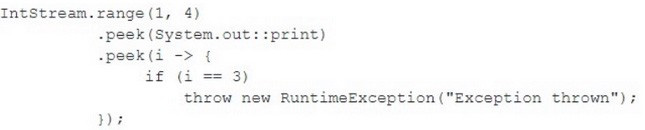
What is the result?
Reveal answer details Close answer details
Correct answerA
Oracle · 1Z0-819
Preview real exam questions, verified answers and available explanations before choosing a study plan.
|
Single choice
Given: What is the result? Reveal answer details Close answer detailsCorrect answerA
Single choice
Given: 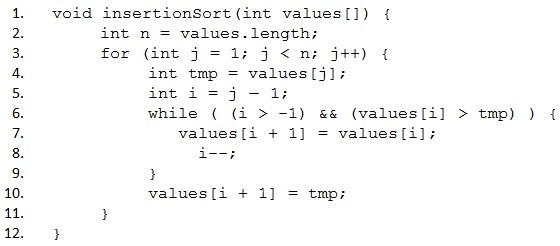 After which line can we insert assert i < 0 || values[i] <= values[i + 1]; to verify that the values array is partially sorted? Reveal answer details Close answer detailsCorrect answerB
Multiple choice
Given TripleThis.java: 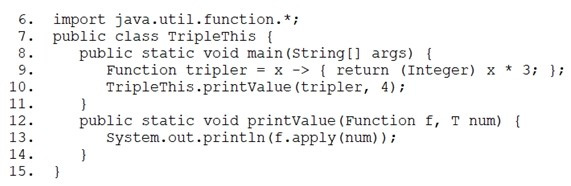 Compiling TripleThis.java gives this compiler warning: Note: TripleThis.java uses unchecked or unsafe operations. Which two replacements remove this compiler warning and prints 12? (Choose two.) Reveal answer details Close answer detailsCorrect answersA, D
Single choice
Given: 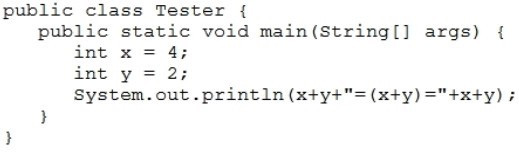 What is the result? Reveal answer details Close answer detailsCorrect answerD
Single choice
Given: 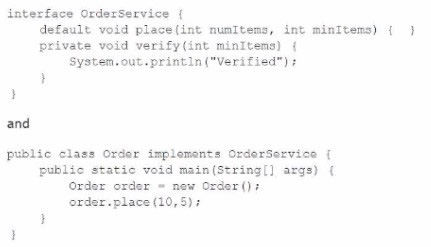 Which action must you perform to print Verified? Reveal answer details Close answer detailsCorrect answerB
Single choice
Given: 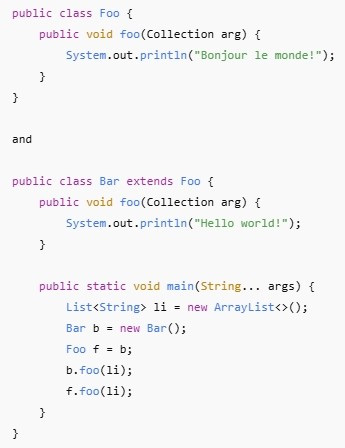 What is the output? Reveal answer details Close answer detailsCorrect answerC
Single choice
Given: 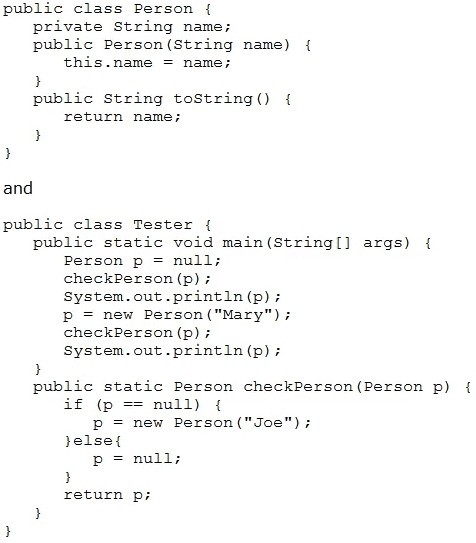 What is the result? Reveal answer details Close answer detailsCorrect answerA
Multiple choice
Given the content: 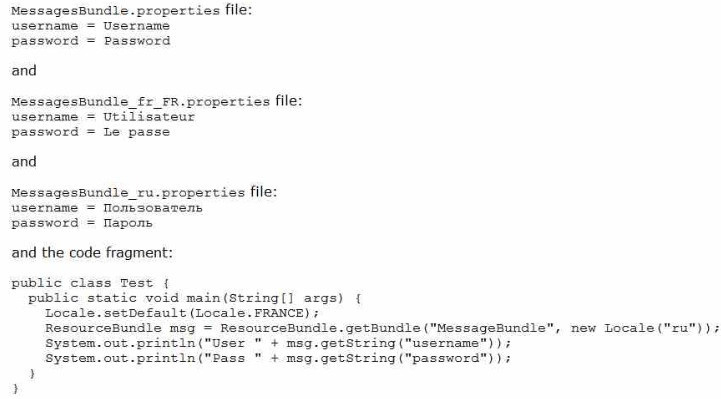 What is the result? 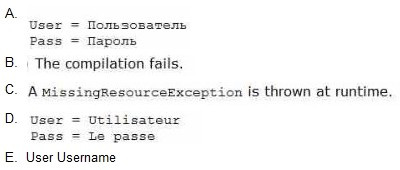 Reveal answer details Close answer detailsCorrect answersD, E
Single choice
Given the code fragment:  Which statement prints the same value of result? (Choose two.) Reveal answer details Close answer detailsCorrect answerB
Multiple choice
Which two statements are true about a class that is marked @Deprecated? (Choose two.) Reveal answer details Close answer detailsCorrect answersA, C
Single choice
Given: 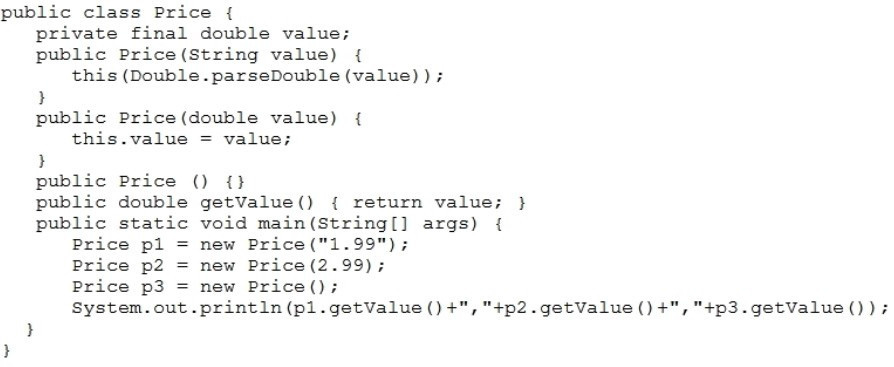 What is the result? Reveal answer details Close answer detailsCorrect answerA
Single choice
Given: 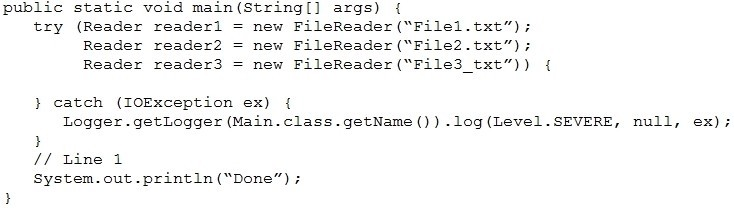 When run and all three files exist, what is the state of each reader on Line 1? Reveal answer details Close answer detailsCorrect answerC
Single choice
Which method throws an exception for not-a-number and infinite input values? 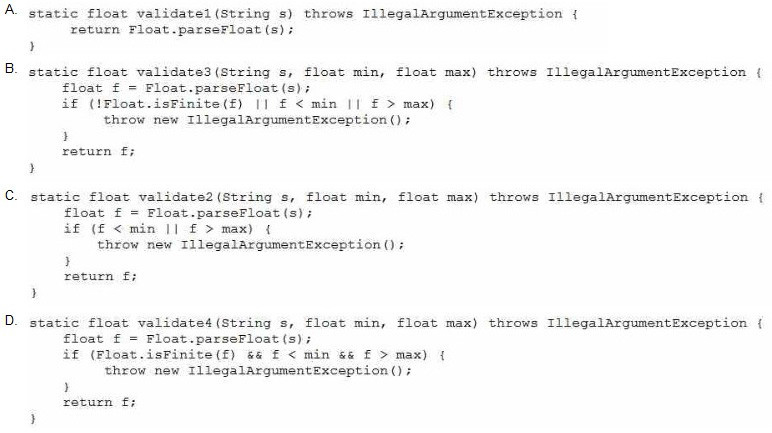 Reveal answer details Close answer detailsCorrect answerA
Single choice
Given: 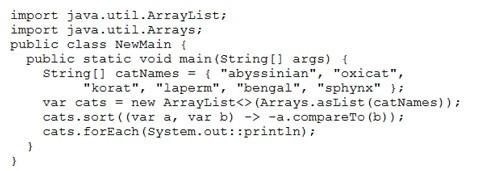 What is the result? Reveal answer details Close answer detailsCorrect answerC
Single choice
Given: 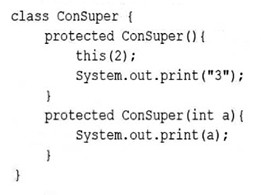 and 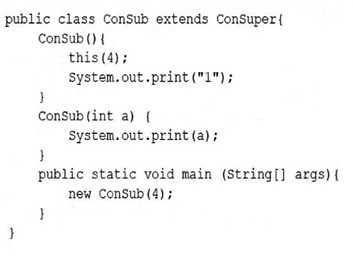 What is the result? Reveal answer details Close answer detailsCorrect answerC
Single choice
Given: 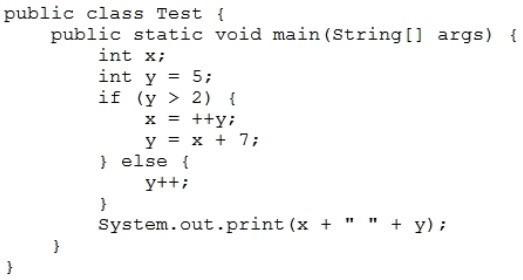 What is the result? Reveal answer details Close answer detailsCorrect answerA
Single choice
Which is a proper JDBC URL? Reveal answer details Close answer detailsCorrect answerD
Single choice
Given: 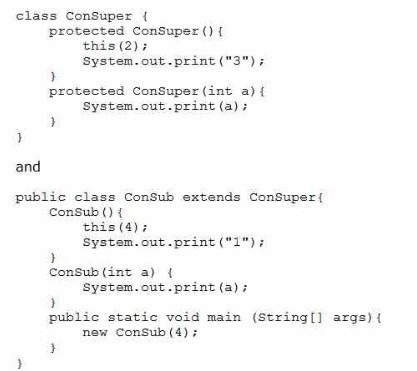 What is the result? Reveal answer details Close answer detailsCorrect answerB
Single choice
Given: 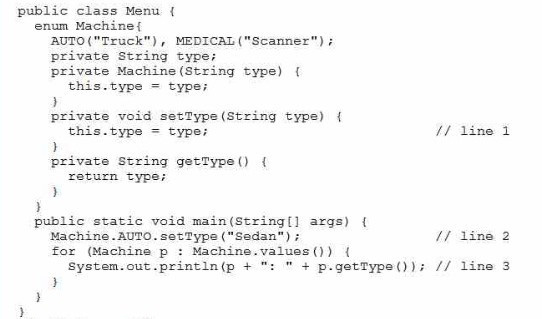 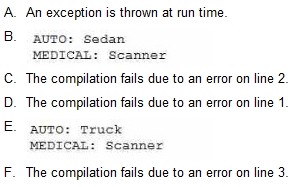 What is the result? Reveal answer details Close answer detailsCorrect answerC
Single choice
Given: 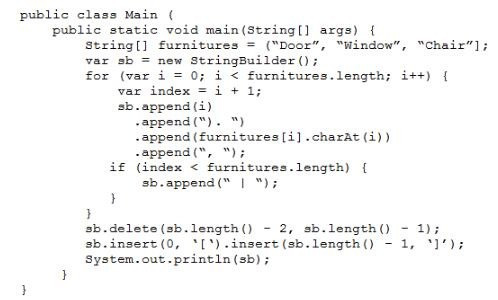 What is the output of this class? Reveal answer details Close answer detailsCorrect answerA
Single choice
Given: 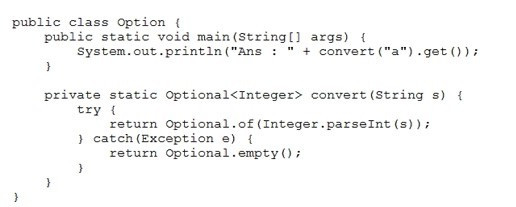 What is the result? Reveal answer details Close answer detailsCorrect answerA
Single choice
Given the code fragment: 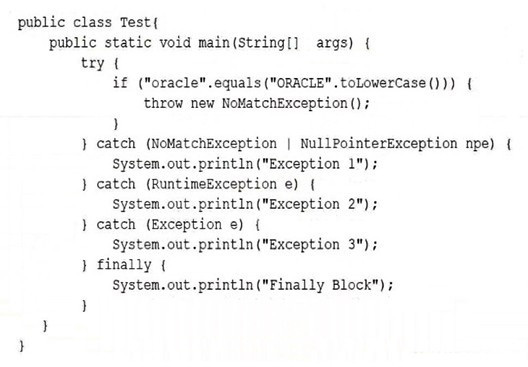 How many lines of text does this program print? Reveal answer details Close answer detailsCorrect answerD
Single choice
Given: 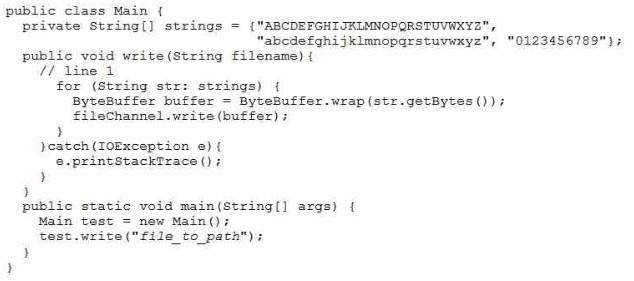 You want to obtain the Filechannel object on line 1. Which code fragment will accomplish this?  Reveal answer details Close answer detailsCorrect answerA
Single choice
You are working on a functional bug in a tool used by your development organization. In your investigation, you find that the tool is executed with a security policy file containing this grant.  What action should you take? Reveal answer details Close answer detailsCorrect answerD
Multiple choice
Given an application with a main module that has this module-info.java file: 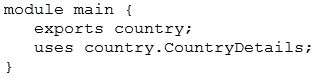 Which two are true? (Choose two.) Reveal answer details Close answer detailsCorrect answersB, D
Single choice
Given: 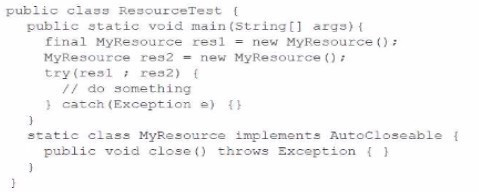 Which statement is true? Reveal answer details Close answer detailsCorrect answerA
Single choice
Given the code fragment: 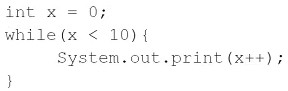 Which "for" loop produces the same output? 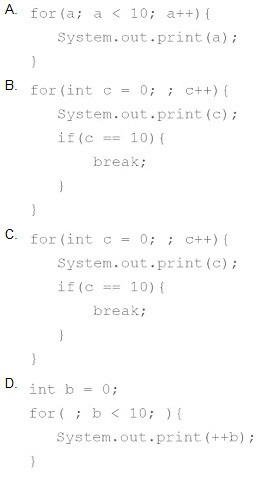 Reveal answer details Close answer detailsCorrect answerB
Single choice
Which code fragment prints 100 random numbers?  Reveal answer details Close answer detailsCorrect answerD
Single choice
You replace the code on line 1 to use ParallelStream.  Which one is correct? Reveal answer details Close answer detailsCorrect answerD
Multiple choice
Given:  Which three classes successfully override printOne()? (Choose three.) 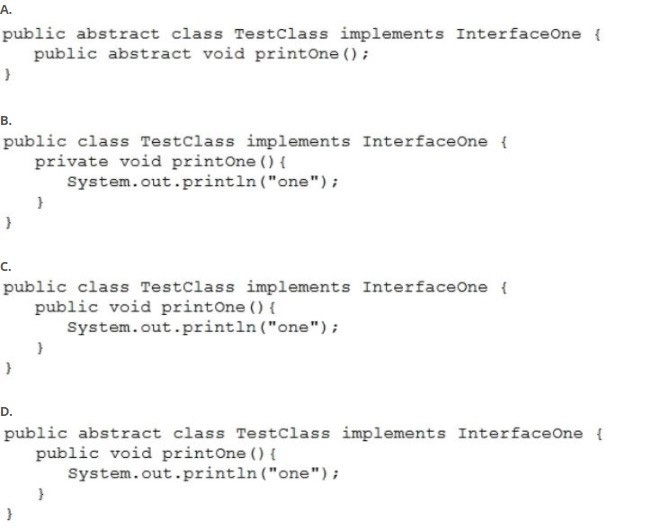 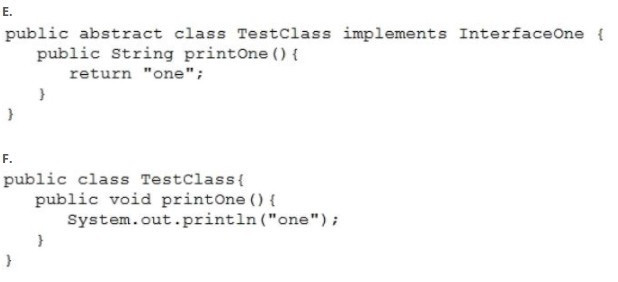 Reveal answer details Close answer detailsCorrect answersA, C, D
Single choice
A company has an existing Java app that includes two Java 8 jar files, sales-3.10. jar and clients-10.2.jar. The jar file ,sales -8, 10, jar reference packages in clients -10.2 jar, but clients-10.2 jar does not reference packages in sales -8.10, jar. They have decided to modularize clients-10.2.jar. Which module-info. 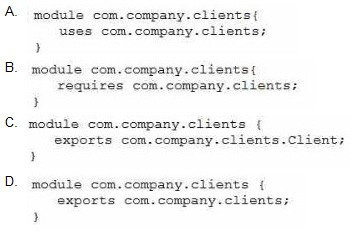 Reveal answer details Close answer detailsCorrect answerD
Single choice
Given: 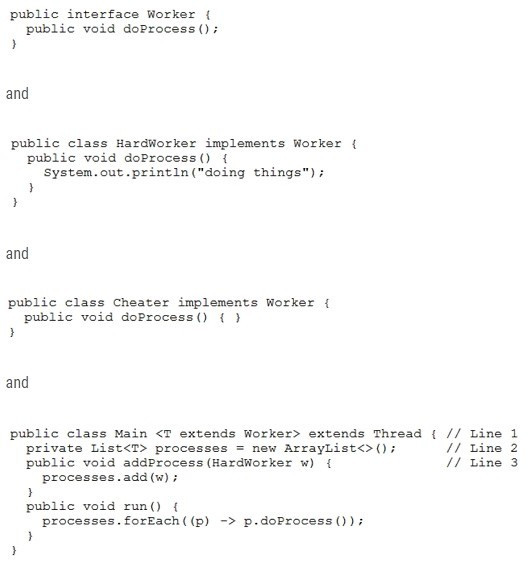 What needs to change to make these classes compile and still handle all types of Interface Worker? Reveal answer details Close answer detailsCorrect answerD
Multiple choice
Given: 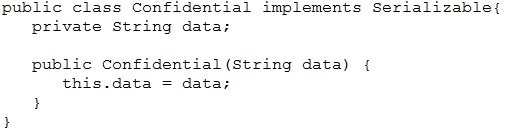 Which two are secure serialization of these objects? (Choose two.) Reveal answer details Close answer detailsCorrect answersA, C
Single choice
Given: 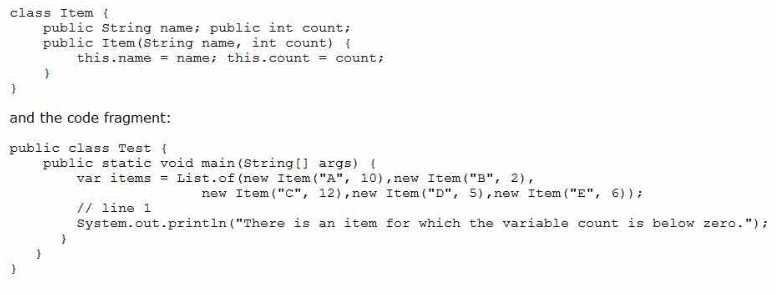 You want to examine the items list it contains an item for which the variable count is below zero. Which code fragment at line 1 accomplish this? Reveal answer details Close answer detailsCorrect answerA
Single choice
Given: 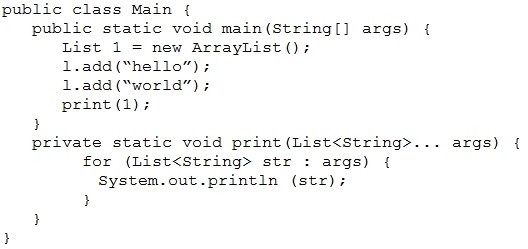 Which annotation should be used to remove warnings from compilation? Reveal answer details Close answer detailsCorrect answerB
Single choice
What makes Java dynamic? Reveal answer details Close answer detailsCorrect answerA
Single choice
Given: 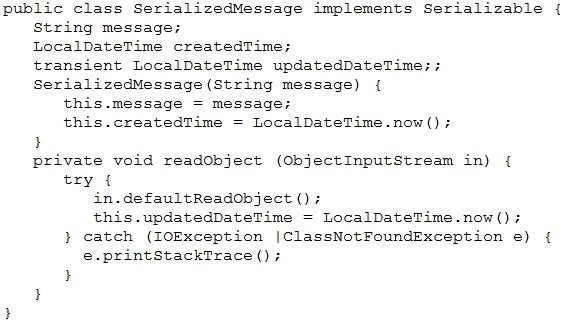 When is the readObject method called? Reveal answer details Close answer detailsCorrect answerB
Multiple choice
Which three guidelines are used to protect confidential information? (Choose three.) Reveal answer details Close answer detailsCorrect answersA, D, F
Multiple choice
Given: 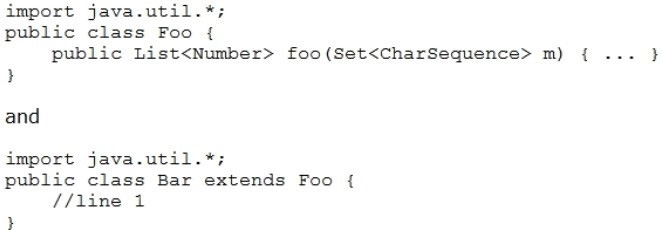 Which two statements can be added at line 1 in Bar to successfully compile it? (Choose two.) Reveal answer details Close answer detailsCorrect answersB, C
Single choice
Which code fragment compiles? 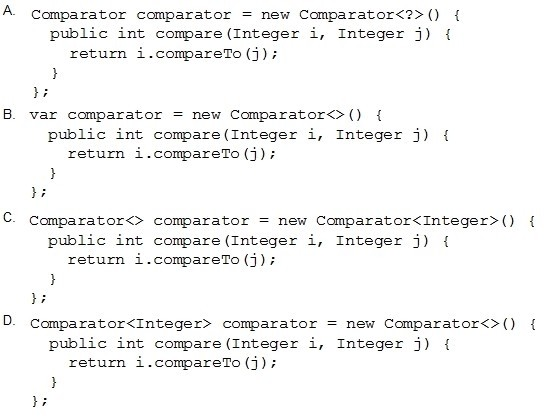 Reveal answer details Close answer detailsCorrect answerD
Single choice
Given: 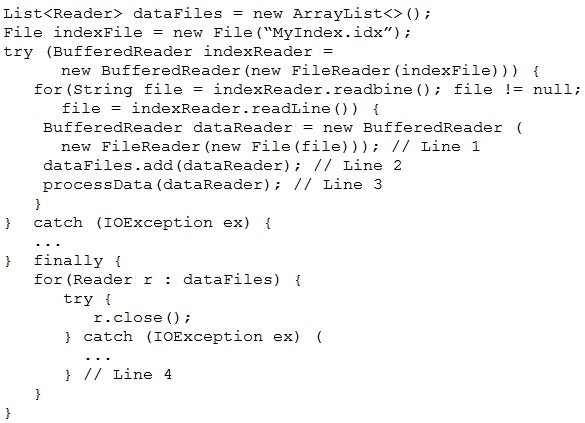 What will secure this code from a potential Denial of Service condition? Reveal answer details Close answer detailsCorrect answerB
Single choice
What is the result? 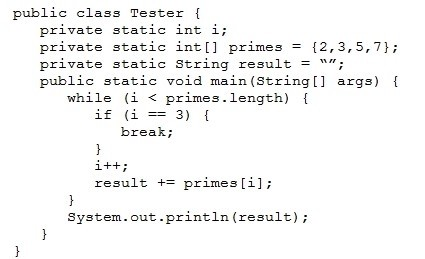 Reveal answer details Close answer detailsCorrect answerA
Single choice
Given the code fragment: Path currentFile = Paths.get("/scratch/exam/temp.txt"); Path outputFile = Paths get("/scratch/exam/new.txt"); Path directory = Paths.get("/scratch/"); Files.copy(currentFile, outputFile); Files.copy(outputFile, directory); Files.delete (outputFile); The /scratch/exam/temp.txt file exists. The /scratch/exam/new.txt and /scratch/new.txt files do not exist. What is the result? Reveal answer details Close answer detailsCorrect answerB
Single choice
Given the directory structure: 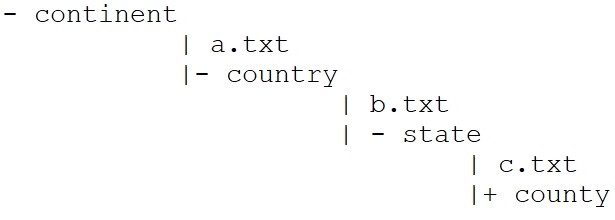 and 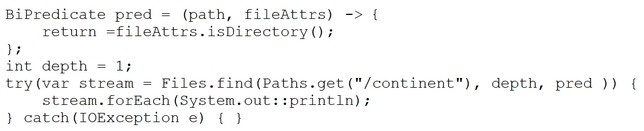 What is the result? Reveal answer details Close answer detailsCorrect answerC
Single choice
Given: 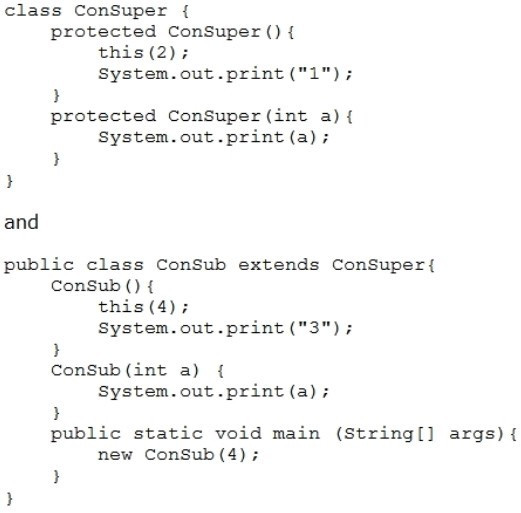 What is the result? Reveal answer details Close answer detailsCorrect answerD
Single choice
Given the code fragment: 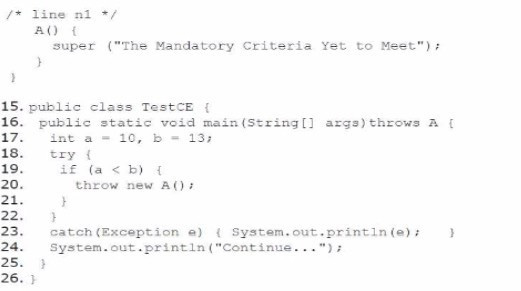 You must define the A exception class. The program execution must be terminated if the condition at line 19 is true and an a exception is thrown at line 20. Which code fragment at line n1 defines A as per the requirement? Reveal answer details Close answer detailsCorrect answerA
Multiple choice
Which two describe reasons to modularize the JDK? (Choose two.) Reveal answer details Close answer detailsCorrect answersB, D
Single choice
Given these two classes: 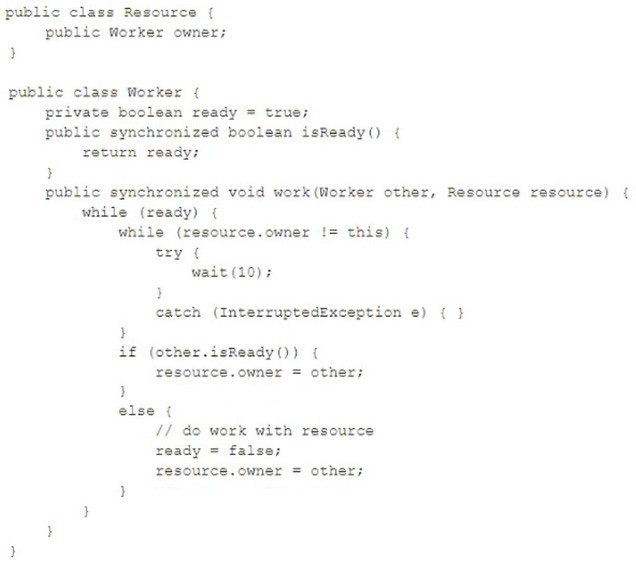 And given this fragment: 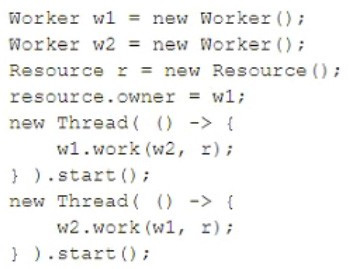 Which describes the fragment? Reveal answer details Close answer detailsCorrect answerB
Multiple choice
Which two var declarations are correct? (Choose two.) Reveal answer details Close answer detailsCorrect answersA, C
Single choice
Given: jdeps -jdkinternals C:\workspace4\SimpleSecurity\jar\classes.jar Which describes the expected output? Reveal answer details Close answer detailsCorrect answerD |