What should you do to prepare your Oracle Cloud Infrastructure (OCI) Virtual Cloud Network (VCN) for potential security risks when connected to a Microsoft Azure VNet?
-
A
Allow all traffic from the Azure VNet without restrictions.
-
B
Limit all inbound and outbound traffic from the Azure VNet to expected and well-defined traffic.
-
C
Remove all OCI security rules.
-
D
Disable the connection between Azure VNet and OCI VCN.
Reveal answer details
Close answer details
Correct answerB
ExplanationControlling Traffic Flow Over the Connection Even if a connection has been established between your VCN and VNet, you can control the packet flow over the connection with route tables in your VCN. For example, you can restrict traf-fic to only specific subnets in the VNet. Controlling the Specific Types of Traffic Allowed It's important that you ensure that all outbound and inbound traffic with the VNet is intended or expected and well defined. Implement Azure network security group and Oracle security rules that explicitly state the types of traffic one cloud can send to the other and accept from the other.
What is a key benefit of using Oracle Autonomous Database on Shared Exadata Infrastructure?
-
A
Unlimited storage capacity
-
B
Automatic database tuning and patching
-
C
Seamless integration with third-party cloud providers
-
D
Dedicated hardware resources for each database
Reveal answer details
Close answer details
Correct answerB
ExplanationWith Autonomous Database on shared Exadata infrastructure, you do not need to configure or manage any hardware or install any software. Autonomous Database handles provisioning the data-base, backing up the database, patching and upgrading the database, and growing or shrinking the database.
Autonomous Database is a completely elastic service.An autonomous database is a cloud database that uses machine learning to automate database tuning, security, backups, updates, and other routine management tasks traditionally performed by DBAs.
Which workload type is NOT optimized for Oracle Autonomous Database on Shared Exadata In-frastructure?
-
A
-
B
-
C
High-performance computing
-
D
Reveal answer details
Close answer details
Correct answerC
ExplanationAutonomous Database supports different workload types, including: Data Warehouse, Transac-tion
Processing, JSON Database, and APEX Service. Autonomous Database provides all of the performance of the market-leading Oracle Database in an environment that is tuned and optimized to meet the demands of a variety of applications, includ-ing: mission-critical transaction processing, mixed transactions and analytics, IoT, and JSON doc-ument store.
Which database system is NOT available in Oracle Database Service for Azure?
-
A
Autonomous Database on shared Exadata infrastructure
-
B
Base Database using Oracle Enterprise Edition or Oracle Standard Edition 2 databases
-
C
-
D
Autonomous Database on dedicated Exadata infrastructure
Reveal answer details
Close answer details
Correct answerD
ExplanationOracle Database Service for Azure offers the following products: Oracle Exadata Database: You can provision flexible Exadata systems that allow you to add database compute servers and storage servers to your system at any time after provision-ing.
Autonomous Database on shared Exadata infrastructure: Autonomous Database pro-vides an easy-to-use, fully autonomous database that scales elastically, delivers fast query performance, and requires no database administration. Base Database: Using OracleDB for Azure, you can deploy Oracle Enterprise Edition or Oracle Standard Edition 2 databases on virtual machine DB systems. You can deploy single-node systems or 2-node RAC systems.
MySQL Database with HeatWave: MySQL Database Service is a fully managed Oracle Cloud native service available through OracleDB for Azure. It is developed, managed, and supported by the MySQL team in Oracle. Optionally, you can add a HeatWave cluster to a MySQL DB system. HeatWave is a distributed, scalable, shared-nothing, in-memory, hybrid columnar, query processing engine designed for extreme performance. Hence, "Autonomous Database on dedicated Exadata infrastructure" is NOT available and hence the CORRECT ANSWER.
An enterprise has a workload running in a VNet in Microsoft Azure and a database running in a VCN in Oracle Cloud Infrastructure. The enterprise wants to set up a private, secure, and isolated network connection between the two clouds to enable traffic flow between the workload and the database. Which option can be used to achieve this requirement?
-
A
Use public internet to establish connectivity between the Microsoft Azure VNet and the OCI VCN.
-
B
Use Azure VPN and Oracle FastConnect to establish a private and secure tunnel be-tween the Azure VNet and the OCI VCN.
-
C
Use Azure Private Link to create a private connection between the workload and the database.
-
D
Use Azure ExpressRoute and Oracle FastConnect to create a private interconnection between the Azure VNet and the OCI VCN.
Reveal answer details
Close answer details
Correct answerD
ExplanationAs per the question, the keywords are "The enterprise wants to set up a private, secure, and isolat-ed network connection between the two clouds" Use public internet to establish connectivity between the Microsoft Azure VNet and the OCI VCN - INCORRECT as this option won't provide private, secure and isolated connection. Use Azure VPN and Oracle FastConnect to establish a private and secure tunnel between the Azure VNet and the OCI VCN is INCORRECT as it won't provide a isolated connection. Use Azure Private Link to create a private connection between the workload and the database is INCORRECT as Azure Private Link enables you to access Azure PaaS Services (for example, Azure Storage and SQL Database) and Azure hosted customer-owned/partner services over a pri-vate endpoint in your virtual network. Use Azure ExpressRoute and Oracle FastConnect to create a private interconnection between the Azure VNet and the OCI VCN. is CORRECT. To create an integrated multi-cloud experience, Microsoft and Oracle offer direct interconnection between Azure and Oracle Cloud Infrastructure (OCI) through ExpressRoute and FastConnect. Through the ExpressRoute and FastConnect inter-connection, customers can experience low latency, high throughput, private direct connectivity be-tween the two clouds.
Which step is NOT valid while implementing an OCI-Azure Interconnect?
-
A
Set up an Oracle FastConnect virtual circuit.
-
B
Create a Dynamic Routing Gateway and attach it to the OCI VCN.
-
C
Select FastConnect Direct as the connection type.
-
D
Set up an Azure ExpressRoute circuit.
Reveal answer details
Close answer details
Correct answerC
ExplanationAs you can see in the below screenshot (from the OCI Console), while implementing OCI-Azure Interconnect you need to select Connection type: FastConnect partner and select Microsoft Azure ExpressRoute as the Partner.
Hence, "Select FastConnect Direct as the connection type" is NOT VALID and hence the correct answer. 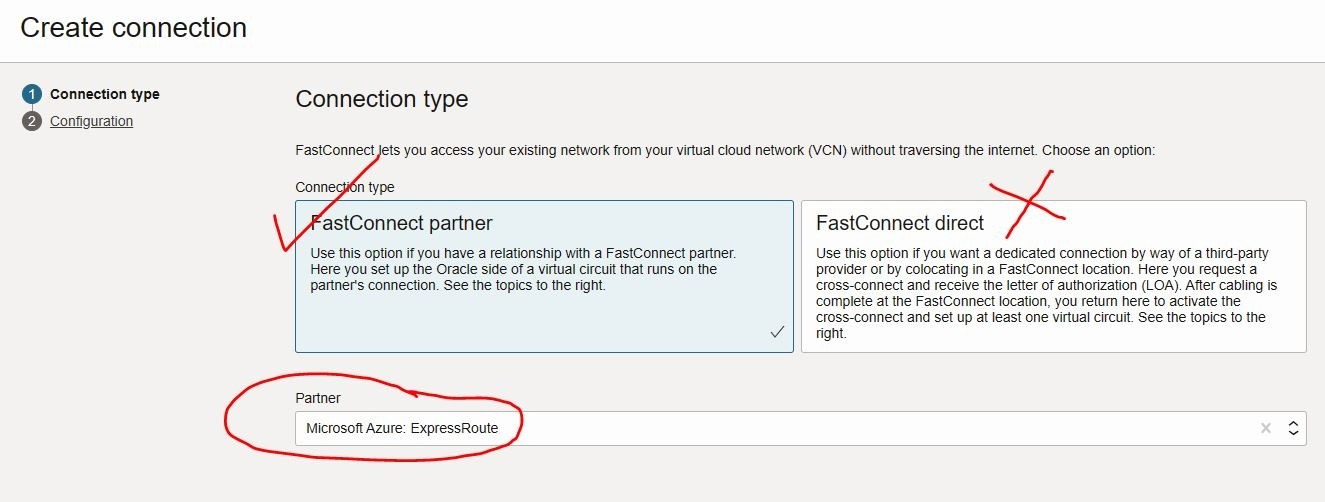
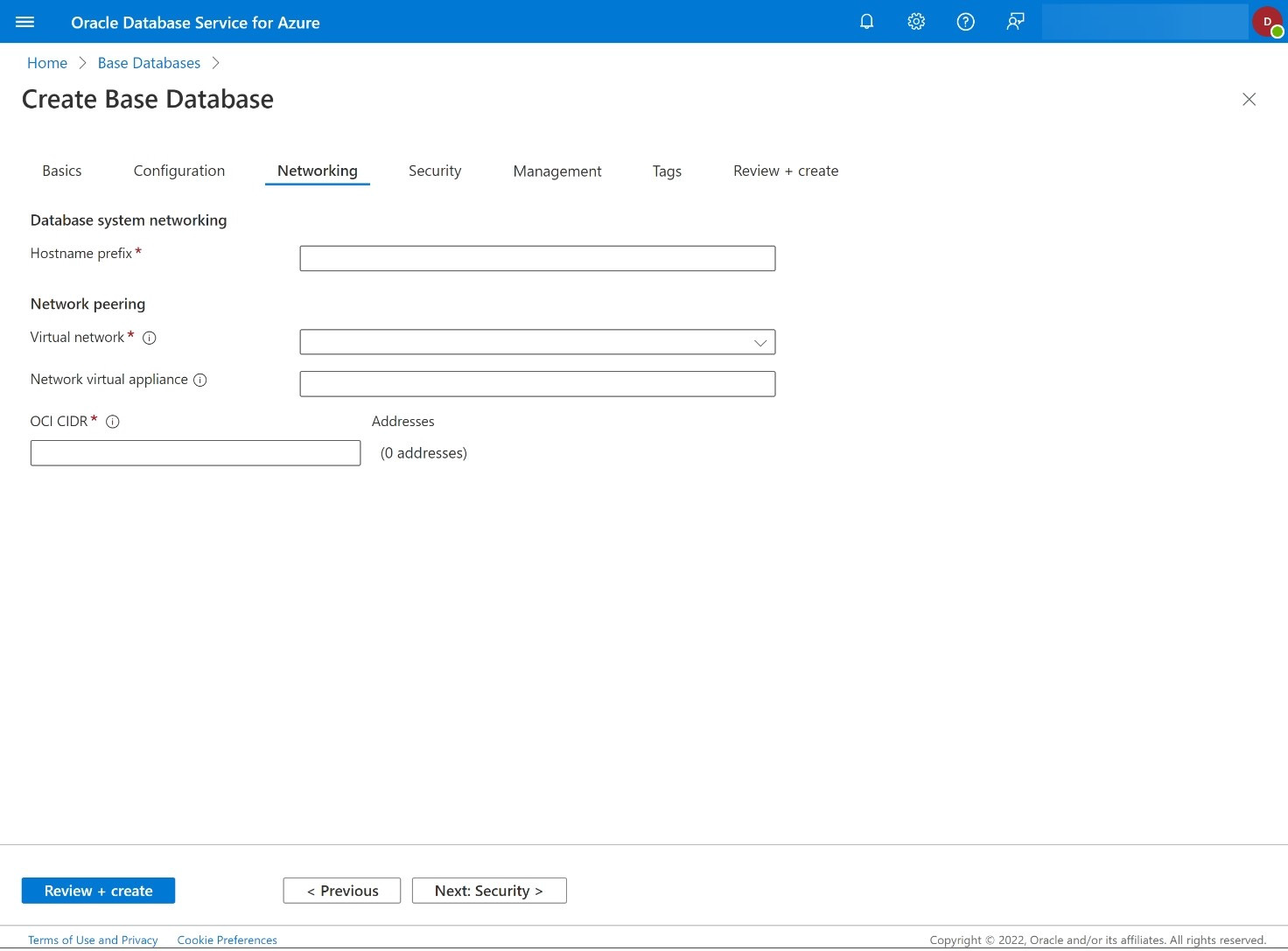
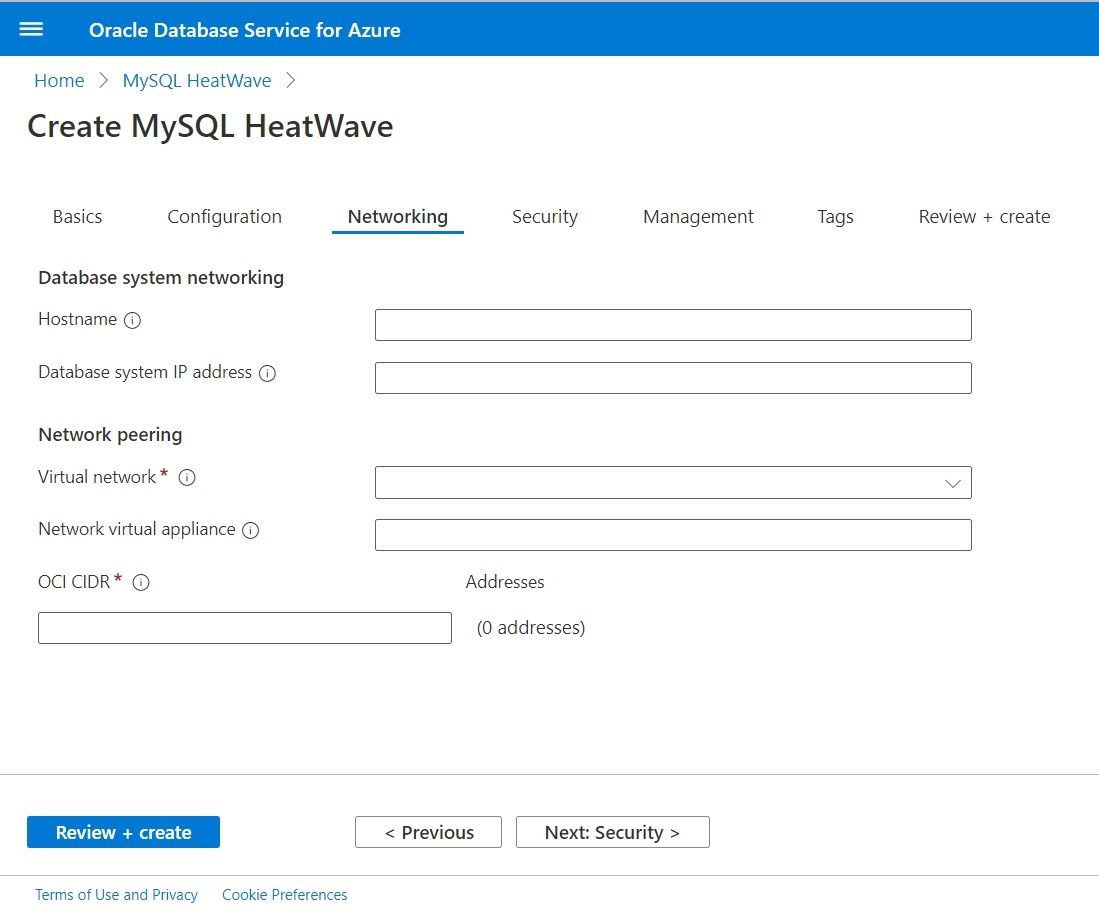
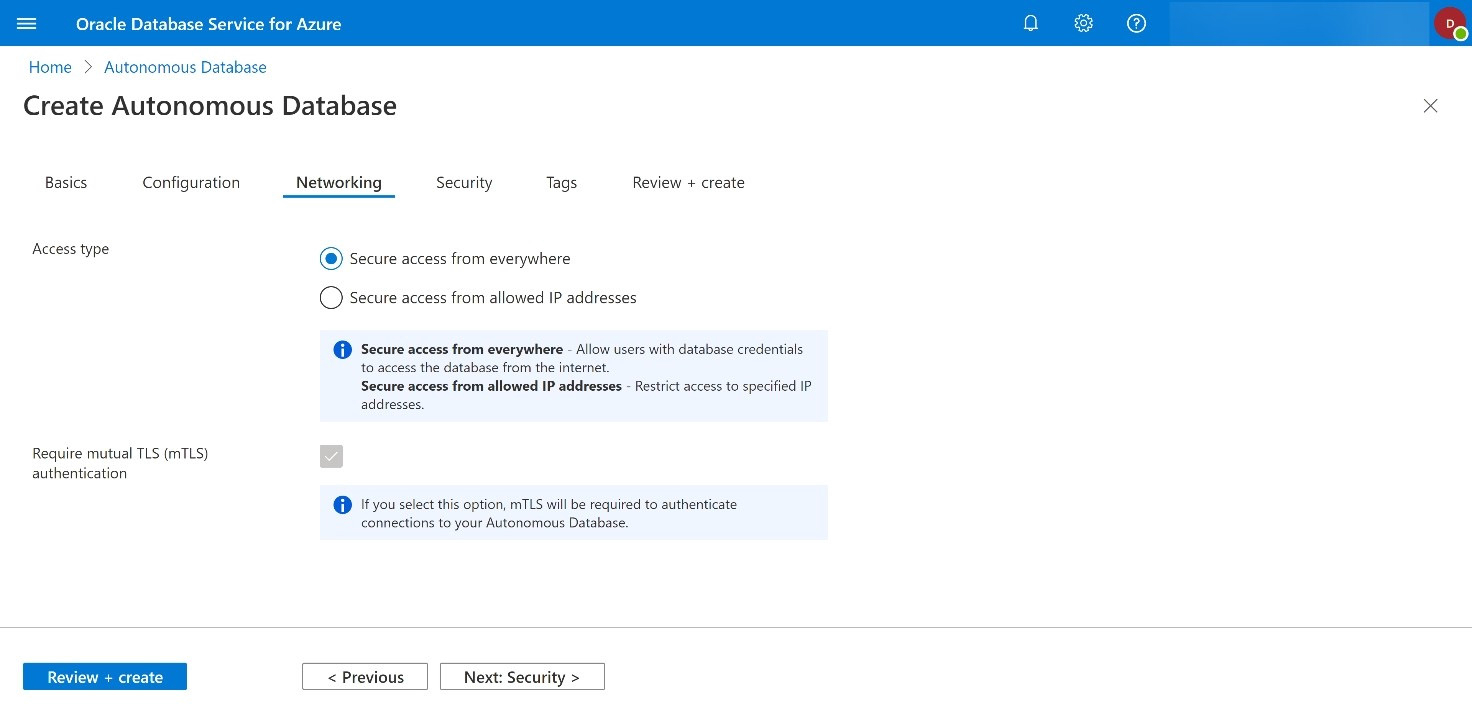
Which database system does NOT require an Azure Virtual Network during provisioning?
-
A
MySQL Database with HeatWave
-
B
Base Database with Oracle Enterprise Edition or Oracle Standard Edition 2
-
C
Autonomous Database on shared Exadata infrastructure
-
D
Reveal answer details
Close answer details
|