Which feature allows you to group and logically isolate your Oracle Cloud Infrastructure (OCI) resources?
-
A
-
B
Identity and Access Management Groups
-
C
-
D
Reveal answer details
Close answer details
Correct answerD
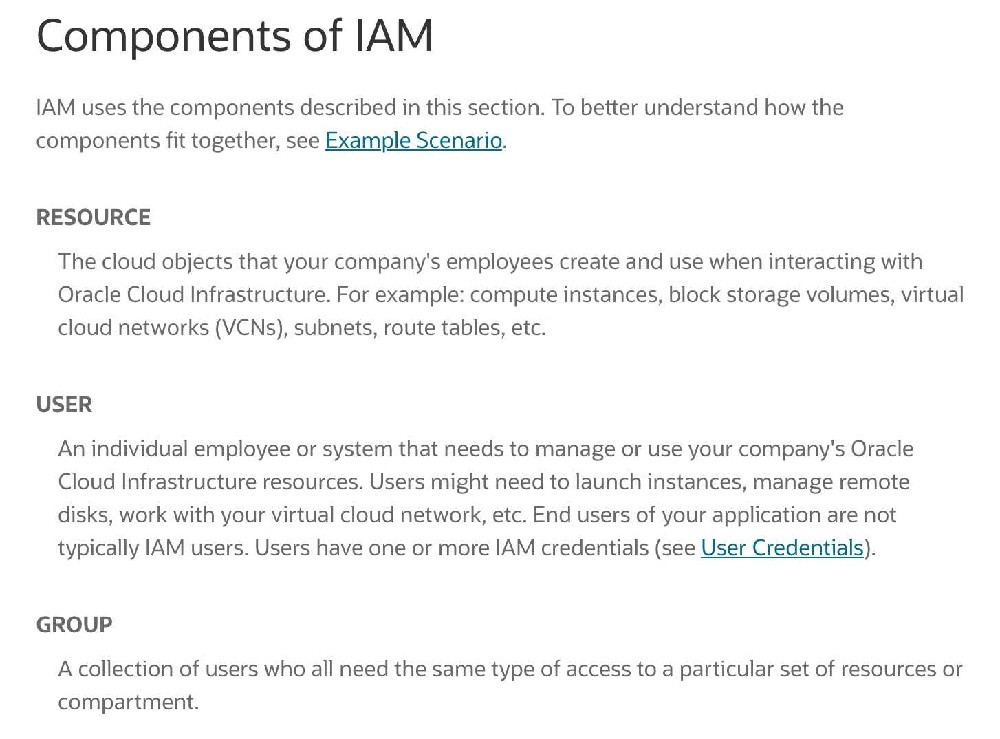
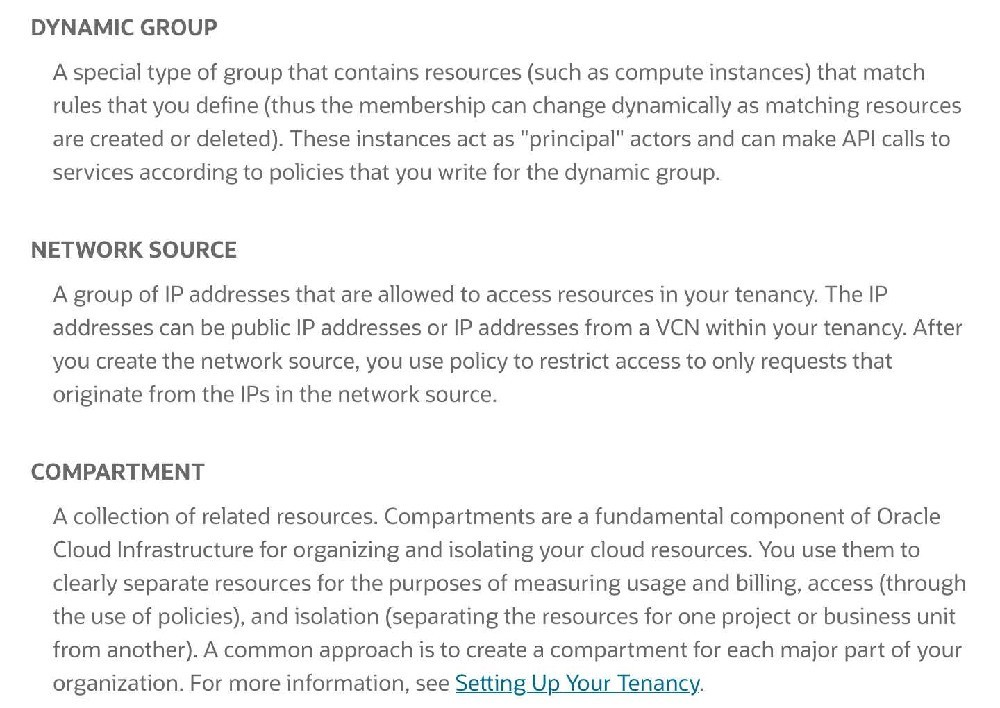
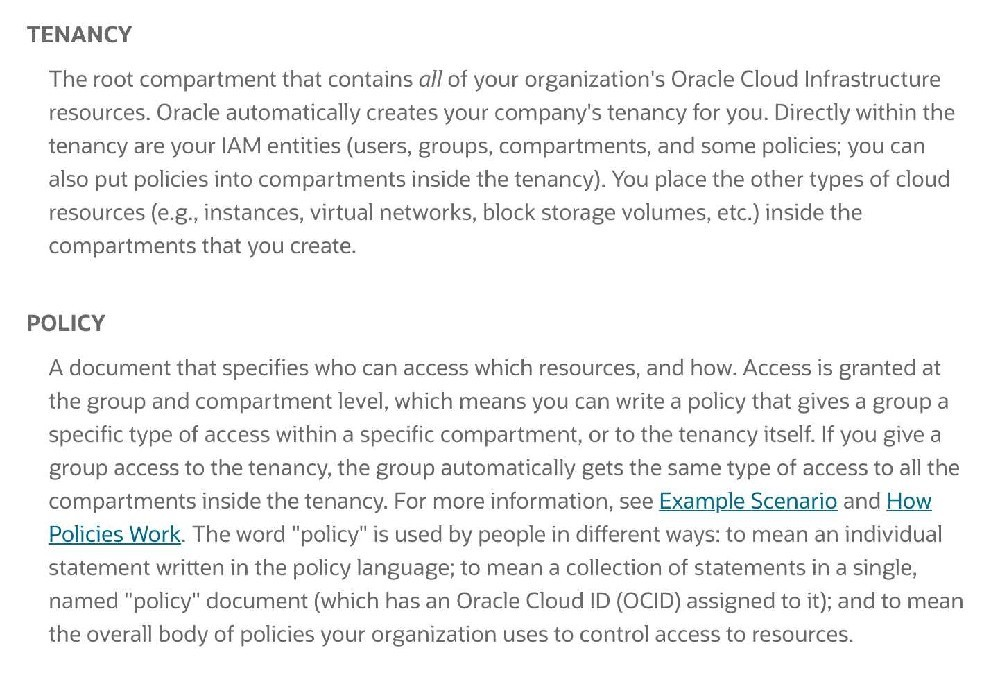
ExplanationIt is collection of related resources. Compartments are a fundamental component of Oracle Cloud Infrastructure for organizing and isolating your cloud resources. You use them to clearly separate resources for the purposes of measuring usage and billing, access (through the use of IAM Service policies), and isolation (separating the resources for one project or business unit from another). A common approach is to create a compartment for each major part of your organization. For more information, see Overview of the IAM Service and also Setting Up Your Tenancy. To place a resource in a compartment, simply specify the compartment ID in the "Create" request object when initially creating the resource. For example, to launch an instance into a particular compartment, specify that compartment's OCID in the LaunchInstance request. You can't move an existing resource from one compartment to another. To use any of the API operations, you must be authorized in an IAM policy. If you're not authorized, talk to an administrator. If you're an administrator who needs to write policies to give users access, see Getting Started with Policies.
References:
https://docs.cloud.oracle.com/en-us/iaas/tools/oci-cli/2.9.9/oci_cli_docs/cmdref/iam/compartment.html
Which is NOT covered by Oracle Cloud Infrastructure (OCI) Service Level Agreement (SLA)?
-
A
-
B
-
C
-
D
Reveal answer details
Close answer details
Correct answerC
Explanationhttps://www.oracle.com/assets/paas-iaas-pub-cld-srvs-pillar-4021422.pdf
Enterprises demand more than just availability from their cloud infrastructure. Mission-critical workloads also require consistent performance, and the ability to manage, monitor, and modify resources running in the cloud at any time.
Only Oracle offers end-to-end SLAs covering performance, availability, manageability of services. 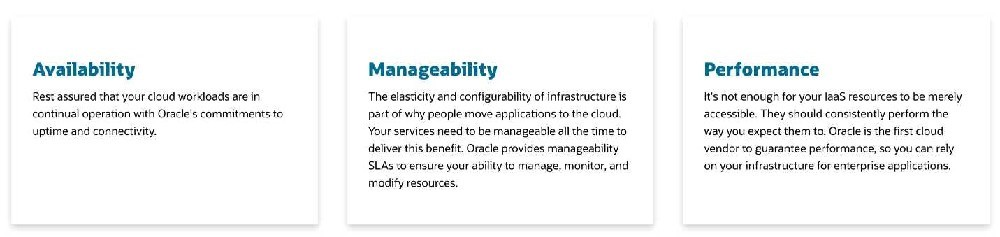 References:
https://www.oracle.com/in/cloud/iaas/sla.html
Question 3
Multiple choice
In what two ways does Oracle Cloud Infrastructure (OCI) offer industry leading price-performance?
-
A
OCI leverages advanced encryption that results In fast performance
-
B
With OCI, pricing Is low and predictable across all regions and services.
-
C
OCI hypervisor provides Industry loading performance.
-
D
OCI backs performance claims with Service Level Agreements.
-
E
OCI does not over subscribe CPU, but only memory.
Reveal answer details
Close answer details
Correct answersB, D
ExplanationOCI leverages advanced encryption that leads to fast performance, OCI does not over subscribe CPU, but only memory, and OCI hypervisor provides industry leading performance are WRONG. However, OCI does back claims with SLAs and offers predictable pricing for all services.
References:
https://www.oracle.com/cloud/iaas/sla.html
https://www.oracle.com/in/cloud/pricing.html
Which is NOT a valid business benefit for a customer considering migrating their infrastructure and apps to Oracle Cloud Infrastructure (OCI)?
-
A
-
B
Capital Expenditure to Operational Expenditure conversion
-
C
-
D
Increased Total Cost of Ownership (TCO)
Reveal answer details
Close answer details
Correct answerD
ExplanationOracle Cloud Infrastructure is a set of complementary cloud services that enable you to build and run a wide range of applications and services in a highly available hosted environment. Oracle Cloud Infrastructure offers high-performance compute capabilities (as physical hardware instances) and storage capacity in a flexible overlay virtual network that is securely accessible from your on-premises network.
References:
https://docs.cloud.oracle.com/en-us/iaas/Content/GSG/Concepts/baremetalintro.htm
One of the major benefits of cloud computing is REDUCED TCO. Therefore, Increased TCO is the incorrect option. (https://www.oracle.com/partners/en/partner-with-oracle/develop-solutions/why/increase-value-)
reduce-cost-3907933.pdf
Which resource do you manage in an Infrastructure-as-a-services (IAAS) offering?
-
A
-
B
-
C
-
D
Reveal answer details
Close answer details
Correct answerA
ExplanationInfrastructure as a service (IaaS) is a type of cloud service model in which computing resources are hosted in the cloud. Businesses can use the IaaS model to shift some or all of their use of on-premises or colocated data center infrastructure to the cloud, where it is owned and managed by a cloud provider.
These infrastructure elements can include compute, network, and storage hardware as well as other components and software.
How Does IaaS Work?
In a typical IaaS model, a business--which can be of any size--consumes services like compute, storage, and databases from a cloud provider. The cloud provider offers those services by hosting hardware and software in the cloud. The business will no longer need to purchase and manage its own equipment, or space to host the equipment, and the cost will shift to a pay-as-you-go model. When the business needs less, it pays for less. And when it grows, it can provision additional computing resources and other technologies in minutes. 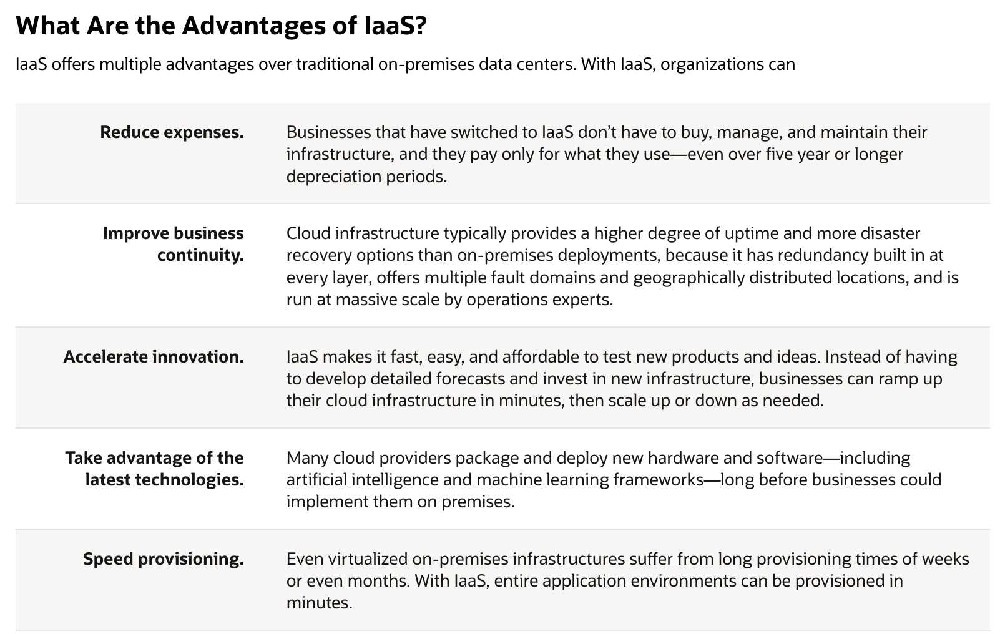 References:
https://www.oracle.com/in/cloud/what-is-iaas/
Which Oracle cloud infrastructure capability can be used to protect against power failures within an availability Domain?
-
A
-
B
-
C
-
D
Reveal answer details
Close answer details
Correct answerB
ExplanationA fault domain is a grouping of hardware and infrastructure within an availability domain. Each availability domain contains three fault domains. Fault domains provide anti-affinity: they let you distribute your
instances so that the instances are not on the same physical hardware within a single availability domain.
A hardware failure or Compute hardware maintenance event that affects one fault domain does not affect instances in other fault domains. In addition, the physical hardware in a fault domain has independent and redundant power supplies, which prevents a failure in the power supply hardware within one fault domain from affecting other fault domains. To control the placement of your compute instances, bare metal DB system instances, or virtual machine DB system instances, you can optionally specify the fault domain for a new instance or instance pool at launch time. If you don't specify the fault domain, the system selects one for you. Oracle Cloud Infrastructure makes a best-effort anti-affinity placement across different fault domains, while optimizing for available capacity in the availability domain. To change the fault domain for an instance, terminate it and launch a new instance in the preferred fault domain.
Use fault domains to do the following things: Protect against unexpected hardware failures or power supply failures. Protect against planned outages because of Compute hardware maintenance. References:
https://blogs.oracle.com/cloud-infrastructure/using-availibility-domains-and-fault-domains-to-
improve-application-resiliency
You are required to host several files in a location that can be publicly accessible from anywhere in the world. Which Oracle Cloud Infrastructure (OCI) service should you use?
-
A
-
B
-
C
-
D
-
E
Reveal answer details
Close answer details
Question 8
Multiple choice
According to Shared security model, which two are a customer's responsibilities in Oracle Cloud Infrastructure (OCI)?
-
A
Physical security of OCI data center facilities
-
B
Virtual Machine hypervisor
-
C
Local NVMe data persistence
-
D
-
E
Object Storage data durability
Reveal answer details
Close answer details
Correct answersD, E
ExplanationCustomer and Oracle's responsibilities can be divided into the following areas: Physical Security: Oracle is responsible for protecting the global infrastructure that runs all of the services offered in Oracle Cloud Infrastructure. This infrastructure consists of the hardware, software, networking, and facilities that run Oracle Cloud Infrastructure services. Identity and Access Management (IAM): As with all Oracle cloud services, you should protect your cloud access credentials and set up individual user accounts. You are responsible for managing and reviewing access for your own employee accounts and for all activities that occur under your tenancy. Oracle is responsible for providing effective IAM services such as identity management, authentication, authorization, and auditing. Workload Security: You are responsible for protecting and securing the operating system and application layers of your compute instances from attacks and compromises. This protection includes patching applications and operating systems, operating system configuration, and protection against malware and network attacks. Oracle is responsible for providing secure images that are hardened and have the latest patches. Also, Oracle makes it simple for you to bring the same third-party security solutions that you use today.
Data Classification and Compliance: You are responsible for correctly classifying and labeling your data and meeting any compliance obligations. Also, you are responsible for auditing your solutions to ensure that they meet your compliance obligations.
Host Infrastructure Security: You are responsible for securely configuring and managing your compute (virtual hosts, containers), storage (object, local storage, block volumes), and platform (database configuration) services. Oracle has a shared responsibility with you to ensure that the service is optimally configured and secured. This responsibility includes hypervisor security and the configuration of the permissions and network access controls required to ensure that hosts can communicate correctly and that devices are able to attach or mount the correct storage devices. Network Security: You are responsible for securely configuring network elements such as virtual networking, load balancing, DNS, and gateways. Oracle is responsible for providing a secure network infrastructure.
Client and Endpoint Protection: Your enterprise uses various hardware and software systems, such as mobile devices and browsers, to access your cloud resources. You are responsible for securing all clients and endpoints that you allow to access Oracle Cloud Infrastructure services. References:
https://docs.cloud.oracle.com/en-us/iaas/Content/Security/Concepts/security_overview.htm
Which capability can be used to protect against unexpected hardware or power supply failures within an availability domain?
-
A
-
B
-
C
-
D
Reveal answer details
Close answer details
Correct answerA
ExplanationA fault domain is a grouping of hardware and infrastructure within an availability domain. Each availability domain contains three fault domains. Fault domains provide anti-affinity: they let you distribute your
instances so that the instances are not on the same physical hardware within a single availability domain.
A hardware failure or Compute hardware maintenance event that affects one fault domain does not affect instances in other fault domains. In addition, the physical hardware in a fault domain has independent and redundant power supplies, which prevents a failure in the power supply hardware within one fault domain from affecting other fault domains.
Usually fault domains to do the following things:
1) Protect against unexpected hardware failures or power supply failures.
2) Protect against planned outages because of Compute hardware maintenance. 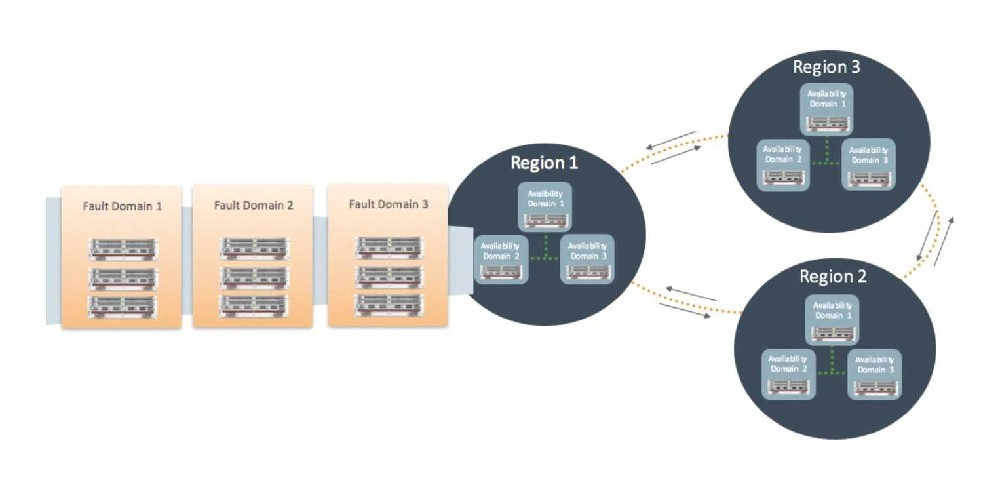 References:
https://docs.cloud.oracle.com/en-us/iaas/Content/General/Concepts/regions.htm
Question 10
Single choice
A new customer has logged into Oracle Cloud Infrastructure (OCI) as an administrator for the first time.
The admin would like to deploy infrastructure. What is the first step they must take in order to accomplish this task?
-
A
File a service request for access to each additional region.
-
B
Use API endpoints to create resources in the desired region.
-
C
Subscribe to the desired region.
-
D
Navigate to the desired region and begin creating resources.
Reveal answer details
Close answer details
Correct answerC
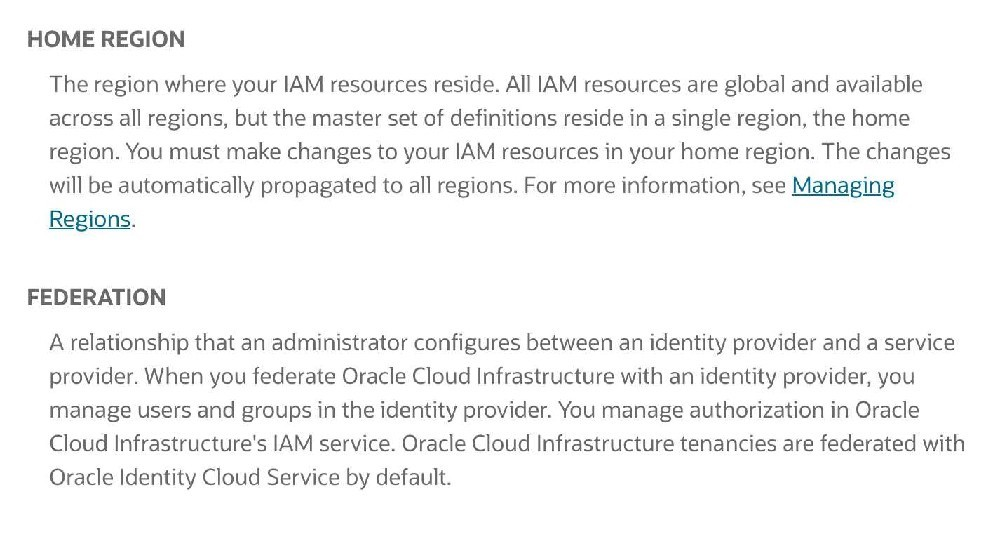
ExplanationWhen you sign up for Oracle Cloud Infrastructure, Oracle creates a tenancy for you in one region. This is your home region. Your home region is where your IAM resources are defined. When you subscribe to another region, your IAM resources are available in the new region, however, the master definitions reside in your home region and can only be changed there. When you subscribe your tenancy to a new region, all the policies from your home region are enforced in the new region. If you want to limit access for groups of users to specific regions, you can write policies to grant access to specific regions only. References:
https://docs.cloud.oracle.com/en-us/iaas/Content/Identity/Tasks/managingregions.htm
Question 11
Single choice
What is Oracle's responsibility according to the Oracle Cloud Infrastructure (OCI) shared-security model?
-
A
Configuring OCI services securely
-
B
Data classification and compliance
-
C
Securing application workloads
-
D
Security of data center facilities
Reveal answer details
Close answer details
Correct answerD
ExplanationOracle's mission is to build cloud infrastructure and platform services for your business to have effective and manageable security to run your mission-critical workloads and store your data with confidence.
Oracle Cloud Infrastructure offers best-in-class security technology and operational processes to secure its enterprise cloud services. However, for you to securely run your workloads in Oracle Cloud Infrastructure, you must be aware of your security and compliance responsibilities. By design, Oracle provides security of cloud infrastructure and operations (cloud operator access controls, infrastructure security patching, and so on), and you are responsible for securely configuring your cloud resources. Security in the cloud is a shared responsibility between you and Oracle. In a shared, multi-tenant compute environment, Oracle is responsible for the security of the underlying cloud infrastructure (such as data-center facilities, and hardware and software systems) and you are responsible for securing your workloads and configuring your services (such as compute, network, storage, and database) securely. In a fully isolated, single-tenant, bare metal server with no Oracle software on it, your responsibility increases as you bring the entire software stack (operating systems and above) on which you deploy your applications. In this environment, you are responsible for securing your workloads, and configuring your services (compute, network, storage, database) securely, and ensuring that the software components that you run on the bare metal servers are configured, deployed, and managed securely.
More specifically, your and Oracle's responsibilities can be divided into the following areas: 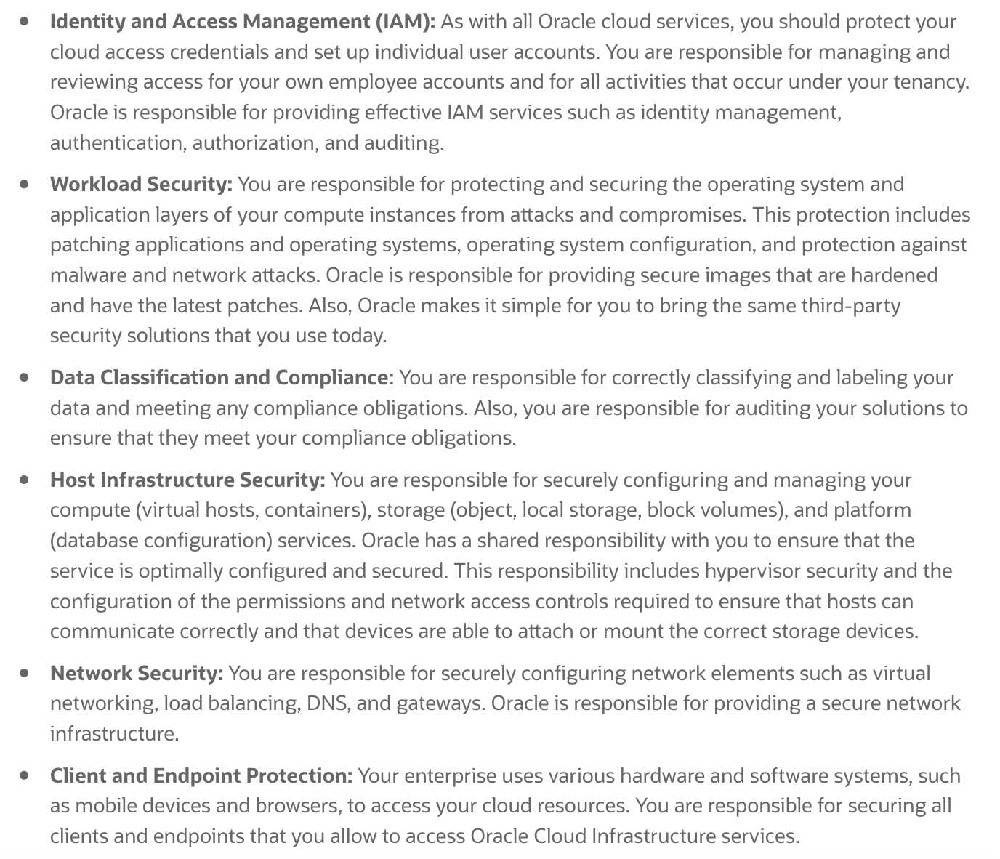 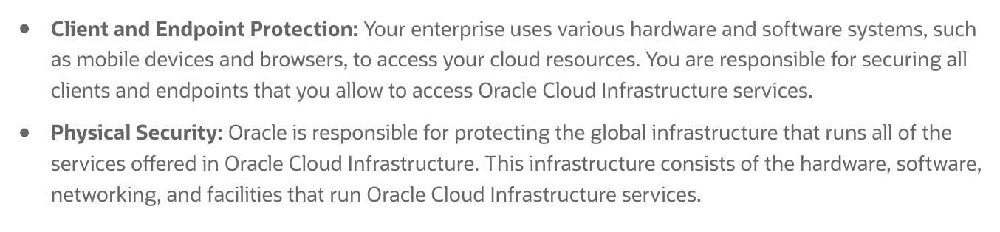 References:
https://docs.cloud.oracle.com/en-us/iaas/Content/Security/Concepts/security_overview.htm
Question 12
Single choice
Which of the following services can you control access to via IAM?
-
A
-
B
-
C
All services including IAM
-
D
Reveal answer details
Close answer details
Question 13
Single choice
You have a mission-critical application which requires to be globally available at all times. Which deployment strategy should you adopt?
-
A
Use multiple Fault Domains In each Availability Domain in each Region.
-
B
Use multiple Availability Domains In one Region.
-
C
Use multiple Fault Domains In one Region.
-
D
Use multiple Fault Domains in any Availability Domain in multiple Regions.
Reveal answer details
Close answer details
Correct answerA
ExplanationOracle Cloud Infrastructure is hosted in regions and availability domains. A region is a localized geographic area, and an availability domain is one or more data centers located within a region. A region is composed of one or more availability domains. Regions are independent of other regions and can be separated by vast distances--across countries or even continents. Availability domains are isolated from each other, fault tolerant, and very unlikely to fail simultaneously.
Because availability domains do not share infrastructure such as power or cooling, or the internal availability domain network, a failure at one availability domain within a region is unlikely to impact the availability of the others within the same region. Fault domain is a grouping of hardware and infrastructure within an availability domain. Each availability domain contains three fault domains. Fault domains provide anti-affinity: they let you distribute your instances so that the instances are not on the same physical hardware within a single availability domain. A hardware failure or Compute hardware maintenance event that affects one fault domain does not affect instances in other fault domains. In addition, the physical hardware in a fault domain has independent and redundant power supplies, which prevents a failure in the power supply hardware within one fault domain from affecting other fault domains. References:
https://docs.cloud.oracle.com/en-us/iaas/Content/General/Concepts/regions.htm
Question 14
Multiple choice
Oracle Cloud Infrastructure is complement with which three industry standard?
-
A
-
B
-
C
-
D
-
E
Reveal answer details
Close answer details
Correct answersC, D, E
Explanationhttps://www.oracle.com/cloud/cloud-infrastructure-compliance/
Question 15
Single choice
Which pricing model is NOT supported by Oracle Cloud Infrastructure?
-
A
-
B
Universal Credits - Monthly Flex
-
C
-
D
Reveal answer details
Close answer details
Correct answerA
ExplanationThe available purchase models are: Pay As You Go (PAYG): Billed in arrears based on consumption. Recommended for organizations who are trying new services, rapid prototyping, or for elastic scaling. Monthly Flex:
Billed in advance with a 12-month minimum. Use monthly or forfeit that month's credits. Recommended for customers with predictable production workloads or large long-running applications, such as HR, payroll, analytics, and more. Monthly Flex maximizes cost reduction with predictable monthly spend, similar to your monthly phone plan.
Delivers faster time to market by offering customers the choice of using any IaaS and PaaS services.
Oracle's current PaaS offering is "license-included PaaS." It includes:
1. Compute and compute support
2. Automation 3. License entitlement and license support Bring your own license
BYOL stands for "bring your own license." Previously, you could bring your own licenses to Oracle IaaS, but to get the benefits of PaaS automation, you couldn't leverage existing licenses. This has been changed. We're offering Oracle BYOL to PaaS, enabling our customers to leverage their investment in existing on-premises licenses in their journey to the cloud.
Oracle BYOL to PaaS includes:
1. Compute and compute support
2. Automation 3. Customers bring their on-premises license entitlement and get license support via their existing on-premises support contract.
4. As customers leverage their existing on-premises license entitlement, they can move to the cloud at a lower cost. References:
https://www.oracle.com/in/cloud/bring-your-own-license/faq/universal-credit-pricing.html
OCI doesn't offer Reserved instances. Enterprise users and technology vendors alike require cost predictability to plan their budgets and run their business. The cost for running applications, databases, and large workloads in the cloud can be extremely difficult to forecast leading to unforeseen expenses. Not with Oracle Cloud. Oracle has simple rate structures that eliminate the cost surprises associated with hard-to-estimate usage elements like data egress and storage performance. Oracle also charges the same rates for all regions, so going global on Oracle Cloud means no hidden cost variances. Thus, Oracle's cloud will provide you with industry leading price-performance and tremendous business value. 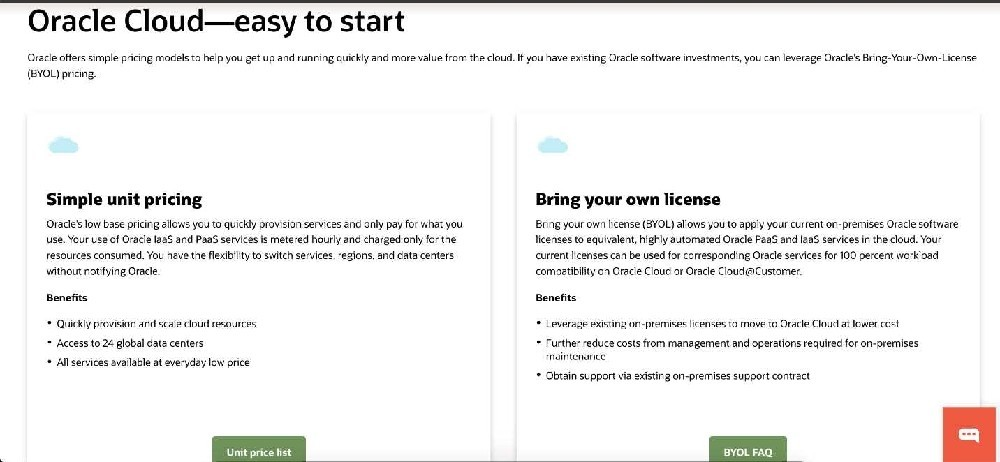 References:
https://www.oracle.com/in/cloud/pricing.html
|